A French Word to Live By
How to Conjugate Biberonner in French
/bi.bʁɔ.ne/
Biberonner means to booze — to drink steadily and a little too much, the way a baby works away at its bottle.
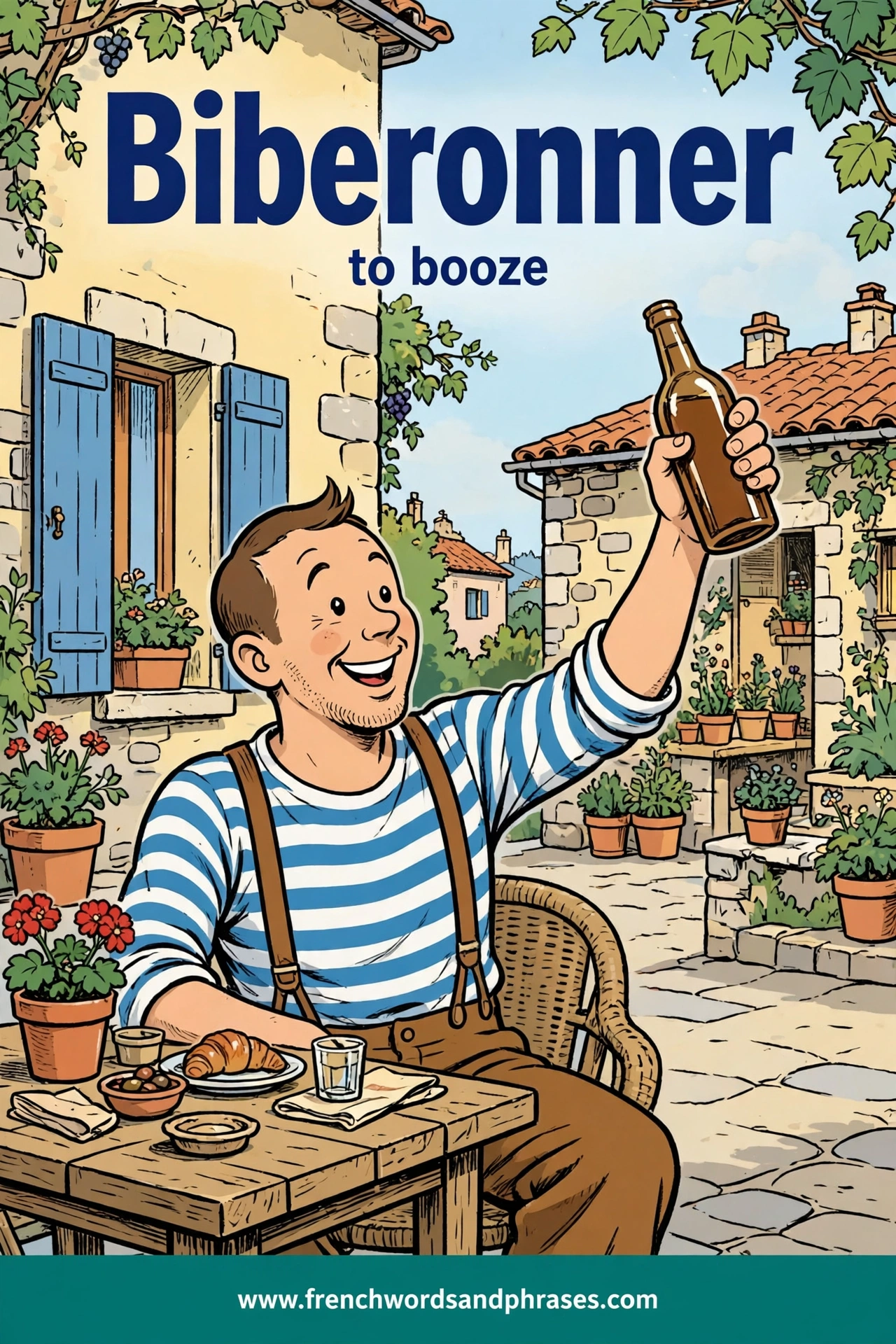
The village café at opening time, the regular already at the zinc, his glass quietly refilled as the hours slide past — biberonner is the familiar verb of steady, habitual drinking: not a binge, not a celebration, just the bottle, revisited all day long.
In this guide, you’ll learn how to conjugate biberonner in all the major French tenses and moods. Explore complete conjugation tables, French examples, English translations, and practice quizzes.
Understanding the French Verb Biberonner
Biberonner is a regular French verb belonging to the first group of verbs, those ending in -er.
It means to booze. It paints the drinker with a mixture of mockery and pity: the drinking is constant, unglamorous and usually solitary or shared with other regulars at the bar. A single wild party is not biberonner — that would be faire la fête or boire un coup de trop.
Verb classification: First group (-er)
Auxiliary verb: Avoir
Past participle: biberonné
Present participle: biberonnant
English equivalents: To booze, to tipple, to drink steadily (familiar); biberonner du vin rouge — to keep knocking back red wine; biberonner dès le matin — to start drinking first thing in the morning; un biberon — a baby’s feeding bottle.
Register first: biberonner is familiar French, the word of cafés and jokes, not of essays. It is built on un biberon, a baby’s feeding bottle — the steady drinker is teasingly compared to a baby who never lets go of the bottle. The verb is regular (je biberonne, nous biberonnons), usually intransitive, and it suggests a habit rather than a single occasion: il biberonne means he drinks steadily, day in, day out. Its close familiar cousin is picoler; the neutral verbs are boire and, for excess, boire trop.
Experience the Word
Biberonner is the verb of the refilled glass — drinking as a background habit, steady as a baby at its bottle.
Imagine the café of a small town at eleven in the morning. Monsieur Paul is at the counter, exactly where he was yesterday. The patron fills his glass without being asked; outside, the market packs up, the church bell rings, the afternoon begins — and Monsieur Paul biberonne, calmly, as if time itself were something to sip.
He is not celebrating anything. He is boozing — biberonnant — at the slow rhythm of the village clock.
How to Conjugate Biberonner: Complete French Conjugation Guide
Let’s explore every major conjugation of biberonner, beginning with the indicative mood.
How to Conjugate Biberonner in the Indicative Mood
The indicative mood is used to express facts, observations, actions, and events.
How to Conjugate Biberonner in the Present Tense (Présent)
Used for actions happening now, habitual actions, and general truths.
| Subject | Conjugation |
|---|---|
| je | biberonne |
| tu | biberonnes |
| il / elle | biberonne |
| nous | biberonnons |
| vous | biberonnez |
| ils / elles | biberonnent |
Example
Il biberonne du vin rouge dès le déjeuner.
He starts knocking back red wine from lunchtime on.
Quick Quiz 1
Complete the sentence:
Nous ______ au comptoir depuis midi.
Reveal the answer
biberonnons
Nous biberonnons au comptoir depuis midi.
We have been boozing at the bar since noon.
How to Conjugate Biberonner in the Passé Composé
Used for completed actions in the past. Biberonner takes the auxiliary verb avoir.
| Subject | Conjugation |
|---|---|
| j’ | ai biberonné |
| tu | as biberonné |
| il / elle | a biberonné |
| nous | avons biberonné |
| vous | avez biberonné |
| ils / elles | ont biberonné |
Example
Ils ont biberonné toute la soirée au comptoir.
They boozed all evening at the bar.
How to Conjugate Biberonner in the Imparfait (Imperfect Tense)
Used for habitual past actions, descriptions, and ongoing situations in the past.
| Subject | Conjugation |
|---|---|
| je | biberonnais |
| tu | biberonnais |
| il / elle | biberonnait |
| nous | biberonnions |
| vous | biberonniez |
| ils / elles | biberonnaient |
Example
Autrefois, les ouvriers biberonnaient à la pause de midi.
In the old days, the workmen used to tipple during the lunch break.
Quick Quiz 2
Choose the correct form:
They boozed all evening.
Ils ______ toute la soirée. (ont biberonné / sont biberonnés)
Reveal the answer
ont biberonné
Ils ont biberonné toute la soirée.
Biberonner takes avoir.
How to Conjugate Biberonner in the Plus-que-parfait
Used to describe an action that had already been completed before another past event.
| Subject | Conjugation |
|---|---|
| j’ | avais biberonné |
| tu | avais biberonné |
| il / elle | avait biberonné |
| nous | avions biberonné |
| vous | aviez biberonné |
| ils / elles | avaient biberonné |
Example
Il avait biberonné avant même l’arrivée des invités.
He had been drinking steadily even before the guests arrived.
How to Conjugate Biberonner in the Passé Simple
Primarily used in formal writing, literature, and historical narratives. It is rarely used in everyday conversation.
| Subject | Conjugation |
|---|---|
| je | biberonnai |
| tu | biberonnas |
| il / elle | biberonna |
| nous | biberonnâmes |
| vous | biberonnâtes |
| ils / elles | biberonnèrent |
Example
Ce soir-là, il biberonna jusqu’à la fermeture du café.
That evening, he boozed until the café closed.
How to Conjugate Biberonner in the Passé Antérieur
A literary tense used to express an action completed immediately before another past action, generally in the passé simple.
| Subject | Conjugation |
|---|---|
| j’ | eus biberonné |
| tu | eus biberonné |
| il / elle | eut biberonné |
| nous | eûmes biberonné |
| vous | eûtes biberonné |
| ils / elles | eurent biberonné |
Example
Quand il eut biberonné toute la soirée, il rentra en titubant.
When he had boozed all evening, he went home staggering.
How to Conjugate Biberonner in the Future Tense (Futur Simple)
Used to describe actions that will take place in the future.
| Subject | Conjugation |
|---|---|
| je | biberonnerai |
| tu | biberonneras |
| il / elle | biberonnera |
| nous | biberonnerons |
| vous | biberonnerez |
| ils / elles | biberonneront |
Example
À ce rythme, tu biberonneras encore à minuit.
At this rate, you will still be drinking at midnight.
How to Conjugate Biberonner in the Futur Antérieur (Future Perfect)
Used for an action that will have been completed before a particular point in the future.
| Subject | Conjugation |
|---|---|
| j’ | aurai biberonné |
| tu | auras biberonné |
| il / elle | aura biberonné |
| nous | aurons biberonné |
| vous | aurez biberonné |
| ils / elles | auront biberonné |
Example
À la fin de la fête, ils auront biberonné pendant six heures.
By the end of the party, they will have been boozing for six hours.
How to Conjugate Biberonner in the Near Future (Futur Proche)
Used to describe something that is going to happen soon. Formed with aller + infinitive.
| Subject | Conjugation |
|---|---|
| je | vais biberonner |
| tu | vas biberonner |
| il / elle | va biberonner |
| nous | allons biberonner |
| vous | allez biberonner |
| ils / elles | vont biberonner |
Example
Attention, il va encore biberonner ce soir.
Careful, he is going to booze again tonight.
How to Conjugate Biberonner in the Conditional Mood
The conditional mood expresses what would happen under certain circumstances. It is also frequently used to make polite requests or express wishes.
How to Conjugate Biberonner in the Present Conditional
| Subject | Conjugation |
|---|---|
| je | biberonnerais |
| tu | biberonnerais |
| il / elle | biberonnerait |
| nous | biberonnerions |
| vous | biberonneriez |
| ils / elles | biberonneraient |
Example
Sans sa femme, il biberonnerait du matin au soir.
Without his wife, he would drink from morning to night.
How to Conjugate Biberonner in the Past Conditional
| Subject | Conjugation |
|---|---|
| j’ | aurais biberonné |
| tu | aurais biberonné |
| il / elle | aurait biberonné |
| nous | aurions biberonné |
| vous | auriez biberonné |
| ils / elles | auraient biberonné |
Example
Il aurait biberonné toute la nuit sans le patron du bar.
He would have boozed all night if not for the bar owner.
Biberonner in the Literary Past Conditional Form
This less common literary form uses the imperfect subjunctive of avoir.
| Subject | Conjugation |
|---|---|
| j’ | eusse biberonné |
| tu | eusses biberonné |
| il / elle | eût biberonné |
| nous | eussions biberonné |
| vous | eussiez biberonné |
| ils / elles | eussent biberonné |
Example
Il eût biberonné jusqu’au matin si le café fût resté ouvert.
He would have boozed until morning if the café had stayed open.
How to Conjugate Biberonner in the Subjunctive Mood
The subjunctive is used to express wishes, emotions, doubts, necessity, and uncertainty. It frequently follows expressions such as il faut que (it is necessary that) or bien que (although).
How to Conjugate Biberonner in the Present Subjunctive
| Subject | Conjugation |
|---|---|
| que je | biberonne |
| que tu | biberonnes |
| qu’il / qu’elle | biberonne |
| que nous | biberonnions |
| que vous | biberonniez |
| qu’ils / qu’elles | biberonnent |
Example
Je crains qu’il biberonne encore trop.
I fear he still drinks too much.
Quick Quiz 3
Complete the sentence using the subjunctive:
Je crains que vous ______ encore trop.
Reveal the answer
biberonniez
Je crains que vous biberonniez encore trop.
I fear you still drink too much.
How to Conjugate Biberonner in the Imperfect Subjunctive
A literary tense, rarely encountered in modern spoken French.
| Subject | Conjugation |
|---|---|
| que je | biberonnasse |
| que tu | biberonnasses |
| qu’il / qu’elle | biberonnât |
| que nous | biberonnassions |
| que vous | biberonnassiez |
| qu’ils / qu’elles | biberonnassent |
Example
Il fallait qu’il biberonnât moins pour garder son travail.
He had to drink less to keep his job.
How to Conjugate Biberonner in the Pluperfect Subjunctive
A literary construction used to express an action completed before another past action.
| Subject | Conjugation |
|---|---|
| que j’ | eusse biberonné |
| que tu | eusses biberonné |
| qu’il / qu’elle | eût biberonné |
| que nous | eussions biberonné |
| que vous | eussiez biberonné |
| qu’ils / qu’elles | eussent biberonné |
Example
On racontait qu’il eût biberonné pendant toute la traversée.
People said he had boozed throughout the whole crossing.
How to Conjugate Biberonner in the Past Subjunctive
| Subject | Conjugation |
|---|---|
| que j’ | aie biberonné |
| que tu | aies biberonné |
| qu’il / qu’elle | ait biberonné |
| que nous | ayons biberonné |
| que vous | ayez biberonné |
| qu’ils / qu’elles | aient biberonné |
Example
Je suis déçu qu’il ait biberonné dès le matin.
I am disappointed he started drinking first thing in the morning.
How to Conjugate Biberonner in the Imperative
The imperative is used to give commands, instructions, invitations, or suggestions. Subject pronouns are omitted.
How to Conjugate Biberonner in the Present Imperative
| Person | Conjugation |
|---|---|
| (tu) | biberonne |
| (nous) | biberonnons |
| (vous) | biberonnez |
Example
Ne biberonne pas avant le repas !
Do not start boozing before the meal!
Quick Quiz 4
How would you say Do not booze before the meal (tu form)?
Reveal the answer
Ne biberonne pas avant le repas !
French Participles of Biberonner
Participles are verb forms that can be used in compound tenses and other grammatical constructions.
Present Participle of Biberonner
biberonnant
En biberonnant au comptoir, il écoutait les rumeurs du village.
While tippling at the bar, he listened to the village gossip.
Past Participle of Biberonner
biberonné
Biberonnés dès l’apéritif, les invités riaient de tout.
Having been drinking since the aperitif, the guests were laughing at everything.
Biberonner in Everyday French: Real-Life Examples
Now that you know the conjugations, let’s see how biberonner appears in everyday French.
Example 1 — Present
Il biberonne dès le déjeuner.
He starts boozing from lunchtime on.
Example 2 — Passé composé
Ils ont biberonné toute la soirée.
They boozed all evening.
Example 3 — Imparfait
Autrefois, il biberonnait au café du coin.
In the old days, he used to tipple at the corner café.
Example 4 — Future
Tu biberonneras encore à minuit, à ce rythme.
You will still be drinking at midnight, at this rate.
Example 5 — Conditional
Il biberonnerait du matin au soir sans sa femme.
He would drink from morning to night without his wife.
Example 6 — Imperative
Ne biberonne pas avant le repas !
Do not booze before the meal!
Beyond Translation: The Meaning of Biberonner
The image is the whole meaning: un biberon is the bottle a baby sucks, and the French ear hears the grown man at the bar as a giant baby who has never been weaned.
It is mockery, but gentle mockery.
Biberonner belongs to the rich familiar family of drinking words — picoler, trinquer, lever le coude — each with its own shade, and biberonner’s shade is slowness: the glass that is always, quietly, full.
How to Remember the French Verb Biberonner
Remember it this way: Biberonner is about the baby’s bottle, refilled all evening at the bar.
- Un biberon is a baby’s bottle: the biberonneur is a baby at the bottle, glass after glass.
- Familiar register and habitual drinking — a steady habit, not one wild party.
- Regular -er: je biberonne, nous biberonnons, past participle biberonné.
The key idea is the baby’s bottle, refilled all evening at the bar.
Test Your Knowledge of Biberonner
Let’s see how much you’ve learned. Try answering these questions before revealing the answers.
Question 1
What object gives biberonner its image, and what does the image imply?
Reveal the answer
Un biberon, a baby’s feeding bottle — the drinker is compared to a baby steadily sucking at its bottle: constant, habitual drinking.
Question 2
How do you say They boozed all evening in French?
Reveal the answer
Ils ont biberonné toute la soirée.
Question 3
Translate: He starts drinking from lunchtime on.
Reveal the answer
Il biberonne dès le déjeuner.
Question 4
What is the past participle of biberonner?
Reveal the answer
Biberonné.
Question 5
Complete the sentence:
Je crains qu’il ______ encore trop.
Reveal the answer
biberonne
Je crains qu’il biberonne encore trop.
I fear he still drinks too much.
Your Final Challenge
Can You Use It?
How would you say this in French?
At the village café, people booze slowly, and the day’s news takes hours to cross the counter.
Reveal the answer
Au café du village, on biberonne lentement, et les nouvelles du jour mettent des heures à traverser le comptoir.
At the village café, people booze slowly, and the day’s news takes hours to cross the counter.
A little French. A little curiosity. A richer everyday life.
LEARN FRENCH ONE WORD AT A TIME