A French Word to Live By
How to Conjugate Adapter in French
/a.dap.te/
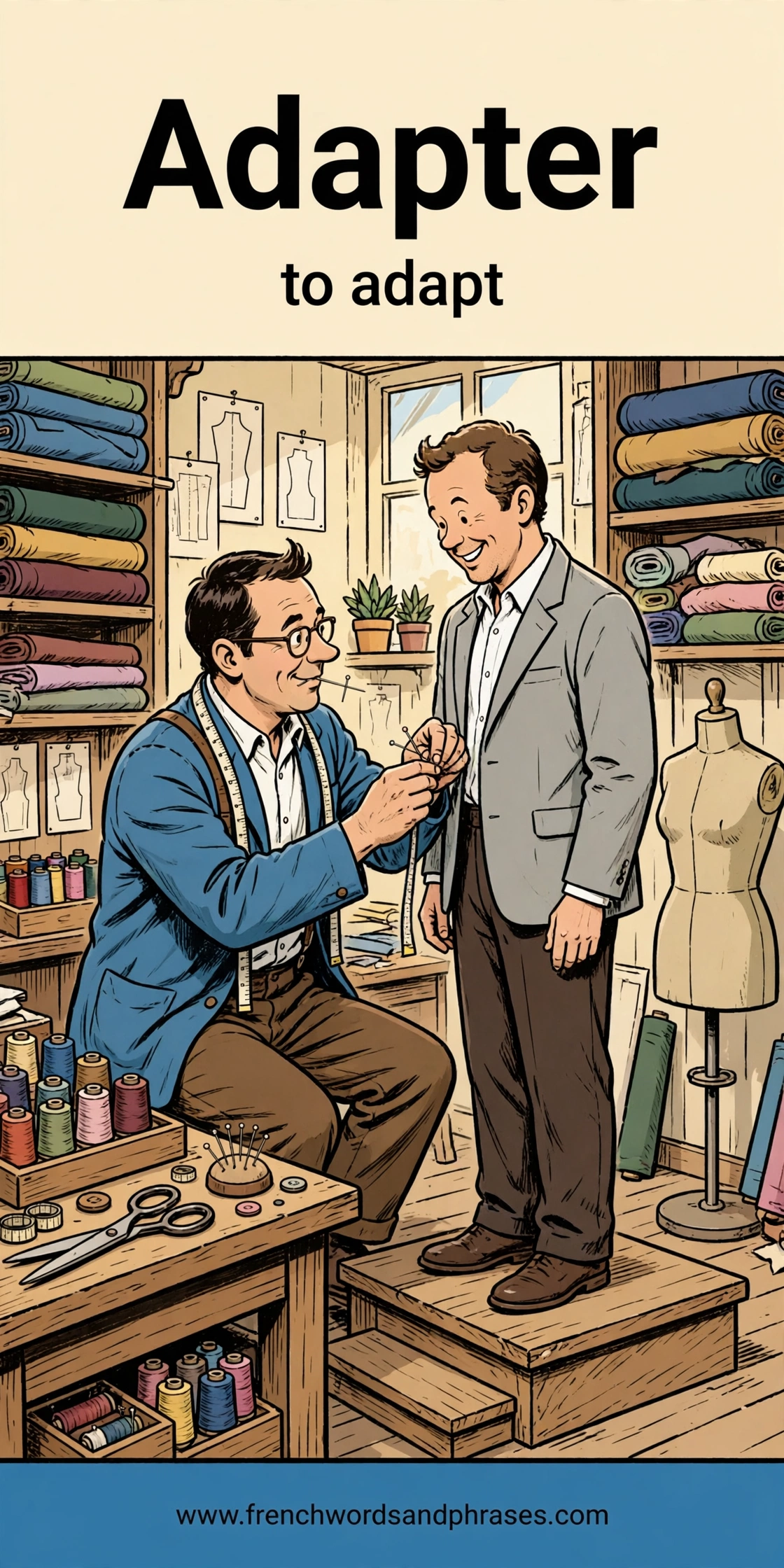
Adapter means to adapt — to adjust one thing so that it fits another: a text to the screen, a recipe to the guests, a piece of furniture to a small room.
A joiner trimming a shelf to fit an crooked old wall, a screenwriter reshaping a beloved novel for the cinema, a cook quietly changing a recipe for a guest who cannot eat nuts — adapter is the verb of fitting: nothing changes its nature, everything changes its shape.
In this guide, you’ll learn how to conjugate adapter in all the major French tenses and moods. Explore complete conjugation tables, French examples, English translations, and practice quizzes.
Understanding the French Verb Adapter
Adapter is a regular French verb belonging to the first group of verbs, those ending in-er.
It means to adapt. It is commonly used in literature and film for adaptations of books and plays, in the kitchen and workshop for adjusting recipes, tools and furniture, in technology for fittings and plug adapters, and everywhere for adjusting plans, timetables and speeches to their audience.
Verb classification: First group (-er)
Auxiliary verb: Avoir
Past participle: adapté
Present participle: adaptant
English equivalents: To adapt, to adjust, to fit; adapter quelque chose à quelque chose — to adapt something to something; adapter un roman au cinéma — to adapt a novel for the cinema; adapter une recette — to adjust a recipe; un adaptateur — a plug adapter; s’adapter à — to adapt oneself to.
One important detail: adapter almost always travels with the preposition à — you adapt one thing à another: adapter le texte à l’écran, adapter l’horaire à la saison (and à + le becomes au: adapter un roman au cinéma). The verb itself is a regular -er: j’adapte, nous adaptons, ils adaptent, past participle adapté. For people adjusting to new circumstances, French turns reflexive: s’adapter à un nouveau pays.
Experience the Word
Adapter is the verb of the good fit — the art of changing a thing’s shape without changing its soul.
Imagine a village carpenter fitting a bookcase into an old farmhouse corner where no wall is straight. He measures, shaves a centimetre here, wedges a sliver there, and adapte the shelf to the wall until it looks as if the house had been built around it.
The shelf is still the same shelf. It has been fitted — adapté — to a world that is not straight.
How to Conjugate Adapter: Complete French Conjugation Guide
Let’s explore every major conjugation of adapter, beginning with the indicative mood.
How to Conjugate Adapter in the Indicative Mood
The indicative mood is used to express facts, observations, actions, and events.
How to Conjugate Adapter in the Present Tense (Présent)
Used for actions happening now, habitual actions, and general truths.
| Subject | Conjugation |
|---|---|
| je | adapte |
| tu | adaptes |
| il / elle | adapte |
| nous | adaptons |
| vous | adaptez |
| ils / elles | adaptent |
Example
Elle adapte le roman pour la télévision.
She is adapting the novel for television.
Quick Quiz 1
Complete the sentence:
Nous ______ l’horaire à la saison.
Reveal the answer
adaptons
Nous adaptons l’horaire à la saison.
We adapt the timetable to the season.
How to Conjugate Adapter in the Passé Composé
Used for completed actions in the past. Adapter takes the auxiliary verb avoir.
| Subject | Conjugation |
|---|---|
| j’ | ai adapté |
| tu | as adapté |
| il / elle | a adapté |
| nous | avons adapté |
| vous | avez adapté |
| ils / elles | ont adapté |
Example
Ils ont adapté la recette pour les enfants.
They adapted the recipe for the children.
How to Conjugate Adapter in the Imparfait (Imperfect Tense)
Used for habitual past actions, descriptions, and ongoing situations in the past.
| Subject | Conjugation |
|---|---|
| je | adaptais |
| tu | adaptais |
| il / elle | adaptait |
| nous | adaptions |
| vous | adaptiez |
| ils / elles | adaptaient |
Example
Le menuisier adaptait les meubles aux petites pièces.
The joiner used to adapt the furniture to small rooms.
Quick Quiz 2
Choose the correct form:
She adapted her speech to her audience.
Elle ______ son discours à son public. (a adapté / est adaptée)
Reveal the answer
a adapté
Elle a adapté son discours à son public.
Adapter takes avoir.
How to Conjugate Adapter in the Plus-que-parfait
Used to describe an action that had already been completed before another past event.
| Subject | Conjugation |
|---|---|
| j’ | avais adapté |
| tu | avais adapté |
| il / elle | avait adapté |
| nous | avions adapté |
| vous | aviez adapté |
| ils / elles | avaient adapté |
Example
Elle avait adapté son discours à son public.
She had adapted her speech to her audience.
How to Conjugate Adapter in the Passé Simple
Primarily used in formal writing, literature, and historical narratives. It is rarely used in everyday conversation.
| Subject | Conjugation |
|---|---|
| je | adaptai |
| tu | adaptas |
| il / elle | adapta |
| nous | adaptâmes |
| vous | adaptâtes |
| ils / elles | adaptèrent |
Example
L’auteur adapta sa pièce pour le cinéma.
The author adapted his play for the cinema.
How to Conjugate Adapter in the Passé Antérieur
A literary tense used to express an action completed immediately before another past action, generally in the passé simple.
| Subject | Conjugation |
|---|---|
| j’ | eus adapté |
| tu | eus adapté |
| il / elle | eut adapté |
| nous | eûmes adapté |
| vous | eûtes adapté |
| ils / elles | eurent adapté |
Example
Quand il eut adapté le texte, il le lut à voix haute.
When he had adapted the text, he read it aloud.
How to Conjugate Adapter in the Future Tense (Futur Simple)
Used to describe actions that will take place in the future.
| Subject | Conjugation |
|---|---|
| je | adapterai |
| tu | adapteras |
| il / elle | adaptera |
| nous | adapterons |
| vous | adapterez |
| ils / elles | adapteront |
Example
Nous adapterons l’horaire à la saison.
We will adapt the timetable to the season.
How to Conjugate Adapter in the Futur Antérieur (Future Perfect)
Used for an action that will have been completed before a particular point in the future.
| Subject | Conjugation |
|---|---|
| j’ | aurai adapté |
| tu | auras adapté |
| il / elle | aura adapté |
| nous | aurons adapté |
| vous | aurez adapté |
| ils / elles | auront adapté |
Example
À la rentrée, ils auront adapté tous les cours au nouveau programme.
By the start of term, they will have adapted all the courses to the new syllabus.
How to Conjugate Adapter in the Near Future (Futur Proche)
Used to describe something that is going to happen soon. Formed with aller + infinitive.
| Subject | Conjugation |
|---|---|
| je | vais adapter |
| tu | vas adapter |
| il / elle | va adapter |
| nous | allons adapter |
| vous | allez adapter |
| ils / elles | vont adapter |
Example
Je vais adapter cette prise à la fiche européenne.
I am going to adapt this plug to the European socket.
How to Conjugate Adapter in the Conditional Mood
The conditional mood expresses what would happen under certain circumstances. It is also frequently used to make polite requests or express wishes.
How to Conjugate Adapter in the Present Conditional
| Subject | Conjugation |
|---|---|
| je | adapterais |
| tu | adapterais |
| il / elle | adapterait |
| nous | adapterions |
| vous | adapteriez |
| ils / elles | adapteraient |
Example
Ce logiciel adapterait l’écran à la lumière.
This software would adapt the screen to the light.
How to Conjugate Adapter in the Past Conditional
| Subject | Conjugation |
|---|---|
| j’ | aurais adapté |
| tu | aurais adapté |
| il / elle | aurait adapté |
| nous | aurions adapté |
| vous | auriez adapté |
| ils / elles | auraient adapté |
Example
Tu aurais adapté la recette si tu avais su pour l’allergie.
You would have adapted the recipe if you had known about the allergy.
Adapter in the Literary Past Conditional Form
This less common literary form uses the imperfect subjunctive of avoir.
| Subject | Conjugation |
|---|---|
| j’ | eusse adapté |
| tu | eusses adapté |
| il / elle | eût adapté |
| nous | eussions adapté |
| vous | eussiez adapté |
| ils / elles | eussent adapté |
Example
Le poète eût adapté son chant à la cour du roi.
The poet would have adapted his song to the king’s court.
How to Conjugate Adapter in the Subjunctive Mood
The subjunctive is used to express wishes, emotions, doubts, necessity, and uncertainty. It frequently follows expressions such as il faut que (it is necessary that) or bien que (although).
How to Conjugate Adapter in the Present Subjunctive
| Subject | Conjugation |
|---|---|
| que je | adapte |
| que tu | adaptes |
| qu’il / qu’elle | adapte |
| que nous | adaptions |
| que vous | adaptiez |
| qu’ils / qu’elles | adaptent |
Example
Il faut que tu adaptes ton ton à la situation.
You must adapt your tone to the situation.
Quick Quiz 3
Complete the sentence using the subjunctive:
Il faut que vous ______ le menu aux invités.
Reveal the answer
adaptiez
Il faut que vous adaptiez le menu aux invités.
You must adapt the menu to the guests.
How to Conjugate Adapter in the Imperfect Subjunctive
A literary tense, rarely encountered in modern spoken French.
| Subject | Conjugation |
|---|---|
| que je | adaptasse |
| que tu | adaptasses |
| qu’il / qu’elle | adaptât |
| que nous | adaptassions |
| que vous | adaptassiez |
| qu’ils / qu’elles | adaptassent |
Example
Je voulais qu’elle adaptât le menu aux invités.
I wanted her to adapt the menu to the guests.
How to Conjugate Adapter in the Pluperfect Subjunctive
A literary construction used to express an action completed before another past action.
| Subject | Conjugation |
|---|---|
| que j’ | eusse adapté |
| que tu | eusses adapté |
| qu’il / qu’elle | eût adapté |
| que nous | eussions adapté |
| que vous | eussiez adapté |
| qu’ils / qu’elles | eussent adapté |
Example
On admirait qu’il eût adapté la pièce en trois semaines.
People admired that he had adapted the play in three weeks.
How to Conjugate Adapter in the Past Subjunctive
| Subject | Conjugation |
|---|---|
| que j’ | aie adapté |
| que tu | aies adapté |
| qu’il / qu’elle | ait adapté |
| que nous | ayons adapté |
| que vous | ayez adapté |
| qu’ils / qu’elles | aient adapté |
Example
Je suis heureux qu’ils aient adapté le livre en film.
I am glad they adapted the book into a film.
How to Conjugate Adapter in the Imperative
The imperative is used to give commands, instructions, invitations, or suggestions. Subject pronouns are omitted.
How to Conjugate Adapter in the Present Imperative
| Person | Conjugation |
|---|---|
| (tu) | adapte |
| (nous) | adaptons |
| (vous) | adaptez |
Example
Adapte la hauteur du siège avant de conduire !
Adjust the height of the seat before driving!
Quick Quiz 4
How would you say Adapt the recipe (tu form)?
Reveal the answer
Adapte la recette !
French Participles of Adapter
Participles are verb forms that can be used in compound tenses and other grammatical constructions.
Present Participle of Adapter
adaptant
En adaptant la recette, elle l’a rendue plus légère.
By adapting the recipe, she made it lighter.
Past Participle of Adapter
adapté
Adaptée au cinéma, la nouvelle a connu un grand succès.
Adapted for the cinema, the short story was a great success.
Adapter in Everyday French: Real-Life Examples
Now that you know the conjugations, let’s see how adapter appears in everyday French.
Example 1 — Present
Elle adapte le roman pour la télévision.
She is adapting the novel for television.
Example 2 — Passé composé
Ils ont adapté la recette pour les enfants.
They adapted the recipe for the children.
Example 3 — Imparfait
Le menuisier adaptait les meubles aux petites pièces.
The joiner used to adapt furniture to small rooms.
Example 4 — Future
Nous adapterons l’horaire à la saison.
We will adapt the timetable to the season.
Example 5 — Conditional
Ce logiciel adapterait l’écran à la lumière.
This software would adapt the screen to the light.
Example 6 — Imperative
Adapte la hauteur du siège !
Adjust the height of the seat!
Beyond Translation: The Meaning of Adapter
English adapt and French adapter are the same Latin word — adaptare, to fit to — and both languages use it for books turned into films.
But French keeps the joiner’s bench inside the word.
Before it described novels, adapter described fitting a joint, a lid, a plug: making one solid thing sit exactly against another. Every adaptation, in French, still carries that craftsman’s question — est-ce que ça s’adapte ? does it fit?
How to Remember the French Verb Adapter
Remember it this way: Adapter is about the joiner fitting a shelf into a crooked old wall.
- Almost always with à: adapter quelque chose à quelque chose — and au cinéma for films.
- Regular -er: j’adapte, nous adaptons, past participle adapté.
- People adapting to circumstances go reflexive: s’adapter à un nouveau pays.
The key idea is the joiner fitting a shelf into a crooked old wall.
Test Your Knowledge of Adapter
Let’s see how much you’ve learned. Try answering these questions before revealing the answers.
Question 1
Which preposition links the thing adapted to what it is adapted to?
Reveal the answer
À — adapter le texte à l’écran; adapter un roman au cinéma.
Question 2
How do you say They adapted the recipe for the children in French?
Reveal the answer
Ils ont adapté la recette pour les enfants.
Question 3
Translate: Adjust the height of the seat!
Reveal the answer
Adapte la hauteur du siège !
Question 4
What is the past participle of adapter?
Reveal the answer
Adapté.
Question 5
Complete the sentence:
Il faut que tu ______ ton ton à la situation.
Reveal the answer
adaptes
Il faut que tu adaptes ton ton à la situation.
You must adapt your tone to the situation.
Your Final Challenge
Can You Use It?
How would you say this in French?
The joiner adapts the shelf to the crooked wall, and suddenly it looks born in that room.
Reveal the answer
Le menuisier adapte l’étagère au mur tordu, et soudain, elle semble née dans cette pièce.
The joiner adapts the shelf to the crooked wall, and suddenly it looks born in that room.
A little French. A little curiosity. A richer everyday life.
LEARN FRENCH ONE WORD AT A TIME