A French Word to Live By
How to Conjugate Absorber in French
/ap.sɔʁ.be/
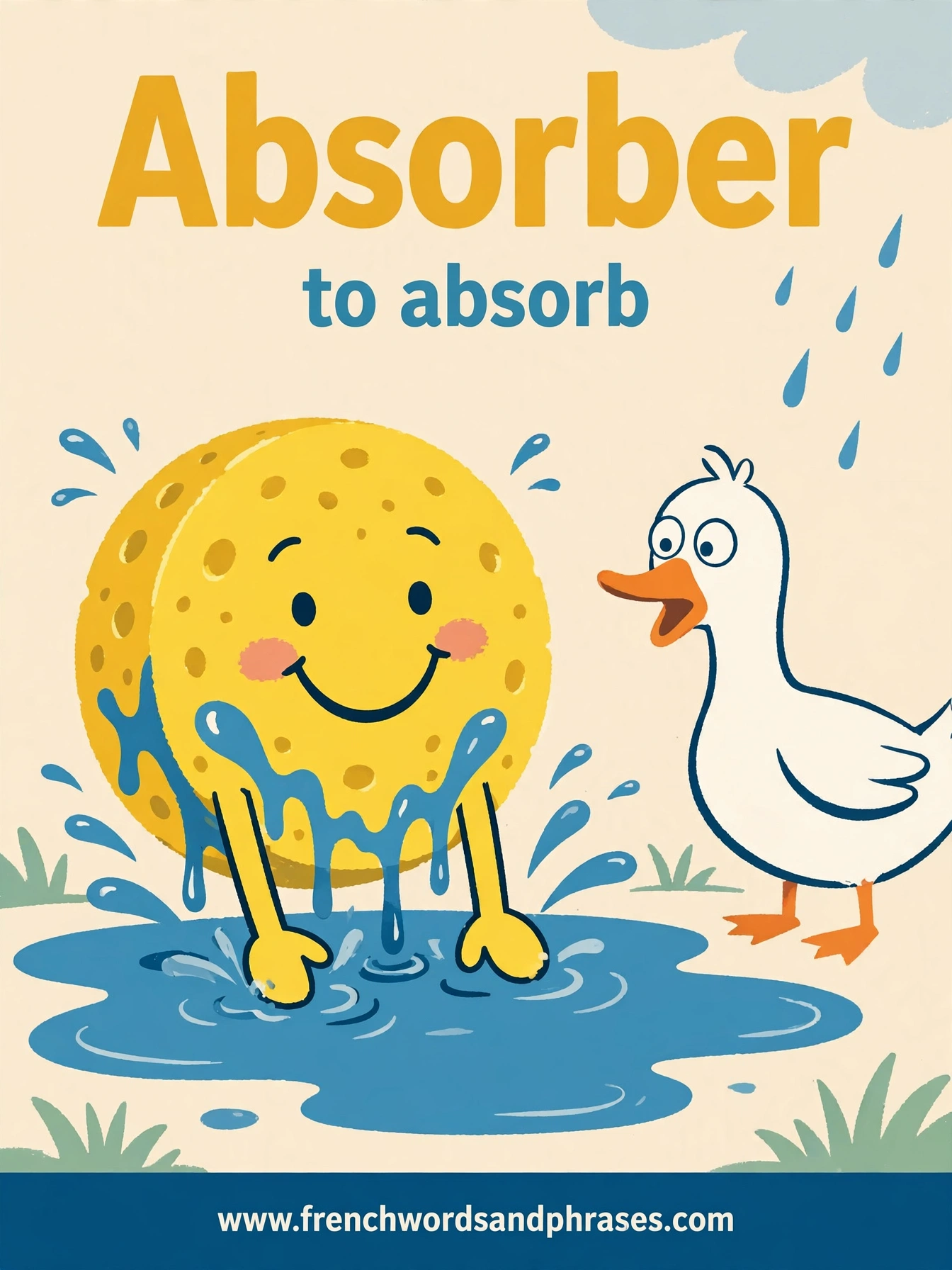
Absorber means to absorb — to soak up a liquid, to swallow a shock, or to hold a mind completely.
A sponge drinking up spilt wine, sand swallowing the tide, a reader so deep in a novel that the doorbell rings unheard — absorber is the verb of taking in completely: liquids, blows, costs and attention all disappear into something that absorbe them.
In this guide, you’ll learn how to conjugate absorber in all the major French tenses and moods. Explore complete conjugation tables, French examples, English translations, and practice quizzes.
Understanding the French Verb Absorber
Absorber is a regular French verb belonging to the first group of verbs, those ending in-er.
It means to absorb. It is commonly used for sponges, soil and materials soaking up liquids, for systems and budgets taking in shocks and costs, in physics for surfaces absorbing light and heat, and above all for minds: a book, a task or a worry that absorbe someone leaves nothing of them for anything else.
Verb classification: First group (-er)
Auxiliary verb: Avoir
Past participle: absorbé
Present participle: absorbant
English equivalents: To absorb, to soak up, to take in; absorber une éponge… une éponge absorbe l’eau — a sponge absorbs water; absorber un choc — to absorb a shock; absorber les coûts — to absorb the costs; être absorbé par — to be absorbed in, engrossed in.
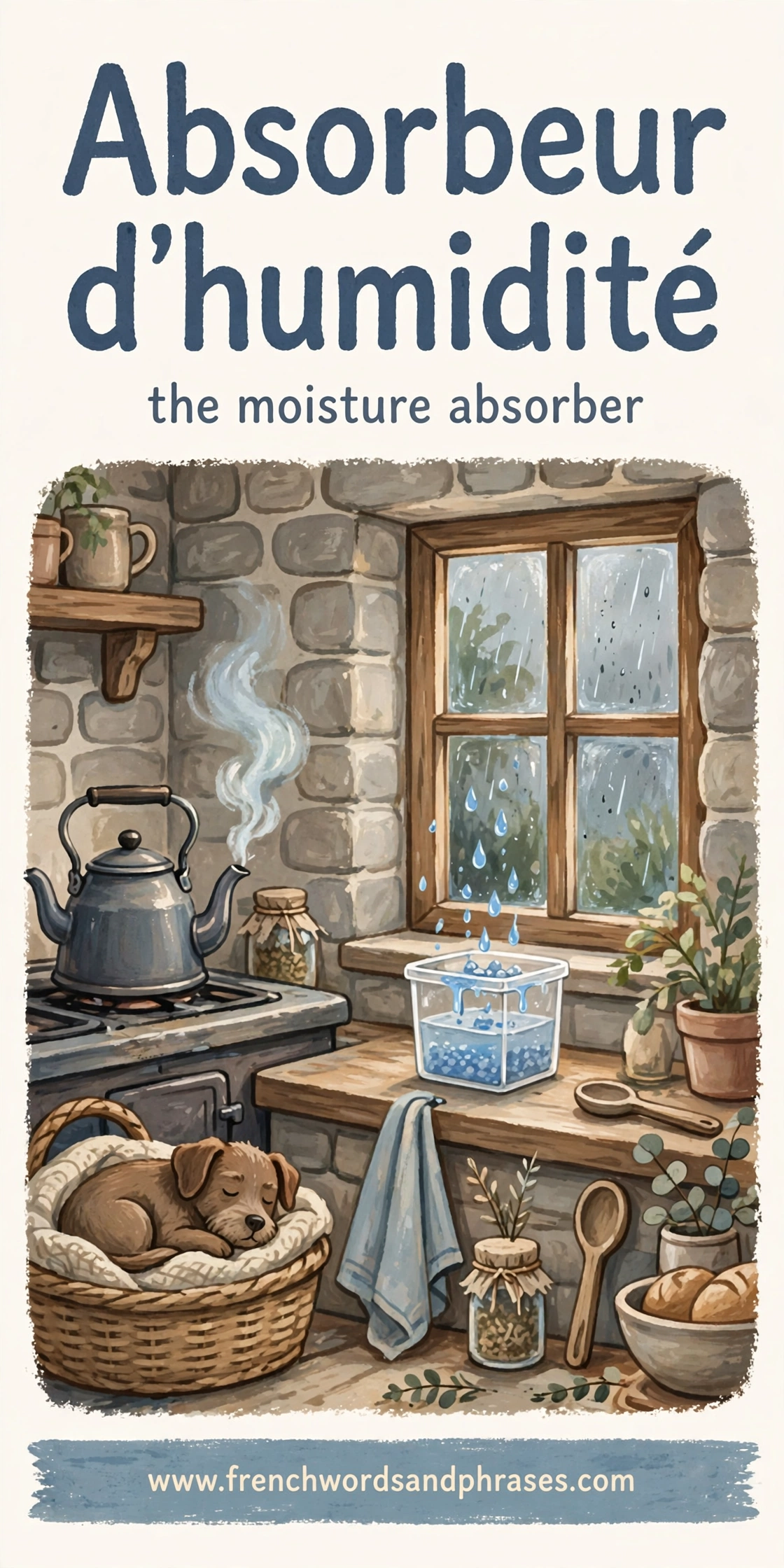
One important detail: absorber leads two lives. In the kitchen and the laboratory it is physical — l’éponge absorbe l’eau, the sponge soaks up the water. But its most human use is the passive: être absorbé par — to be absorbed, engrossed: elle était absorbée par son roman, she was lost in her novel. The family is technical and useful: absorbant (absorbent), l’absorption, and in shops, un absorbeur d’humidité, a moisture absorber.
Experience the Word
Absorber is the verb of disappearance by welcome — what is absorbed does not bounce off; it goes in, and stays in.
Imagine a girl on a train with a novel. The conductor asks twice for her ticket; the announcement names her station; her coffee goes cold untouched. Le livre l’absorbe — the book has absorbed her so completely that the whole carriage exists at the bottom of a well, and only the page is real.
She has not fallen asleep or run away. She has been absorbed — absorbée — and the world will have to wait for the chapter to end.
How to Conjugate Absorber: Complete French Conjugation Guide
Let’s explore every major conjugation of absorber, beginning with the indicative mood.
How to Conjugate Absorber in the Indicative Mood
The indicative mood is used to express facts, observations, actions, and events.
How to Conjugate Absorber in the Present Tense (Présent)
Used for actions happening now, habitual actions, and general truths.
| Subject | Conjugation |
|---|---|
| je | absorbe |
| tu | absorbes |
| il / elle | absorbe |
| nous | absorbons |
| vous | absorbez |
| ils / elles | absorbent |
Example
L’éponge absorbe toute l’eau renversée.
The sponge absorbs all the spilt water.
Quick Quiz 1
Complete the sentence:
Nous ______ la lumière avec ces rideaux noirs.
Reveal the answer
absorbons
Nous absorbons la lumière avec ces rideaux noirs.
We absorb the light with these black curtains.
How to Conjugate Absorber in the Passé Composé
Used for completed actions in the past. Absorber takes the auxiliary verb avoir.
| Subject | Conjugation |
|---|---|
| j’ | ai absorbé |
| tu | as absorbé |
| il / elle | a absorbé |
| nous | avons absorbé |
| vous | avez absorbé |
| ils / elles | ont absorbé |
Example
Le tapis a absorbé le vin renversé.
The carpet absorbed the spilt wine.
How to Conjugate Absorber in the Imparfait (Imperfect Tense)
Used for habitual past actions, descriptions, and ongoing situations in the past.
| Subject | Conjugation |
|---|---|
| je | absorbais |
| tu | absorbais |
| il / elle | absorbait |
| nous | absorbions |
| vous | absorbiez |
| ils / elles | absorbaient |
Example
La foule absorbait les nouveaux arrivants sans bruit.
The crowd used to absorb the newcomers silently.
Quick Quiz 2
Choose the correct form:
The carpet absorbed the wine.
Le tapis ______ le vin. (a absorbé / est absorbé)
Reveal the answer
a absorbé
Le tapis a absorbé le vin.
Absorber takes avoir.
How to Conjugate Absorber in the Plus-que-parfait
Used to describe an action that had already been completed before another past event.
| Subject | Conjugation |
|---|---|
| j’ | avais absorbé |
| tu | avais absorbé |
| il / elle | avait absorbé |
| nous | avions absorbé |
| vous | aviez absorbé |
| ils / elles | avaient absorbé |
Example
La lecture avait absorbé toute son attention.
Reading had absorbed all her attention.
How to Conjugate Absorber in the Passé Simple
Primarily used in formal writing, literature, and historical narratives. It is rarely used in everyday conversation.
| Subject | Conjugation |
|---|---|
| je | absorbai |
| tu | absorbas |
| il / elle | absorba |
| nous | absorbâmes |
| vous | absorbâtes |
| ils / elles | absorbèrent |
Example
La terre sèche absorba la pluie en quelques minutes.
The dry earth absorbed the rain in a few minutes.
How to Conjugate Absorber in the Passé Antérieur
A literary tense used to express an action completed immediately before another past action, generally in the passé simple.
| Subject | Conjugation |
|---|---|
| j’ | eus absorbé |
| tu | eus absorbé |
| il / elle | eut absorbé |
| nous | eûmes absorbé |
| vous | eûtes absorbé |
| ils / elles | eurent absorbé |
Example
Quand l’éponge eut absorbé l’eau, il la pressa.
When the sponge had absorbed the water, he squeezed it.
How to Conjugate Absorber in the Future Tense (Futur Simple)
Used to describe actions that will take place in the future.
| Subject | Conjugation |
|---|---|
| je | absorberai |
| tu | absorberas |
| il / elle | absorbera |
| nous | absorberons |
| vous | absorberez |
| ils / elles | absorberont |
Example
Ce tissu absorbera mieux la sueur.
This fabric will absorb sweat better.
How to Conjugate Absorber in the Futur Antérieur (Future Perfect)
Used for an action that will have been completed before a particular point in the future.
| Subject | Conjugation |
|---|---|
| j’ | aurai absorbé |
| tu | auras absorbé |
| il / elle | aura absorbé |
| nous | aurons absorbé |
| vous | aurez absorbé |
| ils / elles | auront absorbé |
Example
À midi, le sable aura absorbé toute l’eau.
By noon, the sand will have absorbed all the water.
How to Conjugate Absorber in the Near Future (Futur Proche)
Used to describe something that is going to happen soon. Formed with aller + infinitive.
| Subject | Conjugation |
|---|---|
| je | vais absorber |
| tu | vas absorber |
| il / elle | va absorber |
| nous | allons absorber |
| vous | allez absorber |
| ils / elles | vont absorber |
Example
Attention, la farine va absorber le lait d’un coup.
Careful, the flour is going to absorb the milk all at once.
How to Conjugate Absorber in the Conditional Mood
The conditional mood expresses what would happen under certain circumstances. It is also frequently used to make polite requests or express wishes.
How to Conjugate Absorber in the Present Conditional
| Subject | Conjugation |
|---|---|
| je | absorberais |
| tu | absorberais |
| il / elle | absorberait |
| nous | absorberions |
| vous | absorberiez |
| ils / elles | absorberaient |
Example
Un bon buvard absorberait l’encre sans baver.
A good blotter would absorb the ink without smudging.
How to Conjugate Absorber in the Past Conditional
| Subject | Conjugation |
|---|---|
| j’ | aurais absorbé |
| tu | aurais absorbé |
| il / elle | aurait absorbé |
| nous | aurions absorbé |
| vous | auriez absorbé |
| ils / elles | auraient absorbé |
Example
Le matelas aurait absorbé sa chute.
The mattress would have absorbed his fall.
Absorber in the Literary Past Conditional Form
This less common literary form uses the imperfect subjunctive of avoir.
| Subject | Conjugation |
|---|---|
| j’ | eusse absorbé |
| tu | eusses absorbé |
| il / elle | eût absorbé |
| nous | eussions absorbé |
| vous | eussiez absorbé |
| ils / elles | eussent absorbé |
Example
La forêt eût absorbé l’armée sans les guides.
The forest would have swallowed up the army without the guides.
How to Conjugate Absorber in the Subjunctive Mood
The subjunctive is used to express wishes, emotions, doubts, necessity, and uncertainty. It frequently follows expressions such as il faut que (it is necessary that) or bien que (although).
How to Conjugate Absorber in the Present Subjunctive
| Subject | Conjugation |
|---|---|
| que je | absorbe |
| que tu | absorbes |
| qu’il / qu’elle | absorbe |
| que nous | absorbions |
| que vous | absorbiez |
| qu’ils / qu’elles | absorbent |
Example
Il faut que la serviette absorbe vite.
The towel must absorb quickly.
Quick Quiz 3
Complete the sentence using the subjunctive:
Il faut que vous ______ tout le lait avec la farine.
Reveal the answer
absorbiez
Il faut que vous absorbiez tout le lait avec la farine.
You must absorb all the milk with the flour.
How to Conjugate Absorber in the Imperfect Subjunctive
A literary tense, rarely encountered in modern spoken French.
| Subject | Conjugation |
|---|---|
| que je | absorbasse |
| que tu | absorbasses |
| qu’il / qu’elle | absorbât |
| que nous | absorbassions |
| que vous | absorbassiez |
| qu’ils / qu’elles | absorbassent |
Example
On ne pensait pas que le sable absorbât tant d’eau.
Nobody thought the sand would absorb so much water.
How to Conjugate Absorber in the Pluperfect Subjunctive
A literary construction used to express an action completed before another past action.
| Subject | Conjugation |
|---|---|
| que j’ | eusse absorbé |
| que tu | eusses absorbé |
| qu’il / qu’elle | eût absorbé |
| que nous | eussions absorbé |
| que vous | eussiez absorbé |
| qu’ils / qu’elles | eussent absorbé |
Example
On admirait que le roman eût absorbé des générations de lecteurs.
People admired that the novel had absorbed generations of readers.
How to Conjugate Absorber in the Past Subjunctive
| Subject | Conjugation |
|---|---|
| que j’ | aie absorbé |
| que tu | aies absorbé |
| qu’il / qu’elle | ait absorbé |
| que nous | ayons absorbé |
| que vous | ayez absorbé |
| qu’ils / qu’elles | aient absorbé |
Example
Je suis étonné que cette lecture l’ait absorbé si longtemps.
I am amazed this book absorbed him for so long.
How to Conjugate Absorber in the Imperative
The imperative is used to give commands, instructions, invitations, or suggestions. Subject pronouns are omitted.
How to Conjugate Absorber in the Present Imperative
| Person | Conjugation |
|---|---|
| (tu) | absorbe |
| (nous) | absorbons |
| (vous) | absorbez |
Example
Absorbez l’eau avec cette éponge !
Soak up the water with this sponge!
Quick Quiz 4
How would you say Soak up the water (tu form)?
Reveal the answer
Absorbe l’eau !
French Participles of Absorber
Participles are verb forms that can be used in compound tenses and other grammatical constructions.
Present Participle of Absorber
absorbant
En absorbant la lumière, le noir chauffe plus vite.
By absorbing light, black heats up faster.
Past Participle of Absorber
absorbé
Absorbée par son roman, elle n’a pas entendu la sonnette.
Absorbed in her novel, she did not hear the doorbell.
Absorber in Everyday French: Real-Life Examples
Now that you know the conjugations, let’s see how absorber appears in everyday French.
Example 1 — Present
L’éponge absorbe l’eau.
The sponge absorbs the water.
Example 2 — Passé composé
Le tapis a absorbé le vin renversé.
The carpet absorbed the spilt wine.
Example 3 — Imparfait
La lecture absorbait toute son attention.
Reading absorbed all her attention.
Example 4 — Future
Ce tissu absorbera mieux la sueur.
This fabric will absorb sweat better.
Example 5 — Conditional
Un bon buvard absorberait l’encre.
A good blotter would absorb the ink.
Example 6 — Imperative
Absorbe l’eau, vite !
Soak up the water, quickly!
Beyond Translation: The Meaning of Absorber
English absorb is the same word wearing the same Latin root — absorbere, to suck in — and both languages stretch it from sponges to minds.
But French leans on the passive.
Être absorbé is the standard French portrait of deep concentration: the scholar, the chess player, the child with a comic — all absorbés, taken in whole by what they are doing.
How to Remember the French Verb Absorber
Remember it this way: Absorber is about the sponge and the reader — both take everything in.
- Two lives: the sponge absorbs water — and the book absorbs the reader (être absorbé par).
- Regular -er: j’absorbe, nous absorbons, past participle absorbé.
- Family: absorbant (absorbent), l’absorption, un absorbeur d’humidité (a moisture absorber).
The key idea is the sponge and the reader — both take everything in.
Test Your Knowledge of Absorber
Let’s see how much you’ve learned. Try answering these questions before revealing the answers.
Question 1
How do you say to be engrossed in a book with absorber?
Reveal the answer
Être absorbé par un livre — elle était absorbée par son roman, she was lost in her novel.
Question 2
How do you say The sponge absorbs the water in French?
Reveal the answer
L’éponge absorbe l’eau.
Question 3
Translate: The carpet absorbed the spilt wine.
Reveal the answer
Le tapis a absorbé le vin renversé.
Question 4
What is the past participle of absorber?
Reveal the answer
Absorbé.
Question 5
Complete the sentence:
Il faut que la serviette ______ vite.
Reveal the answer
absorbe
Il faut que la serviette absorbe vite.
The towel must absorb quickly.
Your Final Challenge
Can You Use It?
How would you say this in French?
The sponge absorbs the water silently, and a good book absorbs its reader in the same way.
Reveal the answer
L’éponge absorbe l’eau en silence, et le bon livre absorbe le lecteur de la même façon.
The sponge absorbs the water silently, and a good book absorbs its reader in the same way.
A little French. A little curiosity. A richer everyday life.
LEARN FRENCH ONE WORD AT A TIME