A French Word to Live By
Translate Abbé to English
/a.be/
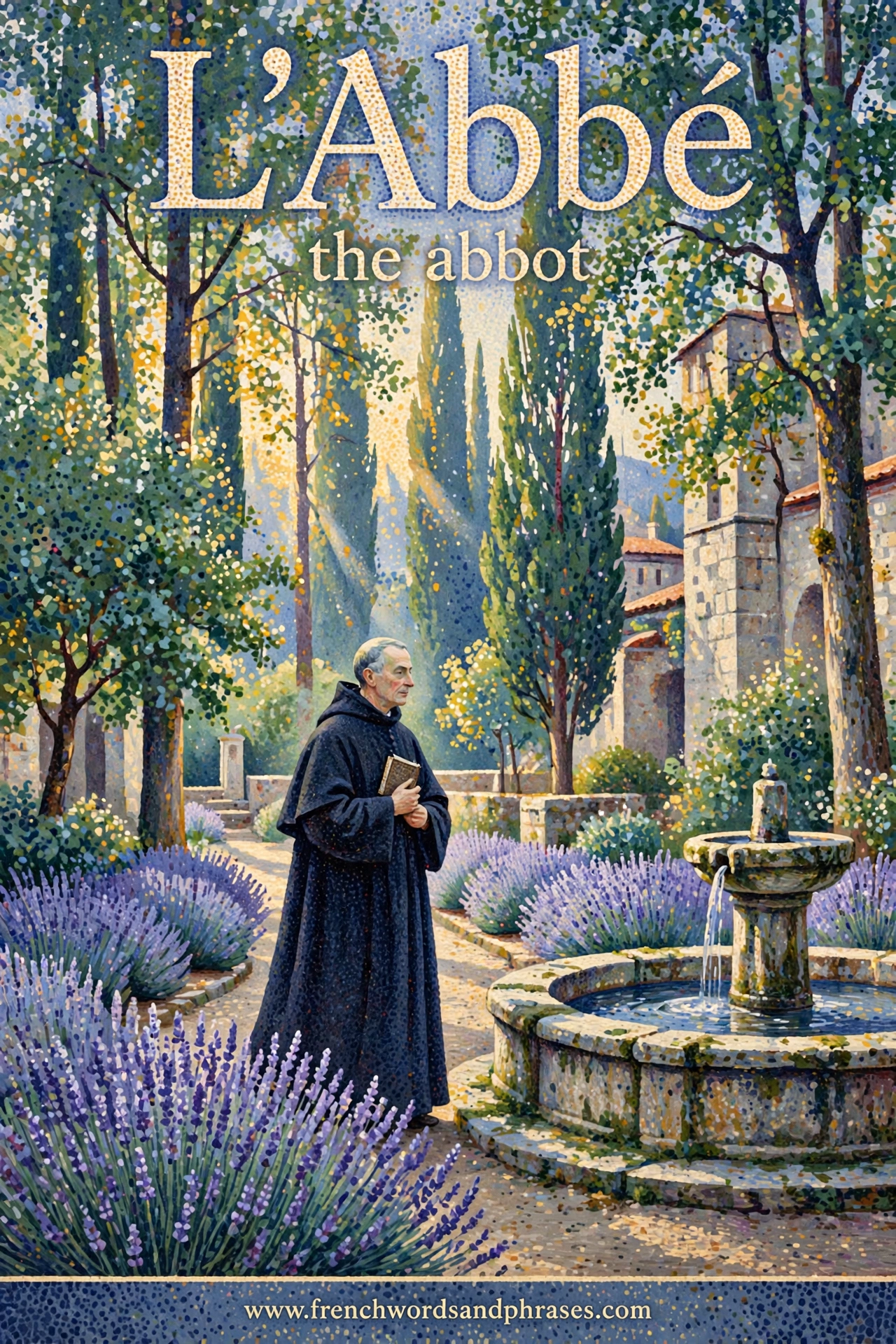
L’abbé means the abbot.
At the door of the abbey church, the monks fall silent as one figure comes down the cloister walk, breviary in hand — l’abbé, the father of the house.
In this guide, you’ll learn what abbé means in English, how to use it with its articles, how to form its plural, and how it appears in everyday French. Explore French examples, English translations, and practice quizzes.
Understanding the French Noun Abbé
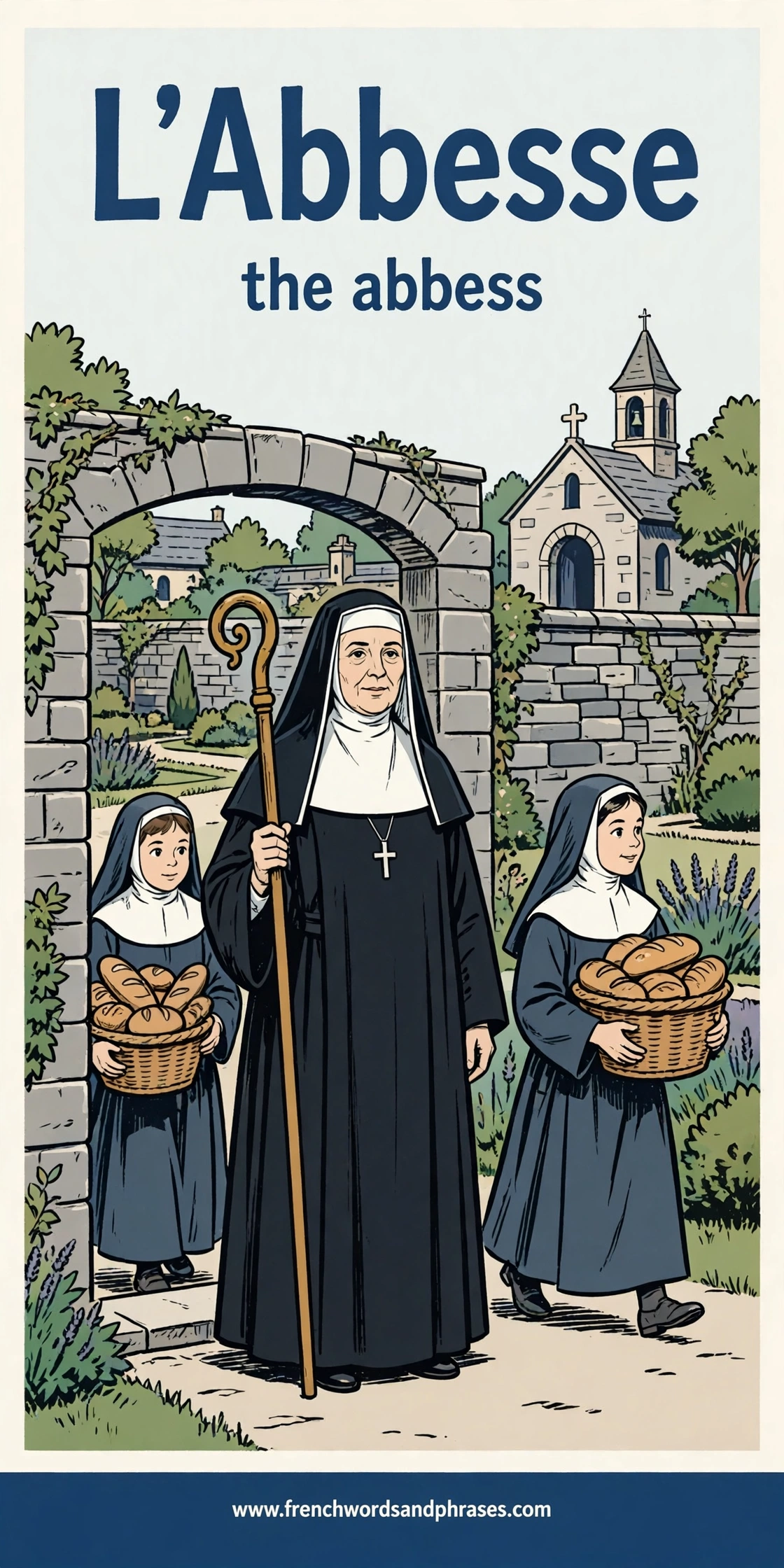
Abbé is a masculine French noun, learned with its article: l’abbé, un abbé — l’, because it begins with a vowel. The word comes from the Aramaic abba, father — the same root that gives abbaye and abbesse. For a woman at the head of a community, French uses a different word entirely: l’abbesse.
It means the abbot — the superior who heads an abbaye of monks, elected by his brothers and followed for life. But abbé has a second, everyday life in France: it is also the respectful title for any priest — Monsieur l’abbé — whether or not he rules an abbey. France’s most famous modern abbé never ran a monastery at all: l’abbé Pierre, the priest who founded Emmaus and championed the homeless.
Gender: Masculine
Feminine: A woman in the role is une abbesse — a different word (see abbesse)
Definite article: l’ — l’abbé (the abbot)
Indefinite article: un — un abbé (an abbot; a priest)
Plural: les abbés
English equivalents: The abbot; (as a title) Father.
One important usage detail: spoken French uses abbé far beyond the cloister. Any diocesan priest can be addressed as Monsieur l’abbé, and parish newsletters are full of « l’abbé Martin » who may never have seen an abbey. In writing about a real abbot of monks, the context — the abbaye, les moines — makes the sense clear.
Experience the Word
Abbé is a word of fatherhood: abba, the father. The abbot is meant to be a father to his monks — ruling, yes, but as a parent rules, by knowing every brother by name.
Imagine the chapter house on election day: the votes counted in silence, the new abbé kneeling for the blessing, taking on forty men and eight centuries of tradition in one morning.
You have not just met a superior. You have met the father of the house — le père abbé.
How to Use Abbé in French: Complete Guide
Let’s explore how abbé works in French, beginning with its articles — and keep an eye on its double life as a priest’s title.
Abbé with the Definite Article (L’, Les)
Used for the abbot everyone knows — l’abbé, at the head of the abbey.
| Form | French |
|---|---|
| Masculine singular | l’abbé |
| Plural | les abbés |
Example
L’abbé accueille les visiteurs à la porte de l’abbaye.
The abbot welcomes visitors at the abbey gate.
Abbé with the Indefinite Article (Un, Des)
Used for an abbot — or a priest — in general: un abbé.
| Form | French |
|---|---|
| Masculine singular | un abbé |
| Plural | des abbés |
Example
Un abbé du village voisin célèbre la messe ce dimanche.
A priest from the neighbouring village is celebrating Mass this Sunday.
Around the Abbé: Words of the Abbey
Monasteries, monks and Mass — the vocabulary that surrounds the abbé.
| French | In English |
|---|---|
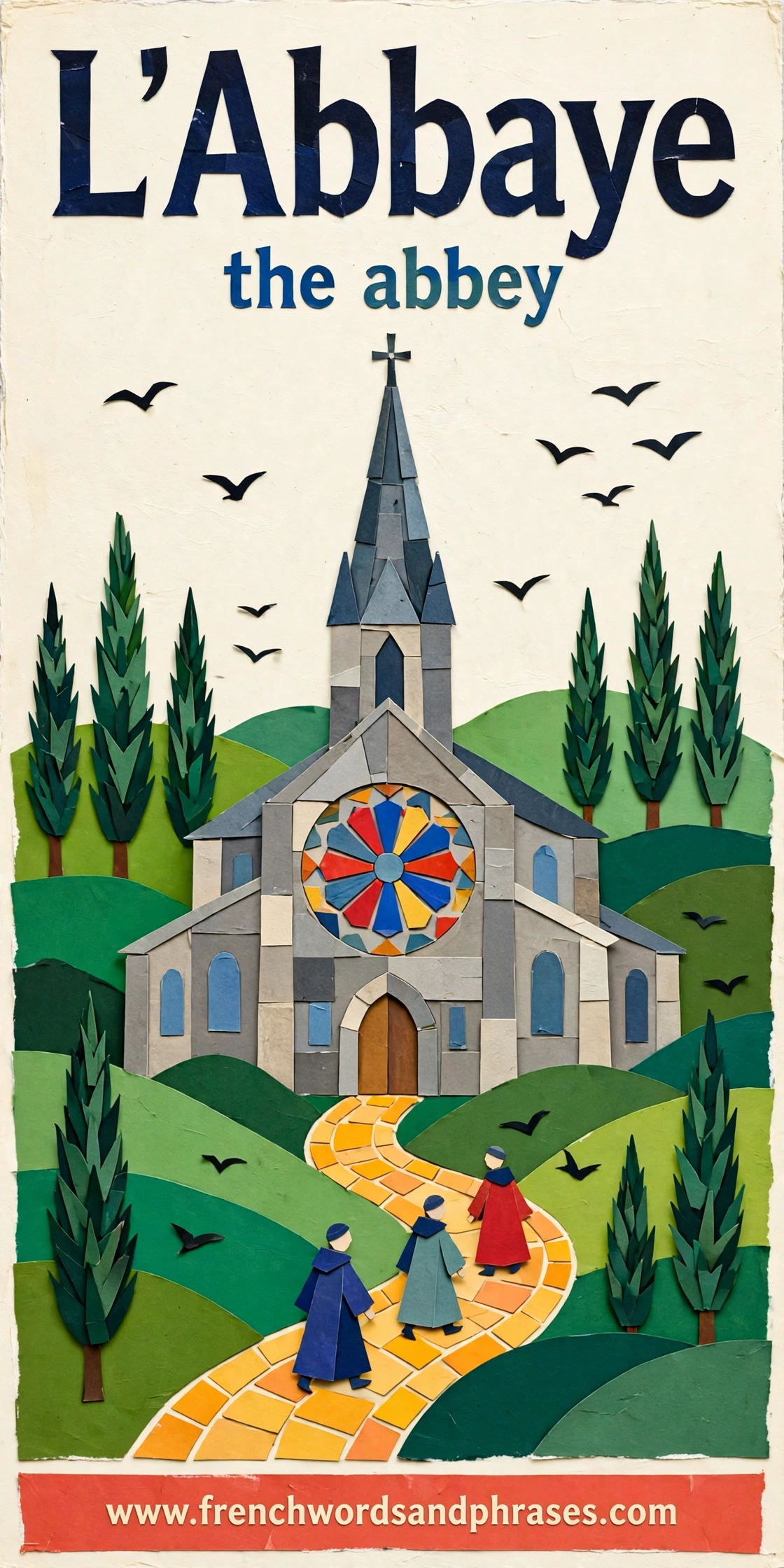
| l’abbaye | the abbey |
| les moines | the monks |
| l’abbesse | the abbess |
| le monastère | the monastery |
| le prieur | the prior, the abbot’s deputy |
| la messe | Mass |
Example
L’abbé réunit les moines chaque matin dans la salle du chapitre.
The abbot gathers the monks every morning in the chapter house.
Quick Quiz 1
Complete the sentence:
______ Pierre a fondé Emmaus en 1949.
Reveal the answer
L’abbé
L’abbé Pierre a fondé Emmaus en 1949.
Father Pierre founded Emmaus in 1949 — the most famous abbé of modern France, a priest, not a monk.
The Plural of Abbé
Abbé adds an -s in the plural — les abbés.
| Number | French |
|---|---|
| Singular | l’abbé |
| Plural | les abbés |
Example
Les abbés de la région se réunissent une fois par an.
The abbots (and priests) of the region meet once a year.
Abbé with Possessive Adjectives (Mon, Ton, Son…)
Possessives agree with the noun: abbé is masculine, so it takes mon, ton, son.
| Owner | French |
|---|---|
| my | mon abbé |
| your (tu) | ton abbé |
| his / her | son abbé |
| our | notre abbé |
| your (vous) | votre abbé |
| their | leur abbé |
Example
Notre abbé connaît chaque moine par son prénom.
Our abbot knows every monk by his first name.
Quick Quiz 2
Complete the sentence:
______ abbé célèbre la messe de Noël. (Their)
Reveal the answer
Leur
Leur abbé célèbre la messe de Noël.
Their priest is celebrating the Christmas Mass.
Abbé with Demonstrative Adjectives (Cet, Ces)
Used to point: cet abbé — cet, not ce, because the word begins with a vowel.
| Form | French |
|---|---|
| Masculine singular | cet abbé |
| Plural | ces abbés |
Example
Cet abbé a écrit plusieurs livres d’histoire.
This abbot has written several history books.
Abbé with Adjectives
Old, young, learned — the adjectives an abbé collects.
| Adjective | With Abbé |
|---|---|
| vieux (old) | un vieil abbé |
| jeune (young) | un jeune abbé |
| célèbre (famous) | un abbé célèbre |
| érudit (learned) | un abbé érudit |
| nouveau (new) | un nouvel abbé |
Example
Un vieil abbé racontait l’histoire de l’abbaye aux enfants.
An old abbot used to tell the children the abbey’s story.
Quick Quiz 3
Complete the sentence:
C’est un abbé très ______, il connaît toute l’histoire de la région. (learned)
Reveal the answer
érudit
C’est un abbé très érudit, il connaît toute l’histoire de la région.
He is a very learned abbot; he knows the whole history of the region.
Everyday Expressions with Abbé
Titles, elections and one national hero — the abbé phrases of French life.
| Expression | In English |
|---|---|
| Monsieur l’abbé | Father (respectful address to a priest) |
| l’abbé Pierre | Father Pierre, founder of Emmaus |
| le père abbé | the Father Abbot |
| élire un abbé | to elect an abbot |
| l’abbé du monastère | the abbot of the monastery |
| dire la messe | to say Mass |
Example
« Bonjour, Monsieur l’abbé », dit-elle en entrant dans l’église.
“Good morning, Father,” she says, entering the church.
Words from the Same Family as Abbé
The abba family — father, house, office and counterpart.
| French | In English |
|---|---|
| l’abbaye | the abbey |
| l’abbesse | the abbess |
| l’abbatiat | the abbacy, the term of office |
| abbatial | abbatial, relating to an abbey or abbot |
| le monastère | the monastery |
| le moine | the monk |
Example
Après la mort de l’abbé, les moines en élisent un nouveau.
After the abbot’s death, the monks elect a new one.
Quick Quiz 4
Was the abbé Pierre the abbot of a monastery?
Reveal the answer
No — he was a priest; abbé is also the everyday title for a priest.
L’abbé Pierre a consacré sa vie aux sans-abri.
Father Pierre devoted his life to the homeless.
Abbé in Everyday French: Real-Life Examples
Now that you know the word, let’s see how abbé appears in everyday French.
Example 1 — At the abbey gate
L’abbé accueille les pèlerins avec un sourire.
The abbot welcomes the pilgrims with a smile.
Example 2 — A respectful greeting
Bonjour, Monsieur l’abbé, comment allez-vous ?
Good morning, Father, how are you?
Example 3 — An election
Les moines élisent leur nouvel abbé demain.
The monks elect their new abbot tomorrow.
Example 4 — A famous name
L’abbé Pierre reste une figure aimée des Français.
Father Pierre remains a beloved figure for the French.
Example 5 — At the parish
L’abbé Martin célèbre le mariage de samedi.
Father Martin is celebrating Saturday’s wedding.
Example 6 — A learned man
Cet abbé a traduit des manuscrits anciens.
This abbot has translated ancient manuscripts.
Beyond Translation: The Meaning of Abbé
Abbé carries its meaning in its root: abba, father — the word Jesus used, carried through Latin into French. The Church made it an office; France made it a household word. Villages that had not seen a monk in centuries still called their priest l’abbé, and when the abbé Pierre thundered on the radio in the winter of 1954 for the homeless, a whole country heard the title and understood it at once.
To say abbé is to say father — of a monastery, or simply of a parish.
It evokes the cloister and the village square alike: the elected ruler of monks, and the familiar figure in the black soutane crossing the market with his breviary.
How to Remember the French Noun Abbé
Remember it this way: Abbé is the abbot — from abba, father; and in everyday French, the title of any priest: Monsieur l’abbé.
- You hear the root — abba, father: the abbé is the father of the house.
- You see the house — the abbé heads l’abbaye, his name runs through the family.
- You greet the priest — « Bonjour, Monsieur l’abbé », abbé or not.
The key idea is l’abbé — the father of the abbey.
Test Your Knowledge of Abbé
Let’s see how much you’ve learned. Try answering these questions before revealing the answers.
Question 1
What are the two uses of abbé?
Reveal the answer
The abbot who heads an abbey — and the respectful title for any priest, Monsieur l’abbé.
Question 2
What is the feminine counterpart of abbé?
Reveal the answer
Abbesse — the abbess, a different word for the woman who heads a community of nuns.
Question 3
Translate: The abbot welcomes the visitors.
Reveal the answer
L’abbé accueille les visiteurs.
Question 4
What does the root abba mean?
Reveal the answer
Father — the abbé is the father of his community.
Question 5
Complete the sentence:
______ abbé travaille dans cette paroisse depuis dix ans. (This)
Reveal the answer
Cet
Cet abbé travaille dans cette paroisse depuis dix ans.
This priest has worked in this parish for ten years — cet, because abbé begins with a vowel.
Your Final Challenge
Can You Use It?
How would you say this in French?
“The abbot welcomes the pilgrims at the abbey gate.”
Reveal the answer
L’abbé accueille les pèlerins à la porte de l’abbaye.
The abbot welcomes the pilgrims at the abbey gate.
A little French. A little curiosity. A richer everyday life.
LEARN FRENCH ONE WORD AT A TIME