A French Word to Live By
Translate Abandon to English
/a.bɑ̃.dɔ̃/
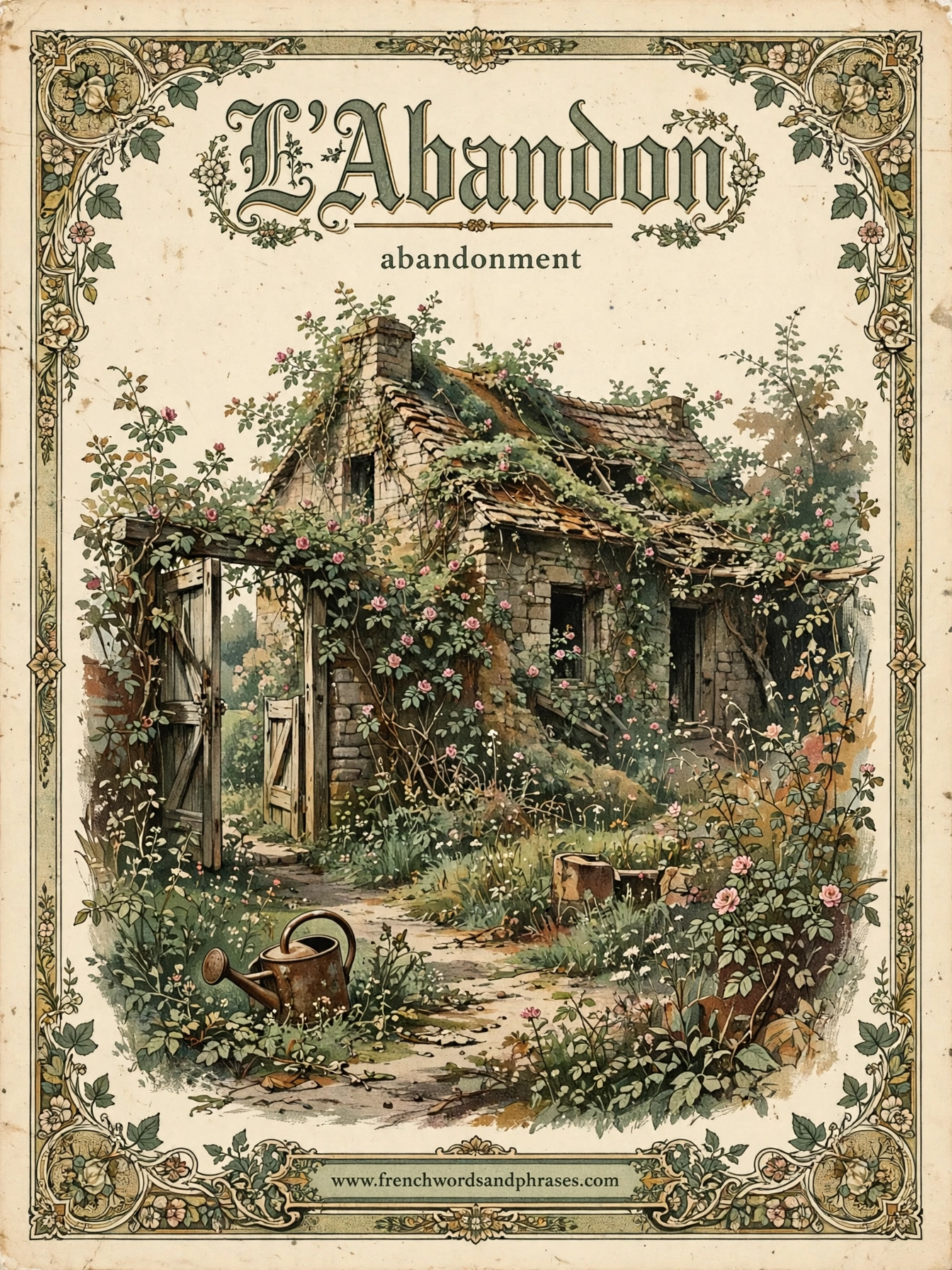
L’abandon means abandonment.
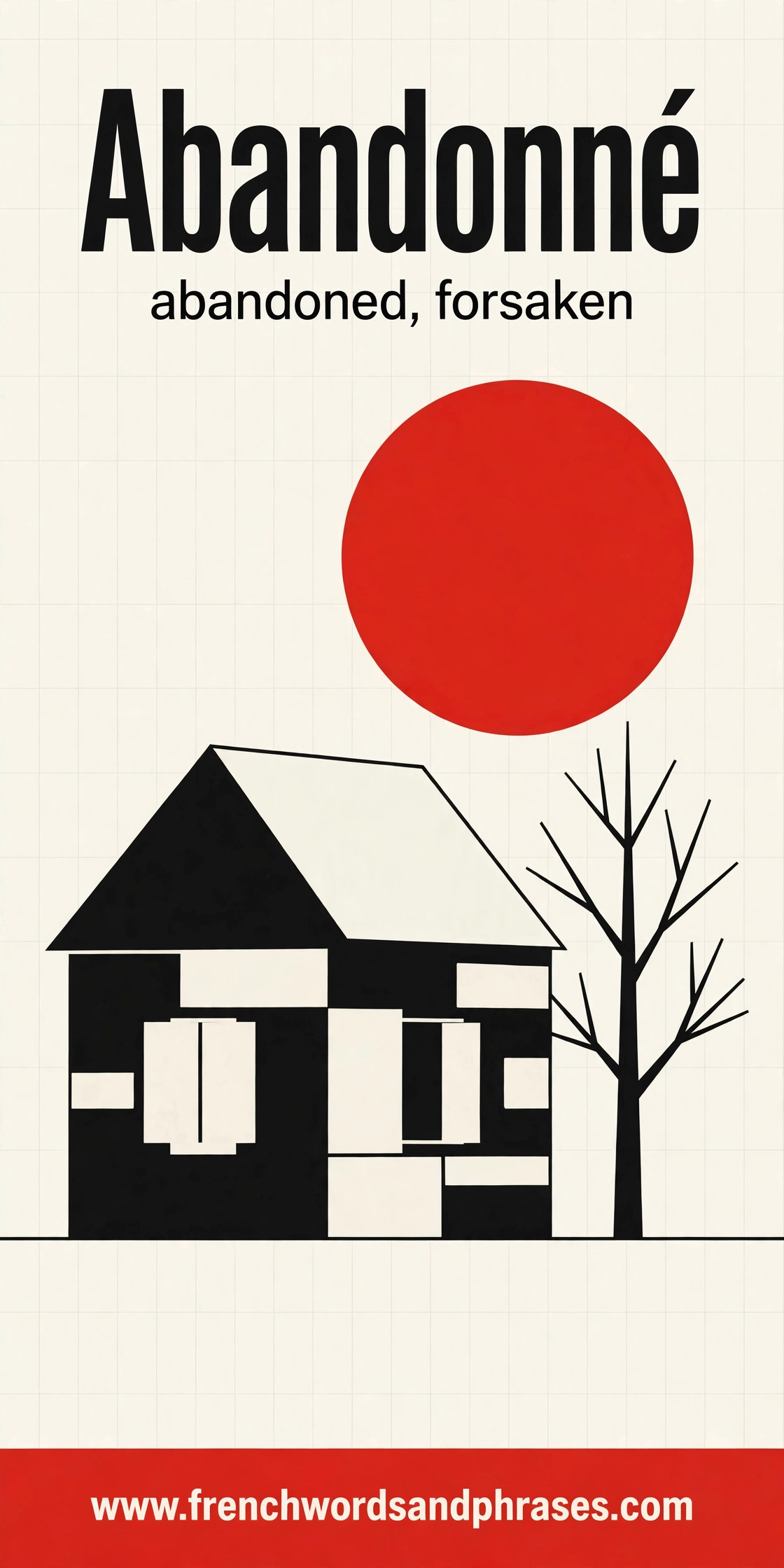
At the edge of the village stands a house with shutters closed and roses run wild — nobody has opened its door for twenty years. Its state has a name: l’abandon.
In this guide, you’ll learn what abandon means in English, how to use it with its articles, how to form its plural, and how it appears in everyday French. Explore French examples, English translations, and practice quizzes.
Understanding the French Noun Abandon
Abandon is a masculine French noun, learned with its article: l’abandon, un abandon — vowel start, so le becomes l’. It is the noun of the verb abandonner, and it carries both the act of leaving and the state of being left.
It means abandonment — the act of giving something or someone up, or the neglected state that follows: l’abandon d’un projet, un chien victime d’abandon. It also lives in two phrases that soften it: à l’abandon, neglected, left to fall apart, and avec abandon, with abandon — freely, whole-heartedly, without holding back.
Gender: Masculine
Definite article: l’ — l’abandon (abandonment)
Indefinite article: un — un abandon (an act of abandonment)
Plural: les abandons
Key phrases: à l’abandon — neglected; avec abandon — with abandon, freely
English equivalents: Abandonment, desertion; abandon (in « with abandon »).
One important usage detail: abandon very often appears inside fixed phrases rather than alone. A house is à l’abandon, a dancer dances avec abandon, and every summer the news reports les abandons d’animaux — pets abandoned on the road to the holidays, a subject France takes seriously.
Experience the Word
Abandon is a word with two faces. One is sad: the empty house, the dog at the shelter, the project folder nobody opens. The other is almost joyful: to speak avec abandon is to speak without guard, to dance avec abandon is to stop counting the steps.
Imagine the old house again — then imagine its opposite: a grandmother telling stories avec abandon, laughing too loudly, giving everything away.
The same word holds both. Abandon is what is left behind — and the freedom of letting go.
How to Use Abandon in French: Complete Guide
Let’s explore how abandon works in French, beginning with its articles — l’abandon, with l’ for the vowel start.
Abandon with the Definite Article (L’, Les)
Abandon begins with a vowel, so le shrinks to l’ in the singular.
| Form | French |
|---|---|
| Singular | l’abandon |
| Plural | les abandons |
Example
L’abandon de la maison date de vingt ans.
The abandonment of the house dates back twenty years.
Abandon with the Indefinite Article (Un, Des)
Used for an act of abandonment in general — un abandon, des abandons.
| Form | French |
|---|---|
| Singular | un abandon |
| Plural | des abandons |
Example
Chaque été, les refuges dénoncent des abandons d’animaux.
Every summer, shelters denounce cases of abandoned animals.
Words of Leaving and Letting Go
Empty houses and open hearts — the vocabulary that surrounds the abandon.
| French | In English |
|---|---|
| abandonner | to abandon, to give up |
| déserter | to desert |
| la ruine | the ruin |
| négliger | to neglect |
| le refuge | the shelter, the refuge |
| laisser tomber | to drop, to let down (informal) |
Example
Après l’abandon, la maison tombe en ruine.
After its abandonment, the house is falling into ruin.
Quick Quiz 1
Complete the sentence:
Le jardin est ______ : personne ne s’en occupe. (neglected)
Reveal the answer
à l’abandon
Le jardin est à l’abandon : personne ne s’en occupe.
The garden is neglected: nobody looks after it.
The Plural of Abandon
Abandon adds an -s in the plural — les abandons, usually acts counted one by one.
| Number | French |
|---|---|
| Singular | l’abandon |
| Plural | les abandons |
Example
Les abandons de chiens augmentent avant les vacances.
Abandonments of dogs increase before the holidays.
Abandon with Possessive Adjectives (Mon, Ton, Son…)
Possessives agree with the noun — abandon is masculine, so it takes mon, ton, son.
| Owner | French |
|---|---|
| my | mon abandon |
| your (tu) | ton abandon |
| his / her | son abandon |
| our | notre abandon |
| your (vous) | votre abandon |
| their | leur abandon |
Example
Son abandon du projet a surpris toute l’équipe.
His abandonment of the project surprised the whole team.
Quick Quiz 2
Complete the sentence:
Elle raconte ses souvenirs ______ abandon. (with, freely)
Reveal the answer
avec
Elle raconte ses souvenirs avec abandon.
She tells her memories with abandon — freely, without holding back.
Abandon with Demonstrative Adjectives (Cet, Ces)
Used to point: cet abandon — cet, not ce, because of the vowel start.
| Form | French |
|---|---|
| Singular | cet abandon |
| Plural | ces abandons |
Example
Cet abandon de poste lui a coûté son emploi.
This desertion of his post cost him his job.
Abandon with Adjectives
Adjectives agree with abandon: masculine singular, -s in the plural.
| Adjective | With Abandon |
|---|---|
| total (total) | un abandon total |
| volontaire (voluntary) | un abandon volontaire |
| triste (sad) | un triste abandon |
| complet (complete) | un abandon complet |
| définitif (final) | un abandon définitif |
Example
L’abandon total du village date des années soixante.
The total abandonment of the village dates from the sixties.
Quick Quiz 3
Complete the sentence:
______ abandon d’animaux est puni par la loi. (This)
Reveal the answer
Cet
Cet abandon d’animaux est puni par la loi.
This abandonment of animals is punished by law.
Everyday Expressions with Abandon
Neglect and freedom — the abandon phrases of daily life.
| Expression | In English |
|---|---|
| à l’abandon | neglected, left to fall apart |
| avec abandon | with abandon, freely, whole-heartedly |
| l’abandon d’un projet | the abandonment of a project |
| un abandon de poste | desertion of one’s post |
| les abandons d’animaux | abandoned pets, pet abandonment |
| en état d’abandon | in a state of neglect |
Example
La vieille école est à l’abandon depuis dix ans.
The old school has been neglected for ten years.
Words from the Same Family as Abandon
Leaving, giving up and letting go — the words that travel with abandon.
| French | In English |
|---|---|
| abandonner | to abandon, to give up |
| abandonné | abandoned, deserted |
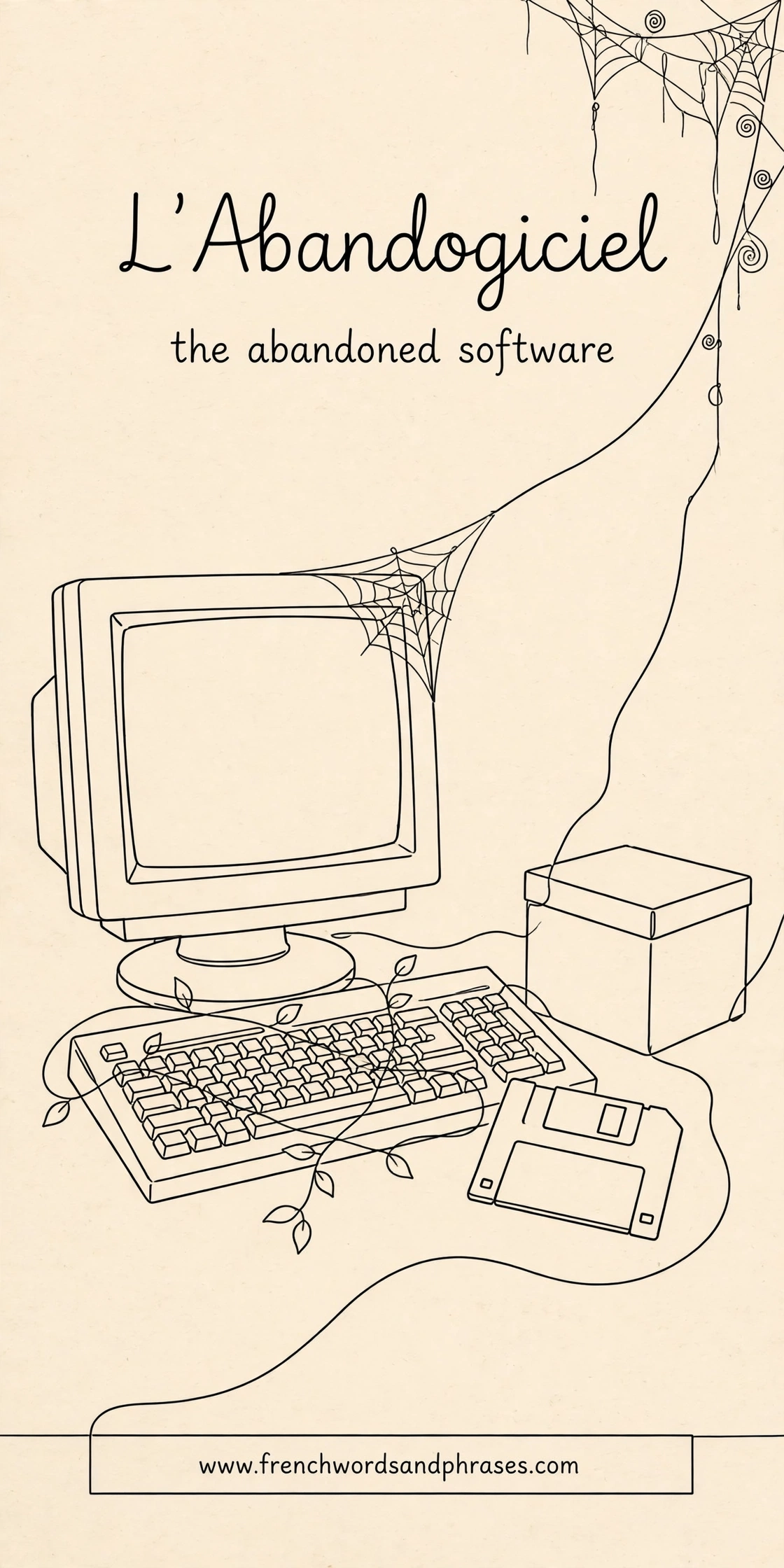
| l’abandogiciel | abandonware |
| renoncer | to renounce, to give up |
| quitter | to leave |
| la désertion | desertion |
Example
Un lieu abandonné est un lieu en état d’abandon.
An abandoned place is a place in a state of abandonment.
Quick Quiz 4
What does à l’abandon mean?
Reveal the answer
Neglected, left to fall apart — the state of a place nobody looks after any more.
Le château est à l’abandon.
The castle has been left to fall apart.
Abandon in Everyday French: Real-Life Examples
Now that you know the word, let’s see how abandon appears in everyday French.
Example 1 — The old house
Cette maison est à l’abandon depuis des années.
This house has been neglected for years.
Example 2 — Summer news
Les abandons de chiens sont nombreux en juillet.
Abandonments of dogs are numerous in July.
Example 3 — At work
L’abandon du projet a déçu les clients.
The abandonment of the project disappointed the clients.
Example 4 — Speaking freely
Elle parle de son enfance avec abandon.
She talks about her childhood with abandon.
Example 5 — A deserted village
L’abandon du village date de la guerre.
The village’s abandonment dates from the war.
Example 6 — Dancing
Ils dansent avec un joyeux abandon.
They dance with a joyful abandon.
Beyond Translation: The Meaning of Abandon
Abandon is one of those words French shares almost unchanged with English, and both languages keep its double soul: desertion and freedom. French law knows the sad face — l’abandon d’animaux is an offence, l’abandon de poste a fault — while French literature loves the free one: s’abandonner, to let oneself go, is how saints, lovers and dancers are described. Between the empty house and the unguarded laugh, the word measures everything we release, for worse and for better.
To say abandon is to stand between what was left and what was set free.
It evokes shuttered houses and summer shelters — and a grandmother’s stories told avec abandon, too generous to stop.
How to Remember the French Noun Abandon
Remember it this way: Abandon is abandonment — the act of leaving, and the neglected state that follows; but avec abandon means freely, with your whole heart.
- You see the empty house — à l’abandon, neglected.
- You hear the free laughter — avec abandon, without holding back.
- You count the sad cases — les abandons d’animaux, every summer.
The key idea is l’abandon — à l’abandon (neglected), avec abandon (freely).
Test Your Knowledge of Abandon
Let’s see how much you’ve learned. Try answering these questions before revealing the answers.
Question 1
What does abandon mean?
Reveal the answer
Abandonment — the act of giving up or deserting, and the state of being left.
Question 2
Is abandon masculine or feminine?
Reveal the answer
Masculine — un abandon, l’abandon.
Question 3
Translate: The garden is neglected.
Reveal the answer
Le jardin est à l’abandon.
Question 4
What does avec abandon mean?
Reveal the answer
With abandon — freely, whole-heartedly, without holding back.
Question 5
Complete the sentence:
______ abandons d’animaux augmentent en été.
Reveal the answer
Les
Les abandons d’animaux augmentent en été.
Pet abandonments increase in summer.
Your Final Challenge
Can You Use It?
How would you say this in French?
“The old house has been neglected for twenty years.”
Reveal the answer
La vieille maison est à l’abandon depuis vingt ans.
The old house has been neglected for twenty years.
A little French. A little curiosity. A richer everyday life.
LEARN FRENCH ONE WORD AT A TIME