A French Word to Live By
How to Conjugate Déshydrogéner in French
/de.zi.dʁɔ.ʒe.ne/
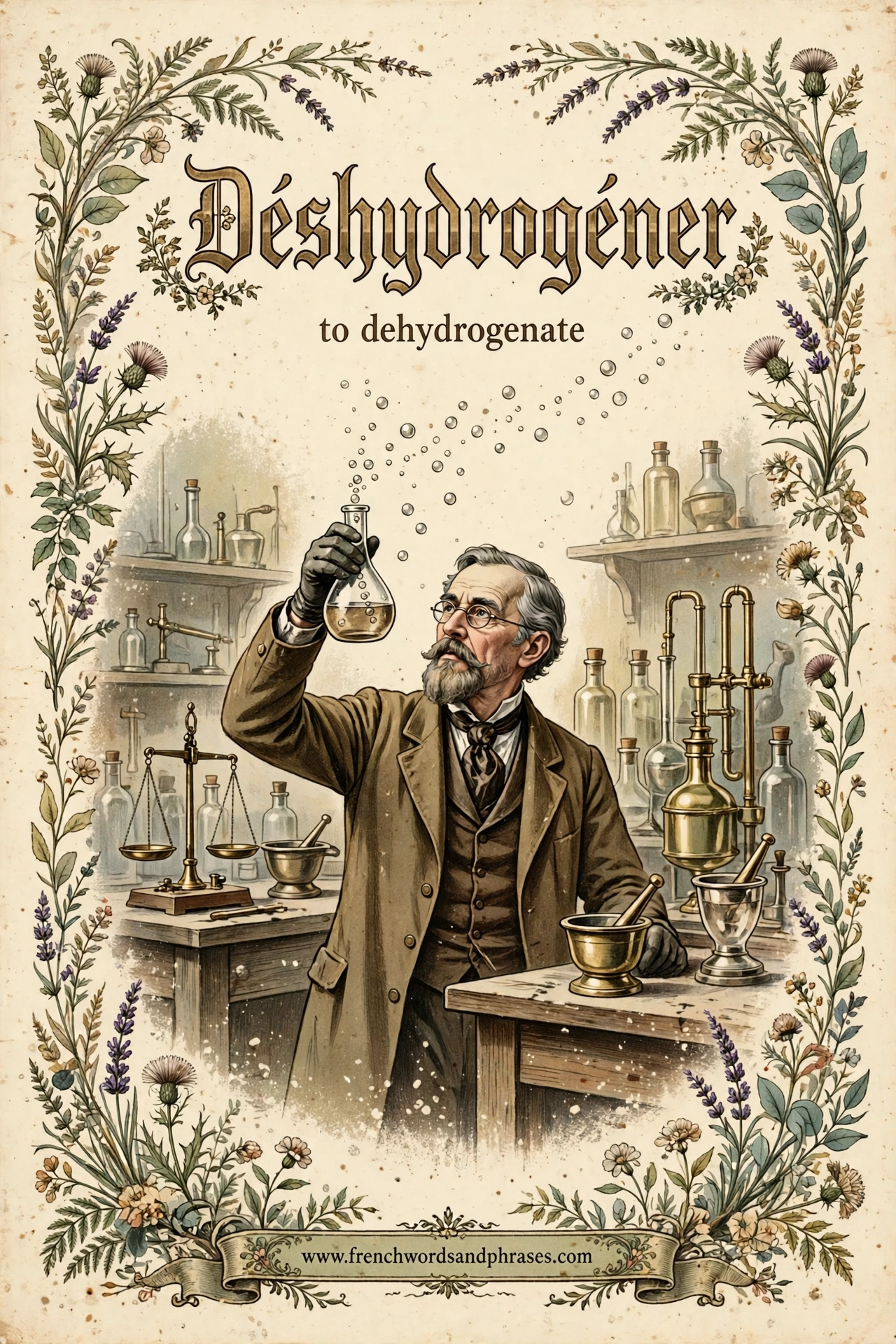
Déshydrogéner means to dehydrogenate — to strip hydrogen atoms out of a chemical compound, changing what the substance is and how it behaves.
In the refinery and the laboratory, molecules are rebuilt by removing pieces: take hydrogen away from an alcohol and an aldehyde appears — déshydrogéner is the chemist’s verb for that precise subtraction.
In this guide, you’ll learn how to conjugate déshydrogéner in all the major French tenses and moods. Explore complete conjugation tables, French examples, English translations, and practice quizzes.
Understanding the French Verb Déshydrogéner
Déshydrogéner is a regular French verb belonging to the first group of verbs, those ending in-er.
It means to dehydrogenate. It is a technical verb of chemistry and industry — used for turning alcohols into aldehydes, for refining petroleum and for making styrene and other feedstocks — and it lives in laboratories and process plants rather than in everyday conversation.
Verb classification: First group (-er)
Auxiliary verb: Avoir
Past participle: déshydrogéné
Present participle: déshydrogénant
English equivalents: To dehydrogenate; déshydrogéner un alcool — to dehydrogenate an alcohol; la déshydrogénation — dehydrogenation; un catalyseur de déshydrogénation — a dehydrogenation catalyst; hydrogéner — to hydrogenate, its opposite.
One important detail: déshydrogéner follows the céder-type spelling change — the é of the stem opens to è wherever the next syllable is mute: je déshydrogène, tu déshydrogènes, il déshydrogène, ils déshydrogènent, and through the future and conditional: je déshydrogènerai, je déshydrogènerais. The é stays wherever the ending is sounded: nous déshydrogénons, vous déshydrogénez, je déshydrogénais, and in the infinitive and participle, déshydrogéner, déshydrogéné. The word itself is a small chemistry lesson: dés- undoes hydrogéner, to add hydrogen.
Experience the Word
Déshydrogéner is the verb of the molecular subtraction — remove hydrogen, and a familiar substance quietly becomes another one.
Imagine a reactor vessel in a chemical plant at night. Inside, over a hot catalyst, ethanol molecules give up their hydrogen one pair of atoms at a time; what flows out is no longer alcohol but acetaldehyde, bound for plastics and resins. On déshydrogène, and chemistry moves one step along its chain.
Nothing was added, only taken away. The compound has been dehydrogenated — déshydrogéné — and it will never be the same molecule again.
How to Conjugate Déshydrogéner: Complete French Conjugation Guide
Let’s explore every major conjugation of déshydrogéner, beginning with the indicative mood.
How to Conjugate Déshydrogéner in the Indicative Mood
The indicative mood is used to express facts, observations, actions, and events.
How to Conjugate Déshydrogéner in the Present Tense (Présent)
Used for actions happening now, habitual actions, and general truths.
| Subject | Conjugation |
|---|---|
| je | déshydrogène |
| tu | déshydrogènes |
| il / elle | déshydrogène |
| nous | déshydrogénons |
| vous | déshydrogénez |
| ils / elles | déshydrogènent |
Example
Ce catalyseur déshydrogène l’éthanol à chaud.
This catalyst dehydrogenates ethanol when hot.
Quick Quiz 1
Complete the sentence:
Nous ______ le butane dans ce réacteur.
Reveal the answer
déshydrogénons
Nous déshydrogénons le butane dans ce réacteur.
We dehydrogenate the butane in this reactor — the é stays before a sounded ending.
How to Conjugate Déshydrogéner in the Passé Composé
Used for completed actions in the past. Déshydrogéner takes the auxiliary verb avoir.
| Subject | Conjugation |
|---|---|
| j’ | ai déshydrogéné |
| tu | as déshydrogéné |
| il / elle | a déshydrogéné |
| nous | avons déshydrogéné |
| vous | avez déshydrogéné |
| ils / elles | ont déshydrogéné |
Example
Le laboratoire a déshydrogéné l’alcool pour l’expérience.
The laboratory dehydrogenated the alcohol for the experiment.
How to Conjugate Déshydrogéner in the Imparfait (Imperfect Tense)
Used for habitual past actions, descriptions, and ongoing situations in the past.
| Subject | Conjugation |
|---|---|
| je | déshydrogénais |
| tu | déshydrogénais |
| il / elle | déshydrogénait |
| nous | déshydrogénions |
| vous | déshydrogéniez |
| ils / elles | déshydrogénaient |
Example
L’ancienne usine déshydrogénait le butane jour et nuit.
The old plant used to dehydrogenate butane day and night.
Quick Quiz 2
Choose the correct form:
The laboratory dehydrogenated the alcohol.
Le laboratoire ______ l’alcool. (a déshydrogéné / est déshydrogéné)
Reveal the answer
a déshydrogéné
Le laboratoire a déshydrogéné l’alcool.
Déshydrogéner takes avoir.
How to Conjugate Déshydrogéner in the Plus-que-parfait
Used to describe an action that had already been completed before another past event.
| Subject | Conjugation |
|---|---|
| j’ | avais déshydrogéné |
| tu | avais déshydrogéné |
| il / elle | avait déshydrogéné |
| nous | avions déshydrogéné |
| vous | aviez déshydrogéné |
| ils / elles | avaient déshydrogéné |
Example
Ils avaient déshydrogéné le propane avant l’étape suivante.
They had dehydrogenated the propane before the next step.
How to Conjugate Déshydrogéner in the Passé Simple
Primarily used in formal writing, literature, and historical narratives. It is rarely used in everyday conversation.
| Subject | Conjugation |
|---|---|
| je | déshydrogénai |
| tu | déshydrogénas |
| il / elle | déshydrogéna |
| nous | déshydrogénâmes |
| vous | déshydrogénâtes |
| ils / elles | déshydrogénèrent |
Example
Le procédé déshydrogéna les hydrocarbures en quelques minutes.
The process dehydrogenated the hydrocarbons in a few minutes.
How to Conjugate Déshydrogéner in the Passé Antérieur
A literary tense used to express an action completed immediately before another past action, generally in the passé simple.
| Subject | Conjugation |
|---|---|
| j’ | eus déshydrogéné |
| tu | eus déshydrogéné |
| il / elle | eut déshydrogéné |
| nous | eûmes déshydrogéné |
| vous | eûtes déshydrogéné |
| ils / elles | eurent déshydrogéné |
Example
Quand le réacteur eut déshydrogéné tout le lot, on arrêta la machine.
When the reactor had dehydrogenated the whole batch, they stopped the machine.
How to Conjugate Déshydrogéner in the Future Tense (Futur Simple)
Used to describe actions that will take place in the future.
| Subject | Conjugation |
|---|---|
| je | déshydrogènerai |
| tu | déshydrogèneras |
| il / elle | déshydrogènera |
| nous | déshydrogènerons |
| vous | déshydrogènerez |
| ils / elles | déshydrogèneront |
Example
La nouvelle unité déshydrogènera le propane sur place.
The new unit will dehydrogenate the propane on site.
How to Conjugate Déshydrogéner in the Futur Antérieur (Future Perfect)
Used for an action that will have been completed before a particular point in the future.
| Subject | Conjugation |
|---|---|
| j’ | aurai déshydrogéné |
| tu | auras déshydrogéné |
| il / elle | aura déshydrogéné |
| nous | aurons déshydrogéné |
| vous | aurez déshydrogéné |
| ils / elles | auront déshydrogéné |
Example
À minuit, le catalyseur aura déshydrogéné dix tonnes de butane.
By midnight, the catalyst will have dehydrogenated ten tonnes of butane.
How to Conjugate Déshydrogéner in the Near Future (Futur Proche)
Used to describe something that is going to happen soon. Formed with aller + infinitive.
| Subject | Conjugation |
|---|---|
| je | vais déshydrogéner |
| tu | vas déshydrogéner |
| il / elle | va déshydrogéner |
| nous | allons déshydrogéner |
| vous | allez déshydrogéner |
| ils / elles | vont déshydrogéner |
Example
Attention, la réaction va déshydrogéner le mélange.
Careful, the reaction is going to dehydrogenate the mixture.
How to Conjugate Déshydrogéner in the Conditional Mood
The conditional mood expresses what would happen under certain circumstances. It is also frequently used to make polite requests or express wishes.
How to Conjugate Déshydrogéner in the Present Conditional
| Subject | Conjugation |
|---|---|
| je | déshydrogènerais |
| tu | déshydrogènerais |
| il / elle | déshydrogènerait |
| nous | déshydrogènerions |
| vous | déshydrogèneriez |
| ils / elles | déshydrogèneraient |
Example
À plus haute température, le catalyseur déshydrogènerait plus vite.
At a higher temperature, the catalyst would dehydrogenate faster.
How to Conjugate Déshydrogéner in the Past Conditional
| Subject | Conjugation |
|---|---|
| j’ | aurais déshydrogéné |
| tu | aurais déshydrogéné |
| il / elle | aurait déshydrogéné |
| nous | aurions déshydrogéné |
| vous | auriez déshydrogéné |
| ils / elles | auraient déshydrogéné |
Example
Sans catalyseur, le procédé aurait déshydrogéné bien moins de matière.
Without a catalyst, the process would have dehydrogenated far less material.
Déshydrogéner in the Literary Past Conditional Form
This less common literary form uses the imperfect subjunctive of avoir.
| Subject | Conjugation |
|---|---|
| j’ | eusse déshydrogéné |
| tu | eusses déshydrogéné |
| il / elle | eût déshydrogéné |
| nous | eussions déshydrogéné |
| vous | eussiez déshydrogéné |
| ils / elles | eussent déshydrogéné |
Example
Le four eût déshydrogéné le lot entier sans la panne.
The furnace would have dehydrogenated the whole batch without the breakdown.
How to Conjugate Déshydrogéner in the Subjunctive Mood
The subjunctive is used to express wishes, emotions, doubts, necessity, and uncertainty. It frequently follows expressions such as il faut que (it is necessary that) or bien que (although).
How to Conjugate Déshydrogéner in the Present Subjunctive
| Subject | Conjugation |
|---|---|
| que je | déshydrogène |
| que tu | déshydrogènes |
| qu’il / qu’elle | déshydrogène |
| que nous | déshydrogénions |
| que vous | déshydrogéniez |
| qu’ils / qu’elles | déshydrogènent |
Example
Il faut que le réacteur déshydrogène l’alcool lentement.
The reactor must dehydrogenate the alcohol slowly.
Quick Quiz 3
Complete the sentence using the subjunctive:
Il faut que tu ______ l’échantillon lentement.
Reveal the answer
déshydrogènes
Il faut que tu déshydrogènes l’échantillon lentement.
You must dehydrogenate the sample slowly.
How to Conjugate Déshydrogéner in the Imperfect Subjunctive
A literary tense, rarely encountered in modern spoken French.
| Subject | Conjugation |
|---|---|
| que je | déshydrogénasse |
| que tu | déshydrogénasses |
| qu’il / qu’elle | déshydrogénât |
| que nous | déshydrogénassions |
| que vous | déshydrogénassiez |
| qu’ils / qu’elles | déshydrogénassent |
Example
On voulait que l’usine déshydrogénât le propane sur place.
They wanted the plant to dehydrogenate the propane on site.
How to Conjugate Déshydrogéner in the Pluperfect Subjunctive
A literary construction used to express an action completed before another past action.
| Subject | Conjugation |
|---|---|
| que j’ | eusse déshydrogéné |
| que tu | eusses déshydrogéné |
| qu’il / qu’elle | eût déshydrogéné |
| que nous | eussions déshydrogéné |
| que vous | eussiez déshydrogéné |
| qu’ils / qu’elles | eussent déshydrogéné |
Example
On vérifia que le catalyseur eût déshydrogéné tout le mélange.
They checked that the catalyst had dehydrogenated the whole mixture.
How to Conjugate Déshydrogéner in the Past Subjunctive
| Subject | Conjugation |
|---|---|
| que j’ | aie déshydrogéné |
| que tu | aies déshydrogéné |
| qu’il / qu’elle | ait déshydrogéné |
| que nous | ayons déshydrogéné |
| que vous | ayez déshydrogéné |
| qu’ils / qu’elles | aient déshydrogéné |
Example
Je suis content que le laboratoire ait déshydrogéné l’échantillon.
I am glad the laboratory dehydrogenated the sample.
How to Conjugate Déshydrogéner in the Imperative
The imperative is used to give commands, instructions, invitations, or suggestions. Subject pronouns are omitted.
How to Conjugate Déshydrogéner in the Present Imperative
| Person | Conjugation |
|---|---|
| (tu) | déshydrogène |
| (nous) | déshydrogénons |
| (vous) | déshydrogénez |
Example
Déshydrogénez le butane avant de le refroidir !
Dehydrogenate the butane before cooling it!
Quick Quiz 4
How would you say Dehydrogenate the sample carefully (tu form)?
Reveal the answer
Déshydrogène l’échantillon avec prudence !
French Participles of Déshydrogéner
Participles are verb forms that can be used in compound tenses and other grammatical constructions.
Present Participle of Déshydrogéner
déshydrogénant
En déshydrogénant l’éthanol, on obtient un aldéhyde.
By dehydrogenating ethanol, you obtain an aldehyde.
Past Participle of Déshydrogéner
déshydrogéné
Déshydrogéné sur catalyseur chaud, le propane devient du propylène.
Dehydrogenated over a hot catalyst, propane becomes propylene.
Déshydrogéner in Everyday French: Real-Life Examples
Now that you know the conjugations, let’s see how déshydrogéner appears in everyday French.
Example 1 — Present
Le catalyseur déshydrogène l’éthanol.
The catalyst dehydrogenates the ethanol.
Example 2 — Passé composé
Le laboratoire a déshydrogéné l’alcool.
The laboratory dehydrogenated the alcohol.
Example 3 — Imparfait
L’usine déshydrogénait le butane.
The plant used to dehydrogenate butane.
Example 4 — Future
La nouvelle unité déshydrogènera le propane.
The new unit will dehydrogenate the propane.
Example 5 — Conditional
Le catalyseur déshydrogènerait plus vite à chaud.
The catalyst would dehydrogenate faster when hot.
Example 6 — Imperative
Déshydrogène l’échantillon avec prudence !
Dehydrogenate the sample carefully!
Beyond Translation: The Meaning of Déshydrogéner
English dehydrogenate is the same word in a lab coat — both languages built it from hydrogen with the undoing prefix.
Its opposite runs the margarine factory.
Hydrogéner adds hydrogen — that is how liquid oils are hardened into spreads — while déshydrogéner takes hydrogen away, the first step toward plastics, rubbers and solvents.
How to Remember the French Verb Déshydrogéner
Remember it this way: Déshydrogéner is about the reactor at night — hydrogen leaves, a new molecule is born.
- Céder-type spelling: je déshydrogène with è, but nous déshydrogénons with é.
- Dés- undoes hydrogéner: hydrogéner adds hydrogen, déshydrogéner removes it.
- Regular endings otherwise: je déshydrogène, nous déshydrogénons, past participle déshydrogéné.
The key idea is the reactor at night — hydrogen leaves, a new molecule is born.
Test Your Knowledge of Déshydrogéner
Let’s see how much you’ve learned. Try answering these questions before revealing the answers.
Question 1
Why does je déshydrogène have a grave accent but nous déshydrogénons an acute one?
Reveal the answer
The céder-type rule — é becomes è before a mute syllable (je déshydrogène), and stays é where the ending is sounded (nous déshydrogénons).
Question 2
How do you say The catalyst dehydrogenates the ethanol in French?
Reveal the answer
Le catalyseur déshydrogène l’éthanol.
Question 3
Translate: The laboratory dehydrogenated the alcohol.
Reveal the answer
Le laboratoire a déshydrogéné l’alcool.
Question 4
What is the past participle of déshydrogéner?
Reveal the answer
Déshydrogéné.
Question 5
Complete the sentence:
Il faut que le réacteur ______ l’alcool lentement.
Reveal the answer
déshydrogène
Il faut que le réacteur déshydrogène l’alcool lentement.
The reactor must dehydrogenate the alcohol slowly.
Your Final Challenge
Can You Use It?
How would you say this in French?
By dehydrogenating propane, the plant prepares the raw material of a thousand everyday objects.
Reveal the answer
En déshydrogénant le propane, l’usine prépare la matière première de mille objets du quotidien.
By dehydrogenating propane, the plant prepares the raw material of a thousand everyday objects.
A little French. A little curiosity. A richer everyday life.
LEARN FRENCH ONE WORD AT A TIME