A French Word to Live By
How to Conjugate Désigner in French
/de.zi.ɲe/
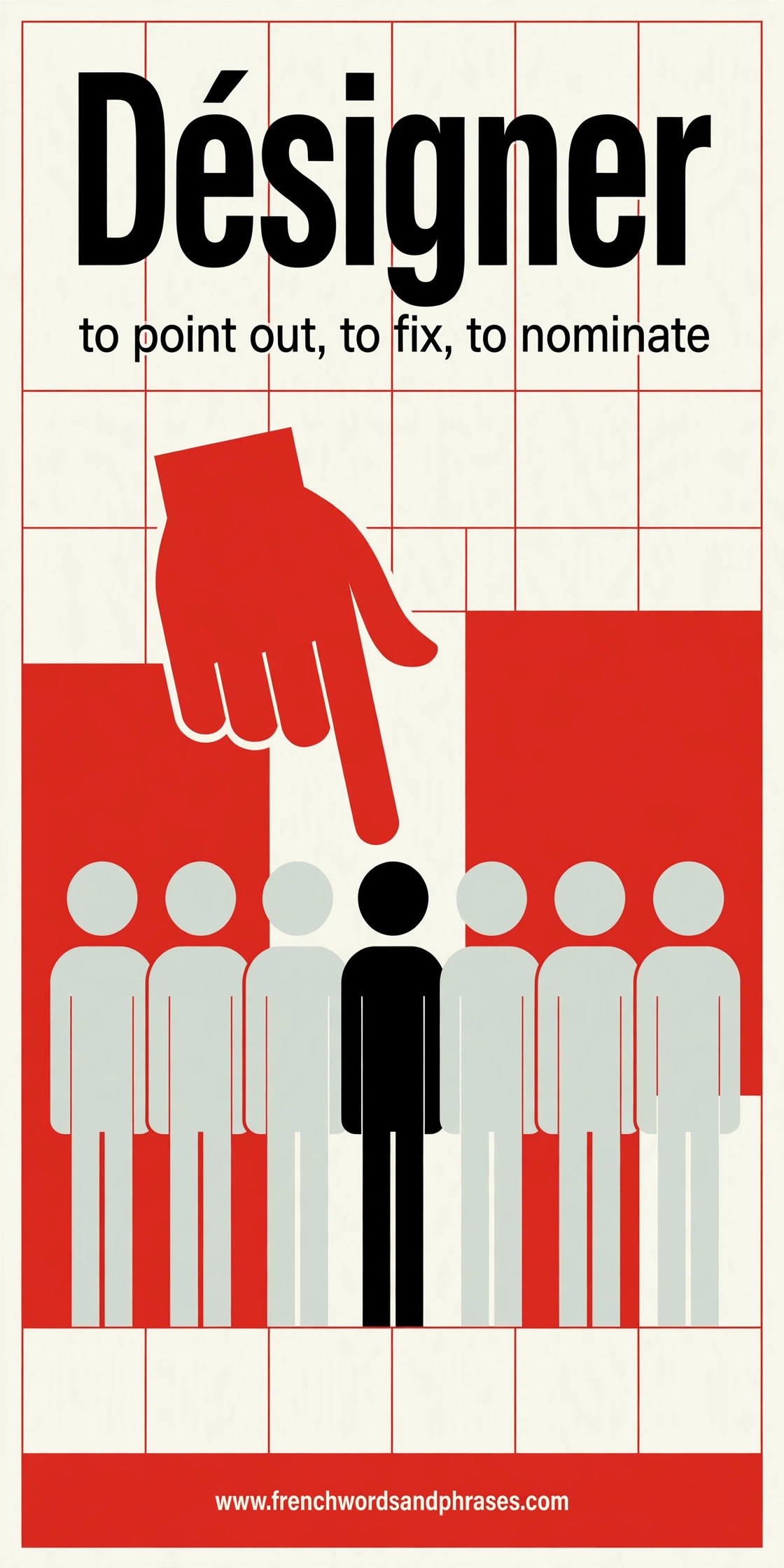
Désigner means to point out, to fix, to nominate — to single someone or something out from the crowd and name them for a role, a moment or a fate.
A finger rising in a classroom, a committee naming its new president, a calendar fixing the day of the meeting — désigner is the verb of choosing by pointing: this one, here, now.
In this guide, you’ll learn how to conjugate désigner in all the major French tenses and moods. Explore complete conjugation tables, French examples, English translations, and practice quizzes.
Understanding the French Verb Désigner
Désigner is a regular French verb belonging to the first group of verbs, those ending in-er.
It means to point out, to fix, to nominate. It covers three close acts: pointing at a person or thing, appointing someone to a role or task, and fixing a date, a place or a price — committees, captains, juries and calendars all désignent.
Verb classification: First group (-er)
Auxiliary verb: Avoir
Past participle: désigné
Present participle: désignant
English equivalents: To point out, to designate, to appoint; désigner quelqu’un du doigt — to point at someone; désigner un successeur — to name a successor; désigner le coupable — to identify the culprit; être désigné pour un poste — to be appointed to a post; désigner une date — to fix a date.
Two traps live here. First, the sound: the gn of désigner is the gn of agneau — a single soft sound, and the verb is a regular -er built on it: je désigne, nous désignons, past participle désigné. Second, the false friends: désigner does not mean to draw — that is dessiner, with two s and a different sound — and an English designer is un créateur or un styliste in French, not a person who designates. When someone is chosen, French says il a été désigné — he was appointed.
Experience the Word
Désigner is the verb of the raised finger — out of everyone in the room, it lands on one.
Imagine a village council on a rainy evening. The mayor looks around the table, the room goes quiet, and every eye follows his hand as it rises: il désigne le nouveau trésorier. One gesture, and a neighbour has become an official.
No vote, no speech, just a finger and a name. He has been designated — désigné — and the village knows it.
How to Conjugate Désigner: Complete French Conjugation Guide
Let’s explore every major conjugation of désigner, beginning with the indicative mood.
How to Conjugate Désigner in the Indicative Mood
The indicative mood is used to express facts, observations, actions, and events.
How to Conjugate Désigner in the Present Tense (Présent)
Used for actions happening now, habitual actions, and general truths.
| Subject | Conjugation |
|---|---|
| je | désigne |
| tu | désignes |
| il / elle | désigne |
| nous | désignons |
| vous | désignez |
| ils / elles | désignent |
Example
Le professeur désigne un élève au hasard.
The teacher picks out a pupil at random.
Quick Quiz 1
Complete the sentence:
Nous ______ un volontaire pour fermer la salle.
Reveal the answer
désignons
Nous désignons un volontaire pour fermer la salle.
We are appointing a volunteer to lock up the hall.
How to Conjugate Désigner in the Passé Composé
Used for completed actions in the past. Désigner takes the auxiliary verb avoir.
| Subject | Conjugation |
|---|---|
| j’ | ai désigné |
| tu | as désigné |
| il / elle | a désigné |
| nous | avons désigné |
| vous | avez désigné |
| ils / elles | ont désigné |
Example
Le jury a désigné le vainqueur à l’unanimité.
The jury named the winner unanimously.
How to Conjugate Désigner in the Imparfait (Imperfect Tense)
Used for habitual past actions, descriptions, and ongoing situations in the past.
| Subject | Conjugation |
|---|---|
| je | désignais |
| tu | désignais |
| il / elle | désignait |
| nous | désignions |
| vous | désigniez |
| ils / elles | désignaient |
Example
On désignait le capitaine avant chaque match.
They used to appoint the captain before every match.
Quick Quiz 2
Choose the correct form:
The jury named the winner.
Le jury ______ le vainqueur. (a désigné / a dessiné)
Reveal the answer
a désigné
Le jury a désigné le vainqueur.
Désigner appoints; dessiner would mean the jury drew him.
How to Conjugate Désigner in the Plus-que-parfait
Used to describe an action that had already been completed before another past event.
| Subject | Conjugation |
|---|---|
| j’ | avais désigné |
| tu | avais désigné |
| il / elle | avait désigné |
| nous | avions désigné |
| vous | aviez désigné |
| ils / elles | avaient désigné |
Example
Le roi avait désigné son successeur depuis longtemps.
The king had named his successor long before.
How to Conjugate Désigner in the Passé Simple
Primarily used in formal writing, literature, and historical narratives. It is rarely used in everyday conversation.
| Subject | Conjugation |
|---|---|
| je | désignai |
| tu | désignas |
| il / elle | désigna |
| nous | désignâmes |
| vous | désignâtes |
| ils / elles | désignèrent |
Example
L’assemblée désigna un nouveau président.
The assembly appointed a new president.
How to Conjugate Désigner in the Passé Antérieur
A literary tense used to express an action completed immediately before another past action, generally in the passé simple.
| Subject | Conjugation |
|---|---|
| j’ | eus désigné |
| tu | eus désigné |
| il / elle | eut désigné |
| nous | eûmes désigné |
| vous | eûtes désigné |
| ils / elles | eurent désigné |
Example
Quand le comité eut désigné les membres, la séance fut levée.
When the committee had appointed the members, the meeting was adjourned.
How to Conjugate Désigner in the Future Tense (Futur Simple)
Used to describe actions that will take place in the future.
| Subject | Conjugation |
|---|---|
| je | désignerai |
| tu | désigneras |
| il / elle | désignera |
| nous | désignerons |
| vous | désignerez |
| ils / elles | désigneront |
Example
Demain, le directeur désignera son adjoint.
Tomorrow, the director will name his deputy.
How to Conjugate Désigner in the Futur Antérieur (Future Perfect)
Used for an action that will have been completed before a particular point in the future.
| Subject | Conjugation |
|---|---|
| j’ | aurai désigné |
| tu | auras désigné |
| il / elle | aura désigné |
| nous | aurons désigné |
| vous | aurez désigné |
| ils / elles | auront désigné |
Example
À midi, le jury aura désigné les trois finalistes.
By noon, the jury will have named the three finalists.
How to Conjugate Désigner in the Near Future (Futur Proche)
Used to describe something that is going to happen soon. Formed with aller + infinitive.
| Subject | Conjugation |
|---|---|
| je | vais désigner |
| tu | vas désigner |
| il / elle | va désigner |
| nous | allons désigner |
| vous | allez désigner |
| ils / elles | vont désigner |
Example
Le témoin va désigner le coupable dans la file.
The witness is going to point out the culprit in the line-up.
How to Conjugate Désigner in the Conditional Mood
The conditional mood expresses what would happen under certain circumstances. It is also frequently used to make polite requests or express wishes.
How to Conjugate Désigner in the Present Conditional
| Subject | Conjugation |
|---|---|
| je | désignerais |
| tu | désignerais |
| il / elle | désignerait |
| nous | désignerions |
| vous | désigneriez |
| ils / elles | désigneraient |
Example
À ta place, je désignerais un volontaire plus jeune.
In your place, I would appoint a younger volunteer.
How to Conjugate Désigner in the Past Conditional
| Subject | Conjugation |
|---|---|
| j’ | aurais désigné |
| tu | aurais désigné |
| il / elle | aurait désigné |
| nous | aurions désigné |
| vous | auriez désigné |
| ils / elles | auraient désigné |
Example
Sans ce retard, on aurait désigné le gagnant hier.
Without this delay, they would have named the winner yesterday.
Désigner in the Literary Past Conditional Form
This less common literary form uses the imperfect subjunctive of avoir.
| Subject | Conjugation |
|---|---|
| j’ | eusse désigné |
| tu | eusses désigné |
| il / elle | eût désigné |
| nous | eussions désigné |
| vous | eussiez désigné |
| ils / elles | eussent désigné |
Example
Le roi eût désigné un autre héritier sans les intrigues.
The king would have named another heir without the intrigues.
How to Conjugate Désigner in the Subjunctive Mood
The subjunctive is used to express wishes, emotions, doubts, necessity, and uncertainty. It frequently follows expressions such as il faut que (it is necessary that) or bien que (although).
How to Conjugate Désigner in the Present Subjunctive
| Subject | Conjugation |
|---|---|
| que je | désigne |
| que tu | désignes |
| qu’il / qu’elle | désigne |
| que nous | désignions |
| que vous | désigniez |
| qu’ils / qu’elles | désignent |
Example
Il faut que le jury désigne un rapporteur.
The jury must appoint a rapporteur.
Quick Quiz 3
Complete the sentence using the subjunctive:
Il faut que tu ______ un successeur avant de partir.
Reveal the answer
désignes
Il faut que tu désignes un successeur avant de partir.
You must name a successor before leaving.
How to Conjugate Désigner in the Imperfect Subjunctive
A literary tense, rarely encountered in modern spoken French.
| Subject | Conjugation |
|---|---|
| que je | désignasse |
| que tu | désignasses |
| qu’il / qu’elle | désignât |
| que nous | désignassions |
| que vous | désignassiez |
| qu’ils / qu’elles | désignassent |
Example
On attendait que le président désignât son successeur.
People were waiting for the president to name his successor.
How to Conjugate Désigner in the Pluperfect Subjunctive
A literary construction used to express an action completed before another past action.
| Subject | Conjugation |
|---|---|
| que j’ | eusse désigné |
| que tu | eusses désigné |
| qu’il / qu’elle | eût désigné |
| que nous | eussions désigné |
| que vous | eussiez désigné |
| qu’ils / qu’elles | eussent désigné |
Example
On annonça que le roi eût désigné son héritier la veille.
It was announced that the king had named his heir the day before.
How to Conjugate Désigner in the Past Subjunctive
| Subject | Conjugation |
|---|---|
| que j’ | aie désigné |
| que tu | aies désigné |
| qu’il / qu’elle | ait désigné |
| que nous | ayons désigné |
| que vous | ayez désigné |
| qu’ils / qu’elles | aient désigné |
Example
Je suis content que le comité ait désigné une femme compétente.
I am glad the committee appointed a competent woman.
How to Conjugate Désigner in the Imperative
The imperative is used to give commands, instructions, invitations, or suggestions. Subject pronouns are omitted.
How to Conjugate Désigner in the Present Imperative
| Person | Conjugation |
|---|---|
| (tu) | désigne |
| (nous) | désignons |
| (vous) | désignez |
Example
Désignez un responsable pour chaque équipe !
Appoint a leader for each team!
Quick Quiz 4
How would you say Appoint a leader for the team (tu form)?
Reveal the answer
Désigne un responsable pour l’équipe !
French Participles of Désigner
Participles are verb forms that can be used in compound tenses and other grammatical constructions.
Present Participle of Désigner
désignant
En désignant son successeur, le directeur a surpris tout le monde.
By naming his successor, the director surprised everyone.
Past Participle of Désigner
désigné
Désigné par le sort, le jeune soldat monta la première garde.
Chosen by lot, the young soldier took the first watch.
Désigner in Everyday French: Real-Life Examples
Now that you know the conjugations, let’s see how désigner appears in everyday French.
Example 1 — Present
Le professeur désigne un élève au hasard.
The teacher picks out a pupil at random.
Example 2 — Passé composé
Le jury a désigné le vainqueur.
The jury named the winner.
Example 3 — Imparfait
On désignait le capitaine avant le match.
They used to appoint the captain before the match.
Example 4 — Future
Le directeur désignera son adjoint demain.
The director will name his deputy tomorrow.
Example 5 — Conditional
Je désignerais un volontaire plus jeune.
I would appoint a younger volunteer.
Example 6 — Imperative
Désigne un responsable pour l’équipe !
Appoint a leader for the team!
Beyond Translation: The Meaning of Désigner
The word hides a sign: Latin designare is to mark out with a sign, and French désigner still carries that pointing finger.
Two neighbours, two trades.
Désigner appoints people and fixes dates; dessiner draws pictures. English borrowed the same root for designate — the exact equivalent — while its designer wandered off into fashion, which is why the two languages keep tripping over this word.
How to Remember the French Verb Désigner
Remember it this way: Désigner is about the mayor’s finger rising over the council table — this one.
- A finger points, a name is spoken: désigner singles out a person, a culprit, a successor.
- Not dessiner (to draw) and not an English designer — désigner means to appoint, to designate.
- Regular -er with the soft gn: je désigne, nous désignons, past participle désigné.
The key idea is the mayor’s finger rising over the council table — this one.
Test Your Knowledge of Désigner
Let’s see how much you’ve learned. Try answering these questions before revealing the answers.
Question 1
What is the difference between désigner and dessiner?
Reveal the answer
Désigner appoints or points out; dessiner draws a picture.
Question 2
How do you say The jury named the winner in French?
Reveal the answer
Le jury a désigné le vainqueur.
Question 3
Translate: The teacher picks out a pupil at random.
Reveal the answer
Le professeur désigne un élève au hasard.
Question 4
What is the past participle of désigner?
Reveal the answer
Désigné.
Question 5
Complete the sentence:
Il faut que le jury ______ un rapporteur.
Reveal the answer
désigne
Il faut que le jury désigne un rapporteur.
The jury must appoint a rapporteur.
Your Final Challenge
Can You Use It?
How would you say this in French?
When the mayor’s finger picks out a man in the crowd, his whole life can change in a second.
Reveal the answer
Quand le doigt du maire désigne un homme dans la foule, toute sa vie peut changer en une seconde.
When the mayor’s finger picks out a man in the crowd, his whole life can change in a second.
A little French. A little curiosity. A richer everyday life.
LEARN FRENCH ONE WORD AT A TIME