A French Word to Live By
How to Conjugate Charrier in French
/ʃa.ʁje/
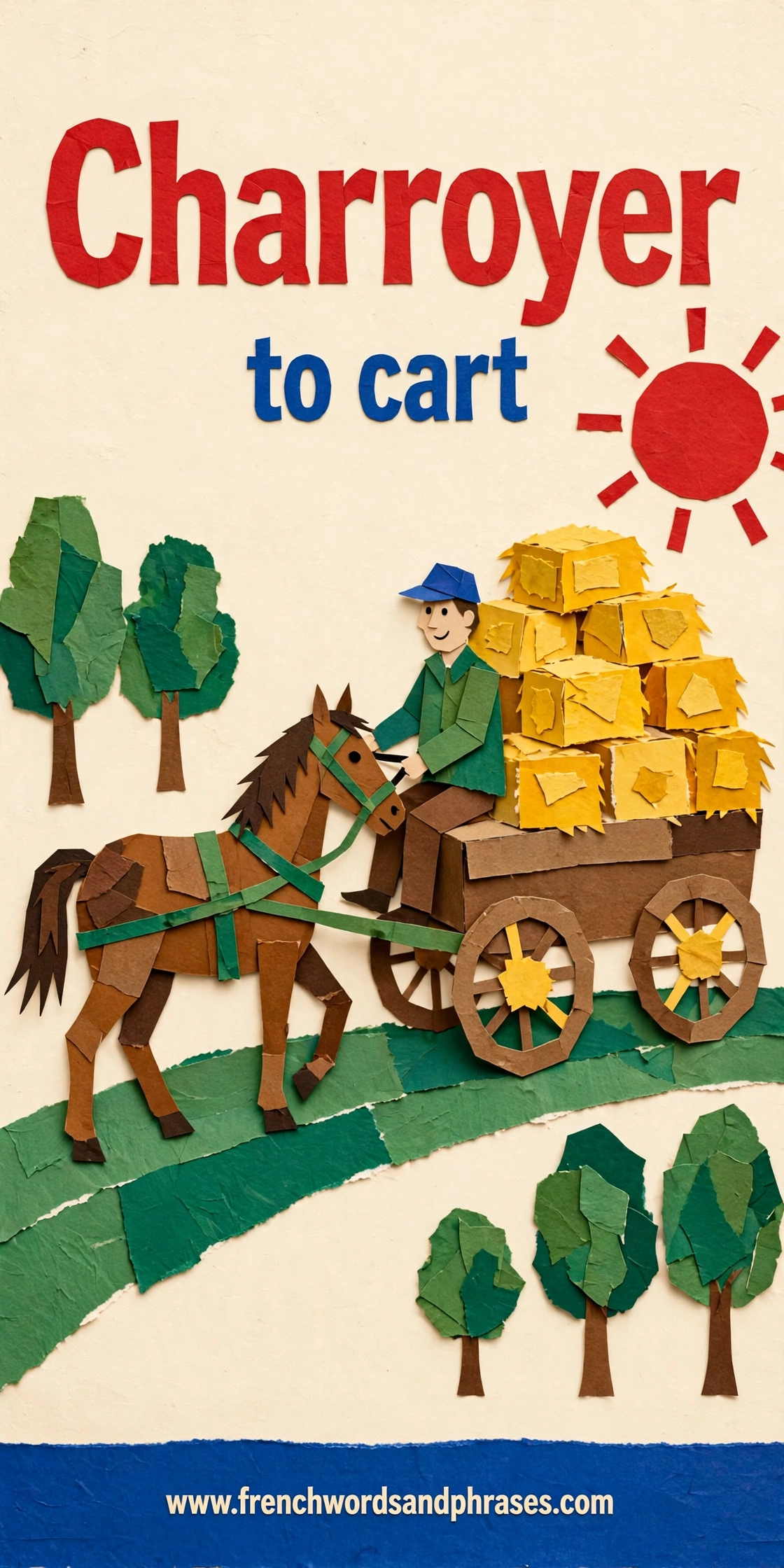
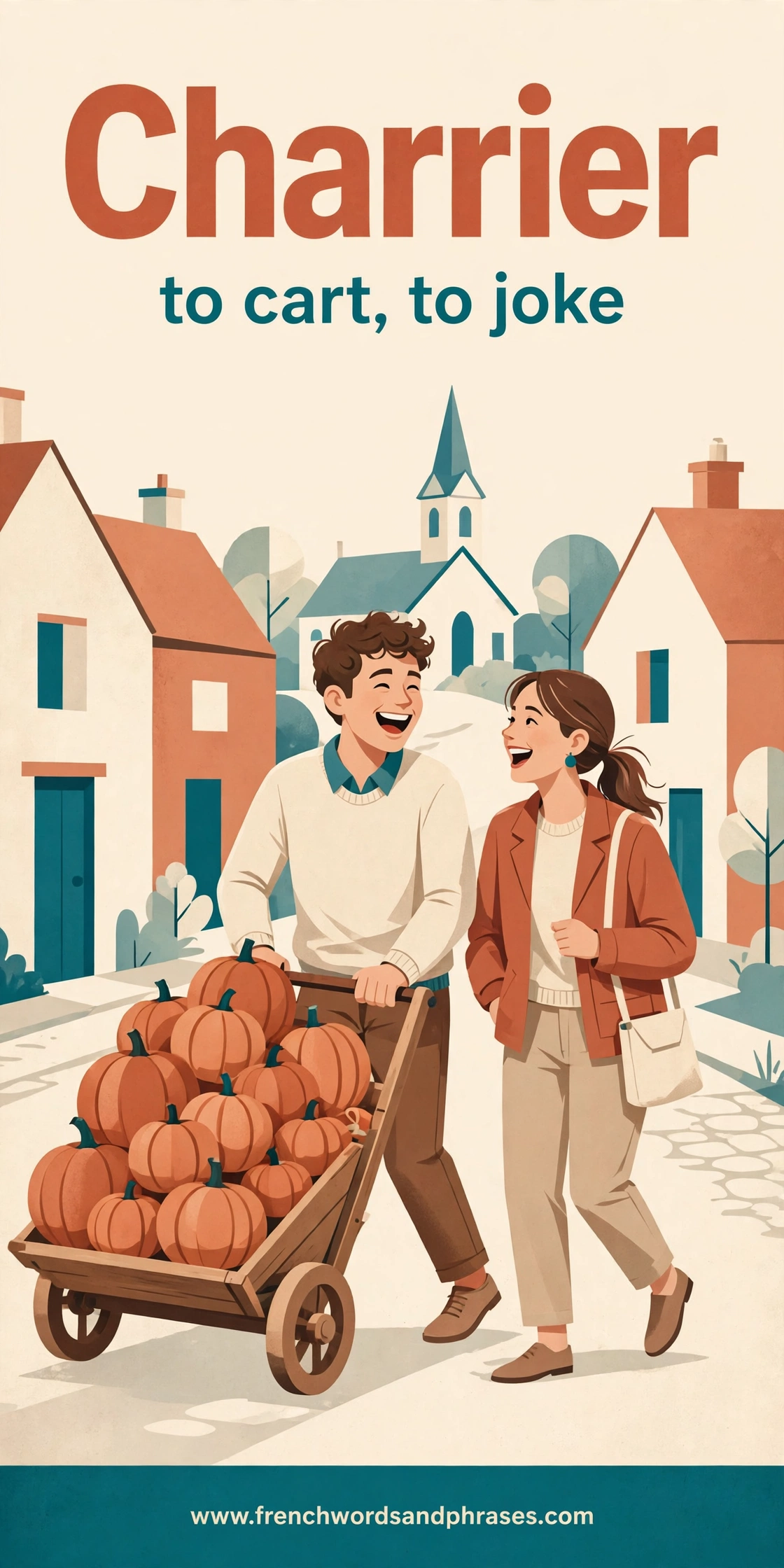
Charrier means to cart, to joke — to haul loads along like a river hauling silt, and, in familiar French, to kid and tease someone without mercy.
A spring river running brown and fast, carting branches and blocks of ice downstream — and, in the schoolyard, a grinning boy insisting the teacher has cancelled tomorrow’s test. Charrier lives in both places: hauling things along, and hauling people along with a story.
In this guide, you’ll learn how to conjugate charrier in all the major French tenses and moods. Explore complete conjugation tables, French examples, English translations, and practice quizzes.
Understanding the French Verb Charrier
Charrier is a regular French verb belonging to the first group of verbs, those ending in-er.
It means to cart, to joke. It is used of carts, lorries and above all rivers carrying loads — stones, earth, silt, ice — and, in the familiar register, of teasing: charrier un copain is to wind a friend up, and the protest tu charries ! is the standard French answer to a tall story.
Verb classification: First group (-er)
Auxiliary verb: Avoir
Past participle: charrié
Present participle: charriant
English equivalents: To cart, to carry along; charrier des pierres — to cart stones; le fleuve charrie des alluvions — the river carries silt downstream; charrier quelqu’un — to tease someone, to pull someone’s leg (fam.); tu charries ! — you’re kidding! (fam.)
One important detail: charrier has two lives. The river charrie silt, ice and driftwood — it carts them along in its current. But charrier quelqu’un, in familiar French, is to tease them, to lead them on, to kid them: tu charries ! means you’re joking, you’re exaggerating! — said with a grin, never as an insult. Watch the spelling in the middle of the paradigm: the stem ends in -i-, so the imparfait and subjunctive plural double it: nous charriions, que vous charriiez, while the present keeps one: nous charrions.
Experience the Word
Charrier is the verb of carrying along — water carries silt, carts carry stones, and jokers carry their friends along with a story.
Imagine the river in March. The ice breaks, the current quickens, and the whole valley seems to move: branches, pebbles, whole tree trunks go past, charriés by the flood. On the bridge, a boy watches and tells his sister the river is running away with the mountain — elle rit : « Tu charries ! »
The river really is carting the valley away. The boy is only charriant his sister — carrying her along with words.
How to Conjugate Charrier: Complete French Conjugation Guide
Let’s explore every major conjugation of charrier, beginning with the indicative mood.
How to Conjugate Charrier in the Indicative Mood
The indicative mood is used to express facts, observations, actions, and events.
How to Conjugate Charrier in the Present Tense (Présent)
Used for actions happening now, habitual actions, and general truths.
| Subject | Conjugation |
|---|---|
| je | charrie |
| tu | charries |
| il / elle | charrie |
| nous | charrions |
| vous | charriez |
| ils / elles | charrient |
Example
Le fleuve charrie des troncs et des alluvions.
The river carries logs and silt downstream.
Quick Quiz 1
Complete the sentence:
Le fleuve ______ des alluvions vers la mer.
Reveal the answer
charrie
Le fleuve charrie des alluvions vers la mer.
The river carries silt towards the sea.
How to Conjugate Charrier in the Passé Composé
Used for completed actions in the past. Charrier takes the auxiliary verb avoir.
| Subject | Conjugation |
|---|---|
| j’ | ai charrié |
| tu | as charrié |
| il / elle | a charrié |
| nous | avons charrié |
| vous | avez charrié |
| ils / elles | ont charrié |
Example
Tu as charrié ton frère toute la soirée.
You teased your brother all evening.
How to Conjugate Charrier in the Imparfait (Imperfect Tense)
Used for habitual past actions, descriptions, and ongoing situations in the past.
| Subject | Conjugation |
|---|---|
| je | charriais |
| tu | charriais |
| il / elle | charriait |
| nous | charriions |
| vous | charriiez |
| ils / elles | charriaient |
Example
Les tombereaux charriaient le grain jusqu’au moulin.
The carts used to haul the grain to the mill.
Quick Quiz 2
Choose the correct form:
You teased everyone.
Tu ______ tout le monde. (as charrié / es charrié)
Reveal the answer
as charrié
Tu as charrié tout le monde.
Charrier takes avoir.
How to Conjugate Charrier in the Plus-que-parfait
Used to describe an action that had already been completed before another past event.
| Subject | Conjugation |
|---|---|
| j’ | avais charrié |
| tu | avais charrié |
| il / elle | avait charrié |
| nous | avions charrié |
| vous | aviez charrié |
| ils / elles | avaient charrié |
Example
La rivière avait charrié des blocs de glace pendant la crue.
The river had carried blocks of ice along during the flood.
How to Conjugate Charrier in the Passé Simple
Primarily used in formal writing, literature, and historical narratives. It is rarely used in everyday conversation.
| Subject | Conjugation |
|---|---|
| je | charriai |
| tu | charrias |
| il / elle | charria |
| nous | charriâmes |
| vous | charriâtes |
| ils / elles | charrièrent |
Example
Les charrettes charrièrent le foin jusqu’à la grange.
The carts hauled the hay to the barn.
How to Conjugate Charrier in the Passé Antérieur
A literary tense used to express an action completed immediately before another past action, generally in the passé simple.
| Subject | Conjugation |
|---|---|
| j’ | eus charrié |
| tu | eus charrié |
| il / elle | eut charrié |
| nous | eûmes charrié |
| vous | eûtes charrié |
| ils / elles | eurent charrié |
Example
Quand le fleuve eut charrié les épaves, la rive se dégagea.
When the river had carried the wreckage away, the bank cleared.
How to Conjugate Charrier in the Future Tense (Futur Simple)
Used to describe actions that will take place in the future.
| Subject | Conjugation |
|---|---|
| je | charrierai |
| tu | charrieras |
| il / elle | charriera |
| nous | charrierons |
| vous | charrierez |
| ils / elles | charrieront |
Example
Au printemps, le fleuve charriera des glaces.
In spring, the river will carry ice downstream.
How to Conjugate Charrier in the Futur Antérieur (Future Perfect)
Used for an action that will have been completed before a particular point in the future.
| Subject | Conjugation |
|---|---|
| j’ | aurai charrié |
| tu | auras charrié |
| il / elle | aura charrié |
| nous | aurons charrié |
| vous | aurez charrié |
| ils / elles | auront charrié |
Example
À la fin des travaux, les camions auront charrié mille tonnes de terre.
By the end of the work, the lorries will have carted a thousand tonnes of earth.
How to Conjugate Charrier in the Near Future (Futur Proche)
Used to describe something that is going to happen soon. Formed with aller + infinitive.
| Subject | Conjugation |
|---|---|
| je | vais charrier |
| tu | vas charrier |
| il / elle | va charrier |
| nous | allons charrier |
| vous | allez charrier |
| ils / elles | vont charrier |
Example
Je vais charrier des pierres toute la journée.
I am going to cart stones all day.
How to Conjugate Charrier in the Conditional Mood
The conditional mood expresses what would happen under certain circumstances. It is also frequently used to make polite requests or express wishes.
How to Conjugate Charrier in the Present Conditional
| Subject | Conjugation |
|---|---|
| je | charrierais |
| tu | charrierais |
| il / elle | charrierait |
| nous | charrierions |
| vous | charrieriez |
| ils / elles | charrieraient |
Example
Il charrierait son frère sans relâche si on le laissait faire.
He would tease his brother endlessly if we let him.
How to Conjugate Charrier in the Past Conditional
| Subject | Conjugation |
|---|---|
| j’ | aurais charrié |
| tu | aurais charrié |
| il / elle | aurait charrié |
| nous | aurions charrié |
| vous | auriez charrié |
| ils / elles | auraient charrié |
Example
Tu aurais charrié tout le village avec ton histoire.
You would have fooled the whole village with your story.
Charrier in the Literary Past Conditional Form
This less common literary form uses the imperfect subjunctive of avoir.
| Subject | Conjugation |
|---|---|
| j’ | eusse charrié |
| tu | eusses charrié |
| il / elle | eût charrié |
| nous | eussions charrié |
| vous | eussiez charrié |
| ils / elles | eussent charrié |
Example
Il eût charrié ses amis sans jamais les blesser.
He would have teased his friends without ever hurting them.
How to Conjugate Charrier in the Subjunctive Mood
The subjunctive is used to express wishes, emotions, doubts, necessity, and uncertainty. It frequently follows expressions such as il faut que (it is necessary that) or bien que (although).
How to Conjugate Charrier in the Present Subjunctive
| Subject | Conjugation |
|---|---|
| que je | charrie |
| que tu | charries |
| qu’il / qu’elle | charrie |
| que nous | charriions |
| que vous | charriiez |
| qu’ils / qu’elles | charrient |
Example
Il faut que le fleuve charrie ces troncs loin du pont.
The river must carry these logs away from the bridge.
Quick Quiz 3
Complete the sentence using the subjunctive:
Il faut que vous ______ vos amis moins fort.
Reveal the answer
charriiez
Il faut que vous charriiez vos amis moins fort.
You must tease your friends more gently.
How to Conjugate Charrier in the Imperfect Subjunctive
A literary tense, rarely encountered in modern spoken French.
| Subject | Conjugation |
|---|---|
| que je | charriasse |
| que tu | charriasses |
| qu’il / qu’elle | charriât |
| que nous | charriassions |
| que vous | charriassiez |
| qu’ils / qu’elles | charriassent |
Example
On ne voulait pas qu’il charriât son cousin devant tout le monde.
Nobody wanted him to tease his cousin in front of everyone.
How to Conjugate Charrier in the Pluperfect Subjunctive
A literary construction used to express an action completed before another past action.
| Subject | Conjugation |
|---|---|
| que j’ | eusse charrié |
| que tu | eusses charrié |
| qu’il / qu’elle | eût charrié |
| que nous | eussions charrié |
| que vous | eussiez charrié |
| qu’ils / qu’elles | eussent charrié |
Example
On plaisantait qu’il eût charrié même le maire du village.
People joked that he had fooled even the village mayor.
How to Conjugate Charrier in the Past Subjunctive
| Subject | Conjugation |
|---|---|
| que j’ | aie charrié |
| que tu | aies charrié |
| qu’il / qu’elle | ait charrié |
| que nous | ayons charrié |
| que vous | ayez charrié |
| qu’ils / qu’elles | aient charrié |
Example
Je crois qu’il a charrié tout le monde avec cette annonce.
I think he fooled everyone with that announcement.
How to Conjugate Charrier in the Imperative
The imperative is used to give commands, instructions, invitations, or suggestions. Subject pronouns are omitted.
How to Conjugate Charrier in the Present Imperative
| Person | Conjugation |
|---|---|
| (tu) | charrie |
| (nous) | charrions |
| (vous) | charriez |
Example
Ne charrie pas ta sœur, elle est fatiguée !
Do not tease your sister, she is tired!
Quick Quiz 4
How would you say Do not tease your sister (tu form)?
Reveal the answer
Ne charrie pas ta sœur !
French Participles of Charrier
Participles are verb forms that can be used in compound tenses and other grammatical constructions.
Present Participle of Charrier
charriant
En charriant des pierres, il s’est fait mal au dos.
While carting stones, he hurt his back.
Past Participle of Charrier
charrié
Charriées par le courant, les branches s’accumulaient contre le pont.
Carried along by the current, the branches piled up against the bridge.
Charrier in Everyday French: Real-Life Examples
Now that you know the conjugations, let’s see how charrier appears in everyday French.
Example 1 — Present
Tu charries, ce n’est pas vrai !
You are kidding, that is not true!
Example 2 — Passé composé
Les camions ont charrié la terre du chantier.
The lorries carted the earth from the site.
Example 3 — Imparfait
Le fleuve charriait des glaces au printemps.
The river used to carry ice in spring.
Example 4 — Future
Il charriera encore ses copains ce soir.
He will tease his friends again tonight.
Example 5 — Conditional
Tu charrierais moins si tu savais la vérité.
You would kid less if you knew the truth.
Example 6 — Imperative
Ne charrie pas ton frère !
Do not tease your brother!
Beyond Translation: The Meaning of Charrier
The cart came first: charrier is the verb of un char, a cart, and its family fills the farmyard — une charrette, a handcart, charroyer, its twin verb.
Then the cart became a joke.
To charrier someone is to load them onto your cart and take them for a ride — English does the same trick with to pull someone’s leg and you’re having me on. And the river keeps the honest sense: whatever the current carries, it charrie.
How to Remember the French Verb Charrier
Remember it this way: Charrier is about the river carting silt — and the joker carting his friends along.
- Two loads: the river charrie silt and ice; the joker charrie his friends — tu charries ! = you’re kidding!
- The teasing sense is familiar register: friendly, grinning, never formal.
- Spelling watch: nous charrions in the present, but nous charriions in the imparfait.
The key idea is the river carting silt — and the joker carting his friends along.
Test Your Knowledge of Charrier
Let’s see how much you’ve learned. Try answering these questions before revealing the answers.
Question 1
What does Tu charries ! mean, and in what register?
Reveal the answer
You’re kidding! — familiar French, said to someone teasing or exaggerating.
Question 2
How do you say The river carries logs downstream in French?
Reveal the answer
Le fleuve charrie des troncs.
Question 3
Translate: You teased your brother all evening.
Reveal the answer
Tu as charrié ton frère toute la soirée.
Question 4
What is the past participle of charrier?
Reveal the answer
Charrié.
Question 5
Complete the sentence:
Il faut que le fleuve ______ ces troncs loin du pont.
Reveal the answer
charrie
Il faut que le fleuve charrie ces troncs loin du pont.
The river must carry these logs away from the bridge.
Your Final Challenge
Can You Use It?
How would you say this in French?
The river carts the spring ice along, and my brother teases everyone at the table.
Reveal the answer
Le fleuve charrie les glaces du printemps, et mon frère charrie tout le monde à table.
The river carts the spring ice along, and my brother teases everyone at the table.
A little French. A little curiosity. A richer everyday life.
LEARN FRENCH ONE WORD AT A TIME