A French Word to Live By
How to Conjugate Se relaxer in French
/sə ʁə.lak.se/
Se relaxer means to relax — to let the tension drain away and do nothing, on purpose.
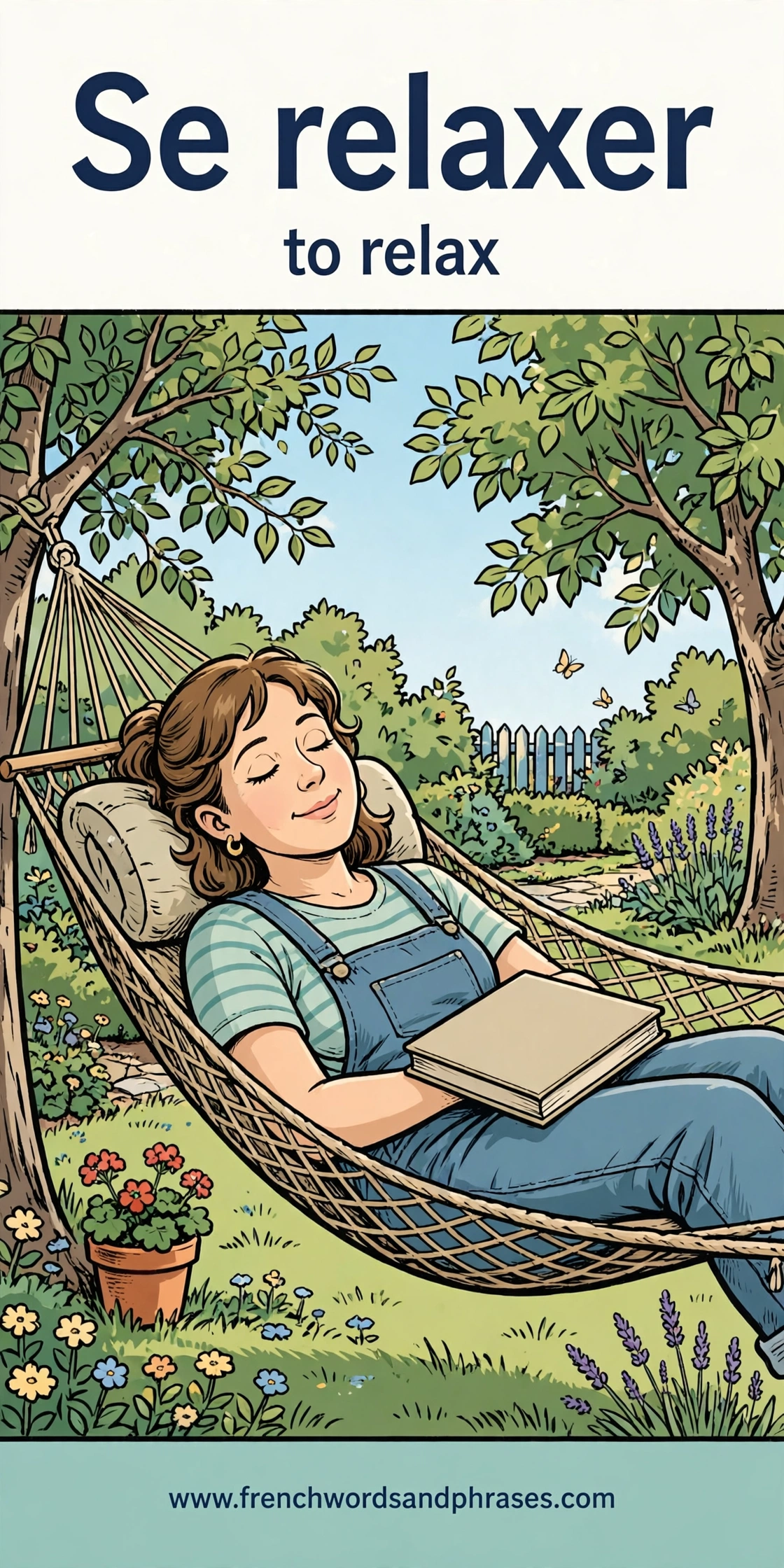
A hammock between two trees, a beach at the end of the afternoon, shoulders dropping inch by inch — se relaxer is the verb of switching off: the holiday form of a verb that, without its little pronoun, belongs to the courtroom.
In this guide, you’ll learn how to conjugate se relaxer in all the major French tenses and moods. Explore complete conjugation tables, French examples, English translations, and practice quizzes.
Understanding the French Verb Se relaxer
Se relaxer is a regular French verb belonging to the first group of verbs, those ending in-er.
It means to relax. It is the verb French people actually use for switching off — after work, on holiday, at the spa, in front of a film. You will hear it constantly in conversation and advertising; in formal prose, se détendre and se reposer take its place.
Verb classification: First group (-er), reflexive
Auxiliary verb: Être
Past participle: relaxé
Present participle: relaxant
English equivalents: To relax, to unwind, to chill out; se relaxer sur la plage — to relax on the beach; se relaxer après le travail — to unwind after work; un week-end pour se relaxer — a weekend to recharge one’s batteries; relaxe-toi ! — relax! (everyday, familiar).
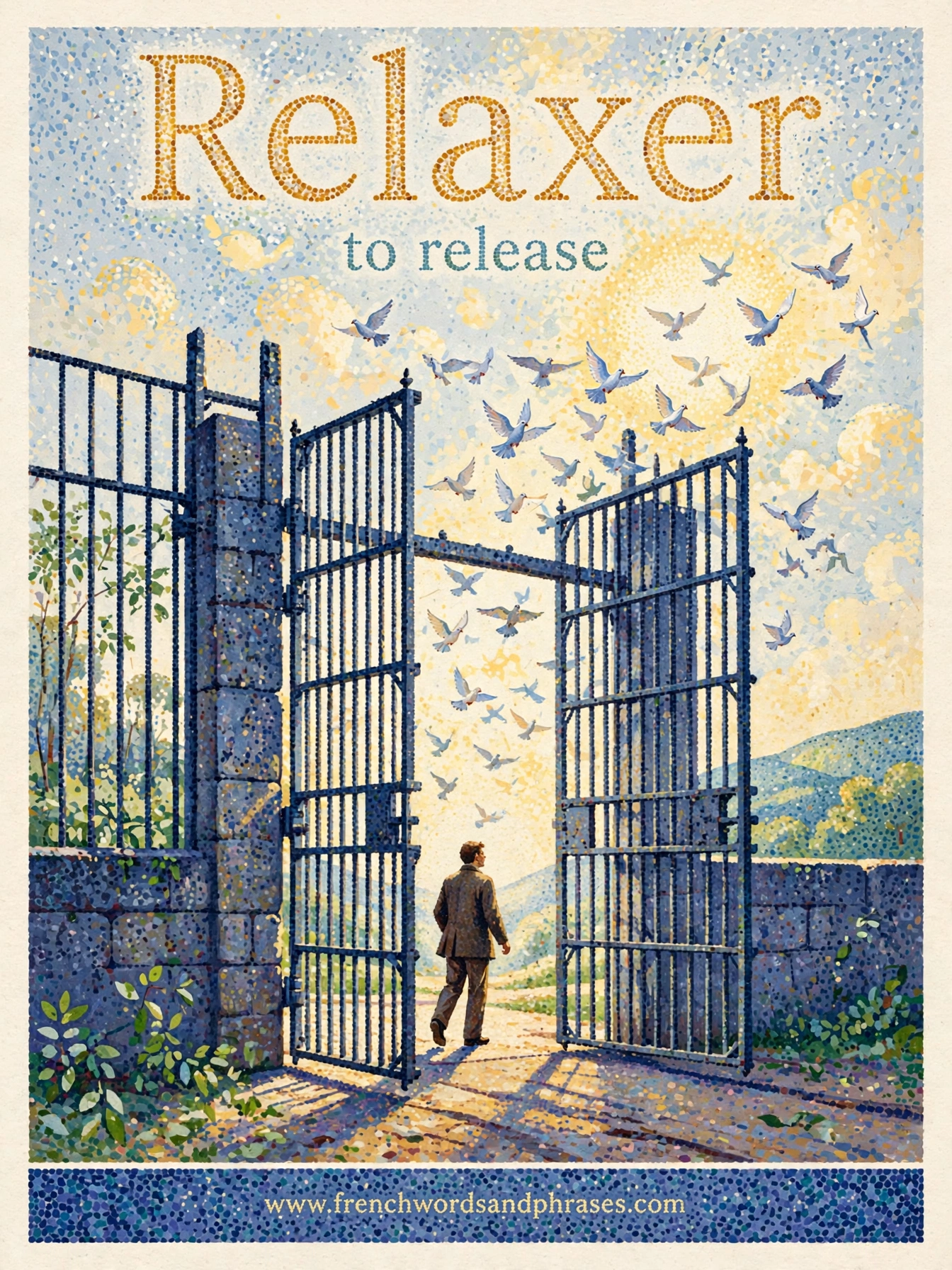
One important detail: se relaxer is a modern borrowing from English to relax, fitted with a reflexive pronoun — the plain French relaxer means to release a prisoner, so the pronoun is what carries the holiday sense. It is everyday, slightly informal French: perfect for speech, spas and holiday brochures, while careful writers often prefer se détendre. Being reflexive, it takes être in every compound tense and the participle agrees: elle s’est relaxée. The tu imperative tucks the pronoun behind the verb: relaxe-toi !
Experience the Word
Se relaxer is the verb of the off-switch — the deliberate art of doing nothing, and doing it well.
Imagine the first evening of the holidays. The bags are still standing by the door, but she is already in the hammock with a book she will not read, listening to the cicadas — elle se relaxe, and the whole year quietly leaves her shoulders.
Nothing has been achieved, and that is exactly the point. She has relaxed — relaxée, completely, at last.
How to Conjugate Se relaxer: Complete French Conjugation Guide
Let’s explore every major conjugation of se relaxer, beginning with the indicative mood.
How to Conjugate Se relaxer in the Indicative Mood
The indicative mood is used to express facts, observations, actions, and events.
How to Conjugate Se relaxer in the Present Tense (Présent)
Used for actions happening now, habitual actions, and general truths.
| Subject | Conjugation |
|---|---|
| je | me relaxe |
| tu | te relaxes |
| il / elle | se relaxe |
| nous | nous relaxons |
| vous | vous relaxez |
| ils / elles | se relaxent |
Example
Après le travail, je me relaxe sur le canapé avec un thé.
After work, I relax on the sofa with a tea.
Quick Quiz 1
Complete the sentence:
Nous nous ______ au bord du lac.
Reveal the answer
relaxons
Nous nous relaxons au bord du lac.
We relax by the lake.
How to Conjugate Se relaxer in the Passé Composé
Used for completed actions in the past. Se relaxer takes the auxiliary verb être.
| Subject | Conjugation |
|---|---|
| je | me suis relaxé / me suis relaxée |
| tu | t’es relaxé / t’es relaxée |
| il / elle | s’est relaxé / s’est relaxée |
| nous | nous sommes relaxés / nous sommes relaxées |
| vous | vous êtes relaxés / vous êtes relaxées / vous êtes relaxé / vous êtes relaxée |
| ils / elles | se sont relaxés / se sont relaxées |
Example
Elle s’est relaxée à la plage tout l’après-midi.
She relaxed on the beach all afternoon.
How to Conjugate Se relaxer in the Imparfait (Imperfect Tense)
Used for habitual past actions, descriptions, and ongoing situations in the past.
| Subject | Conjugation |
|---|---|
| je | me relaxais |
| tu | te relaxais |
| il / elle | se relaxait |
| nous | nous relaxions |
| vous | vous relaxiez |
| ils / elles | se relaxaient |
Example
Le dimanche, nous nous relaxions au bord du lac.
On Sundays, we used to relax by the lake.
Quick Quiz 2
Choose the correct form:
She relaxed at the spa.
Elle ______ au spa. (s’est relaxée / a relaxé)
Reveal the answer
s’est relaxée
Elle s’est relaxée au spa.
Se relaxer is reflexive, takes être, and the participle agrees: relaxée.
How to Conjugate Se relaxer in the Plus-que-parfait
Used to describe an action that had already been completed before another past event.
| Subject | Conjugation |
|---|---|
| je | m’étais relaxé / m’étais relaxée |
| tu | t’étais relaxé / t’étais relaxée |
| il / elle | s’était relaxé / s’était relaxée |
| nous | nous étions relaxés / nous étions relaxées |
| vous | vous étiez relaxés / vous étiez relaxées / vous étiez relaxé / vous étiez relaxée |
| ils / elles | s’étaient relaxés / s’étaient relaxées |
Example
Ils s’étaient relaxés au spa avant le mariage.
They had relaxed at the spa before the wedding.
How to Conjugate Se relaxer in the Passé Simple
Primarily used in formal writing, literature, and historical narratives. It is rarely used in everyday conversation.
| Subject | Conjugation |
|---|---|
| je | me relaxai |
| tu | te relaxas |
| il / elle | se relaxa |
| nous | nous relaxâmes |
| vous | vous relaxâtes |
| ils / elles | se relaxèrent |
Example
À peine arrivé à l’hôtel, il se relaxa dans un bain chaud.
As soon as he arrived at the hotel, he relaxed in a hot bath.
How to Conjugate Se relaxer in the Passé Antérieur
A literary tense used to express an action completed immediately before another past action, generally in the passé simple.
| Subject | Conjugation |
|---|---|
| je | me fus relaxé / me fus relaxée |
| tu | te fus relaxé / te fus relaxée |
| il / elle | se fut relaxé / se fut relaxée |
| nous | nous fûmes relaxés / nous fûmes relaxées |
| vous | vous fûtes relaxés / vous fûtes relaxées / vous fûtes relaxé / vous fûtes relaxée |
| ils / elles | se furent relaxés / se furent relaxées |
Example
Dès qu’elle se fut relaxée, elle s’endormit profondément.
As soon as she had relaxed, she fell deeply asleep.
How to Conjugate Se relaxer in the Future Tense (Futur Simple)
Used to describe actions that will take place in the future.
| Subject | Conjugation |
|---|---|
| je | me relaxerai |
| tu | te relaxeras |
| il / elle | se relaxera |
| nous | nous relaxerons |
| vous | vous relaxerez |
| ils / elles | se relaxeront |
Example
Demain, tu te relaxeras enfin loin des écrans.
Tomorrow, you will finally relax away from screens.
How to Conjugate Se relaxer in the Futur Antérieur (Future Perfect)
Used for an action that will have been completed before a particular point in the future.
| Subject | Conjugation |
|---|---|
| je | me serai relaxé / me serai relaxée |
| tu | te seras relaxé / te seras relaxée |
| il / elle | se sera relaxé / se sera relaxée |
| nous | nous serons relaxés / nous serons relaxées |
| vous | vous serez relaxés / vous serez relaxées / vous serez relaxé / vous serez relaxée |
| ils / elles | se seront relaxés / se seront relaxées |
Example
À la fin des vacances, ils se seront relaxés comme jamais.
By the end of the holidays, they will have relaxed like never before.
How to Conjugate Se relaxer in the Near Future (Futur Proche)
Used to describe something that is going to happen soon. Formed with aller + infinitive.
| Subject | Conjugation |
|---|---|
| je | vais me relaxer |
| tu | vas te relaxer |
| il / elle | va se relaxer |
| nous | allons nous relaxer |
| vous | allez vous relaxer |
| ils / elles | vont se relaxer |
Example
Regarde-la, elle va se relaxer au soleil.
Look at her, she is going to relax in the sun.
How to Conjugate Se relaxer in the Conditional Mood
The conditional mood expresses what would happen under certain circumstances. It is also frequently used to make polite requests or express wishes.
How to Conjugate Se relaxer in the Present Conditional
| Subject | Conjugation |
|---|---|
| je | me relaxerais |
| tu | te relaxerais |
| il / elle | se relaxerait |
| nous | nous relaxerions |
| vous | vous relaxeriez |
| ils / elles | se relaxeraient |
Example
Sans les enfants, nous nous relaxerions davantage.
Without the children, we would relax more.
How to Conjugate Se relaxer in the Past Conditional
| Subject | Conjugation |
|---|---|
| je | me serais relaxé / me serais relaxée |
| tu | te serais relaxé / te serais relaxée |
| il / elle | se serait relaxé / se serait relaxée |
| nous | nous serions relaxés / nous serions relaxées |
| vous | vous seriez relaxés / vous seriez relaxées / vous seriez relaxé / vous seriez relaxée |
| ils / elles | se seraient relaxés / se seraient relaxées |
Example
Elle se serait relaxée si le téléphone avait arrêté de sonner.
She would have relaxed if the phone had stopped ringing.
Se relaxer in the Literary Past Conditional Form
This less common literary form uses the imperfect subjunctive of être.
| Subject | Conjugation |
|---|---|
| je | me fusse relaxé / me fusse relaxée |
| tu | te fusses relaxé / te fusses relaxée |
| il / elle | se fût relaxé / se fût relaxée |
| nous | nous fussions relaxés / nous fussions relaxées |
| vous | vous fussiez relaxés / vous fussiez relaxées / vous fussiez relaxé / vous fussiez relaxée |
| ils / elles | se fussent relaxés / se fussent relaxées |
Example
Il se fût relaxé au bord de la mer sans ce travail urgent.
He would have relaxed by the sea without that urgent work.
How to Conjugate Se relaxer in the Subjunctive Mood
The subjunctive is used to express wishes, emotions, doubts, necessity, and uncertainty. It frequently follows expressions such as il faut que (it is necessary that) or bien que (although).
How to Conjugate Se relaxer in the Present Subjunctive
| Subject | Conjugation |
|---|---|
| que je | me relaxe |
| que tu | te relaxes |
| qu’il / qu’elle | se relaxe |
| que nous | nous relaxions |
| que vous | vous relaxiez |
| qu’ils / qu’elles | se relaxent |
Example
Il faut que tu te relaxes un peu avant l’examen.
You need to relax a little before the exam.
Quick Quiz 3
Complete the sentence using the subjunctive:
Il faut que vous vous ______ pendant les vacances.
Reveal the answer
relaxiez
Il faut que vous vous relaxiez pendant les vacances.
You must relax during the holidays.
How to Conjugate Se relaxer in the Imperfect Subjunctive
A literary tense, rarely encountered in modern spoken French.
| Subject | Conjugation |
|---|---|
| que je | me relaxasse |
| que tu | te relaxasses |
| qu’il / qu’elle | se relaxât |
| que nous | nous relaxassions |
| que vous | vous relaxassiez |
| qu’ils / qu’elles | se relaxassent |
Example
Le médecin voulait que je me relaxasse davantage.
The doctor wanted me to relax more.
How to Conjugate Se relaxer in the Pluperfect Subjunctive
A literary construction used to express an action completed before another past action.
| Subject | Conjugation |
|---|---|
| que je | me fusse relaxé / me fusse relaxée |
| que tu | te fusses relaxé / te fusses relaxée |
| qu’il / qu’elle | se fût relaxé / se fût relaxée |
| que nous | nous fussions relaxés / nous fussions relaxées |
| que vous | vous fussiez relaxés / vous fussiez relaxées / vous fussiez relaxé / vous fussiez relaxée |
| qu’ils / qu’elles | se fussent relaxés / se fussent relaxées |
Example
On disait qu’ils se fussent relaxés dans un chalet perdu en montagne.
People said they had relaxed in a remote mountain chalet.
How to Conjugate Se relaxer in the Past Subjunctive
| Subject | Conjugation |
|---|---|
| que je | me sois relaxé / me sois relaxée |
| que tu | te sois relaxé / te sois relaxée |
| qu’il / qu’elle | se soit relaxé / se soit relaxée |
| que nous | nous soyons relaxés / nous soyons relaxées |
| que vous | vous soyez relaxés / vous soyez relaxées / vous soyez relaxé / vous soyez relaxée |
| qu’ils / qu’elles | se soient relaxés / se soient relaxées |
Example
Je suis content que tu te sois relaxé pendant ce week-end.
I am glad you relaxed during this weekend.
How to Conjugate Se relaxer in the Imperative
The imperative is used to give commands, instructions, invitations, or suggestions. Subject pronouns are omitted.
How to Conjugate Se relaxer in the Present Imperative
| Person | Conjugation |
|---|---|
| (tu) | relaxe-toi |
| (nous) | relaxons-nous |
| (vous) | relaxez-vous |
Example
Relaxe-toi, tout va bien se passer !
Relax, everything will be fine!
Quick Quiz 4
How would you say Relax (tu form)?
Reveal the answer
Relaxe-toi !
French Participles of Se relaxer
Participles are verb forms that can be used in compound tenses and other grammatical constructions.
Present Participle of Se relaxer
relaxant
En se relaxant au soleil, elle a oublié tous ses soucis.
By relaxing in the sun, she forgot all her worries.
Past Participle of Se relaxer
relaxé
Relaxée après son massage, elle souriait enfin.
Relaxed after her massage, she was finally smiling.
Se relaxer in Everyday French: Real-Life Examples
Now that you know the conjugations, let’s see how se relaxer appears in everyday French.
Example 1 — Present
Je me relaxe sur la plage.
I relax on the beach.
Example 2 — Passé composé
Elle s’est relaxée tout le week-end.
She relaxed all weekend.
Example 3 — Imparfait
Nous nous relaxions au bord du lac.
We used to relax by the lake.
Example 4 — Future
Tu te relaxeras pendant les vacances.
You will relax during the holidays.
Example 5 — Conditional
Il se relaxerait davantage sans son téléphone.
He would relax more without his phone.
Example 6 — Imperative
Relaxez-vous, c’est les vacances !
Relax, it’s the holidays!
Beyond Translation: The Meaning of Se relaxer
English relax came from Latin relaxare, to loosen, and crossed into French as relaxer — where the plain verb stayed in the courtroom, loosening charges instead of shoulders. Then, in the twentieth century, French borrowed the leisure sense back from English and dressed it in a reflexive pronoun: se relaxer.
A verb that emigrated, and came home changed.
Purists still reach for se détendre, but on every beach, in every spa and in every «relaxe-toi !» called across a garden, it is se relaxer that France actually says.
How to Remember the French Verb Se relaxer
Remember it this way: Se relaxer is about the hammock between two trees.
- The leisure sense always carries the pronoun: je me relaxe, elle s’est relaxée — être, and the participle agrees.
- Without the pronoun, relaxer is the judge’s verb: to release a prisoner.
- Regular -er underneath: je me relaxe, nous nous relaxons, past participle relaxé.
The key idea is the hammock between two trees.
Test Your Knowledge of Se relaxer
Let’s see how much you’ve learned. Try answering these questions before revealing the answers.
Question 1
Which auxiliary does se relaxer use, and why?
Reveal the answer
Être — it is a reflexive verb: elle s’est relaxée à la plage.
Question 2
How do you say I relax on the beach in French?
Reveal the answer
Je me relaxe sur la plage.
Question 3
Translate: She relaxed all weekend.
Reveal the answer
Elle s’est relaxée tout le week-end.
Question 4
What is the past participle of se relaxer?
Reveal the answer
Relaxé — agreeing: relaxée, relaxés, relaxées.
Question 5
Complete the sentence:
Il faut que tu te ______ avant l’examen.
Reveal the answer
relaxes
Il faut que tu te relaxes avant l’examen.
You need to relax before the exam.
Your Final Challenge
Can You Use It?
How would you say this in French?
She relaxes in the hammock, a book open on her stomach, while summer drifts slowly by.
Reveal the answer
Elle se relaxe dans le hamac, un livre ouvert sur le ventre, pendant que l’été passe lentement.
She relaxes in the hammock, a book open on her stomach, while summer drifts slowly by.
A little French. A little curiosity. A richer everyday life.
LEARN FRENCH ONE WORD AT A TIME