A French Word to Live By
How to Conjugate Coltiner in French
/kɔl.ti.ne/
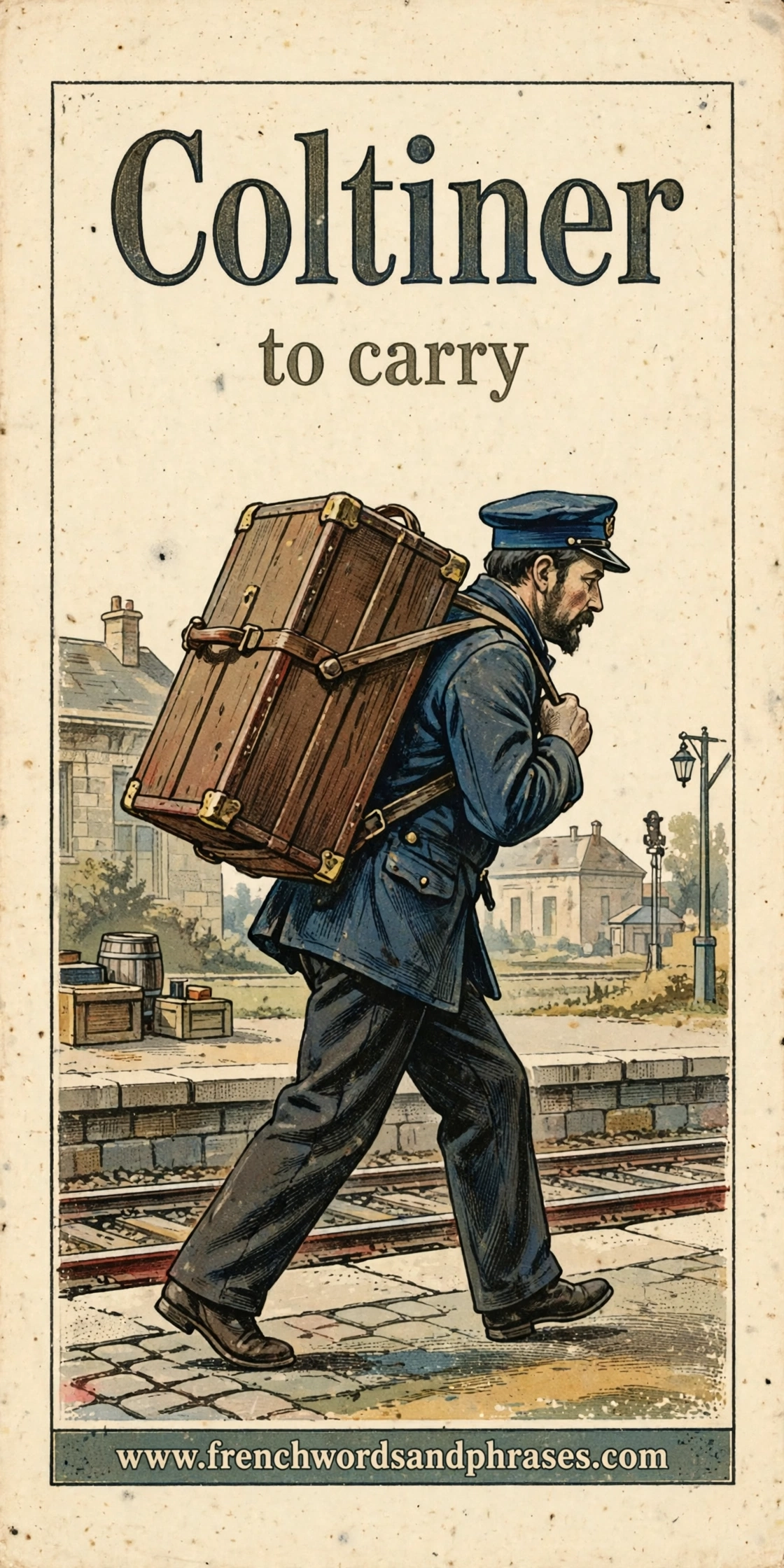
Coltiner means to carry — but not any carrying: to lug heavy loads on your back and shoulders, load after load, like the porters of old Paris.
Crates of vegetables at dawn, sacks of cement on a building site, a grand piano’s little brothers — coltiner is the verb of heavy loads carried by human backs: no wheels, no trolley, just shoulders, stairs and patience.
In this guide, you’ll learn how to conjugate coltiner in all the major French tenses and moods. Explore complete conjugation tables, French examples, English translations, and practice quizzes.
Understanding the French Verb Coltiner
Coltiner is a regular French verb belonging to the first group of verbs, those ending in-er.
It means to carry. It is used wherever heavy things move by muscle: markets, building sites, removals, farmyards. The load is always physical and always heavy — coltiner un sac de sable, coltiner des caisses de vin — and the verb carries respect for the back that does it.
Verb classification: First group (-er)
Auxiliary verb: Avoir
Past participle: coltiné
Present participle: coltinant
English equivalents: To lug, to haul, to carry (heavy loads); coltiner des caisses — to lug crates; coltiner des sacs de ciment — to haul bags of cement; coltiner des bûches — to lug logs; les coltineurs des Halles — the porters of Les Halles market.
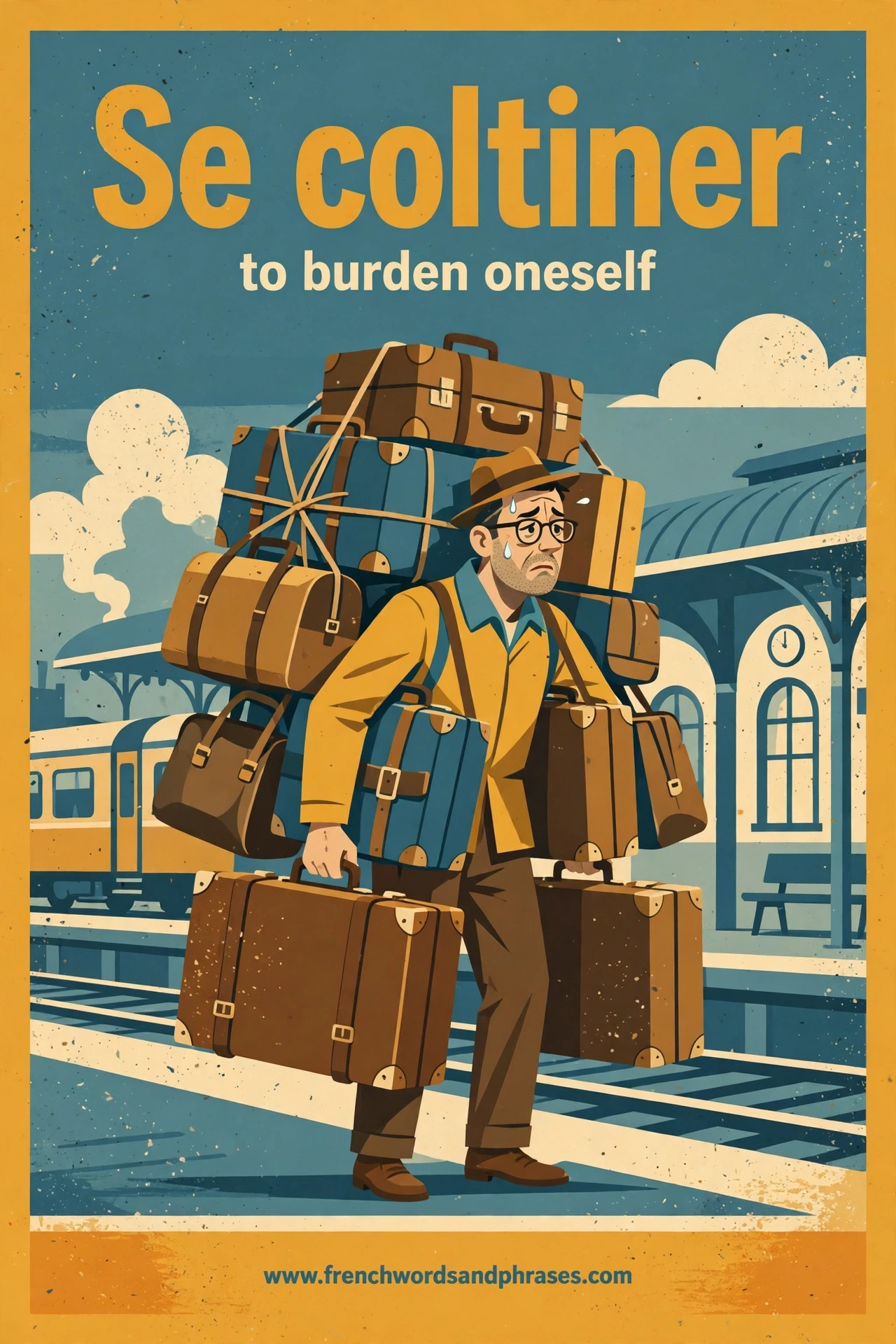
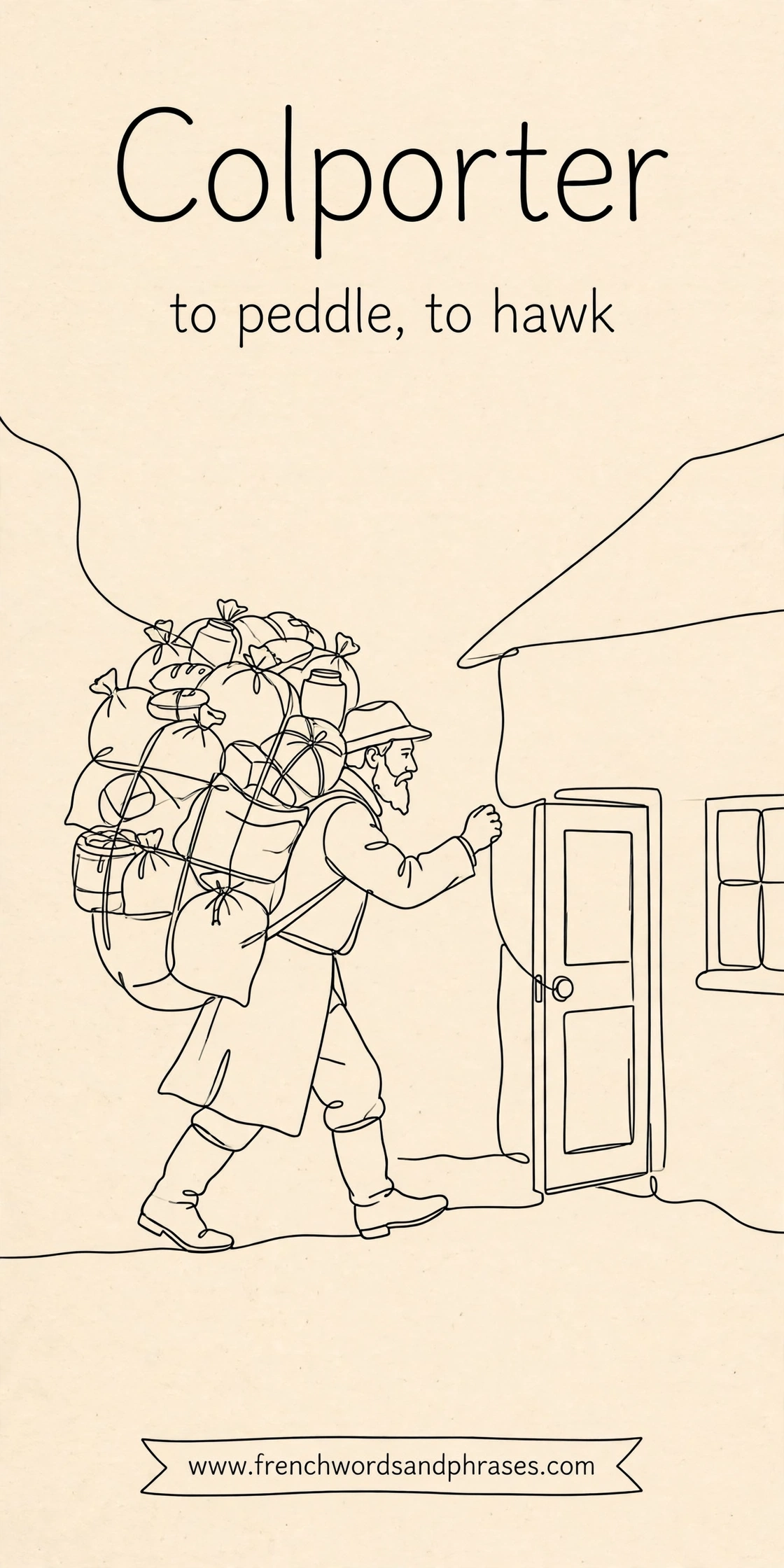
One important detail: coltiner is porter with weight added — you portez a bag, but you coltinez crates, sacks and suitcases heavy enough to bend the back, traditionally carried high on the shoulders, at the neck (le col). The verb is perfectly regular; its fame is historical. The coltineurs of Les Halles, the great Paris food market, were the legendary strong men who unloaded the city’s food every night — coltiner is their verb, and it still smells of dawn markets and sore shoulders. Its reflexive twin, se coltiner, means to get stuck with a burden or a bore, and has its own page.
Experience the Word
Coltiner is the verb of the human forklift — when the load is too heavy for elegance, someone coltine it.
Imagine Les Halles at four in the morning, a century ago. Under the great iron pavilions, the coltineurs move in silence, a quarter of beef on a shoulder, crates stacked to the chin, unloading the food of a million Parisians before the city wakes. Ils ont coltiné toute la nuit, and Paris will eat today because their backs held.
No machine helped them. They lugged it all — coltiné, crate by crate, on their own shoulders.
How to Conjugate Coltiner: Complete French Conjugation Guide
Let’s explore every major conjugation of coltiner, beginning with the indicative mood.
How to Conjugate Coltiner in the Indicative Mood
The indicative mood is used to express facts, observations, actions, and events.
How to Conjugate Coltiner in the Present Tense (Présent)
Used for actions happening now, habitual actions, and general truths.
| Subject | Conjugation |
|---|---|
| je | coltine |
| tu | coltines |
| il / elle | coltine |
| nous | coltinons |
| vous | coltinez |
| ils / elles | coltinent |
Example
Les déménageurs coltinent les caisses jusqu’au troisième étage.
The removal men are lugging the crates up to the third floor.
Quick Quiz 1
Complete the sentence:
Nous ______ les cartons au grenier.
Reveal the answer
coltinons
Nous coltinons les cartons au grenier.
We are lugging the boxes up to the attic.
How to Conjugate Coltiner in the Passé Composé
Used for completed actions in the past. Coltiner takes the auxiliary verb avoir.
| Subject | Conjugation |
|---|---|
| j’ | ai coltiné |
| tu | as coltiné |
| il / elle | a coltiné |
| nous | avons coltiné |
| vous | avez coltiné |
| ils / elles | ont coltiné |
Example
Il a coltiné des sacs de ciment toute la journée.
He hauled bags of cement all day.
How to Conjugate Coltiner in the Imparfait (Imperfect Tense)
Used for habitual past actions, descriptions, and ongoing situations in the past.
| Subject | Conjugation |
|---|---|
| je | coltinais |
| tu | coltinais |
| il / elle | coltinait |
| nous | coltinions |
| vous | coltiniez |
| ils / elles | coltinaient |
Example
Aux Halles, les coltineurs coltinaient des quartiers de bœuf dès l’aube.
At Les Halles, the porters used to lug quarters of beef from dawn.
Quick Quiz 2
Choose the correct form:
He hauled the bags alone.
Il ______ les sacs tout seul. (a coltiné / est coltiné)
Reveal the answer
a coltiné
Il a coltiné les sacs tout seul.
Coltiner takes avoir.
How to Conjugate Coltiner in the Plus-que-parfait
Used to describe an action that had already been completed before another past event.
| Subject | Conjugation |
|---|---|
| j’ | avais coltiné |
| tu | avais coltiné |
| il / elle | avait coltiné |
| nous | avions coltiné |
| vous | aviez coltiné |
| ils / elles | avaient coltiné |
Example
Elle avait coltiné toutes les valises avant notre arrivée.
She had lugged all the suitcases before we arrived.
How to Conjugate Coltiner in the Passé Simple
Primarily used in formal writing, literature, and historical narratives. It is rarely used in everyday conversation.
| Subject | Conjugation |
|---|---|
| je | coltinai |
| tu | coltinas |
| il / elle | coltina |
| nous | coltinâmes |
| vous | coltinâtes |
| ils / elles | coltinèrent |
Example
Les porteurs coltinèrent les malles jusqu’au quai.
The porters lugged the trunks as far as the platform.
How to Conjugate Coltiner in the Passé Antérieur
A literary tense used to express an action completed immediately before another past action, generally in the passé simple.
| Subject | Conjugation |
|---|---|
| j’ | eus coltiné |
| tu | eus coltiné |
| il / elle | eut coltiné |
| nous | eûmes coltiné |
| vous | eûtes coltiné |
| ils / elles | eurent coltiné |
Example
Quand il eut coltiné le dernier sac, il s’assit enfin.
When he had hauled the last bag, he finally sat down.
How to Conjugate Coltiner in the Future Tense (Futur Simple)
Used to describe actions that will take place in the future.
| Subject | Conjugation |
|---|---|
| je | coltinerai |
| tu | coltineras |
| il / elle | coltinera |
| nous | coltinerons |
| vous | coltinerez |
| ils / elles | coltineront |
Example
Demain, nous coltinerons les cartons au grenier.
Tomorrow, we will lug the boxes up to the attic.
How to Conjugate Coltiner in the Futur Antérieur (Future Perfect)
Used for an action that will have been completed before a particular point in the future.
| Subject | Conjugation |
|---|---|
| j’ | aurai coltiné |
| tu | auras coltiné |
| il / elle | aura coltiné |
| nous | aurons coltiné |
| vous | aurez coltiné |
| ils / elles | auront coltiné |
Example
À midi, ils auront coltiné tout le matériel sur le chantier.
By noon, they will have hauled all the equipment onto the site.
How to Conjugate Coltiner in the Near Future (Futur Proche)
Used to describe something that is going to happen soon. Formed with aller + infinitive.
| Subject | Conjugation |
|---|---|
| je | vais coltiner |
| tu | vas coltiner |
| il / elle | va coltiner |
| nous | allons coltiner |
| vous | allez coltiner |
| ils / elles | vont coltiner |
Example
Je vais coltiner ces bûches jusqu’à la cheminée.
I am going to lug these logs over to the fireplace.
How to Conjugate Coltiner in the Conditional Mood
The conditional mood expresses what would happen under certain circumstances. It is also frequently used to make polite requests or express wishes.
How to Conjugate Coltiner in the Present Conditional
| Subject | Conjugation |
|---|---|
| je | coltinerais |
| tu | coltinerais |
| il / elle | coltinerait |
| nous | coltinerions |
| vous | coltineriez |
| ils / elles | coltineraient |
Example
Sans aide, il coltinerait les sacs un par un.
Without help, he would haul the bags one by one.
How to Conjugate Coltiner in the Past Conditional
| Subject | Conjugation |
|---|---|
| j’ | aurais coltiné |
| tu | aurais coltiné |
| il / elle | aurait coltiné |
| nous | aurions coltiné |
| vous | auriez coltiné |
| ils / elles | auraient coltiné |
Example
Ils auraient coltiné les meubles eux-mêmes si le déménageur n’était pas venu.
They would have lugged the furniture themselves if the removal man had not come.
Coltiner in the Literary Past Conditional Form
This less common literary form uses the imperfect subjunctive of avoir.
| Subject | Conjugation |
|---|---|
| j’ | eusse coltiné |
| tu | eusses coltiné |
| il / elle | eût coltiné |
| nous | eussions coltiné |
| vous | eussiez coltiné |
| ils / elles | eussent coltiné |
Example
Les porteurs eussent coltiné les malles jusqu’au navire sans la tempête.
The porters would have lugged the trunks to the ship without the storm.
How to Conjugate Coltiner in the Subjunctive Mood
The subjunctive is used to express wishes, emotions, doubts, necessity, and uncertainty. It frequently follows expressions such as il faut que (it is necessary that) or bien que (although).
How to Conjugate Coltiner in the Present Subjunctive
| Subject | Conjugation |
|---|---|
| que je | coltine |
| que tu | coltines |
| qu’il / qu’elle | coltine |
| que nous | coltinions |
| que vous | coltiniez |
| qu’ils / qu’elles | coltinent |
Example
Il faut que quelqu’un coltine ces caisses au sous-sol.
Someone must lug these crates down to the cellar.
Quick Quiz 3
Complete the sentence using the subjunctive:
Il faut que vous ______ ces bûches jusqu’à la cheminée.
Reveal the answer
coltiniez
Il faut que vous coltiniez ces bûches jusqu’à la cheminée.
You must lug these logs over to the fireplace.
How to Conjugate Coltiner in the Imperfect Subjunctive
A literary tense, rarely encountered in modern spoken French.
| Subject | Conjugation |
|---|---|
| que je | coltinasse |
| que tu | coltinasses |
| qu’il / qu’elle | coltinât |
| que nous | coltinassions |
| que vous | coltinassiez |
| qu’ils / qu’elles | coltinassent |
Example
Le patron exigeait que l’on coltinât les sacs avant midi.
The boss demanded the bags be hauled before noon.
How to Conjugate Coltiner in the Pluperfect Subjunctive
A literary construction used to express an action completed before another past action.
| Subject | Conjugation |
|---|---|
| que j’ | eusse coltiné |
| que tu | eusses coltiné |
| qu’il / qu’elle | eût coltiné |
| que nous | eussions coltiné |
| que vous | eussiez coltiné |
| qu’ils / qu’elles | eussent coltiné |
Example
On admirait qu’il eût coltiné seul tout ce matériel.
People admired that he had hauled all that equipment alone.
How to Conjugate Coltiner in the Past Subjunctive
| Subject | Conjugation |
|---|---|
| que j’ | aie coltiné |
| que tu | aies coltiné |
| qu’il / qu’elle | ait coltiné |
| que nous | ayons coltiné |
| que vous | ayez coltiné |
| qu’ils / qu’elles | aient coltiné |
Example
Je suis étonné qu’elle ait coltiné ces valises toute seule.
I am amazed she lugged those suitcases all by herself.
How to Conjugate Coltiner in the Imperative
The imperative is used to give commands, instructions, invitations, or suggestions. Subject pronouns are omitted.
How to Conjugate Coltiner in the Present Imperative
| Person | Conjugation |
|---|---|
| (tu) | coltine |
| (nous) | coltinons |
| (vous) | coltinez |
Example
Coltine ce sac jusqu’à la porte, s’il te plaît !
Lug this bag over to the door, please!
Quick Quiz 4
How would you say Lug this bag to the door (tu form)?
Reveal the answer
Coltine ce sac jusqu’à la porte !
French Participles of Coltiner
Participles are verb forms that can be used in compound tenses and other grammatical constructions.
Present Participle of Coltiner
coltinant
En coltinant les caisses, il s’est fait mal au dos.
While lugging the crates, he hurt his back.
Past Participle of Coltiner
coltiné
Coltinées à dos d’homme, les malles sont arrivées intactes.
Lugged on men’s backs, the trunks arrived intact.
Coltiner in Everyday French: Real-Life Examples
Now that you know the conjugations, let’s see how coltiner appears in everyday French.
Example 1 — Present
Les déménageurs coltinent les caisses.
The removal men are lugging the crates.
Example 2 — Passé composé
Il a coltiné des sacs toute la journée.
He hauled bags all day.
Example 3 — Imparfait
Les coltineurs coltinaient dès l’aube.
The porters used to lug loads from dawn.
Example 4 — Future
Nous coltinerons les cartons au grenier.
We will lug the boxes up to the attic.
Example 5 — Conditional
Il coltinerait les sacs un par un.
He would haul the bags one by one.
Example 6 — Imperative
Coltine ce sac jusqu’à la porte !
Lug this bag over to the door!
Beyond Translation: The Meaning of Coltiner
Coltiner keeps the memory of a vanished trade: the coltineurs, the strong porters of Les Halles, were Parisian legends — men who could carry a side of beef the way you carry a coat.
The market is gone; the verb still lifts.
Les Halles moved out of Paris in the 1970s, but coltiner stayed behind, ready for every removal day, every building site and every grandfather who insists on carrying the heaviest suitcase himself.
How to Remember the French Verb Coltiner
Remember it this way: Coltiner is about the porters of Les Halles — a quarter of beef on one shoulder.
- Porter is carrying; coltiner is carrying what bends the back — crates, sacks, trunks.
- Picture the coltineurs of Les Halles, unloading Paris’s food before dawn.
- Regular -er: je coltine, nous coltinons, past participle coltiné.
The key idea is the porters of Les Halles — a quarter of beef on one shoulder.
Test Your Knowledge of Coltiner
Let’s see how much you’ve learned. Try answering these questions before revealing the answers.
Question 1
What makes coltiner different from porter?
Reveal the answer
The weight — porter is to carry anything; coltiner is to lug heavy loads, traditionally on the back and shoulders.
Question 2
How do you say He hauled bags of cement all day in French?
Reveal the answer
Il a coltiné des sacs de ciment toute la journée.
Question 3
Translate: The removal men are lugging the crates.
Reveal the answer
Les déménageurs coltinent les caisses.
Question 4
What is the past participle of coltiner?
Reveal the answer
Coltiné.
Question 5
Complete the sentence:
Il faut que quelqu’un ______ ces caisses au sous-sol.
Reveal the answer
coltine
Il faut que quelqu’un coltine ces caisses au sous-sol.
Someone must lug these crates down to the cellar.
Your Final Challenge
Can You Use It?
How would you say this in French?
He has been lugging crates since dawn, and his shoulders tell the story of the day.
Reveal the answer
Il coltine les caisses depuis l’aube, et ses épaules racontent la journée.
He has been lugging crates since dawn, and his shoulders tell the story of the day.
A little French. A little curiosity. A richer everyday life.
LEARN FRENCH ONE WORD AT A TIME