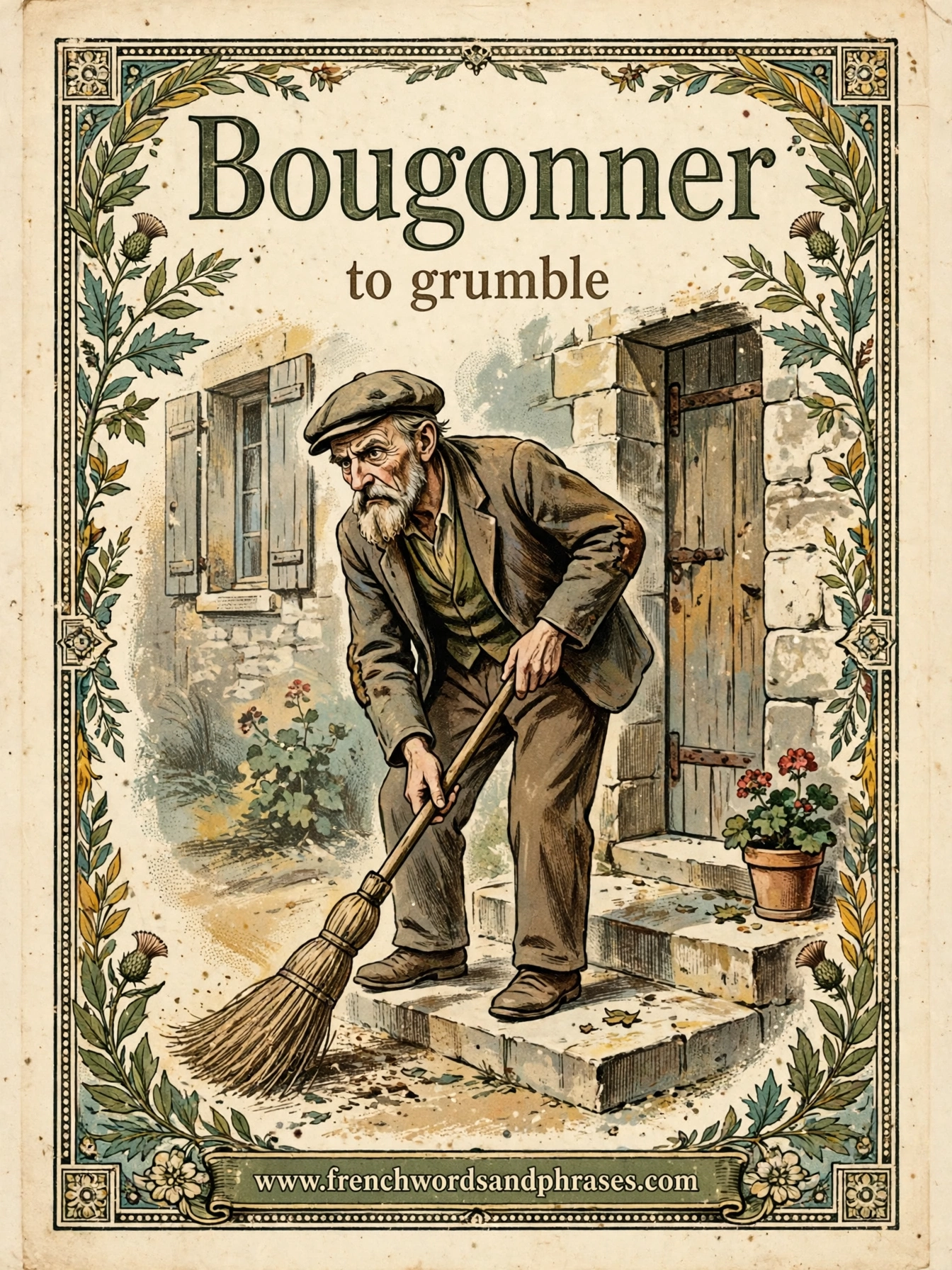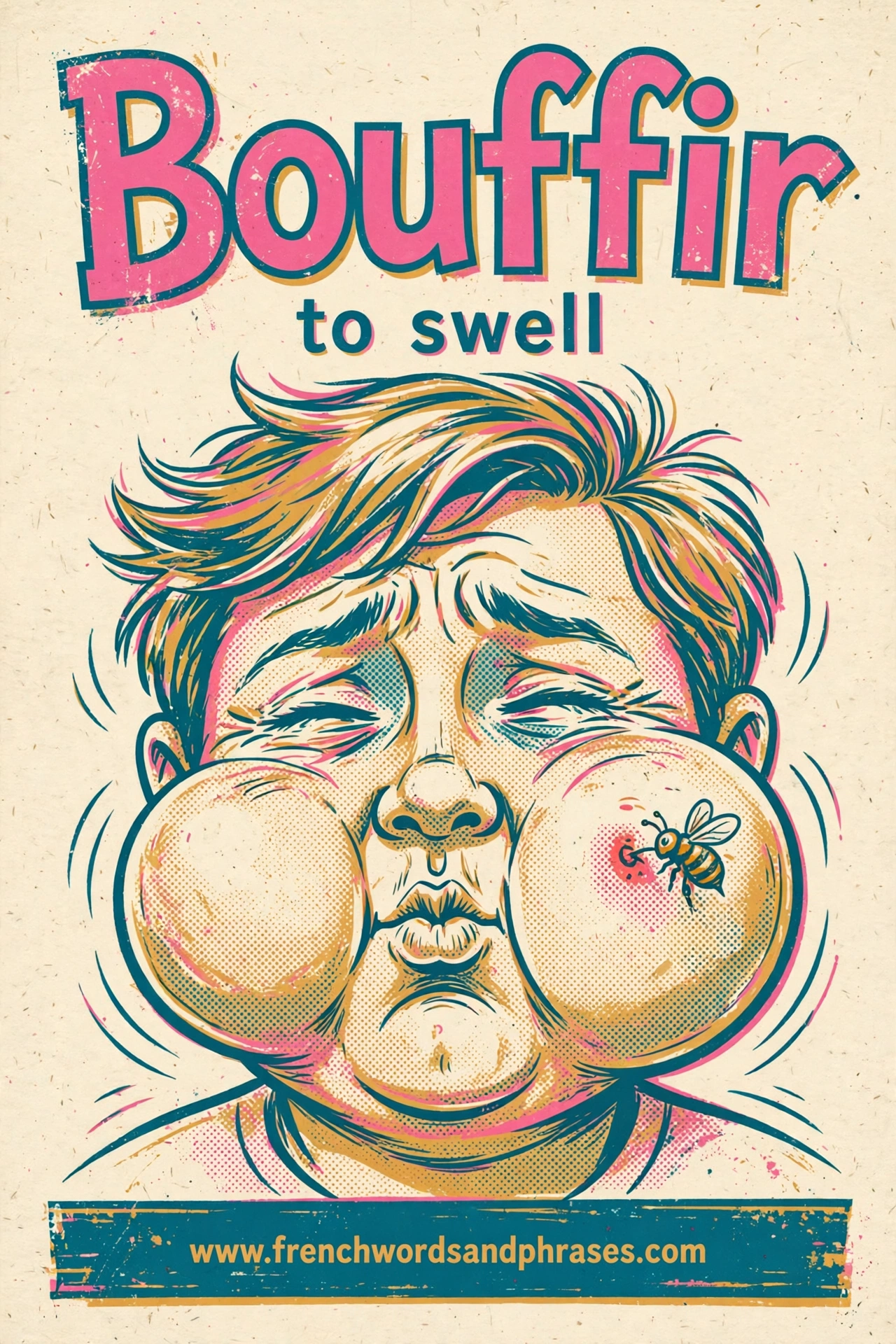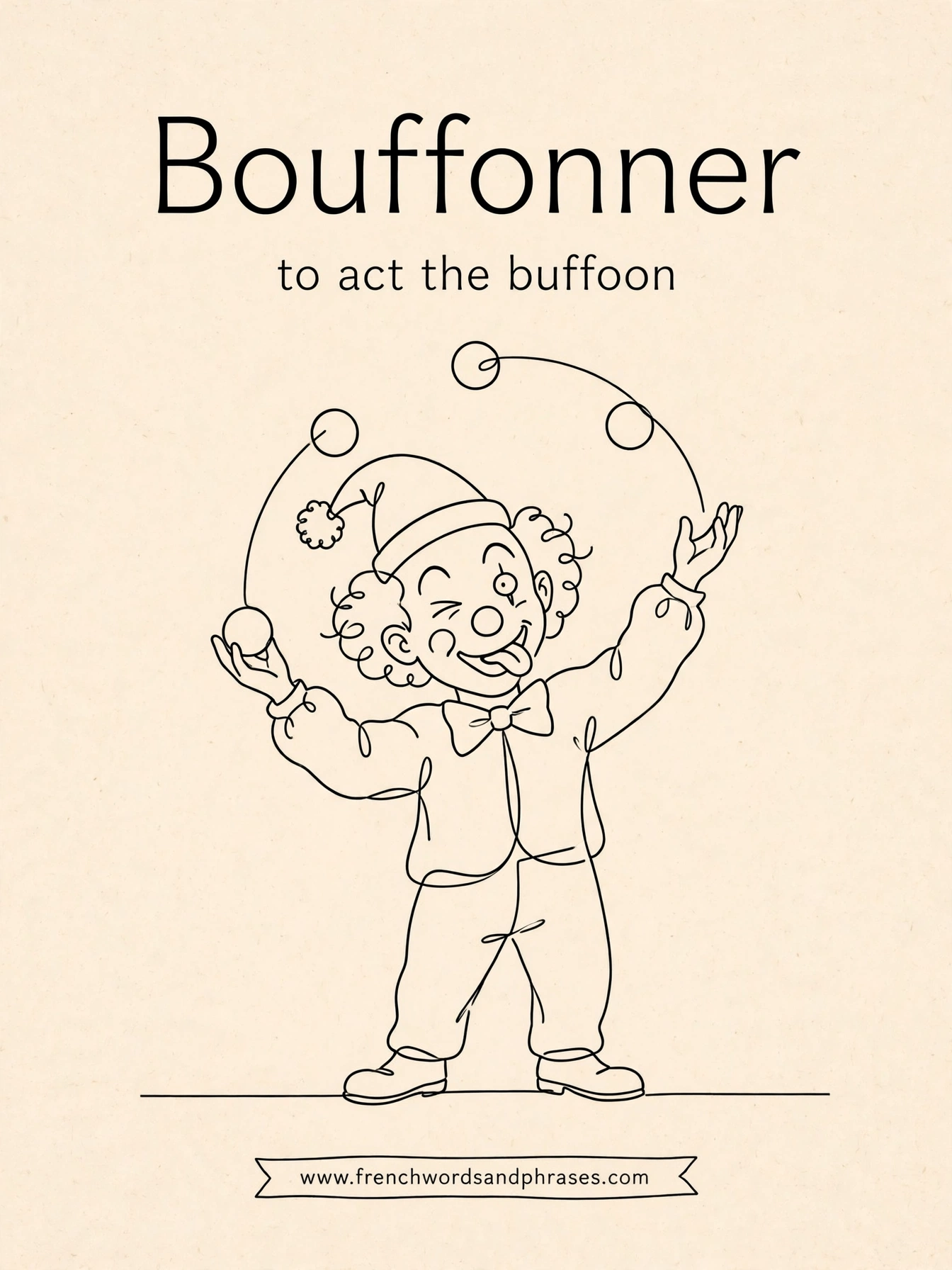
A French Word to Live By
How to Conjugate Bouffonner in French
/bu.fɔ.ne/
Bouffonner means to act the buffoon — to clown around, pulling faces and playing the fool to make people laugh.
A class clown at the back of the room, a uncle at Christmas lunch with a napkin on his head — bouffonner is the verb of deliberate silliness: someone performing the fool, on purpose, for an audience that is laughing too hard to stop him.
In this guide, you’ll learn how to conjugate bouffonner in all the major French tenses and moods. Explore complete conjugation tables, French examples, English translations, and practice quizzes.
Understanding the French Verb Bouffonner
Bouffonner is a regular French verb belonging to the first group of verbs, those ending in-er.
It means to act the buffoon. It is used of children, friends and performers who clown deliberately — at the table, in class, on stage — and of public figures accused of turning serious occasions into farce: bouffonner devant les caméras.
Verb classification: First group (-er)
Auxiliary verb: Avoir
Past participle: bouffonné
Present participle: bouffonnant
English equivalents: To act the buffoon, to clown around, to play the fool; faire le bouffon — to play the clown; un bouffon — a buffoon, a jester; les bouffonneries — clowning, antics; bouffonner pour amuser la galerie — to clown around to entertain the crowd.
One important detail: bouffonner keeps its double -nn- everywhere, because it is built on the noun un bouffon (a buffoon, a jester): je bouffonne, nous bouffonnons, ils bouffonnent, past participle bouffonné. The double consonant is the noun showing through the verb. The tone is teasing rather than cruel: to say someone bouffonne is to say he is performing — the moment the fooling stops being a performance, French switches to faire l’idiot or déconner.
Experience the Word
Bouffonner is the verb of the volunteer fool — nobody falls into it by accident; it is a role someone picks up and performs.
Imagine a long family lunch that has gone quiet. Uncle Marc balances a spoon on his nose, crosses his eyes and bouffonne for the grandchildren until the whole table is crying with laughter — the meal was over, but the afternoon has been saved.
He is not drunk and he is not mad. He is clowning — bouffonnant, deliberately, for love of the audience.
How to Conjugate Bouffonner: Complete French Conjugation Guide
Let’s explore every major conjugation of bouffonner, beginning with the indicative mood.
How to Conjugate Bouffonner in the Indicative Mood
The indicative mood is used to express facts, observations, actions, and events.
How to Conjugate Bouffonner in the Present Tense (Présent)
Used for actions happening now, habitual actions, and general truths.
| Subject | Conjugation |
|---|---|
| je | bouffonne |
| tu | bouffonnes |
| il / elle | bouffonne |
| nous | bouffonnons |
| vous | bouffonnez |
| ils / elles | bouffonnent |
Example
Il bouffonne sans arrêt pour faire rire les enfants.
He clowns around nonstop to make the children laugh.
Quick Quiz 1
Complete the sentence:
Nous ______ pour amuser les invités.
Reveal the answer
bouffonnons
Nous bouffonnons pour amuser les invités.
We are clowning around to amuse the guests.
How to Conjugate Bouffonner in the Passé Composé
Used for completed actions in the past. Bouffonner takes the auxiliary verb avoir.
| Subject | Conjugation |
|---|---|
| j’ | ai bouffonné |
| tu | as bouffonné |
| il / elle | a bouffonné |
| nous | avons bouffonné |
| vous | avez bouffonné |
| ils / elles | ont bouffonné |
Example
Les deux acteurs ont bouffonné pendant toute la pièce.
The two actors clowned around throughout the whole play.
How to Conjugate Bouffonner in the Imparfait (Imperfect Tense)
Used for habitual past actions, descriptions, and ongoing situations in the past.
| Subject | Conjugation |
|---|---|
| je | bouffonnais |
| tu | bouffonnais |
| il / elle | bouffonnait |
| nous | bouffonnions |
| vous | bouffonniez |
| ils / elles | bouffonnaient |
Example
Enfant, il bouffonnait en classe dès que le maître tournait le dos.
As a child, he would play the fool in class as soon as the teacher turned his back.
Quick Quiz 2
Choose the correct form:
The actors clowned throughout the play.
Les acteurs ______ pendant toute la pièce. (ont bouffonné / sont bouffonnés)
Reveal the answer
ont bouffonné
Les acteurs ont bouffonné pendant toute la pièce.
Bouffonner takes avoir.
How to Conjugate Bouffonner in the Plus-que-parfait
Used to describe an action that had already been completed before another past event.
| Subject | Conjugation |
|---|---|
| j’ | avais bouffonné |
| tu | avais bouffonné |
| il / elle | avait bouffonné |
| nous | avions bouffonné |
| vous | aviez bouffonné |
| ils / elles | avaient bouffonné |
Example
Elle avait bouffonné toute la soirée avant de redevenir sérieuse.
She had clowned around all evening before turning serious again.
How to Conjugate Bouffonner in the Passé Simple
Primarily used in formal writing, literature, and historical narratives. It is rarely used in everyday conversation.
| Subject | Conjugation |
|---|---|
| je | bouffonnai |
| tu | bouffonnas |
| il / elle | bouffonna |
| nous | bouffonnâmes |
| vous | bouffonnâtes |
| ils / elles | bouffonnèrent |
Example
Le valet bouffonna si bien que le roi le garda près de lui.
The servant played the fool so well that the king kept him close.
How to Conjugate Bouffonner in the Passé Antérieur
A literary tense used to express an action completed immediately before another past action, generally in the passé simple.
| Subject | Conjugation |
|---|---|
| j’ | eus bouffonné |
| tu | eus bouffonné |
| il / elle | eut bouffonné |
| nous | eûmes bouffonné |
| vous | eûtes bouffonné |
| ils / elles | eurent bouffonné |
Example
Quand il eut bouffonné assez longtemps, le public se lassa.
When he had clowned long enough, the audience grew tired of it.
How to Conjugate Bouffonner in the Future Tense (Futur Simple)
Used to describe actions that will take place in the future.
| Subject | Conjugation |
|---|---|
| je | bouffonnerai |
| tu | bouffonneras |
| il / elle | bouffonnera |
| nous | bouffonnerons |
| vous | bouffonnerez |
| ils / elles | bouffonneront |
Example
Demain, les animateurs bouffonneront pour la fête de l’école.
Tomorrow, the entertainers will clown around for the school fête.
How to Conjugate Bouffonner in the Futur Antérieur (Future Perfect)
Used for an action that will have been completed before a particular point in the future.
| Subject | Conjugation |
|---|---|
| j’ | aurai bouffonné |
| tu | auras bouffonné |
| il / elle | aura bouffonné |
| nous | aurons bouffonné |
| vous | aurez bouffonné |
| ils / elles | auront bouffonné |
Example
À la fin du spectacle, ils auront bouffonné pendant deux heures.
By the end of the show, they will have been clowning for two hours.
How to Conjugate Bouffonner in the Near Future (Futur Proche)
Used to describe something that is going to happen soon. Formed with aller + infinitive.
| Subject | Conjugation |
|---|---|
| je | vais bouffonner |
| tu | vas bouffonner |
| il / elle | va bouffonner |
| nous | allons bouffonner |
| vous | allez bouffonner |
| ils / elles | vont bouffonner |
Example
Attention, il va encore bouffonner devant tout le monde.
Careful, he is going to clown around in front of everyone again.
How to Conjugate Bouffonner in the Conditional Mood
The conditional mood expresses what would happen under certain circumstances. It is also frequently used to make polite requests or express wishes.
How to Conjugate Bouffonner in the Present Conditional
| Subject | Conjugation |
|---|---|
| je | bouffonnerais |
| tu | bouffonnerais |
| il / elle | bouffonnerait |
| nous | bouffonnerions |
| vous | bouffonneriez |
| ils / elles | bouffonneraient |
Example
Sans public, il bouffonnerait beaucoup moins.
Without an audience, he would clown around far less.
How to Conjugate Bouffonner in the Past Conditional
| Subject | Conjugation |
|---|---|
| j’ | aurais bouffonné |
| tu | aurais bouffonné |
| il / elle | aurait bouffonné |
| nous | aurions bouffonné |
| vous | auriez bouffonné |
| ils / elles | auraient bouffonné |
Example
Tu aurais moins bouffonné si le directeur avait été là.
You would have clowned less if the headmaster had been there.
Bouffonner in the Literary Past Conditional Form
This less common literary form uses the imperfect subjunctive of avoir.
| Subject | Conjugation |
|---|---|
| j’ | eusse bouffonné |
| tu | eusses bouffonné |
| il / elle | eût bouffonné |
| nous | eussions bouffonné |
| vous | eussiez bouffonné |
| ils / elles | eussent bouffonné |
Example
Le fou eût bouffonné devant le trône sans crainte.
The jester would have clowned before the throne without fear.
How to Conjugate Bouffonner in the Subjunctive Mood
The subjunctive is used to express wishes, emotions, doubts, necessity, and uncertainty. It frequently follows expressions such as il faut que (it is necessary that) or bien que (although).
How to Conjugate Bouffonner in the Present Subjunctive
| Subject | Conjugation |
|---|---|
| que je | bouffonne |
| que tu | bouffonnes |
| qu’il / qu’elle | bouffonne |
| que nous | bouffonnions |
| que vous | bouffonniez |
| qu’ils / qu’elles | bouffonnent |
Example
Je ne crois pas qu’il bouffonne pour se moquer de nous.
I do not think he is clowning to make fun of us.
Quick Quiz 3
Complete the sentence using the subjunctive:
Il fallait que tu ______ pour détendre l’atmosphère.
Reveal the answer
bouffonnes
Il fallait que tu bouffonnes pour détendre l’atmosphère.
You had to clown around to lighten the atmosphere.
How to Conjugate Bouffonner in the Imperfect Subjunctive
A literary tense, rarely encountered in modern spoken French.
| Subject | Conjugation |
|---|---|
| que je | bouffonnasse |
| que tu | bouffonnasses |
| qu’il / qu’elle | bouffonnât |
| que nous | bouffonnassions |
| que vous | bouffonnassiez |
| qu’ils / qu’elles | bouffonnassent |
Example
Il fallait qu’il bouffonnât pour détendre l’atmosphère.
He had to clown around to lighten the atmosphere.
How to Conjugate Bouffonner in the Pluperfect Subjunctive
A literary construction used to express an action completed before another past action.
| Subject | Conjugation |
|---|---|
| que j’ | eusse bouffonné |
| que tu | eusses bouffonné |
| qu’il / qu’elle | eût bouffonné |
| que nous | eussions bouffonné |
| que vous | eussiez bouffonné |
| qu’ils / qu’elles | eussent bouffonné |
Example
On racontait qu’ils eussent bouffonné devant le roi lui-même.
People said they had clowned before the king himself.
How to Conjugate Bouffonner in the Past Subjunctive
| Subject | Conjugation |
|---|---|
| que j’ | aie bouffonné |
| que tu | aies bouffonné |
| qu’il / qu’elle | ait bouffonné |
| que nous | ayons bouffonné |
| que vous | ayez bouffonné |
| qu’ils / qu’elles | aient bouffonné |
Example
Je suis content qu’elle ait bouffonné un peu pour les enfants.
I am glad she clowned a little for the children.
How to Conjugate Bouffonner in the Imperative
The imperative is used to give commands, instructions, invitations, or suggestions. Subject pronouns are omitted.
How to Conjugate Bouffonner in the Present Imperative
| Person | Conjugation |
|---|---|
| (tu) | bouffonne |
| (nous) | bouffonnons |
| (vous) | bouffonnez |
Example
Bouffonne un peu, les enfants s’ennuient !
Clown around a bit, the children are bored!
Quick Quiz 4
How would you say Clown around a bit (tu form)?
Reveal the answer
Bouffonne un peu !
French Participles of Bouffonner
Participles are verb forms that can be used in compound tenses and other grammatical constructions.
Present Participle of Bouffonner
bouffonnant
En bouffonnant ainsi, il cachait sa timidité.
By clowning like that, he was hiding his shyness.
Past Participle of Bouffonner
bouffonné
Bouffonné par les uns, adoré par les autres, le personnage divise.
Clowned by some, adored by others, the character divides opinion.
Bouffonner in Everyday French: Real-Life Examples
Now that you know the conjugations, let’s see how bouffonner appears in everyday French.
Example 1 — Present
Il bouffonne pour faire rire les enfants.
He clowns around to make the children laugh.
Example 2 — Passé composé
Ils ont bouffonné pendant tout le repas.
They clowned around throughout the meal.
Example 3 — Imparfait
En classe, il bouffonnait sans arrêt.
In class, he played the fool nonstop.
Example 4 — Future
Les clowns bouffonneront à la fête.
The clowns will clown around at the fête.
Example 5 — Conditional
Sans public, elle bouffonnerait moins.
Without an audience, she would clown less.
Example 6 — Imperative
Bouffonnez un peu pour les petits !
Clown around a bit for the little ones!
Beyond Translation: The Meaning of Bouffonner
English buffoon is the same word, borrowed from the same Italian buffone — but English mostly keeps it as a noun of contempt, while French bouffonner is a living verb, and often an affectionate one.
The bouffon was once a professional.
Court jesters — les bouffons du roi — were licensed to say through jokes what no one else dared say aloud; when a modern French speaker bouffonne, a little of that old licence survives: the fool may speak the truth.
How to Remember the French Verb Bouffonner
Remember it this way: Bouffonner is about the court jester at work — the licensed fool performing for the table.
- Built on un bouffon, a jester: the double -nn- never drops — je bouffonne, nous bouffonnons.
- It is a performance: bouffonner is clowning on purpose, for an audience.
- Regular -er: je bouffonne, nous bouffonnons, past participle bouffonné.
The key idea is the court jester at work — the licensed fool performing for the table.
Test Your Knowledge of Bouffonner
Let’s see how much you’ve learned. Try answering these questions before revealing the answers.
Question 1
What noun is bouffonner built on, and what spelling does it keep?
Reveal the answer
Un bouffon, a buffoon or jester — the verb keeps the double -nn- everywhere: nous bouffonnons.
Question 2
How do you say He clowns around to make the children laugh in French?
Reveal the answer
Il bouffonne pour faire rire les enfants.
Question 3
Translate: They clowned around throughout the meal.
Reveal the answer
Ils ont bouffonné pendant tout le repas.
Question 4
What is the past participle of bouffonner?
Reveal the answer
Bouffonné.
Question 5
Complete the sentence:
Je ne crois pas qu’il ______ pour se moquer de nous.
Reveal the answer
bouffonne
Je ne crois pas qu’il bouffonne pour se moquer de nous.
I do not think he is clowning to make fun of us.
Your Final Challenge
Can You Use It?
How would you say this in French?
He clowns at every family meal, and yet he is the one who says the truths nobody else dares to say.
Reveal the answer
Il bouffonne à chaque repas de famille, et pourtant c’est lui qui dit les vérités que personne n’ose dire.
He clowns at every family meal, and yet he is the one who says the truths nobody else dares to say.
A little French. A little curiosity. A richer everyday life.
LEARN FRENCH ONE WORD AT A TIME