A French Word to Live By
How to Conjugate Tressauter in French
/tʁe.so.te/
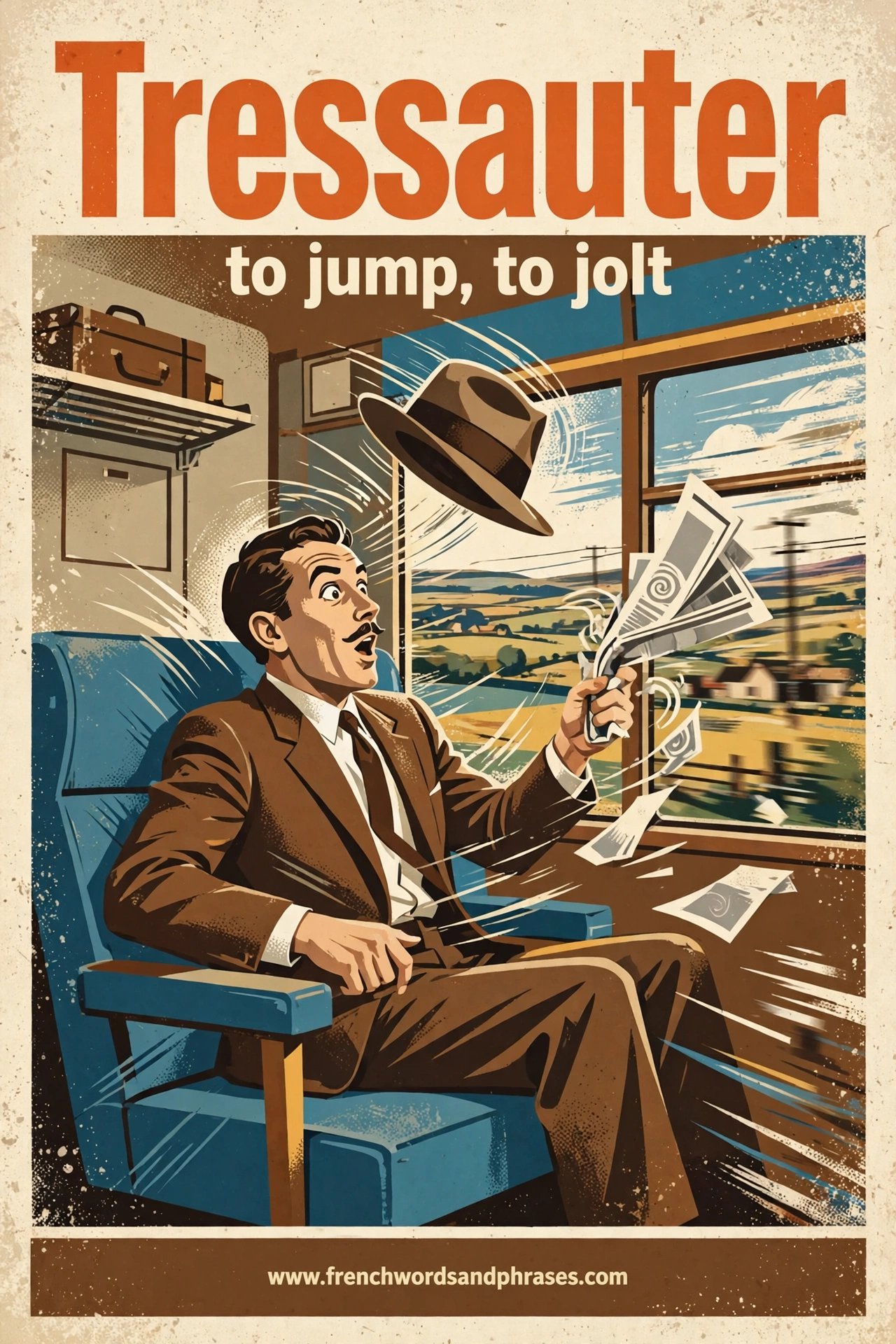
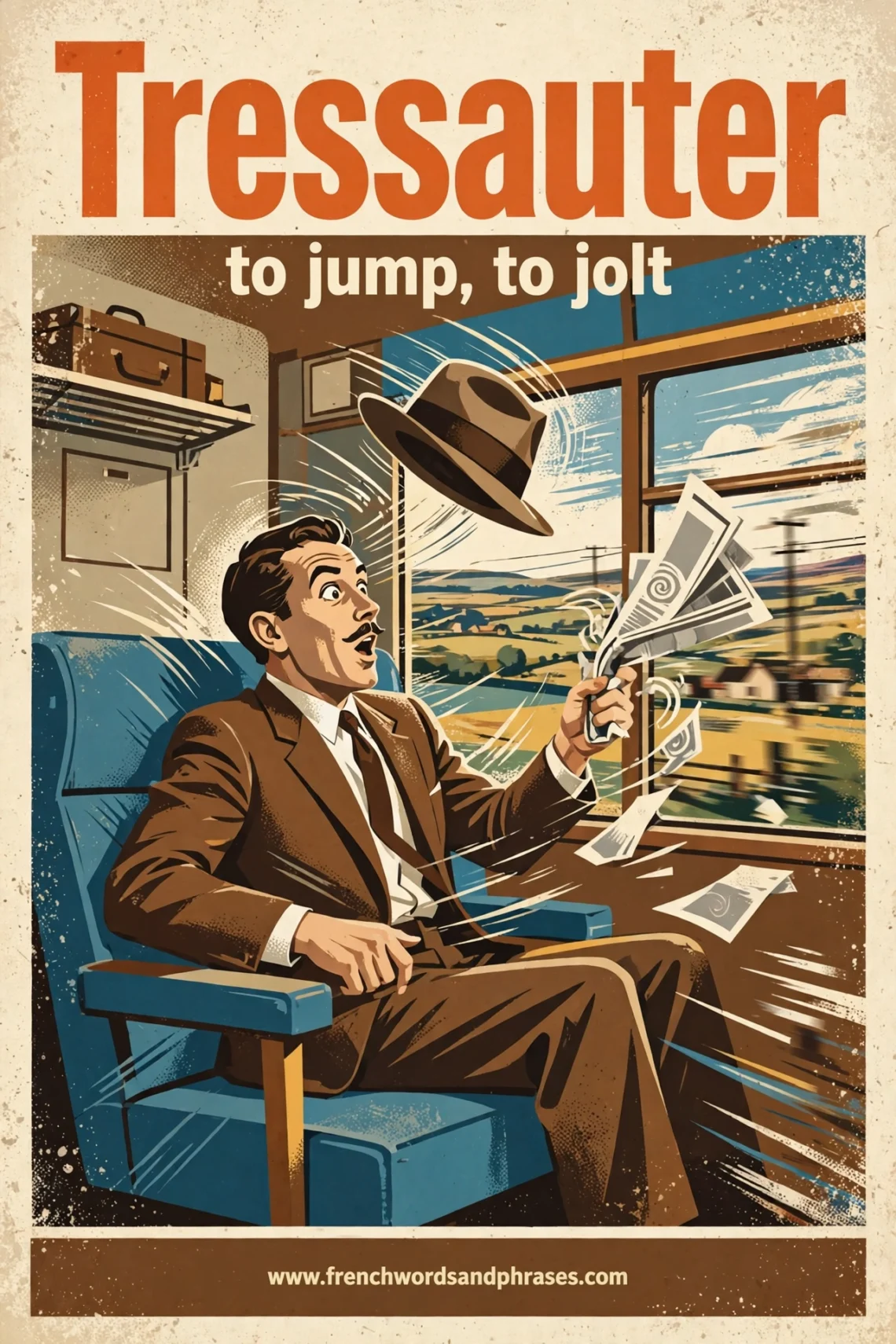
Tressauter means to jump or start — the sudden little leap of the whole body when a door slams, a phone rings, or a car hits a bump.
A sleeper woken by a thunderclap, a passenger thrown against the window as the bus hits a pothole, a reader who jumps at a knock on the door — tressauter is the verb of the startle, the body’s quick, involuntary jump.
In this guide, you’ll learn how to conjugate tressauter in all the major French tenses and moods. Explore complete conjugation tables, French examples, English translations, and practice quizzes.
Understanding the French Verb Tressauter
Tressauter is a regular French verb belonging to the first group of verbs, those ending in -er.
It means to jump, to jolt. It is commonly used for people starting at sudden noises, bad news or unexpected touches, for passengers and vehicles jolting over rough roads, and for hearts and bodies that leap at a shock — mon cœur a tressauté, my heart skipped a beat.
Verb classification: First group (-er)
Auxiliary verb: Avoir
Past participle: tressauté
Present participle: tressautant
English equivalents: To start, to jump, to jolt, to give a start; faire tressauter quelqu’un — to make someone jump; tressauter de peur — to start with fear; la voiture tressaute — the car jolts.
One important detail: tressauter is sauter (to jump) with the intensifying prefix tre-, an old cousin of très — a jump on top of a jump, which is exactly what a startle feels like. It is a regular -er verb: je tressaute, nous tressautons, past participle tressauté. The jump is involuntary: you tressautes at noises, surprises and bumps in the road, and vehicles tressautent over them too.
Experience the Word
Tressauter is the verb of the unplanned jump — the body reacting a second before the mind understands.
Imagine a night train crossing the countryside. In the dim carriage, everyone is asleep — until the brakes scream for a level crossing and the whole carriage tressaute: heads lift, eyes open, hearts hammer, and then, slowly, the sleepers settle again.
Nobody decided to jump. Everybody started — tout le monde a tressauté — together.
How to Conjugate Tressauter: Complete French Conjugation Guide
Let’s explore every major conjugation of tressauter, beginning with the indicative mood.
How to Conjugate Tressauter in the Indicative Mood
The indicative mood is used to express facts, observations, actions, and events.
How to Conjugate Tressauter in the Present Tense (Présent)
Used for actions happening now, habitual actions, and general truths.
| Subject | Conjugation |
|---|---|
| je | tressaute |
| tu | tressautes |
| il / elle | tressaute |
| nous | tressautons |
| vous | tressautez |
| ils / elles | tressautent |
Example
Je tressaute chaque fois que la porte claque.
I jump every time the door slams.
Quick Quiz 1
Complete the sentence:
Nous ______ à chaque coup de tonnerre.
Reveal the answer
tressautons
Nous tressautons à chaque coup de tonnerre.
We jump at every clap of thunder.
How to Conjugate Tressauter in the Passé Composé
Used for completed actions in the past. Tressauter takes the auxiliary verb avoir.
| Subject | Conjugation |
|---|---|
| j’ | ai tressauté |
| tu | as tressauté |
| il / elle | a tressauté |
| nous | avons tressauté |
| vous | avez tressauté |
| ils / elles | ont tressauté |
Example
Elle a tressauté en entendant son nom dans le haut-parleur.
She started on hearing her name over the loudspeaker.
How to Conjugate Tressauter in the Imparfait (Imperfect Tense)
Used for habitual past actions, descriptions, and ongoing situations in the past.
| Subject | Conjugation |
|---|---|
| je | tressautais |
| tu | tressautais |
| il / elle | tressautait |
| nous | tressautions |
| vous | tressautiez |
| ils / elles | tressautaient |
Example
La vieille voiture tressautait sur les pavés.
The old car used to jolt over the cobblestones.
Quick Quiz 2
Choose the correct form:
She started on hearing her name.
Elle ______ en entendant son nom. (a tressauté / est tressautée)
Reveal the answer
a tressauté
Elle a tressauté en entendant son nom.
Tressauter takes avoir.
How to Conjugate Tressauter in the Plus-que-parfait
Used to describe an action that had already been completed before another past event.
| Subject | Conjugation |
|---|---|
| j’ | avais tressauté |
| tu | avais tressauté |
| il / elle | avait tressauté |
| nous | avions tressauté |
| vous | aviez tressauté |
| ils / elles | avaient tressauté |
Example
Il avait tressauté bien avant le tonnerre, au premier éclair.
He had jumped well before the thunder, at the first flash of lightning.
How to Conjugate Tressauter in the Passé Simple
Primarily used in formal writing, literature, and historical narratives. It is rarely used in everyday conversation.
| Subject | Conjugation |
|---|---|
| je | tressautai |
| tu | tressautas |
| il / elle | tressauta |
| nous | tressautâmes |
| vous | tressautâtes |
| ils / elles | tressautèrent |
Example
Au coup de feu, toute la salle tressauta.
At the gunshot, the whole hall started.
How to Conjugate Tressauter in the Passé Antérieur
A literary tense used to express an action completed immediately before another past action, generally in the passé simple.
| Subject | Conjugation |
|---|---|
| j’ | eus tressauté |
| tu | eus tressauté |
| il / elle | eut tressauté |
| nous | eûmes tressauté |
| vous | eûtes tressauté |
| ils / elles | eurent tressauté |
Example
Quand le train eut tressauté sur l’aiguillage, il ralentit.
When the train had jolted over the points, it slowed down.
How to Conjugate Tressauter in the Future Tense (Futur Simple)
Used to describe actions that will take place in the future.
| Subject | Conjugation |
|---|---|
| je | tressauterai |
| tu | tressauteras |
| il / elle | tressautera |
| nous | tressauterons |
| vous | tressauterez |
| ils / elles | tressauteront |
Example
Tu tressauteras encore si le chien aboie cette nuit.
You will jump again if the dog barks tonight.
How to Conjugate Tressauter in the Futur Antérieur (Future Perfect)
Used for an action that will have been completed before a particular point in the future.
| Subject | Conjugation |
|---|---|
| j’ | aurai tressauté |
| tu | auras tressauté |
| il / elle | aura tressauté |
| nous | aurons tressauté |
| vous | aurez tressauté |
| ils / elles | auront tressauté |
Example
À la fin du film, nous aurons tressauté dix fois.
By the end of the film, we will have jumped ten times.
How to Conjugate Tressauter in the Near Future (Futur Proche)
Used to describe something that is going to happen soon. Formed with aller + infinitive.
| Subject | Conjugation |
|---|---|
| je | vais tressauter |
| tu | vas tressauter |
| il / elle | va tressauter |
| nous | allons tressauter |
| vous | allez tressauter |
| ils / elles | vont tressauter |
Example
Attention, la voiture va tressauter sur ce dos-d’âne.
Careful, the car is going to jolt over this speed bump.
How to Conjugate Tressauter in the Conditional Mood
The conditional mood expresses what would happen under certain circumstances. It is also frequently used to make polite requests or express wishes.
How to Conjugate Tressauter in the Present Conditional
| Subject | Conjugation |
|---|---|
| je | tressauterais |
| tu | tressauterais |
| il / elle | tressauterait |
| nous | tressauterions |
| vous | tressauteriez |
| ils / elles | tressauteraient |
Example
Avec de meilleurs amortisseurs, le bus ne tressauterait pas.
With better shock absorbers, the bus would not jolt.
How to Conjugate Tressauter in the Past Conditional
| Subject | Conjugation |
|---|---|
| j’ | aurais tressauté |
| tu | aurais tressauté |
| il / elle | aurait tressauté |
| nous | aurions tressauté |
| vous | auriez tressauté |
| ils / elles | auraient tressauté |
Example
Elle aurait tressauté si l’alarme avait sonné.
She would have jumped if the alarm had gone off.
Tressauter in the Literary Past Conditional Form
This less common literary form uses the imperfect subjunctive of avoir.
| Subject | Conjugation |
|---|---|
| j’ | eusse tressauté |
| tu | eusses tressauté |
| il / elle | eût tressauté |
| nous | eussions tressauté |
| vous | eussiez tressauté |
| ils / elles | eussent tressauté |
Example
Le dormeur eût tressauté au moindre bruit.
The sleeper would have started at the slightest noise.
How to Conjugate Tressauter in the Subjunctive Mood
The subjunctive is used to express wishes, emotions, doubts, necessity, and uncertainty. It frequently follows expressions such as il faut que (it is necessary that) or bien que (although).
How to Conjugate Tressauter in the Present Subjunctive
| Subject | Conjugation |
|---|---|
| que je | tressaute |
| que tu | tressautes |
| qu’il / qu’elle | tressaute |
| que nous | tressautions |
| que vous | tressautiez |
| qu’ils / qu’elles | tressautent |
Example
Il est normal que tu tressautes quand on te réveille ainsi.
It is normal that you jump when someone wakes you like that.
Quick Quiz 3
Complete the sentence using the subjunctive:
Il est normal que vous ______ à ce bruit soudain.
Reveal the answer
tressautiez
Il est normal que vous tressautiez à ce bruit soudain.
It is normal that you jump at this sudden noise.
How to Conjugate Tressauter in the Imperfect Subjunctive
A literary tense, rarely encountered in modern spoken French.
| Subject | Conjugation |
|---|---|
| que je | tressautasse |
| que tu | tressautasses |
| qu’il / qu’elle | tressautât |
| que nous | tressautassions |
| que vous | tressautassiez |
| qu’ils / qu’elles | tressautassent |
Example
La route était si mauvaise que le car tressautât sans relâche.
The road was so bad that the coach jolted without respite.
How to Conjugate Tressauter in the Pluperfect Subjunctive
A literary construction used to express an action completed before another past action.
| Subject | Conjugation |
|---|---|
| que j’ | eusse tressauté |
| que tu | eusses tressauté |
| qu’il / qu’elle | eût tressauté |
| que nous | eussions tressauté |
| que vous | eussiez tressauté |
| qu’ils / qu’elles | eussent tressauté |
Example
On racontait que le roi eût tressauté à l’annonce de la défaite.
People told how the king had started at the news of the defeat.
How to Conjugate Tressauter in the Past Subjunctive
| Subject | Conjugation |
|---|---|
| que j’ | aie tressauté |
| que tu | aies tressauté |
| qu’il / qu’elle | ait tressauté |
| que nous | ayons tressauté |
| que vous | ayez tressauté |
| qu’ils / qu’elles | aient tressauté |
Example
Je suis désolé que le bruit t’ait fait tressauter.
I am sorry the noise made you jump.
How to Conjugate Tressauter in the Imperative
The imperative is used to give commands, instructions, invitations, or suggestions. Subject pronouns are omitted.
How to Conjugate Tressauter in the Present Imperative
| Person | Conjugation |
|---|---|
| (tu) | tressaute |
| (nous) | tressautons |
| (vous) | tressautez |
Example
Tressaute si tu veux, le film ne fait que commencer !
Jump all you like, the film has only just begun!
Quick Quiz 4
How would you say Jump all you like (tu form)?
Reveal the answer
Tressaute si tu veux !
French Participles of Tressauter
Participles are verb forms that can be used in compound tenses and other grammatical constructions.
Present Participle of Tressauter
tressautant
Tressautant à chaque explosion, le chat se cacha sous le lit.
Starting at every explosion, the cat hid under the bed.
Past Participle of Tressauter
tressauté
Tressauté à chaque nid-de-poule, le chargement arriva en désordre.
Jolted at every pothole, the load arrived in a mess.
Tressauter in Everyday French: Real-Life Examples
Now that you know the conjugations, let’s see how tressauter appears in everyday French.
Example 1 — Present
Je tressaute quand la porte claque.
I jump when the door slams.
Example 2 — Passé composé
Elle a tressauté en entendant son nom.
She started on hearing her name.
Example 3 — Imparfait
La voiture tressautait sur les pavés.
The car used to jolt over the cobblestones.
Example 4 — Future
Tu tressauteras si le chien aboie.
You will jump if the dog barks.
Example 5 — Conditional
Le bus ne tressauterait pas avec de bons amortisseurs.
The bus would not jolt with good shock absorbers.
Example 6 — Imperative
Tressaute si tu veux, ce n’est qu’un film !
Jump all you like, it is only a film!
Beyond Translation: The Meaning of Tressauter
English separates the two lives of this verb — people start, vehicles jolt; French tressauter happily does both with one word.
And it keeps the loveliest startle of all.
Mon cœur a tressauté — my heart leapt — is what French says when the beloved walks into the room: the same jump as the slammed door, at the opposite end of feeling.
How to Remember the French Verb Tressauter
Remember it this way: Tressauter is about the body’s involuntary jump — at a slam, a bump, a beloved face.
- Tressauter is sauter with a tre- on top — a jump on a jump, a startle.
- People tressautent at noises; cars tressautent over bumps; hearts tressautent at surprises.
- Regular -er: je tressaute, nous tressautons, past participle tressauté.
The key idea is the body’s involuntary jump — at a slam, a bump, a beloved face.
Test Your Knowledge of Tressauter
Let’s see how much you’ve learned. Try answering these questions before revealing the answers.
Question 1
What does mon cœur a tressauté mean?
Reveal the answer
My heart leapt — it skipped a beat with shock or joy.
Question 2
How do you say I jump every time the door slams in French?
Reveal the answer
Je tressaute chaque fois que la porte claque.
Question 3
Translate: The old car used to jolt over the cobblestones.
Reveal the answer
La vieille voiture tressautait sur les pavés.
Question 4
What is the past participle of tressauter?
Reveal the answer
Tressauté.
Question 5
Complete the sentence:
Il est normal que tu ______ quand on te réveille ainsi.
Reveal the answer
tressautes
Il est normal que tu tressautes quand on te réveille ainsi.
It is normal that you jump when someone wakes you like that.
Your Final Challenge
Can You Use It?
How would you say this in French?
The thunder cracks, the whole village jumps, then nervous laughter replaces the fear.
Reveal the answer
Le tonnerre éclate, tout le village tressaute, puis le rire nerveux remplace la peur.
The thunder cracks, the whole village jumps, then nervous laughter replaces the fear.
A little French. A little curiosity. A richer everyday life.
LEARN FRENCH ONE WORD AT A TIME