
A French Word to Live By
How to Conjugate Tresser in French
/tʁe.se/
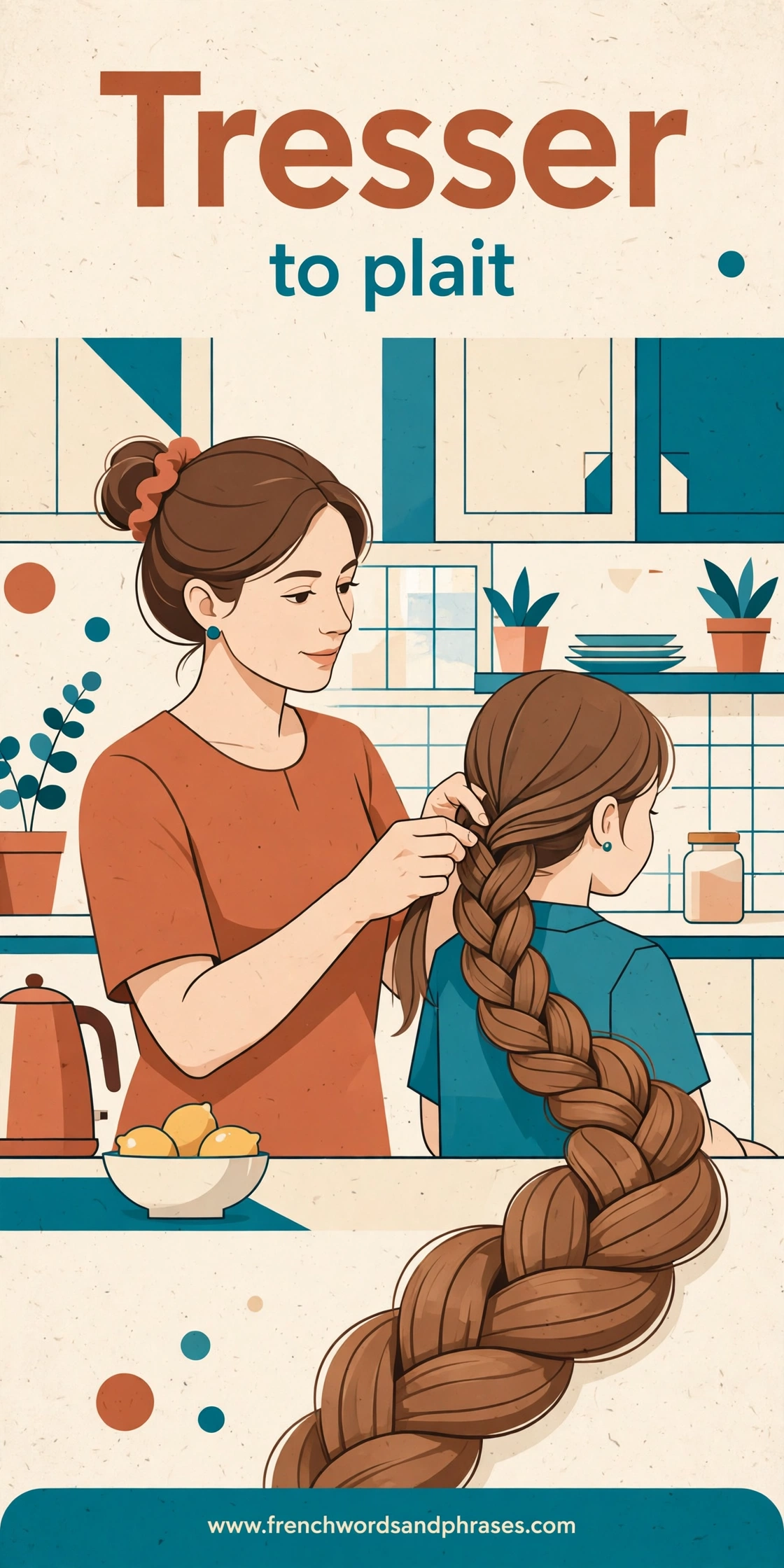
Tresser means to plait — to weave strands over and under each other into braids, baskets, crowns and ropes.
Three strands of hair crossing over and under, willow withies bending into a basket, flowers woven into a crown for a summer festival — tresser is the verb of the braid, one of the oldest patterns human hands ever learned.
In this guide, you’ll learn how to conjugate tresser in all the major French tenses and moods. Explore complete conjugation tables, French examples, English translations, and practice quizzes.
Understanding the French Verb Tresser
Tresser is a regular French verb belonging to the first group of verbs, those ending in -er.
It means to plait. It is commonly used for braiding hair into plaits, weaving baskets, mats and wicker, plaiting garlic and onion strings for the kitchen, braiding dough for festive breads, and weaving flower crowns and garlands.
Verb classification: First group (-er)
Auxiliary verb: Avoir
Past participle: tressé
Present participle: tressant
English equivalents: To plait, to braid, to weave; tresser les cheveux — to braid hair; une tresse — a plait, a braid; tresser une couronne — to weave a garland; tresser l’osier — to weave wicker.
One important detail: tresser is a regular -er verb — je tresse, nous tressons, past participle tressé — and its noun, une tresse, is the braid itself, whether of hair, garlic, onions or rope. Watch the family resemblance: the same weaving idea gives tressé as an adjective for anything plaited, from a loaf of braided brioche to the interlaced pattern of a wicker chair.
Experience the Word
Tresser is the verb of three strands becoming one — order and beauty made by crossing over.
Imagine a grandmother on a doorstep in Provence, a granddaughter between her knees. The old hands move without looking: left over middle, right over middle, and a shining tresse grows down the child’s back while the swallows stitch the evening sky above them.
It takes a minute and it holds all day. The hair has been plaited — tressé — with a thousand years of practice.
How to Conjugate Tresser: Complete French Conjugation Guide
Let’s explore every major conjugation of tresser, beginning with the indicative mood.
How to Conjugate Tresser in the Indicative Mood
The indicative mood is used to express facts, observations, actions, and events.
How to Conjugate Tresser in the Present Tense (Présent)
Used for actions happening now, habitual actions, and general truths.
| Subject | Conjugation |
|---|---|
| je | tresse |
| tu | tresses |
| il / elle | tresse |
| nous | tressons |
| vous | tressez |
| ils / elles | tressent |
Example
Elle tresse les cheveux de sa fille chaque matin.
She braids her daughter’s hair every morning.
Quick Quiz 1
Complete the sentence:
Nous ______ l’osier pour faire des paniers.
Reveal the answer
tressons
Nous tressons l’osier pour faire des paniers.
We weave wicker to make baskets.
How to Conjugate Tresser in the Passé Composé
Used for completed actions in the past. Tresser takes the auxiliary verb avoir.
| Subject | Conjugation |
|---|---|
| j’ | ai tressé |
| tu | as tressé |
| il / elle | a tressé |
| nous | avons tressé |
| vous | avez tressé |
| ils / elles | ont tressé |
Example
Nous avons tressé une couronne de fleurs pour la fête.
We wove a crown of flowers for the festival.
How to Conjugate Tresser in the Imparfait (Imperfect Tense)
Used for habitual past actions, descriptions, and ongoing situations in the past.
| Subject | Conjugation |
|---|---|
| je | tressais |
| tu | tressais |
| il / elle | tressait |
| nous | tressions |
| vous | tressiez |
| ils / elles | tressaient |
Example
Les vanniers tressaient l’osier au bord de la rivière.
The basket-makers used to weave wicker by the river.
Quick Quiz 2
Choose the correct form:
She braided her hair.
Elle ______ ses cheveux. (a tressé / est tressée)
Reveal the answer
a tressé
Elle a tressé ses cheveux.
Tresser takes avoir.
How to Conjugate Tresser in the Plus-que-parfait
Used to describe an action that had already been completed before another past event.
| Subject | Conjugation |
|---|---|
| j’ | avais tressé |
| tu | avais tressé |
| il / elle | avait tressé |
| nous | avions tressé |
| vous | aviez tressé |
| ils / elles | avaient tressé |
Example
Il avait tressé une longue corde avec des fibres de chanvre.
He had plaited a long rope from hemp fibres.
How to Conjugate Tresser in the Passé Simple
Primarily used in formal writing, literature, and historical narratives. It is rarely used in everyday conversation.
| Subject | Conjugation |
|---|---|
| je | tressai |
| tu | tressas |
| il / elle | tressa |
| nous | tressâmes |
| vous | tressâtes |
| ils / elles | tressèrent |
Example
Elle tressa ses cheveux et partit au travail.
She braided her hair and left for work.
How to Conjugate Tresser in the Passé Antérieur
A literary tense used to express an action completed immediately before another past action, generally in the passé simple.
| Subject | Conjugation |
|---|---|
| j’ | eus tressé |
| tu | eus tressé |
| il / elle | eut tressé |
| nous | eûmes tressé |
| vous | eûtes tressé |
| ils / elles | eurent tressé |
Example
Quand elle eut tressé la dernière natte, l’école commença.
When she had plaited the last braid, school began.
How to Conjugate Tresser in the Future Tense (Futur Simple)
Used to describe actions that will take place in the future.
| Subject | Conjugation |
|---|---|
| je | tresserai |
| tu | tresseras |
| il / elle | tressera |
| nous | tresserons |
| vous | tresserez |
| ils / elles | tresseront |
Example
Demain, je tresserai une tresse d’ail pour la cuisine.
Tomorrow, I will plait a string of garlic for the kitchen.
How to Conjugate Tresser in the Futur Antérieur (Future Perfect)
Used for an action that will have been completed before a particular point in the future.
| Subject | Conjugation |
|---|---|
| j’ | aurai tressé |
| tu | auras tressé |
| il / elle | aura tressé |
| nous | aurons tressé |
| vous | aurez tressé |
| ils / elles | auront tressé |
Example
À midi, elles auront tressé tous les paniers du marché.
By noon, they will have woven all the market baskets.
How to Conjugate Tresser in the Near Future (Futur Proche)
Used to describe something that is going to happen soon. Formed with aller + infinitive.
| Subject | Conjugation |
|---|---|
| je | vais tresser |
| tu | vas tresser |
| il / elle | va tresser |
| nous | allons tresser |
| vous | allez tresser |
| ils / elles | vont tresser |
Example
Je vais tresser tes cheveux, assieds-toi.
I am going to braid your hair, sit down.
How to Conjugate Tresser in the Conditional Mood
The conditional mood expresses what would happen under certain circumstances. It is also frequently used to make polite requests or express wishes.
How to Conjugate Tresser in the Present Conditional
| Subject | Conjugation |
|---|---|
| je | tresserais |
| tu | tresserais |
| il / elle | tresserait |
| nous | tresserions |
| vous | tresseriez |
| ils / elles | tresseraient |
Example
Avec plus de brins, tu tresserais un motif magnifique.
With more strands, you would plait a magnificent pattern.
How to Conjugate Tresser in the Past Conditional
| Subject | Conjugation |
|---|---|
| j’ | aurais tressé |
| tu | aurais tressé |
| il / elle | aurait tressé |
| nous | aurions tressé |
| vous | auriez tressé |
| ils / elles | auraient tressé |
Example
Il aurait tressé la couronne si les fleurs avaient suffi.
He would have woven the crown if there had been enough flowers.
Tresser in the Literary Past Conditional Form
This less common literary form uses the imperfect subjunctive of avoir.
| Subject | Conjugation |
|---|---|
| j’ | eusse tressé |
| tu | eusses tressé |
| il / elle | eût tressé |
| nous | eussions tressé |
| vous | eussiez tressé |
| ils / elles | eussent tressé |
Example
La jeune fille eût tressé une guirlande pour la mariée.
The young girl would have woven a garland for the bride.
How to Conjugate Tresser in the Subjunctive Mood
The subjunctive is used to express wishes, emotions, doubts, necessity, and uncertainty. It frequently follows expressions such as il faut que (it is necessary that) or bien que (although).
How to Conjugate Tresser in the Present Subjunctive
| Subject | Conjugation |
|---|---|
| que je | tresse |
| que tu | tresses |
| qu’il / qu’elle | tresse |
| que nous | tressions |
| que vous | tressiez |
| qu’ils / qu’elles | tressent |
Example
Il faut que vous tressiez ces brins bien serrés.
You must plait these strands good and tight.
Quick Quiz 3
Complete the sentence using the subjunctive:
Il faut que vous ______ les brins bien serrés.
Reveal the answer
tressiez
Il faut que vous tressiez les brins bien serrés.
You must plait the strands good and tight.
How to Conjugate Tresser in the Imperfect Subjunctive
A literary tense, rarely encountered in modern spoken French.
| Subject | Conjugation |
|---|---|
| que je | tressasse |
| que tu | tressasses |
| qu’il / qu’elle | tressât |
| que nous | tressassions |
| que vous | tressassiez |
| qu’ils / qu’elles | tressassent |
Example
Sa mère voulait qu’elle tressât ses cheveux avant l’église.
Her mother wanted her to braid her hair before church.
How to Conjugate Tresser in the Pluperfect Subjunctive
A literary construction used to express an action completed before another past action.
| Subject | Conjugation |
|---|---|
| que j’ | eusse tressé |
| que tu | eusses tressé |
| qu’il / qu’elle | eût tressé |
| que nous | eussions tressé |
| que vous | eussiez tressé |
| qu’ils / qu’elles | eussent tressé |
Example
On admirait qu’elles eussent tressé de si beaux paniers.
People admired that they had woven such beautiful baskets.
How to Conjugate Tresser in the Past Subjunctive
| Subject | Conjugation |
|---|---|
| que j’ | aie tressé |
| que tu | aies tressé |
| qu’il / qu’elle | ait tressé |
| que nous | ayons tressé |
| que vous | ayez tressé |
| qu’ils / qu’elles | aient tressé |
Example
Je suis ravie que tu aies tressé cette couronne.
I am delighted that you wove this crown.
How to Conjugate Tresser in the Imperative
The imperative is used to give commands, instructions, invitations, or suggestions. Subject pronouns are omitted.
How to Conjugate Tresser in the Present Imperative
| Person | Conjugation |
|---|---|
| (tu) | tresse |
| (nous) | tressons |
| (vous) | tressez |
Example
Tresse mes cheveux comme grand-mère le faisait !
Braid my hair the way grandmother used to!
Quick Quiz 4
How would you say Braid my hair (tu form)?
Reveal the answer
Tresse mes cheveux !
French Participles of Tresser
Participles are verb forms that can be used in compound tenses and other grammatical constructions.
Present Participle of Tresser
tressant
En tressant l’osier, le vannier chantait doucement.
Weaving the wicker, the basket-maker sang softly.
Past Participle of Tresser
tressé
Tressée avec soin, la couronne parfuma toute la maison.
Carefully woven, the crown scented the whole house.
Tresser in Everyday French: Real-Life Examples
Now that you know the conjugations, let’s see how tresser appears in everyday French.
Example 1 — Present
Elle tresse les cheveux de sa fille.
She braids her daughter’s hair.
Example 2 — Passé composé
Nous avons tressé une couronne de fleurs.
We wove a crown of flowers.
Example 3 — Imparfait
Les vanniers tressaient l’osier.
The basket-makers used to weave wicker.
Example 4 — Future
Je tresserai une tresse d’ail demain.
I will plait a string of garlic tomorrow.
Example 5 — Conditional
Tu tresserais un beau motif avec plus de brins.
You would plait a fine pattern with more strands.
Example 6 — Imperative
Tressez ces brins bien serrés !
Plait these strands good and tight!
Beyond Translation: The Meaning of Tresser
English splits the work between plait and braid and then borrows other verbs for baskets; French tresser covers hair, wicker, dough, garlic and flowers with a single, satisfying word.
The braid is one of humanity’s first technologies.
Before weaving, before pottery, hands tressaient fibres into cord — and the French verb still carries that whole history every time a mother braids a child’s hair.
How to Remember the French Verb Tresser
Remember it this way: Tresser is about three strands crossing over and under — hair, baskets and crowns.
- Une tresse is the braid; tresser is the making of it — hair, wicker, garlic, dough.
- Left over middle, right over middle: three strands become one.
- Regular -er: je tresse, nous tressons, past participle tressé.
The key idea is three strands crossing over and under — hair, baskets and crowns.
Test Your Knowledge of Tresser
Let’s see how much you’ve learned. Try answering these questions before revealing the answers.
Question 1
What is une tresse?
Reveal the answer
A plait, a braid — of hair, garlic, rope or dough.
Question 2
How do you say She braids her daughter’s hair in French?
Reveal the answer
Elle tresse les cheveux de sa fille.
Question 3
Translate: We wove a crown of flowers.
Reveal the answer
Nous avons tressé une couronne de fleurs.
Question 4
What is the past participle of tresser?
Reveal the answer
Tressé.
Question 5
Complete the sentence:
Il faut que vous ______ ces brins bien serrés.
Reveal the answer
tressiez
Il faut que vous tressiez ces brins bien serrés.
You must plait these strands good and tight.
Your Final Challenge
Can You Use It?
How would you say this in French?
Grandmother braids the child’s hair, and three generations meet in a single gesture.
Reveal the answer
Grand-mère tresse les cheveux de l’enfant, et trois générations se retrouvent dans un seul geste.
Grandmother braids the child’s hair, and three generations meet in a single gesture.
A little French. A little curiosity. A richer everyday life.
LEARN FRENCH ONE WORD AT A TIME




