A French Word to Live By
How to Conjugate Transvaser in French
/tʁɑ̃s.va.ze/
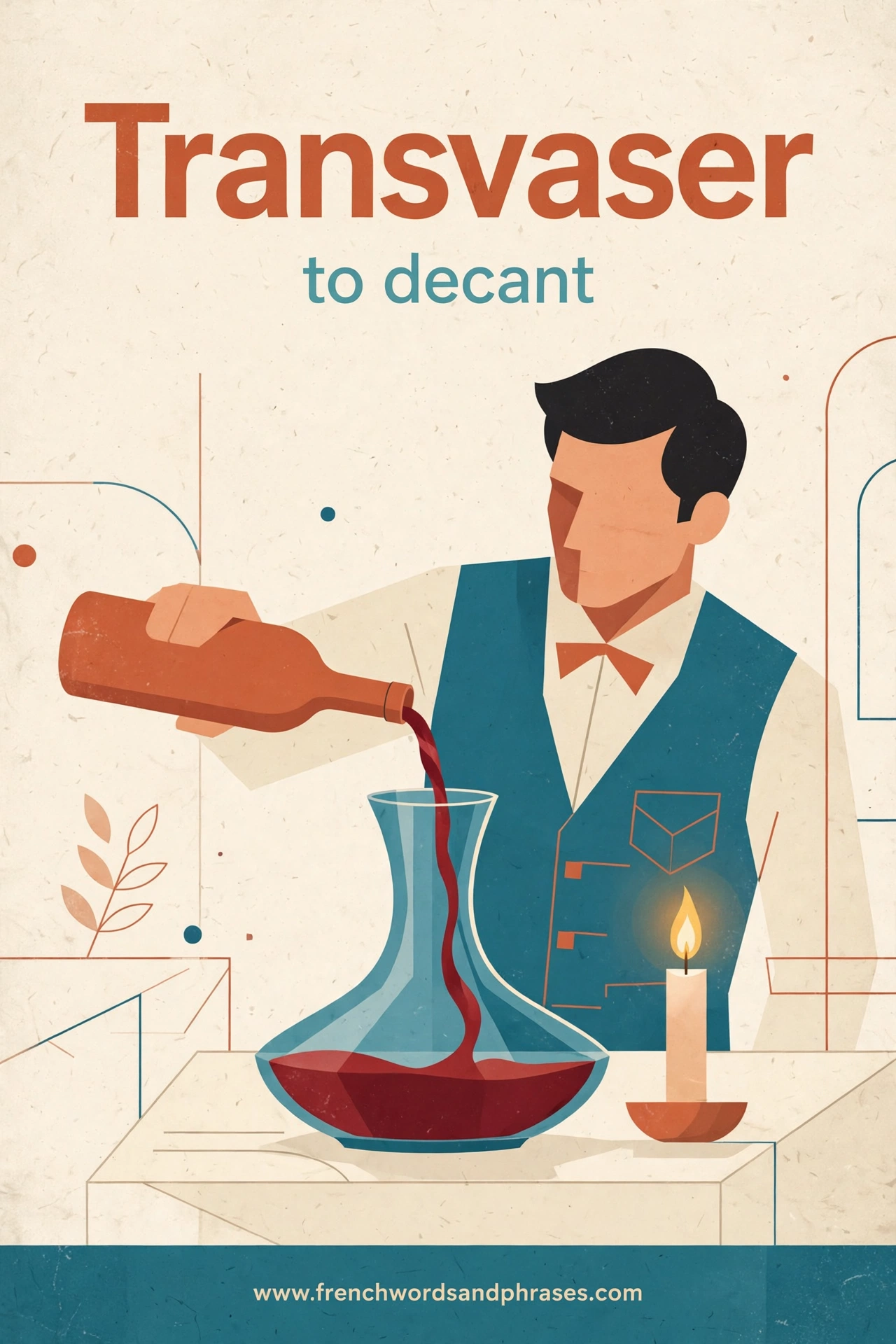
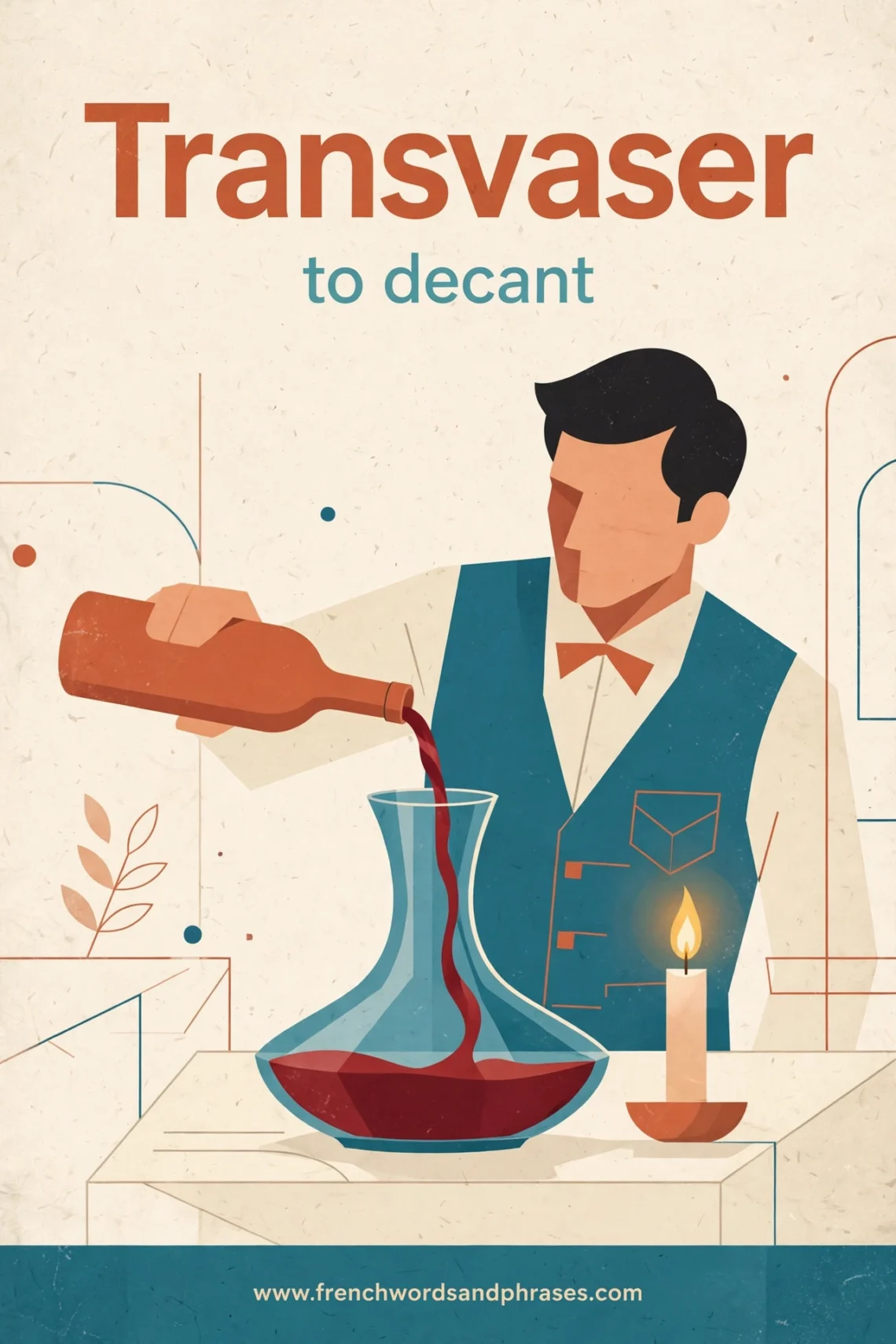
Transvaser means to decant — to pour a liquid carefully from one vessel into another, leaving any sediment behind.
In the cool of the cellar, the cellar master lifts a dusty bottle, sets a candle behind its neck, and pours with infinite slowness into a crystal carafe — transvaser is the verb of decanting, of moving a liquid across without waking what sleeps at the bottom.
In this guide, you’ll learn how to conjugate transvaser in all the major French tenses and moods. Explore complete conjugation tables, French examples, English translations, and practice quizzes.
Understanding the French Verb Transvaser
Transvaser is a regular French verb belonging to the first group of verbs, those ending in -er.
It means to decant. It is commonly used in wine cellars for decanting old wines into a carafe, in kitchens and laboratories for pouring liquids from one container to another, and by motorists siphoning fuel — anywhere a liquid changes vessel and care matters more than speed.
Verb classification: First group (-er)
Auxiliary verb: Avoir
Past participle: transvasé
Present participle: transvasant
English equivalents: To decant, to pour off into another vessel; transvaser un vin — to decant a wine; transvaser de l’essence — to siphon petrol; un transvasement — a decanting, a transfer of liquid.
One important detail: transvaser is built on un vase, a vessel — you pour from vessel to vessel. Do not confuse it with its cellar twin transvider: transvaser stresses the careful pouring across, leaving the sediment (la lie) undisturbed in the old bottle; transvider stresses emptying one container out into another. For wine before dinner, the verb you want is transvaser.
Experience the Word
Transvaser is the verb of the steady hand — a liquid crosses over, its sediment stays behind.
Imagine a Bordeaux cellar an hour before dinner. The bottle has slept twenty years on its side. The sommelier stands it upright, lights the candle, and transvase: the wine runs clear as a jewel into the carafe while the dark deposit stops, just in time, at the shoulder of the bottle.
The wine has crossed into its new vessel, bright and awake. It has been decanted — transvasé — and the sediment never followed.
How to Conjugate Transvaser: Complete French Conjugation Guide
Let’s explore every major conjugation of transvaser, beginning with the indicative mood.
How to Conjugate Transvaser in the Indicative Mood
The indicative mood is used to express facts, observations, actions, and events.
How to Conjugate Transvaser in the Present Tense (Présent)
Used for actions happening now, habitual actions, and general truths.
| Subject | Conjugation |
|---|---|
| je | transvase |
| tu | transvases |
| il / elle | transvase |
| nous | transvasons |
| vous | transvasez |
| ils / elles | transvasent |
Example
Le sommelier transvase le vieux bordeaux dans une carafe.
The sommelier decants the old Bordeaux into a carafe.
Quick Quiz 1
Complete the sentence:
Nous ______ le vin dans une carafe.
Reveal the answer
transvasons
Nous transvasons le vin dans une carafe.
We decant the wine into a carafe.
How to Conjugate Transvaser in the Passé Composé
Used for completed actions in the past. Transvaser takes the auxiliary verb avoir.
| Subject | Conjugation |
|---|---|
| j’ | ai transvasé |
| tu | as transvasé |
| il / elle | a transvasé |
| nous | avons transvasé |
| vous | avez transvasé |
| ils / elles | ont transvasé |
Example
Nous avons transvasé le vin avant le dîner.
We decanted the wine before dinner.
How to Conjugate Transvaser in the Imparfait (Imperfect Tense)
Used for habitual past actions, descriptions, and ongoing situations in the past.
| Subject | Conjugation |
|---|---|
| je | transvasais |
| tu | transvasais |
| il / elle | transvasait |
| nous | transvasions |
| vous | transvasiez |
| ils / elles | transvasaient |
Example
Mon grand-père transvasait toujours ses vins vieux.
My grandfather always used to decant his old wines.
Quick Quiz 2
Choose the correct form:
We decanted the wine before dinner.
Nous ______ le vin avant le dîner. (avons transvasé / sommes transvasés)
Reveal the answer
avons transvasé
Nous avons transvasé le vin avant le dîner.
Transvaser takes avoir.
How to Conjugate Transvaser in the Plus-que-parfait
Used to describe an action that had already been completed before another past event.
| Subject | Conjugation |
|---|---|
| j’ | avais transvasé |
| tu | avais transvasé |
| il / elle | avait transvasé |
| nous | avions transvasé |
| vous | aviez transvasé |
| ils / elles | avaient transvasé |
Example
Elle avait transvasé l’huile dans des bouteilles propres.
She had poured the oil into clean bottles.
How to Conjugate Transvaser in the Passé Simple
Primarily used in formal writing, literature, and historical narratives. It is rarely used in everyday conversation.
| Subject | Conjugation |
|---|---|
| je | transvasai |
| tu | transvasas |
| il / elle | transvasa |
| nous | transvasâmes |
| vous | transvasâtes |
| ils / elles | transvasèrent |
Example
Le caviste transvasa le vin avec une lenteur infinie.
The cellarman decanted the wine with infinite slowness.
How to Conjugate Transvaser in the Passé Antérieur
A literary tense used to express an action completed immediately before another past action, generally in the passé simple.
| Subject | Conjugation |
|---|---|
| j’ | eus transvasé |
| tu | eus transvasé |
| il / elle | eut transvasé |
| nous | eûmes transvasé |
| vous | eûtes transvasé |
| ils / elles | eurent transvasé |
Example
Quand il eut transvasé le vin, il le laissa respirer.
When he had decanted the wine, he let it breathe.
How to Conjugate Transvaser in the Future Tense (Futur Simple)
Used to describe actions that will take place in the future.
| Subject | Conjugation |
|---|---|
| je | transvaserai |
| tu | transvaseras |
| il / elle | transvasera |
| nous | transvaserons |
| vous | transvaserez |
| ils / elles | transvaseront |
Example
Ce soir, je transvaserai la bouteille de 1998.
Tonight, I will decant the 1998 bottle.
How to Conjugate Transvaser in the Futur Antérieur (Future Perfect)
Used for an action that will have been completed before a particular point in the future.
| Subject | Conjugation |
|---|---|
| j’ | aurai transvasé |
| tu | auras transvasé |
| il / elle | aura transvasé |
| nous | aurons transvasé |
| vous | aurez transvasé |
| ils / elles | auront transvasé |
Example
À vingt heures, nous aurons transvasé toutes les bouteilles.
By eight o’clock, we will have decanted all the bottles.
How to Conjugate Transvaser in the Near Future (Futur Proche)
Used to describe something that is going to happen soon. Formed with aller + infinitive.
| Subject | Conjugation |
|---|---|
| je | vais transvaser |
| tu | vas transvaser |
| il / elle | va transvaser |
| nous | allons transvaser |
| vous | allez transvaser |
| ils / elles | vont transvaser |
Example
Je vais transvaser ce vin, il a un dépôt.
I am going to decant this wine, it has a sediment.
How to Conjugate Transvaser in the Conditional Mood
The conditional mood expresses what would happen under certain circumstances. It is also frequently used to make polite requests or express wishes.
How to Conjugate Transvaser in the Present Conditional
| Subject | Conjugation |
|---|---|
| je | transvaserais |
| tu | transvaserais |
| il / elle | transvaserait |
| nous | transvaserions |
| vous | transvaseriez |
| ils / elles | transvaseraient |
Example
Avec une bougie, tu transvaserais sans troubler la lie.
With a candle, you would decant without disturbing the sediment.
How to Conjugate Transvaser in the Past Conditional
| Subject | Conjugation |
|---|---|
| j’ | aurais transvasé |
| tu | aurais transvasé |
| il / elle | aurait transvasé |
| nous | aurions transvasé |
| vous | auriez transvasé |
| ils / elles | auraient transvasé |
Example
Il aurait transvasé le vin si les invités étaient arrivés plus tôt.
He would have decanted the wine if the guests had arrived earlier.
Transvaser in the Literary Past Conditional Form
This less common literary form uses the imperfect subjunctive of avoir.
| Subject | Conjugation |
|---|---|
| j’ | eusse transvasé |
| tu | eusses transvasé |
| il / elle | eût transvasé |
| nous | eussions transvasé |
| vous | eussiez transvasé |
| ils / elles | eussent transvasé |
Example
Il eût transvasé le vin avant même l’arrivée des convives.
He would have decanted the wine even before the guests arrived.
How to Conjugate Transvaser in the Subjunctive Mood
The subjunctive is used to express wishes, emotions, doubts, necessity, and uncertainty. It frequently follows expressions such as il faut que (it is necessary that) or bien que (although).
How to Conjugate Transvaser in the Present Subjunctive
| Subject | Conjugation |
|---|---|
| que je | transvase |
| que tu | transvases |
| qu’il / qu’elle | transvase |
| que nous | transvasions |
| que vous | transvasiez |
| qu’ils / qu’elles | transvasent |
Example
Il faut que vous transvasiez ce vin une heure à l’avance.
You must decant this wine an hour in advance.
Quick Quiz 3
Complete the sentence using the subjunctive:
Il faut que vous ______ la bouteille doucement.
Reveal the answer
transvasiez
Il faut que vous transvasiez la bouteille doucement.
You must decant the bottle gently.
How to Conjugate Transvaser in the Imperfect Subjunctive
A literary tense, rarely encountered in modern spoken French.
| Subject | Conjugation |
|---|---|
| que je | transvasasse |
| que tu | transvasasses |
| qu’il / qu’elle | transvasât |
| que nous | transvasassions |
| que vous | transvasassiez |
| qu’ils / qu’elles | transvasassent |
Example
Je voulais qu’il transvasât la bouteille devant nous.
I wanted him to decant the bottle in front of us.
How to Conjugate Transvaser in the Pluperfect Subjunctive
A literary construction used to express an action completed before another past action.
| Subject | Conjugation |
|---|---|
| que j’ | eusse transvasé |
| que tu | eusses transvasé |
| qu’il / qu’elle | eût transvasé |
| que nous | eussions transvasé |
| que vous | eussiez transvasé |
| qu’ils / qu’elles | eussent transvasé |
Example
On racontait qu’ils eussent transvasé le vin du roi lui-même.
People told how they had decanted the king’s own wine.
How to Conjugate Transvaser in the Past Subjunctive
| Subject | Conjugation |
|---|---|
| que j’ | aie transvasé |
| que tu | aies transvasé |
| qu’il / qu’elle | ait transvasé |
| que nous | ayons transvasé |
| que vous | ayez transvasé |
| qu’ils / qu’elles | aient transvasé |
Example
Je suis content que tu aies transvasé le vin sans le troubler.
I am glad you decanted the wine without clouding it.
How to Conjugate Transvaser in the Imperative
The imperative is used to give commands, instructions, invitations, or suggestions. Subject pronouns are omitted.
How to Conjugate Transvaser in the Present Imperative
| Person | Conjugation |
|---|---|
| (tu) | transvase |
| (nous) | transvasons |
| (vous) | transvasez |
Example
Transvase ce vin doucement, sans réveiller la lie !
Decant this wine gently, without waking the sediment!
Quick Quiz 4
How would you say Decant this wine gently (tu form)?
Reveal the answer
Transvase ce vin doucement !
French Participles of Transvaser
Participles are verb forms that can be used in compound tenses and other grammatical constructions.
Present Participle of Transvaser
transvasant
En transvasant le vin, il surveille le dépôt à la bougie.
While decanting the wine, he watches the sediment by candlelight.
Past Participle of Transvaser
transvasé
Transvasé une heure avant, le vin était limpide et parfumé.
Decanted an hour beforehand, the wine was clear and fragrant.
Transvaser in Everyday French: Real-Life Examples
Now that you know the conjugations, let’s see how transvaser appears in everyday French.
Example 1 — Present
Le sommelier transvase le vin dans une carafe.
The sommelier decants the wine into a carafe.
Example 2 — Passé composé
Nous avons transvasé le vin avant le dîner.
We decanted the wine before dinner.
Example 3 — Imparfait
Mon grand-père transvasait toujours ses vins vieux.
My grandfather always used to decant his old wines.
Example 4 — Future
Je transvaserai la bouteille de 1998 ce soir.
I will decant the 1998 bottle tonight.
Example 5 — Conditional
Tu transvaserais mieux à la bougie.
You would decant better by candlelight.
Example 6 — Imperative
Transvasez ce vin une heure à l’avance !
Decant this wine an hour in advance!
Beyond Translation: The Meaning of Transvaser
English decant is a sommelier’s word and little else; French transvaser pours anything from anywhere — wine into a carafe, oil into bottles, petrol into a jerrycan.
Its twin transvider empties; transvaser pours.
Transvider vide un récipient dans un autre — it empties one container into another. Transvaser keeps its eyes on the liquid itself and on what must not follow it across: the sediment, the dregs, the lie.
How to Remember the French Verb Transvaser
Remember it this way: Transvaser is about decanting old wine by candlelight, sediment left behind.
- Un vase is a vessel: transvaser pours from vessel to vessel.
- Transvaser un vin — to decant a wine, leaving la lie, the sediment, behind.
- Regular -er: je transvase, nous transvasons, past participle transvasé.
The key idea is decanting old wine by candlelight, sediment left behind.
Test Your Knowledge of Transvaser
Let’s see how much you’ve learned. Try answering these questions before revealing the answers.
Question 1
How do you say to decant a wine in French?
Reveal the answer
Transvaser un vin.
Question 2
How do you say The sommelier decants the wine into a carafe in French?
Reveal the answer
Le sommelier transvase le vin dans une carafe.
Question 3
Translate: We decanted the wine before dinner.
Reveal the answer
Nous avons transvasé le vin avant le dîner.
Question 4
What is the past participle of transvaser?
Reveal the answer
Transvasé.
Question 5
Complete the sentence:
Il faut que vous ______ ce vin une heure à l’avance.
Reveal the answer
transvasiez
Il faut que vous transvasiez ce vin une heure à l’avance.
You must decant this wine an hour in advance.
Your Final Challenge
Can You Use It?
How would you say this in French?
By candlelight, he decants the old wine, and the sediment stays prisoner in the bottle.
Reveal the answer
À la lueur de la bougie, il transvase le vieux vin, et la lie reste prisonnière de la bouteille.
By candlelight, he decants the old wine, and the sediment stays prisoner in the bottle.
A little French. A little curiosity. A richer everyday life.
LEARN FRENCH ONE WORD AT A TIME