
A French Word to Live By
How to Conjugate Défalquer in French
/de.fal.ke/
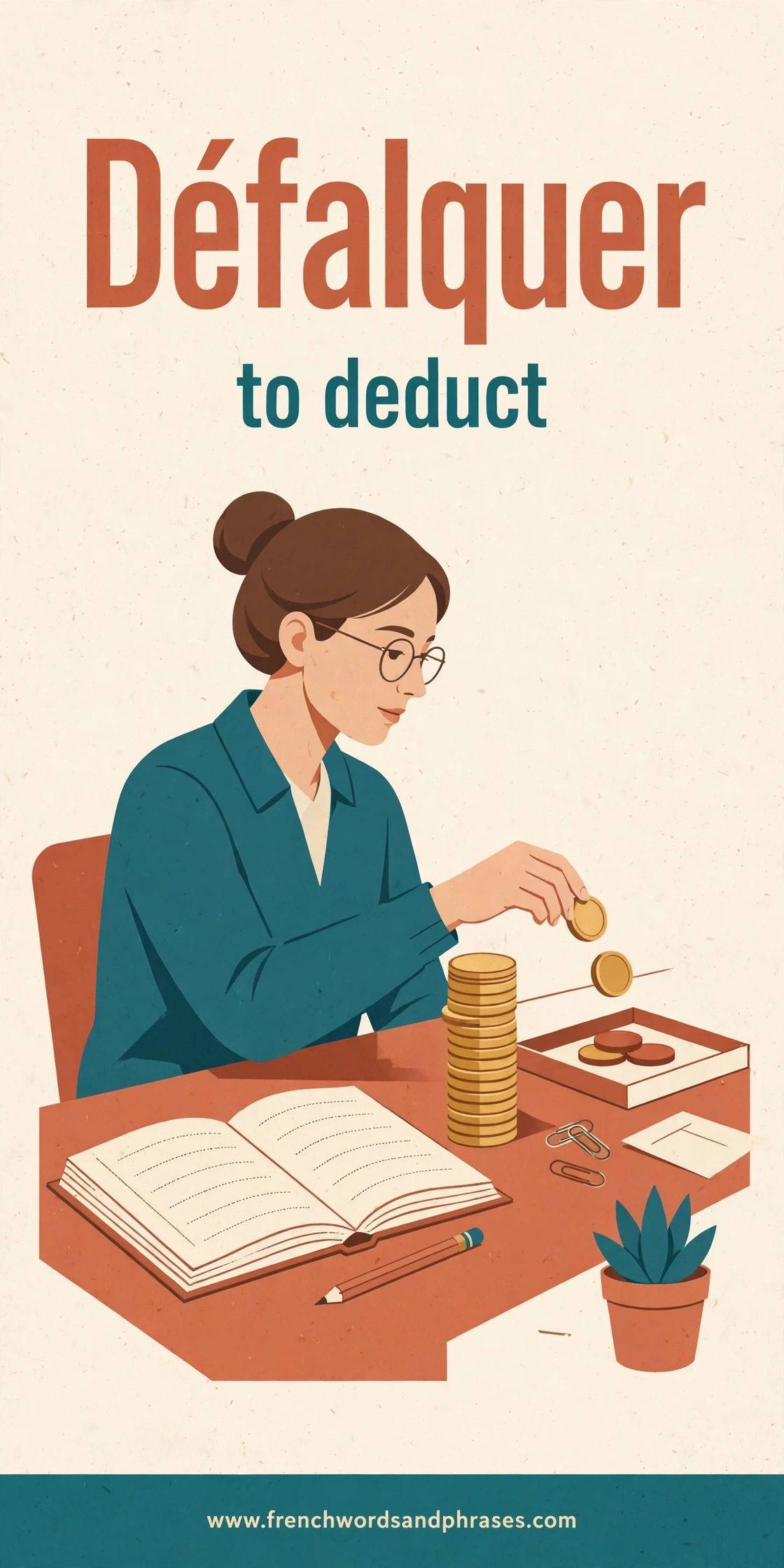
Défalquer means to deduct.
A sum quietly removed from a payslip, expenses taken off a total before anyone sees it — défalquer is the bookkeeper’s verb of deduction: before the number reaches you, something has already been taken away.
In this guide, you’ll learn how to conjugate défalquer in all the major French tenses and moods. Explore complete conjugation tables, French examples, English translations, and practice quizzes.
Understanding the French Verb Défalquer
Défalquer is a regular French verb belonging to the first group of verbs, those ending in -er.
It means to deduct. It is commonly used in accounting and administration for deducting charges, taxes and advances from salaries, invoices and settlements — défalquer les frais, défalquer une avance — wherever a total is officially reduced before payment.
Verb classification: First group (-er)
Auxiliary verb: Avoir
Past participle: défalqué
Present participle: défalquant
English equivalents: To deduct, to take off (a sum); défalquer quelque chose de quelque chose — to deduct something from something.
One important detail: défalquer comes from Italian defalcare, to cut off with a sickle (la falce) — deduction imagined as a harvest blade. It keeps its qu in every form (je défalque, nous défalquons) and its construction is fixed: défalquer une somme d’un total, to deduct a sum from a total. It belongs to offices, payslips and contracts; everyday French usually prefers déduire or retenir.
Experience the Word
Défalquer is the verb of the smaller final number — the total you hoped for, minus what the rules took first.
Imagine a clerk in an old-fashioned accounts office, sleeves protected, pen in hand. Line by line he défalque: the advance, the charges, the small debt from March — and the proud sum at the top of the page becomes the modest sum at the bottom.
Nothing has been stolen. It has been défalqué — deducted by the rules, in ink, in the open.
How to Conjugate Défalquer: Complete French Conjugation Guide
Let’s explore every major conjugation of défalquer, beginning with the indicative mood.
How to Conjugate Défalquer in the Indicative Mood
The indicative mood is used to express facts, observations, actions, and events.
How to Conjugate Défalquer in the Present Tense (Présent)
Used for actions happening now, habitual actions, and general truths.
| Subject | Conjugation |
|---|---|
| je | défalque |
| tu | défalques |
| il / elle | défalque |
| nous | défalquons |
| vous | défalquez |
| ils / elles | défalquent |
Example
Le comptable défalque les frais du total.
The accountant deducts the charges from the total.
Quick Quiz 1
Complete the sentence:
Nous ______ les charges du total.
Reveal the answer
défalquons
Nous défalquons les charges du total.
We deduct the charges from the total.
How to Conjugate Défalquer in the Passé Composé
Used for completed actions in the past. Défalquer takes the auxiliary verb avoir.
| Subject | Conjugation |
|---|---|
| j’ | ai défalqué |
| tu | as défalqué |
| il / elle | a défalqué |
| nous | avons défalqué |
| vous | avez défalqué |
| ils / elles | ont défalqué |
Example
Ils ont défalqué l’avance de mon salaire.
They deducted the advance from my salary.
How to Conjugate Défalquer in the Imparfait (Imperfect Tense)
Used for habitual past actions, descriptions, and ongoing situations in the past.
| Subject | Conjugation |
|---|---|
| je | défalquais |
| tu | défalquais |
| il / elle | défalquait |
| nous | défalquions |
| vous | défalquiez |
| ils / elles | défalquaient |
Example
Autrefois, on défalquait les cotisations à la main.
In the old days, contributions used to be deducted by hand.
Quick Quiz 2
Choose the correct form:
They deducted the deposit.
Ils ______ le dépôt. (ont défalqué / sont défalqués)
Reveal the answer
ont défalqué
Ils ont défalqué le dépôt.
Défalquer takes avoir.
How to Conjugate Défalquer in the Plus-que-parfait
Used to describe an action that had already been completed before another past event.
| Subject | Conjugation |
|---|---|
| j’ | avais défalqué |
| tu | avais défalqué |
| il / elle | avait défalqué |
| nous | avions défalqué |
| vous | aviez défalqué |
| ils / elles | avaient défalqué |
Example
Elle avait défalqué la casse avant de présenter la facture.
She had deducted the breakages before presenting the bill.
How to Conjugate Défalquer in the Passé Simple
Primarily used in formal writing, literature, and historical narratives. It is rarely used in everyday conversation.
| Subject | Conjugation |
|---|---|
| je | défalquai |
| tu | défalquas |
| il / elle | défalqua |
| nous | défalquâmes |
| vous | défalquâtes |
| ils / elles | défalquèrent |
Example
Le trésorier défalqua les dépenses du budget annuel.
The treasurer deducted the expenses from the annual budget.
How to Conjugate Défalquer in the Passé Antérieur
A literary tense used to express an action completed immediately before another past action, generally in the passé simple.
| Subject | Conjugation |
|---|---|
| j’ | eus défalqué |
| tu | eus défalqué |
| il / elle | eut défalqué |
| nous | eûmes défalqué |
| vous | eûtes défalqué |
| ils / elles | eurent défalqué |
Example
Quand il eut défalqué les taxes, il annonça le bénéfice.
When he had deducted the taxes, he announced the profit.
How to Conjugate Défalquer in the Future Tense (Futur Simple)
Used to describe actions that will take place in the future.
| Subject | Conjugation |
|---|---|
| je | défalquerai |
| tu | défalqueras |
| il / elle | défalquera |
| nous | défalquerons |
| vous | défalquerez |
| ils / elles | défalqueront |
Example
Nous défalquerons les frais de transport de la facture.
We will deduct the transport costs from the invoice.
How to Conjugate Défalquer in the Futur Antérieur (Future Perfect)
Used for an action that will have been completed before a particular point in the future.
| Subject | Conjugation |
|---|---|
| j’ | aurai défalqué |
| tu | auras défalqué |
| il / elle | aura défalqué |
| nous | aurons défalqué |
| vous | aurez défalqué |
| ils / elles | auront défalqué |
Example
À la fin du mois, ils auront défalqué toutes les avances.
By the end of the month, they will have deducted all the advances.
How to Conjugate Défalquer in the Near Future (Futur Proche)
Used to describe something that is going to happen soon. Formed with aller + infinitive.
| Subject | Conjugation |
|---|---|
| je | vais défalquer |
| tu | vas défalquer |
| il / elle | va défalquer |
| nous | allons défalquer |
| vous | allez défalquer |
| ils / elles | vont défalquer |
Example
Je vais défalquer ces dix euros de ton remboursement.
I am going to deduct these ten euros from your refund.
How to Conjugate Défalquer in the Conditional Mood
The conditional mood expresses what would happen under certain circumstances. It is also frequently used to make polite requests or express wishes.
How to Conjugate Défalquer in the Present Conditional
| Subject | Conjugation |
|---|---|
| je | défalquerais |
| tu | défalquerais |
| il / elle | défalquerait |
| nous | défalquerions |
| vous | défalqueriez |
| ils / elles | défalqueraient |
Example
À votre place, je défalquerais le dépôt de garantie.
In your place, I would deduct the deposit.
How to Conjugate Défalquer in the Past Conditional
| Subject | Conjugation |
|---|---|
| j’ | aurais défalqué |
| tu | aurais défalqué |
| il / elle | aurait défalqué |
| nous | aurions défalqué |
| vous | auriez défalqué |
| ils / elles | auraient défalqué |
Example
Elle aurait défalqué les charges si le contrat l’avait permis.
She would have deducted the charges if the contract had allowed it.
Défalquer in the Literary Past Conditional Form
This less common literary form uses the imperfect subjunctive of avoir.
| Subject | Conjugation |
|---|---|
| j’ | eusse défalqué |
| tu | eusses défalqué |
| il / elle | eût défalqué |
| nous | eussions défalqué |
| vous | eussiez défalqué |
| ils / elles | eussent défalqué |
Example
Il eût défalqué jusqu’au dernier sou de la dette.
He would have deducted down to the last penny of the debt.
How to Conjugate Défalquer in the Subjunctive Mood
The subjunctive is used to express wishes, emotions, doubts, necessity, and uncertainty. It frequently follows expressions such as il faut que (it is necessary that) or bien que (although).
How to Conjugate Défalquer in the Present Subjunctive
| Subject | Conjugation |
|---|---|
| que je | défalque |
| que tu | défalques |
| qu’il / qu’elle | défalque |
| que nous | défalquions |
| que vous | défalquiez |
| qu’ils / qu’elles | défalquent |
Example
Il faut que tu défalques les frais avant de totaliser.
You must deduct the charges before adding up.
Quick Quiz 3
Complete the sentence using the subjunctive:
Il faut que vous ______ l’avance.
Reveal the answer
défalquiez
Il faut que vous défalquiez l’avance.
You must deduct the advance.
How to Conjugate Défalquer in the Imperfect Subjunctive
A literary tense, rarely encountered in modern spoken French.
| Subject | Conjugation |
|---|---|
| que je | défalquasse |
| que tu | défalquasses |
| qu’il / qu’elle | défalquât |
| que nous | défalquassions |
| que vous | défalquassiez |
| qu’ils / qu’elles | défalquassent |
Example
Le règlement voulait qu’on défalquât les avances chaque mois.
The rules required the advances to be deducted every month.
How to Conjugate Défalquer in the Pluperfect Subjunctive
A literary construction used to express an action completed before another past action.
| Subject | Conjugation |
|---|---|
| que j’ | eusse défalqué |
| que tu | eusses défalqué |
| qu’il / qu’elle | eût défalqué |
| que nous | eussions défalqué |
| que vous | eussiez défalqué |
| qu’ils / qu’elles | eussent défalqué |
Example
On vérifia qu’ils eussent défalqué la bonne somme.
It was checked that they had deducted the right sum.
How to Conjugate Défalquer in the Past Subjunctive
| Subject | Conjugation |
|---|---|
| que j’ | aie défalqué |
| que tu | aies défalqué |
| qu’il / qu’elle | ait défalqué |
| que nous | ayons défalqué |
| que vous | ayez défalqué |
| qu’ils / qu’elles | aient défalqué |
Example
Je suis content que vous ayez défalqué les frais de dossier.
I am glad you deducted the file charges.
How to Conjugate Défalquer in the Imperative
The imperative is used to give commands, instructions, invitations, or suggestions. Subject pronouns are omitted.
How to Conjugate Défalquer in the Present Imperative
| Person | Conjugation |
|---|---|
| (tu) | défalque |
| (nous) | défalquons |
| (vous) | défalquez |
Example
Défalque l’avance de sa paie, s’il te plaît.
Deduct the advance from his pay, please.
Quick Quiz 4
How would you say Deduct the charges (tu form)?
Reveal the answer
Défalque les frais !
French Participles of Défalquer
Participles are verb forms that can be used in compound tenses and other grammatical constructions.
Present Participle of Défalquer
défalquant
En défalquant les charges, il a trouvé une erreur.
While deducting the charges, he found an error.
Past Participle of Défalquer
défalqué
Défalquées du total, les charges apparaissent en bas de page.
Deducted from the total, the charges appear at the bottom of the page.
Défalquer in Everyday French: Real-Life Examples
Now that you know the conjugations, let’s see how défalquer appears in everyday French.
Example 1 — Present
La banque défalque les frais chaque mois.
The bank deducts the charges every month.
Example 2 — Passé composé
Ils ont défalqué vingt euros de ma paie.
They deducted twenty euros from my pay.
Example 3 — Imparfait
Le patron défalquait les retards du salaire.
The boss used to deduct lateness from wages.
Example 4 — Future
Ils défalqueront l’acompte de la facture finale.
They will deduct the down payment from the final bill.
Example 5 — Conditional
Tu défalquerais les frais, toi ?
Would you deduct the charges, you?
Example 6 — Imperative
Défalquez la taxe avant de signer !
Deduct the tax before signing!
Beyond Translation: The Meaning of Défalquer
English deduct is neutral; French défalquer still carries its sickle — something is cut off the top before the harvest is shared.
It is the payslip verb.
Where déduire reasons and retenir withholds, défalquer simply slices: the sum was there, the blade passed, and the bottom line is smaller.
How to Remember the French Verb Défalquer
Remember it this way: Défalquer is about the bookkeeper’s blade — sums cut from totals.
- Défalquer quelque chose de quelque chose — a sum from a total, always with de.
- From the Italian sickle (falce): deduction as a clean cut off the top.
- Regular -er with qu kept: je défalque, nous défalquons, past participle défalqué.
The key idea is the bookkeeper’s blade — sums cut from totals.
Test Your Knowledge of Défalquer
Let’s see how much you’ve learned. Try answering these questions before revealing the answers.
Question 1
How do you say They deducted the advance from my salary in French?
Reveal the answer
Ils ont défalqué l’avance de mon salaire.
Question 2
What construction does défalquer use?
Reveal the answer
Défalquer quelque chose de quelque chose — to deduct one sum from another.
Question 3
Translate: The bank deducts the charges every month.
Reveal the answer
La banque défalque les frais chaque mois.
Question 4
What is the past participle of défalquer?
Reveal the answer
Défalqué.
Question 5
Complete the sentence:
Il faut que tu ______ les frais avant de totaliser.
Reveal the answer
défalques
Il faut que tu défalques les frais avant de totaliser.
You must deduct the charges before adding up.
Your Final Challenge
Can You Use It?
How would you say this in French?
The accountant deducts the charges, and the total finally becomes honest.
Reveal the answer
Le comptable défalque les frais, et le total devient enfin honnête.
The accountant deducts the charges, and the total finally becomes honest.
A little French. A little curiosity. A richer everyday life.
LEARN FRENCH ONE WORD AT A TIME




