A French Word to Live By
How to Conjugate Maquignonner in French
/ma.ki.ɲɔ.ne/
Maquignonner means to rig or to fake up.
A horse whose teeth have been filed young, a car with its meter wound back, a deal polished until the flaws stop showing — maquignonner is the verb of shady dressing-up, born in the horse market and still at work wherever a bargain smells too good.
In this guide, you’ll learn how to conjugate maquignonner in all the major French tenses and moods. Explore complete conjugation tables, French examples, English translations, and practice quizzes.
Understanding the French Verb Maquignonner
Maquignonner is a regular French verb belonging to the first group of verbs, those ending in -er.
It means to rig, to fake up. It is commonly used for faking up merchandise to hide its flaws, for rigging deals, bids and accounts behind the scenes, and in journalism for manoeuvres that dress a shabby arrangement in respectable clothes — always with a smell of the stable and the sly grin.
Verb classification: First group (-er)
Auxiliary verb: Avoir
Past participle: maquignonné
Present participle: maquignonnant
English equivalents: To rig, to fake up, to dress up dishonestly; un maquignon — a horse dealer, a wheeler-dealer.
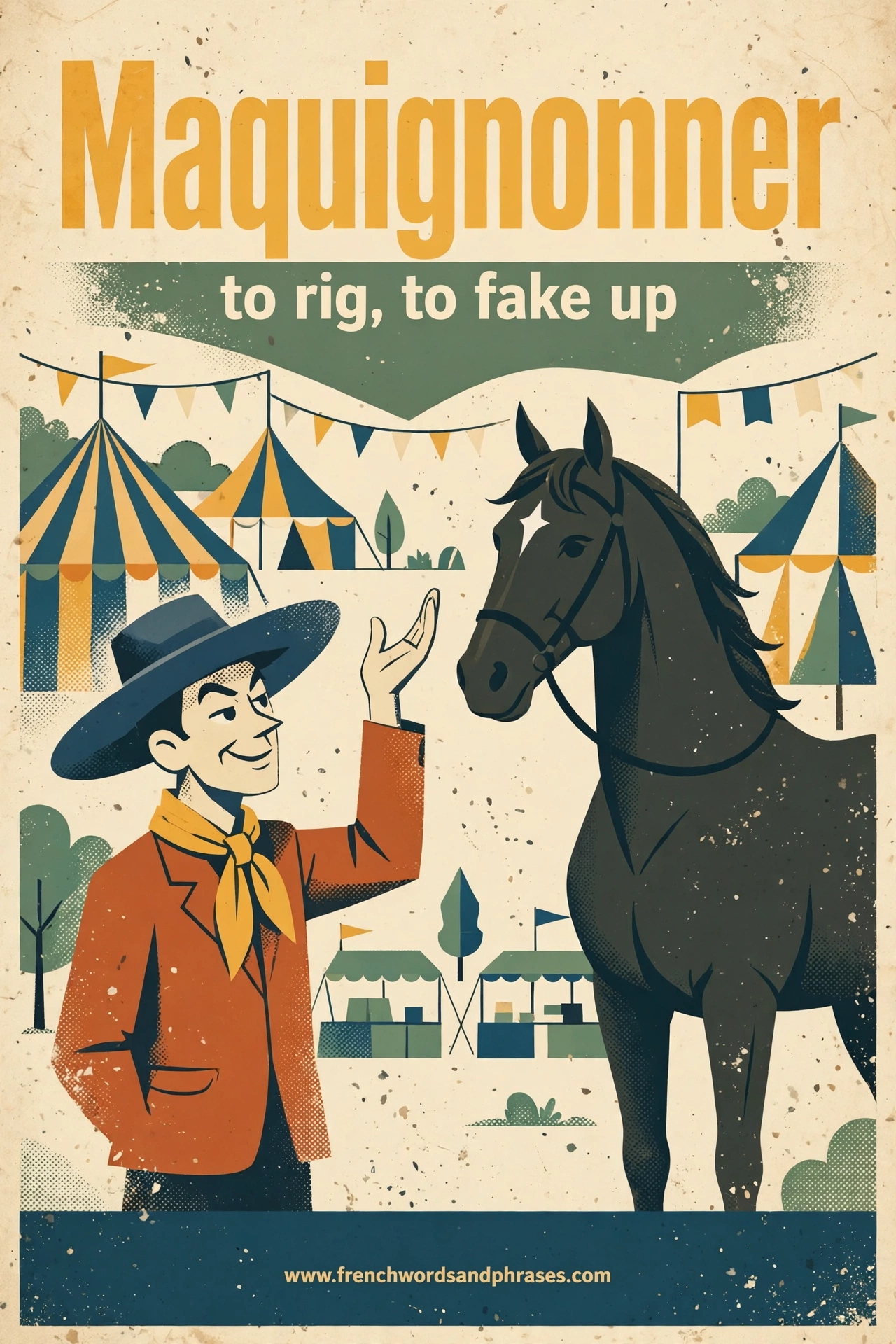
One important detail: maquignonner is built on un maquignon, a horse dealer — a trade once so famous for tricks that the word became an insult for any sharp dealer. The horse fairs knew every maquignon’s art: filing teeth to make an old horse look young, feeding tricks to make a quiet horse look spirited. Today the verb has left the stable: maquignonner une affaire, to rig a deal; des élections maquignonnées, rigged elections; un bilan maquignonné, cooked accounts.
Experience the Word
Maquignonner is the verb of the suspicious bargain — everything shines, and that is exactly the problem.
Imagine a country horse fair two centuries ago. The dealer trots out a gleaming mare, talks fast, pats her flank — and the old farmer smiles, because he knows every trick being maquignonné in front of him, having used half of them himself.
The horse has not changed at all. It has been faked up — dressed, polished and presented to deceive.
How to Conjugate Maquignonner: Complete French Conjugation Guide
Let’s explore every major conjugation of maquignonner, beginning with the indicative mood.
How to Conjugate Maquignonner in the Indicative Mood
The indicative mood is used to express facts, observations, actions, and events.
How to Conjugate Maquignonner in the Present Tense (Présent)
Used for actions happening now, habitual actions, and general truths.
| Subject | Conjugation |
|---|---|
| je | maquignonne |
| tu | maquignonnes |
| il / elle | maquignonne |
| nous | maquignonnons |
| vous | maquignonnez |
| ils / elles | maquignonnent |
Example
Ce vendeur maquignonne ses voitures avant de les exposer.
This dealer fakes up his cars before putting them on display.
Quick Quiz 1
Complete the sentence:
Nous ne ______ jamais nos produits.
Reveal the answer
maquignonnons
Nous ne maquignonnons jamais nos produits.
We never fake up our products.
How to Conjugate Maquignonner in the Passé Composé
Used for completed actions in the past. Maquignonner takes the auxiliary verb avoir.
| Subject | Conjugation |
|---|---|
| j’ | ai maquignonné |
| tu | as maquignonné |
| il / elle | a maquignonné |
| nous | avons maquignonné |
| vous | avez maquignonné |
| ils / elles | ont maquignonné |
Example
Ils ont maquignonné l’affaire en une nuit.
They rigged the deal in a single night.
How to Conjugate Maquignonner in the Imparfait (Imperfect Tense)
Used for habitual past actions, descriptions, and ongoing situations in the past.
| Subject | Conjugation |
|---|---|
| je | maquignonnais |
| tu | maquignonnais |
| il / elle | maquignonnait |
| nous | maquignonnions |
| vous | maquignonniez |
| ils / elles | maquignonnaient |
Example
Au marché aux chevaux, on maquignonnait les bêtes sans scrupule.
At the horse market, people used to fake up the animals without scruples.
Quick Quiz 2
Choose the correct form:
They rigged the election.
Ils ______ l’élection. (ont maquignonné / sont maquignonnés)
Reveal the answer
ont maquignonné
Ils ont maquignonné l’élection.
Maquignonner takes avoir.
How to Conjugate Maquignonner in the Plus-que-parfait
Used to describe an action that had already been completed before another past event.
| Subject | Conjugation |
|---|---|
| j’ | avais maquignonné |
| tu | avais maquignonné |
| il / elle | avait maquignonné |
| nous | avions maquignonné |
| vous | aviez maquignonné |
| ils / elles | avaient maquignonné |
Example
Le maquignon avait maquignonné la jument avant la foire.
The horse dealer had faked up the mare before the fair.
How to Conjugate Maquignonner in the Passé Simple
Primarily used in formal writing, literature, and historical narratives. It is rarely used in everyday conversation.
| Subject | Conjugation |
|---|---|
| je | maquignonnai |
| tu | maquignonnas |
| il / elle | maquignonna |
| nous | maquignonnâmes |
| vous | maquignonnâtes |
| ils / elles | maquignonnèrent |
Example
Il maquignonna les chiffres et présenta un bilan superbe.
He cooked the figures and presented a superb balance sheet.
How to Conjugate Maquignonner in the Passé Antérieur
A literary tense used to express an action completed immediately before another past action, generally in the passé simple.
| Subject | Conjugation |
|---|---|
| j’ | eus maquignonné |
| tu | eus maquignonné |
| il / elle | eut maquignonné |
| nous | eûmes maquignonné |
| vous | eûtes maquignonné |
| ils / elles | eurent maquignonné |
Example
Quand ils eurent maquignonné le contrat, les signatures suivirent.
When they had rigged the contract, the signatures followed.
How to Conjugate Maquignonner in the Future Tense (Futur Simple)
Used to describe actions that will take place in the future.
| Subject | Conjugation |
|---|---|
| je | maquignonnerai |
| tu | maquignonneras |
| il / elle | maquignonnera |
| nous | maquignonnerons |
| vous | maquignonnerez |
| ils / elles | maquignonneront |
Example
Méfie-toi : il maquignonnera l’accord à son avantage.
Watch out: he will rig the agreement to his advantage.
How to Conjugate Maquignonner in the Futur Antérieur (Future Perfect)
Used for an action that will have been completed before a particular point in the future.
| Subject | Conjugation |
|---|---|
| j’ | aurai maquignonné |
| tu | auras maquignonné |
| il / elle | aura maquignonné |
| nous | aurons maquignonné |
| vous | aurez maquignonné |
| ils / elles | auront maquignonné |
Example
À la fin de la semaine, ils auront maquignonné toute la vente.
By the end of the week, they will have rigged the whole sale.
How to Conjugate Maquignonner in the Near Future (Futur Proche)
Used to describe something that is going to happen soon. Formed with aller + infinitive.
| Subject | Conjugation |
|---|---|
| je | vais maquignonner |
| tu | vas maquignonner |
| il / elle | va maquignonner |
| nous | allons maquignonner |
| vous | allez maquignonner |
| ils / elles | vont maquignonner |
Example
Je crois qu’ils vont maquignonner les résultats.
I think they are going to fake up the results.
How to Conjugate Maquignonner in the Conditional Mood
The conditional mood expresses what would happen under certain circumstances. It is also frequently used to make polite requests or express wishes.
How to Conjugate Maquignonner in the Present Conditional
| Subject | Conjugation |
|---|---|
| je | maquignonnerais |
| tu | maquignonnerais |
| il / elle | maquignonnerait |
| nous | maquignonnerions |
| vous | maquignonneriez |
| ils / elles | maquignonneraient |
Example
Un honnête commerçant ne maquignonnerait jamais sa marchandise.
An honest trader would never fake up his goods.
How to Conjugate Maquignonner in the Past Conditional
| Subject | Conjugation |
|---|---|
| j’ | aurais maquignonné |
| tu | aurais maquignonné |
| il / elle | aurait maquignonné |
| nous | aurions maquignonné |
| vous | auriez maquignonné |
| ils / elles | auraient maquignonné |
Example
Sans le contrôle, ils auraient maquignonné les comptes.
Without the inspection, they would have cooked the accounts.
Maquignonner in the Literary Past Conditional Form
This less common literary form uses the imperfect subjunctive of avoir.
| Subject | Conjugation |
|---|---|
| j’ | eusse maquignonné |
| tu | eusses maquignonné |
| il / elle | eût maquignonné |
| nous | eussions maquignonné |
| vous | eussiez maquignonné |
| ils / elles | eussent maquignonné |
Example
Le maquignon eût maquignonné sa plus vieille jument.
The horse dealer would have faked up his oldest mare.
How to Conjugate Maquignonner in the Subjunctive Mood
The subjunctive is used to express wishes, emotions, doubts, necessity, and uncertainty. It frequently follows expressions such as il faut que (it is necessary that) or bien que (although).
How to Conjugate Maquignonner in the Present Subjunctive
| Subject | Conjugation |
|---|---|
| que je | maquignonne |
| que tu | maquignonnes |
| qu’il / qu’elle | maquignonne |
| que nous | maquignonnions |
| que vous | maquignonniez |
| qu’ils / qu’elles | maquignonnent |
Example
Je doute qu’il maquignonne encore ses voitures.
I doubt he still fakes up his cars.
Quick Quiz 3
Complete the sentence using the subjunctive:
Je doute que vous ______ les comptes.
Reveal the answer
maquignonniez
Je doute que vous maquignonniez les comptes.
I doubt you cook the accounts.
How to Conjugate Maquignonner in the Imperfect Subjunctive
A literary tense, rarely encountered in modern spoken French.
| Subject | Conjugation |
|---|---|
| que je | maquignonnasse |
| que tu | maquignonnasses |
| qu’il / qu’elle | maquignonnât |
| que nous | maquignonnassions |
| que vous | maquignonnassiez |
| qu’ils / qu’elles | maquignonnassent |
Example
On craignait que le vendeur maquignonnât le compteur.
People feared the seller might wind back the meter.
How to Conjugate Maquignonner in the Pluperfect Subjunctive
A literary construction used to express an action completed before another past action.
| Subject | Conjugation |
|---|---|
| que j’ | eusse maquignonné |
| que tu | eusses maquignonné |
| qu’il / qu’elle | eût maquignonné |
| que nous | eussions maquignonné |
| que vous | eussiez maquignonné |
| qu’ils / qu’elles | eussent maquignonné |
Example
Le rapport prouva qu’ils eussent maquignonné l’appel d’offres.
The report proved they had rigged the tender.
How to Conjugate Maquignonner in the Past Subjunctive
| Subject | Conjugation |
|---|---|
| que j’ | aie maquignonné |
| que tu | aies maquignonné |
| qu’il / qu’elle | ait maquignonné |
| que nous | ayons maquignonné |
| que vous | ayez maquignonné |
| qu’ils / qu’elles | aient maquignonné |
Example
Je suis déçu qu’ils aient maquignonné une affaire si simple.
I am disappointed they rigged such a simple deal.
How to Conjugate Maquignonner in the Imperative
The imperative is used to give commands, instructions, invitations, or suggestions. Subject pronouns are omitted.
How to Conjugate Maquignonner in the Present Imperative
| Person | Conjugation |
|---|---|
| (tu) | maquignonne |
| (nous) | maquignonnons |
| (vous) | maquignonnez |
Example
Ne maquignonne pas ce rapport, écris la vérité !
Do not fake up this report, write the truth!
Quick Quiz 4
How would you say Do not fake up this report (tu form)?
Reveal the answer
Ne maquignonne pas ce rapport !
French Participles of Maquignonner
Participles are verb forms that can be used in compound tenses and other grammatical constructions.
Present Participle of Maquignonner
maquignonnant
En maquignonnant les chiffres, il a perdu la confiance de tous.
By cooking the figures, he lost everyone’s trust.
Past Participle of Maquignonner
maquignonné
Maquignonné de la tête aux pieds, le vieux cheval semblait avoir cinq ans.
Faked up from head to hoof, the old horse seemed to be five years old.
Maquignonner in Everyday French: Real-Life Examples
Now that you know the conjugations, let’s see how maquignonner appears in everyday French.
Example 1 — Present
Ce garagiste maquignonne les compteurs, paraît-il.
That garage owner winds back the meters, so they say.
Example 2 — Passé composé
Ils ont maquignonné l’élection du comité.
They rigged the committee election.
Example 3 — Imparfait
Les maquignons maquignonnaient les chevaux avant la foire.
The horse dealers used to fake up the horses before the fair.
Example 4 — Future
Il maquignonnera le bilan si personne ne regarde.
He will cook the balance sheet if nobody looks.
Example 5 — Conditional
Tu maquignonnerais un contrat, toi ?
Would you rig a contract, you?
Example 6 — Imperative
Ne maquignonnez pas les résultats !
Do not fake up the results!
Beyond Translation: The Meaning of Maquignonner
English spreads this idea across rig, fake, cook, fiddle, dress up; French maquignonner keeps it in one word with its origin still visible — the horse fair.
Every rigged deal smells faintly of the stable.
Call a negotiation maquignonnée and you have said it all: the teeth were filed, the meter was wound back, and the shine was the cheapest part.
How to Remember the French Verb Maquignonner
Remember it this way: Maquignonner is about the horse dealer’s trick — rigged, faked up, too shiny to trust.
- Un maquignon — a horse dealer; maquignonner is doing what a shady maquignon does.
- Maquignonner une affaire, des comptes, une élection — to rig a deal, accounts, an election.
- Regular -er: je maquignonne, nous maquignonnons, past participle maquignonné.
The key idea is the horse dealer’s trick — rigged, faked up, too shiny to trust.
Test Your Knowledge of Maquignonner
Let’s see how much you’ve learned. Try answering these questions before revealing the answers.
Question 1
What is un maquignon?
Reveal the answer
A horse dealer — the sharp trader the verb is named after.
Question 2
How do you say They rigged the deal in French?
Reveal the answer
Ils ont maquignonné l’affaire.
Question 3
Translate: He cooked the figures.
Reveal the answer
Il a maquignonné les chiffres.
Question 4
What is the past participle of maquignonner?
Reveal the answer
Maquignonné.
Question 5
Complete the sentence:
Je doute qu’il ______ encore ses voitures.
Reveal the answer
maquignonne
Je doute qu’il maquignonne encore ses voitures.
I doubt he still fakes up his cars.
Your Final Challenge
Can You Use It?
How would you say this in French?
He faked up the car from its cellar smell to its meter, but the buyer saw everything.
Reveal the answer
Il a maquignonné la voiture de la cave au compteur, mais l’acheteur a tout vu.
He faked up the car from its cellar smell to its meter, but the buyer saw everything.
A little French. A little curiosity. A richer everyday life.
LEARN FRENCH ONE WORD AT A TIME