A French Word to Live By
How to Conjugate Râper in French
/ʁɑ.pe/
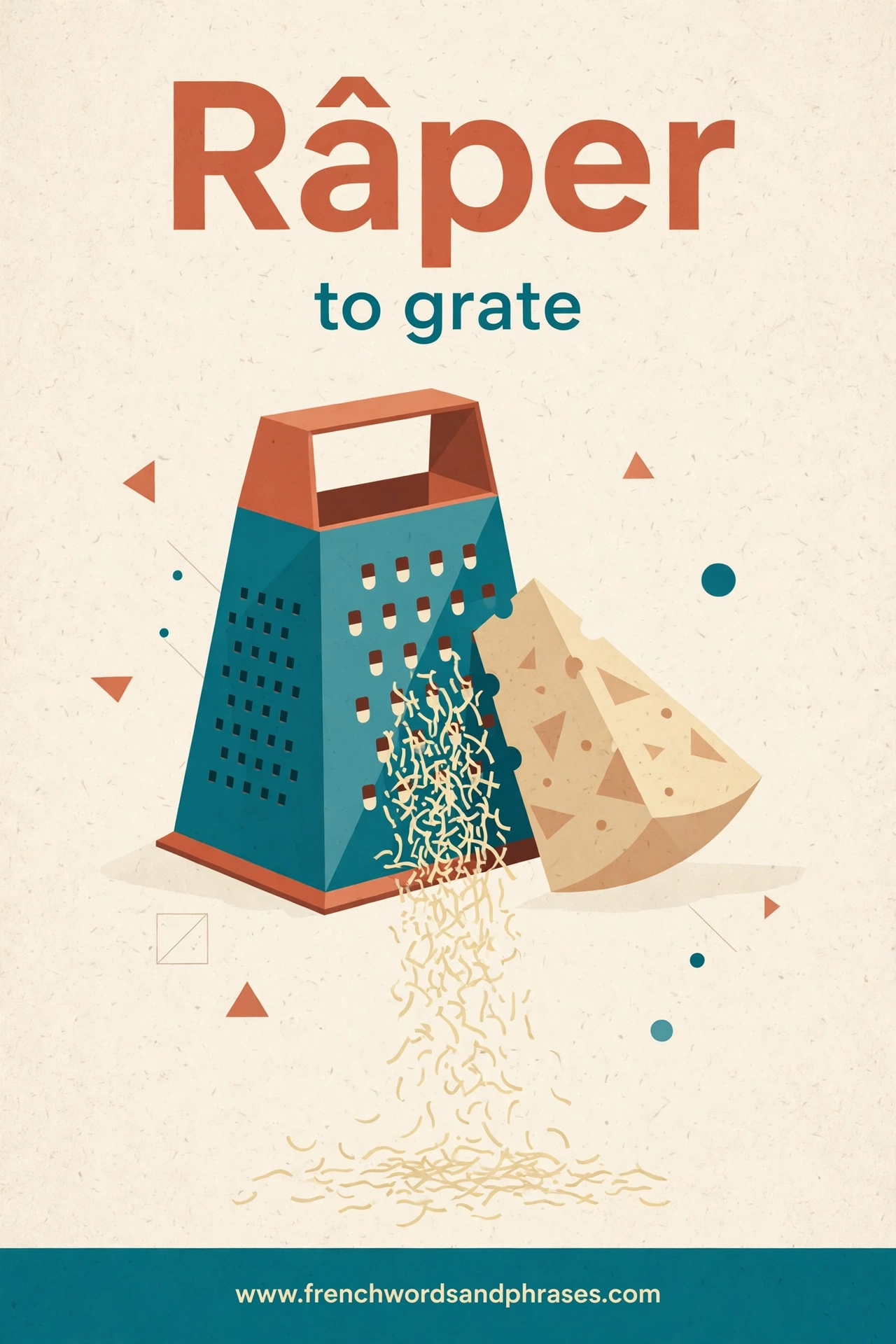
Râper means to grate.
Parmesan snowing down on pasta, carrots shredded for a salad, nutmeg dusted over warm milk — râper is the verb of the grater, the humble tool that turns a hard lump into a flavouring cloud.
In this guide, you’ll learn how to conjugate râper in all the major French tenses and moods. Explore complete conjugation tables, French examples, English translations, and practice quizzes.
Understanding the French Verb Râper
Râper is a regular French verb belonging to the first group of verbs, those ending in -er.
It means to grate. It is commonly used for grating cheese, carrots, potatoes and chocolate, for zesting citrus fruit, for ginger and nutmeg, and in every French supermarket aisle where sachets of fromage râpé wait for gratins and pizzas.
Verb classification: First group (-er)
Auxiliary verb: Avoir
Past participle: râpé
Present participle: râpant
English equivalents: To grate; râpé — grated (fromage râpé, carottes râpées).
One important detail: râper keeps its circumflex on the â in every form, and its past participle doubles as the everyday adjective — du fromage râpé, grated cheese; des carottes râpées, grated carrots, agreeing like any adjective. The tool itself is une râpe, a grater. In familiar speech the verb scratches too: ce pull râpe, this sweater is rough and itchy.
Experience the Word
Râper is the verb of transformation by friction — a solid block goes in at the top, and a soft snowfall of flavour comes out at the bottom.
Imagine a Sunday gratin in the making. One person holds the grater, another turns the cheese, and a small white mountain grows on the board while the potatoes wait in their dish below.
The cheese is not cut, not chopped. It has been grated — ready to melt into gold.
How to Conjugate Râper: Complete French Conjugation Guide
Let’s explore every major conjugation of râper, beginning with the indicative mood.
How to Conjugate Râper in the Indicative Mood
The indicative mood is used to express facts, observations, actions, and events.
How to Conjugate Râper in the Present Tense (Présent)
Used for actions happening now, habitual actions, and general truths.
| Subject | Conjugation |
|---|---|
| je | râpe |
| tu | râpes |
| il / elle | râpe |
| nous | râpons |
| vous | râpez |
| ils / elles | râpent |
Example
Elle râpe le parmesan directement sur les pâtes.
She grates the parmesan straight over the pasta.
Quick Quiz 1
Complete the sentence:
Nous ______ le parmesan sur les pâtes.
Reveal the answer
râpons
Nous râpons le parmesan sur les pâtes.
We grate the parmesan over the pasta.
How to Conjugate Râper in the Passé Composé
Used for completed actions in the past. Râper takes the auxiliary verb avoir.
| Subject | Conjugation |
|---|---|
| j’ | ai râpé |
| tu | as râpé |
| il / elle | a râpé |
| nous | avons râpé |
| vous | avez râpé |
| ils / elles | ont râpé |
Example
Il a râpé les carottes pour la salade.
He grated the carrots for the salad.
How to Conjugate Râper in the Imparfait (Imperfect Tense)
Used for habitual past actions, descriptions, and ongoing situations in the past.
| Subject | Conjugation |
|---|---|
| je | râpais |
| tu | râpais |
| il / elle | râpait |
| nous | râpions |
| vous | râpiez |
| ils / elles | râpaient |
Example
Ma mère râpait le chocolat sur la mousse encore tiède.
My mother used to grate chocolate over the still-warm mousse.
Quick Quiz 2
Choose the correct form:
He grated the carrots.
Il ______ les carottes. (a râpé / est râpé)
Reveal the answer
a râpé
Il a râpé les carottes.
Râper takes avoir.
How to Conjugate Râper in the Plus-que-parfait
Used to describe an action that had already been completed before another past event.
| Subject | Conjugation |
|---|---|
| j’ | avais râpé |
| tu | avais râpé |
| il / elle | avait râpé |
| nous | avions râpé |
| vous | aviez râpé |
| ils / elles | avaient râpé |
Example
Nous avions râpé le fromage avant de préparer le gratin.
We had grated the cheese before preparing the gratin.
How to Conjugate Râper in the Passé Simple
Primarily used in formal writing, literature, and historical narratives. It is rarely used in everyday conversation.
| Subject | Conjugation |
|---|---|
| je | râpai |
| tu | râpas |
| il / elle | râpa |
| nous | râpâmes |
| vous | râpâtes |
| ils / elles | râpèrent |
Example
Elle râpa le zeste d’un citron sur la tarte.
She grated the zest of a lemon over the tart.
How to Conjugate Râper in the Passé Antérieur
A literary tense used to express an action completed immediately before another past action, generally in the passé simple.
| Subject | Conjugation |
|---|---|
| j’ | eus râpé |
| tu | eus râpé |
| il / elle | eut râpé |
| nous | eûmes râpé |
| vous | eûtes râpé |
| ils / elles | eurent râpé |
Example
Quand il eut râpé le gingembre, il le pressa dans le thé.
When he had grated the ginger, he squeezed it into the tea.
How to Conjugate Râper in the Future Tense (Futur Simple)
Used to describe actions that will take place in the future.
| Subject | Conjugation |
|---|---|
| je | râperai |
| tu | râperas |
| il / elle | râpera |
| nous | râperons |
| vous | râperez |
| ils / elles | râperont |
Example
Demain, je râperai les pommes de terre pour les galettes.
Tomorrow, I will grate the potatoes for the patties.
How to Conjugate Râper in the Futur Antérieur (Future Perfect)
Used for an action that will have been completed before a particular point in the future.
| Subject | Conjugation |
|---|---|
| j’ | aurai râpé |
| tu | auras râpé |
| il / elle | aura râpé |
| nous | aurons râpé |
| vous | aurez râpé |
| ils / elles | auront râpé |
Example
À la fin du cours, les élèves auront râpé tout le fromage.
By the end of the class, the pupils will have grated all the cheese.
How to Conjugate Râper in the Near Future (Futur Proche)
Used to describe something that is going to happen soon. Formed with aller + infinitive.
| Subject | Conjugation |
|---|---|
| je | vais râper |
| tu | vas râper |
| il / elle | va râper |
| nous | allons râper |
| vous | allez râper |
| ils / elles | vont râper |
Example
Je vais râper du chocolat sur le dessert.
I am going to grate some chocolate over the dessert.
How to Conjugate Râper in the Conditional Mood
The conditional mood expresses what would happen under certain circumstances. It is also frequently used to make polite requests or express wishes.
How to Conjugate Râper in the Present Conditional
| Subject | Conjugation |
|---|---|
| je | râperais |
| tu | râperais |
| il / elle | râperait |
| nous | râperions |
| vous | râperiez |
| ils / elles | râperaient |
Example
Avec une râpe fine, tu râperais le zeste sans amertume.
With a fine grater, you would grate the zest without bitterness.
How to Conjugate Râper in the Past Conditional
| Subject | Conjugation |
|---|---|
| j’ | aurais râpé |
| tu | aurais râpé |
| il / elle | aurait râpé |
| nous | aurions râpé |
| vous | auriez râpé |
| ils / elles | auraient râpé |
Example
Elle aurait râpé plus de fromage pour le gratin.
She would have grated more cheese for the gratin.
Râper in the Literary Past Conditional Form
This less common literary form uses the imperfect subjunctive of avoir.
| Subject | Conjugation |
|---|---|
| j’ | eusse râpé |
| tu | eusses râpé |
| il / elle | eût râpé |
| nous | eussions râpé |
| vous | eussiez râpé |
| ils / elles | eussent râpé |
Example
Il eût râpé la muscade avec délicatesse.
He would have grated the nutmeg delicately.
How to Conjugate Râper in the Subjunctive Mood
The subjunctive is used to express wishes, emotions, doubts, necessity, and uncertainty. It frequently follows expressions such as il faut que (it is necessary that) or bien que (although).
How to Conjugate Râper in the Present Subjunctive
| Subject | Conjugation |
|---|---|
| que je | râpe |
| que tu | râpes |
| qu’il / qu’elle | râpe |
| que nous | râpions |
| que vous | râpiez |
| qu’ils / qu’elles | râpent |
Example
Il faut que tu râpes le fromage avant l’arrivée des invités.
You must grate the cheese before the guests arrive.
Quick Quiz 3
Complete the sentence using the subjunctive:
Il faut que vous ______ le fromage.
Reveal the answer
râpiez
Il faut que vous râpiez le fromage.
You must grate the cheese.
How to Conjugate Râper in the Imperfect Subjunctive
A literary tense, rarely encountered in modern spoken French.
| Subject | Conjugation |
|---|---|
| que je | râpasse |
| que tu | râpasses |
| qu’il / qu’elle | râpât |
| que nous | râpassions |
| que vous | râpassiez |
| qu’ils / qu’elles | râpassent |
Example
Je voulais qu’elle râpât la noix de coco fraîche.
I wanted her to grate the fresh coconut.
How to Conjugate Râper in the Pluperfect Subjunctive
A literary construction used to express an action completed before another past action.
| Subject | Conjugation |
|---|---|
| que j’ | eusse râpé |
| que tu | eusses râpé |
| qu’il / qu’elle | eût râpé |
| que nous | eussions râpé |
| que vous | eussiez râpé |
| qu’ils / qu’elles | eussent râpé |
Example
Il regrettait que nous eussions râpé le fromage si tôt.
He regretted that we had grated the cheese so early.
How to Conjugate Râper in the Past Subjunctive
| Subject | Conjugation |
|---|---|
| que j’ | aie râpé |
| que tu | aies râpé |
| qu’il / qu’elle | ait râpé |
| que nous | ayons râpé |
| que vous | ayez râpé |
| qu’ils / qu’elles | aient râpé |
Example
Je suis content que tu aies râpé les carottes, elles sont parfaites.
I am glad you grated the carrots, they are perfect.
How to Conjugate Râper in the Imperative
The imperative is used to give commands, instructions, invitations, or suggestions. Subject pronouns are omitted.
How to Conjugate Râper in the Present Imperative
| Person | Conjugation |
|---|---|
| (tu) | râpe |
| (nous) | râpons |
| (vous) | râpez |
Example
Râpe le parmesan, on sert les pâtes !
Grate the parmesan, we are serving the pasta!
Quick Quiz 4
How would you say Grate the cheese (tu form)?
Reveal the answer
Râpe le fromage !
French Participles of Râper
Participles are verb forms that can be used in compound tenses and other grammatical constructions.
Present Participle of Râper
râpant
En râpant les carottes, elle s’est râpé le bout du doigt.
While grating the carrots, she grated the tip of her finger.
Past Participle of Râper
râpé
Râpé frais, le gingembre réveille tout le plat.
Freshly grated, ginger wakes up the whole dish.
Râper in Everyday French: Real-Life Examples
Now that you know the conjugations, let’s see how râper appears in everyday French.
Example 1 — Present
Je râpe toujours le fromage au dernier moment.
I always grate the cheese at the last moment.
Example 2 — Passé composé
Elle a râpé les courgettes pour les beignets.
She grated the courgettes for the fritters.
Example 3 — Imparfait
Grand-père râpait la muscade sur le lait chaud.
Grandfather used to grate nutmeg over the warm milk.
Example 4 — Future
Nous râperons les carottes ce soir.
We will grate the carrots this evening.
Example 5 — Conditional
Tu râperais le chocolat, s’il te plaît ?
Would you grate the chocolate, please?
Example 6 — Imperative
Râpez le zeste d’un citron sur la salade !
Grate the zest of a lemon over the salad!
Beyond Translation: The Meaning of Râper
English grate also grates on the nerves; French râper stays cheerfully in the kitchen, and its participle does double duty on every packet in the supermarket.
Fromage râpé is a shopping-list word.
Learn râper and you have learned the label, the recipe instruction and the tool — une râpe, râper, râpé — a whole family from one little root with a hat on it.
How to Remember the French Verb Râper
Remember it this way: Râper is about the grater — cheese, carrots and a snowfall of parmesan.
- Une râpe, râper, râpé — tool, verb and result share one root, circumflex included.
- Du fromage râpé, des carottes râpées — the participle agrees like an adjective.
- Regular -er: je râpe, nous râpons, past participle râpé.
The key idea is the grater — cheese, carrots and a snowfall of parmesan.
Test Your Knowledge of Râper
Let’s see how much you’ve learned. Try answering these questions before revealing the answers.
Question 1
How do you say grated cheese in French?
Reveal the answer
Du fromage râpé.
Question 2
What is une râpe?
Reveal the answer
A grater — the tool that does the râper.
Question 3
Translate: She grated the carrots for the salad.
Reveal the answer
Elle a râpé les carottes pour la salade.
Question 4
What is the past participle of râper?
Reveal the answer
Râpé — râpée, râpés, râpées when it agrees.
Question 5
Complete the sentence:
Il faut que tu ______ le fromage.
Reveal the answer
râpes
Il faut que tu râpes le fromage.
You must grate the cheese.
Your Final Challenge
Can You Use It?
How would you say this in French?
She grates the parmesan, and the pasta becomes a celebration.
Reveal the answer
Elle râpe le parmesan, et les pâtes deviennent une fête.
She grates the parmesan, and the pasta becomes a celebration.
A little French. A little curiosity. A richer everyday life.
LEARN FRENCH ONE WORD AT A TIME