A French Word to Live By
How to Conjugate Trépasser in French
/tʁe.pa.se/
Trépasser means to pass away, to die.
Old novels and old gravestones use a gentler word for dying: trépasser — to pass beyond. It is a word from another century, kept alive in books, in the phrase les trépassés (the departed), and in the Bay of the Dead in Brittany.
In this guide, you’ll learn how to conjugate trépasser in all the major French tenses and moods. Explore complete conjugation tables, French examples, English translations, and practice quizzes.
Understanding the French Verb Trépasser
Trépasser is a regular French verb belonging to the first group of verbs, those ending in -er.
It means to pass away, to die (literary). It is commonly found in literature and in old inscriptions, and in the noun les trépassés, the departed. In everyday French, say mourir or décéder instead.
Verb classification: First group (-er)
Auxiliary verb: Être or avoir, depending on the construction
Past participle: trépassé
Present participle: trépassant
English equivalents: To pass away, to die, to depart this life.
One important detail: trépasser is an old-fashioned, literary word for dying, and it works with two auxiliaries. Être marks the state that results — elle est trépassée depuis longtemps (she passed away long ago) — and the past participle agrees with the subject. Avoir marks the action itself in literary narrative — elle a trépassé vers minuit (she passed away around midnight). The tables on this page use être, the auxiliary of the state that remains.
Experience the Word
Trépasser is the word of old books and quiet churchyards — death spoken softly, as a passing beyond.
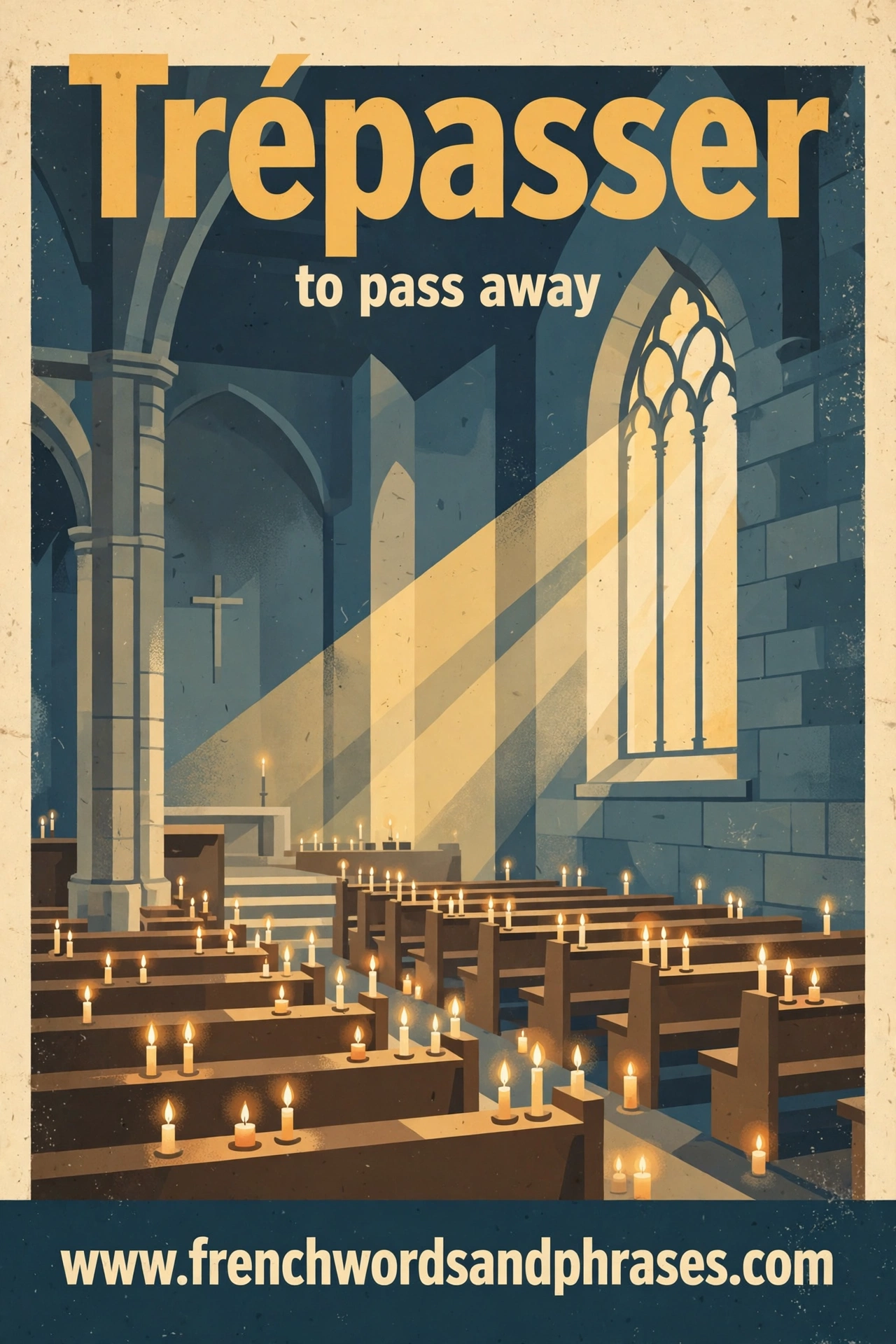
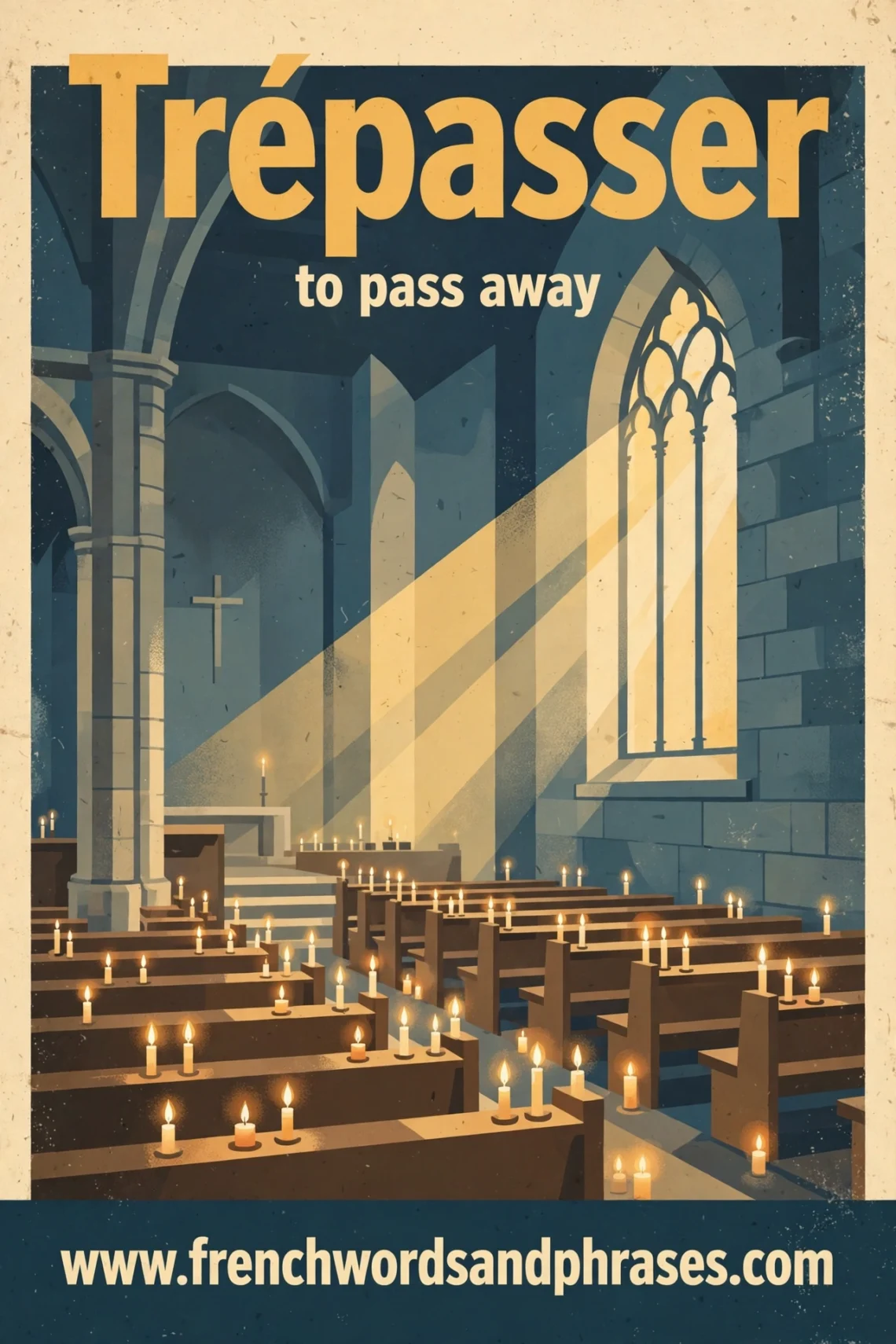
Imagine an old stone church in Brittany, above a bay the Bretons call the Bay of the Dead — la baie des Trépassés. The name alone tells you that this word belongs to poetry and to prayer, not to the news.
You have not just said someone died. You have said they passed beyond.
How to Conjugate Trépasser: Complete French Conjugation Guide
Let’s explore every major conjugation of trépasser, beginning with the indicative mood.
How to Conjugate Trépasser in the Indicative Mood
The indicative mood is used to express facts, observations, actions, and events.
How to Conjugate Trépasser in the Present Tense (Présent)
Used for actions happening now, habitual actions, and general truths.
| Subject | Conjugation |
|---|---|
| je | trépasse |
| tu | trépasses |
| il / elle | trépasse |
| nous | trépassons |
| vous | trépassez |
| ils / elles | trépassent |
Example
Le vieil homme trépasse doucement, entouré de ses enfants.
The old man passes away gently, surrounded by his children.
Quick Quiz 1
Complete the sentence:
Le vieil homme ______ doucement.
Reveal the answer
trépasse
Le vieil homme trépasse doucement.
The old man is passing away gently.
How to Conjugate Trépasser in the Passé Composé
Used for completed actions in the past. Trépasser takes the auxiliary verb être or avoir, depending on the construction.
| Subject | Conjugation |
|---|---|
| je | suis trépassé / suis trépassée |
| tu | es trépassé / es trépassée |
| il / elle | est trépassé / est trépassée |
| nous | sommes trépassés / sommes trépassées |
| vous | êtes trépassés / êtes trépassées / êtes trépassé / êtes trépassée |
| ils / elles | sont trépassés / sont trépassées |
Example
Le vieux fermier est trépassé il y a huit jours.
The old farmer passed away eight days ago.
How to Conjugate Trépasser in the Imparfait (Imperfect Tense)
Used for habitual past actions, descriptions, and ongoing situations in the past.
| Subject | Conjugation |
|---|---|
| je | trépassais |
| tu | trépassais |
| il / elle | trépassait |
| nous | trépassions |
| vous | trépassiez |
| ils / elles | trépassaient |
Example
On disait qu’il trépassait lentement, sans souffrir.
People said he was passing away slowly, without suffering.
Quick Quiz 2
Choose the correct form:
The old farmer passed away eight days ago.
Le vieux fermier ______ il y a huit jours. (est trépassé / a trépassé)
Reveal the answer
est trépassé
Le vieux fermier est trépassé il y a huit jours.
Être marks the state that remains after the passing.
How to Conjugate Trépasser in the Plus-que-parfait
Used to describe an action that had already been completed before another past event.
| Subject | Conjugation |
|---|---|
| je | étais trépassé / étais trépassée |
| tu | étais trépassé / étais trépassée |
| il / elle | était trépassé / était trépassée |
| nous | étions trépassés / étions trépassées |
| vous | étiez trépassés / étiez trépassées / étiez trépassé / étiez trépassée |
| ils / elles | étaient trépassés / étaient trépassées |
Example
Quand nous sommes arrivés, le vieillard était trépassé.
When we arrived, the old man had passed away.
How to Conjugate Trépasser in the Passé Simple
Primarily used in formal writing, literature, and historical narratives. It is rarely used in everyday conversation.
| Subject | Conjugation |
|---|---|
| je | trépassai |
| tu | trépassas |
| il / elle | trépassa |
| nous | trépassâmes |
| vous | trépassâtes |
| ils / elles | trépassèrent |
Example
Le roi trépassa au petit matin.
The king passed away in the early morning.
How to Conjugate Trépasser in the Passé Antérieur
A literary tense used to express an action completed immediately before another past action, generally in the passé simple.
| Subject | Conjugation |
|---|---|
| je | fus trépassé / fus trépassée |
| tu | fus trépassé / fus trépassée |
| il / elle | fut trépassé / fut trépassée |
| nous | fûmes trépassés / fûmes trépassées |
| vous | fûtes trépassés / fûtes trépassées / fûtes trépassé / fûtes trépassée |
| ils / elles | furent trépassés / furent trépassées |
Example
Dès qu’il fut trépassé, on sonna le glas.
As soon as he had passed away, the passing bell was rung.
How to Conjugate Trépasser in the Future Tense (Futur Simple)
Used to describe actions that will take place in the future.
| Subject | Conjugation |
|---|---|
| je | trépasserai |
| tu | trépasseras |
| il / elle | trépassera |
| nous | trépasserons |
| vous | trépasserez |
| ils / elles | trépasseront |
Example
Un jour, nous trépasserons tous.
One day, we shall all pass away.
How to Conjugate Trépasser in the Futur Antérieur (Future Perfect)
Used for an action that will have been completed before a particular point in the future.
| Subject | Conjugation |
|---|---|
| je | serai trépassé / serai trépassée |
| tu | seras trépassé / seras trépassée |
| il / elle | sera trépassé / sera trépassée |
| nous | serons trépassés / serons trépassées |
| vous | serez trépassés / serez trépassées / serez trépassé / serez trépassée |
| ils / elles | seront trépassés / seront trépassées |
Example
À la fin du roman, le héros sera trépassé.
By the end of the novel, the hero will have passed away.
How to Conjugate Trépasser in the Near Future (Futur Proche)
Used to describe something that is going to happen soon. Formed with aller + infinitive.
| Subject | Conjugation |
|---|---|
| je | vais trépasser |
| tu | vas trépasser |
| il / elle | va trépasser |
| nous | allons trépasser |
| vous | allez trépasser |
| ils / elles | vont trépasser |
Example
Il va trépasser, disent les médecins.
He is going to pass away, say the doctors.
How to Conjugate Trépasser in the Conditional Mood
The conditional mood expresses what would happen under certain circumstances. It is also frequently used to make polite requests or express wishes.
How to Conjugate Trépasser in the Present Conditional
| Subject | Conjugation |
|---|---|
| je | trépasserais |
| tu | trépasserais |
| il / elle | trépasserait |
| nous | trépasserions |
| vous | trépasseriez |
| ils / elles | trépasseraient |
Example
Sans les soins de sa fille, il trépasserait plus tôt.
Without his daughter’s care, he would pass away sooner.
How to Conjugate Trépasser in the Past Conditional
| Subject | Conjugation |
|---|---|
| je | serais trépassé / serais trépassée |
| tu | serais trépassé / serais trépassée |
| il / elle | serait trépassé / serait trépassée |
| nous | serions trépassés / serions trépassées |
| vous | seriez trépassés / seriez trépassées / seriez trépassé / seriez trépassée |
| ils / elles | seraient trépassés / seraient trépassées |
Example
Il serait trépassé sans l’aide du médecin.
He would have passed away without the doctor’s help.
Trépasser in the Literary Past Conditional Form
This less common literary form uses the imperfect subjunctive of être or avoir, depending on the construction.
| Subject | Conjugation |
|---|---|
| je | fusse trépassé / fusse trépassée |
| tu | fusses trépassé / fusses trépassée |
| il / elle | fût trépassé / fût trépassée |
| nous | fussions trépassés / fussions trépassées |
| vous | fussiez trépassés / fussiez trépassées / fussiez trépassé / fussiez trépassée |
| ils / elles | fussent trépassés / fussent trépassées |
Example
Il fût trépassé dans la nuit si le prêtre n’était pas venu.
He would have passed away during the night if the priest had not come.
How to Conjugate Trépasser in the Subjunctive Mood
The subjunctive is used to express wishes, emotions, doubts, necessity, and uncertainty. It frequently follows expressions such as il faut que (it is necessary that) or bien que (although).
How to Conjugate Trépasser in the Present Subjunctive
| Subject | Conjugation |
|---|---|
| que je | trépasse |
| que tu | trépasses |
| qu’il / qu’elle | trépasse |
| que nous | trépassions |
| que vous | trépassiez |
| qu’ils / qu’elles | trépassent |
Example
Il est possible qu’il trépasse avant l’aube.
It is possible that he may pass away before dawn.
Quick Quiz 3
Complete the sentence using the subjunctive:
Il est possible qu’il ______ avant l’aube.
Reveal the answer
trépasse
Il est possible qu’il trépasse avant l’aube.
It is possible that he may pass away before dawn.
How to Conjugate Trépasser in the Imperfect Subjunctive
A literary tense, rarely encountered in modern spoken French.
| Subject | Conjugation |
|---|---|
| que je | trépassasse |
| que tu | trépassasses |
| qu’il / qu’elle | trépassât |
| que nous | trépassassions |
| que vous | trépassassiez |
| qu’ils / qu’elles | trépassassent |
Example
On craignait qu’il ne trépassât dans son sommeil.
People feared he might pass away in his sleep.
How to Conjugate Trépasser in the Pluperfect Subjunctive
A literary construction used to express an action completed before another past action.
| Subject | Conjugation |
|---|---|
| que je | fusse trépassé / fusse trépassée |
| que tu | fusses trépassé / fusses trépassée |
| qu’il / qu’elle | fût trépassé / fût trépassée |
| que nous | fussions trépassés / fussions trépassées |
| que vous | fussiez trépassés / fussiez trépassées / fussiez trépassé / fussiez trépassée |
| qu’ils / qu’elles | fussent trépassés / fussent trépassées |
Example
On doutait qu’il fût trépassé si vite.
People doubted he had passed away so quickly.
How to Conjugate Trépasser in the Past Subjunctive
| Subject | Conjugation |
|---|---|
| que je | sois trépassé / sois trépassée |
| que tu | sois trépassé / sois trépassée |
| qu’il / qu’elle | soit trépassé / soit trépassée |
| que nous | soyons trépassés / soyons trépassées |
| que vous | soyez trépassés / soyez trépassées / soyez trépassé / soyez trépassée |
| qu’ils / qu’elles | soient trépassés / soient trépassées |
Example
Je suis triste qu’elle soit trépassée si jeune.
I am sad that she passed away so young.
How to Conjugate Trépasser in the Imperative
The imperative is used to give commands, instructions, invitations, or suggestions. Subject pronouns are omitted.
How to Conjugate Trépasser in the Present Imperative
| Person | Conjugation |
|---|---|
| (tu) | trépasse |
| (nous) | trépassons |
| (vous) | trépassez |
Example
Trépasse en paix, vieil ami.
Pass away in peace, old friend.
Quick Quiz 4
How would you say Pass away in peace, using the tu form?
Reveal the answer
Trépasse en paix !
French Participles of Trépasser
Participles are verb forms that can be used in compound tenses and other grammatical constructions.
Present Participle of Trépasser
trépassant
Trépassant sans souffrir, il s’endormit pour toujours.
Passing away without suffering, he fell asleep for ever.
Past Participle of Trépasser
trépassé
Elle a trépassé vers minuit, entourée de sa famille.
She passed away around midnight, surrounded by her family.
Trépasser in Everyday French: Real-Life Examples
Now that you know the conjugations, let’s see how trépasser appears in everyday French.
Example 1 — Present
Le vieil homme trépasse doucement.
The old man is passing away gently.
Example 2 — Passé composé — être
Le vieux fermier est trépassé il y a huit jours.
The old farmer passed away eight days ago.
Example 3 — Passé composé — avoir
Elle a trépassé vers minuit, sans souffrir.
She passed away around midnight, without suffering.
Example 4 — Imparfait
On disait qu’il trépassait lentement.
People said he was passing away slowly.
Example 5 — Future
Un jour, nous trépasserons tous.
One day, we shall all pass away.
Example 6 — Conditional
Sans les soins de sa fille, il trépasserait plus tôt.
Without his daughter’s care, he would pass away sooner.
Beyond Translation: The Meaning of Trépasser
English has ‘pass away’, and French has trépasser — from très-, beyond, and passer, to pass. It is the word of old books, of the baie des Trépassés in Brittany, and of the noun les trépassés, the departed.
And trépasser keeps the old action-state split.
With avoir you tell the action as it happened — elle a trépassé vers minuit; with être you tell the state that remains — elle est trépassée depuis longtemps. In everyday French, use mourir or décéder instead.
How to Remember the French Verb Trépasser
Remember it this way: Trépasser is about passing away, in literary French — être for the state, avoir for the action.
- Trépasser is literary and old-fashioned — in everyday French, say mourir or décéder.
- You mark the state that remains with être — elle est trépassée depuis longtemps.
- You mark the action in a story with avoir — elle a trépassé vers minuit.
The key idea is passing away, in literary French — être for the state, avoir for the action.
Test Your Knowledge of Trépasser
Let’s see how much you’ve learned. Try answering these questions before revealing the answers.
Question 1
When does trépasser take être, and when does it take avoir?
Reveal the answer
Être for the state that results — elle est trépassée depuis longtemps. Avoir for the action in literary narrative — elle a trépassé vers minuit.
Question 2
What does trépasser mean, and what is its register?
Reveal the answer
To pass away, to die — it is literary and old-fashioned. In everyday French, use mourir or décéder.
Question 3
Translate: The old farmer passed away eight days ago.
Reveal the answer
Le vieux fermier est trépassé il y a huit jours.
Question 4
What is the past participle of trépasser?
Reveal the answer
Trépassé.
Question 5
Complete the sentence:
Un jour, nous ______ tous.
Reveal the answer
trépasserons
Un jour, nous trépasserons tous.
One day, we shall all pass away.
Your Final Challenge
Can You Use It?
How would you say this in French?
The old farmer passed away in peace, surrounded by those he loved.
Reveal the answer
Le vieux fermier est trépassé en paix, entouré de ceux qu’il aimait.
The old farmer passed away in peace, surrounded by those he loved.
A little French. A little curiosity. A richer everyday life.
LEARN FRENCH ONE WORD AT A TIME