A French Word to Live By
Translate Oh là là to English
/o la la/
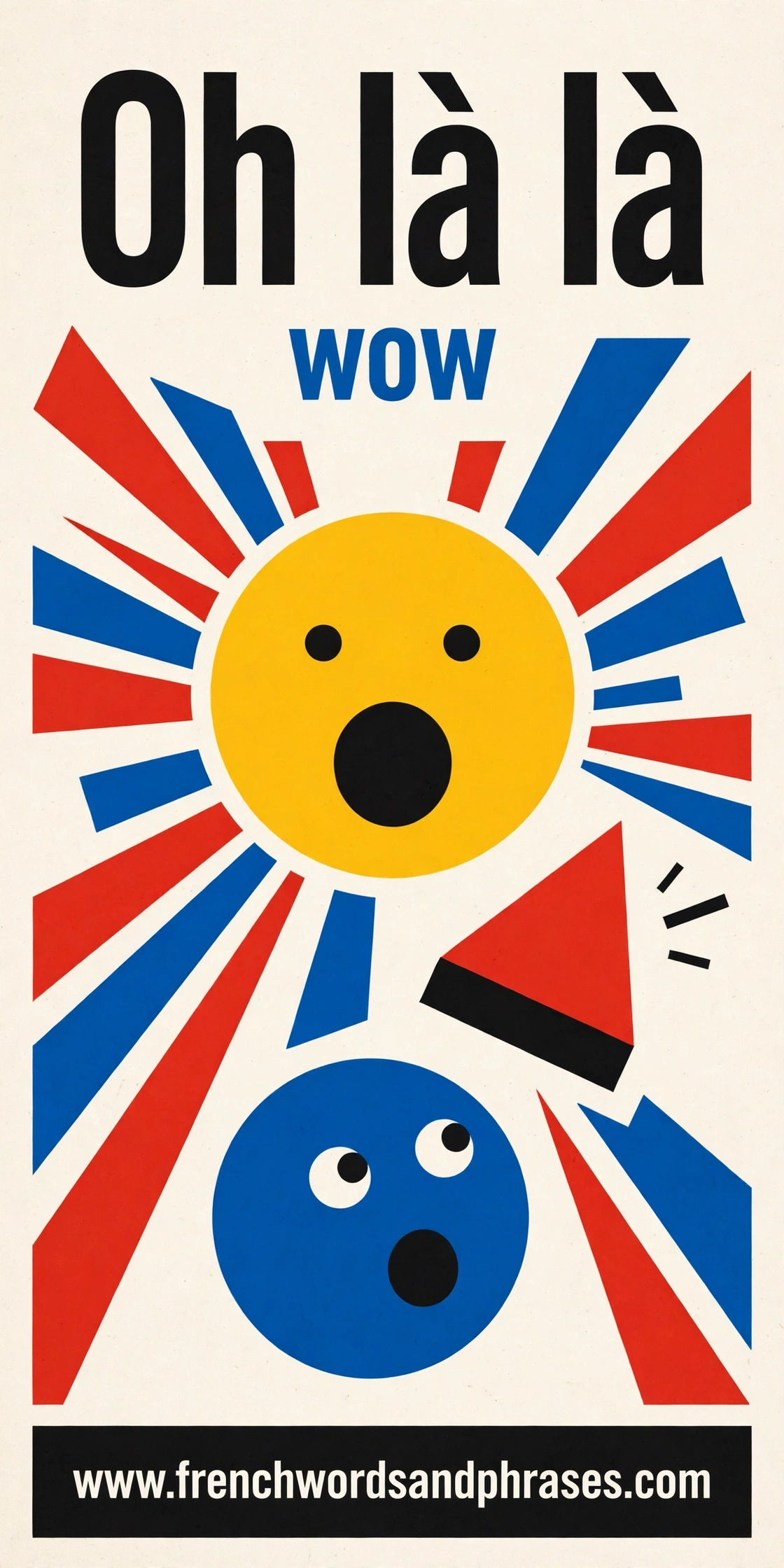
Oh là là means wow.
A waiter in a Paris café watches a tray of glasses tilt, catch the light, and somehow land upright. The whole terrace breathes out at once: « Oh là là ! » It can mean wow, oh dear, oh no, or my goodness — oh là là is the Swiss army knife of French reactions, and its meaning lives entirely in the tone of voice.
Let’s explore how oh là là works in French, beginning with the whole reaction on one card.
Understanding the French Interjection Oh là là
Oh là là is a French interjection of pure reaction — surprise, admiration, dismay or sympathy, all in three little syllables. It is built from oh + là (there) repeated, and it is probably the most famous French reaction in the world.
It means wow — and about five other things. Said brightly, it is admiration (what a view!); said flatly, it is oh dear (what a mess); said slowly with a sigh, it is sympathy (you poor thing). The words never change — the music does.
Type: Interjection — reaction (surprise / emotion)
Answers the need: Reacting out loud — to good news, bad news, beauty, chaos
Register: Neutral to warm — safe everywhere, loved by everyone
Strength: Adjustable — one là is mild, three làs is a drama
One important usage detail: English speakers often write it “oh la la” and make it sound flirty. In France it is mostly everyday and family-friendly — grandmothers say it at dropped shopping, children say it at fireworks. The flirty version is largely an export myth.
Experience the Word
Oh là là is the sound a whole room makes at the same moment — the gasp that is also a sentence.
Imagine the tour de France sweeping past your village in a blur of colour, and every neighbour on the pavement says it together: « Oh là là ! » — wonder, pride and noise in one breath.
You have not described the thing at all. You have let the feeling speak first.
How to Use Oh là là in French: Complete Guide
Let’s explore how oh là là works in French, beginning with the whole reaction on one card.
Oh là là at a Glance
The Whole Reaction on One Card
Meaning, job, register and strength — oh là là in four lines.
| Point | Oh là là |
|---|---|
| Meaning | wow / oh dear / oh no / my goodness — set by tone |
| Job | reacts out loud to something surprising, beautiful, awful or touching |
| Register | neutral and warm — safe with strangers, children, grandparents |
| Strength | adjustable: oh là (mild) → oh là là là (full drama) |
Example
Oh là là, quel beau coucher de soleil !
Oh wow, what a beautiful sunset!
When You Say It: The Trigger Moments
Oh là là fires automatically at moments like these — the situation chooses the tone.
| Situation | Example |
|---|---|
| Something beautiful | oh là là, cette vue ! — oh wow, this view! |
| Something goes wrong | oh là là, j’ai renversé le café — oh no, I’ve spilt the coffee |
| Hearing bad news | oh là là, je suis désolé — oh dear, I’m so sorry |
| Something impressive | oh là là, il court vite ! — wow, he runs fast! |
| A delicious surprise | oh là là, ce gâteau ! — oh my, this cake! |
Example
Oh là là, tu as vu la neige ?
Oh wow, have you seen the snow?
Quick Quiz 1
What decides whether oh là là means “wow” or “oh dear”?
Reveal the answer
The tone of voice — bright for admiration, flat or sighing for dismay.
Oh là là, quel désastre !
Oh dear, what a disaster!
The Reaction Question: Tone, Punctuation and the Extra Là
The same three syllables can carry joy, horror or sympathy — here is how the delivery does it.
| Delivery | What it does |
|---|---|
| Rising, bright voice + ! | admiration or delighted surprise |
| Flat, falling voice + … | dismay, sympathy, ‘oh dear’ |
| Slow, with a sigh | compassion — ‘you poor thing’ |
| Repeated làs: oh là là là là | turns the volume up — amazement or total chaos |
| Said twice: oh là là, oh là là | shaking the head — disbelief |
Example
Oh là là là là, qu’est-ce qui s’est passé ici ?
Oh no no no, what happened here?
Where It Goes: Standalone, Sentence-First, Repeated
Oh là là needs no grammar around it — it stands alone or opens a sentence like a curtain going up.
| Position / pattern | Example |
|---|---|
| Standalone | oh là là ! — just the reaction, nothing else |
| Opening a sentence | oh là là, je suis en retard ! — oh no, I’m late! |
| Before a quel phrase | oh là là, quelle histoire ! — my goodness, what a story! |
| Repeated for emphasis | oh là là, oh là là, calme-toi — wow, wow, calm down |
Example
Oh là là, quelle belle surprise !
Oh wow, what a lovely surprise!
Quick Quiz 2
How do you make oh là là stronger without changing the words?
Reveal the answer
Add more làs — oh là là là là turns the volume right up.
Oh là là là là, incroyable !
Oh wow wow wow, unbelievable!
Everyday Expressions with Oh là là
Oh là là slots into these everyday frames — each one a small drama in itself.
| Expression | In English |
|---|---|
| oh là là, mon Dieu ! | oh my goodness! |
| oh là là, la la | oh dear me (head-shaking, half amused) |
| et oh là là ! | and — wow! / and that was that! |
| oh là là, ça alors ! | well, of all things! |
| oh là là, pauvre de toi | oh you poor thing |
Example
Oh là là, mon Dieu, j’ai oublié les clés !
Oh my goodness, I forgot the keys!
Close Cousins: The Other Big Reactions
French has a whole shelf of gasps — oh là là is the all-purpose one; its cousins are more specialised.
| Word | The difference |
|---|---|
| oh là là | the all-rounder — wow, oh dear, oh no, sympathy |
| ça alors ! | ‘well I never!’ — surprise with disbelief |
| mon Dieu ! | ‘my God!’ — stronger shock or alarm |
| dis donc ! | ‘well!’ — impressed, often at a person |
| aïe ! | ‘ouch!’ — pain, or wincing at someone else’s bad luck |
Example
Ça alors, je ne m’y attendais pas !
Well I never, I wasn’t expecting that!
Quick Quiz 3
Which cousin means “well I never!” — oh là là or ça alors?
Reveal the answer
ça alors — surprise with a shake of disbelief.
Ça alors, toi ici !
Well I never, you here!
Oh là là and Its Neighbours
The reaction shelf around oh là là, from delight to despair.
| French | In English |
|---|---|
| super ! | awesome! (delight, success) |
| génial ! | fantastic! (delight) |
| oh là là | wow / oh dear (the middle of the shelf) |
| dommage ! | too bad! (regret) |
| zut ! | damn! (annoyance) |
Example
Oh là là, dommage, on a raté le train.
Oh dear, too bad, we missed the train.
Watch Out: The Traps Around Oh là là
The traps: the spelling, the flirty myth, and using it where silence is kinder.
| Trap | The truth |
|---|---|
| writing “oh la la” without accents | in French it is oh là là — là means ‘there’ |
| making it sound flirty | the seductive ‘oh la la’ is an English myth — in France it is everyday and innocent |
| using it for real grief | at genuinely grave news, je suis désolé is kinder — oh là là can sound too light |
| translating word by word | it is never ‘oh there there’ — it is one whole reaction |
Example
Oh là là, je suis vraiment désolé pour toi.
Oh dear, I’m really sorry for you.
Quick Quiz 4
True or false: in France, oh là là is mostly a flirty expression.
Reveal the answer
False — it is an everyday, family-friendly reaction; the flirty version is an English-language myth.
Oh là là, les enfants ont tout mangé !
Oh dear, the children ate everything!
Oh là là in Everyday French: Real-Life Examples
Now that you know the word, let’s see how oh là là appears in everyday French.
Example Example 1 — Wonder
Oh là là, regarde cet arc-en-ciel !
Oh wow, look at that rainbow!
Example Example 2 — A spill
Oh là là, pardon, j’ai fait tomber ton verre.
Oh no, sorry, I knocked your glass over.
Example Example 3 — Good news
Oh là là, tu as réussi ton examen ? Félicitations !
Oh wow, you passed your exam? Congratulations!
Example Example 4 — Sympathy
Oh là là, tu as perdu ton portefeuille ?
Oh dear, you lost your wallet?
Example Example 5 — A crowd
Oh là là, il y a un monde fou au marché aujourd’hui.
My goodness, the market is packed today.
Example Example 6 — Taste
Oh là là, cette soupe est délicieuse !
Oh wow, this soup is delicious!
Beyond Translation: The Meaning of Oh là là
English borrowed ooh la la and dressed it up as something daring. The real oh là là is warmer and more useful than that: it is the sound of a person meeting the world with their feelings switched on — wonder at a sunset, dismay at a spill, sympathy for a friend, all from the same three syllables.
To say oh là là is to react first and explain later.
That is why the tone does all the work. French trusts the voice — the rise, the sigh, the extra là — to say what English needs four different phrases for.
How to Remember the French Interjection Oh là là
Remember it this way: Remember it this way: Oh là là is the all-purpose gasp — one reaction whose tone picks the meaning.
- You hear the tone first — bright means wow, flat means oh dear.
- You add làs to turn it up — oh là là là là is the full-volume version.
- You keep it innocent — in France, grandmothers and children say it all day.
The key idea is oh là là means wow or oh dear, the tone decides, and extra làs make it stronger.
Test Your Knowledge of Oh là là
Let’s see how much you’ve learned. Try answering these questions before revealing the answers.
Question 1
What does oh là là mean?
Reveal the answer
Wow — or oh dear, oh no, my goodness. One reaction; the tone of voice picks the meaning.
Question 2
How do you make oh là là stronger?
Reveal the answer
Add more làs — oh là là là là is the full-drama version.
Question 3
Translate: Oh wow, what a beautiful dress!
Reveal the answer
Oh là là, quelle belle robe !
Question 4
Is oh là là rude or flirty in France?
Reveal the answer
Neither — it is a neutral, family-friendly reaction used by everyone; the flirty version is an English myth.
Question 5
Complete the sentence:
______ , j’ai renversé le café ! (Oh no, I’ve spilt the coffee!)
Reveal the answer
Oh là là
Oh là là, j’ai renversé le café !
Oh no, I’ve spilt the coffee!
Your Final Challenge
Can You Use It?
How would you say this in French?
“How would you say this in French?”
Reveal the answer
Oh là là, quelle belle surprise !
Oh wow, what a lovely surprise!
A little French. A little curiosity. A richer everyday life.
LEARN FRENCH ONE WORD AT A TIME