A French Word to Live By
How to Conjugate Caqueter in French
/kak.te/
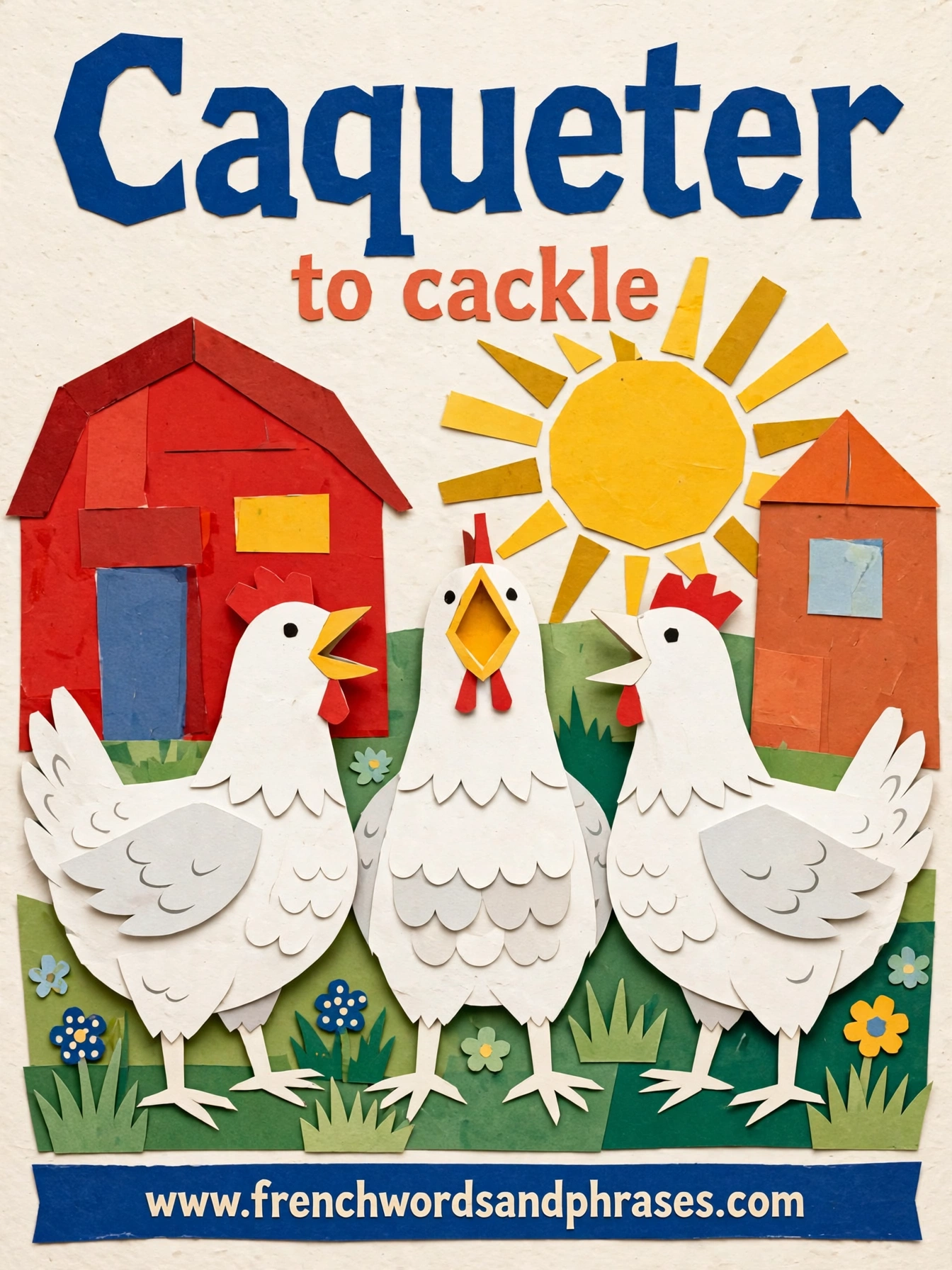
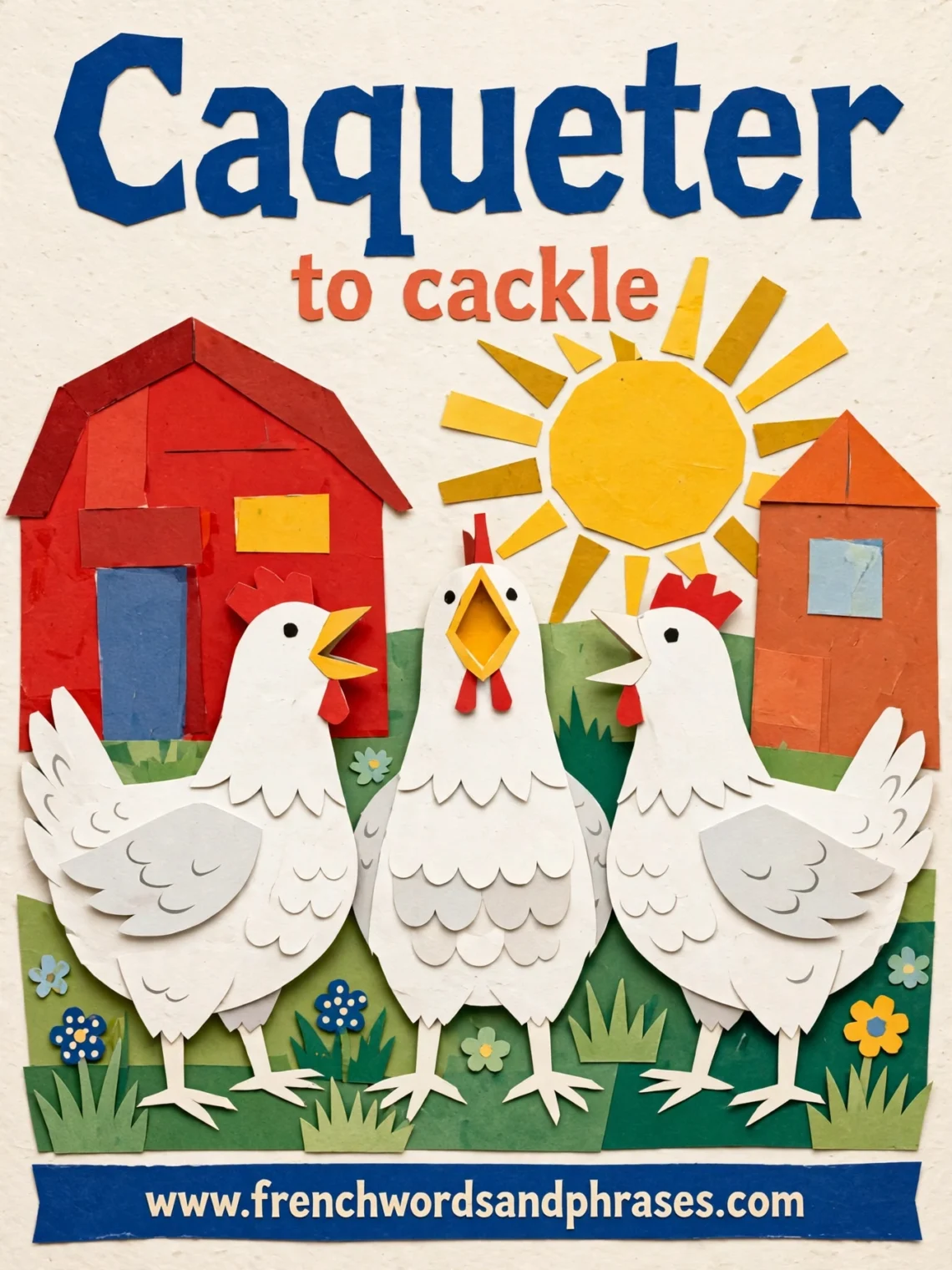
Caqueter means to cackle, to gossip — the proud clucking of a hen who has just laid an egg, and, by extension, the cheerful chatter of people who cannot stop talking.
A hen announcing her egg to the whole farmyard, a circle of friends whose conversation bubbles like a kettle — caqueter is the verb of joyful noise: part cackle, part gossip, all tongue and triumph.
In this guide, you’ll learn how to conjugate caqueter in all the major French tenses and moods. Explore complete conjugation tables, French examples, English translations, and practice quizzes.
Understanding the French Verb Caqueter
Caqueter is a regular French verb belonging to the first group of verbs, those ending in-er.
It means to cackle, to gossip. Its first home is the henhouse — the hen caquette over her egg — and its second is the salon and the market, where people (in the traditional, teasing picture, especially groups of women in older literature) caquettent: chattering and gossiping without pause. The tone is amused rather than cruel.
Verb classification: First group (-er)
Auxiliary verb: Avoir
Past participle: caqueté
Present participle: caquetant
English equivalents: To cackle, to cluck, to gossip, to chatter; la poule caquette — the hen cackles; caqueter après la ponte — to cackle after laying; elles caquettent au marché — they gossip at the market; un caquet incessant — incessant cackling/chatter.
One important detail: caqueter belongs to the appeler family of spelling — the t of the infinitive doubles before a mute e. So the present runs je caquette, tu caquettes, elle caquette, elles caquettent, while nous and vous keep the single t: nous caquetons, vous caquetez. The doubling runs through the whole future and conditional: je caquetterai, je caquetterais, and through the subjunctive singular and third plural: qu’elle caquette, qu’elles caquettent. The tu imperative doubles too: caquette ! The noun is le caquet — rabattre le caquet à quelqu’un is to shut someone up, to take them down a peg.
Experience the Word
Caqueter is the verb of the triumphant hen and the unstoppable tea party — noise made proudly, in public, on purpose.
Imagine a farmyard at seven in the morning. From the henhouse comes a sudden, glorious racket — la poule caquette, announcing her egg to the hens, the dog, the farmer and the world, while at the farmhouse window the neighbours caquettent over coffee, scarcely quieter.
Egg laid, news delivered. Everyone is cackling — tout le monde caquette, hens and humans alike.
How to Conjugate Caqueter: Complete French Conjugation Guide
Let’s explore every major conjugation of caqueter, beginning with the indicative mood.
How to Conjugate Caqueter in the Indicative Mood
The indicative mood is used to express facts, observations, actions, and events.
How to Conjugate Caqueter in the Present Tense (Présent)
Used for actions happening now, habitual actions, and general truths.
| Subject | Conjugation |
|---|---|
| je | caquette |
| tu | caquettes |
| il / elle | caquette |
| nous | caquetons |
| vous | caquetez |
| ils / elles | caquettent |
Example
La poule caquette fièrement après avoir pondu.
The hen cackles proudly after laying.
Quick Quiz 1
Complete the sentence:
Nous écoutons les poules qui ______ dans la cour.
Reveal the answer
caquettent
Nous écoutons les poules qui caquettent dans la cour.
We listen to the hens cackling in the yard — third plural doubles the t.
How to Conjugate Caqueter in the Passé Composé
Used for completed actions in the past. Caqueter takes the auxiliary verb avoir.
| Subject | Conjugation |
|---|---|
| j’ | ai caqueté |
| tu | as caqueté |
| il / elle | a caqueté |
| nous | avons caqueté |
| vous | avez caqueté |
| ils / elles | ont caqueté |
Example
Elles ont caqueté au marché toute la matinée.
They gossiped at the market all morning.
How to Conjugate Caqueter in the Imparfait (Imperfect Tense)
Used for habitual past actions, descriptions, and ongoing situations in the past.
| Subject | Conjugation |
|---|---|
| je | caquetais |
| tu | caquetais |
| il / elle | caquetait |
| nous | caquetions |
| vous | caquetiez |
| ils / elles | caquetaient |
Example
Les poules caquetaient dès l’aube dans la basse-cour.
The hens used to cackle from dawn in the farmyard.
Quick Quiz 2
Choose the correct form:
They gossiped all morning.
Elles ______ toute la matinée. (ont caqueté / sont caqueté)
Reveal the answer
ont caqueté
Elles ont caqueté toute la matinée.
Caqueter takes avoir.
How to Conjugate Caqueter in the Plus-que-parfait
Used to describe an action that had already been completed before another past event.
| Subject | Conjugation |
|---|---|
| j’ | avais caqueté |
| tu | avais caqueté |
| il / elle | avait caqueté |
| nous | avions caqueté |
| vous | aviez caqueté |
| ils / elles | avaient caqueté |
Example
La vieille poule avait caqueté avant même de pondre.
The old hen had cackled even before laying.
How to Conjugate Caqueter in the Passé Simple
Primarily used in formal writing, literature, and historical narratives. It is rarely used in everyday conversation.
| Subject | Conjugation |
|---|---|
| je | caquetai |
| tu | caquetas |
| il / elle | caqueta |
| nous | caquetâmes |
| vous | caquetâtes |
| ils / elles | caquetèrent |
Example
La poule caqueta si fort qu’elle réveilla la ferme.
The hen cackled so loudly that she woke the farm.
How to Conjugate Caqueter in the Passé Antérieur
A literary tense used to express an action completed immediately before another past action, generally in the passé simple.
| Subject | Conjugation |
|---|---|
| j’ | eus caqueté |
| tu | eus caqueté |
| il / elle | eut caqueté |
| nous | eûmes caqueté |
| vous | eûtes caqueté |
| ils / elles | eurent caqueté |
Example
Quand les commères eurent caqueté une heure, elles rentrèrent chez elles.
When the gossips had chattered for an hour, they went home.
How to Conjugate Caqueter in the Future Tense (Futur Simple)
Used to describe actions that will take place in the future.
| Subject | Conjugation |
|---|---|
| je | caquetterai |
| tu | caquetteras |
| il / elle | caquettera |
| nous | caquetterons |
| vous | caquetterez |
| ils / elles | caquetteront |
Example
Demain, la poule caquettera encore à la même heure.
Tomorrow, the hen will cackle again at the same time.
How to Conjugate Caqueter in the Futur Antérieur (Future Perfect)
Used for an action that will have been completed before a particular point in the future.
| Subject | Conjugation |
|---|---|
| j’ | aurai caqueté |
| tu | auras caqueté |
| il / elle | aura caqueté |
| nous | aurons caqueté |
| vous | aurez caqueté |
| ils / elles | auront caqueté |
Example
À midi, elles auront caqueté sur tout le village.
By noon, they will have gossiped about the whole village.
How to Conjugate Caqueter in the Near Future (Futur Proche)
Used to describe something that is going to happen soon. Formed with aller + infinitive.
| Subject | Conjugation |
|---|---|
| je | vais caqueter |
| tu | vas caqueter |
| il / elle | va caqueter |
| nous | allons caqueter |
| vous | allez caqueter |
| ils / elles | vont caqueter |
Example
Écoute, la poule va caqueter, elle a pondu.
Listen, the hen is going to cackle, she has laid.
How to Conjugate Caqueter in the Conditional Mood
The conditional mood expresses what would happen under certain circumstances. It is also frequently used to make polite requests or express wishes.
How to Conjugate Caqueter in the Present Conditional
| Subject | Conjugation |
|---|---|
| je | caquetterais |
| tu | caquetterais |
| il / elle | caquetterait |
| nous | caquetterions |
| vous | caquetteriez |
| ils / elles | caquetteraient |
Example
Sans les voisins, elles caquetteraient jusqu’au soir.
Without the neighbours, they would gossip until evening.
How to Conjugate Caqueter in the Past Conditional
| Subject | Conjugation |
|---|---|
| j’ | aurais caqueté |
| tu | aurais caqueté |
| il / elle | aurait caqueté |
| nous | aurions caqueté |
| vous | auriez caqueté |
| ils / elles | auraient caqueté |
Example
La poule aurait caqueté plus fort avec un public.
The hen would have cackled louder with an audience.
Caqueter in the Literary Past Conditional Form
This less common literary form uses the imperfect subjunctive of avoir.
| Subject | Conjugation |
|---|---|
| j’ | eusse caqueté |
| tu | eusses caqueté |
| il / elle | eût caqueté |
| nous | eussions caqueté |
| vous | eussiez caqueté |
| ils / elles | eussent caqueté |
Example
Les commères eussent caqueté jusqu’à la nuit tombante.
The gossips would have chattered until nightfall.
How to Conjugate Caqueter in the Subjunctive Mood
The subjunctive is used to express wishes, emotions, doubts, necessity, and uncertainty. It frequently follows expressions such as il faut que (it is necessary that) or bien que (although).
How to Conjugate Caqueter in the Present Subjunctive
| Subject | Conjugation |
|---|---|
| que je | caquette |
| que tu | caquettes |
| qu’il / qu’elle | caquette |
| que nous | caquetions |
| que vous | caquetiez |
| qu’ils / qu’elles | caquettent |
Example
Il est normal que la poule caquette après la ponte.
It is normal for the hen to cackle after laying.
Quick Quiz 3
Complete the sentence using the subjunctive:
Il est normal que les poules ______ après la ponte.
Reveal the answer
caquettent
Il est normal que les poules caquettent après la ponte.
It is normal for hens to cackle after laying.
How to Conjugate Caqueter in the Imperfect Subjunctive
A literary tense, rarely encountered in modern spoken French.
| Subject | Conjugation |
|---|---|
| que je | caquetasse |
| que tu | caquetasses |
| qu’il / qu’elle | caquetât |
| que nous | caquetassions |
| que vous | caquetassiez |
| qu’ils / qu’elles | caquetassent |
Example
On riait que les voisines caquetassent si tôt le matin.
People laughed that the neighbours gossiped so early in the morning.
How to Conjugate Caqueter in the Pluperfect Subjunctive
A literary construction used to express an action completed before another past action.
| Subject | Conjugation |
|---|---|
| que j’ | eusse caqueté |
| que tu | eusses caqueté |
| qu’il / qu’elle | eût caqueté |
| que nous | eussions caqueté |
| que vous | eussiez caqueté |
| qu’ils / qu’elles | eussent caqueté |
Example
On prétendait qu’elles eussent caqueté sur tout le quartier.
People claimed they had gossiped about the whole neighbourhood.
How to Conjugate Caqueter in the Past Subjunctive
| Subject | Conjugation |
|---|---|
| que j’ | aie caqueté |
| que tu | aies caqueté |
| qu’il / qu’elle | ait caqueté |
| que nous | ayons caqueté |
| que vous | ayez caqueté |
| qu’ils / qu’elles | aient caqueté |
Example
Je suis amusé qu’elles aient caqueté toute la matinée.
I am amused that they gossiped all morning.
How to Conjugate Caqueter in the Imperative
The imperative is used to give commands, instructions, invitations, or suggestions. Subject pronouns are omitted.
How to Conjugate Caqueter in the Present Imperative
| Person | Conjugation |
|---|---|
| (tu) | caquette |
| (nous) | caquetons |
| (vous) | caquetez |
Example
Caquette, ma poule, annonce ton œuf au monde !
Cackle, my hen, announce your egg to the world!
Quick Quiz 4
How would you say Cackle, my hen (tu form)?
Reveal the answer
Caquette, ma poule !
French Participles of Caqueter
Participles are verb forms that can be used in compound tenses and other grammatical constructions.
Present Participle of Caqueter
caquetant
En caquetant, la poule a réveillé le coq.
By cackling, the hen woke the rooster.
Past Participle of Caqueter
caqueté
Elles ont caqueté si longtemps que le café a refroidi.
They gossiped so long that the coffee went cold.
Caqueter in Everyday French: Real-Life Examples
Now that you know the conjugations, let’s see how caqueter appears in everyday French.
Example 1 — Present
La poule caquette fièrement après avoir pondu.
The hen cackles proudly after laying.
Example 2 — Passé composé
Elles ont caqueté au marché toute la matinée.
They gossiped at the market all morning.
Example 3 — Imparfait
Les poules caquetaient dès l’aube.
The hens used to cackle from dawn.
Example 4 — Future
La poule caquettera encore demain matin.
The hen will cackle again tomorrow morning.
Example 5 — Conditional
Elles caquetteraient jusqu’au soir sans les voisins.
They would gossip until evening without the neighbours.
Example 6 — Imperative
Caquette, ma poule, annonce ton œuf !
Cackle, my hen, announce your egg!
Beyond Translation: The Meaning of Caqueter
English cackle is the sound twin — both words are imitations of the hen herself, built from her own voice.
The hen is the original gossip.
French simply followed the farmyard logic to the salon: le caquet is the noise, caqueter is making it, and rabattre le caquet — lowering someone’s cackle — remains the liveliest French way to say to shut someone up.
How to Remember the French Verb Caqueter
Remember it this way: Caqueter is about the hen announcing her egg to the whole farmyard.
- Appeler-type doubling: je caquette with two t’s, but nous caquetons with one.
- The doubling runs through future and conditional too: je caquetterai, je caquetterais.
- Le caquet is the cackle itself — rabattre le caquet à quelqu’un, to shut them up.
The key idea is the hen announcing her egg to the whole farmyard.
Test Your Knowledge of Caqueter
Let’s see how much you’ve learned. Try answering these questions before revealing the answers.
Question 1
Why does je caquette have two t’s but nous caquetons only one?
Reveal the answer
The appeler-type rule — the t doubles before a mute e (present singular and third plural, future, conditional, tu imperative); nous/vous forms keep the single t.
Question 2
How do you say The hen cackles in French?
Reveal the answer
La poule caquette.
Question 3
Translate: They gossiped at the market all morning.
Reveal the answer
Elles ont caqueté au marché toute la matinée.
Question 4
What is the past participle of caqueter?
Reveal the answer
Caqueté — with a single t.
Question 5
Complete the sentence:
Il est normal que la poule ______ après la ponte.
Reveal the answer
caquette
Il est normal que la poule caquette après la ponte.
It is normal for the hen to cackle after laying.
Your Final Challenge
Can You Use It?
How would you say this in French?
The hen cackles over her egg like a queen on her throne, and the whole farmyard pretends to admire.
Reveal the answer
La poule caquette sur son œuf comme une reine sur son trône, et toute la basse-cour fait semblant d’admirer.
The hen cackles over her egg like a queen on her throne, and the whole farmyard pretends to admire.
A little French. A little curiosity. A richer everyday life.
LEARN FRENCH ONE WORD AT A TIME