A French Word to Live By
How to Conjugate Infléchir in French
/ɛ̃.fle.ʃiʁ/
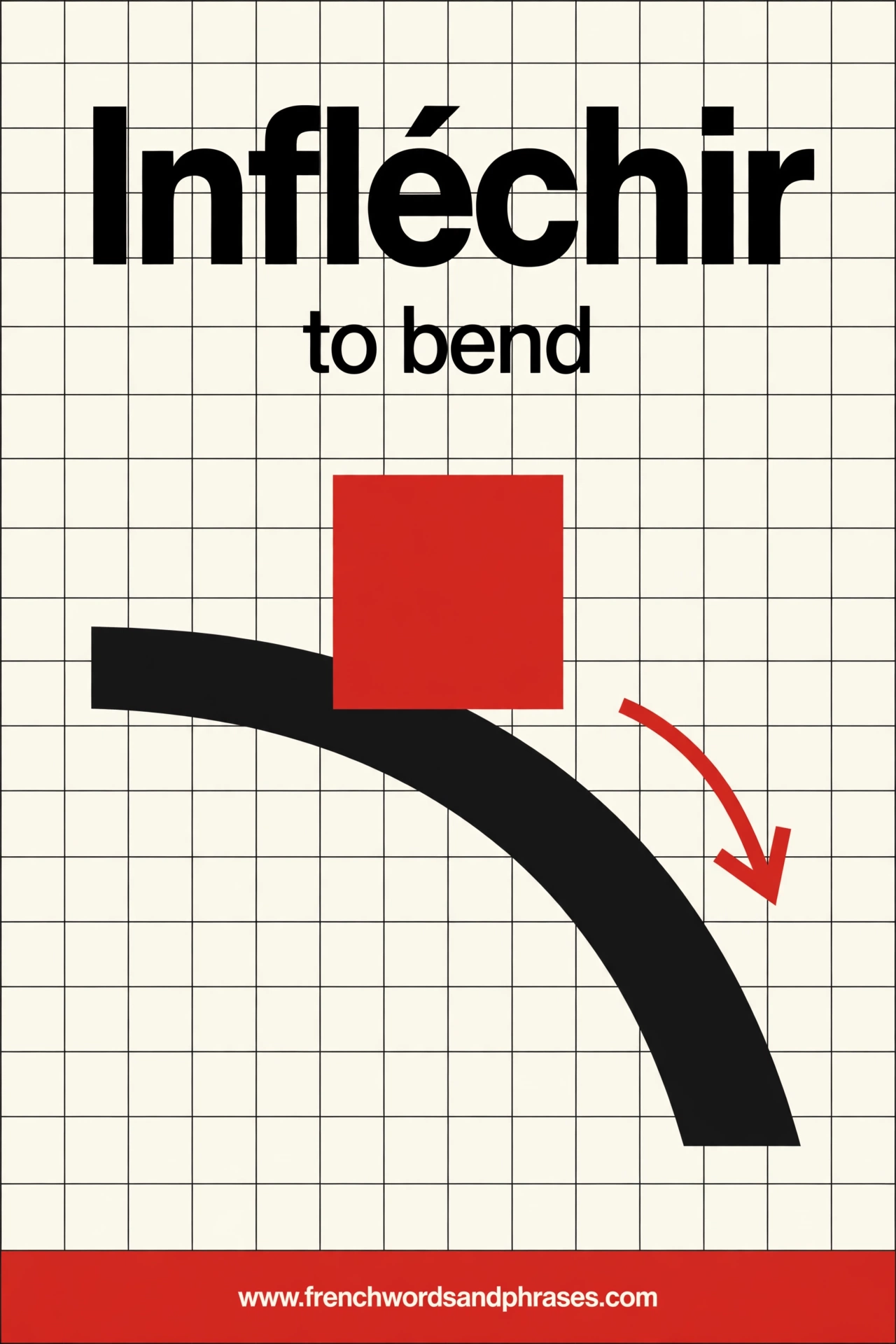
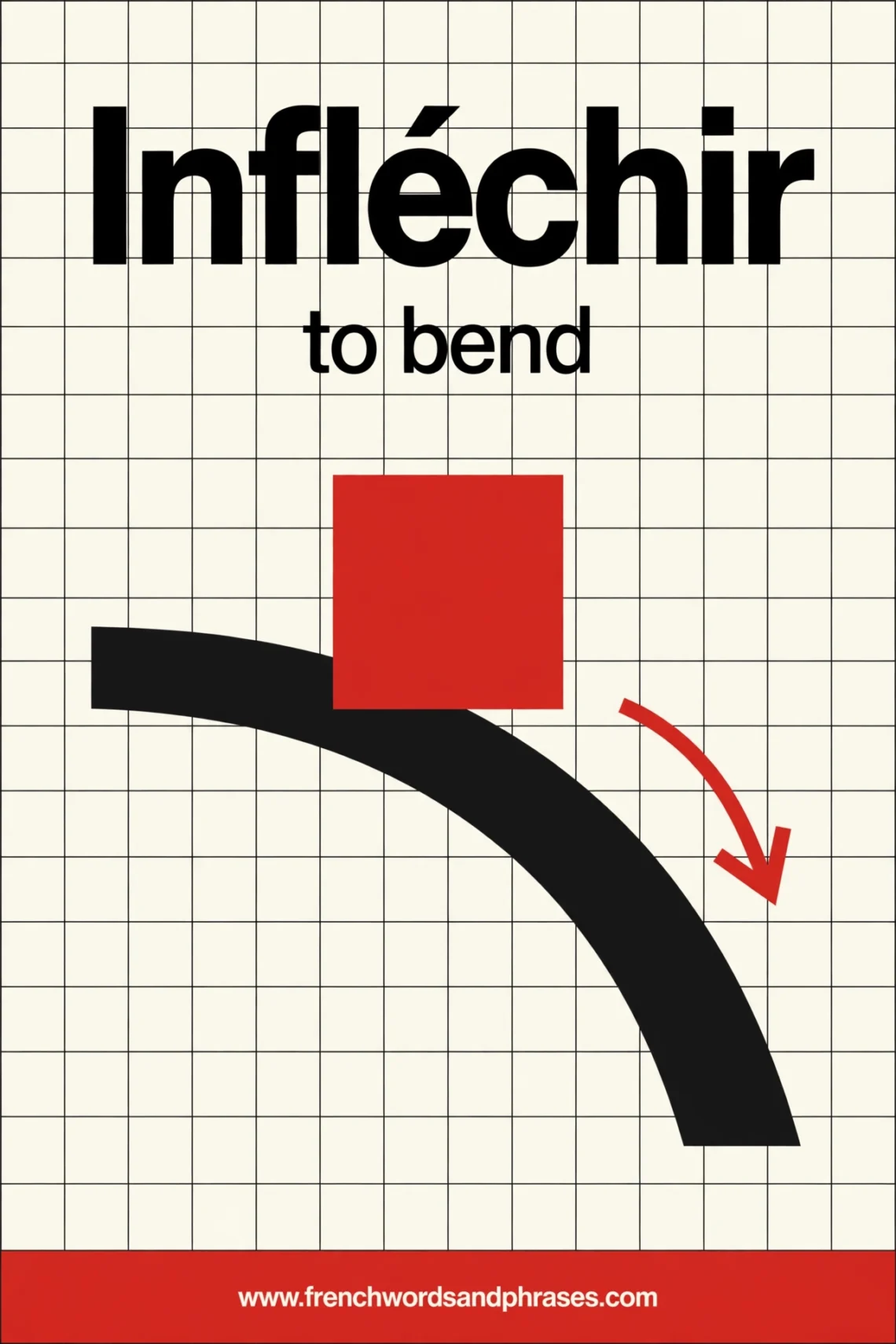
Infléchir means to bend, to sag, to inflect — to make something curve from its straight line: a rod under weight, a beam under a roof, or a policy changing direction.
A steel rod bending slowly under a load, a government quietly changing course mid-stream — infléchir is the verb of the curve imposed on straight things: nothing breaks, but nothing stays straight either.
In this guide, you’ll learn how to conjugate infléchir in all the major French tenses and moods. Explore complete conjugation tables, French examples, English translations, and practice quizzes.
Understanding the French Verb Infléchir
Infléchir is a regular French verb belonging to the second group of verbs, those ending in -ir.
It means to bend, to sag, to inflect. It is used literally of rods, branches, beams and backs that curve under pressure, and very often figuratively in politics and economics: infléchir une décision, infléchir la courbe, infléchir sa position — to bend a course of action without abandoning it. The reflexive s’infléchir describes the sag itself: les branches s’infléchissent sous les fruits.
Verb classification: Second group (-ir)
Auxiliary verb: Avoir
Past participle: infléchi
Present participle: infléchissant
English equivalents: To bend, to curve, to deflect, to inflect; infléchir une tige — to bend a rod; la poutre s’infléchit — the beam is sagging; infléchir une politique — to alter the course of a policy; infléchir la tendance — to reverse the trend.
One important detail: infléchir is a second-group verb in -ir, the twin of fléchir — so it conjugates like finir, not like aimer: j’infléchis, nous infléchissons, ils infléchissent, past participle infléchi. Transitive, it bends something: il infléchit la tige. Reflexive, s’infléchir is what beams and branches do under weight: la poutre s’infléchit, the beam is sagging — and grammarians also use the family for the way word endings bend, which is why English calls it inflection.
Experience the Word
Infléchir is the verb of the honest curve — the moment a straight thing admits the weight on it and bows without breaking.
Imagine an old barn in the mountains. Every winter the snow settles on the roof, and every winter the great central beam bends a little more — elle s’infléchit, slowly, silently — until the carpenter comes in spring to read the curve like a doctor reading a chart.
The beam has not failed. It has bent — infléchie — and its curve tells the whole story of the winter.
How to Conjugate Infléchir: Complete French Conjugation Guide
Let’s explore every major conjugation of infléchir, beginning with the indicative mood.
How to Conjugate Infléchir in the Indicative Mood
The indicative mood is used to express facts, observations, actions, and events.
How to Conjugate Infléchir in the Present Tense (Présent)
Used for actions happening now, habitual actions, and general truths.
| Subject | Conjugation |
|---|---|
| je | infléchis |
| tu | infléchis |
| il / elle | infléchit |
| nous | infléchissons |
| vous | infléchissez |
| ils / elles | infléchissent |
Example
Le poids infléchit lentement la branche chargée de fruits.
The weight is slowly bending the fruit-laden branch.
Quick Quiz 1
Complete the sentence:
Nous ______ les roseaux pour passer, sans les casser.
Reveal the answer
infléchissons
Nous infléchissons les roseaux pour passer, sans les casser.
We are bending the reeds to get through, without breaking them.
How to Conjugate Infléchir in the Passé Composé
Used for completed actions in the past. Infléchir takes the auxiliary verb avoir.
| Subject | Conjugation |
|---|---|
| j’ | ai infléchi |
| tu | as infléchi |
| il / elle | a infléchi |
| nous | avons infléchi |
| vous | avez infléchi |
| ils / elles | ont infléchi |
Example
L’ouvrier a infléchi la tige de métal à la main.
The workman bent the metal rod by hand.
How to Conjugate Infléchir in the Imparfait (Imperfect Tense)
Used for habitual past actions, descriptions, and ongoing situations in the past.
| Subject | Conjugation |
|---|---|
| je | infléchissais |
| tu | infléchissais |
| il / elle | infléchissait |
| nous | infléchissions |
| vous | infléchissiez |
| ils / elles | infléchissaient |
Example
La poutre s’infléchissait un peu plus chaque hiver.
The beam sagged a little more each winter.
Quick Quiz 2
Choose the correct form:
He bent the rod by hand.
Il ______ la tige à la main. (a infléchi / est infléchi)
Reveal the answer
a infléchi
Il a infléchi la tige à la main.
Infléchir takes avoir.
How to Conjugate Infléchir in the Plus-que-parfait
Used to describe an action that had already been completed before another past event.
| Subject | Conjugation |
|---|---|
| j’ | avais infléchi |
| tu | avais infléchi |
| il / elle | avait infléchi |
| nous | avions infléchi |
| vous | aviez infléchi |
| ils / elles | avaient infléchi |
Example
La neige avait infléchi les branches jusqu’au sol.
The snow had bent the branches down to the ground.
How to Conjugate Infléchir in the Passé Simple
Primarily used in formal writing, literature, and historical narratives. It is rarely used in everyday conversation.
| Subject | Conjugation |
|---|---|
| je | infléchis |
| tu | infléchis |
| il / elle | infléchit |
| nous | infléchîmes |
| vous | infléchîtes |
| ils / elles | infléchirent |
Example
Le forgeron infléchit la barre d’un seul coup.
The blacksmith bent the bar with a single blow.
How to Conjugate Infléchir in the Passé Antérieur
A literary tense used to express an action completed immediately before another past action, generally in the passé simple.
| Subject | Conjugation |
|---|---|
| j’ | eus infléchi |
| tu | eus infléchi |
| il / elle | eut infléchi |
| nous | eûmes infléchi |
| vous | eûtes infléchi |
| ils / elles | eurent infléchi |
Example
Quand le vent eut infléchi tous les roseaux, l’étang redevint calme.
When the wind had bent all the reeds, the pond grew calm again.
How to Conjugate Infléchir in the Future Tense (Futur Simple)
Used to describe actions that will take place in the future.
| Subject | Conjugation |
|---|---|
| je | infléchirai |
| tu | infléchiras |
| il / elle | infléchira |
| nous | infléchirons |
| vous | infléchirez |
| ils / elles | infléchiront |
Example
Ce nouveau poids infléchira l’étagère, c’est sûr.
This new weight will bend the shelf, that is certain.
How to Conjugate Infléchir in the Futur Antérieur (Future Perfect)
Used for an action that will have been completed before a particular point in the future.
| Subject | Conjugation |
|---|---|
| j’ | aurai infléchi |
| tu | auras infléchi |
| il / elle | aura infléchi |
| nous | aurons infléchi |
| vous | aurez infléchi |
| ils / elles | auront infléchi |
Example
À la fin de l’hiver, la neige aura infléchi toutes les clôtures.
By the end of winter, the snow will have bent all the fences.
How to Conjugate Infléchir in the Near Future (Futur Proche)
Used to describe something that is going to happen soon. Formed with aller + infinitive.
| Subject | Conjugation |
|---|---|
| je | vais infléchir |
| tu | vas infléchir |
| il / elle | va infléchir |
| nous | allons infléchir |
| vous | allez infléchir |
| ils / elles | vont infléchir |
Example
Attention, tu vas infléchir la règle en métal !
Careful, you are going to bend the metal ruler!
How to Conjugate Infléchir in the Conditional Mood
The conditional mood expresses what would happen under certain circumstances. It is also frequently used to make polite requests or express wishes.
How to Conjugate Infléchir in the Present Conditional
| Subject | Conjugation |
|---|---|
| je | infléchirais |
| tu | infléchirais |
| il / elle | infléchirait |
| nous | infléchirions |
| vous | infléchiriez |
| ils / elles | infléchiraient |
Example
Une charge plus lourde infléchirait la poutre dangereusement.
A heavier load would bend the beam dangerously.
How to Conjugate Infléchir in the Past Conditional
| Subject | Conjugation |
|---|---|
| j’ | aurais infléchi |
| tu | aurais infléchi |
| il / elle | aurait infléchi |
| nous | aurions infléchi |
| vous | auriez infléchi |
| ils / elles | auraient infléchi |
Example
Le gouvernement aurait infléchi sa politique sans les élections.
The government would have altered its policy if not for the elections.
Infléchir in the Literary Past Conditional Form
This less common literary form uses the imperfect subjunctive of avoir.
| Subject | Conjugation |
|---|---|
| j’ | eusse infléchi |
| tu | eusses infléchi |
| il / elle | eût infléchi |
| nous | eussions infléchi |
| vous | eussiez infléchi |
| ils / elles | eussent infléchi |
Example
Le vent eût infléchi les roseaux toute la nuit.
The wind would have bent the reeds all night long.
How to Conjugate Infléchir in the Subjunctive Mood
The subjunctive is used to express wishes, emotions, doubts, necessity, and uncertainty. It frequently follows expressions such as il faut que (it is necessary that) or bien que (although).
How to Conjugate Infléchir in the Present Subjunctive
| Subject | Conjugation |
|---|---|
| que je | infléchisse |
| que tu | infléchisses |
| qu’il / qu’elle | infléchisse |
| que nous | infléchissions |
| que vous | infléchissiez |
| qu’ils / qu’elles | infléchissent |
Example
Il faut que tu infléchisses la tige doucement, sans la casser.
You must bend the rod gently, without breaking it.
Quick Quiz 3
Complete the sentence using the subjunctive:
Il faut que vous ______ la barre avec précaution.
Reveal the answer
infléchissiez
Il faut que vous infléchissiez la barre avec précaution.
You must bend the bar carefully.
How to Conjugate Infléchir in the Imperfect Subjunctive
A literary tense, rarely encountered in modern spoken French.
| Subject | Conjugation |
|---|---|
| que je | infléchisse |
| que tu | infléchisses |
| qu’il / qu’elle | infléchît |
| que nous | infléchissions |
| que vous | infléchissiez |
| qu’ils / qu’elles | infléchissent |
Example
On craignait que la poutre s’infléchît sous la neige.
People feared the beam might sag under the snow.
How to Conjugate Infléchir in the Pluperfect Subjunctive
A literary construction used to express an action completed before another past action.
| Subject | Conjugation |
|---|---|
| que j’ | eusse infléchi |
| que tu | eusses infléchi |
| qu’il / qu’elle | eût infléchi |
| que nous | eussions infléchi |
| que vous | eussiez infléchi |
| qu’ils / qu’elles | eussent infléchi |
Example
On racontait que la tempête eût infléchi même les vieux chênes.
People said the storm had bent even the old oaks.
How to Conjugate Infléchir in the Past Subjunctive
| Subject | Conjugation |
|---|---|
| que j’ | aie infléchi |
| que tu | aies infléchi |
| qu’il / qu’elle | ait infléchi |
| nous | ayons infléchi |
| que vous | ayez infléchi |
| qu’ils / qu’elles | aient infléchi |
Example
Je suis étonné que le gouvernement ait infléchi sa position si vite.
I am amazed the government has shifted its position so quickly.
How to Conjugate Infléchir in the Imperative
The imperative is used to give commands, instructions, invitations, or suggestions. Subject pronouns are omitted.
How to Conjugate Infléchir in the Present Imperative
| Person | Conjugation |
|---|---|
| (tu) | infléchis |
| (nous) | infléchissons |
| (vous) | infléchissez |
Example
Infléchis cette tige doucement, à deux mains !
Bend this rod gently, with both hands!
Quick Quiz 4
How would you say Bend the rod gently (tu form)?
Reveal the answer
Infléchis la tige doucement !
French Participles of Infléchir
Participles are verb forms that can be used in compound tenses and other grammatical constructions.
Present Participle of Infléchir
infléchissant
En infléchissant la branche, il a cueilli les fruits les plus hauts.
By bending the branch, he picked the highest fruit.
Past Participle of Infléchir
infléchi
Infléchie par le poids des fruits, la branche touchait presque le sol.
Bent by the weight of the fruit, the branch almost touched the ground.
Infléchir in Everyday French: Real-Life Examples
Now that you know the conjugations, let’s see how infléchir appears in everyday French.
Example 1 — Present
Le poids infléchit la branche.
The weight is bending the branch.
Example 2 — Passé composé
Il a infléchi la tige à la main.
He bent the rod by hand.
Example 3 — Imparfait
La poutre s’infléchissait chaque hiver.
The beam used to sag each winter.
Example 4 — Future
La neige infléchira les clôtures.
The snow will bend the fences.
Example 5 — Conditional
Une charge lourde infléchirait la poutre.
A heavy load would bend the beam.
Example 6 — Imperative
Infléchis la tige doucement !
Bend the rod gently!
Beyond Translation: The Meaning of Infléchir
English inflect survives mostly in grammar class, but French infléchir still works outdoors: beams, branches and backs infléchissent, and so do governments.
It is the politest verb of change.
A minister who reverses a policy has reculé; a minister who l’infléchit has merely bent it — the direction is adjusted, the pride is intact. Between the straight line and the U-turn, French keeps this one verb for the curve.
How to Remember the French Verb Infléchir
Remember it this way: Infléchir is about the beam bowing under snow — bent, not broken.
- Second group in -ir, like finir: j’infléchis, nous infléchissons, past participle infléchi.
- Two pictures: bending a rod (transitive) and the beam that sags — la poutre s’infléchit.
- Figurative gold: infléchir une politique, infléchir la tendance — to bend a course without breaking it.
The key idea is the beam bowing under snow — bent, not broken.
Test Your Knowledge of Infléchir
Let’s see how much you’ve learned. Try answering these questions before revealing the answers.
Question 1
To which group does infléchir belong, and what is its nous form in the present?
Reveal the answer
The second group (-ir), like finir: nous infléchissons.
Question 2
How do you say The beam is sagging in French?
Reveal the answer
La poutre s’infléchit.
Question 3
Translate: The workman bent the metal rod by hand.
Reveal the answer
L’ouvrier a infléchi la tige de métal à la main.
Question 4
What is the past participle of infléchir?
Reveal the answer
Infléchi.
Question 5
Complete the sentence:
Il faut que tu ______ la tige doucement.
Reveal the answer
infléchisses
Il faut que tu infléchisses la tige doucement.
You must bend the rod gently.
Your Final Challenge
Can You Use It?
How would you say this in French?
The old beam sags under the snow, but it has held firm for a hundred years.
Reveal the answer
La vieille poutre s’infléchit sous la neige, mais elle tient bon depuis cent ans.
The old beam sags under the snow, but it has held firm for a hundred years.
A little French. A little curiosity. A richer everyday life.
LEARN FRENCH ONE WORD AT A TIME