A French Word to Live By
How to Conjugate Accabler in French
/a.ka.ble/
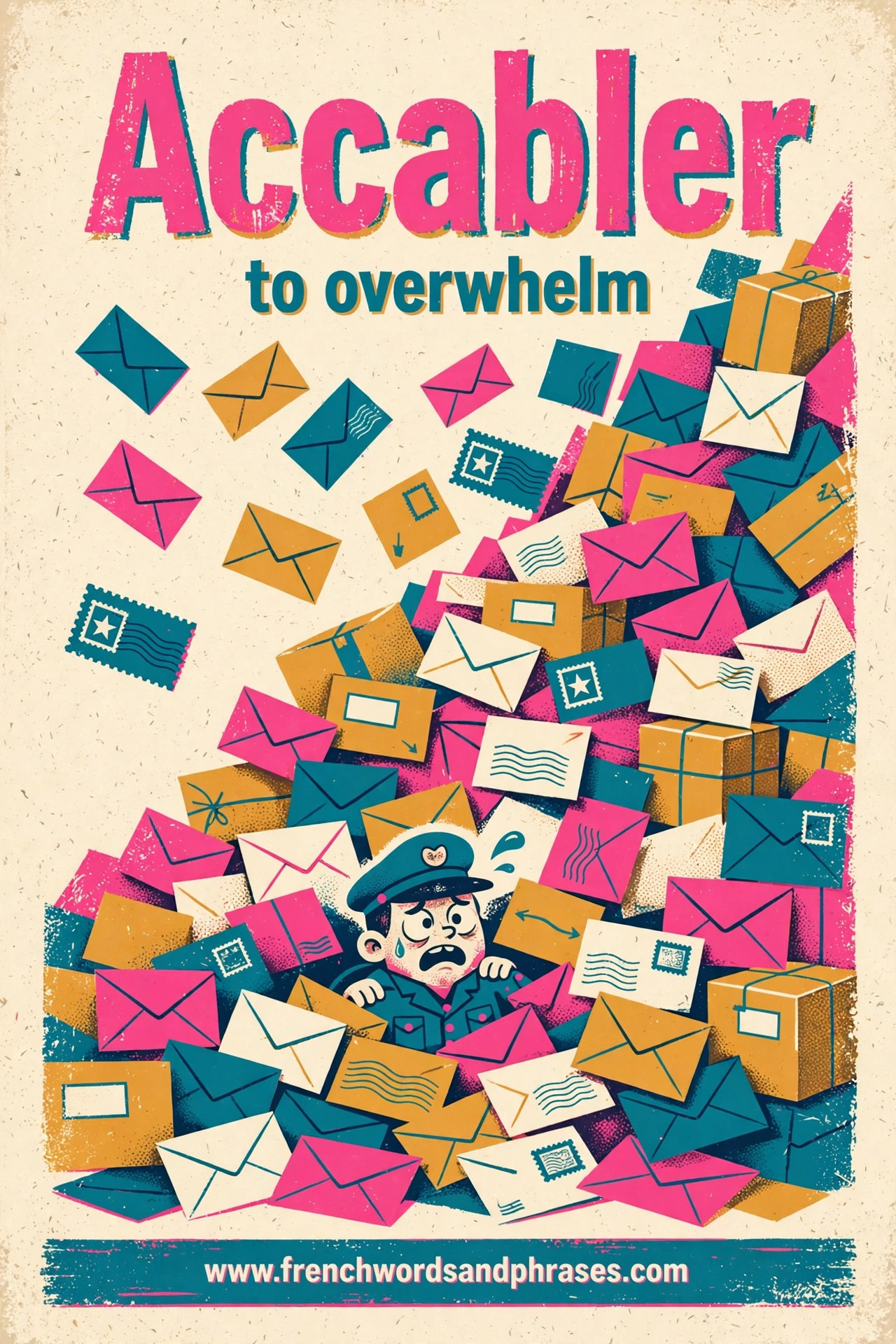
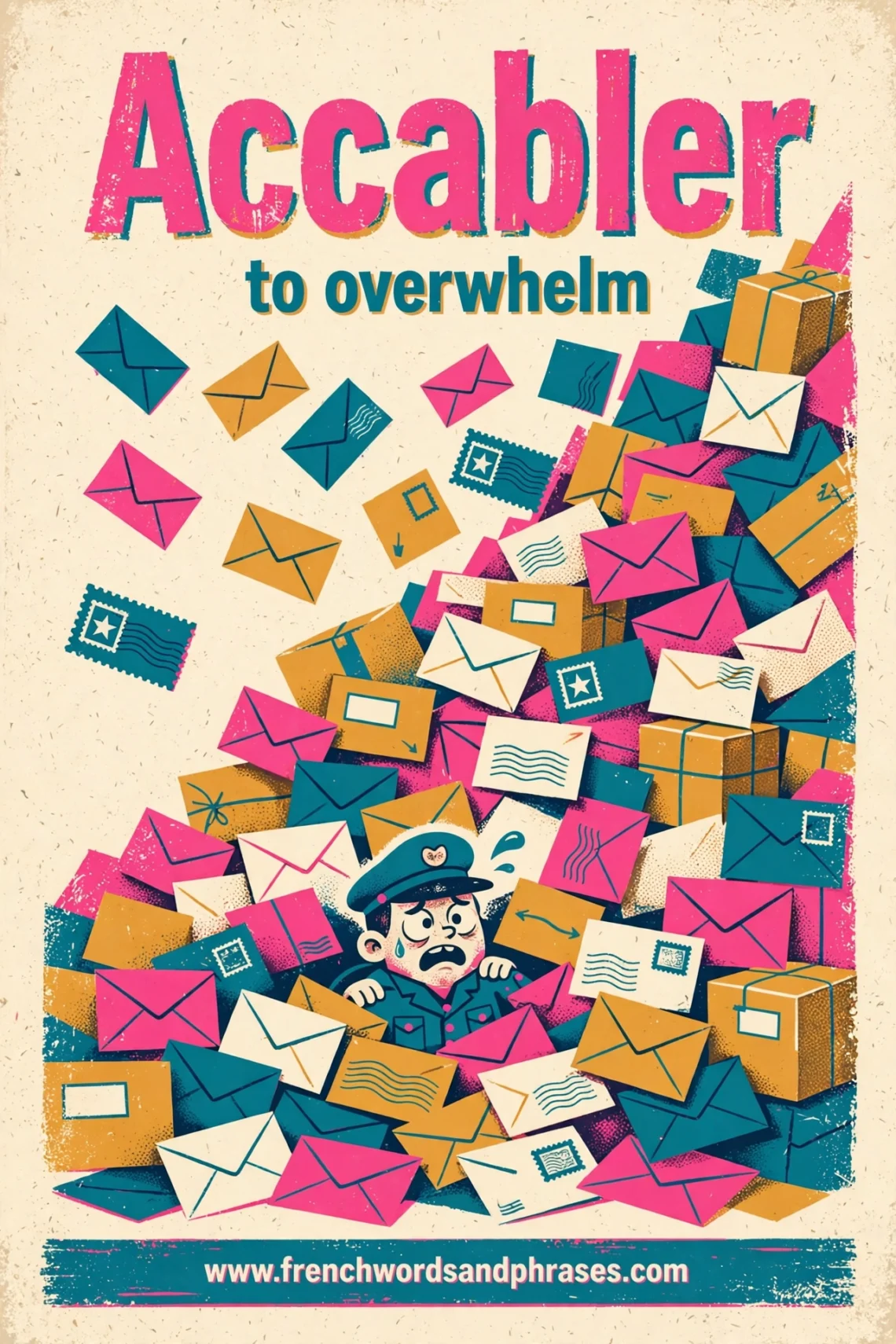
Accabler means to overwhelm — to crush someone under a weight of grief, work, heat or words until they can barely stand.
A labourer bending under sacks in the August sun, a widow sinking under bad news, a clerk buried under files — accabler is the verb of the crushing load: whatever falls on a person all at once and presses them down, body or soul.
In this guide, you’ll learn how to conjugate accabler in all the major French tenses and moods. Explore complete conjugation tables, French examples, English translations, and practice quizzes.
Understanding the French Verb Accabler
Accabler is a regular French verb belonging to the first group of verbs, those ending in-er.
It means to overwhelm. It is used of physical weights (heat, fatigue, sleep), of emotions (grief, shame, sorrow) and of words used as weapons — reproaches, insults, questions. Its noun is l’accablement, the state of being crushed, and the adjective accablant describes crushing heat or crushing news.
Verb classification: First group (-er)
Auxiliary verb: Avoir
Past participle: accablé
Present participle: accablant
English equivalents: To overwhelm, to weigh down, to crush; accabler quelqu’un de quelque chose — to overwhelm someone with something; accabler de reproches — to heap reproaches on; accabler de travail — to overload with work; accabler de questions — to bombard with questions; être accablé de chaleur — to be overcome by the heat.
One important detail: accabler is built around its favourite frame — accabler quelqu’un de quelque chose. The person crushed is the direct object, and the crushing load follows de: la chaleur l’accable, on l’a accablé de reproches, elle est accablée de dettes. In the passive-style descriptions French loves, the participle agrees: accablé, accablée, accablés — accablé de chaleur is the standard way to say overcome by a heatwave. The verb itself is perfectly regular: j’accable, nous accablons, past participle accablé.
Experience the Word
Accabler is the verb of the load that arrives all at once — too much sun, too much sorrow, too many words, all pressing on the same shoulders.
Imagine a small farmer at noon in a lavender field. The heat is a hand on his neck, the sacks grow heavier at every row, and the letter in his pocket — the bank’s letter — weighs more than all of them. La chaleur l’accable, le travail l’accable, le souci l’accable: three loads, one bent back.
Nothing has struck him or chased him. He is overwhelmed — accablé — pressed down by everything at once.
How to Conjugate Accabler: Complete French Conjugation Guide
Let’s explore every major conjugation of accabler, beginning with the indicative mood.
How to Conjugate Accabler in the Indicative Mood
The indicative mood is used to express facts, observations, actions, and events.
How to Conjugate Accabler in the Present Tense (Présent)
Used for actions happening now, habitual actions, and general truths.
| Subject | Conjugation |
|---|---|
| je | accable |
| tu | accables |
| il / elle | accable |
| nous | accablons |
| vous | accablez |
| ils / elles | accablent |
Example
La chaleur accable les moissonneurs dès le matin.
The heat overwhelms the harvesters from early morning.
Quick Quiz 1
Complete the sentence:
Nous ______ de questions le pauvre guide.
Reveal the answer
accablons
Nous accablons de questions le pauvre guide.
We bombard the poor guide with questions.
How to Conjugate Accabler in the Passé Composé
Used for completed actions in the past. Accabler takes the auxiliary verb avoir.
| Subject | Conjugation |
|---|---|
| j’ | ai accablé |
| tu | as accablé |
| il / elle | a accablé |
| nous | avons accablé |
| vous | avez accablé |
| ils / elles | ont accablé |
Example
Les mauvaises nouvelles l’ont accablé.
The bad news overwhelmed him.
How to Conjugate Accabler in the Imparfait (Imperfect Tense)
Used for habitual past actions, descriptions, and ongoing situations in the past.
| Subject | Conjugation |
|---|---|
| je | accablais |
| tu | accablais |
| il / elle | accablait |
| nous | accablions |
| vous | accabliez |
| ils / elles | accablaient |
Example
Le chagrin l’accablait depuis des mois.
Grief had been overwhelming him for months.
Quick Quiz 2
Choose the correct form:
The news overwhelmed her.
La nouvelle ______ . (l’a accablée / l’a accablé)
Reveal the answer
l’a accablée
La nouvelle l’a accablée.
The participle agrees with the feminine direct object placed before it.
How to Conjugate Accabler in the Plus-que-parfait
Used to describe an action that had already been completed before another past event.
| Subject | Conjugation |
|---|---|
| j’ | avais accablé |
| tu | avais accablé |
| il / elle | avait accablé |
| nous | avions accablé |
| vous | aviez accablé |
| ils / elles | avaient accablé |
Example
Les dettes avaient accablé la famille pendant des années.
The debts had weighed the family down for years.
How to Conjugate Accabler in the Passé Simple
Primarily used in formal writing, literature, and historical narratives. It is rarely used in everyday conversation.
| Subject | Conjugation |
|---|---|
| je | accablai |
| tu | accablas |
| il / elle | accabla |
| nous | accablâmes |
| vous | accablâtes |
| ils / elles | accablèrent |
Example
La canicule accabla la ville pendant trois semaines.
The heatwave overwhelmed the town for three weeks.
How to Conjugate Accabler in the Passé Antérieur
A literary tense used to express an action completed immediately before another past action, generally in the passé simple.
| Subject | Conjugation |
|---|---|
| j’ | eus accablé |
| tu | eus accablé |
| il / elle | eut accablé |
| nous | eûmes accablé |
| vous | eûtes accablé |
| ils / elles | eurent accablé |
Example
Quand la nouvelle l’eut accablé, il s’assit sans un mot.
When the news had overwhelmed him, he sat down without a word.
How to Conjugate Accabler in the Future Tense (Futur Simple)
Used to describe actions that will take place in the future.
| Subject | Conjugation |
|---|---|
| je | accablerai |
| tu | accableras |
| il / elle | accablera |
| nous | accablerons |
| vous | accablerez |
| ils / elles | accableront |
Example
Sans aide, ce travail vous accablera.
Without help, this work will overwhelm you.
How to Conjugate Accabler in the Futur Antérieur (Future Perfect)
Used for an action that will have been completed before a particular point in the future.
| Subject | Conjugation |
|---|---|
| j’ | aurai accablé |
| tu | auras accablé |
| il / elle | aura accablé |
| nous | aurons accablé |
| vous | aurez accablé |
| ils / elles | auront accablé |
Example
À ce rythme, la fatigue les aura accablés avant la fin du chantier.
At this rate, tiredness will have overwhelmed them before the building work ends.
How to Conjugate Accabler in the Near Future (Futur Proche)
Used to describe something that is going to happen soon. Formed with aller + infinitive.
| Subject | Conjugation |
|---|---|
| je | vais accabler |
| tu | vas accabler |
| il / elle | va accabler |
| nous | allons accabler |
| vous | allez accabler |
| ils / elles | vont accabler |
Example
Attention, cette chaleur va nous accabler.
Careful, this heat is going to overwhelm us.
How to Conjugate Accabler in the Conditional Mood
The conditional mood expresses what would happen under certain circumstances. It is also frequently used to make polite requests or express wishes.
How to Conjugate Accabler in the Present Conditional
| Subject | Conjugation |
|---|---|
| je | accablerais |
| tu | accablerais |
| il / elle | accablerait |
| nous | accablerions |
| vous | accableriez |
| ils / elles | accableraient |
Example
Tant de reproches accableraient n’importe qui.
So many reproaches would overwhelm anyone.
How to Conjugate Accabler in the Past Conditional
| Subject | Conjugation |
|---|---|
| j’ | aurais accablé |
| tu | aurais accablé |
| il / elle | aurait accablé |
| nous | aurions accablé |
| vous | auriez accablé |
| ils / elles | auraient accablé |
Example
Cette nouvelle l’aurait accablé s’il l’avait apprise seul.
This news would have overwhelmed him if he had heard it alone.
Accabler in the Literary Past Conditional Form
This less common literary form uses the imperfect subjunctive of avoir.
| Subject | Conjugation |
|---|---|
| j’ | eusse accablé |
| tu | eusses accablé |
| il / elle | eût accablé |
| nous | eussions accablé |
| vous | eussiez accablé |
| ils / elles | eussent accablé |
Example
Il eût accablé ses employés de travail sans les règles du syndicat.
He would have crushed his employees with work without the union rules.
How to Conjugate Accabler in the Subjunctive Mood
The subjunctive is used to express wishes, emotions, doubts, necessity, and uncertainty. It frequently follows expressions such as il faut que (it is necessary that) or bien que (although).
How to Conjugate Accabler in the Present Subjunctive
| Subject | Conjugation |
|---|---|
| que je | accable |
| que tu | accables |
| qu’il / qu’elle | accable |
| que nous | accablions |
| que vous | accabliez |
| qu’ils / qu’elles | accablent |
Example
Il ne faut pas que ce deuil l’accable trop longtemps.
This grief must not overwhelm him for too long.
Quick Quiz 3
Complete the sentence using the subjunctive:
Je crains que la chaleur ne vous ______ .
Reveal the answer
accable
Je crains que la chaleur ne vous accable.
I fear the heat may overwhelm you.
How to Conjugate Accabler in the Imperfect Subjunctive
A literary tense, rarely encountered in modern spoken French.
| Subject | Conjugation |
|---|---|
| que je | accablasse |
| que tu | accablasses |
| qu’il / qu’elle | accablât |
| que nous | accablassions |
| que vous | accablassiez |
| qu’ils / qu’elles | accablassent |
Example
Elle craignait que la chaleur n’accablât les vieillards du village.
She feared the heat might overwhelm the village’s old people.
How to Conjugate Accabler in the Pluperfect Subjunctive
A literary construction used to express an action completed before another past action.
| Subject | Conjugation |
|---|---|
| que j’ | eusse accablé |
| que tu | eusses accablé |
| qu’il / qu’elle | eût accablé |
| que nous | eussions accablé |
| que vous | eussiez accablé |
| qu’ils / qu’elles | eussent accablé |
Example
On racontait qu’il eût accablé le jury de questions.
People said he had bombarded the jury with questions.
How to Conjugate Accabler in the Past Subjunctive
| Subject | Conjugation |
|---|---|
| que j’ | aie accablé |
| que tu | aies accablé |
| qu’il / qu’elle | ait accablé |
| que nous | ayons accablé |
| que vous | ayez accablé |
| qu’ils / qu’elles | aient accablé |
Example
Je suis désolé que cette nouvelle vous ait accablé.
I am sorry this news overwhelmed you.
How to Conjugate Accabler in the Imperative
The imperative is used to give commands, instructions, invitations, or suggestions. Subject pronouns are omitted.
How to Conjugate Accabler in the Present Imperative
| Person | Conjugation |
|---|---|
| (tu) | accable |
| (nous) | accablons |
| (vous) | accablez |
Example
Ne l’accable pas de reproches, il fait de son mieux !
Do not heap reproaches on him, he is doing his best!
Quick Quiz 4
How would you say Do not overwhelm me with work (tu form)?
Reveal the answer
Ne m’accable pas de travail !
French Participles of Accabler
Participles are verb forms that can be used in compound tenses and other grammatical constructions.
Present Participle of Accabler
accablant
Accablant ses employés de réunions, le directeur les épuise.
By overwhelming his employees with meetings, the manager wears them out.
Past Participle of Accabler
accablé
Accablé de travail, il a fini par démissionner.
Overwhelmed with work, he ended up resigning.
Accabler in Everyday French: Real-Life Examples
Now that you know the conjugations, let’s see how accabler appears in everyday French.
Example 1 — Present
La chaleur nous accable.
The heat overwhelms us.
Example 2 — Passé composé
La nouvelle l’a accablé.
The news overwhelmed him.
Example 3 — Imparfait
Le chagrin l’accablait.
Grief was overwhelming him.
Example 4 — Future
Ce travail vous accablera sans aide.
This work will overwhelm you without help.
Example 5 — Conditional
Tant de soucis l’accableraient.
So many worries would overwhelm him.
Example 6 — Imperative
Ne m’accable pas de questions !
Do not bombard me with questions!
Beyond Translation: The Meaning of Accabler
English overwhelm once meant exactly what accabler still means — to turn over on top of someone and bury them.
Accabler keeps the picture of the pile.
French reaches for it whenever things pile up on one person: sun, sleep, sorrow, debts, reproaches. Its family is everywhere in a hot French summer — une chaleur accablante, crushing heat, and l’accablement, the flat exhaustion of a person — or a whole country — under the load.
How to Remember the French Verb Accabler
Remember it this way: Accabler is about the bent back under sun, sorrow and sacks — everything piling on at once.
- The frame is accabler quelqu’un DE quelque chose: accablé de chaleur, de travail, de reproches.
- Heat is its home ground: une chaleur accablante, être accablé de chaleur.
- Regular -er: j’accable, nous accablons, past participle accablé, agreeing in descriptions: accablée, accablés.
The key idea is the bent back under sun, sorrow and sacks — everything piling on at once.
Test Your Knowledge of Accabler
Let’s see how much you’ve learned. Try answering these questions before revealing the answers.
Question 1
Which preposition introduces the load in accabler quelqu’un ___ quelque chose?
Reveal the answer
De — accabler quelqu’un de reproches, de travail, de questions.
Question 2
How do you say The heat overwhelms us in French?
Reveal the answer
La chaleur nous accable.
Question 3
Translate: The bad news overwhelmed him.
Reveal the answer
Les mauvaises nouvelles l’ont accablé.
Question 4
What is the past participle of accabler?
Reveal the answer
Accablé — agreeing: accablée, accablés, accablées.
Question 5
Complete the sentence:
Il ne faut pas que ce deuil l’______ trop longtemps.
Reveal the answer
accable
Il ne faut pas que ce deuil l’accable trop longtemps.
This grief must not overwhelm him for too long.
Your Final Challenge
Can You Use It?
How would you say this in French?
The heat overwhelms the village, and even the cicadas fall silent at noon.
Reveal the answer
La chaleur accable le village, et même les cigales se taisent à midi.
The heat overwhelms the village, and even the cicadas fall silent at noon.
A little French. A little curiosity. A richer everyday life.
LEARN FRENCH ONE WORD AT A TIME