A French Word to Live By
How to Conjugate Enherber in French
/ɑ̃.ɛʁ.be/
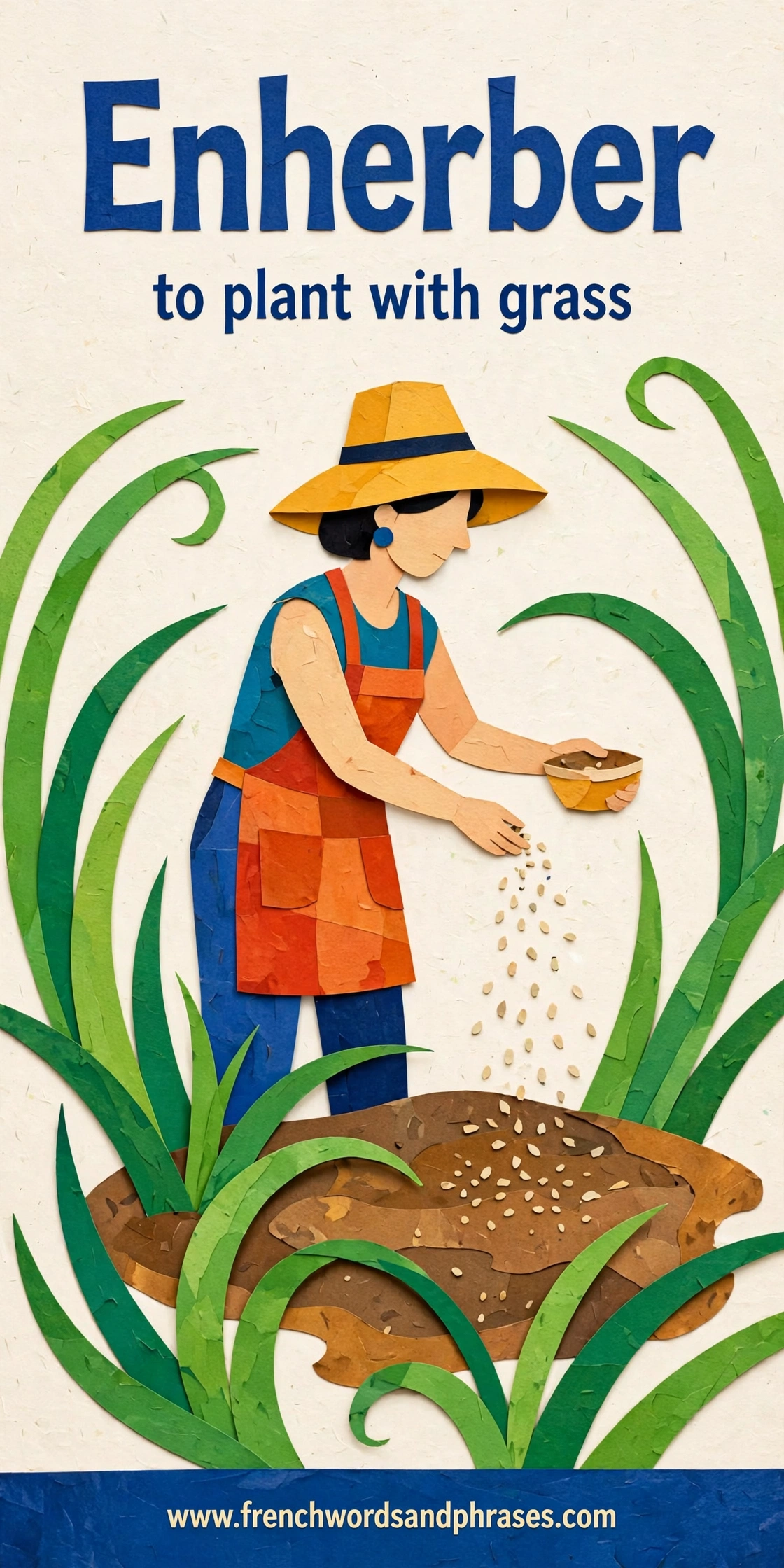
Enherber means to plant with grass — to sow grass over bare ground so that a field, a bank or a plot of land turns green and stays covered.
A bare earth bank beside a new road, a trampled courtyard, an orchard floor of dust: the remedy, in French, is enherber — to sow grass seed over the whole surface and wait for the green to take. It is the verb of turning brown ground into a living carpet.
In this guide, you’ll learn how to conjugate enherber in all the major French tenses and moods. Explore complete conjugation tables, French examples, English translations, and practice quizzes.
Understanding the French Verb Enherber
Enherber is a regular French verb belonging to the first group of verbs, those ending in-er.
It means to plant with grass. Enherber belongs to farming, gardening and land management: orchards and vineyards are enherbés between the rows to stop erosion, new road banks are enherbées to hold the soil, and a strip left grassed along a river — une bande enherbée — filters the water. The noun l’enherbement is the standard term in modern sustainable agriculture.
Verb classification: First group (-er)
Auxiliary verb: Avoir
Past participle: enherbé
Present participle: enherbant
English equivalents: To plant with grass, to grass over, to sow with grass; enherber un terrain — to grass over a plot of land; enherber les berges — to plant the banks with grass; une bande enherbée — a grass strip; l’enherbement — grassing over, grass cover.
One important detail: enherber is a regular -er verb built on l’herbe, grass — the prefix en- means ‘to put into’, so enherber is literally ‘to put into grass’. The spelling is steady throughout: j’enherbe, nous enherbons, past participle enherbé. Gardeners and farmers use it for deliberate sowing; ground that simply gets overgrown by itself is rather s’enherber in older texts, but the everyday verb for covering land with grass is this one, with a person doing the sowing.
Experience the Word
Enherber is the verb of the green takeover — seed scattered today, a lawn holding the hillside tomorrow.
Imagine a winegrower in the Loire who is tired of watching his topsoil wash away with every storm. This spring he changes method: between the rows of vines he sows clover and grass — il enherbe son vignoble. By summer the vineyard floor is green, the soil stays where it belongs, and the bees have moved in.
He planted no vines this year. He planted grass — il a enherbé — and the whole vineyard is healthier for it.
How to Conjugate Enherber: Complete French Conjugation Guide
Let’s explore every major conjugation of enherber, beginning with the indicative mood.
How to Conjugate Enherber in the Indicative Mood
The indicative mood is used to express facts, observations, actions, and events.
How to Conjugate Enherber in the Present Tense (Présent)
Used for actions happening now, habitual actions, and general truths.
| Subject | Conjugation |
|---|---|
| je | enherbe |
| tu | enherbes |
| il / elle | enherbe |
| nous | enherbons |
| vous | enherbez |
| ils / elles | enherbent |
Example
Le jardinier enherbe les bords de l’étang.
The gardener is planting the pond banks with grass.
Quick Quiz 1
Complete the sentence:
Nous ______ tout le verger au printemps.
Reveal the answer
enherberons
Nous enherberons tout le verger au printemps.
We will plant the whole orchard with grass in spring.
How to Conjugate Enherber in the Passé Composé
Used for completed actions in the past. Enherber takes the auxiliary verb avoir.
| Subject | Conjugation |
|---|---|
| j’ | ai enherbé |
| tu | as enherbé |
| il / elle | a enherbé |
| nous | avons enherbé |
| vous | avez enherbé |
| ils / elles | ont enherbé |
Example
Ils ont enherbé le terrain derrière la maison.
They grassed over the plot behind the house.
How to Conjugate Enherber in the Imparfait (Imperfect Tense)
Used for habitual past actions, descriptions, and ongoing situations in the past.
| Subject | Conjugation |
|---|---|
| je | enherbais |
| tu | enherbais |
| il / elle | enherbait |
| nous | enherbions |
| vous | enherbiez |
| ils / elles | enherbaient |
Example
Autrefois, on enherbait les vergers pour nourrir les bêtes.
In the old days, orchards were planted with grass to feed the animals.
Quick Quiz 2
Choose the correct form:
They grassed over the field.
Ils ______ le champ. (ont enherbé / sont enherbés)
Reveal the answer
ont enherbé
Ils ont enherbé le champ.
Enherber takes avoir.
How to Conjugate Enherber in the Plus-que-parfait
Used to describe an action that had already been completed before another past event.
| Subject | Conjugation |
|---|---|
| j’ | avais enherbé |
| tu | avais enherbé |
| il / elle | avait enherbé |
| nous | avions enherbé |
| vous | aviez enherbé |
| ils / elles | avaient enherbé |
Example
Elle avait enherbé la cour avant de vendre la ferme.
She had grassed over the yard before selling the farm.
How to Conjugate Enherber in the Passé Simple
Primarily used in formal writing, literature, and historical narratives. It is rarely used in everyday conversation.
| Subject | Conjugation |
|---|---|
| je | enherbai |
| tu | enherbas |
| il / elle | enherba |
| nous | enherbâmes |
| vous | enherbâtes |
| ils / elles | enherbèrent |
Example
La commune enherba les berges du canal en un printemps.
The town planted the canal banks with grass in a single spring.
How to Conjugate Enherber in the Passé Antérieur
A literary tense used to express an action completed immediately before another past action, generally in the passé simple.
| Subject | Conjugation |
|---|---|
| j’ | eus enherbé |
| tu | eus enherbé |
| il / elle | eut enherbé |
| nous | eûmes enherbé |
| vous | eûtes enherbé |
| ils / elles | eurent enherbé |
Example
Quand il eut enherbé le talus, l’érosion cessa.
When he had grassed over the bank, the erosion stopped.
How to Conjugate Enherber in the Future Tense (Futur Simple)
Used to describe actions that will take place in the future.
| Subject | Conjugation |
|---|---|
| je | enherberai |
| tu | enherberas |
| il / elle | enherbera |
| nous | enherberons |
| vous | enherberez |
| ils / elles | enherberont |
Example
Au printemps, nous enherberons tout le verger.
In spring, we will plant the whole orchard with grass.
How to Conjugate Enherber in the Futur Antérieur (Future Perfect)
Used for an action that will have been completed before a particular point in the future.
| Subject | Conjugation |
|---|---|
| j’ | aurai enherbé |
| tu | auras enherbé |
| il / elle | aura enherbé |
| nous | aurons enherbé |
| vous | aurez enherbé |
| ils / elles | auront enherbé |
Example
À l’automne, ils auront enherbé les deux rives.
By autumn, they will have grassed over both banks.
How to Conjugate Enherber in the Near Future (Futur Proche)
Used to describe something that is going to happen soon. Formed with aller + infinitive.
| Subject | Conjugation |
|---|---|
| je | vais enherber |
| tu | vas enherber |
| il / elle | va enherber |
| nous | allons enherber |
| vous | allez enherber |
| ils / elles | vont enherber |
Example
Je vais enherber ce coin de terre nue près de la haie.
I am going to plant this patch of bare earth near the hedge with grass.
How to Conjugate Enherber in the Conditional Mood
The conditional mood expresses what would happen under certain circumstances. It is also frequently used to make polite requests or express wishes.
How to Conjugate Enherber in the Present Conditional
| Subject | Conjugation |
|---|---|
| je | enherberais |
| tu | enherberais |
| il / elle | enherberait |
| nous | enherberions |
| vous | enherberiez |
| ils / elles | enherberaient |
Example
Sans la sécheresse, on enherberait les talus dès mars.
Without the drought, they would grass the banks from March.
How to Conjugate Enherber in the Past Conditional
| Subject | Conjugation |
|---|---|
| j’ | aurais enherbé |
| tu | aurais enherbé |
| il / elle | aurait enherbé |
| nous | aurions enherbé |
| vous | auriez enherbé |
| ils / elles | auraient enherbé |
Example
Ils auraient enherbé le champ si la semence était arrivée.
They would have grassed over the field if the seed had arrived.
Enherber in the Literary Past Conditional Form
This less common literary form uses the imperfect subjunctive of avoir.
| Subject | Conjugation |
|---|---|
| j’ | eusse enherbé |
| tu | eusses enherbé |
| il / elle | eût enherbé |
| nous | eussions enherbé |
| vous | eussiez enherbé |
| ils / elles | eussent enherbé |
Example
Il eût enherbé la cour entière pour plaire aux abeilles.
He would have grassed the whole yard to please the bees.
How to Conjugate Enherber in the Subjunctive Mood
The subjunctive is used to express wishes, emotions, doubts, necessity, and uncertainty. It frequently follows expressions such as il faut que (it is necessary that) or bien que (although).
How to Conjugate Enherber in the Present Subjunctive
| Subject | Conjugation |
|---|---|
| que je | enherbe |
| que tu | enherbes |
| qu’il / qu’elle | enherbe |
| que nous | enherbions |
| que vous | enherbiez |
| qu’ils / qu’elles | enherbent |
Example
Il faut que la commune enherbe les berges cette année.
The town must plant the banks with grass this year.
Quick Quiz 3
Complete the sentence using the subjunctive:
Il faut que vous ______ les berges cette année.
Reveal the answer
enherbiez
Il faut que vous enherbiez les berges cette année.
You must plant the banks with grass this year.
How to Conjugate Enherber in the Imperfect Subjunctive
A literary tense, rarely encountered in modern spoken French.
| Subject | Conjugation |
|---|---|
| que je | enherbasse |
| que tu | enherbasses |
| qu’il / qu’elle | enherbât |
| que nous | enherbassions |
| que vous | enherbassiez |
| qu’ils / qu’elles | enherbassent |
Example
Le fermier souhaitait que son fils enherbât le pré du bas.
The farmer wished his son would grass over the lower meadow.
How to Conjugate Enherber in the Pluperfect Subjunctive
A literary construction used to express an action completed before another past action.
| Subject | Conjugation |
|---|---|
| que j’ | eusse enherbé |
| que tu | eusses enherbé |
| qu’il / qu’elle | eût enherbé |
| que nous | eussions enherbé |
| que vous | eussiez enherbé |
| qu’ils / qu’elles | eussent enherbé |
Example
On racontait qu’ils eussent enherbé la moitié du village.
People said they had planted half the village with grass.
How to Conjugate Enherber in the Past Subjunctive
| Subject | Conjugation |
|---|---|
| que j’ | aie enherbé |
| que tu | aies enherbé |
| qu’il / qu’elle | ait enherbé |
| que nous | ayons enherbé |
| que vous | ayez enherbé |
| qu’ils / qu’elles | aient enherbé |
Example
Je suis ravi que vous ayez enherbé ce terrain vague.
I am delighted you grassed over that wasteland.
How to Conjugate Enherber in the Imperative
The imperative is used to give commands, instructions, invitations, or suggestions. Subject pronouns are omitted.
How to Conjugate Enherber in the Present Imperative
| Person | Conjugation |
|---|---|
| (tu) | enherbe |
| (nous) | enherbons |
| (vous) | enherbez |
Example
Enherbe ce talus avant les pluies d’automne !
Plant this bank with grass before the autumn rains!
Quick Quiz 4
How would you say Plant this bank with grass (tu form)?
Reveal the answer
Enherbe ce talus !
French Participles of Enherber
Participles are verb forms that can be used in compound tenses and other grammatical constructions.
Present Participle of Enherber
enherbant
En enherbant les rangs de vignes, il protège le sol.
By grassing over the vine rows, he protects the soil.
Past Participle of Enherber
enherbé
Enherbé au printemps, le verger est vert tout l’été.
Planted with grass in spring, the orchard stays green all summer.
Enherber in Everyday French: Real-Life Examples
Now that you know the conjugations, let’s see how enherber appears in everyday French.
Example 1 — Present
Le jardinier enherbe les bords de l’étang.
The gardener plants the pond banks with grass.
Example 2 — Passé composé
Ils ont enherbé le terrain derrière la maison.
They grassed over the plot behind the house.
Example 3 — Imparfait
On enherbait les vergers pour les bêtes.
Orchards used to be grassed for the animals.
Example 4 — Future
Nous enherberons tout le verger au printemps.
We will plant the whole orchard with grass in spring.
Example 5 — Conditional
On enherberait les talus sans la sécheresse.
They would grass the banks without the drought.
Example 6 — Imperative
Enherbez ce talus avant les pluies !
Plant this bank with grass before the rains!
Beyond Translation: The Meaning of Enherber
Inside enherber is l’herbe — grass, a herb, a weed, all in one word, the cousin of English herb.
The en- prefix turns the noun into a transformation.
French builds dozens of verbs this way — ensabler (to cover with sand), enneiger (to snow in) — and enherber is the green member of the family: bare earth goes in, grassland comes out.
How to Remember the French Verb Enherber
Remember it this way: Enherber is about bare brown earth waking up green.
- En- + herbe: to put land INTO grass — enherber un terrain, enherber les berges.
- Regular -er: j’enherbe, nous enherbons, past participle enherbé.
- The noun for the process is l’enherbement — grass cover, as in une bande enherbée.
The key idea is bare brown earth waking up green.
Test Your Knowledge of Enherber
Let’s see how much you’ve learned. Try answering these questions before revealing the answers.
Question 1
What noun lives inside enherber?
Reveal the answer
L’herbe — grass; enherber is to put land into grass.
Question 2
How do you say They grassed over the plot behind the house in French?
Reveal the answer
Ils ont enherbé le terrain derrière la maison.
Question 3
Translate: The gardener is planting the pond banks with grass.
Reveal the answer
Le jardinier enherbe les bords de l’étang.
Question 4
What is the past participle of enherber?
Reveal the answer
Enherbé.
Question 5
Complete the sentence:
Il faut que la commune ______ les berges cette année.
Reveal the answer
enherbe
Il faut que la commune enherbe les berges cette année.
The town must plant the banks with grass this year.
Your Final Challenge
Can You Use It?
How would you say this in French?
Planted with grass in spring, the old orchard offered the bees a carpet of flowers right through to autumn.
Reveal the answer
Enherbé au printemps, le vieux verger offrit aux abeilles un tapis de fleurs jusqu’à l’automne.
Planted with grass in spring, the old orchard offered the bees a carpet of flowers right through to autumn.
A little French. A little curiosity. A richer everyday life.
LEARN FRENCH ONE WORD AT A TIME