How to Conjugate Parfumer in French
/paʁ.fy.me/
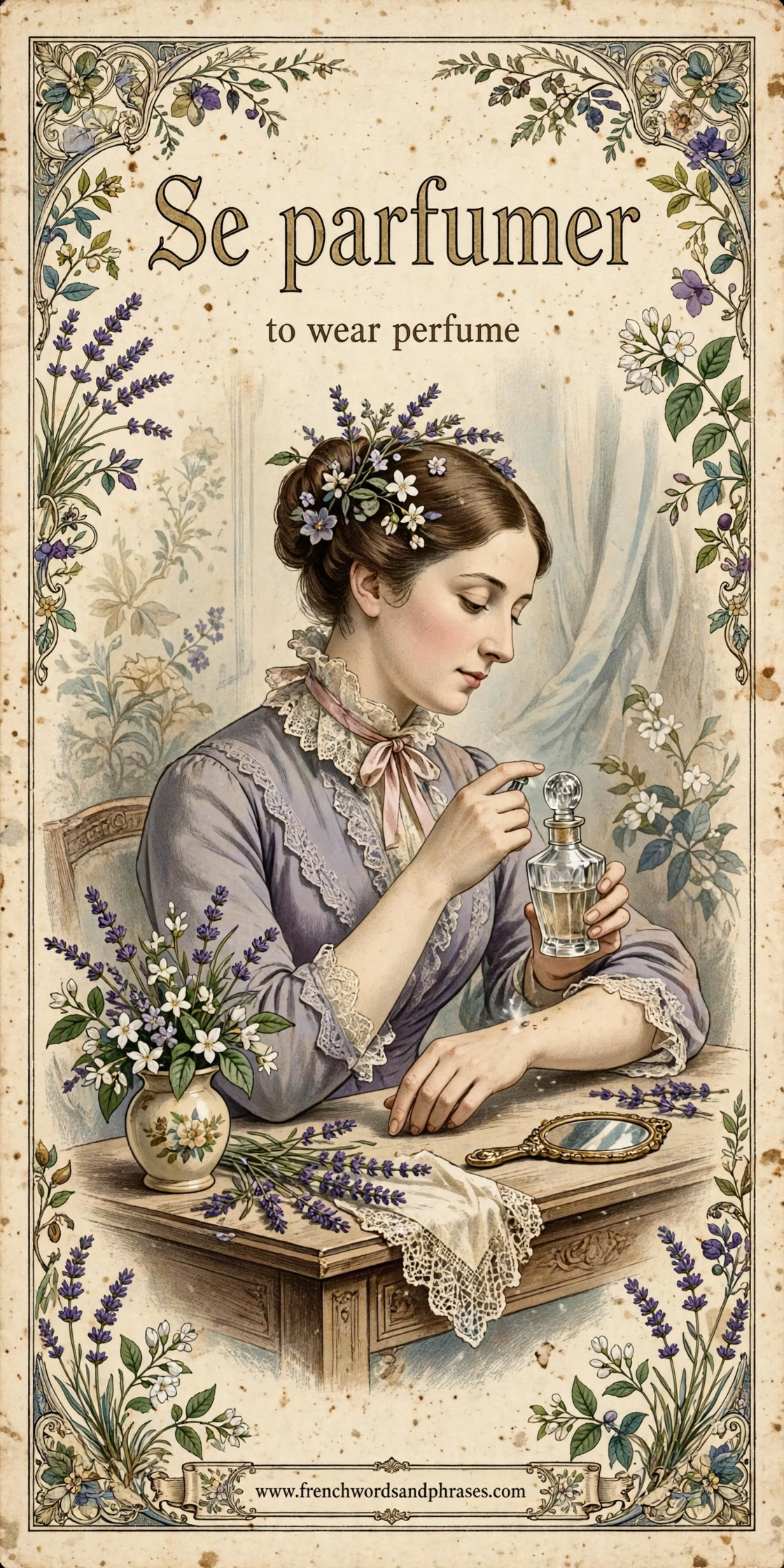
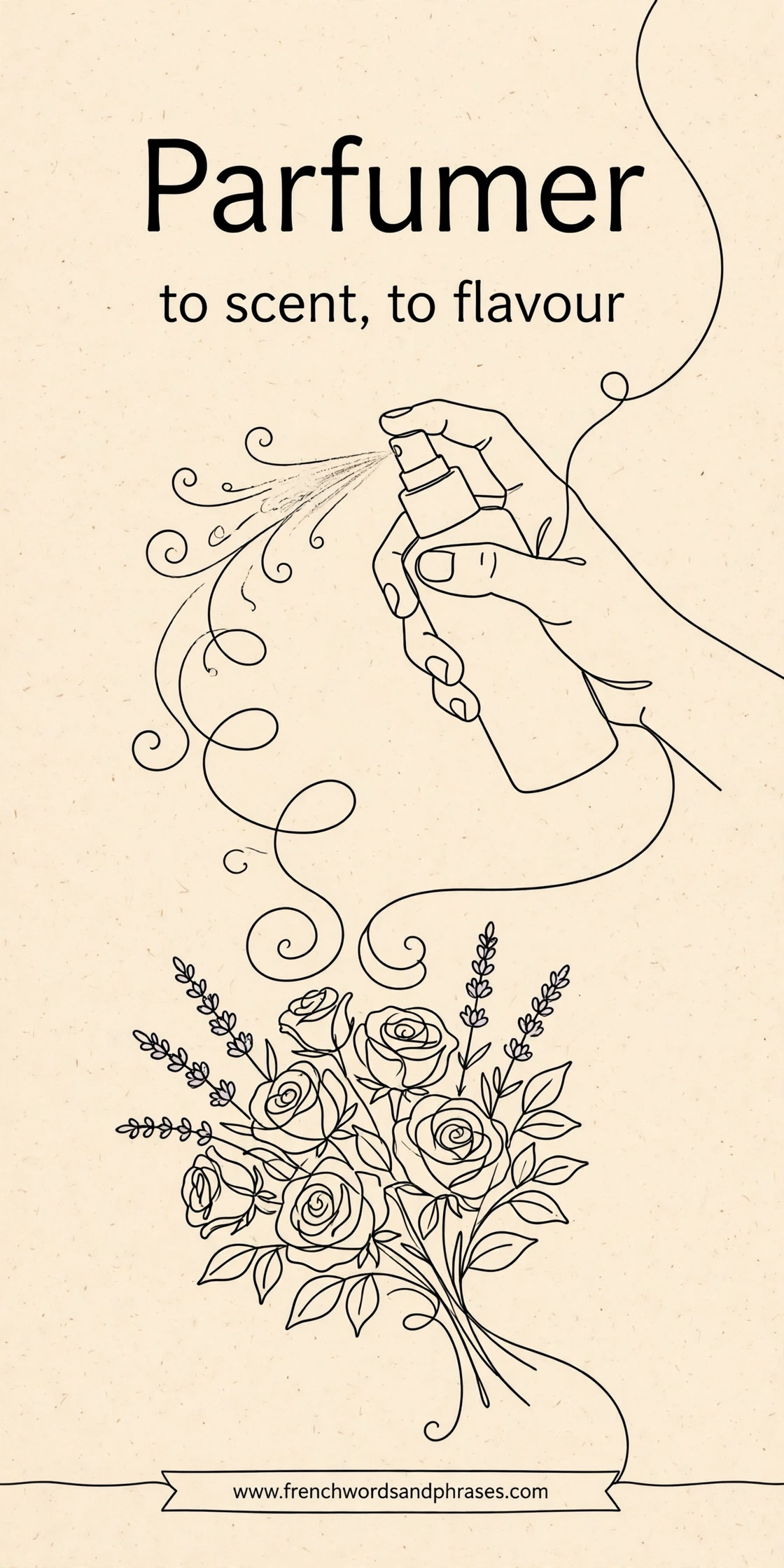
Parfumer means to scent, to flavour — to give a room, a linen drawer or a custard its invisible signature: lavender, vanilla, rose.
A grandmother sliding lavender sachets between the sheets, a chef splitting a vanilla pod over warm cream, rose water drifting from a kitchen in Provence — parfumer is the verb of fragrance deliberately given: nothing in the room has changed, and yet everything has.
In this guide, you’ll learn how to conjugate parfumer in all the major French tenses and moods. Explore complete conjugation tables, French examples, English translations, and practice quizzes.
Understanding the French Verb Parfumer
Parfumer is a regular French verb belonging to the first group of verbs, those ending in -er.
It means to scent, to flavour. Parfumer covers the whole fragrant world: rooms, linen, letters and baths on one side; creams, cakes, teas and liqueurs on the other. English splits the job between scent and flavour; French keeps one verb, because for French the nose does both. The flavour sense is the one on every menu and yoghurt pot in the country.
Verb classification: First group (-er)
Auxiliary verb: Avoir
Past participle: parfumé
Present participle: parfumant
English equivalents: To scent, to flavour; parfumer à la vanille — to flavour with vanilla; parfumer le linge — to scent the linen; parfumer une pièce — to scent a room; parfumer un plat aux épices — to flavour a dish with spices; une crème parfumée au café — a coffee-flavoured custard.
One important detail: parfumer names the scent twice over — it scents objects and flavours food, and in both jobs its partner is à: parfumer la crème à la vanille, parfumer le linge à la lavande. The past participle parfumé has escaped into everyday life as an adjective — un yaourt parfumé à la fraise, a strawberry-flavoured yoghurt. The verb itself is a plain regular -er: je parfume, nous parfumons. For putting scent on a person, French turns reflexive: se parfumer.
Experience the Word
Parfumer is the verb of the invisible ingredient — the one you notice before you see anything at all.
Imagine opening a wardrobe in a farmhouse in Provence. Between the folded sheets, little linen sachets, grey-blue with lavender. The grandmother who parfumait her linen this way has been gone for years — but open the wardrobe, and she is, unmistakably, still in the room.
Nothing visible had survived. Only the scent — parfumé — outlived everything else.
How to Conjugate Parfumer: Complete French Conjugation Guide
Let’s explore every major conjugation of parfumer, beginning with the indicative mood.
How to Conjugate Parfumer in the Indicative Mood
The indicative mood is used to express facts, observations, actions, and events.
How to Conjugate Parfumer in the Present Tense (Présent)
Used for actions happening now, habitual actions, and general truths.
| Subject | Conjugation |
|---|---|
| je | parfume |
| tu | parfumes |
| il / elle | parfume |
| nous | parfumons |
| vous | parfumez |
| ils / elles | parfument |
Elle parfume le linge à la lavande.
She scents the linen with lavender.
Complete the sentence:
Nous ______ la crème au café.
Reveal the answer
parfumons
Nous parfumons la crème au café.
We flavour the cream with coffee.
How to Conjugate Parfumer in the Passé Composé
Used for completed actions in the past. Parfumer takes the auxiliary verb avoir.
| Subject | Conjugation |
|---|---|
| j’ | ai parfumé |
| tu | as parfumé |
| il / elle | a parfumé |
| nous | avons parfumé |
| vous | avez parfumé |
| ils / elles | ont parfumé |
Le chef a parfumé la crème à la vanille.
The chef flavoured the cream with vanilla.
How to Conjugate Parfumer in the Imparfait (Imperfect Tense)
Used for habitual past actions, descriptions, and ongoing situations in the past.
| Subject | Conjugation |
|---|---|
| je | parfumais |
| tu | parfumais |
| il / elle | parfumait |
| nous | parfumions |
| vous | parfumiez |
| ils / elles | parfumaient |
Grand-mère parfumait ses armoires avec des sachets de lavande.
Grandmother used to scent her wardrobes with lavender sachets.
Choose the correct form:
She scented the room.
Elle a ______ la pièce. (parfumé / parfumée)
Reveal the answer
parfumé
Elle a parfumé la pièce.
With avoir and the object after the verb, the participle stays parfumé.
How to Conjugate Parfumer in the Plus-que-parfait
Used to describe an action that had already been completed before another past event.
| Subject | Conjugation |
|---|---|
| j’ | avais parfumé |
| tu | avais parfumé |
| il / elle | avait parfumé |
| nous | avions parfumé |
| vous | aviez parfumé |
| ils / elles | avaient parfumé |
Il avait parfumé la pièce avant l’arrivée des invités.
He had scented the room before the guests arrived.
How to Conjugate Parfumer in the Passé Simple
Primarily used in formal writing, literature, and historical narratives. It is rarely used in everyday conversation.
| Subject | Conjugation |
|---|---|
| je | parfumai |
| tu | parfumas |
| il / elle | parfuma |
| nous | parfumâmes |
| vous | parfumâtes |
| ils / elles | parfumèrent |
Elle parfuma le salon d’une eau de rose précieuse.
She scented the drawing room with a precious rose water.
How to Conjugate Parfumer in the Passé Antérieur
A literary tense used to express an action completed immediately before another past action, generally in the passé simple.
| Subject | Conjugation |
|---|---|
| j’ | eus parfumé |
| tu | eus parfumé |
| il / elle | eut parfumé |
| nous | eûmes parfumé |
| vous | eûtes parfumé |
| ils / elles | eurent parfumé |
Quand il eut parfumé le plat, le cuisinier le servit aussitôt.
When he had flavoured the dish, the cook served it at once.
How to Conjugate Parfumer in the Future Tense (Futur Simple)
Used to describe actions that will take place in the future.
| Subject | Conjugation |
|---|---|
| je | parfumerai |
| tu | parfumeras |
| il / elle | parfumera |
| nous | parfumerons |
| vous | parfumerez |
| ils / elles | parfumeront |
Ce soir, je parfumerai le riz au jasmin.
Tonight, I will scent the rice with jasmine.
How to Conjugate Parfumer in the Futur Antérieur (Future Perfect)
Used for an action that will have been completed before a particular point in the future.
| Subject | Conjugation |
|---|---|
| j’ | aurai parfumé |
| tu | auras parfumé |
| il / elle | aura parfumé |
| nous | aurons parfumé |
| vous | aurez parfumé |
| ils / elles | auront parfumé |
Quand tu auras parfumé la chambre, les invités arriveront.
When you have scented the room, the guests will arrive.
How to Conjugate Parfumer in the Near Future (Futur Proche)
Used to describe something that is going to happen soon. Formed with aller + infinitive.
| Subject | Conjugation |
|---|---|
| je | vais parfumer |
| tu | vas parfumer |
| il / elle | va parfumer |
| nous | allons parfumer |
| vous | allez parfumer |
| ils / elles | vont parfumer |
Elle va parfumer le gâteau à la fleur d’oranger.
She is going to flavour the cake with orange blossom.
How to Conjugate Parfumer in the Conditional Mood
The conditional mood expresses what would happen under certain circumstances. It is also frequently used to make polite requests or express wishes.
How to Conjugate Parfumer in the Present Conditional
| Subject | Conjugation |
|---|---|
| je | parfumerais |
| tu | parfumerais |
| il / elle | parfumerait |
| nous | parfumerions |
| vous | parfumeriez |
| ils / elles | parfumeraient |
Un peu de citron parfumerait agréablement ce poisson.
A little lemon would pleasantly flavour this fish.
How to Conjugate Parfumer in the Past Conditional
| Subject | Conjugation |
|---|---|
| j’ | aurais parfumé |
| tu | aurais parfumé |
| il / elle | aurait parfumé |
| nous | aurions parfumé |
| vous | auriez parfumé |
| ils / elles | auraient parfumé |
Il aurait parfumé le plat au curry si les enfants avaient aimé.
He would have flavoured the dish with curry if the children had liked it.
Parfumer in the Literary Past Conditional Form
This less common literary form uses the imperfect subjunctive of avoir.
| Subject | Conjugation |
|---|---|
| j’ | eusse parfumé |
| tu | eusses parfumé |
| il / elle | eût parfumé |
| nous | eussions parfumé |
| vous | eussiez parfumé |
| ils / elles | eussent parfumé |
Elle eût parfumé le salon de roses, si le jardin en eût donné.
She would have scented the drawing room with roses, if the garden had provided any.
How to Conjugate Parfumer in the Subjunctive Mood
The subjunctive is used to express wishes, emotions, doubts, necessity, and uncertainty. It frequently follows expressions such as il faut que (it is necessary that) or bien que (although).
How to Conjugate Parfumer in the Present Subjunctive
| Subject | Conjugation |
|---|---|
| que je | parfume |
| que tu | parfumes |
| qu’il / qu’elle | parfume |
| que nous | parfumions |
| que vous | parfumiez |
| qu’ils / qu’elles | parfument |
Je veux que tu parfumes la pièce avant leur arrivée.
I want you to scent the room before they arrive.
Complete the sentence using the subjunctive:
Il faut que vous ______ le plat au safran.
Reveal the answer
parfumiez
Il faut que vous parfumiez le plat au safran.
You must flavour the dish with saffron.
How to Conjugate Parfumer in the Imperfect Subjunctive
A literary tense, rarely encountered in modern spoken French.
| Subject | Conjugation |
|---|---|
| que je | parfumasse |
| que tu | parfumasses |
| qu’il / qu’elle | parfumât |
| que nous | parfumassions |
| que vous | parfumassiez |
| qu’ils / qu’elles | parfumassent |
Il fallait qu’elle parfumât le linge chaque semaine.
She had to scent the linen every week.
How to Conjugate Parfumer in the Pluperfect Subjunctive
A literary construction used to express an action completed before another past action.
| Subject | Conjugation |
|---|---|
| que j’ | eusse parfumé |
| que tu | eusses parfumé |
| qu’il / qu’elle | eût parfumé |
| que nous | eussions parfumé |
| que vous | eussiez parfumé |
| qu’ils / qu’elles | eussent parfumé |
On disait qu’elle eût parfumé ses lettres d’un parfum rare.
People said she had scented her letters with a rare perfume.
How to Conjugate Parfumer in the Past Subjunctive
| Subject | Conjugation |
|---|---|
| que j’ | aie parfumé |
| que tu | aies parfumé |
| qu’il / qu’elle | ait parfumé |
| que nous | ayons parfumé |
| que vous | ayez parfumé |
| qu’ils / qu’elles | aient parfumé |
Je suis ravi qu’il ait parfumé le plat au safran.
I am delighted he flavoured the dish with saffron.
How to Conjugate Parfumer in the Imperative
The imperative is used to give commands, instructions, invitations, or suggestions. Subject pronouns are omitted.
How to Conjugate Parfumer in the Present Imperative
| Person | Conjugation |
|---|---|
| (tu) | parfume |
| (nous) | parfumons |
| (vous) | parfumez |
Parfume la crème à la vanille, pas au citron !
Flavour the cream with vanilla, not lemon!
How would you say Flavour the cream with vanilla (tu form)?
Reveal the answer
Parfume la crème à la vanille !
French Participles of Parfumer
Participles are verb forms that can be used in compound tenses and other grammatical constructions.
Present Participle of Parfumer
parfumant
En parfumant le thé aux épices, elle raconte son voyage.
While flavouring the tea with spices, she tells of her journey.
Past Participle of Parfumer
parfumé
Parfumée à la rose, cette eau détend avant le coucher.
Scented with rose, this water relaxes you before bed.
Parfumer in Everyday French: Real-Life Examples
Now that you know the conjugations, let’s see how parfumer appears in everyday French.
Elle parfume le linge à la lavande.
She scents the linen with lavender.
Le chef a parfumé la crème à la vanille.
The chef flavoured the cream with vanilla.
Grand-mère parfumait ses armoires à la lavande.
Grandmother used to scent her wardrobes with lavender.
Je parfumerai le riz au jasmin.
I will scent the rice with jasmine.
Un peu de citron parfumerait ce poisson.
A little lemon would flavour this fish.
Parfume la crème à la vanille !
Flavour the cream with vanilla!
Beyond Translation: The Meaning of Parfumer
Parfum itself tells a smoky story: Latin per fumum, through smoke — the first perfumes were incense, fragrance carried on smoke to the gods.
Parfumer is where French cooking and French perfume meet.
The same verb scents a boudoir and flavours a custard, because French has never really separated the two pleasures: a glace parfumée au café and a room parfumée à la rose are, grammatically and sensually, the same achievement.
How to Remember the French Verb Parfumer
Remember it this way: Parfumer is about lavender sachets in a wardrobe — a grandmother still present, by scent alone.
- Two jobs, one verb: scenting rooms and linen, flavouring food — both with à: parfumer à la vanille.
- The participle parfumé lives on every menu: un dessert parfumé au café.
- Regular -er: je parfume, nous parfumons; for scenting a person, use the reflexive se parfumer.
The key idea is lavender sachets in a wardrobe — a grandmother still present, by scent alone.
Test Your Knowledge of Parfumer
Let’s see how much you’ve learned. Try answering these questions before revealing the answers.
Which preposition names the scent with parfumer?
Reveal the answer
À — parfumer la crème à la vanille, parfumer le linge à la lavande.
How do you say The chef flavoured the cream with vanilla in French?
Reveal the answer
Le chef a parfumé la crème à la vanille.
Translate: Tonight, I will scent the rice with jasmine.
Reveal the answer
Ce soir, je parfumerai le riz au jasmin.
What is the past participle of parfumer?
Reveal the answer
Parfumé — also the everyday adjective: un yaourt parfumé à la fraise.
Complete the sentence:
Je veux que tu ______ la pièce avant leur arrivée.
Reveal the answer
parfumes
Je veux que tu parfumes la pièce avant leur arrivée.
I want you to scent the room before they arrive.
Can You Use It?
How would you say this in French?
She scents the linen with lavender, and the whole house breathes the summer of Provence.
Reveal the answer
Elle parfume le linge à la lavande, et toute la maison respire l’été de Provence.
She scents the linen with lavender, and the whole house breathes the summer of Provence.
LEARN FRENCH ONE WORD AT A TIME