How to Conjugate Panacher in French
/pa.na.ʃe/
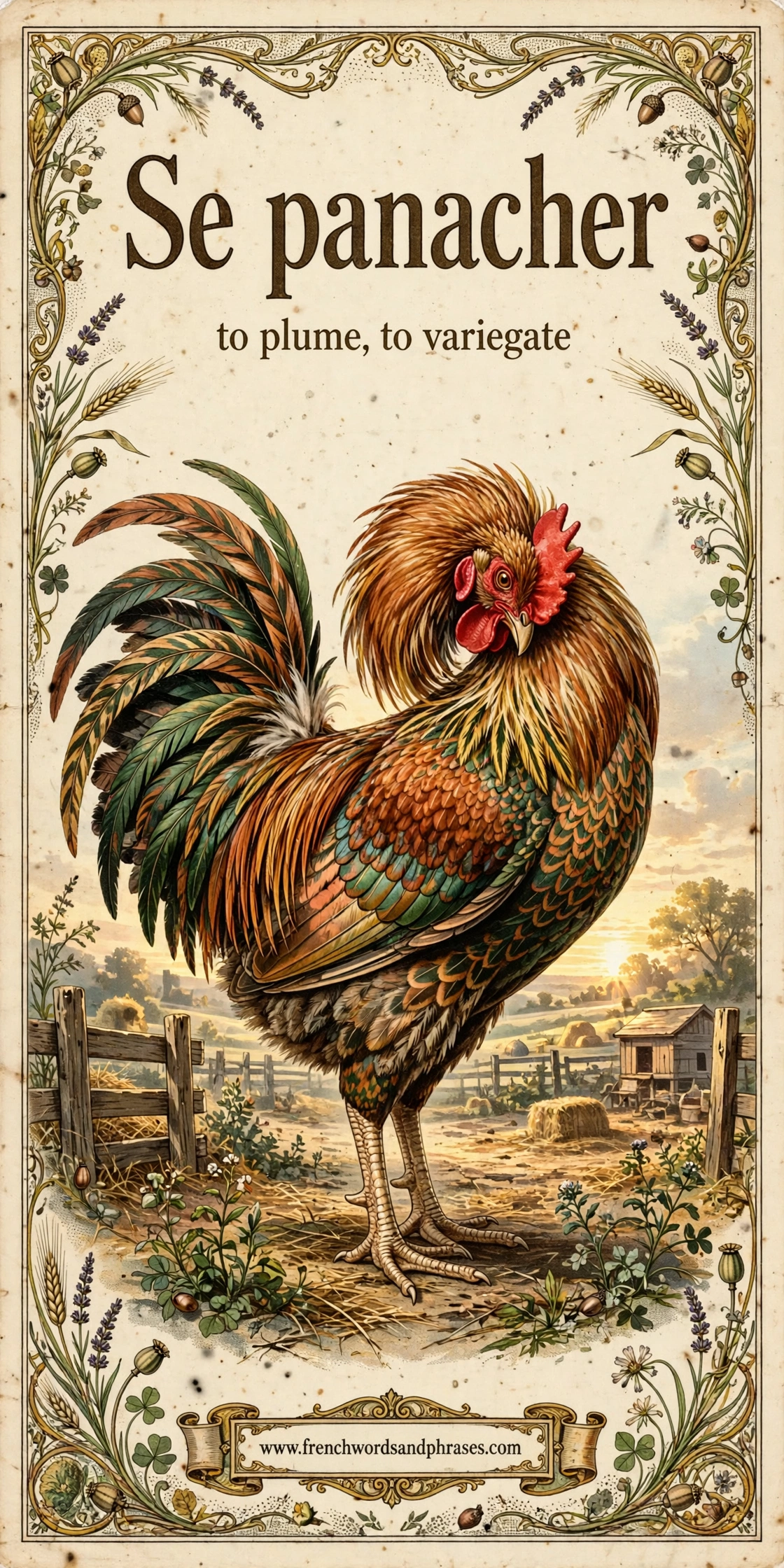
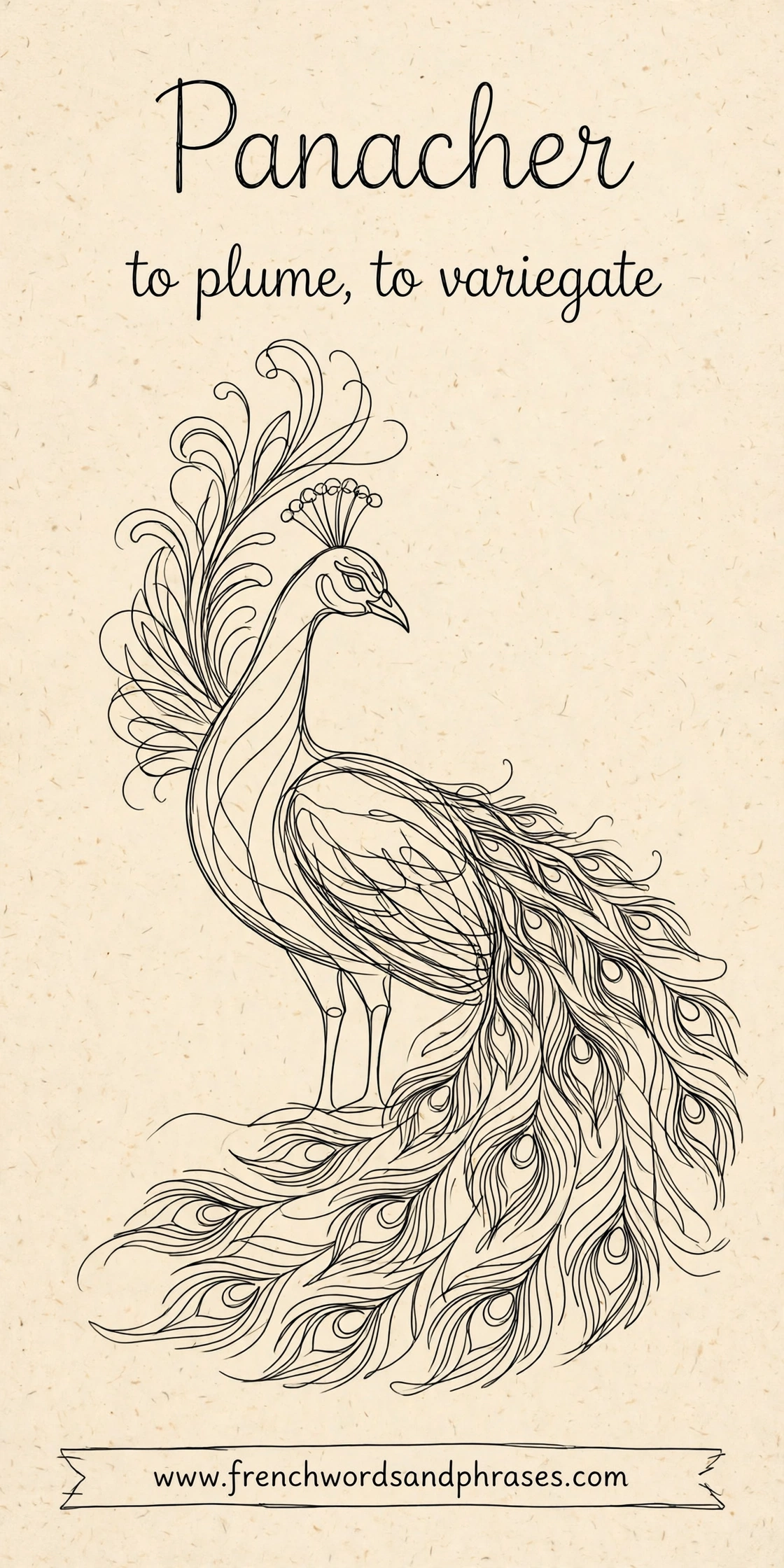
Panacher means to plume, to variegate — to streak a thing with contrasting colours like the crest of a helmet, and, in the café, to mix two drinks into one glorious half-and-half.
A guardsman’s helmet crowned with a crest of red and white feathers. A tulip streaked crimson on cream. And in a Lyon café, a glass filled half with lager and half with lemonade, foam rising in two tones. Panacher is the verb of cheerful mixture: colours streaked together, flavours married in one glass, lists and teams blended on purpose.
In this guide, you’ll learn how to conjugate panacher in all the major French tenses and moods. Explore complete conjugation tables, French examples, English translations, and practice quizzes.
Understanding the French Verb Panacher
Panacher is a regular French verb belonging to the first group of verbs, those ending in -er.
It means to plume, to variegate. Gardeners panachent tulips and foliage; cafés serve the panaché all summer; cooks offer légumes panachés; and at elections, voters who split their choices between lists panachent — a technical term of French voting. Wherever two colours, flavours or loyalties are deliberately streaked together rather than blended smooth, panacher is the word.
Verb classification: First group (-er)
Auxiliary verb: Avoir
Past participle: panaché
Present participle: panachant
English equivalents: To plume, to variegate, to mix; panacher des couleurs — to blend contrasting colours; une tulipe panachée — a variegated tulip; un panaché — a shandy, half beer half lemonade; panacher une liste — to mix a list, to split one’s vote between lists; des légumes panachés — mixed vegetables.
One important detail: panacher comes from un panache — the plume of feathers on a helmet, and by extension any splash of flamboyant colour. The verb’s centre of gravity today is mixture with contrast: colours streaked (une glace panachée, a mixed-flavour ice cream), drinks married (un panaché is the beloved beer-and-lemonade shandy) and even ballot papers mixed between lists. The conjugation is plain regular -er: je panache, nous panachons, past participle panaché — the ch is pronounced like English sh throughout.
Experience the Word
Panacher is the verb of the proud mixture — nothing melts into uniformity; every streak keeps its colour and shows it off.
Imagine a café terrace in July, heat standing on the pavement like a wall. The waiter sets down a tall glass in two storeys — gold beer below, pale lemonade above, foam crowning both: un panaché, the drink the whole terrace is drinking, panaché à la minute by a man who has mixed ten thousand of them.
It is not beer and it is not lemonade. It is both, streaked together — panaché — and twice as refreshing for it.
How to Conjugate Panacher: Complete French Conjugation Guide
Let’s explore every major conjugation of panacher, beginning with the indicative mood.
How to Conjugate Panacher in the Indicative Mood
The indicative mood is used to express facts, observations, actions, and events.
How to Conjugate Panacher in the Present Tense (Présent)
Used for actions happening now, habitual actions, and general truths.
| Subject | Conjugation |
|---|---|
| je | panache |
| tu | panaches |
| il / elle | panache |
| nous | panachons |
| vous | panachez |
| ils / elles | panachent |
Le jardinier panache les tulipes rouges et jaunes.
The gardener is variegating the red and yellow tulips.
Complete the sentence:
Nous ______ les légumes du jardin.
Reveal the answer
panachons
Nous panachons les légumes du jardin.
We are mixing the garden vegetables.
How to Conjugate Panacher in the Passé Composé
Used for completed actions in the past. Panacher takes the auxiliary verb avoir.
| Subject | Conjugation |
|---|---|
| j’ | ai panaché |
| tu | as panaché |
| il / elle | a panaché |
| nous | avons panaché |
| vous | avez panaché |
| ils / elles | ont panaché |
Le cafetier a panaché la bière et la limonade.
The café owner mixed the beer and the lemonade into a shandy.
How to Conjugate Panacher in the Imparfait (Imperfect Tense)
Used for habitual past actions, descriptions, and ongoing situations in the past.
| Subject | Conjugation |
|---|---|
| je | panachais |
| tu | panachais |
| il / elle | panachait |
| nous | panachions |
| vous | panachiez |
| ils / elles | panachaient |
Autrefois, les soldats panachaient leurs casques de plumes.
In the old days, soldiers used to plume their helmets with feathers.
Choose the correct form:
The painter streaked the sky.
Le peintre ______ le ciel. (a panaché / est panaché)
Reveal the answer
a panaché
Le peintre a panaché le ciel.
Panacher takes avoir.
How to Conjugate Panacher in the Plus-que-parfait
Used to describe an action that had already been completed before another past event.
| Subject | Conjugation |
|---|---|
| j’ | avais panaché |
| tu | avais panaché |
| il / elle | avait panaché |
| nous | avions panaché |
| vous | aviez panaché |
| ils / elles | avaient panaché |
Elle avait panaché les couleurs de toute la collection.
She had variegated the colours of the whole collection.
How to Conjugate Panacher in the Passé Simple
Primarily used in formal writing, literature, and historical narratives. It is rarely used in everyday conversation.
| Subject | Conjugation |
|---|---|
| je | panachai |
| tu | panachas |
| il / elle | panacha |
| nous | panachâmes |
| vous | panachâtes |
| ils / elles | panachèrent |
Le peintre panacha le ciel de rose et de gris.
The painter streaked the sky with pink and grey.
How to Conjugate Panacher in the Passé Antérieur
A literary tense used to express an action completed immediately before another past action, generally in the passé simple.
| Subject | Conjugation |
|---|---|
| j’ | eus panaché |
| tu | eus panaché |
| il / elle | eut panaché |
| nous | eûmes panaché |
| vous | eûtes panaché |
| ils / elles | eurent panaché |
Quand il eut panaché les deux parfums, la glace fut prête.
When he had mixed the two flavours, the ice cream was ready.
How to Conjugate Panacher in the Future Tense (Futur Simple)
Used to describe actions that will take place in the future.
| Subject | Conjugation |
|---|---|
| je | panacherai |
| tu | panacheras |
| il / elle | panachera |
| nous | panacherons |
| vous | panacherez |
| ils / elles | panacheront |
Ce soir, nous panacherons les légumes du jardin.
Tonight, we will mix the garden vegetables.
How to Conjugate Panacher in the Futur Antérieur (Future Perfect)
Used for an action that will have been completed before a particular point in the future.
| Subject | Conjugation |
|---|---|
| j’ | aurai panaché |
| tu | auras panaché |
| il / elle | aura panaché |
| nous | aurons panaché |
| vous | aurez panaché |
| ils / elles | auront panaché |
À l’apéritif, le patron aura panaché vingt verres.
By the aperitif, the owner will have mixed twenty shandies.
How to Conjugate Panacher in the Near Future (Futur Proche)
Used to describe something that is going to happen soon. Formed with aller + infinitive.
| Subject | Conjugation |
|---|---|
| je | vais panacher |
| tu | vas panacher |
| il / elle | va panacher |
| nous | allons panacher |
| vous | allez panacher |
| ils / elles | vont panacher |
Je vais panacher cette salade de fruits.
I am going to mix up this fruit salad.
How to Conjugate Panacher in the Conditional Mood
The conditional mood expresses what would happen under certain circumstances. It is also frequently used to make polite requests or express wishes.
How to Conjugate Panacher in the Present Conditional
| Subject | Conjugation |
|---|---|
| je | panacherais |
| tu | panacherais |
| il / elle | panacherait |
| nous | panacherions |
| vous | panacheriez |
| ils / elles | panacheraient |
Avec plus de couleurs, on panacherait mieux ce massif.
With more colours, we would variegate this flower bed better.
How to Conjugate Panacher in the Past Conditional
| Subject | Conjugation |
|---|---|
| j’ | aurais panaché |
| tu | aurais panaché |
| il / elle | aurait panaché |
| nous | aurions panaché |
| vous | auriez panaché |
| ils / elles | auraient panaché |
Ils auraient panaché leurs votes sans la consigne du parti.
They would have split their votes between lists without the party’s instruction.
Panacher in the Literary Past Conditional Form
This less common literary form uses the imperfect subjunctive of avoir.
| Subject | Conjugation |
|---|---|
| j’ | eusse panaché |
| tu | eusses panaché |
| il / elle | eût panaché |
| nous | eussions panaché |
| vous | eussiez panaché |
| ils / elles | eussent panaché |
Le jardinier eût panaché les tulipes sans la gelée tardive.
The gardener would have variegated the tulips, but for the late frost.
How to Conjugate Panacher in the Subjunctive Mood
The subjunctive is used to express wishes, emotions, doubts, necessity, and uncertainty. It frequently follows expressions such as il faut que (it is necessary that) or bien que (although).
How to Conjugate Panacher in the Present Subjunctive
| Subject | Conjugation |
|---|---|
| que je | panache |
| que tu | panaches |
| qu’il / qu’elle | panache |
| que nous | panachions |
| que vous | panachiez |
| qu’ils / qu’elles | panachent |
Il faut que tu panaches les saveurs avec soin.
You must mix the flavours with care.
Complete the sentence using the subjunctive:
Il faut que vous ______ les couleurs avec goût.
Reveal the answer
panachiez
Il faut que vous panachiez les couleurs avec goût.
You must variegate the colours with taste.
How to Conjugate Panacher in the Imperfect Subjunctive
A literary tense, rarely encountered in modern spoken French.
| Subject | Conjugation |
|---|---|
| que je | panachasse |
| que tu | panachasses |
| qu’il / qu’elle | panachât |
| que nous | panachassions |
| que vous | panachassiez |
| qu’ils / qu’elles | panachassent |
On demandait que le cafetier panachât les verres à la minute.
They asked the café owner to mix the shandies to order.
How to Conjugate Panacher in the Pluperfect Subjunctive
A literary construction used to express an action completed before another past action.
| Subject | Conjugation |
|---|---|
| que j’ | eusse panaché |
| que tu | eusses panaché |
| qu’il / qu’elle | eût panaché |
| que nous | eussions panaché |
| que vous | eussiez panaché |
| qu’ils / qu’elles | eussent panaché |
On racontait que les électeurs eussent panaché leurs listes en masse.
It was said the voters had split their lists en masse.
How to Conjugate Panacher in the Past Subjunctive
| Subject | Conjugation |
|---|---|
| que j’ | aie panaché |
| que tu | aies panaché |
| qu’il / qu’elle | ait panaché |
| que nous | ayons panaché |
| que vous | ayez panaché |
| qu’ils / qu’elles | aient panaché |
Je suis content que vous ayez panaché les couleurs ainsi.
I am glad you variegated the colours like that.
How to Conjugate Panacher in the Imperative
The imperative is used to give commands, instructions, invitations, or suggestions. Subject pronouns are omitted.
How to Conjugate Panacher in the Present Imperative
| Person | Conjugation |
|---|---|
| (tu) | panache |
| (nous) | panachons |
| (vous) | panachez |
Panache-moi un verre bien frais, patron !
Mix me a nice cold shandy, boss!
How would you say Mix the flavours (tu form)?
Reveal the answer
Panache les saveurs !
French Participles of Panacher
Participles are verb forms that can be used in compound tenses and other grammatical constructions.
Present Participle of Panacher
panachant
En panachant les parfums, le glacier a créé sa spécialité.
By mixing the flavours, the ice-cream maker created his speciality.
Past Participle of Panacher
panaché
Panachée de rouge et de blanc, la tulipe attire tous les regards.
Streaked with red and white, the tulip draws every eye.
Panacher in Everyday French: Real-Life Examples
Now that you know the conjugations, let’s see how panacher appears in everyday French.
Le jardinier panache les tulipes.
The gardener is variegating the tulips.
Le cafetier a panaché mon verre.
The café owner mixed my shandy.
Les soldats panachaient leurs casques de plumes.
Soldiers used to plume their helmets with feathers.
Nous panacherons les légumes du jardin.
We will mix the garden vegetables.
On panacherait mieux ce massif avec plus de couleurs.
We would variegate this bed better with more colours.
Panache les saveurs avec soin !
Mix the flavours with care!
Beyond Translation: The Meaning of Panacher
English borrowed panache for flamboyant style — Cyrano’s white plume and his dying word — but left the verb behind.
In French, the plume became a principle of mixture.
From helmet crests the word slid to streaked tulips, mixed ice creams, split ballot papers and the summer shandy: un panaché on a café terrace is Cyrano’s plume, domesticated into a glass.
How to Remember the French Verb Panacher
Remember it this way: Panacher is about the two-tone shandy and the streaked tulip under a plumed helmet.
- Start with un panache, the helmet’s plume: panacher is streaking with proud, contrasting colour.
- At the café, un panaché is a shandy — beer and lemonade mixed, never blended smooth.
- Regular -er: je panache, nous panachons, past participle panaché, ch pronounced sh.
The key idea is the two-tone shandy and the streaked tulip under a plumed helmet.
Test Your Knowledge of Panacher
Let’s see how much you’ve learned. Try answering these questions before revealing the answers.
What is un panaché in a French café?
Reveal the answer
A shandy — beer mixed half-and-half with lemonade, the drinkable face of panacher.
How do you say The gardener is variegating the tulips in French?
Reveal the answer
Le jardinier panache les tulipes.
Translate: The café owner mixed my shandy.
Reveal the answer
Le cafetier a panaché mon verre.
What is the past participle of panacher?
Reveal the answer
Panaché — as in une tulipe panachée, a variegated tulip.
Complete the sentence:
Il faut que tu ______ les saveurs avec soin.
Reveal the answer
panaches
Il faut que tu panaches les saveurs avec soin.
You must mix the flavours with care.
Can You Use It?
How would you say this in French?
The café owner mixes the shandy in two storeys, and summer becomes drinkable.
Reveal the answer
Le cafetier panache le verre en deux étages, et l’été devient buvable.
The café owner mixes the shandy in two storeys, and summer becomes drinkable.
LEARN FRENCH ONE WORD AT A TIME