How to Conjugate Pailler in French
/pa.je/
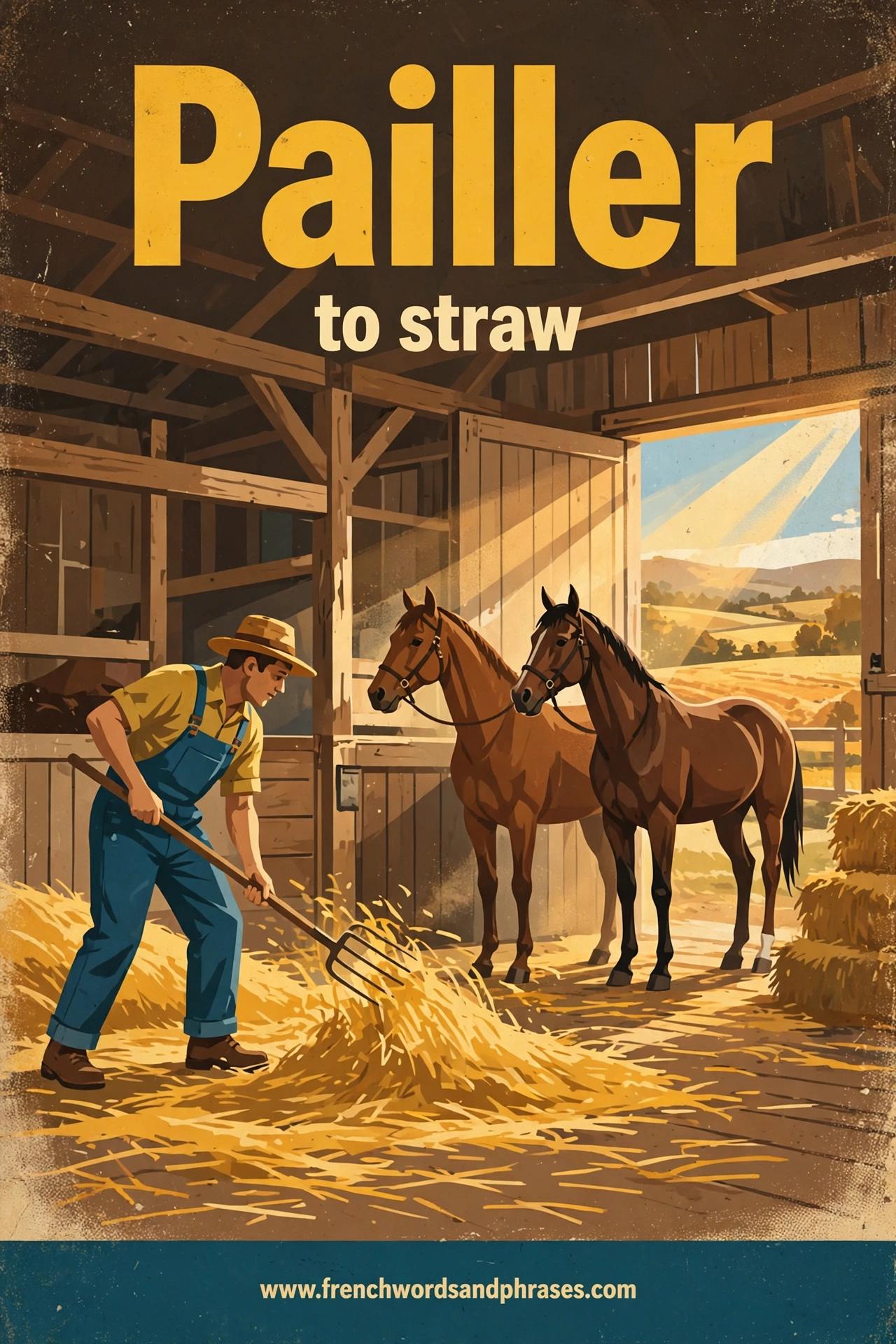
Pailler means to straw — to spread straw over soil, over a roof, or through the seat of a chair.
Straw is the farmer’s oldest blanket: spread over the strawberry rows it keeps the fruit clean, woven into a roof it sheds the rain, twisted into a chair seat it carries a century of sitters. Pailler is the verb for all that straw work — covering, thatching and seating with straw.
In this guide, you’ll learn how to conjugate pailler in all the major French tenses and moods. Explore complete conjugation tables, French examples, English translations, and practice quizzes.
Understanding the French Verb Pailler
Pailler is a regular French verb belonging to the first group of verbs, those ending in -er.
It means to straw. In the garden it is the everyday mulching verb: pailler le potager keeps moisture in and weeds down. In the countryside it still names thatching (pailler un toit, though couvrir de chaume is also heard), and in the workshop it is chair-seating, the craft of the rempailleur who twists straw into chair bottoms.
Verb classification: First group (-er)
Auxiliary verb: Avoir
Past participle: paillé
Present participle: paillant
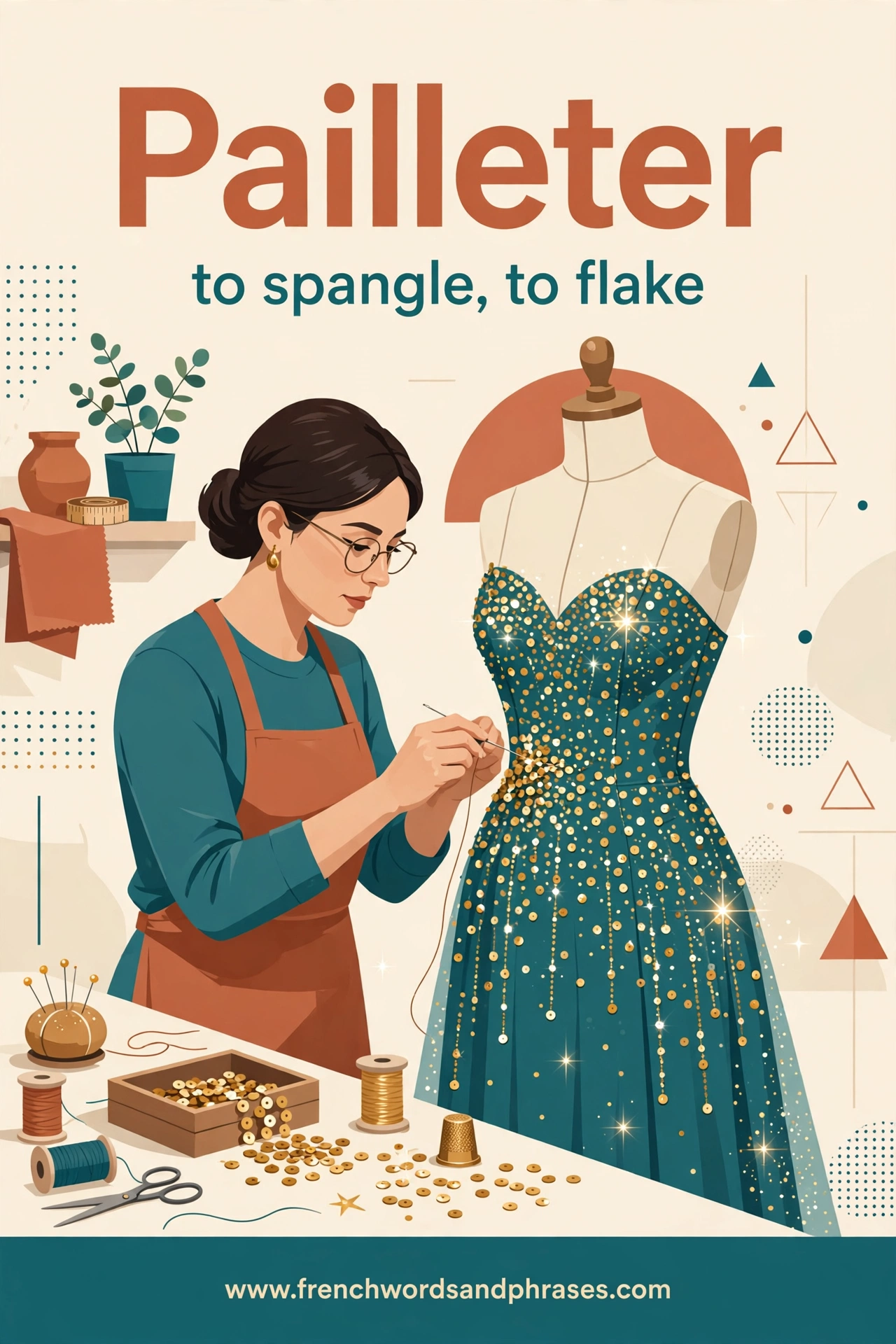
English equivalents: To straw, to mulch with straw, to thatch; pailler les fraisiers — to straw the strawberry plants; pailler un toit — to thatch a roof; pailler une chaise — to seat a chair with straw; le paillage — mulching; la paille — straw.
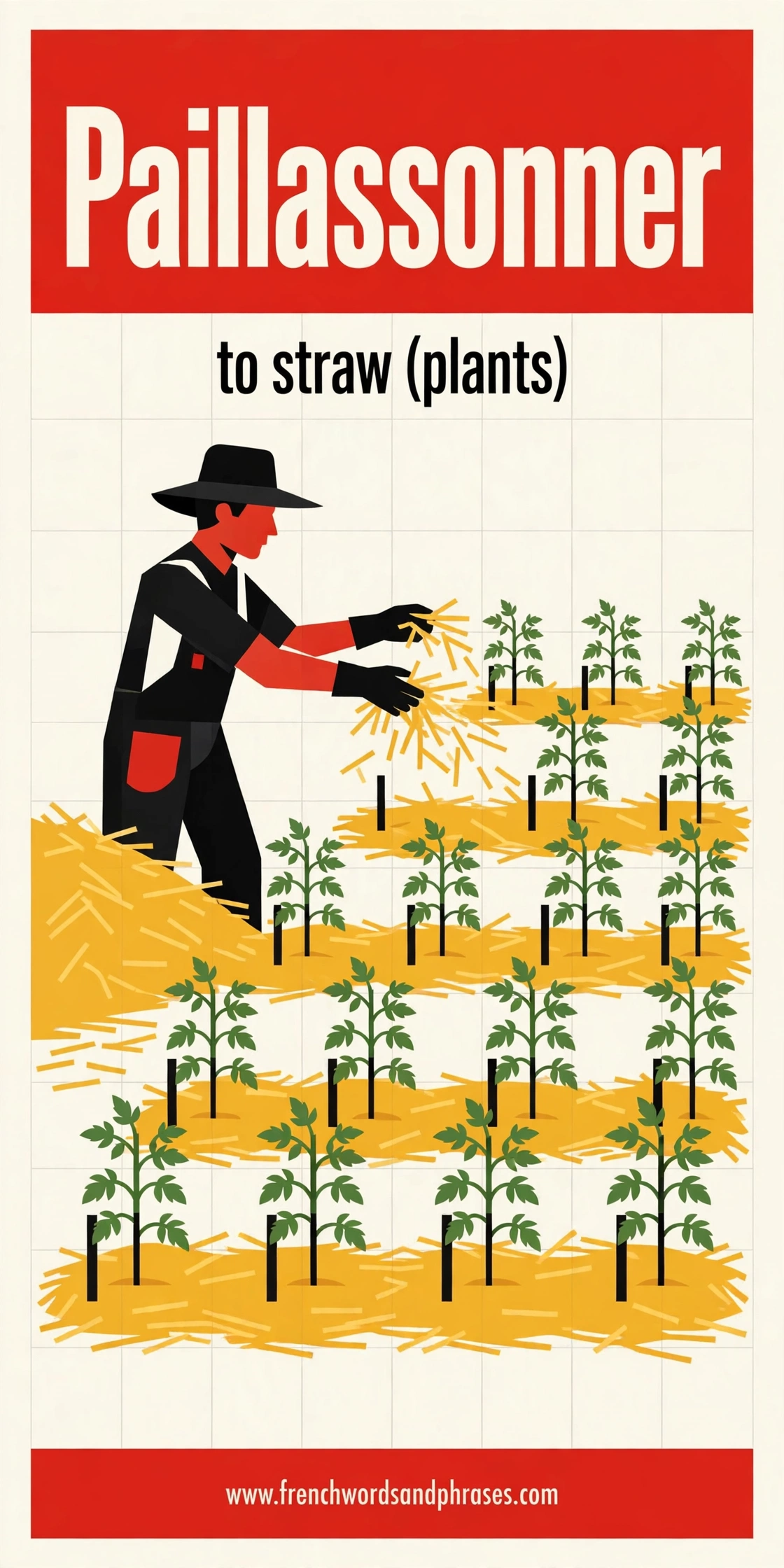
One important detail: pailler is a plain regular -er verb (je paille, nous paillons, paillé) whose meanings all come from its noun, la paille, straw. Do not confuse it with its longer cousin paillassonner, which lays woven straw mats (des paillassons) over plants: pailler spreads the straw itself. And for chairs, the repair word is often rempailler — to re-seat a chair whose straw has worn through.
Experience the Word
Pailler is the verb of straw at work — one humble material doing three jobs: blanket, roof and seat.
Imagine a June morning in a strawberry patch. The fruit is swelling and blushing, and the gardener walks the rows with a fork of straw, paillant chaque pied so the berries ripen on clean straw instead of mud — the oldest trick in the garden, still the best.
No plastic, no chemicals. The rows are strawed — paillées — and the fruit will come to the table spotless.
How to Conjugate Pailler: Complete French Conjugation Guide
Let’s explore every major conjugation of pailler, beginning with the indicative mood.
How to Conjugate Pailler in the Indicative Mood
The indicative mood is used to express facts, observations, actions, and events.
How to Conjugate Pailler in the Present Tense (Présent)
Used for actions happening now, habitual actions, and general truths.
| Subject | Conjugation |
|---|---|
| je | paille |
| tu | pailles |
| il / elle | paille |
| nous | paillons |
| vous | paillez |
| ils / elles | paillent |
Elle paille les fraisiers pour garder la terre humide.
She straws the strawberry plants to keep the soil moist.
Complete the sentence:
Nous ______ le potager entier demain.
Reveal the answer
paillerons
Nous paillerons le potager entier demain.
We will straw the whole kitchen garden tomorrow.
How to Conjugate Pailler in the Passé Composé
Used for completed actions in the past. Pailler takes the auxiliary verb avoir.
| Subject | Conjugation |
|---|---|
| j’ | ai paillé |
| tu | as paillé |
| il / elle | a paillé |
| nous | avons paillé |
| vous | avez paillé |
| ils / elles | ont paillé |
Ils ont paillé le toit de la grange en une semaine.
They thatched the barn roof in a week.
How to Conjugate Pailler in the Imparfait (Imperfect Tense)
Used for habitual past actions, descriptions, and ongoing situations in the past.
| Subject | Conjugation |
|---|---|
| je | paillais |
| tu | paillais |
| il / elle | paillait |
| nous | paillions |
| vous | pailliez |
| ils / elles | paillaient |
Autrefois, on paillait les toits avec du seigle.
In the old days, roofs were thatched with rye straw.
Choose the correct form:
They thatched the barn roof.
Ils ______ le toit de la grange. (ont paillé / sont paillés)
Reveal the answer
ont paillé
Ils ont paillé le toit de la grange.
Pailler takes avoir.
How to Conjugate Pailler in the Plus-que-parfait
Used to describe an action that had already been completed before another past event.
| Subject | Conjugation |
|---|---|
| j’ | avais paillé |
| tu | avais paillé |
| il / elle | avait paillé |
| nous | avions paillé |
| vous | aviez paillé |
| ils / elles | avaient paillé |
Le jardinier avait paillé les rangs de salades avant la canicule.
The gardener had strawed the rows of lettuces before the heatwave.
How to Conjugate Pailler in the Passé Simple
Primarily used in formal writing, literature, and historical narratives. It is rarely used in everyday conversation.
| Subject | Conjugation |
|---|---|
| je | paillai |
| tu | paillas |
| il / elle | pailla |
| nous | paillâmes |
| vous | paillâtes |
| ils / elles | paillèrent |
Les paysans paillèrent la cour pour la fête du village.
The peasants strewed the yard with straw for the village festival.
How to Conjugate Pailler in the Passé Antérieur
A literary tense used to express an action completed immediately before another past action, generally in the passé simple.
| Subject | Conjugation |
|---|---|
| j’ | eus paillé |
| tu | eus paillé |
| il / elle | eut paillé |
| nous | eûmes paillé |
| vous | eûtes paillé |
| ils / elles | eurent paillé |
Quand il eut paillé les fraisiers, il arrosa copieusement.
When he had strawed the strawberry plants, he watered generously.
How to Conjugate Pailler in the Future Tense (Futur Simple)
Used to describe actions that will take place in the future.
| Subject | Conjugation |
|---|---|
| je | paillerai |
| tu | pailleras |
| il / elle | paillera |
| nous | paillerons |
| vous | paillerez |
| ils / elles | pailleront |
Demain, nous paillerons le potager entier.
Tomorrow, we will straw the whole kitchen garden.
How to Conjugate Pailler in the Futur Antérieur (Future Perfect)
Used for an action that will have been completed before a particular point in the future.
| Subject | Conjugation |
|---|---|
| j’ | aurai paillé |
| tu | auras paillé |
| il / elle | aura paillé |
| nous | aurons paillé |
| vous | aurez paillé |
| ils / elles | auront paillé |
À la fin du jour, ils auront paillé toutes les planches.
By the end of the day, they will have strawed all the beds.
How to Conjugate Pailler in the Near Future (Futur Proche)
Used to describe something that is going to happen soon. Formed with aller + infinitive.
| Subject | Conjugation |
|---|---|
| je | vais pailler |
| tu | vas pailler |
| il / elle | va pailler |
| nous | allons pailler |
| vous | allez pailler |
| ils / elles | vont pailler |
Je vais pailler les fraisiers ce soir.
I am going to straw the strawberry plants tonight.
How to Conjugate Pailler in the Conditional Mood
The conditional mood expresses what would happen under certain circumstances. It is also frequently used to make polite requests or express wishes.
How to Conjugate Pailler in the Present Conditional
| Subject | Conjugation |
|---|---|
| je | paillerais |
| tu | paillerais |
| il / elle | paillerait |
| nous | paillerions |
| vous | pailleriez |
| ils / elles | pailleraient |
Avec assez de paille, je paillerais aussi les bordures.
With enough straw, I would straw the borders too.
How to Conjugate Pailler in the Past Conditional
| Subject | Conjugation |
|---|---|
| j’ | aurais paillé |
| tu | aurais paillé |
| il / elle | aurait paillé |
| nous | aurions paillé |
| vous | auriez paillé |
| ils / elles | auraient paillé |
Tu aurais paillé le toit plus vite à deux.
You would have thatched the roof faster with two of you.
Pailler in the Literary Past Conditional Form
This less common literary form uses the imperfect subjunctive of avoir.
| Subject | Conjugation |
|---|---|
| j’ | eusse paillé |
| tu | eusses paillé |
| il / elle | eût paillé |
| nous | eussions paillé |
| vous | eussiez paillé |
| ils / elles | eussent paillé |
Il eût paillé sa chaumière avant les pluies d’automne.
He would have thatched his cottage before the autumn rains.
How to Conjugate Pailler in the Subjunctive Mood
The subjunctive is used to express wishes, emotions, doubts, necessity, and uncertainty. It frequently follows expressions such as il faut que (it is necessary that) or bien que (although).
How to Conjugate Pailler in the Present Subjunctive
| Subject | Conjugation |
|---|---|
| que je | paille |
| que tu | pailles |
| qu’il / qu’elle | paille |
| que nous | paillions |
| que vous | pailliez |
| qu’ils / qu’elles | paillent |
Il faut que tu pailles les jeunes courgettes.
You must straw the young courgettes.
Complete the sentence using the subjunctive:
Il faut que vous ______ les rangs avant la sécheresse.
Reveal the answer
pailliez
Il faut que vous pailliez les rangs avant la sécheresse.
You must straw the rows before the drought.
How to Conjugate Pailler in the Imperfect Subjunctive
A literary tense, rarely encountered in modern spoken French.
| Subject | Conjugation |
|---|---|
| que je | paillasse |
| que tu | paillasses |
| qu’il / qu’elle | paillât |
| que nous | paillassions |
| que vous | paillassiez |
| qu’ils / qu’elles | paillassent |
On recommandait qu’on paillât les semis dès juin.
It was recommended to straw the seedlings from June onwards.
How to Conjugate Pailler in the Pluperfect Subjunctive
A literary construction used to express an action completed before another past action.
| Subject | Conjugation |
|---|---|
| que j’ | eusse paillé |
| que tu | eusses paillé |
| qu’il / qu’elle | eût paillé |
| que nous | eussions paillé |
| que vous | eussiez paillé |
| qu’ils / qu’elles | eussent paillé |
On constata qu’ils eussent paillé le sol trop tôt.
It was noted that they had strawed the soil too early.
How to Conjugate Pailler in the Past Subjunctive
| Subject | Conjugation |
|---|---|
| que j’ | aie paillé |
| que tu | aies paillé |
| qu’il / qu’elle | ait paillé |
| que nous | ayons paillé |
| que vous | ayez paillé |
| qu’ils / qu’elles | aient paillé |
Je suis heureux que vous ayez paillé les fraisiers à temps.
I am glad you strawed the strawberry plants in time.
How to Conjugate Pailler in the Imperative
The imperative is used to give commands, instructions, invitations, or suggestions. Subject pronouns are omitted.
How to Conjugate Pailler in the Present Imperative
| Person | Conjugation |
|---|---|
| (tu) | paille |
| (nous) | paillons |
| (vous) | paillez |
Paillez les rangs avant la sécheresse !
Straw the rows before the drought!
How would you say Straw the strawberry plants (tu form)?
Reveal the answer
Paille les fraisiers !
French Participles of Pailler
Participles are verb forms that can be used in compound tenses and other grammatical constructions.
Present Participle of Pailler
paillant
En paillant le sol, on garde l’humidité et on étouffe les mauvaises herbes.
By strawing the soil, you keep the moisture and smother the weeds.
Past Participle of Pailler
paillé
Paillé dès le printemps, le potager a traversé l’été sans peine.
Strawed from spring onwards, the kitchen garden got through the summer easily.
Pailler in Everyday French: Real-Life Examples
Now that you know the conjugations, let’s see how pailler appears in everyday French.
Elle paille les fraisiers.
She straws the strawberry plants.
Ils ont paillé le toit de la grange.
They thatched the barn roof.
On paillait les toits avec du seigle.
Roofs used to be thatched with rye straw.
Nous paillerons le potager demain.
We will straw the kitchen garden tomorrow.
Je paillerais aussi les bordures avec assez de paille.
I would straw the borders too with enough straw.
Paillez les rangs avant la sécheresse !
Straw the rows before the drought!
Beyond Translation: The Meaning of Pailler
Everything here is la paille, straw — and French is full of it: un homme de paille is a front man, tirer à la courte paille is drawing straws, and être sur la paille is to be flat broke, down to sleeping on straw.
Pailler is the honest, working member of the family.
Before plastic mulch and fibreglass, straw insulated, roofed, seated and bedded down the whole of rural France — this small verb carried a civilisation’s housekeeping.
How to Remember the French Verb Pailler
Remember it this way: Pailler is about straw everywhere — under the strawberries, over the roof, in the chair.
- One noun, three jobs: la paille straws the garden (mulch), the roof (thatch) and the chair (seat).
- Loose straw is pailler; woven straw mats over plants are paillassonner.
- Regular -er: je paille, nous paillons, past participle paillé.
The key idea is straw everywhere — under the strawberries, over the roof, in the chair.
Test Your Knowledge of Pailler
Let’s see how much you’ve learned. Try answering these questions before revealing the answers.
What is the difference between pailler and paillassonner?
Reveal the answer
Loose straw vs mats — pailler spreads straw itself; paillassonner lays woven straw mats (des paillassons) over plants.
How do you say They thatched the barn roof in French?
Reveal the answer
Ils ont paillé le toit de la grange.
Translate: She straws the strawberry plants to keep the soil moist.
Reveal the answer
Elle paille les fraisiers pour garder la terre humide.
What is the past participle of pailler?
Reveal the answer
Paillé.
Complete the sentence:
Il faut que tu ______ les jeunes courgettes.
Reveal the answer
pailles
Il faut que tu pailles les jeunes courgettes.
You must straw the young courgettes.
Can You Use It?
How would you say this in French?
He straws his strawberry plants one by one, and the soil keeps its coolness all summer.
Reveal the answer
Il paille ses fraisiers un à un, et la terre garde sa fraîcheur tout l’été.
He straws his strawberry plants one by one, and the soil keeps its coolness all summer.
LEARN FRENCH ONE WORD AT A TIME