How to Conjugate Paillassonner in French
/pa.ja.sɔ.ne/
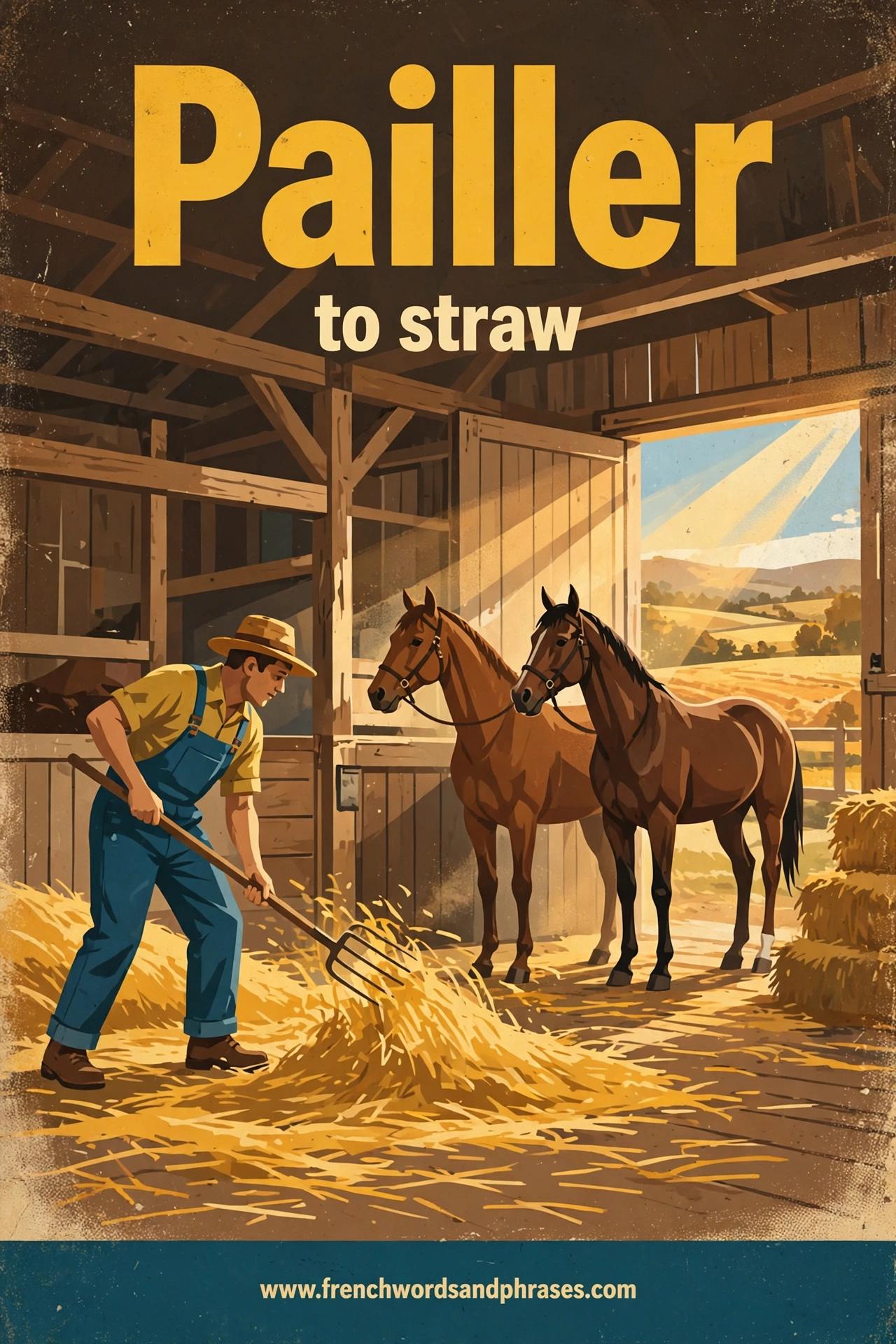
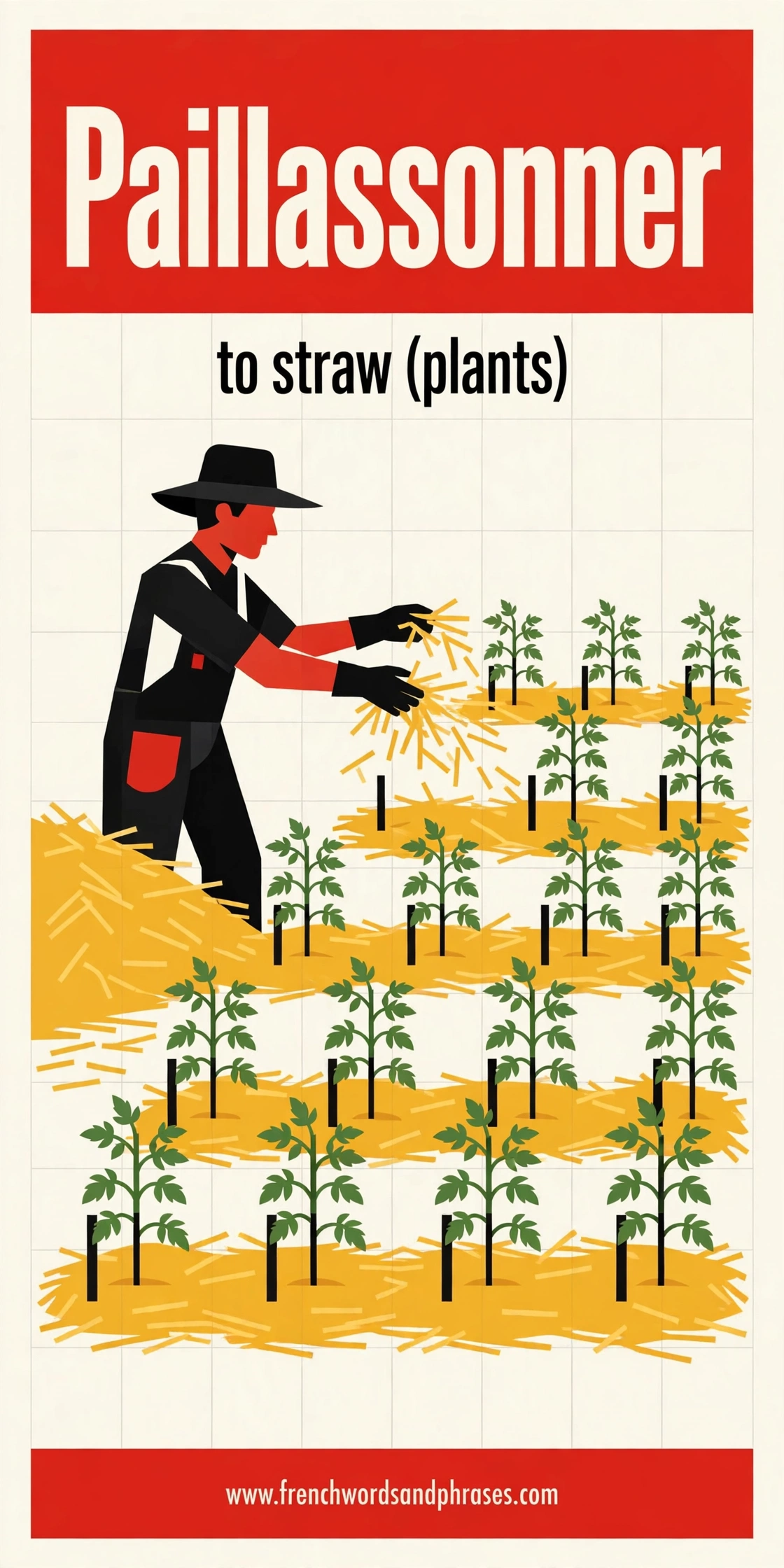
Paillassonner means to straw (plants) — to tuck young plants in under mats of straw so the frost cannot reach them.
First frost is forecast, and the gardener moves down the rows with an armful of straw mats, covering every young salad and strawberry plant before dark. Paillassonner is the precise old gardening verb for that tucking-in: wrapping plants in straw against the cold.
In this guide, you’ll learn how to conjugate paillassonner in all the major French tenses and moods. Explore complete conjugation tables, French examples, English translations, and practice quizzes.
Understanding the French Verb Paillassonner
Paillassonner is a regular French verb belonging to the first group of verbs, those ending in -er.
It means to straw (plants). It is a specialist verb of maraîchers (market gardeners) and old gardening manuals: lettuces, strawberries, artichokes and young seedlings were paillassonnés against frost in winter and sometimes against scorching sun in summer. The mats also kept fruit clean and soil moist, so the verb covers a whole technique of protection, not just warmth.
Verb classification: First group (-er)
Auxiliary verb: Avoir
Past participle: paillassonné
Present participle: paillassonnant
English equivalents: To straw (plants), to cover with straw mats; paillassonner les salades — to straw the lettuces against frost; paillassonner les fraisiers — to cover the strawberry plants; un paillasson — a straw mat (also a doormat); protéger les semis en les paillassonnant — to protect seedlings by strawing them.
One important detail: paillassonner is built on un paillasson — a mat of woven straw, the same word that also means a doormat. To paillassonner a plant is to lay those straw mats over it, and the word belongs to the market garden, not the flower bed in general: for simply mulching with loose straw, French more often says pailler. The verb itself is a plain regular -er: je paillassonne, nous paillassonnons, paillassonné.
Experience the Word
Paillassonner is the verb of the garden’s bedtime — every plant tucked under straw before the frost comes down.
Imagine a market gardener outside Paris in November. The radio promises minus five; at dusk she works the rows with her mats, paillassonnant les salades une à une, while her breath smokes in the cold air and the first stars come out.
By morning the garden is white with frost. Under their straw, the lettuces are untouched — paillassonnées, and saved.
How to Conjugate Paillassonner: Complete French Conjugation Guide
Let’s explore every major conjugation of paillassonner, beginning with the indicative mood.
How to Conjugate Paillassonner in the Indicative Mood
The indicative mood is used to express facts, observations, actions, and events.
How to Conjugate Paillassonner in the Present Tense (Présent)
Used for actions happening now, habitual actions, and general truths.
| Subject | Conjugation |
|---|---|
| je | paillassonne |
| tu | paillassonnes |
| il / elle | paillassonne |
| nous | paillassonnons |
| vous | paillassonnez |
| ils / elles | paillassonnent |
Le jardinier paillassonne les jeunes salades contre le gel.
The gardener straws the young lettuces against the frost.
Complete the sentence:
Nous ______ les fraisiers avant la gelée.
Reveal the answer
paillassonnons
Nous paillassonnons les fraisiers avant la gelée.
We straw the strawberry plants before the frost.
How to Conjugate Paillassonner in the Passé Composé
Used for completed actions in the past. Paillassonner takes the auxiliary verb avoir.
| Subject | Conjugation |
|---|---|
| j’ | ai paillassonné |
| tu | as paillassonné |
| il / elle | a paillassonné |
| nous | avons paillassonné |
| vous | avez paillassonné |
| ils / elles | ont paillassonné |
Nous avons paillassonné les fraisiers avant la première gelée.
We strawed the strawberry plants before the first frost.
How to Conjugate Paillassonner in the Imparfait (Imperfect Tense)
Used for habitual past actions, descriptions, and ongoing situations in the past.
| Subject | Conjugation |
|---|---|
| je | paillassonnais |
| tu | paillassonnais |
| il / elle | paillassonnait |
| nous | paillassonnions |
| vous | paillassonniez |
| ils / elles | paillassonnaient |
Chaque automne, elle paillassonnait ses rosiers.
Every autumn, she used to straw her rose bushes.
Choose the correct form:
We strawed the strawberry plants.
Nous ______ les fraisiers. (avons paillassonné / sommes paillassonnés)
Reveal the answer
avons paillassonné
Nous avons paillassonné les fraisiers.
Paillassonner takes avoir.
How to Conjugate Paillassonner in the Plus-que-parfait
Used to describe an action that had already been completed before another past event.
| Subject | Conjugation |
|---|---|
| j’ | avais paillassonné |
| tu | avais paillassonné |
| il / elle | avait paillassonné |
| nous | avions paillassonné |
| vous | aviez paillassonné |
| ils / elles | avaient paillassonné |
Ils avaient paillassonné les semis dès le mois d’octobre.
They had strawed the seedlings as early as October.
How to Conjugate Paillassonner in the Passé Simple
Primarily used in formal writing, literature, and historical narratives. It is rarely used in everyday conversation.
| Subject | Conjugation |
|---|---|
| je | paillassonnai |
| tu | paillassonnas |
| il / elle | paillassonna |
| nous | paillassonnâmes |
| vous | paillassonnâtes |
| ils / elles | paillassonnèrent |
Le maraîcher paillassonna tout le carré de légumes.
The market gardener strawed the whole vegetable plot.
How to Conjugate Paillassonner in the Passé Antérieur
A literary tense used to express an action completed immediately before another past action, generally in the passé simple.
| Subject | Conjugation |
|---|---|
| j’ | eus paillassonné |
| tu | eus paillassonné |
| il / elle | eut paillassonné |
| nous | eûmes paillassonné |
| vous | eûtes paillassonné |
| ils / elles | eurent paillassonné |
Quand il eut paillassonné les jeunes plants, il rentra se réchauffer.
When he had strawed the young plants, he went in to warm up.
How to Conjugate Paillassonner in the Future Tense (Futur Simple)
Used to describe actions that will take place in the future.
| Subject | Conjugation |
|---|---|
| je | paillassonnerai |
| tu | paillassonneras |
| il / elle | paillassonnera |
| nous | paillassonnerons |
| vous | paillassonnerez |
| ils / elles | paillassonneront |
Ce soir, je paillassonnerai les artichauts.
Tonight, I will straw the artichokes.
How to Conjugate Paillassonner in the Futur Antérieur (Future Perfect)
Used for an action that will have been completed before a particular point in the future.
| Subject | Conjugation |
|---|---|
| j’ | aurai paillassonné |
| tu | auras paillassonné |
| il / elle | aura paillassonné |
| nous | aurons paillassonné |
| vous | aurez paillassonné |
| ils / elles | auront paillassonné |
Avant la nuit, nous aurons paillassonné tout le potager.
Before nightfall, we will have strawed the whole kitchen garden.
How to Conjugate Paillassonner in the Near Future (Futur Proche)
Used to describe something that is going to happen soon. Formed with aller + infinitive.
| Subject | Conjugation |
|---|---|
| je | vais paillassonner |
| tu | vas paillassonner |
| il / elle | va paillassonner |
| nous | allons paillassonner |
| vous | allez paillassonner |
| ils / elles | vont paillassonner |
Le froid arrive, je vais paillassonner les salades.
The cold is coming, I am going to straw the lettuces.
How to Conjugate Paillassonner in the Conditional Mood
The conditional mood expresses what would happen under certain circumstances. It is also frequently used to make polite requests or express wishes.
How to Conjugate Paillassonner in the Present Conditional
| Subject | Conjugation |
|---|---|
| je | paillassonnerais |
| tu | paillassonnerais |
| il / elle | paillassonnerait |
| nous | paillassonnerions |
| vous | paillassonneriez |
| ils / elles | paillassonneraient |
Avec plus de paille, on paillassonnerait aussi les bordures.
With more straw, we would straw the borders too.
How to Conjugate Paillassonner in the Past Conditional
| Subject | Conjugation |
|---|---|
| j’ | aurais paillassonné |
| tu | aurais paillassonné |
| il / elle | aurait paillassonné |
| nous | aurions paillassonné |
| vous | auriez paillassonné |
| ils / elles | auraient paillassonné |
Elle aurait paillassonné les rosiers si le gel avait été annoncé.
She would have strawed the rose bushes if frost had been forecast.
Paillassonner in the Literary Past Conditional Form
This less common literary form uses the imperfect subjunctive of avoir.
| Subject | Conjugation |
|---|---|
| j’ | eusse paillassonné |
| tu | eusses paillassonné |
| il / elle | eût paillassonné |
| nous | eussions paillassonné |
| vous | eussiez paillassonné |
| ils / elles | eussent paillassonné |
Il eût paillassonné ses vignes avant la première neige.
He would have strawed his vines before the first snow.
How to Conjugate Paillassonner in the Subjunctive Mood
The subjunctive is used to express wishes, emotions, doubts, necessity, and uncertainty. It frequently follows expressions such as il faut que (it is necessary that) or bien que (although).
How to Conjugate Paillassonner in the Present Subjunctive
| Subject | Conjugation |
|---|---|
| que je | paillassonne |
| que tu | paillassonnes |
| qu’il / qu’elle | paillassonne |
| que nous | paillassonnions |
| que vous | paillassonniez |
| qu’ils / qu’elles | paillassonnent |
Il faut que tu paillassonnes les jeunes plants ce soir.
You must straw the young plants tonight.
Complete the sentence using the subjunctive:
Il faut que vous ______ les semis les plus fragiles.
Reveal the answer
paillassonniez
Il faut que vous paillassonniez les semis les plus fragiles.
You must straw the most fragile seedlings.
How to Conjugate Paillassonner in the Imperfect Subjunctive
A literary tense, rarely encountered in modern spoken French.
| Subject | Conjugation |
|---|---|
| que je | paillassonnasse |
| que tu | paillassonnasses |
| qu’il / qu’elle | paillassonnât |
| que nous | paillassonnassions |
| que vous | paillassonnassiez |
| qu’ils / qu’elles | paillassonnassent |
Le jardinier conseillait qu’on paillassonnât avant la gelée.
The gardener advised strawing before the frost.
How to Conjugate Paillassonner in the Pluperfect Subjunctive
A literary construction used to express an action completed before another past action.
| Subject | Conjugation |
|---|---|
| que j’ | eusse paillassonné |
| que tu | eusses paillassonné |
| qu’il / qu’elle | eût paillassonné |
| que nous | eussions paillassonné |
| que vous | eussiez paillassonné |
| qu’ils / qu’elles | eussent paillassonné |
On vérifia qu’il eût paillassonné les semis les plus fragiles.
They checked that he had strawed the most fragile seedlings.
How to Conjugate Paillassonner in the Past Subjunctive
| Subject | Conjugation |
|---|---|
| que j’ | aie paillassonné |
| que tu | aies paillassonné |
| qu’il / qu’elle | ait paillassonné |
| que nous | ayons paillassonné |
| que vous | ayez paillassonné |
| qu’ils / qu’elles | aient paillassonné |
Je suis content que vous ayez paillassonné les fraisiers.
I am glad you strawed the strawberry plants.
How to Conjugate Paillassonner in the Imperative
The imperative is used to give commands, instructions, invitations, or suggestions. Subject pronouns are omitted.
How to Conjugate Paillassonner in the Present Imperative
| Person | Conjugation |
|---|---|
| (tu) | paillassonne |
| (nous) | paillassonnons |
| (vous) | paillassonnez |
Paillassonnez les salades, le gel arrive !
Straw the lettuces, the frost is coming!
How would you say Straw the lettuces (tu form)?
Reveal the answer
Paillassonne les salades !
French Participles of Paillassonner
Participles are verb forms that can be used in compound tenses and other grammatical constructions.
Present Participle of Paillassonner
paillassonnant
En paillassonnant les plants, on les protège du froid et de la sécheresse.
By strawing the plants, you protect them from cold and drought.
Past Participle of Paillassonner
paillassonné
Paillassonnés pour l’hiver, les jeunes plants ont survécu au gel.
Strawed for the winter, the young plants survived the frost.
Paillassonner in Everyday French: Real-Life Examples
Now that you know the conjugations, let’s see how paillassonner appears in everyday French.
Le jardinier paillassonne les jeunes salades.
The gardener straws the young lettuces.
Nous avons paillassonné les fraisiers.
We strawed the strawberry plants.
Elle paillassonnait ses rosiers chaque automne.
She used to straw her roses every autumn.
Je paillassonnerai les artichauts ce soir.
I will straw the artichokes tonight.
On paillassonnerait aussi les bordures avec plus de paille.
We would straw the borders too with more straw.
Paillassonnez les salades, le gel arrive !
Straw the lettuces, the frost is coming!
Beyond Translation: The Meaning of Paillassonner
The noun inside the verb, un paillasson, lives a double life: woven straw laid over garden plants in winter, and the humble doormat at your front door — s’essuyer les pieds sur le paillasson.
Both are straw doing quiet, protective work.
Paillassonner belongs to the precise vocabulary of the old maraîchers, the market gardeners who fed Paris: a whole technology of mats, frames and straw that let lettuces survive a Parisian winter without a greenhouse.
How to Remember the French Verb Paillassonner
Remember it this way: Paillassonner is about the gardener at dusk, tucking every lettuce under its straw mat.
- Think of un paillasson, a straw mat (and doormat): paillassonner is laying those mats over young plants.
- Specialist of the market garden — for loose-straw mulching in general, French usually says pailler.
- Regular -er: je paillassonne, nous paillassonnons, past participle paillassonné.
The key idea is the gardener at dusk, tucking every lettuce under its straw mat.
Test Your Knowledge of Paillassonner
Let’s see how much you’ve learned. Try answering these questions before revealing the answers.
What object is hidden inside the verb paillassonner?
Reveal the answer
Un paillasson — a mat of woven straw, the same word as a doormat.
How do you say We strawed the strawberry plants in French?
Reveal the answer
Nous avons paillassonné les fraisiers.
Translate: The gardener straws the young lettuces against the frost.
Reveal the answer
Le jardinier paillassonne les jeunes salades contre le gel.
What is the past participle of paillassonner?
Reveal the answer
Paillassonné.
Complete the sentence:
Il faut que tu ______ les jeunes plants ce soir.
Reveal the answer
paillassonnes
Il faut que tu paillassonnes les jeunes plants ce soir.
You must straw the young plants tonight.
Can You Use It?
How would you say this in French?
She straws her lettuces before nightfall, and the frost may come: the garden sleeps warm.
Reveal the answer
Elle paillassonne ses salades avant la nuit, et le gel peut venir : le jardin dort au chaud.
She straws her lettuces before nightfall, and the frost may come: the garden sleeps warm.
LEARN FRENCH ONE WORD AT A TIME