A French Word to Live By
How to Conjugate Peigner in French
/pe.ɲe/
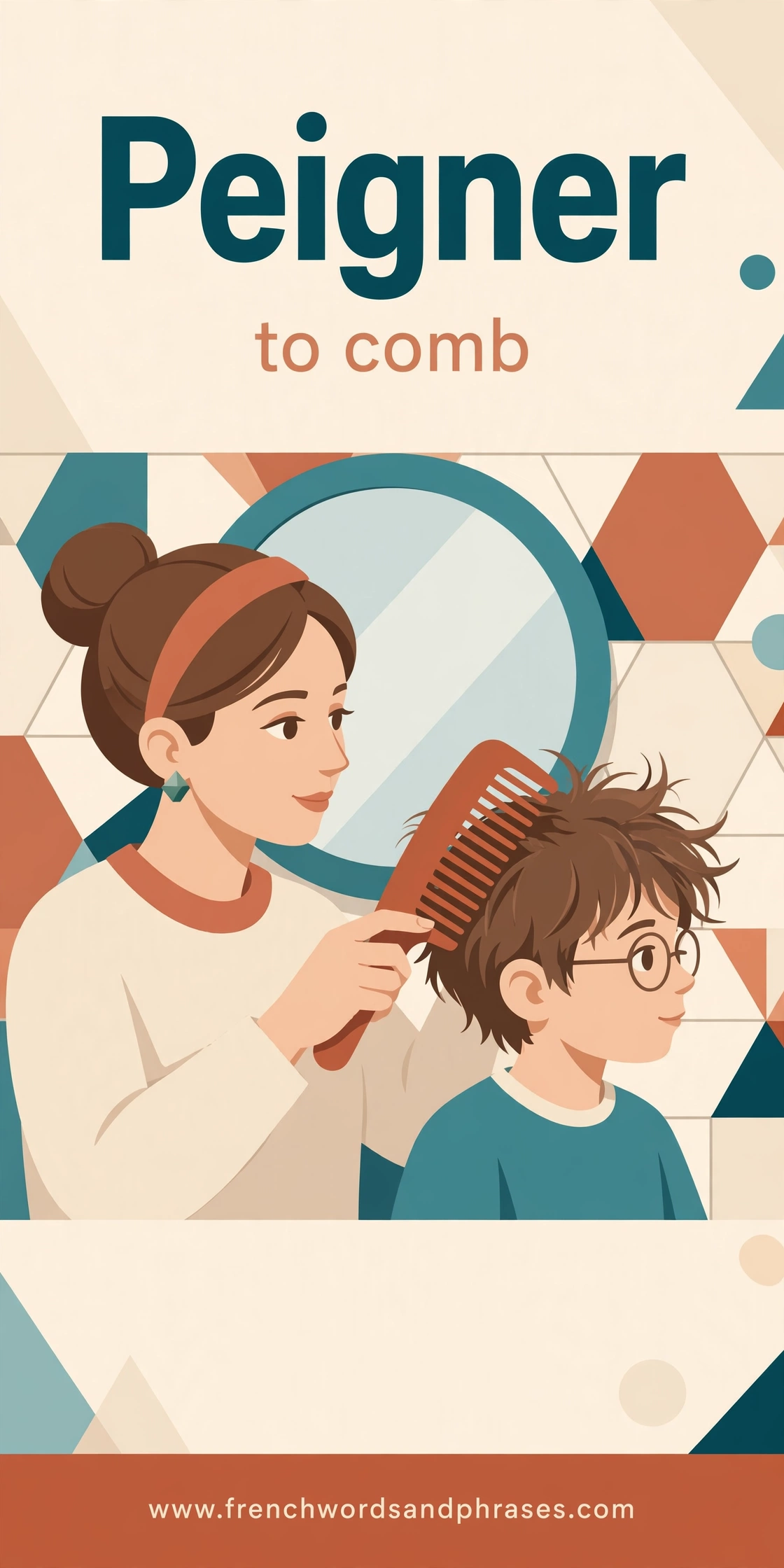
Peigner means to comb — to draw a comb through hair, wool or a horse’s mane until everything lies smooth and in its place.
A mother combing her daughter’s hair before school, a groom combing a horse’s mane until it shines, a spinner combing wool into clouds — peigner is the patient verb of the comb: stroke after stroke, tangle after tangle, until all is smooth.
In this guide, you’ll learn how to conjugate peigner in all the major French tenses and moods. Explore complete conjugation tables, French examples, English translations, and practice quizzes.
Understanding the French Verb Peigner
Peigner is a regular French verb belonging to the first group of verbs, those ending in-er.
It means to comb. It is used at the dressing table for hair (one’s own, with se peigner, or someone else’s), in the stable for manes and coats, in the old textile crafts for combing wool and flax before spinning, and figuratively for searching an area thoroughly — peigner le quartier, to comb the neighbourhood. Its lazy twin is the giraffe: work that is long, absurd and gloriously pointless.
Verb classification: First group (-er)
Auxiliary verb: Avoir
Past participle: peigné
Present participle: peignant
English equivalents: To comb; peigner les cheveux — to comb one’s hair; se peigner — to comb one’s own hair; peigner la laine — to comb (card) wool; peigner un cheval — to groom a horse’s mane; peigner la girafe — to waste one’s time on a useless, endless task.
One important detail: peigner is a regular -er verb built on un peigne, a comb — je peigne, nous peignons, ils peignent, past participle peigné — and the gn is one sound, /ɲ/, like the middle of ‘canyon’: peigne, peignons, peignait all sing the same note. For combing your own hair, French turns the verb reflexive: se peigner — elle se peigne devant la glace. And the comb has one glorious idiom: peigner la girafe, to comb the giraffe, is to spend hours on a task that serves absolutely no purpose.
Experience the Word
Peigner is the verb of patience made visible — order drawn through chaos, one stroke of the comb at a time.
Imagine a stable at dawn. The groom works down the mare’s neck with a stiff brush and then a comb, peignant la crinière until it falls like black silk, while the mare sighs and leans into every stroke. Ten minutes of peigner, and the whole horse looks ready for a parade.
Nothing has been cut or added. He has combed — il a peigné — and patience has done all the work.
How to Conjugate Peigner: Complete French Conjugation Guide
Let’s explore every major conjugation of peigner, beginning with the indicative mood.
How to Conjugate Peigner in the Indicative Mood
The indicative mood is used to express facts, observations, actions, and events.
How to Conjugate Peigner in the Present Tense (Présent)
Used for actions happening now, habitual actions, and general truths.
| Subject | Conjugation |
|---|---|
| je | peigne |
| tu | peignes |
| il / elle | peigne |
| nous | peignons |
| vous | peignez |
| ils / elles | peignent |
Example
Chaque matin, elle peigne les cheveux de sa fille.
Every morning, she combs her daughter’s hair.
Quick Quiz 1
Complete the sentence:
Nous ______ la laine avant de la filer.
Reveal the answer
peignons
Nous peignons la laine avant de la filer.
We comb the wool before spinning it.
How to Conjugate Peigner in the Passé Composé
Used for completed actions in the past. Peigner takes the auxiliary verb avoir.
| Subject | Conjugation |
|---|---|
| j’ | ai peigné |
| tu | as peigné |
| il / elle | a peigné |
| nous | avons peigné |
| vous | avez peigné |
| ils / elles | ont peigné |
Example
Tu as peigné le chien avant la visite du vétérinaire.
You combed the dog before the vet’s visit.
How to Conjugate Peigner in the Imparfait (Imperfect Tense)
Used for habitual past actions, descriptions, and ongoing situations in the past.
| Subject | Conjugation |
|---|---|
| je | peignais |
| tu | peignais |
| il / elle | peignait |
| nous | peignions |
| vous | peigniez |
| ils / elles | peignaient |
Example
Ma grand-mère peignait sa longue chevelure devant la fenêtre.
My grandmother used to comb her long hair in front of the window.
Quick Quiz 2
Choose the correct form:
You combed the dog this morning.
Tu ______ le chien ce matin. (a peigné / est peigné)
Reveal the answer
a peigné
Tu as peigné le chien ce matin.
Peigner takes avoir.
How to Conjugate Peigner in the Plus-que-parfait
Used to describe an action that had already been completed before another past event.
| Subject | Conjugation |
|---|---|
| j’ | avais peigné |
| tu | avais peigné |
| il / elle | avait peigné |
| nous | avions peigné |
| vous | aviez peigné |
| ils / elles | avaient peigné |
Example
Elle avait peigné la laine avant de la filer.
She had combed the wool before spinning it.
How to Conjugate Peigner in the Passé Simple
Primarily used in formal writing, literature, and historical narratives. It is rarely used in everyday conversation.
| Subject | Conjugation |
|---|---|
| je | peignai |
| tu | peignas |
| il / elle | peigna |
| nous | peignâmes |
| vous | peignâtes |
| ils / elles | peignèrent |
Example
La servante peigna la crinière du cheval avec soin.
The maid combed the horse’s mane with care.
How to Conjugate Peigner in the Passé Antérieur
A literary tense used to express an action completed immediately before another past action, generally in the passé simple.
| Subject | Conjugation |
|---|---|
| j’ | eus peigné |
| tu | eus peigné |
| il / elle | eut peigné |
| nous | eûmes peigné |
| vous | eûtes peigné |
| ils / elles | eurent peigné |
Example
Quand elle eut peigné l’enfant, elle l’habilla pour l’école.
When she had combed the child’s hair, she dressed him for school.
How to Conjugate Peigner in the Future Tense (Futur Simple)
Used to describe actions that will take place in the future.
| Subject | Conjugation |
|---|---|
| je | peignerai |
| tu | peigneras |
| il / elle | peignera |
| nous | peignerons |
| vous | peignerez |
| ils / elles | peigneront |
Example
Demain, le coiffeur peignera les mannequins avant le défilé.
Tomorrow, the hairdresser will comb the models’ hair before the show.
How to Conjugate Peigner in the Futur Antérieur (Future Perfect)
Used for an action that will have been completed before a particular point in the future.
| Subject | Conjugation |
|---|---|
| j’ | aurai peigné |
| tu | auras peigné |
| il / elle | aura peigné |
| nous | aurons peigné |
| vous | aurez peigné |
| ils / elles | auront peigné |
Example
À huit heures, elle aura peigné les trois petites filles.
By eight o’clock, she will have combed the three little girls’ hair.
How to Conjugate Peigner in the Near Future (Futur Proche)
Used to describe something that is going to happen soon. Formed with aller + infinitive.
| Subject | Conjugation |
|---|---|
| je | vais peigner |
| tu | vas peigner |
| il / elle | va peigner |
| nous | allons peigner |
| vous | allez peigner |
| ils / elles | vont peigner |
Example
Viens, je vais te peigner avant la photo !
Come here, I am going to comb your hair before the photo!
How to Conjugate Peigner in the Conditional Mood
The conditional mood expresses what would happen under certain circumstances. It is also frequently used to make polite requests or express wishes.
How to Conjugate Peigner in the Present Conditional
| Subject | Conjugation |
|---|---|
| je | peignerais |
| tu | peignerais |
| il / elle | peignerait |
| nous | peignerions |
| vous | peigneriez |
| ils / elles | peigneraient |
Example
Elle peignerait ses poupées pendant des heures si on la laissait faire.
She would comb her dolls’ hair for hours if she were allowed to.
How to Conjugate Peigner in the Past Conditional
| Subject | Conjugation |
|---|---|
| j’ | aurais peigné |
| tu | aurais peigné |
| il / elle | aurait peigné |
| nous | aurions peigné |
| vous | auriez peigné |
| ils / elles | auraient peigné |
Example
Il aurait peigné le chat si celui-ci s’était laissé faire.
He would have combed the cat if the cat had let him.
Peigner in the Literary Past Conditional Form
This less common literary form uses the imperfect subjunctive of avoir.
| Subject | Conjugation |
|---|---|
| j’ | eusse peigné |
| tu | eusses peigné |
| il / elle | eût peigné |
| nous | eussions peigné |
| vous | eussiez peigné |
| ils / elles | eussent peigné |
Example
Elle eût peigné sa chevelure d’or devant le miroir.
She would have combed her golden hair in front of the mirror.
How to Conjugate Peigner in the Subjunctive Mood
The subjunctive is used to express wishes, emotions, doubts, necessity, and uncertainty. It frequently follows expressions such as il faut que (it is necessary that) or bien que (although).
How to Conjugate Peigner in the Present Subjunctive
| Subject | Conjugation |
|---|---|
| que je | peigne |
| que tu | peignes |
| qu’il / qu’elle | peigne |
| que nous | peignions |
| que vous | peigniez |
| qu’ils / qu’elles | peignent |
Example
Il faut que tu peignes tes cheveux avant de sortir.
You must comb your hair before going out.
Quick Quiz 3
Complete the sentence using the subjunctive:
Il faut que vous ______ les cheveux des enfants.
Reveal the answer
peigniez
Il faut que vous peigniez les cheveux des enfants.
You must comb the children’s hair.
How to Conjugate Peigner in the Imperfect Subjunctive
A literary tense, rarely encountered in modern spoken French.
| Subject | Conjugation |
|---|---|
| que je | peignasse |
| que tu | peignasses |
| qu’il / qu’elle | peignât |
| que nous | peignassions |
| que vous | peignassiez |
| qu’ils / qu’elles | peignassent |
Example
Maman voulait que je peignasse mes cheveux avant le dîner.
Mum wanted me to comb my hair before dinner.
How to Conjugate Peigner in the Pluperfect Subjunctive
A literary construction used to express an action completed before another past action.
| Subject | Conjugation |
|---|---|
| que j’ | eusse peigné |
| que tu | eusses peigné |
| qu’il / qu’elle | eût peigné |
| que nous | eussions peigné |
| que vous | eussiez peigné |
| qu’ils / qu’elles | eussent peigné |
Example
On racontait qu’elle eût peigné la laine de tout le village.
People said she had combed the wool of the whole village.
How to Conjugate Peigner in the Past Subjunctive
| Subject | Conjugation |
|---|---|
| que j’ | aie peigné |
| que tu | aies peigné |
| qu’il / qu’elle | ait peigné |
| que nous | ayons peigné |
| que vous | ayez peigné |
| qu’ils / qu’elles | aient peigné |
Example
Je suis content que tu aies peigné le chien, il est tout beau.
I am glad you combed the dog, he looks lovely.
How to Conjugate Peigner in the Imperative
The imperative is used to give commands, instructions, invitations, or suggestions. Subject pronouns are omitted.
How to Conjugate Peigner in the Present Imperative
| Person | Conjugation |
|---|---|
| (tu) | peigne |
| (nous) | peignons |
| (vous) | peignez |
Example
Peigne-toi avant de passer à table !
Comb your hair before sitting down to eat!
Quick Quiz 4
How would you say Comb your hair (tu form)?
Reveal the answer
Peigne-toi !
French Participles of Peigner
Participles are verb forms that can be used in compound tenses and other grammatical constructions.
Present Participle of Peigner
peignant
En peignant la girafe, le gardien pensait à autre chose.
While combing the giraffe, the keeper was thinking of something else.
Past Participle of Peigner
peigné
Peignée avec soin, la laine attendait le rouet.
Combed with care, the wool awaited the spinning wheel.
Peigner in Everyday French: Real-Life Examples
Now that you know the conjugations, let’s see how peigner appears in everyday French.
Example 1 — Present
Elle peigne les cheveux de sa fille.
She combs her daughter’s hair.
Example 2 — Passé composé
Tu as peigné le chien ce matin.
You combed the dog this morning.
Example 3 — Imparfait
Ma grand-mère peignait sa longue chevelure.
My grandmother used to comb her long hair.
Example 4 — Future
Le coiffeur peignera les mannequins.
The hairdresser will comb the models’ hair.
Example 5 — Conditional
Elle peignerait ses poupées pendant des heures.
She would comb her dolls’ hair for hours.
Example 6 — Imperative
Peigne-toi avant la photo !
Comb your hair before the photo!
Beyond Translation: The Meaning of Peigner
Peigner descends from Latin pectinare, from pecten, a comb — the same comb that survives in the scallop’s French name, le peigne being also the shell’s ribbed fan.
And then there is the giraffe.
Peigner la girafe — to comb the giraffe — is French for the most useless job in the world, the task you polish for hours because someone told you to. The idiom is this page’s godmother: somewhere in Paris, a keeper once spent so long combing a giraffe that his wasted morning became a proverb.
How to Remember the French Verb Peigner
Remember it this way: Peigner is about the comb through the mare’s mane at dawn — and the keeper combing the giraffe all morning.
- Un peigne is a comb; peigner is combing with it — je peigne, nous peignons, and the gn is one sound, /ɲ/.
- Your own hair takes the reflexive: se peigner — elle se peigne devant la glace.
- Peigner la girafe: to waste hours combing a giraffe — the patron idiom of pointless work.
The key idea is the comb through the mare’s mane at dawn — and the keeper combing the giraffe all morning.
Test Your Knowledge of Peigner
Let’s see how much you’ve learned. Try answering these questions before revealing the answers.
Question 1
What does peigner la girafe mean?
Reveal the answer
To waste time on a useless, endless task — literally, to comb the giraffe.
Question 2
How do you say Every morning, she combs her daughter’s hair in French?
Reveal the answer
Chaque matin, elle peigne les cheveux de sa fille.
Question 3
Translate: You combed the dog this morning.
Reveal the answer
Tu as peigné le chien ce matin.
Question 4
What is the past participle of peigner?
Reveal the answer
Peigné.
Question 5
Complete the sentence:
Il faut que tu ______ tes cheveux avant de sortir.
Reveal the answer
peignes
Il faut que tu peignes tes cheveux avant de sortir.
You must comb your hair before going out.
Your Final Challenge
Can You Use It?
How would you say this in French?
She combs her daughter’s hair, and the day begins gently.
Reveal the answer
Elle peigne les cheveux de sa fille, et la journée commence en douceur.
She combs her daughter’s hair, and the day begins gently.
A little French. A little curiosity. A richer everyday life.
LEARN FRENCH ONE WORD AT A TIME