A French Word to Live By
Translate Bave to English
/bav/
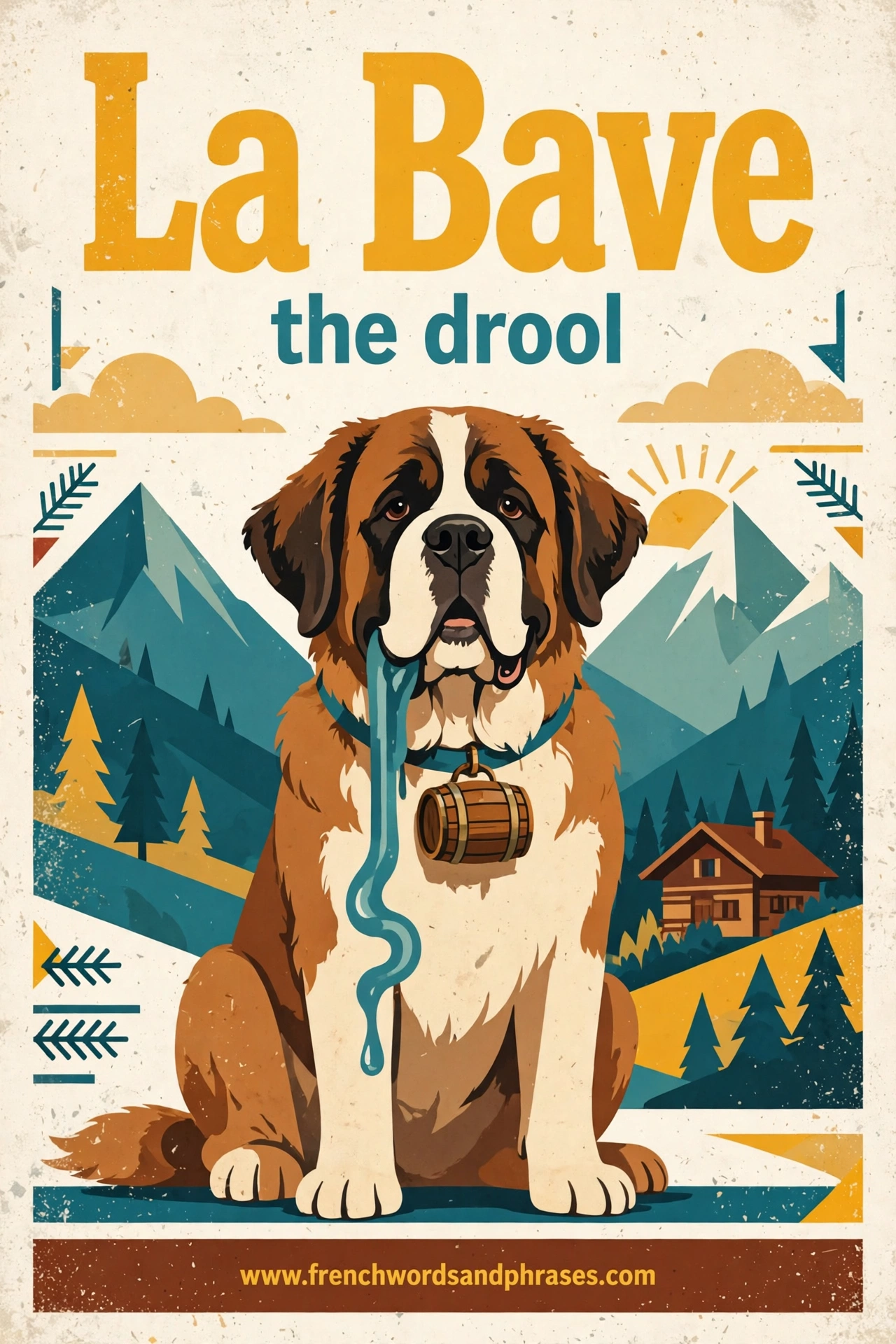
La Bave means the drool.
The big dog sleeps under the table, one cheek squashed against the floorboards, and a slow, shining thread escapes from the corner of his mouth: la bave, the unmistakable signature of a happy dog.
In this guide, you’ll learn what bave means in English, how to use it with its articles, how to form its plural, and how it appears in everyday French. Explore French examples, English translations, and practice quizzes.
Understanding the French Noun Bave
Bave is a feminine French noun, learned with its article: la bave, une bave. It names the saliva that drips from a mouth — a baby’s, a dog’s — and also the silvery slime trail of a snail or a slug. It belongs to the family of baver, to drool.
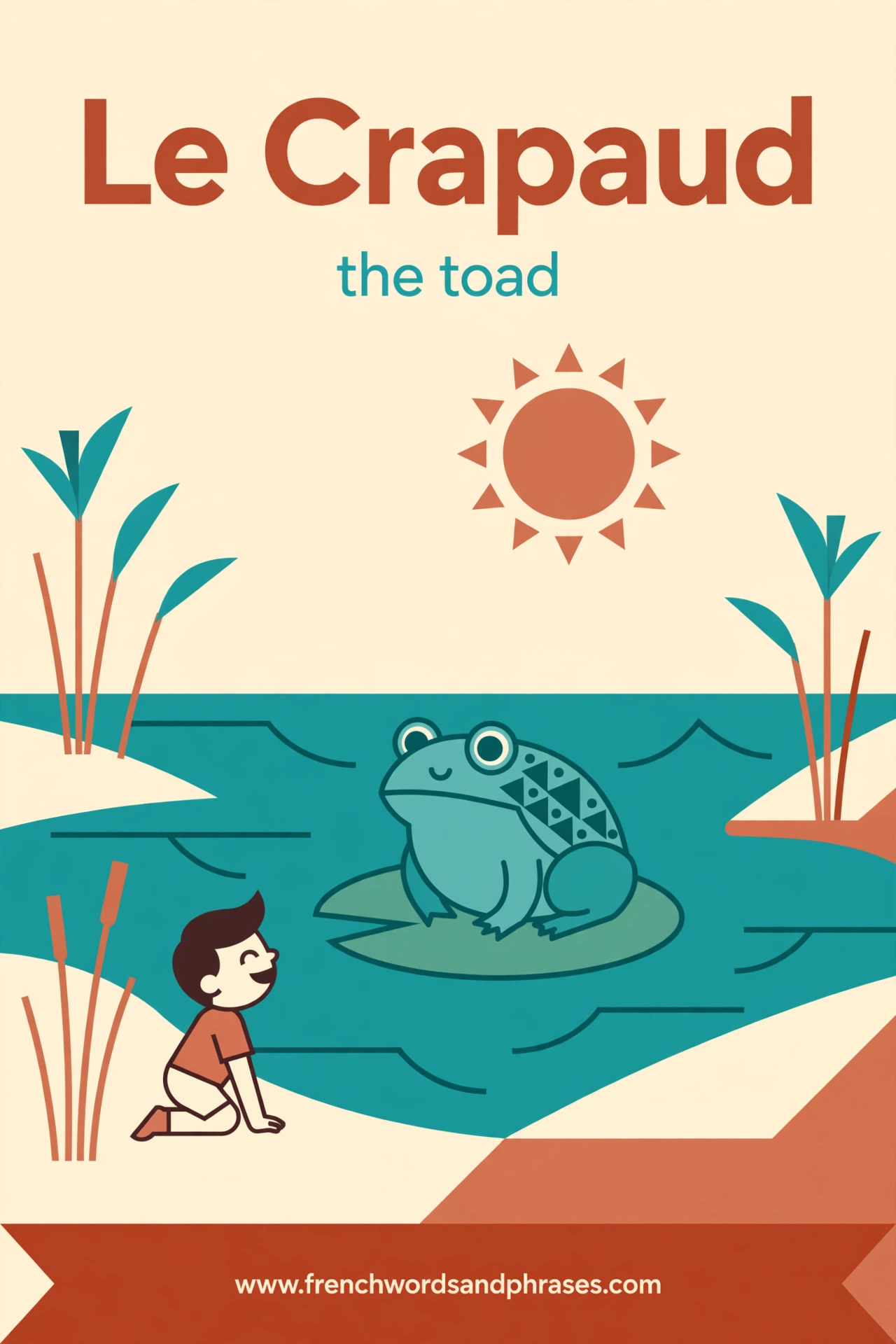
It means drool, dribble — the saliva that escapes without permission: babies teething, dogs watching your sandwich, and sleepers on trains all produce de la bave. Extended, it is the slime of l’escargot (the snail) and, in one famous proverb, the spite of the toad: la bave du crapaud n’atteint pas la blanche colombe — the toad’s drool cannot reach the white dove, insults cannot stain the innocent.
Gender: Feminine
Definite article: la — la bave (the drool)
Indefinite article: une — une bave (a drool, a slime)
Plural: les baves — rare
The verb: baver — to drool, to dribble
The snail’s version: la bave d’escargot — snail slime
One important usage detail: bave is uncountable, so it lives with the partitive — de la bave, some drool. A whole thread of it is un filet de bave, and the bib that catches a baby’s is le bavoir — same family, same dribble.
Experience the Word
Bave is more than an unglamorous word. It is the honest proof of desire — the dog before the roast, the baby before the biscuit, the snail signing its journey in silver across the garden path.
Imagine the morning garden after rain: every leaf carries a shining trail, each one a snail’s signature, written in bave during the night.
You have not just seen slime. You have read a signature — la bave, la trace de ce qui désire.
How to Use Bave in French: Complete Guide
Let’s explore how bave works in French, beginning with its articles — a feminine, uncountable word that loves the partitive.
Bave with the Definite Article (La, Les)
Used for the drool in question — la bave, the trail the snail left on this very leaf.
| Form | French |
|---|---|
| Feminine singular | la bave |
| Plural (rare) | les baves |
Example
La bave du chien coule sur le parquet.
The dog’s drool is running onto the floorboards.
Bave with the Indefinite Article (Une, Des)
Une bave appears mostly for a snail’s slime or in set descriptions; everyday drool prefers the partitive.
| Form | French |
|---|---|
| Feminine singular | une bave |
| Plural | des baves |
Example
Une bave argentée marque le passage de l’escargot.
A silvery slime marks the snail’s passage.
Bave with the Partitive and Quantities (De la, Un filet de…)
Drool is uncountable, so the partitive is its home: de la bave, some drool — measured in threads and drops.
| Quantity | French |
|---|---|
| some drool | de la bave |
| a thread of drool | un filet de bave |
| a little drool | un peu de bave |
| a lot of drool | beaucoup de bave |
| a drop of drool | une goutte de bave |
Example
Un filet de bave pend à la bouche du bébé endormi.
A thread of drool hangs from the sleeping baby’s mouth.
Quick Quiz 1
Complete the sentence:
Le chien regarde le rôti et il y a ______ partout. (some drool)
Reveal the answer
de la bave
Le chien regarde le rôti et il y a de la bave partout.
The dog is watching the roast and there is drool everywhere — de la, the partitive, for an uncountable substance.
The Plural of Bave
The plural les baves exists but is rare — drool is normally spoken of as one uncountable substance.
| Number | French |
|---|---|
| Singular | la bave |
| Plural | les baves |
Example
Les baves des limaces brillent sur les feuilles du potager.
The slugs’ slime trails shine on the vegetable garden leaves.
Bave with Possessive Adjectives (Mon, Ton, Son…)
Possessives agree with the noun: bave is feminine, so it takes ma, ta, sa in the singular.
| Owner | French |
|---|---|
| my | ma bave |
| your (tu) | ta bave |
| his / her | sa bave |
| our | notre bave |
| your (vous) | votre bave |
| their | leur bave |
Example
Le bébé essuie sa bave sur la manche de sa mère.
The baby wipes his drool on his mother’s sleeve.
Quick Quiz 2
Complete the sentence:
Essuie ______ bave, petit escargot de jardin ! (your)
Reveal the answer
ta
Essuie ta bave, petit escargot de jardin !
Wipe your slime, little garden snail! — ta, because bave is feminine.
Bave with Demonstrative Adjectives (Cette, Ces)
Used to point: cette bave, this drool — usually while reaching for a cloth.
| Form | French |
|---|---|
| Feminine singular | cette bave |
| Plural | ces baves |
Example
Cette bave sur ta chemise vient sûrement du chien.
This drool on your shirt surely comes from the dog.
Bave with Adjectives
Adjectives agree with bave and take the feminine -e: épaisse, argentée, longue.
| Adjective | With Bave |
|---|---|
| épaisse (thick) | une bave épaisse |
| argentée (silvery) | la bave argentée |
| longue (long) | une longue bave |
| blanche (white) | la bave blanche |
| collante (sticky) | une bave collante |
Example
L’escargot laisse derrière lui une bave argentée et collante.
The snail leaves behind it a silvery, sticky slime.
Quick Quiz 3
Complete the sentence:
Le chien a une bave ______ qui pend jusqu’au sol. (long)
Reveal the answer
longue
Le chien a une bave longue qui pend jusqu’au sol.
The dog has a long drool hanging down to the floor — longue, feminine, to agree with bave.
Everyday Expressions with Bave
Toads, doves and dribbling dogs — the bave phrases of daily life.
| Expression | In English |
|---|---|
| la bave du crapaud n’atteint pas la blanche colombe | the toad’s spite cannot stain the innocent dove |
| baver devant quelque chose | to drool over something, to long for it |
| un filet de bave | a thread of drool |
| la bave d’escargot | snail slime |
| baver d’envie | to drool with envy, to be dying of envy |
Example
Ignore ses critiques : la bave du crapaud n’atteint pas la blanche colombe.
Ignore his criticism: spite cannot stain the innocent.
Words from the Same Family as Bave
Drooling, bibs and slimy things — the words that travel with bave.
| French | In English |
|---|---|
| baver | to drool, to dribble |
| le bavoir | the bib |
| baveux | slimy, drooling (an adjective) |
| l’escargot | the snail |
| la limace | the slug |
| la salive | saliva (the polite, scientific word) |
Example
On met un bavoir au bébé parce qu’il bave beaucoup.
We put a bib on the baby because he drools a lot.
Quick Quiz 4
What does la bave du crapaud n’atteint pas la blanche colombe mean?
Reveal the answer
The spite of the low cannot reach the innocent — insults slide off a clear conscience, as the toad’s drool cannot reach the white dove.
Elle ignore les rumeurs : la bave du crapaud n’atteint pas la blanche colombe.
She ignores the rumours: spite cannot stain the innocent.
Bave in Everyday French: Real-Life Examples
Now that you know the word, let’s see how bave appears in everyday French.
Example 1 — With the baby
Le bébé fait ses dents et il y a de la bave partout.
The baby is teething and there is drool everywhere.
Example 2 — The hungry dog
Le chien bave devant le poulet rôti.
The dog is drooling in front of the roast chicken.
Example 3 — In the garden
La bave de l’escargot brille sur la salade.
The snail’s slime is shining on the lettuce.
Example 4 — Ignoring spite
Ne l’écoute pas : la bave du crapaud n’atteint pas la blanche colombe.
Don’t listen to him: spite cannot stain the innocent.
Example 5 — Envy
Il bave d’envie devant la nouvelle voiture du voisin.
He is drooling with envy over the neighbour’s new car.
Example 6 — On the train
Le voyageur endormi a un filet de bave au coin de la bouche.
The sleeping traveller has a thread of drool at the corner of his mouth.
Beyond Translation: The Meaning of Bave
Bave is a humble word with a noble proverb to carry: the toad, ugly and earthbound, spits its bave upward at the white dove, and the dove flies on unstained. French speakers quote it whenever gossip tries to soil a good name — proof that even drool can serve philosophy.
To say bave is to name what leaks out when desire or spite overflows.
It evokes teething babies and hopeful dogs, silver snail-trails at dawn, and the dignity of ignoring an insult.
How to Remember the French Noun Bave
Remember it this way: Bave is drool — feminine and uncountable, de la bave; its verb is baver and its proverb defends the innocent dove.
- You see the dog — de la bave, un filet de bave devant le rôti.
- You follow the snail — la bave argentée sur les feuilles.
- You ignore the insult — la bave du crapaud n’atteint pas la colombe.
The key idea is la bave — de la bave, uncountable; verb baver.
Test Your Knowledge of Bave
Let’s see how much you’ve learned. Try answering these questions before revealing the answers.
Question 1
Is bave masculine or feminine?
Reveal the answer
Feminine — la bave, and de la bave for « some ».
Question 2
How do you say « some drool » in French?
Reveal the answer
De la bave — the partitive, because bave is uncountable.
Question 3
Translate: The dog is drooling with envy.
Reveal the answer
Le chien bave d’envie. — with the verb baver, from the same family.
Question 4
What is le bavoir?
Reveal the answer
The bib — the cloth that catches a baby’s bave, from the same family.
Question 5
Complete the sentence:
______ bave du crapaud n’atteint pas la blanche colombe.
Reveal the answer
La
La bave du crapaud n’atteint pas la blanche colombe.
The toad’s drool cannot reach the white dove.
Your Final Challenge
Can You Use It?
How would you say this in French?
“The dog drools in front of the roast chicken.”
Reveal the answer
Le chien bave devant le poulet rôti.
The dog drools in front of the roast chicken.
A little French. A little curiosity. A richer everyday life.
LEARN FRENCH ONE WORD AT A TIME