A French Word to Live By
How to Conjugate Affliger in French
/a.fli.ʒe/
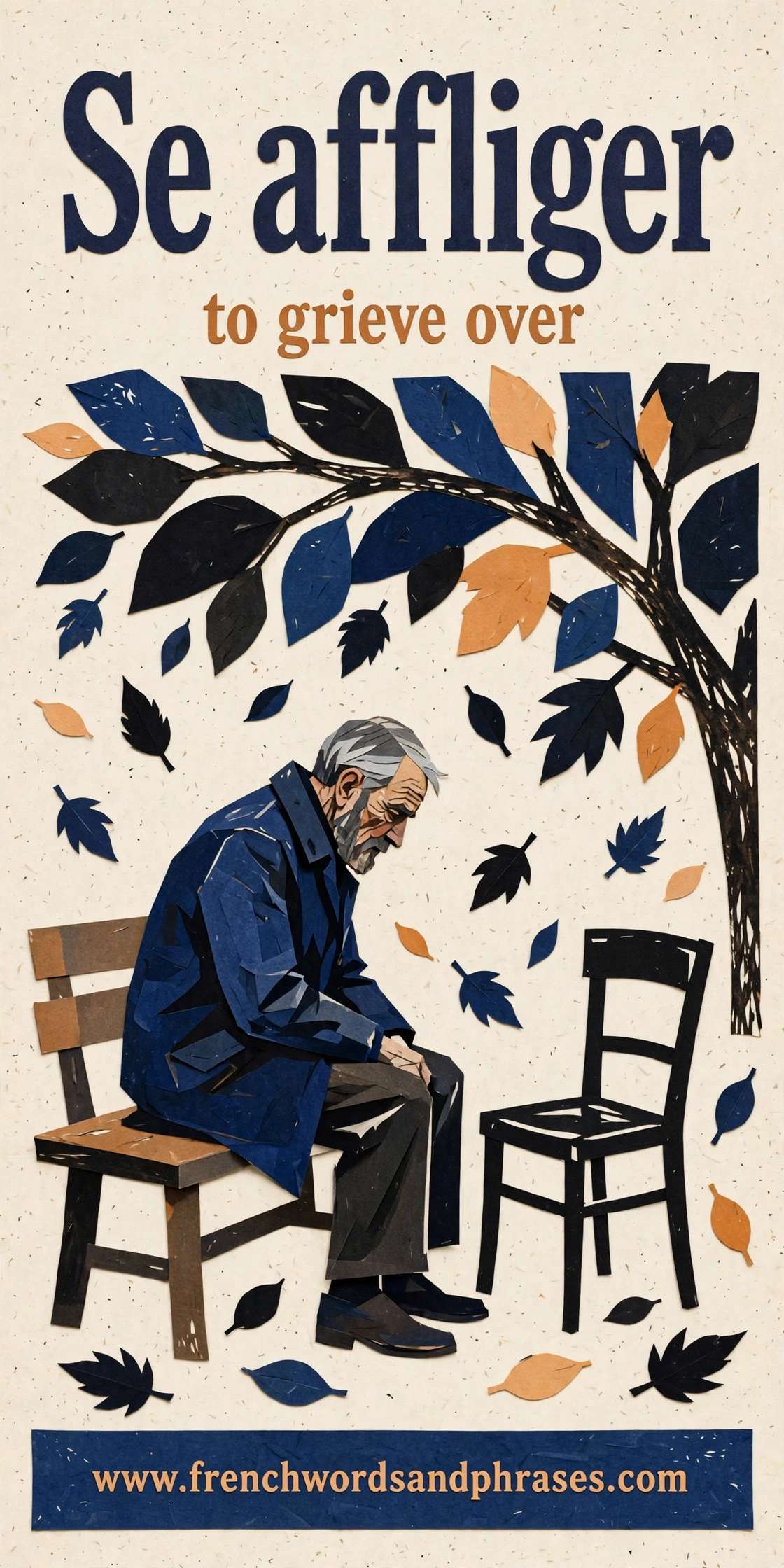
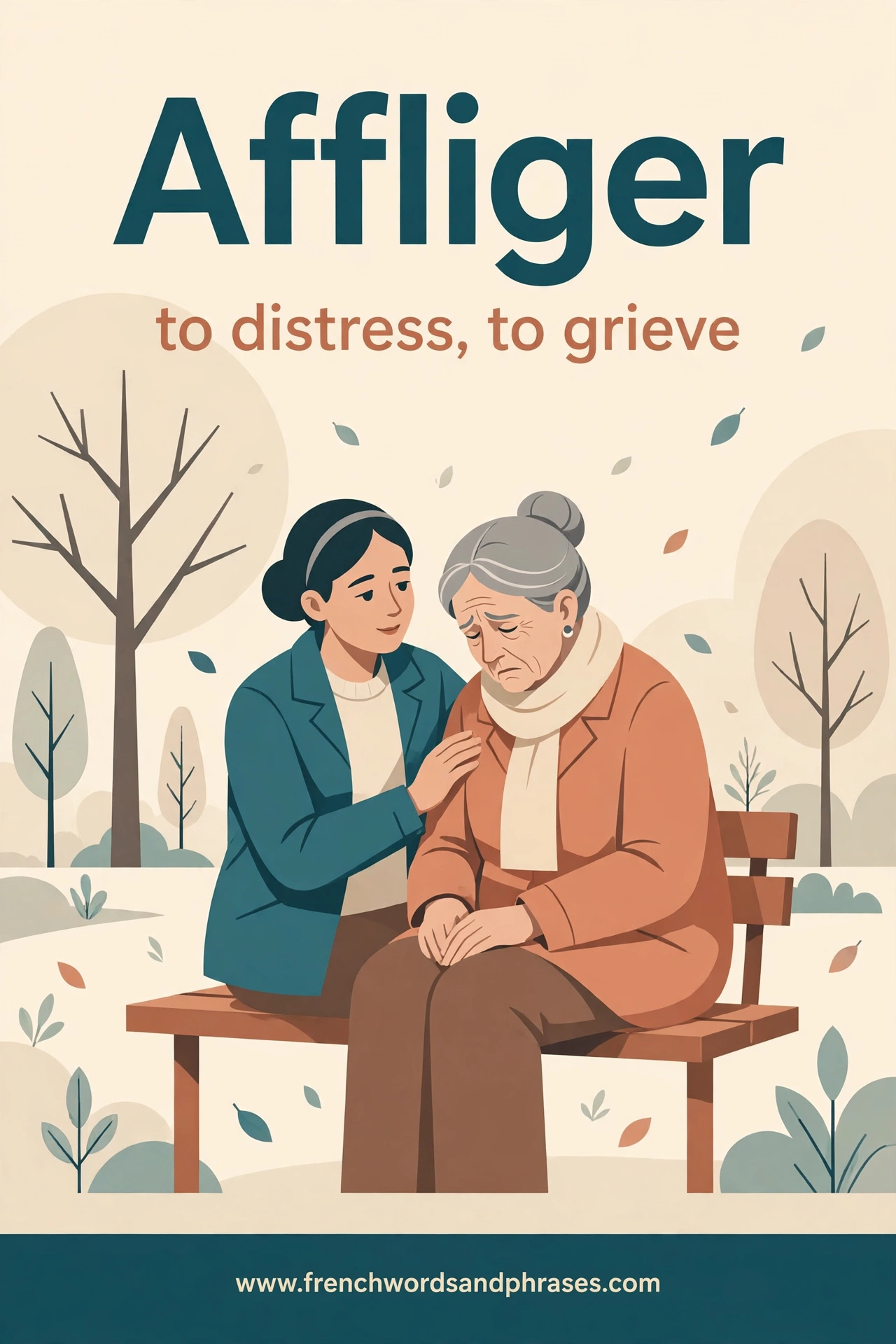
Affliger means to distress, to grieve — to weigh someone down with sorrow, as bad news settles on the heart.
A letter read twice in silence, a village hearing that the factory will close, a mother watching a fever through the night — affliger is the verb of grief arriving from outside: something happens, and its weight lands on a person, who is left affligé.
In this guide, you’ll learn how to conjugate affliger in all the major French tenses and moods. Explore complete conjugation tables, French examples, English translations, and practice quizzes.
Understanding the French Verb Affliger
Affliger is a regular French verb belonging to the first group of verbs, those ending in-er.
It means to distress, to grieve. It is commonly used of news, losses and illnesses that grieve people — une perte qui afflige, une maladie qui afflige — and the adjective affligeant means distressing. In lighter mouths it softens almost to teasing: un homme affligé d’un accent charmant is ‘afflicted’ with a charming accent, and everyone smiles. The reflexive se affliger takes the grief inside, as one’s own reaction.
Verb classification: First group (-er)
Auxiliary verb: Avoir
Past participle: affligé
Present participle: affligeant
English equivalents: To distress, to grieve, to afflict; affliger quelqu’un — to distress someone; être affligé de — to be afflicted with; une nouvelle affligeante — distressing news; affligé d’un rhume — suffering from a cold (often with a smile).
One important detail: affliger is a -ger verb, and verbs in -ger keep a protective e before the endings in a and o, so the g stays soft: nous affligeons, j’affligeais, en affligeant — never affligons or affligais. Elsewhere it behaves like any -er verb: j’afflige, vous affligez, ils affligent. Its construction has two faces: someone or something afflige a person (cette nouvelle l’afflige), and the sufferer is affligé de the trouble — être affligé d’une maladie, and, in the smiling everyday version, affligé d’un gros rhume.
Experience the Word
Affliger is the verb of weight arriving — grief with a sender: a piece of news, a loss, an illness, landing on someone’s shoulders.
Imagine a postman stopping at the farmhouse at the end of the lane. The letter he brings is short, and official. The old woman reads it standing in her doorway, reads it again, and sits down slowly on the step. La nouvelle l’a affligée — nothing in the house has moved, yet everything in it is suddenly heavier.
She has not wept or cried out. She has been grieved — affligée, weighed down by a sorrow with her name on it.
How to Conjugate Affliger: Complete French Conjugation Guide
Let’s explore every major conjugation of affliger, beginning with the indicative mood.
How to Conjugate Affliger in the Indicative Mood
The indicative mood is used to express facts, observations, actions, and events.
How to Conjugate Affliger in the Present Tense (Présent)
Used for actions happening now, habitual actions, and general truths.
| Subject | Conjugation |
|---|---|
| je | afflige |
| tu | affliges |
| il / elle | afflige |
| nous | affligeons |
| vous | affligez |
| ils / elles | affligent |
Example
Cette nouvelle afflige toute la famille.
This news distresses the whole family.
Quick Quiz 1
Complete the sentence:
Nous ______ nos parents avec cette nouvelle.
Reveal the answer
affligeons
Nous affligeons nos parents avec cette nouvelle.
We distress our parents with this news — note the protective e of the -ger verbs.
How to Conjugate Affliger in the Passé Composé
Used for completed actions in the past. Affliger takes the auxiliary verb avoir.
| Subject | Conjugation |
|---|---|
| j’ | ai affligé |
| tu | as affligé |
| il / elle | a affligé |
| nous | avons affligé |
| vous | avez affligé |
| ils / elles | ont affligé |
Example
La sécheresse a affligé les paysans de la région.
The drought grieved the farmers of the region.
How to Conjugate Affliger in the Imparfait (Imperfect Tense)
Used for habitual past actions, descriptions, and ongoing situations in the past.
| Subject | Conjugation |
|---|---|
| je | affligeais |
| tu | affligeais |
| il / elle | affligeait |
| nous | affligions |
| vous | affligiez |
| ils / elles | affligeaient |
Example
La maladie affligeait le vieil homme depuis des années.
Illness had afflicted the old man for years.
Quick Quiz 2
Choose the correct form:
The drought grieved the farmers.
La sécheresse ______ les paysans. (a affligé / est affligé)
Reveal the answer
a affligé
La sécheresse a affligé les paysans.
Affliger takes avoir.
How to Conjugate Affliger in the Plus-que-parfait
Used to describe an action that had already been completed before another past event.
| Subject | Conjugation |
|---|---|
| j’ | avais affligé |
| tu | avais affligé |
| il / elle | avait affligé |
| nous | avions affligé |
| vous | aviez affligé |
| ils / elles | avaient affligé |
Example
Le deuil avait affligé la maison entière.
Bereavement had grieved the whole household.
How to Conjugate Affliger in the Passé Simple
Primarily used in formal writing, literature, and historical narratives. It is rarely used in everyday conversation.
| Subject | Conjugation |
|---|---|
| je | affligeai |
| tu | affligeas |
| il / elle | affligea |
| nous | affligeâmes |
| vous | affligeâtes |
| ils / elles | affligeèrent |
Example
La nouvelle affligea le village comme un hiver précoce.
The news distressed the village like an early winter.
How to Conjugate Affliger in the Passé Antérieur
A literary tense used to express an action completed immediately before another past action, generally in the passé simple.
| Subject | Conjugation |
|---|---|
| j’ | eus affligé |
| tu | eus affligé |
| il / elle | eut affligé |
| nous | eûmes affligé |
| vous | eûtes affligé |
| ils / elles | eurent affligé |
Example
Quand la lettre eut affligé la vieille dame, elle s’assit.
When the letter had grieved the old lady, she sat down.
How to Conjugate Affliger in the Future Tense (Futur Simple)
Used to describe actions that will take place in the future.
| Subject | Conjugation |
|---|---|
| je | affligerai |
| tu | affligeras |
| il / elle | affligera |
| nous | affligerons |
| vous | affligerez |
| ils / elles | affligeront |
Example
Ce départ affligera ses élèves.
This departure will grieve his pupils.
How to Conjugate Affliger in the Futur Antérieur (Future Perfect)
Used for an action that will have been completed before a particular point in the future.
| Subject | Conjugation |
|---|---|
| j’ | aurai affligé |
| tu | auras affligé |
| il / elle | aura affligé |
| nous | aurons affligé |
| vous | aurez affligé |
| ils / elles | auront affligé |
Example
À la fin de l’année, la crise aura affligé bien des familles.
By the end of the year, the crisis will have grieved many families.
How to Conjugate Affliger in the Near Future (Futur Proche)
Used to describe something that is going to happen soon. Formed with aller + infinitive.
| Subject | Conjugation |
|---|---|
| je | vais affliger |
| tu | vas affliger |
| il / elle | va affliger |
| nous | allons affliger |
| vous | allez affliger |
| ils / elles | vont affliger |
Example
Ne lui dis pas encore, cela va l’affliger.
Do not tell him yet, it will distress him.
How to Conjugate Affliger in the Conditional Mood
The conditional mood expresses what would happen under certain circumstances. It is also frequently used to make polite requests or express wishes.
How to Conjugate Affliger in the Present Conditional
| Subject | Conjugation |
|---|---|
| je | affligerais |
| tu | affligerais |
| il / elle | affligerait |
| nous | affligerions |
| vous | affligeriez |
| ils / elles | affligeraient |
Example
Une telle injustice affligerait n’importe qui.
Such an injustice would grieve anyone.
How to Conjugate Affliger in the Past Conditional
| Subject | Conjugation |
|---|---|
| j’ | aurais affligé |
| tu | aurais affligé |
| il / elle | aurait affligé |
| nous | aurions affligé |
| vous | auriez affligé |
| ils / elles | auraient affligé |
Example
La nouvelle l’aurait affligée davantage autrefois.
The news would have distressed her more in the past.
Affliger in the Literary Past Conditional Form
This less common literary form uses the imperfect subjunctive of avoir.
| Subject | Conjugation |
|---|---|
| j’ | eusse affligé |
| tu | eusses affligé |
| il / elle | eût affligé |
| nous | eussions affligé |
| vous | eussiez affligé |
| ils / elles | eussent affligé |
Example
Ce spectacle eût affligé les âmes les plus dures.
This sight would have grieved the hardest hearts.
How to Conjugate Affliger in the Subjunctive Mood
The subjunctive is used to express wishes, emotions, doubts, necessity, and uncertainty. It frequently follows expressions such as il faut que (it is necessary that) or bien que (although).
How to Conjugate Affliger in the Present Subjunctive
| Subject | Conjugation |
|---|---|
| que je | afflige |
| que tu | affliges |
| qu’il / qu’elle | afflige |
| que nous | affligions |
| que vous | affligiez |
| qu’ils / qu’elles | affligent |
Example
Il est triste que ce malheur vous afflige.
It is sad that this misfortune distresses you.
Quick Quiz 3
Complete the sentence using the subjunctive:
Il est triste que cette histoire vous ______.
Reveal the answer
afflige
Il est triste que cette histoire vous afflige.
It is sad that this story distresses you.
How to Conjugate Affliger in the Imperfect Subjunctive
A literary tense, rarely encountered in modern spoken French.
| Subject | Conjugation |
|---|---|
| que je | affligasse |
| que tu | affligasses |
| qu’il / qu’elle | affligât |
| que nous | affligassions |
| que vous | affligassiez |
| qu’ils / qu’elles | affligassent |
Example
On craignait que la nouvelle affligeât les enfants.
They feared the news might distress the children.
How to Conjugate Affliger in the Pluperfect Subjunctive
A literary construction used to express an action completed before another past action.
| Subject | Conjugation |
|---|---|
| que j’ | eusse affligé |
| que tu | eusses affligé |
| qu’il / qu’elle | eût affligé |
| que nous | eussions affligé |
| que vous | eussiez affligé |
| qu’ils / qu’elles | eussent affligé |
Example
On racontait que la famine eût affligé tout le pays.
They said the famine had afflicted the whole country.
How to Conjugate Affliger in the Past Subjunctive
| Subject | Conjugation |
|---|---|
| que j’ | aie affligé |
| que tu | aies affligé |
| qu’il / qu’elle | ait affligé |
| que nous | ayons affligé |
| que vous | ayez affligé |
| qu’ils / qu’elles | aient affligé |
Example
Je regrette que ce départ ait affligé vos élèves.
I regret that this departure grieved your pupils.
How to Conjugate Affliger in the Imperative
The imperative is used to give commands, instructions, invitations, or suggestions. Subject pronouns are omitted.
How to Conjugate Affliger in the Present Imperative
| Person | Conjugation |
|---|---|
| (tu) | afflige |
| (nous) | affligeons |
| (vous) | affligez |
Example
N’affligez pas vos parents avec cette histoire !
Do not distress your parents with this story!
Quick Quiz 4
How would you say Do not distress your parents (tu form)?
Reveal the answer
N’afflige pas tes parents !
French Participles of Affliger
Participles are verb forms that can be used in compound tenses and other grammatical constructions.
Present Participle of Affliger
affligeant
En affligeant ainsi ses voisins, il s’est fait des ennemis.
By distressing his neighbours like this, he made himself enemies.
Past Participle of Affliger
affligé
Affligée par la nouvelle, elle est restée silencieuse.
Grieved by the news, she remained silent.
Affliger in Everyday French: Real-Life Examples
Now that you know the conjugations, let’s see how affliger appears in everyday French.
Example 1 — Present
Cette nouvelle afflige toute la famille.
This news distresses the whole family.
Example 2 — Passé composé
La sécheresse a affligé les paysans.
The drought grieved the farmers.
Example 3 — Imparfait
La maladie affligeait le vieil homme.
Illness afflicted the old man.
Example 4 — Future
Ce départ affligera ses élèves.
This departure will grieve his pupils.
Example 5 — Conditional
Une telle injustice affligerait n’importe qui.
Such an injustice would grieve anyone.
Example 6 — Imperative
N’afflige pas tes parents !
Do not distress your parents!
Beyond Translation: The Meaning of Affliger
English afflict is the same word in sterner dress, and French affliger keeps that old weight — it is the sorrow of the psalms and the funeral notice, never a small annoyance.
Yet French cannot resist teasing with it.
Between the famine that afflige a country and the man affligé d’un charmant accent there is only a smile — the verb descends the whole scale of suffering, from tragedy to a head cold, without changing a letter.
How to Remember the French Verb Affliger
Remember it this way: Affliger is about the short official letter, read twice in the doorway.
- A -ger verb: keep the e before a and o — nous affligeons, j’affligeais, en affligeant.
- Grief with a sender: la nouvelle l’afflige; the sufferer is affligé de the trouble.
- Regular endings otherwise: j’afflige, vous affligez, past participle affligé.
The key idea is the short official letter, read twice in the doorway.
Test Your Knowledge of Affliger
Let’s see how much you’ve learned. Try answering these questions before revealing the answers.
Question 1
Why do we write nous affligeons and not nous affligons?
Reveal the answer
Affliger is a -ger verb — the e is kept before a and o so the g stays soft: affligeons, affligeais, affligeant.
Question 2
How do you say This news distresses the whole family in French?
Reveal the answer
Cette nouvelle afflige toute la famille.
Question 3
Translate: The drought grieved the farmers of the region.
Reveal the answer
La sécheresse a affligé les paysans de la région.
Question 4
What is the past participle of affliger?
Reveal the answer
Affligé.
Question 5
Complete the sentence:
Il est triste que ce malheur vous ______.
Reveal the answer
afflige
Il est triste que ce malheur vous afflige.
It is sad that this misfortune distresses you.
Your Final Challenge
Can You Use It?
How would you say this in French?
The news grieves the whole village, but by morning the neighbours are knocking at her door.
Reveal the answer
La nouvelle afflige le village entier, mais dès le matin, les voisins frappent à sa porte.
The news grieves the whole village, but by morning the neighbours are knocking at her door.
A little French. A little curiosity. A richer everyday life.
LEARN FRENCH ONE WORD AT A TIME