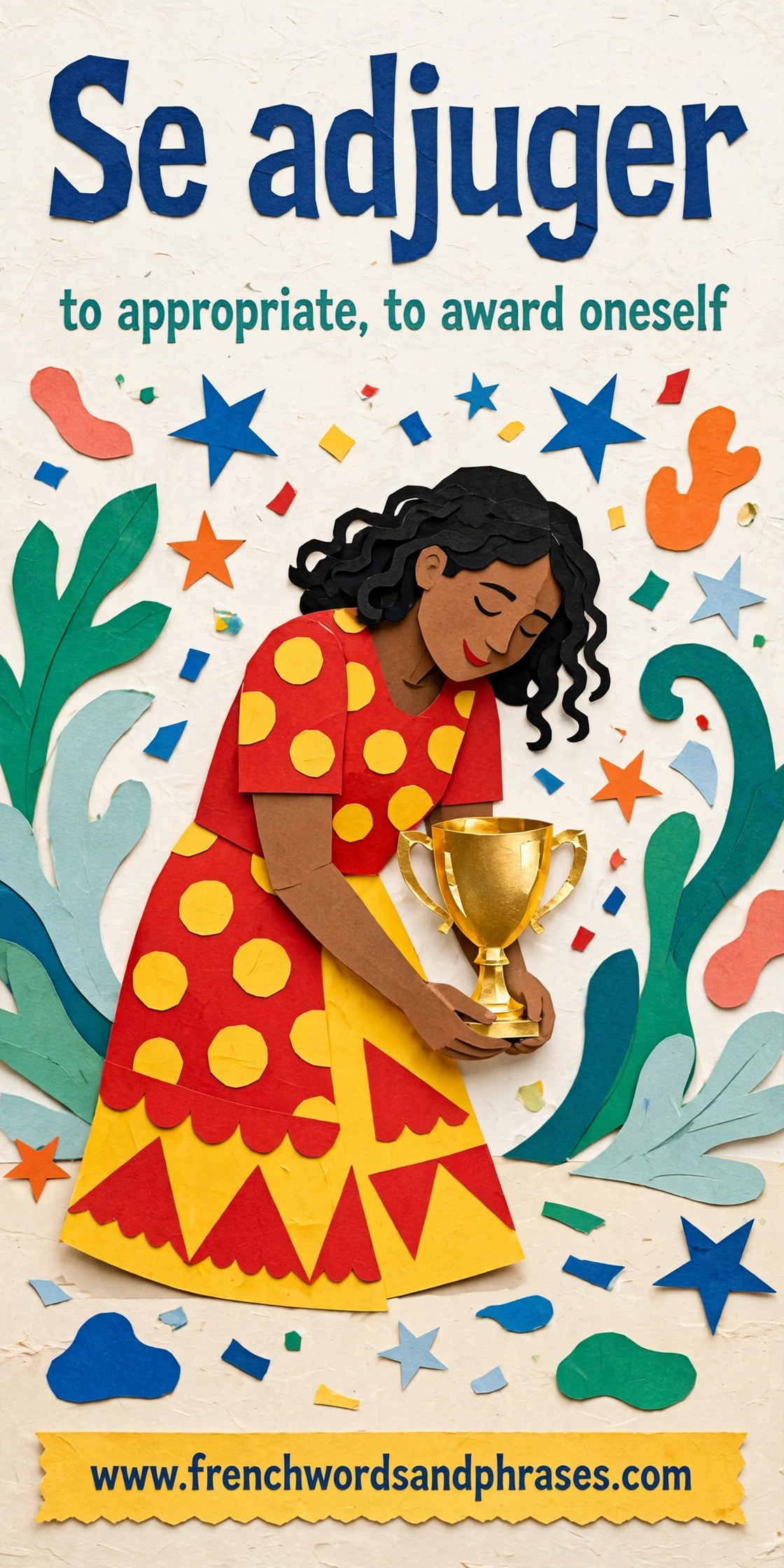
A French Word to Live By
How to Conjugate Adjuger in French
/ad.ʒy.ʒe/
Adjuger means to award, to sell at auction — to knock a lot down to the highest bidder with a tap of the hammer, or to grant a contract or a prize to the chosen winner.
The auction room falls silent, the hammer hovers, one last bid hangs in the air — adjuger is the verb of that falling hammer: the moment a painting, a house or a public contract passes, officially and forever, to the person who offered most.
In this guide, you’ll learn how to conjugate adjuger in all the major French tenses and moods. Explore complete conjugation tables, French examples, English translations, and practice quizzes.
Understanding the French Verb Adjuger
Adjuger is a regular French verb belonging to the first group of verbs, those ending in-er.
It means to award, to sell at auction. It is commonly used in auction rooms for lots knocked down to bidders, in public administration for contracts awarded after tender, and occasionally in sport and law for titles, prizes and property formally granted to a winner.
Verb classification: First group (-er)
Auxiliary verb: Avoir
Past participle: adjugé
Present participle: adjugeant
English equivalents: To award, to knock down at auction, to sell to the highest bidder; adjuger un lot — to knock down a lot; adjuger un tableau à un collectionneur — to sell a painting to a collector at auction; adjuger un marché — to award a contract; adjugé, vendu ! — going, gone — sold!; un commissaire-priseur — an auctioneer.
One important detail: adjuger is a -ger verb, so it keeps a protective e before a and o: nous adjugeons, j’adjugeais, en adjugeant, passé simple j’adjugeai — but j’adjuge, vous adjugez, ils adjugent need nothing. Its cry is famous: when the hammer falls, the auctioneer calls « Adjugé, vendu ! » — knocked down, sold! The same verb, without any hammer, awards public contracts: adjuger un marché à une entreprise.
Experience the Word
Adjuger is the verb of the falling hammer — the instant when bidding stops and ownership begins.
Imagine a Paris auction room in winter. A small landscape climbs from bid to bid, the commissaire-priseur scans the room one last time, and the hammer falls: the painting is adjugé to a quiet collector in the third row, and the room exhales.
A second ago it belonged to everyone who dreamed. Now it is awarded — adjugé, vendu — to one pair of hands.
How to Conjugate Adjuger: Complete French Conjugation Guide
Let’s explore every major conjugation of adjuger, beginning with the indicative mood.
How to Conjugate Adjuger in the Indicative Mood
The indicative mood is used to express facts, observations, actions, and events.
How to Conjugate Adjuger in the Present Tense (Présent)
Used for actions happening now, habitual actions, and general truths.
| Subject | Conjugation |
|---|---|
| je | adjuge |
| tu | adjuges |
| il / elle | adjuge |
| nous | adjugeons |
| vous | adjugez |
| ils / elles | adjugent |
Example
Le commissaire-priseur adjuge les lots un par un.
The auctioneer knocks down the lots one by one.
Quick Quiz 1
Complete the sentence:
Nous ______ les lots un par un.
Reveal the answer
adjugeons
Nous adjugeons les lots un par un.
We knock down the lots one by one — note the protective e of the -ger verbs.
How to Conjugate Adjuger in the Passé Composé
Used for completed actions in the past. Adjuger takes the auxiliary verb avoir.
| Subject | Conjugation |
|---|---|
| j’ | ai adjugé |
| tu | as adjugé |
| il / elle | a adjugé |
| nous | avons adjugé |
| vous | avez adjugé |
| ils / elles | ont adjugé |
Example
Elle a adjugé le tableau à un collectionneur de Lyon.
She sold the painting at auction to a collector from Lyon.
How to Conjugate Adjuger in the Imparfait (Imperfect Tense)
Used for habitual past actions, descriptions, and ongoing situations in the past.
| Subject | Conjugation |
|---|---|
| je | adjugeais |
| tu | adjugeais |
| il / elle | adjugeait |
| nous | adjugions |
| vous | adjugiez |
| ils / elles | adjugeaient |
Example
Autrefois, on adjugeait les terres du village sur la place.
In the old days, the village lands were auctioned on the square.
Quick Quiz 2
Choose the correct form:
The notary knocked the house down to the highest bidder.
Le notaire ______ la maison au plus offrant. (a adjugé / est adjugée)
Reveal the answer
a adjugé
Le notaire a adjugé la maison au plus offrant.
Adjuger takes avoir.
How to Conjugate Adjuger in the Plus-que-parfait
Used to describe an action that had already been completed before another past event.
| Subject | Conjugation |
|---|---|
| j’ | avais adjugé |
| tu | avais adjugé |
| il / elle | avait adjugé |
| nous | avions adjugé |
| vous | aviez adjugé |
| ils / elles | avaient adjugé |
Example
Ils avaient adjugé le contrat à l’entreprise la moins chère.
They had awarded the contract to the cheapest firm.
How to Conjugate Adjuger in the Passé Simple
Primarily used in formal writing, literature, and historical narratives. It is rarely used in everyday conversation.
| Subject | Conjugation |
|---|---|
| je | adjugeai |
| tu | adjugeas |
| il / elle | adjugea |
| nous | adjugeâmes |
| vous | adjugeâtes |
| ils / elles | adjugeèrent |
Example
Le notaire adjugea la maison au plus offrant.
The notary knocked the house down to the highest bidder.
How to Conjugate Adjuger in the Passé Antérieur
A literary tense used to express an action completed immediately before another past action, generally in the passé simple.
| Subject | Conjugation |
|---|---|
| j’ | eus adjugé |
| tu | eus adjugé |
| il / elle | eut adjugé |
| nous | eûmes adjugé |
| vous | eûtes adjugé |
| ils / elles | eurent adjugé |
Example
Quand le juge eut adjugé les biens, la foule se dispersa.
When the judge had awarded the property, the crowd dispersed.
How to Conjugate Adjuger in the Future Tense (Futur Simple)
Used to describe actions that will take place in the future.
| Subject | Conjugation |
|---|---|
| je | adjugerai |
| tu | adjugeras |
| il / elle | adjugera |
| nous | adjugerons |
| vous | adjugerez |
| ils / elles | adjugeront |
Example
Demain, on adjugera la collection entière.
Tomorrow, the whole collection will be auctioned.
How to Conjugate Adjuger in the Futur Antérieur (Future Perfect)
Used for an action that will have been completed before a particular point in the future.
| Subject | Conjugation |
|---|---|
| j’ | aurai adjugé |
| tu | auras adjugé |
| il / elle | aura adjugé |
| nous | aurons adjugé |
| vous | aurez adjugé |
| ils / elles | auront adjugé |
Example
À midi, le commissaire aura adjugé tous les lots.
By noon, the auctioneer will have knocked down all the lots.
How to Conjugate Adjuger in the Near Future (Futur Proche)
Used to describe something that is going to happen soon. Formed with aller + infinitive.
| Subject | Conjugation |
|---|---|
| je | vais adjuger |
| tu | vas adjuger |
| il / elle | va adjuger |
| nous | allons adjuger |
| vous | allez adjuger |
| ils / elles | vont adjuger |
Example
Attention, il va adjuger le dernier lot !
Careful, he is about to knock down the last lot!
How to Conjugate Adjuger in the Conditional Mood
The conditional mood expresses what would happen under certain circumstances. It is also frequently used to make polite requests or express wishes.
How to Conjugate Adjuger in the Present Conditional
| Subject | Conjugation |
|---|---|
| je | adjugerais |
| tu | adjugerais |
| il / elle | adjugerait |
| nous | adjugerions |
| vous | adjugeriez |
| ils / elles | adjugeraient |
Example
Sans enchères, on adjugerait le tableau au premier prix.
Without bids, the painting would be knocked down at the first price.
How to Conjugate Adjuger in the Past Conditional
| Subject | Conjugation |
|---|---|
| j’ | aurais adjugé |
| tu | aurais adjugé |
| il / elle | aurait adjugé |
| nous | aurions adjugé |
| vous | auriez adjugé |
| ils / elles | auraient adjugé |
Example
Il aurait adjugé la maison à sa sœur si elle avait enchéri.
He would have knocked the house down to his sister if she had bid.
Adjuger in the Literary Past Conditional Form
This less common literary form uses the imperfect subjunctive of avoir.
| Subject | Conjugation |
|---|---|
| j’ | eusse adjugé |
| tu | eusses adjugé |
| il / elle | eût adjugé |
| nous | eussions adjugé |
| vous | eussiez adjugé |
| ils / elles | eussent adjugé |
Example
Le roi eût adjugé le fief au plus fidèle de ses chevaliers.
The king would have granted the fief to the most faithful of his knights.
How to Conjugate Adjuger in the Subjunctive Mood
The subjunctive is used to express wishes, emotions, doubts, necessity, and uncertainty. It frequently follows expressions such as il faut que (it is necessary that) or bien que (although).
How to Conjugate Adjuger in the Present Subjunctive
| Subject | Conjugation |
|---|---|
| que je | adjuge |
| que tu | adjuges |
| qu’il / qu’elle | adjuge |
| que nous | adjugions |
| que vous | adjugiez |
| qu’ils / qu’elles | adjugent |
Example
Il faut que le juge adjuge ce prix au meilleur projet.
The judge must award this prize to the best project.
Quick Quiz 3
Complete the sentence using the subjunctive:
Il faut que vous ______ le contrat à une entreprise locale.
Reveal the answer
adjugiez
Il faut que vous adjugiez le contrat à une entreprise locale.
You must award the contract to a local firm.
How to Conjugate Adjuger in the Imperfect Subjunctive
A literary tense, rarely encountered in modern spoken French.
| Subject | Conjugation |
|---|---|
| que je | adjugasse |
| que tu | adjugasses |
| qu’il / qu’elle | adjugât |
| que nous | adjugassions |
| que vous | adjugassiez |
| qu’ils / qu’elles | adjugassent |
Example
Je voulais qu’on adjugeât le contrat à une entreprise locale.
I wanted the contract to be awarded to a local firm.
How to Conjugate Adjuger in the Pluperfect Subjunctive
A literary construction used to express an action completed before another past action.
| Subject | Conjugation |
|---|---|
| que j’ | eusse adjugé |
| que tu | eusses adjugé |
| qu’il / qu’elle | eût adjugé |
| que nous | eussions adjugé |
| que vous | eussiez adjugé |
| qu’ils / qu’elles | eussent adjugé |
Example
On vérifia que le notaire eût adjugé les biens selon les règles.
They checked that the notary had awarded the property according to the rules.
How to Conjugate Adjuger in the Past Subjunctive
| Subject | Conjugation |
|---|---|
| que j’ | aie adjugé |
| que tu | aies adjugé |
| qu’il / qu’elle | ait adjugé |
| que nous | ayons adjugé |
| que vous | ayez adjugé |
| qu’ils / qu’elles | aient adjugé |
Example
Je suis surpris qu’elle ait adjugé le lot si vite.
I am surprised she knocked the lot down so quickly.
How to Conjugate Adjuger in the Imperative
The imperative is used to give commands, instructions, invitations, or suggestions. Subject pronouns are omitted.
How to Conjugate Adjuger in the Present Imperative
| Person | Conjugation |
|---|---|
| (tu) | adjuge |
| (nous) | adjugeons |
| (vous) | adjugez |
Example
Adjugez ce lot au plus offrant !
Knock this lot down to the highest bidder!
Quick Quiz 4
How would you say Award the prize to the winner (tu form)?
Reveal the answer
Adjuge le prix au gagnant !
French Participles of Adjuger
Participles are verb forms that can be used in compound tenses and other grammatical constructions.
Present Participle of Adjuger
adjugeant
En adjugeant le tableau, il a mis fin à une longue enchère.
By knocking down the painting, he ended a long bidding war.
Past Participle of Adjuger
adjugé
Adjugée à un inconnu, la toile a quitté le pays.
Knocked down to a stranger, the canvas left the country.
Adjuger in Everyday French: Real-Life Examples
Now that you know the conjugations, let’s see how adjuger appears in everyday French.
Example 1 — Present
Le commissaire-priseur adjuge les lots un par un.
The auctioneer knocks down the lots one by one.
Example 2 — Passé composé
Elle a adjugé le tableau à un collectionneur.
She sold the painting at auction to a collector.
Example 3 — Imparfait
On adjugeait les terres sur la place du village.
The lands used to be auctioned on the village square.
Example 4 — Future
Demain, on adjugera la collection entière.
Tomorrow, the whole collection will be auctioned.
Example 5 — Conditional
On adjugerait le tableau au premier prix sans enchères.
The painting would be knocked down at the first price without bids.
Example 6 — Imperative
Adjugez ce lot au plus offrant !
Knock this lot down to the highest bidder!
Beyond Translation: The Meaning of Adjuger
English adjudge is a stiff legal cousin, but French adjuger lives in the auction room, gavel in hand.
Its participle is a cry, not just a form.
« Adjugé, vendu ! » — knocked down, sold — is the sound of French auctions ending, as fixed in the language as « going, going, gone » is in English. And quietly, in town halls, the same verb awards the contracts that build schools and roads.
How to Remember the French Verb Adjuger
Remember it this way: Adjuger is about the auctioneer’s hammer falling — adjugé, vendu !.
- -ger verb: nous adjugeons, j’adjugeais keep the protective e before a and o.
- The auctioneer’s cry: « Adjugé, vendu ! » — the hammer has fallen.
- Two podiums, one verb: lots at auction, and contracts awarded — adjuger un marché.
The key idea is the auctioneer’s hammer falling — adjugé, vendu !.
Test Your Knowledge of Adjuger
Let’s see how much you’ve learned. Try answering these questions before revealing the answers.
Question 1
What does the auctioneer cry when the hammer falls?
Reveal the answer
« Adjugé, vendu ! » — knocked down, sold!
Question 2
How do you say She sold the painting at auction to a collector in French?
Reveal the answer
Elle a adjugé le tableau à un collectionneur.
Question 3
Translate: Knock this lot down to the highest bidder!
Reveal the answer
Adjugez ce lot au plus offrant !
Question 4
What is the past participle of adjuger?
Reveal the answer
Adjugé.
Question 5
Complete the sentence:
Il faut que le juge ______ ce prix au meilleur projet.
Reveal the answer
adjuge
Il faut que le juge adjuge ce prix au meilleur projet.
The judge must award this prize to the best project.
Your Final Challenge
Can You Use It?
How would you say this in French?
The hammer falls, the painting is knocked down, and the room applauds its new owner.
Reveal the answer
Le marteau tombe, le tableau est adjugé, et la salle applaudit le nouveau propriétaire.
The hammer falls, the painting is knocked down, and the room applauds its new owner.
A little French. A little curiosity. A richer everyday life.
LEARN FRENCH ONE WORD AT A TIME