A French Word to Live By
How to Conjugate Achever in French
/aʃ.ve/
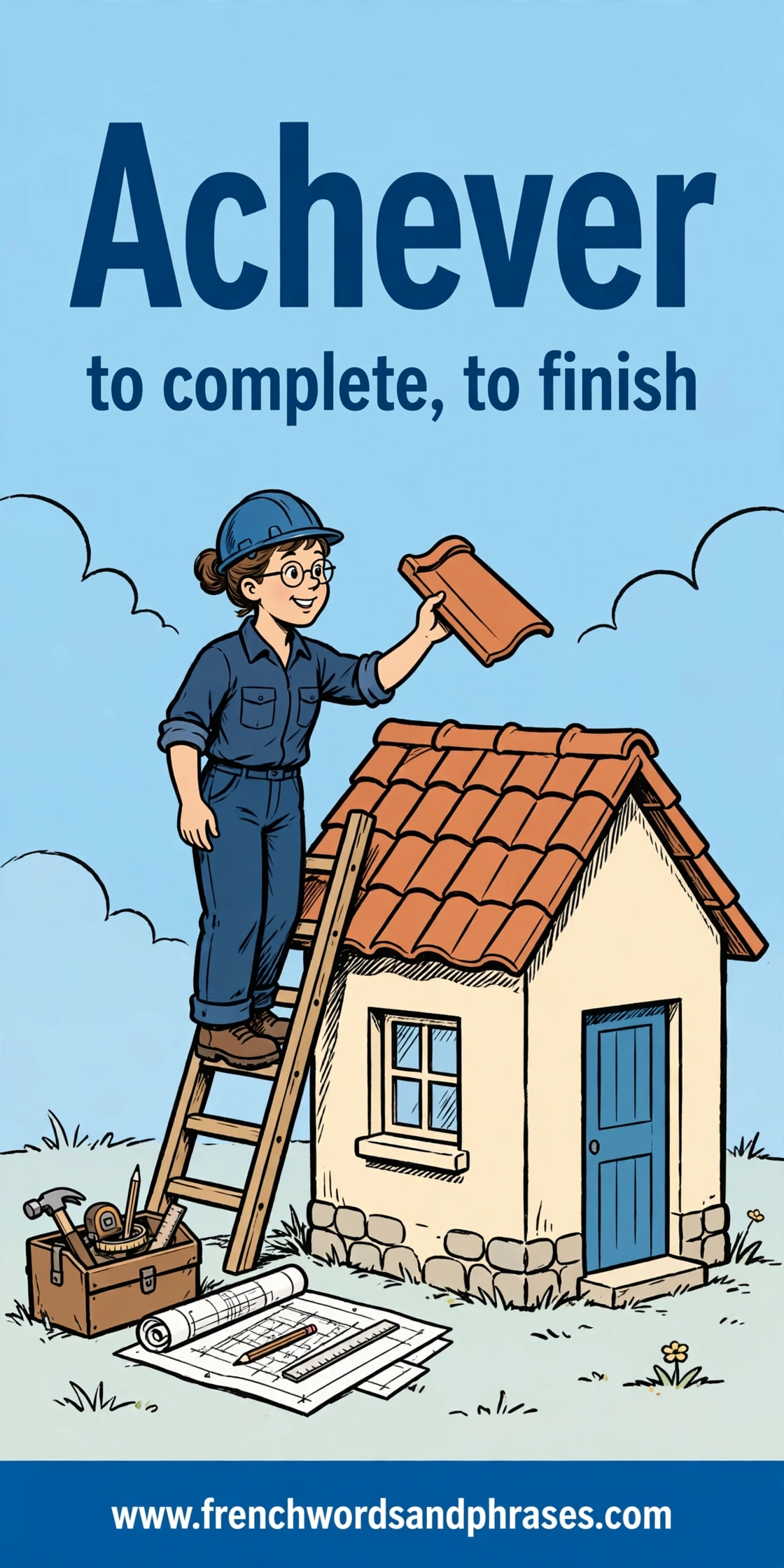
Achever means to complete, to finish — to bring a thing to its very end, its chef, its head: the last stitch, the last page, the last blow.
A novelist writing the final line at dawn, a mason setting the last stone of the vault — achever is the verb of the true ending: not stopping, but completing, carrying a work all the way to its head.
In this guide, you’ll learn how to conjugate achever in all the major French tenses and moods. Explore complete conjugation tables, French examples, English translations, and practice quizzes.
Understanding the French Verb Achever
Achever is a regular French verb belonging to the first group of verbs, those ending in-er.
It means to complete, to finish. It is stronger and more final than finir: finir stops, achever completes. It is used for works brought to perfection (achever un roman, achever une symphonie), for tasks finished off completely, and in its grim sense for finishing off the wounded — while the adjective achevé describes both a polished work and a person at the end of his strength.
Verb classification: First group (-er)
Auxiliary verb: Avoir
Past participle: achevé
Present participle: achevant
English equivalents: To complete, to finish, to end; achever un travail — to complete a job; achever de faire quelque chose — to finish doing something; achever un blessé — to finish off a wounded man; être achevé — to be utterly exhausted, done for; un chef-d’œuvre achevé — a finished masterpiece.
One important detail: achever changes its stem vowel exactly like lever — the silent e of the stem becomes è wherever the next syllable is mute: j’achève, tu achèves, il achève, ils achèvent, and all through the future and conditional: j’achèverai, j’achèverais. The plain e survives where the ending is sounded: nous achevons, vous achevez, j’achevais, and in que nous achevions. Note too the construction achever de plus infinitive — il achève de préparer le dîner, he is finishing preparing dinner — and the dark second sense: achever un blessé is to finish someone off.
Experience the Word
Achever is the verb of the last touch — the ending that is not an abandonment but a crown.
Imagine the old mason on the cathedral scaffolding in the last week of his working life. Stone by stone the vault has risen for thirty years; this morning il achève la dernière clé de voûte, taps it once, and steps back to look at what his whole life has made.
The work is not stopped; it is finished. It has been completed — achevé, brought to its head, and it will outlive him.
How to Conjugate Achever: Complete French Conjugation Guide
Let’s explore every major conjugation of achever, beginning with the indicative mood.
How to Conjugate Achever in the Indicative Mood
The indicative mood is used to express facts, observations, actions, and events.
How to Conjugate Achever in the Present Tense (Présent)
Used for actions happening now, habitual actions, and general truths.
| Subject | Conjugation |
|---|---|
| je | achève |
| tu | achèves |
| il / elle | achève |
| nous | achevons |
| vous | achevez |
| ils / elles | achèvent |
Example
Elle achève son roman ce mois-ci.
She is completing her novel this month.
Quick Quiz 1
Complete the sentence:
Nous ______ les travaux cette semaine.
Reveal the answer
achevons
Nous achevons les travaux cette semaine.
We are completing the work this week.
How to Conjugate Achever in the Passé Composé
Used for completed actions in the past. Achever takes the auxiliary verb avoir.
| Subject | Conjugation |
|---|---|
| j’ | ai achevé |
| tu | as achevé |
| il / elle | a achevé |
| nous | avons achevé |
| vous | avez achevé |
| ils / elles | ont achevé |
Example
Il a achevé les travaux avant l’hiver.
He completed the work before the winter.
How to Conjugate Achever in the Imparfait (Imperfect Tense)
Used for habitual past actions, descriptions, and ongoing situations in the past.
| Subject | Conjugation |
|---|---|
| je | achevais |
| tu | achevais |
| il / elle | achevait |
| nous | achevions |
| vous | acheviez |
| ils / elles | achevaient |
Example
Le peintre achevait lentement son dernier tableau.
The painter was slowly finishing his last painting.
Quick Quiz 2
Choose the correct form:
He completed the work before winter.
Il ______ les travaux avant l’hiver. (a achevé / est achevé)
Reveal the answer
a achevé
Il a achevé les travaux avant l’hiver.
Achever takes avoir.
How to Conjugate Achever in the Plus-que-parfait
Used to describe an action that had already been completed before another past event.
| Subject | Conjugation |
|---|---|
| j’ | avais achevé |
| tu | avais achevé |
| il / elle | avait achevé |
| nous | avions achevé |
| vous | aviez achevé |
| ils / elles | avaient achevé |
Example
Elle avait achevé sa thèse quand le poste s’est libéré.
She had completed her thesis when the post became free.
How to Conjugate Achever in the Passé Simple
Primarily used in formal writing, literature, and historical narratives. It is rarely used in everyday conversation.
| Subject | Conjugation |
|---|---|
| je | achevai |
| tu | achevas |
| il / elle | acheva |
| nous | achevâmes |
| vous | achevâtes |
| ils / elles | achevèrent |
Example
Le maçon acheva la voûte en une semaine.
The mason completed the vault in one week.
How to Conjugate Achever in the Passé Antérieur
A literary tense used to express an action completed immediately before another past action, generally in the passé simple.
| Subject | Conjugation |
|---|---|
| j’ | eus achevé |
| tu | eus achevé |
| il / elle | eut achevé |
| nous | eûmes achevé |
| vous | eûtes achevé |
| ils / elles | eurent achevé |
Example
Quand il eut achevé son discours, la salle applaudit.
When he had finished his speech, the hall applauded.
How to Conjugate Achever in the Future Tense (Futur Simple)
Used to describe actions that will take place in the future.
| Subject | Conjugation |
|---|---|
| je | achèverai |
| tu | achèveras |
| il / elle | achèvera |
| nous | achèverons |
| vous | achèverez |
| ils / elles | achèveront |
Example
J’achèverai ce rapport demain matin.
I will complete this report tomorrow morning.
How to Conjugate Achever in the Futur Antérieur (Future Perfect)
Used for an action that will have been completed before a particular point in the future.
| Subject | Conjugation |
|---|---|
| j’ | aurai achevé |
| tu | auras achevé |
| il / elle | aura achevé |
| nous | aurons achevé |
| vous | aurez achevé |
| ils / elles | auront achevé |
Example
À la fin de l’année, elle aura achevé trois romans.
By the end of the year, she will have completed three novels.
How to Conjugate Achever in the Near Future (Futur Proche)
Used to describe something that is going to happen soon. Formed with aller + infinitive.
| Subject | Conjugation |
|---|---|
| je | vais achever |
| tu | vas achever |
| il / elle | va achever |
| nous | allons achever |
| vous | allez achever |
| ils / elles | vont achever |
Example
Il va achever de ranger l’atelier.
He is going to finish tidying the workshop.
How to Conjugate Achever in the Conditional Mood
The conditional mood expresses what would happen under certain circumstances. It is also frequently used to make polite requests or express wishes.
How to Conjugate Achever in the Present Conditional
| Subject | Conjugation |
|---|---|
| je | achèverais |
| tu | achèverais |
| il / elle | achèverait |
| nous | achèverions |
| vous | achèveriez |
| ils / elles | achèveraient |
Example
Avec une semaine de plus, j’achèverais le livre.
With one more week, I would complete the book.
How to Conjugate Achever in the Past Conditional
| Subject | Conjugation |
|---|---|
| j’ | aurais achevé |
| tu | aurais achevé |
| il / elle | aurait achevé |
| nous | aurions achevé |
| vous | auriez achevé |
| ils / elles | auraient achevé |
Example
Elle aurait achevé le tableau si la lumière avait tenu.
She would have finished the painting if the light had held.
Achever in the Literary Past Conditional Form
This less common literary form uses the imperfect subjunctive of avoir.
| Subject | Conjugation |
|---|---|
| j’ | eusse achevé |
| tu | eusses achevé |
| il / elle | eût achevé |
| nous | eussions achevé |
| vous | eussiez achevé |
| ils / elles | eussent achevé |
Example
L’artiste eût achevé son œuvre avant sa mort.
The artist would have completed his work before his death.
How to Conjugate Achever in the Subjunctive Mood
The subjunctive is used to express wishes, emotions, doubts, necessity, and uncertainty. It frequently follows expressions such as il faut que (it is necessary that) or bien que (although).
How to Conjugate Achever in the Present Subjunctive
| Subject | Conjugation |
|---|---|
| que je | achève |
| que tu | achèves |
| qu’il / qu’elle | achève |
| que nous | achevions |
| que vous | acheviez |
| qu’ils / qu’elles | achèvent |
Example
Il faut qu’il achève ce travail avant vendredi.
He must complete this work before Friday.
Quick Quiz 3
Complete the sentence using the subjunctive:
Il faut que vous ______ le pont cette année.
Reveal the answer
acheviez
Il faut que vous acheviez le pont cette année.
You must complete the bridge this year.
How to Conjugate Achever in the Imperfect Subjunctive
A literary tense, rarely encountered in modern spoken French.
| Subject | Conjugation |
|---|---|
| que je | achevasse |
| que tu | achevasses |
| qu’il / qu’elle | achevât |
| que nous | achevassions |
| que vous | achevassiez |
| qu’ils / qu’elles | achevassent |
Example
Le roi ordonna que les ouvriers achevassent le pont en un an.
The king ordered the workers to complete the bridge within a year.
How to Conjugate Achever in the Pluperfect Subjunctive
A literary construction used to express an action completed before another past action.
| Subject | Conjugation |
|---|---|
| que j’ | eusse achevé |
| que tu | eusses achevé |
| qu’il / qu’elle | eût achevé |
| que nous | eussions achevé |
| que vous | eussiez achevé |
| qu’ils / qu’elles | eussent achevé |
Example
On espérait qu’elle eût achevé sa symphonie à temps.
People hoped she had completed her symphony in time.
How to Conjugate Achever in the Past Subjunctive
| Subject | Conjugation |
|---|---|
| que j’ | aie achevé |
| que tu | aies achevé |
| qu’il / qu’elle | ait achevé |
| que nous | ayons achevé |
| que vous | ayez achevé |
| qu’ils / qu’elles | aient achevé |
Example
Je suis content que tu aies achevé ta formation.
I am glad you completed your training.
How to Conjugate Achever in the Imperative
The imperative is used to give commands, instructions, invitations, or suggestions. Subject pronouns are omitted.
How to Conjugate Achever in the Present Imperative
| Person | Conjugation |
|---|---|
| (tu) | achève |
| (nous) | achevons |
| (vous) | achevez |
Example
Achève ton assiette avant de te lever !
Finish your plate before getting up!
Quick Quiz 4
How would you say Finish your plate (tu form)?
Reveal the answer
Achève ton assiette !
French Participles of Achever
Participles are verb forms that can be used in compound tenses and other grammatical constructions.
Present Participle of Achever
achevant
En achevant son roman, elle a pleuré de joie.
As she completed her novel, she wept with joy.
Past Participle of Achever
achevé
Achevé en trois ans, le pont enjambe encore la rivière.
Completed in three years, the bridge still spans the river.
Achever in Everyday French: Real-Life Examples
Now that you know the conjugations, let’s see how achever appears in everyday French.
Example 1 — Present
Elle achève son roman ce mois-ci.
She is completing her novel this month.
Example 2 — Passé composé
Il a achevé les travaux avant l’hiver.
He completed the work before the winter.
Example 3 — Imparfait
Le peintre achevait lentement son tableau.
The painter was slowly finishing his painting.
Example 4 — Future
J’achèverai ce rapport demain.
I will complete this report tomorrow.
Example 5 — Conditional
Avec plus de temps, elle achèverait son livre.
With more time, she would complete her book.
Example 6 — Imperative
Achève ton assiette !
Finish your plate!
Beyond Translation: The Meaning of Achever
The word hides a head: achever is built on chef, from the Latin caput, the head — to achever a thing was to bring it to a head, to its topmost point.
That is why it means more than stopping.
Finir can abandon a thing half-done; achever crowns it. And the head explains the dark twin sense too — achever un blessé, to finish off a wounded man, brings a life, brutally, to its end.
How to Remember the French Verb Achever
Remember it this way: Achever is about the mason setting the last stone — bringing the work to its head.
- Lever-type stem change: j’achève with è, but nous achevons with plain e — and j’achèverai in the future.
- Achever de + infinitive: il achève de préparer le dîner — he is finishing preparing dinner.
- Stronger than finir: finir stops, achever completes — and achever un blessé means to finish him off.
The key idea is the mason setting the last stone — bringing the work to its head.
Test Your Knowledge of Achever
Let’s see how much you’ve learned. Try answering these questions before revealing the answers.
Question 1
Why is it j’achève but nous achevons?
Reveal the answer
The lever-type rule — the stem’s mute e becomes è before a mute syllable (j’achève), and stays e where the ending is sounded (nous achevons).
Question 2
How do you say She is completing her novel in French?
Reveal the answer
Elle achève son roman.
Question 3
Translate: He completed the work before the winter.
Reveal the answer
Il a achevé les travaux avant l’hiver.
Question 4
What is the past participle of achever?
Reveal the answer
Achevé — also the adjective: un travail achevé, a finished piece of work.
Question 5
Complete the sentence:
Il faut qu’il ______ ce travail avant vendredi.
Reveal the answer
achève
Il faut qu’il achève ce travail avant vendredi.
He must complete this work before Friday.
Your Final Challenge
Can You Use It?
How would you say this in French?
She completes her novel at dawn, puts down her pen, and finally smiles.
Reveal the answer
Elle achève son roman à l’aube, pose son stylo, et sourit enfin.
She completes her novel at dawn, puts down her pen, and finally smiles.
A little French. A little curiosity. A richer everyday life.
LEARN FRENCH ONE WORD AT A TIME