A French Word to Live By
How to Conjugate Embarder in French
/ɑ̃.baʁ.de/
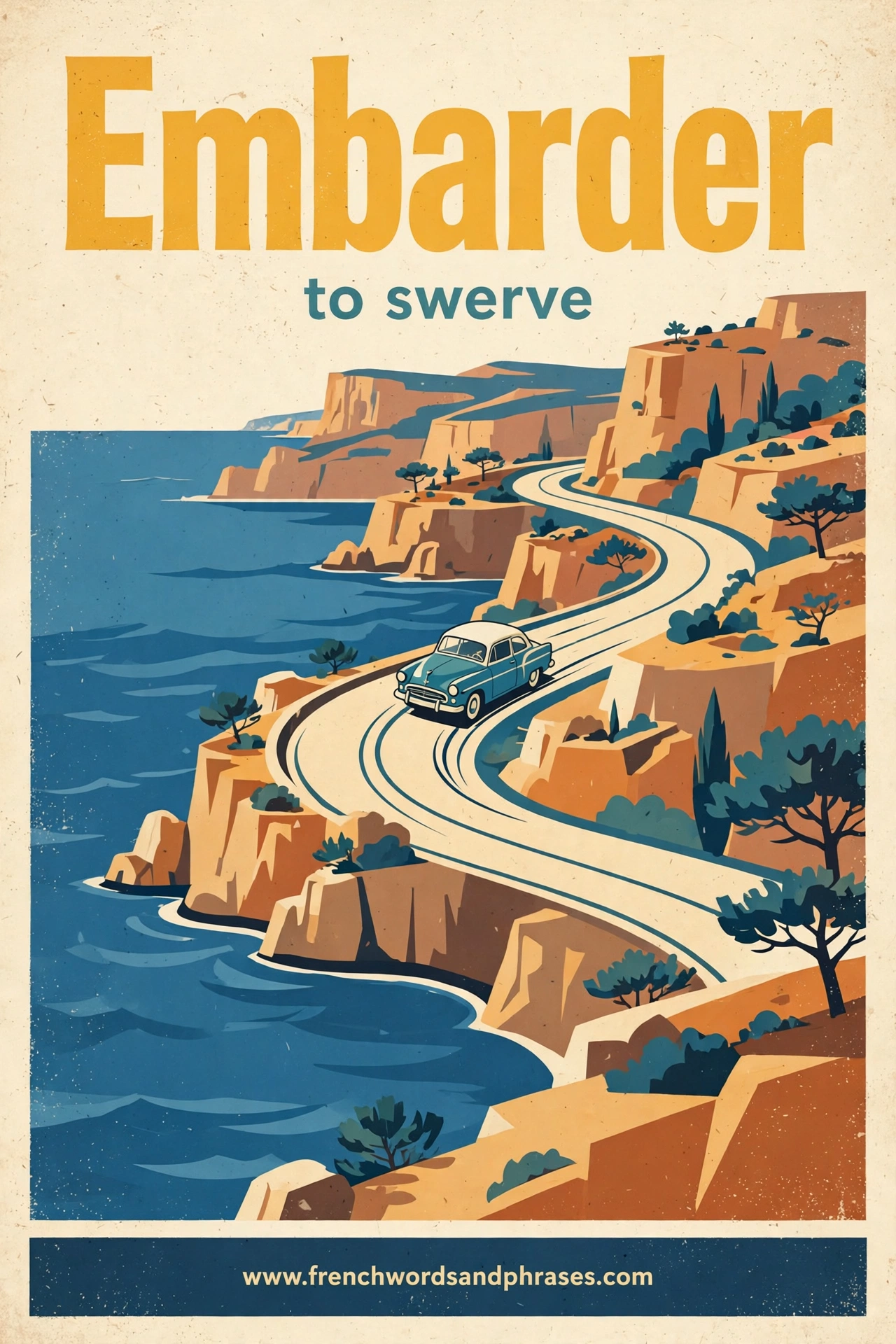
Embarder means to swerve — to lurch suddenly off course, as a boat does in a gust or a car on a wet road.
A sailing boat caught by a sudden gust, a trailer beginning to swing behind a car, a lorry veering on black ice — embarder is the verb of the sudden sideways lurch: one moment the course is straight, the next everything has swung off line.
In this guide, you’ll learn how to conjugate embarder in all the major French tenses and moods. Explore complete conjugation tables, French examples, English translations, and practice quizzes.
Understanding the French Verb Embarder
Embarder is a regular French verb belonging to the first group of verbs, those ending in-er.
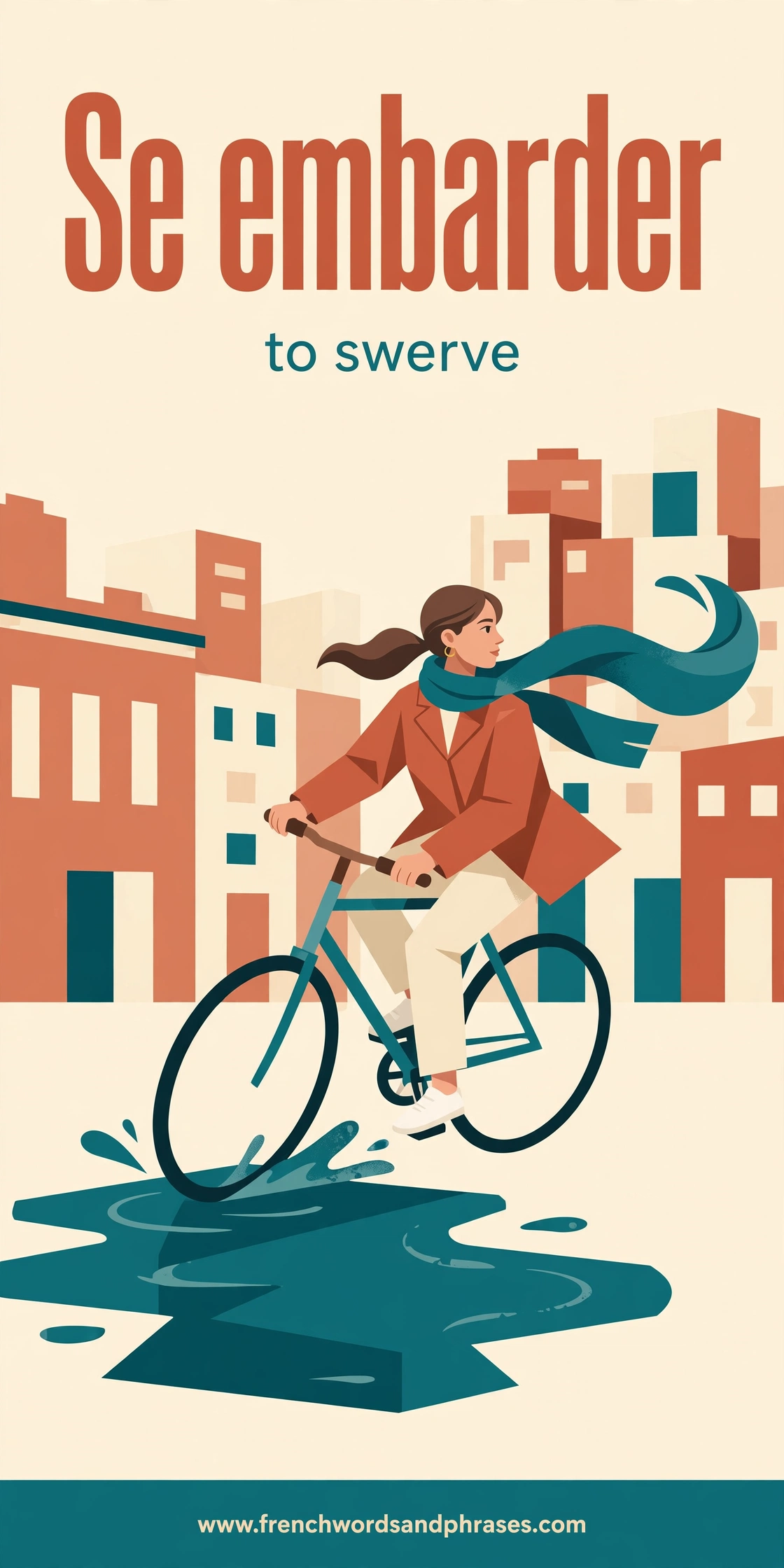
It means to swerve. It is used of boats swinging off course in gusts and cross-currents, and on land of cars, lorries, trailers and bicycles that swerve or lurch sideways — on ice, in wind or after a burst tyre. The swerve is sudden and uncontrolled: an embarder is never a deliberate turn.
Verb classification: First group (-er)
Auxiliary verb: Avoir
Past participle: embardé
Present participle: embardant
English equivalents: To swerve, to lurch, to yaw; le bateau embarde — the boat sheers off course; la voiture a embardé — the car swerved; faire une embardée — to make a swerve, to lurch sideways; embarder sur le verglas — to skid sideways on black ice.
One important detail: embarder is a sailor’s word before it is a driver’s — at sea it means to sheer or yaw, to swing away from the set course under wind or wave, and the noun une embardée is the lurch itself. On the road the same word describes the car or trailer that suddenly swings sideways. The verb itself is a perfectly regular -er: le bateau embarde, nous embardons, and it always takes avoir, even at sea: le voilier a embardé.
Experience the Word
Embarder is the verb of the course betrayed — the wheel is straight, the road is straight, and yet the machine swings sideways.
Imagine a small yacht crossing a harbour mouth. A gust drops off the hill, the sail cracks like a whip, and the boat embarks on a swing of its own — elle embarde, nose turning away from the wind, while the helmsman hauls on the tiller to drag her back.
Nothing was steered or chosen. The boat has swerved — embardé, thrown sideways by the wind itself.
How to Conjugate Embarder: Complete French Conjugation Guide
Let’s explore every major conjugation of embarder, beginning with the indicative mood.
How to Conjugate Embarder in the Indicative Mood
The indicative mood is used to express facts, observations, actions, and events.
How to Conjugate Embarder in the Present Tense (Présent)
Used for actions happening now, habitual actions, and general truths.
| Subject | Conjugation |
|---|---|
| je | embarde |
| tu | embardes |
| il / elle | embarde |
| nous | embardons |
| vous | embardez |
| ils / elles | embardent |
Example
Sous la rafale, le voilier embarde vers la gauche.
Under the gust, the sailing boat swerves to the left.
Quick Quiz 1
Complete the sentence:
Par gros temps, les bateaux ______ près des rochers.
Reveal the answer
embardent
Par gros temps, les bateaux embardent près des rochers.
In heavy weather, boats swerve near the rocks.
How to Conjugate Embarder in the Passé Composé
Used for completed actions in the past. Embarder takes the auxiliary verb avoir.
| Subject | Conjugation |
|---|---|
| j’ | ai embardé |
| tu | as embardé |
| il / elle | a embardé |
| nous | avons embardé |
| vous | avez embardé |
| ils / elles | ont embardé |
Example
La voiture a embardé sur la route mouillée.
The car swerved on the wet road.
How to Conjugate Embarder in the Imparfait (Imperfect Tense)
Used for habitual past actions, descriptions, and ongoing situations in the past.
| Subject | Conjugation |
|---|---|
| je | embardais |
| tu | embardais |
| il / elle | embardait |
| nous | embardions |
| vous | embardiez |
| ils / elles | embardaient |
Example
À chaque vague, la barque embardait dangereusement.
With every wave, the boat used to lurch dangerously.
Quick Quiz 2
Choose the correct form:
The car swerved on the ice.
La voiture ______ sur la glace. (a embardé / est embardée)
Reveal the answer
a embardé
La voiture a embardé sur la glace.
Embarder takes avoir.
How to Conjugate Embarder in the Plus-que-parfait
Used to describe an action that had already been completed before another past event.
| Subject | Conjugation |
|---|---|
| j’ | avais embardé |
| tu | avais embardé |
| il / elle | avait embardé |
| nous | avions embardé |
| vous | aviez embardé |
| ils / elles | avaient embardé |
Example
Le camion avait embardé avant de finir dans le fossé.
The lorry had swerved before ending up in the ditch.
How to Conjugate Embarder in the Passé Simple
Primarily used in formal writing, literature, and historical narratives. It is rarely used in everyday conversation.
| Subject | Conjugation |
|---|---|
| je | embardai |
| tu | embardas |
| il / elle | embarda |
| nous | embardâmes |
| vous | embardâtes |
| ils / elles | embardèrent |
Example
Le navire embarda sous le vent et perdit son cap.
The ship yawed in the wind and lost its course.
How to Conjugate Embarder in the Passé Antérieur
A literary tense used to express an action completed immediately before another past action, generally in the passé simple.
| Subject | Conjugation |
|---|---|
| j’ | eus embardé |
| tu | eus embardé |
| il / elle | eut embardé |
| nous | eûmes embardé |
| vous | eûtes embardé |
| ils / elles | eurent embardé |
Example
Quand le bateau eut embardé, le capitaine reprit la barre.
When the boat had swerved, the captain took the helm again.
How to Conjugate Embarder in the Future Tense (Futur Simple)
Used to describe actions that will take place in the future.
| Subject | Conjugation |
|---|---|
| je | embarderai |
| tu | embarderas |
| il / elle | embardera |
| nous | embarderons |
| vous | embarderez |
| ils / elles | embarderont |
Example
Si le vent tourne, le bateau embardera.
If the wind shifts, the boat will swerve.
How to Conjugate Embarder in the Futur Antérieur (Future Perfect)
Used for an action that will have been completed before a particular point in the future.
| Subject | Conjugation |
|---|---|
| j’ | aurai embardé |
| tu | auras embardé |
| il / elle | aura embardé |
| nous | aurons embardé |
| vous | aurez embardé |
| ils / elles | auront embardé |
Example
Le voilier aura embardé trois fois avant le port.
The yacht will have swerved three times before the harbour.
How to Conjugate Embarder in the Near Future (Futur Proche)
Used to describe something that is going to happen soon. Formed with aller + infinitive.
| Subject | Conjugation |
|---|---|
| je | vais embarder |
| tu | vas embarder |
| il / elle | va embarder |
| nous | allons embarder |
| vous | allez embarder |
| ils / elles | vont embarder |
Example
Attention, la remorque va embarder !
Watch out, the trailer is going to sway!
How to Conjugate Embarder in the Conditional Mood
The conditional mood expresses what would happen under certain circumstances. It is also frequently used to make polite requests or express wishes.
How to Conjugate Embarder in the Present Conditional
| Subject | Conjugation |
|---|---|
| je | embarderais |
| tu | embarderais |
| il / elle | embarderait |
| nous | embarderions |
| vous | embarderiez |
| ils / elles | embarderaient |
Example
Avec moins de voile, le bateau embarderait moins.
With less sail, the boat would lurch less.
How to Conjugate Embarder in the Past Conditional
| Subject | Conjugation |
|---|---|
| j’ | aurais embardé |
| tu | aurais embardé |
| il / elle | aurait embardé |
| nous | aurions embardé |
| vous | auriez embardé |
| ils / elles | auraient embardé |
Example
La voiture aurait embardé même à faible vitesse.
The car would have swerved even at low speed.
Embarder in the Literary Past Conditional Form
This less common literary form uses the imperfect subjunctive of avoir.
| Subject | Conjugation |
|---|---|
| j’ | eusse embardé |
| tu | eusses embardé |
| il / elle | eût embardé |
| nous | eussions embardé |
| vous | eussiez embardé |
| ils / elles | eussent embardé |
Example
Le navire eût embardé sans son lest.
The ship would have yawed without its ballast.
How to Conjugate Embarder in the Subjunctive Mood
The subjunctive is used to express wishes, emotions, doubts, necessity, and uncertainty. It frequently follows expressions such as il faut que (it is necessary that) or bien que (although).
How to Conjugate Embarder in the Present Subjunctive
| Subject | Conjugation |
|---|---|
| que je | embarde |
| que tu | embardes |
| qu’il / qu’elle | embarde |
| que nous | embardions |
| que vous | embardiez |
| qu’ils / qu’elles | embardent |
Example
Il est possible que le bateau embarde par gros temps.
It is possible the boat may swerve in heavy weather.
Quick Quiz 3
Complete the sentence using the subjunctive:
Il est possible que la remorque ______ derrière la voiture.
Reveal the answer
embarde
Il est possible que la remorque embarde derrière la voiture.
It is possible the trailer may sway behind the car.
How to Conjugate Embarder in the Imperfect Subjunctive
A literary tense, rarely encountered in modern spoken French.
| Subject | Conjugation |
|---|---|
| que je | embardasse |
| que tu | embardasses |
| qu’il / qu’elle | embardât |
| que nous | embardassions |
| que vous | embardassiez |
| qu’ils / qu’elles | embardassent |
Example
Le capitaine craignait que le navire embardât dans le chenal.
The captain feared the ship might sheer off in the channel.
How to Conjugate Embarder in the Pluperfect Subjunctive
A literary construction used to express an action completed before another past action.
| Subject | Conjugation |
|---|---|
| que j’ | eusse embardé |
| que tu | eusses embardé |
| qu’il / qu’elle | eût embardé |
| que nous | eussions embardé |
| que vous | eussiez embardé |
| qu’ils / qu’elles | eussent embardé |
Example
On racontait que le voilier eût embardé près des rochers.
People said the yacht had swerved near the rocks.
How to Conjugate Embarder in the Past Subjunctive
| Subject | Conjugation |
|---|---|
| que j’ | aie embardé |
| que tu | aies embardé |
| qu’il / qu’elle | ait embardé |
| que nous | ayons embardé |
| que vous | ayez embardé |
| qu’ils / qu’elles | aient embardé |
Example
Je suis surpris que la voiture ait embardé sur une route si droite.
I am surprised the car swerved on such a straight road.
How to Conjugate Embarder in the Imperative
The imperative is used to give commands, instructions, invitations, or suggestions. Subject pronouns are omitted.
How to Conjugate Embarder in the Present Imperative
| Person | Conjugation |
|---|---|
| (tu) | embarde |
| (nous) | embardons |
| (vous) | embardez |
Example
N’embarde pas sur le verglas !
Do not swerve on the black ice!
Quick Quiz 4
How would you say Do not swerve on the black ice (tu form)?
Reveal the answer
N’embarde pas sur le verglas !
French Participles of Embarder
Participles are verb forms that can be used in compound tenses and other grammatical constructions.
Present Participle of Embarder
embardant
En embardant, la barque a failli toucher le quai.
As it swerved, the boat nearly hit the quay.
Past Participle of Embarder
embardé
Embardée par le vent, la barque s’est couchée sur le flanc.
Thrown off course by the wind, the boat heeled over on its side.
Embarder in Everyday French: Real-Life Examples
Now that you know the conjugations, let’s see how embarder appears in everyday French.
Example 1 — Present
Sous la rafale, le voilier embarde.
Under the gust, the yacht swerves.
Example 2 — Passé composé
La voiture a embardé sur la route mouillée.
The car swerved on the wet road.
Example 3 — Imparfait
La barque embardait à chaque vague.
The boat used to lurch with every wave.
Example 4 — Future
Si le vent tourne, le bateau embardera.
If the wind shifts, the boat will swerve.
Example 5 — Conditional
Avec moins de voile, il embarderait moins.
With less sail, it would lurch less.
Example 6 — Imperative
N’embarde pas sur le verglas !
Do not swerve on the black ice!
Beyond Translation: The Meaning of Embarder
English swerve is broader and commoner; French embarder keeps the smell of salt water — it belongs first to boats, and its noun une embardée is the word French drivers and journalists reach for when a vehicle lurches across the road.
An embardée is a course broken sideways.
Sailors feared it near rocks, drivers fear it on ice: in both worlds the word says that for one frightening second, the machine, not the human, chose the direction.
How to Remember the French Verb Embarder
Remember it this way: Embarder is about the yacht caught by a gust, swinging sideways off its course.
- A sailor’s word first: le bateau embarde — the boat sheers off course; then any vehicle that lurches sideways.
- Its noun is une embardée, the swerve itself: faire une embardée.
- Regular -er, always with avoir: il embarde, nous embardons, past participle embardé.
The key idea is the yacht caught by a gust, swinging sideways off its course.
Test Your Knowledge of Embarder
Let’s see how much you’ve learned. Try answering these questions before revealing the answers.
Question 1
Which world does embarder come from, and what is its noun?
Reveal the answer
The sea — a boat sheering off course; its noun is une embardée, the swerve itself.
Question 2
How do you say The car swerved on the wet road in French?
Reveal the answer
La voiture a embardé sur la route mouillée.
Question 3
Translate: Under the gust, the sailing boat swerves to the left.
Reveal the answer
Sous la rafale, le voilier embarde vers la gauche.
Question 4
What is the past participle of embarder?
Reveal the answer
Embardé.
Question 5
Complete the sentence:
Il est possible que le bateau ______ par gros temps.
Reveal the answer
embarde
Il est possible que le bateau embarde par gros temps.
It is possible the boat may swerve in heavy weather.
Your Final Challenge
Can You Use It?
How would you say this in French?
The yacht swerves under the gust, then the helmsman brings it back into the wind.
Reveal the answer
Le voilier embarde sous la rafale, puis le barreur le remet dans le vent.
The yacht swerves under the gust, then the helmsman brings it back into the wind.
A little French. A little curiosity. A richer everyday life.
LEARN FRENCH ONE WORD AT A TIME