A French Word to Live By
How to Conjugate Élancer in French
/e.lɑ̃.se/
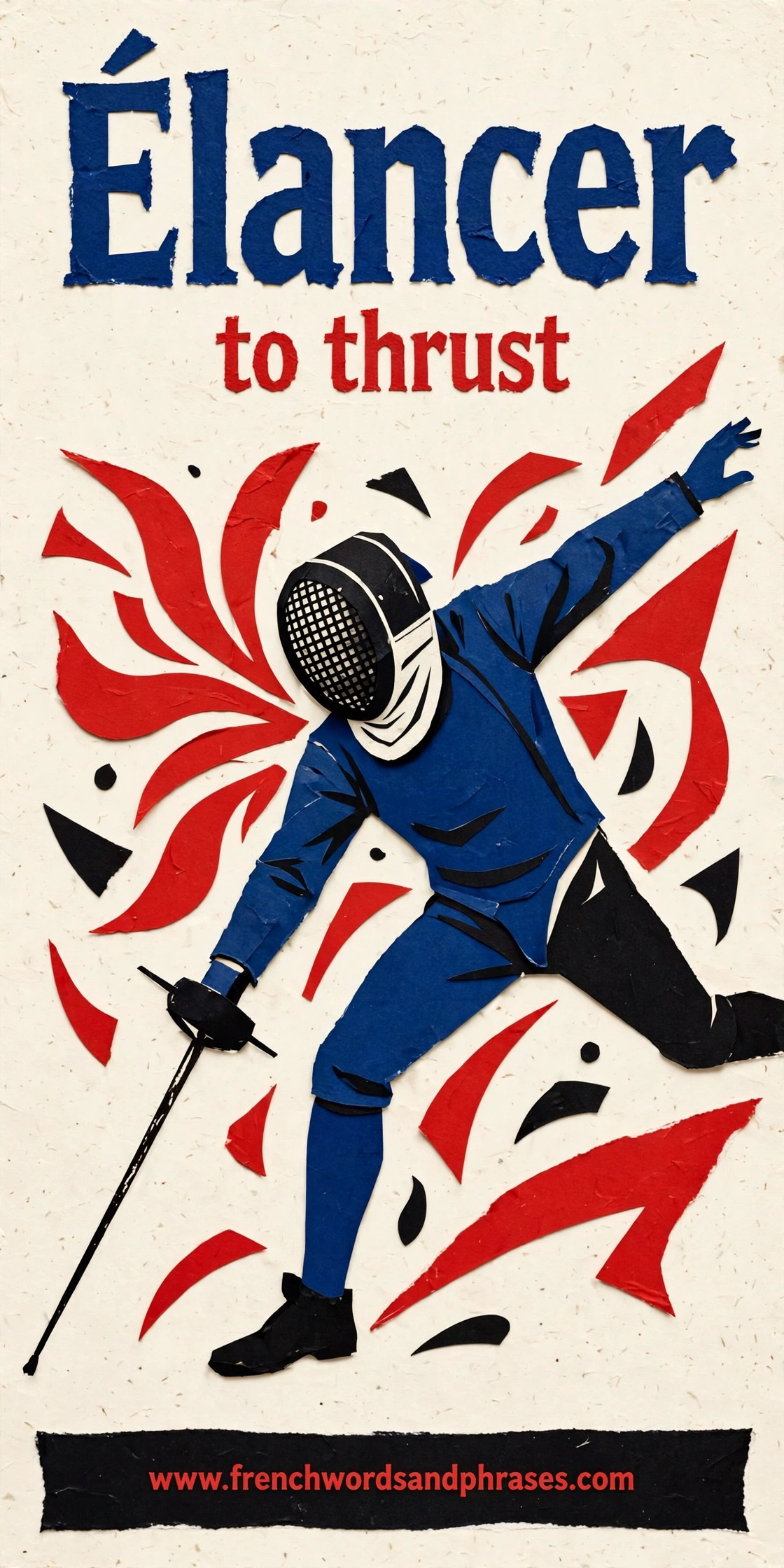
Élancer means to thrust — to hurl or drive something forward in one swift movement, a lance, an arm, a jet of water; it is also the verb of a pain that shoots through you.
A knight levelling his lance, a fountain throwing its jet into the air, a tooth sending a sudden stab through your jaw — élancer is the verb of the sudden forward thrust: of weapons, of water, and of pain itself.
In this guide, you’ll learn how to conjugate élancer in all the major French tenses and moods. Explore complete conjugation tables, French examples, English translations, and practice quizzes.
Understanding the French Verb Élancer
Élancer is a regular French verb belonging to the first group of verbs, those ending in-er.
It means to thrust. The thrusting sense lives in literature, fencing and fountains; the pain sense is pure everyday French, heard in every dentist’s waiting room: ça élance is what a tooth, a finger or a knee does when pain shoots through it in waves. Between the two stands the family word élan — a rush, a surge, momentum — the noun of the same forward leap.
Verb classification: First group (-er)
Auxiliary verb: Avoir
Past participle: élancé
Present participle: élançant
English equivalents: To thrust, to hurl, to shoot out; élancer une lance — to thrust a lance; élancer un jet d’eau — to shoot out a jet of water; ça élance, mon doigt élance — it throbs, my finger is throbbing (of shooting pain); un élancement — a shooting pain, a twinge.
One important detail: élancer is a -cer verb, so the c becomes ç whenever an a or an o follows, to keep it soft: nous élançons, j’élançais, j’élançai, but j’élance, ils élancent with a plain c. The second detail is its double life: transitive, it thrusts a lance or a jet of water; intransitive, with no object at all, it is the standard verb for shooting pain — ça élance, ma dent élance — and its noun is un élancement, a twinge. The reflexive, s’élancer, has its own page.
Experience the Word
Élancer is the verb of the sudden forward movement — of the lance, the fountain, and the pain that shoots.
Imagine a medieval tournament at the moment of the charge. Two riders, two lances levelled — chacun élance sa lance — and in the same instant, in the crowd, a spectator’s bad tooth chooses that very second to élancer too: one sharp stab, gone, then again. The same verb carries the lance and the twinge, the glory and the dentist.
Weapon or toothache, the movement is one. Something has thrust forward — élancé — swift and sharp.
How to Conjugate Élancer: Complete French Conjugation Guide
Let’s explore every major conjugation of élancer, beginning with the indicative mood.
How to Conjugate Élancer in the Indicative Mood
The indicative mood is used to express facts, observations, actions, and events.
How to Conjugate Élancer in the Present Tense (Présent)
Used for actions happening now, habitual actions, and general truths.
| Subject | Conjugation |
|---|---|
| je | élance |
| tu | élances |
| il / elle | élance |
| nous | élançons |
| vous | élancez |
| ils / elles | élancent |
Example
Le chevalier élance sa lance vers son adversaire.
The knight thrusts his lance towards his opponent.
Quick Quiz 1
Complete the sentence:
Nous ______ nos lances au signal.
Reveal the answer
élançons
Nous élançons nos lances au signal.
We thrust our lances at the signal.
How to Conjugate Élancer in the Passé Composé
Used for completed actions in the past. Élancer takes the auxiliary verb avoir.
| Subject | Conjugation |
|---|---|
| j’ | ai élancé |
| tu | as élancé |
| il / elle | a élancé |
| nous | avons élancé |
| vous | avez élancé |
| ils / elles | ont élancé |
Example
La fontaine a élancé son jet plus haut que jamais.
The fountain shot its jet higher than ever.
How to Conjugate Élancer in the Imparfait (Imperfect Tense)
Used for habitual past actions, descriptions, and ongoing situations in the past.
| Subject | Conjugation |
|---|---|
| je | élançais |
| tu | élançais |
| il / elle | élançait |
| nous | élancions |
| vous | élanciez |
| ils / elles | élançaient |
Example
Ma dent élançait toute la nuit.
My tooth was throbbing all night.
Quick Quiz 2
Choose the correct form:
My tooth was throbbing.
Ma dent ______. (élançait / élançais)
Reveal the answer
élançait
Ma dent élançait.
Third person, with the cedilla before the a of the ending.
How to Conjugate Élancer in the Plus-que-parfait
Used to describe an action that had already been completed before another past event.
| Subject | Conjugation |
|---|---|
| j’ | avais élancé |
| tu | avais élancé |
| il / elle | avait élancé |
| nous | avions élancé |
| vous | aviez élancé |
| ils / elles | avaient élancé |
Example
Il avait élancé le javelot avant le signal.
He had hurled the javelin before the signal.
How to Conjugate Élancer in the Passé Simple
Primarily used in formal writing, literature, and historical narratives. It is rarely used in everyday conversation.
| Subject | Conjugation |
|---|---|
| je | élançai |
| tu | élanças |
| il / elle | élança |
| nous | élançâmes |
| vous | élançâtes |
| ils / elles | élancèrent |
Example
Le soldat élança sa pique et chargea.
The soldier thrust his pike and charged.
How to Conjugate Élancer in the Passé Antérieur
A literary tense used to express an action completed immediately before another past action, generally in the passé simple.
| Subject | Conjugation |
|---|---|
| j’ | eus élancé |
| tu | eus élancé |
| il / elle | eut élancé |
| nous | eûmes élancé |
| vous | eûtes élancé |
| ils / elles | eurent élancé |
Example
Quand la source eut élancé son premier jet, les enfants crièrent.
When the spring had shot out its first jet, the children shouted.
How to Conjugate Élancer in the Future Tense (Futur Simple)
Used to describe actions that will take place in the future.
| Subject | Conjugation |
|---|---|
| je | élancerai |
| tu | élanceras |
| il / elle | élancera |
| nous | élancerons |
| vous | élancerez |
| ils / elles | élanceront |
Example
Demain, ma dent élancera peut-être encore.
Tomorrow, my tooth may throb again.
How to Conjugate Élancer in the Futur Antérieur (Future Perfect)
Used for an action that will have been completed before a particular point in the future.
| Subject | Conjugation |
|---|---|
| j’ | aurai élancé |
| tu | auras élancé |
| il / elle | aura élancé |
| nous | aurons élancé |
| vous | aurez élancé |
| ils / elles | auront élancé |
Example
À la fin du combat, il aura élancé sa lance dix fois.
By the end of the fight, he will have thrust his lance ten times.
How to Conjugate Élancer in the Near Future (Futur Proche)
Used to describe something that is going to happen soon. Formed with aller + infinitive.
| Subject | Conjugation |
|---|---|
| je | vais élancer |
| tu | vas élancer |
| il / elle | va élancer |
| nous | allons élancer |
| vous | allez élancer |
| ils / elles | vont élancer |
Example
Attention, ça va élancer quand le froid touchera la dent.
Careful, it is going to shoot with pain when the cold touches the tooth.
How to Conjugate Élancer in the Conditional Mood
The conditional mood expresses what would happen under certain circumstances. It is also frequently used to make polite requests or express wishes.
How to Conjugate Élancer in the Present Conditional
| Subject | Conjugation |
|---|---|
| je | élancerais |
| tu | élancerais |
| il / elle | élancerait |
| nous | élancerions |
| vous | élanceriez |
| ils / elles | élanceraient |
Example
Sans sa blessure, il élancerait le javelot plus loin.
Without his injury, he would hurl the javelin further.
How to Conjugate Élancer in the Past Conditional
| Subject | Conjugation |
|---|---|
| j’ | aurais élancé |
| tu | aurais élancé |
| il / elle | aurait élancé |
| nous | aurions élancé |
| vous | auriez élancé |
| ils / elles | auraient élancé |
Example
Elle aurait élancé la lance si l’arbitre l’avait permis.
She would have thrust the lance if the referee had allowed it.
Élancer in the Literary Past Conditional Form
This less common literary form uses the imperfect subjunctive of avoir.
| Subject | Conjugation |
|---|---|
| j’ | eusse élancé |
| tu | eusses élancé |
| il / elle | eût élancé |
| nous | eussions élancé |
| vous | eussiez élancé |
| ils / elles | eussent élancé |
Example
Le chevalier eût élancé sa lance sans l’ordre du roi.
The knight would have thrust his lance without the king’s order.
How to Conjugate Élancer in the Subjunctive Mood
The subjunctive is used to express wishes, emotions, doubts, necessity, and uncertainty. It frequently follows expressions such as il faut que (it is necessary that) or bien que (although).
How to Conjugate Élancer in the Present Subjunctive
| Subject | Conjugation |
|---|---|
| que je | élance |
| que tu | élances |
| qu’il / qu’elle | élance |
| que nous | élancions |
| que vous | élanciez |
| qu’ils / qu’elles | élancent |
Example
Il faut que le jet élance plus haut pour la fête.
The jet must shoot higher for the festival.
Quick Quiz 3
Complete the sentence using the subjunctive:
Il faut que le jet ______ plus haut.
Reveal the answer
élance
Il faut que le jet élance plus haut.
The jet must shoot higher.
How to Conjugate Élancer in the Imperfect Subjunctive
A literary tense, rarely encountered in modern spoken French.
| Subject | Conjugation |
|---|---|
| que je | élancasse |
| que tu | élancasses |
| qu’il / qu’elle | élancât |
| que nous | élancassions |
| que vous | élancassiez |
| qu’ils / qu’elles | élancassent |
Example
Elle craignait que sa dent élançât pendant le voyage.
She feared her tooth might throb during the journey.
How to Conjugate Élancer in the Pluperfect Subjunctive
A literary construction used to express an action completed before another past action.
| Subject | Conjugation |
|---|---|
| que j’ | eusse élancé |
| que tu | eusses élancé |
| qu’il / qu’elle | eût élancé |
| que nous | eussions élancé |
| que vous | eussiez élancé |
| qu’ils / qu’elles | eussent élancé |
Example
On racontait que le soldat eût élancé sa pique le premier.
People said the soldier had thrust his pike first.
How to Conjugate Élancer in the Past Subjunctive
| Subject | Conjugation |
|---|---|
| que j’ | aie élancé |
| que tu | aies élancé |
| qu’il / qu’elle | ait élancé |
| que nous | ayons élancé |
| que vous | ayez élancé |
| qu’ils / qu’elles | aient élancé |
Example
Je suis content que la fontaine ait élancé son jet pour les invités.
I am glad the fountain shot out its jet for the guests.
How to Conjugate Élancer in the Imperative
The imperative is used to give commands, instructions, invitations, or suggestions. Subject pronouns are omitted.
How to Conjugate Élancer in the Present Imperative
| Person | Conjugation |
|---|---|
| (tu) | élance |
| (nous) | élançons |
| (vous) | élancez |
Example
Élancez vos lances au signal !
Thrust your lances at the signal!
Quick Quiz 4
How would you say Thrust your lance (tu form)?
Reveal the answer
Élance ta lance !
French Participles of Élancer
Participles are verb forms that can be used in compound tenses and other grammatical constructions.
Present Participle of Élancer
élançant
En élançant son jet, la fontaine arrose les passants.
By shooting out its jet, the fountain sprinkles the passers-by.
Past Participle of Élancer
élancé
Élancée par le bras du soldat, la lance a traversé le bouclier.
Thrust by the soldier’s arm, the lance went through the shield.
Élancer in Everyday French: Real-Life Examples
Now that you know the conjugations, let’s see how élancer appears in everyday French.
Example 1 — Present
Ça élance, ma dent me fait mal.
It is throbbing, my tooth hurts.
Example 2 — Passé composé
La fontaine a élancé son jet très haut.
The fountain shot its jet very high.
Example 3 — Imparfait
Mon doigt élançait après le coup de marteau.
My finger was throbbing after the hammer blow.
Example 4 — Future
Le jet élancera plus haut pour la fête.
The jet will shoot higher for the festival.
Example 5 — Conditional
Il élancerait le javelot plus loin sans sa blessure.
He would hurl the javelin further without his injury.
Example 6 — Imperative
Élance ta lance au signal !
Thrust your lance at the signal!
Beyond Translation: The Meaning of Élancer
English lance is hiding inside this verb — élancer is what you do with a lance, and the family noun élan has even travelled into English as a word for dash and spirit.
From the lance to the toothache, one sharp movement.
French kept the verb for everything that shoots forward suddenly: a weapon, a jet of water, a stab of pain. When your tooth throbs in waves, ça élance — the pain is charging, lance levelled, inside your jaw.
How to Remember the French Verb Élancer
Remember it this way: Élancer is about the knight’s lance — and the tooth that charges with the same verb.
- -cer spelling: ç before a and o — nous élançons, j’élançais — plain c elsewhere: j’élance.
- Two lives: transitive thrusting (élancer une lance) and the pain verb — ça élance, ma dent élance.
- Its noun is un élancement, a shooting pain; its famous cousin is élan, momentum.
The key idea is the knight’s lance — and the tooth that charges with the same verb.
Test Your Knowledge of Élancer
Let’s see how much you’ve learned. Try answering these questions before revealing the answers.
Question 1
Why does nous élançons have a cedilla but j’élance does not?
Reveal the answer
The -cer rule — c becomes ç before a or o to stay soft: nous élançons, j’élançais; before e it stays plain: j’élance.
Question 2
How do you say My tooth was throbbing all night in French?
Reveal the answer
Ma dent élançait toute la nuit.
Question 3
Translate: The fountain shot its jet very high.
Reveal the answer
La fontaine a élancé son jet très haut.
Question 4
What is the past participle of élancer?
Reveal the answer
Élancé.
Question 5
Complete the sentence:
Elle craignait que sa dent ______ pendant le voyage.
Reveal the answer
élançât
Elle craignait que sa dent élançât pendant le voyage.
She feared her tooth might throb during the journey.
Your Final Challenge
Can You Use It?
How would you say this in French?
The fountain shoots its jet into the morning sun, and even the pigeons come to watch.
Reveal the answer
La fontaine élance son jet dans le soleil du matin, et même les pigeons viennent regarder.
The fountain shoots its jet into the morning sun, and even the pigeons come to watch.
A little French. A little curiosity. A richer everyday life.
LEARN FRENCH ONE WORD AT A TIME