A French Word to Live By
How to Conjugate Égratigner in French
/e.ɡʁa.ti.ɲe/
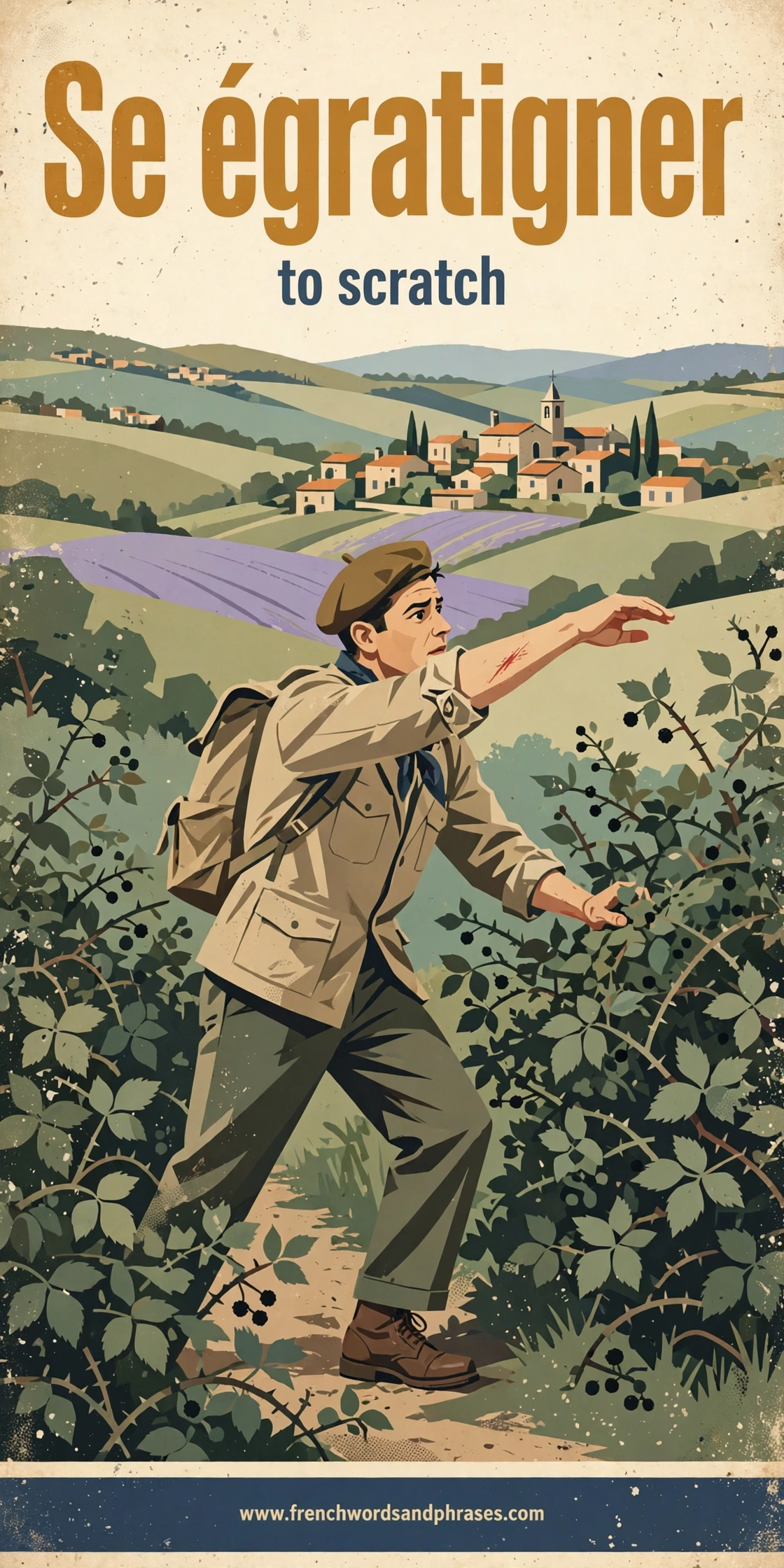
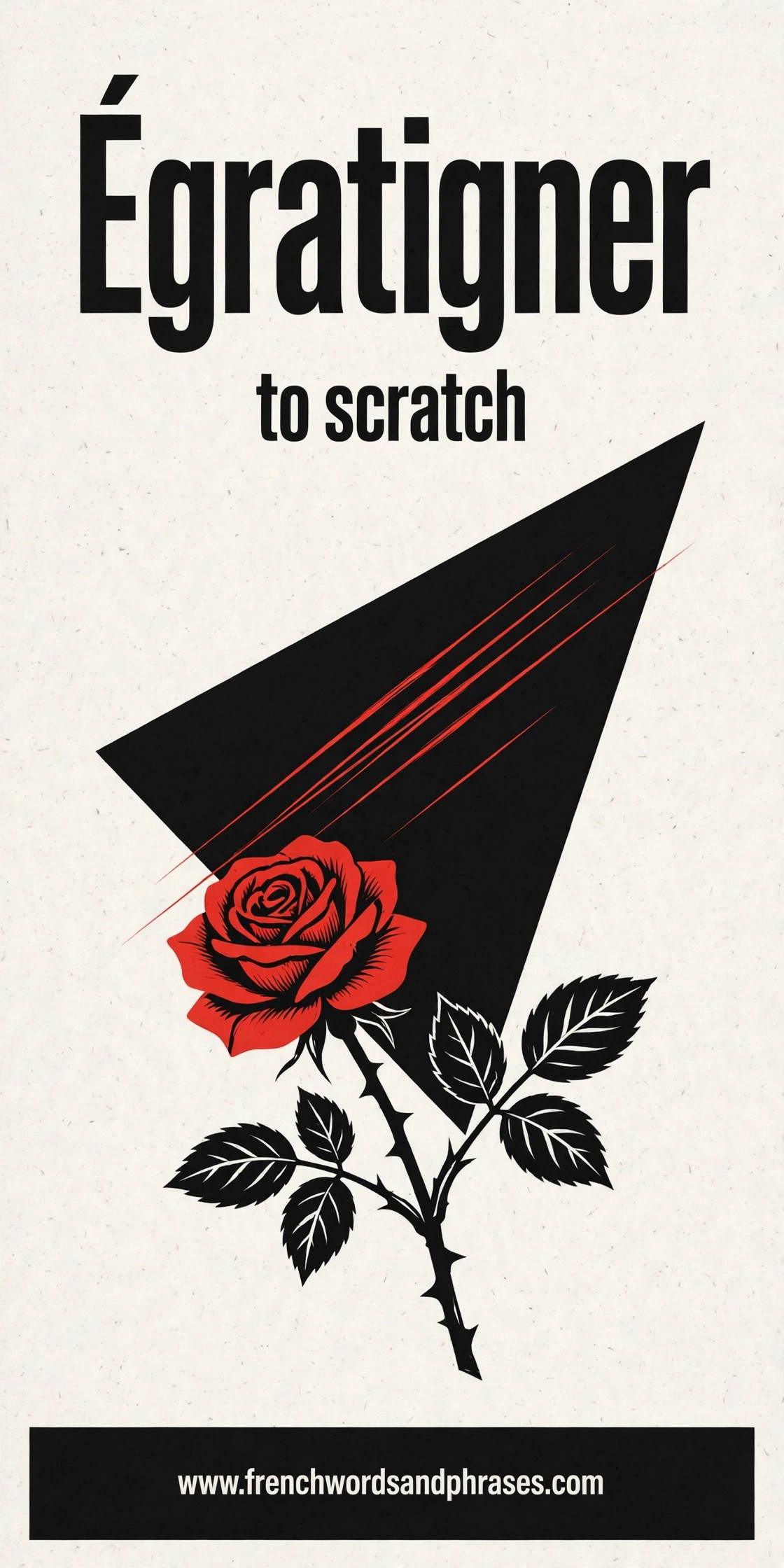
Égratigner means to scratch — to graze a surface lightly, leaving a thin red line on skin or a fine mark on wood, never a deep wound.
Brambles along a country path, a cat’s claw catching a hand, a ring scraping a polished table — égratigner is the verb of the small, sharp accident: the skin is barely broken, the surface barely marked, but the thin line stings and stays.
In this guide, you’ll learn how to conjugate égratigner in all the major French tenses and moods. Explore complete conjugation tables, French examples, English translations, and practice quizzes.
Understanding the French Verb Égratigner
Égratigner is a regular French verb belonging to the first group of verbs, those ending in-er.
It means to scratch. It is used for skin caught by thorns, claws and rough edges, for surfaces — paint, leather, car bodywork, polished wood — marked by a passing scrape, and in journalism and conversation for reputations and public figures lightly damaged by a remark.
Verb classification: First group (-er)
Auxiliary verb: Avoir
Past participle: égratigné
Present participle: égratignant
English equivalents: To scratch, to graze; égratigner la peau — to scratch the skin; une égratignure — a scratch, a graze; égratigner une réputation — to damage a reputation; égratigner quelqu’un — to take a swipe at someone.
One important detail: an égratignure is a small thing — a scratch, a graze — much less than une blessure, a wound, and less again than une griffure, a claw-mark. The verb keeps that lightness, and French uses it figuratively with the same scale: égratigner une réputation is to nick a reputation, not destroy it, and égratigner quelqu’un in an article is to take a passing swipe at them. Note the gn, sounded as in agneau: j’égratigne, nous égratignons.
Experience the Word
Égratigner is the verb of the near-miss injury — it draws a line, not blood; it warns, rather than wounds.
Imagine a blackberry picker at the end of August, sleeves rolled up, reaching deep into the hedge for the darkest fruit. The brambles protest: a thin red line on the wrist, another on the forearm. Les ronces l’ont égratignée partout — yet she would not trade her full basket for unmarked arms, and neither would you.
Nothing needs a doctor or even a plaster. She has been scratched — égratignée, lightly, by the price of blackberries.
How to Conjugate Égratigner: Complete French Conjugation Guide
Let’s explore every major conjugation of égratigner, beginning with the indicative mood.
How to Conjugate Égratigner in the Indicative Mood
The indicative mood is used to express facts, observations, actions, and events.
How to Conjugate Égratigner in the Present Tense (Présent)
Used for actions happening now, habitual actions, and general truths.
| Subject | Conjugation |
|---|---|
| je | égratigne |
| tu | égratignes |
| il / elle | égratigne |
| nous | égratignons |
| vous | égratignez |
| ils / elles | égratignent |
Example
Les ronces égratignent les jambes des promeneurs.
The brambles scratch the walkers’ legs.
Quick Quiz 1
Complete the sentence:
Les ronces ______ les jambes.
Reveal the answer
égratignent
Les ronces égratignent les jambes.
The brambles scratch your legs.
How to Conjugate Égratigner in the Passé Composé
Used for completed actions in the past. Égratigner takes the auxiliary verb avoir.
| Subject | Conjugation |
|---|---|
| j’ | ai égratigné |
| tu | as égratigné |
| il / elle | a égratigné |
| nous | avons égratigné |
| vous | avez égratigné |
| ils / elles | ont égratigné |
Example
Le chat a égratigné la main de l’enfant.
The cat scratched the child’s hand.
How to Conjugate Égratigner in the Imparfait (Imperfect Tense)
Used for habitual past actions, descriptions, and ongoing situations in the past.
| Subject | Conjugation |
|---|---|
| je | égratignais |
| tu | égratignais |
| il / elle | égratignait |
| nous | égratignions |
| vous | égratigniez |
| ils / elles | égratignaient |
Example
Les branches basses égratignaient la carrosserie.
The low branches used to scratch the car bodywork.
Quick Quiz 2
Choose the correct form:
The cat scratched the child’s hand.
Le chat ______ la main de l’enfant. (a égratigné / est égratigné)
Reveal the answer
a égratigné
Le chat a égratigné la main de l’enfant.
Égratigner takes avoir.
How to Conjugate Égratigner in the Plus-que-parfait
Used to describe an action that had already been completed before another past event.
| Subject | Conjugation |
|---|---|
| j’ | avais égratigné |
| tu | avais égratigné |
| il / elle | avait égratigné |
| nous | avions égratigné |
| vous | aviez égratigné |
| ils / elles | avaient égratigné |
Example
Elle avait égratigné la table en déplaçant le vase.
She had scratched the table while moving the vase.
How to Conjugate Égratigner in the Passé Simple
Primarily used in formal writing, literature, and historical narratives. It is rarely used in everyday conversation.
| Subject | Conjugation |
|---|---|
| je | égratignai |
| tu | égratignas |
| il / elle | égratigna |
| nous | égratignâmes |
| vous | égratignâtes |
| ils / elles | égratignèrent |
Example
Une épine égratigna son bras au passage.
A thorn scratched his arm as he passed.
How to Conjugate Égratigner in the Passé Antérieur
A literary tense used to express an action completed immediately before another past action, generally in the passé simple.
| Subject | Conjugation |
|---|---|
| j’ | eus égratigné |
| tu | eus égratigné |
| il / elle | eut égratigné |
| nous | eûmes égratigné |
| vous | eûtes égratigné |
| ils / elles | eurent égratigné |
Example
Quand le chat eut égratigné le fauteuil, on le mit dehors.
When the cat had scratched the armchair, it was put outside.
How to Conjugate Égratigner in the Future Tense (Futur Simple)
Used to describe actions that will take place in the future.
| Subject | Conjugation |
|---|---|
| je | égratignerai |
| tu | égratigneras |
| il / elle | égratignera |
| nous | égratignerons |
| vous | égratignerez |
| ils / elles | égratigneront |
Example
Ces ronces égratigneront tes jambes si tu restes en short.
These brambles will scratch your legs if you stay in shorts.
How to Conjugate Égratigner in the Futur Antérieur (Future Perfect)
Used for an action that will have been completed before a particular point in the future.
| Subject | Conjugation |
|---|---|
| j’ | aurai égratigné |
| tu | auras égratigné |
| il / elle | aura égratigné |
| nous | aurons égratigné |
| vous | aurez égratigné |
| ils / elles | auront égratigné |
Example
À la fin de la balade, les ronces auront égratigné toutes les jambes.
By the end of the walk, the brambles will have scratched everyone’s legs.
How to Conjugate Égratigner in the Near Future (Futur Proche)
Used to describe something that is going to happen soon. Formed with aller + infinitive.
| Subject | Conjugation |
|---|---|
| je | vais égratigner |
| tu | vas égratigner |
| il / elle | va égratigner |
| nous | allons égratigner |
| vous | allez égratigner |
| ils / elles | vont égratigner |
Example
Attention, ce rosier va t’égratigner les bras.
Careful, that rose bush is going to scratch your arms.
How to Conjugate Égratigner in the Conditional Mood
The conditional mood expresses what would happen under certain circumstances. It is also frequently used to make polite requests or express wishes.
How to Conjugate Égratigner in the Present Conditional
| Subject | Conjugation |
|---|---|
| je | égratignerais |
| tu | égratignerais |
| il / elle | égratignerait |
| nous | égratignerions |
| vous | égratigneriez |
| ils / elles | égratigneraient |
Example
Sans manches longues, les ronces nous égratigneraient partout.
Without long sleeves, the brambles would scratch us all over.
How to Conjugate Égratigner in the Past Conditional
| Subject | Conjugation |
|---|---|
| j’ | aurais égratigné |
| tu | aurais égratigné |
| il / elle | aurait égratigné |
| nous | aurions égratigné |
| vous | auriez égratigné |
| ils / elles | auraient égratigné |
Example
Le chat aurait égratigné le canapé si on l’avait laissé seul.
The cat would have scratched the sofa if it had been left alone.
Égratigner in the Literary Past Conditional Form
This less common literary form uses the imperfect subjunctive of avoir.
| Subject | Conjugation |
|---|---|
| j’ | eusse égratigné |
| tu | eusses égratigné |
| il / elle | eût égratigné |
| nous | eussions égratigné |
| vous | eussiez égratigné |
| ils / elles | eussent égratigné |
Example
L’épine eût égratigné sa main sans les gants.
The thorn would have scratched her hand without the gloves.
How to Conjugate Égratigner in the Subjunctive Mood
The subjunctive is used to express wishes, emotions, doubts, necessity, and uncertainty. It frequently follows expressions such as il faut que (it is necessary that) or bien que (although).
How to Conjugate Égratigner in the Present Subjunctive
| Subject | Conjugation |
|---|---|
| que je | égratigne |
| que tu | égratignes |
| qu’il / qu’elle | égratigne |
| que nous | égratignions |
| que vous | égratigniez |
| qu’ils / qu’elles | égratignent |
Example
Il est possible que le chat égratigne les meubles la nuit.
The cat may scratch the furniture at night.
Quick Quiz 3
Complete the sentence using the subjunctive:
Il est possible que le chat ______ les meubles.
Reveal the answer
égratigne
Il est possible que le chat égratigne les meubles.
The cat may scratch the furniture.
How to Conjugate Égratigner in the Imperfect Subjunctive
A literary tense, rarely encountered in modern spoken French.
| Subject | Conjugation |
|---|---|
| que je | égratignasse |
| que tu | égratignasses |
| qu’il / qu’elle | égratignât |
| que nous | égratignassions |
| que vous | égratignassiez |
| qu’ils / qu’elles | égratignassent |
Example
Elle portait des gants, de peur que les ronces ne l’égratignassent.
She wore gloves for fear the brambles might scratch her.
How to Conjugate Égratigner in the Pluperfect Subjunctive
A literary construction used to express an action completed before another past action.
| Subject | Conjugation |
|---|---|
| que j’ | eusse égratigné |
| que tu | eusses égratigné |
| qu’il / qu’elle | eût égratigné |
| que nous | eussions égratigné |
| que vous | eussiez égratigné |
| qu’ils / qu’elles | eussent égratigné |
Example
On voyait que le chat eût égratigné le cuir du fauteuil.
You could see the cat had scratched the leather of the armchair.
How to Conjugate Égratigner in the Past Subjunctive
| Subject | Conjugation |
|---|---|
| que j’ | aie égratigné |
| que tu | aies égratigné |
| qu’il / qu’elle | ait égratigné |
| que nous | ayons égratigné |
| que vous | ayez égratigné |
| qu’ils / qu’elles | aient égratigné |
Example
Je suis étonné que les ronces aient égratigné la voiture.
I am surprised the brambles scratched the car.
How to Conjugate Égratigner in the Imperative
The imperative is used to give commands, instructions, invitations, or suggestions. Subject pronouns are omitted.
How to Conjugate Égratigner in the Present Imperative
| Person | Conjugation |
|---|---|
| (tu) | égratigne |
| (nous) | égratignons |
| (vous) | égratignez |
Example
N’égratigne pas la table avec ce couteau !
Do not scratch the table with that knife!
Quick Quiz 4
How would you say Do not scratch the table (tu form)?
Reveal the answer
N’égratigne pas la table !
French Participles of Égratigner
Participles are verb forms that can be used in compound tenses and other grammatical constructions.
Present Participle of Égratigner
égratignant
En égratignant la peinture, il a découvert l’ancienne couleur.
By scratching the paint, he uncovered the old colour.
Past Participle of Égratigner
égratigné
Égratignée par les ronces, la carrosserie gardait des traces fines.
Scratched by the brambles, the bodywork bore thin marks.
Égratigner in Everyday French: Real-Life Examples
Now that you know the conjugations, let’s see how égratigner appears in everyday French.
Example 1 — Present
Les ronces égratignent les jambes.
The brambles scratch your legs.
Example 2 — Passé composé
Le chat a égratigné l’enfant.
The cat scratched the child.
Example 3 — Imparfait
Les branches égratignaient la voiture.
The branches used to scratch the car.
Example 4 — Future
Ce rosier égratignera tes bras.
That rose bush will scratch your arms.
Example 5 — Conditional
Les ronces nous égratigneraient sans manches longues.
The brambles would scratch us without long sleeves.
Example 6 — Imperative
N’égratigne pas la table !
Do not scratch the table!
Beyond Translation: The Meaning of Égratigner
The verb belongs to a whole scale of French damage, and its place on the scale is the point: effleurer brushes, égratigner scratches, griffer claws, déchirer tears.
Égratigner is the politest injury in the language.
That is why critics and columnists love it: to égratigner a minister in a review is to leave a thin red line on his reputation — visible, stinging, and very far from fatal.
How to Remember the French Verb Égratigner
Remember it this way: Égratigner is about the thin red line the brambles leave on a blackberry picker’s arm.
- An égratignure is a scratch, not a wound — the verb always stays light.
- Skin, surfaces and reputations: les ronces égratignent les jambes, l’article égratigne le ministre.
- Regular -er: j’égratigne, nous égratignons, past participle égratigné.
The key idea is the thin red line the brambles leave on a blackberry picker’s arm.
Test Your Knowledge of Égratigner
Let’s see how much you’ve learned. Try answering these questions before revealing the answers.
Question 1
Which auxiliary does égratigner use?
Reveal the answer
Avoir — le chat a égratigné la main de l’enfant.
Question 2
How do you say The brambles scratch your legs in French?
Reveal the answer
Les ronces égratignent les jambes.
Question 3
Translate: The cat scratched the child’s hand.
Reveal the answer
Le chat a égratigné la main de l’enfant.
Question 4
What is the past participle of égratigner?
Reveal the answer
Égratigné.
Question 5
Complete the sentence:
Il est possible que le chat ______ les meubles la nuit.
Reveal the answer
égratigne
Il est possible que le chat égratigne les meubles la nuit.
The cat may scratch the furniture at night.
Your Final Challenge
Can You Use It?
How would you say this in French?
The brambles scratch your legs, but the blackberries at the end of the path are well worth a few scratches.
Reveal the answer
Les ronces égratignent les jambes, mais les mûres au bout du chemin valent bien quelques égratignures.
The brambles scratch your legs, but the blackberries at the end of the path are well worth a few scratches.
A little French. A little curiosity. A richer everyday life.
LEARN FRENCH ONE WORD AT A TIME