A French Word to Live By
How to Conjugate Égaliser in French
/e.ɡa.li.ze/
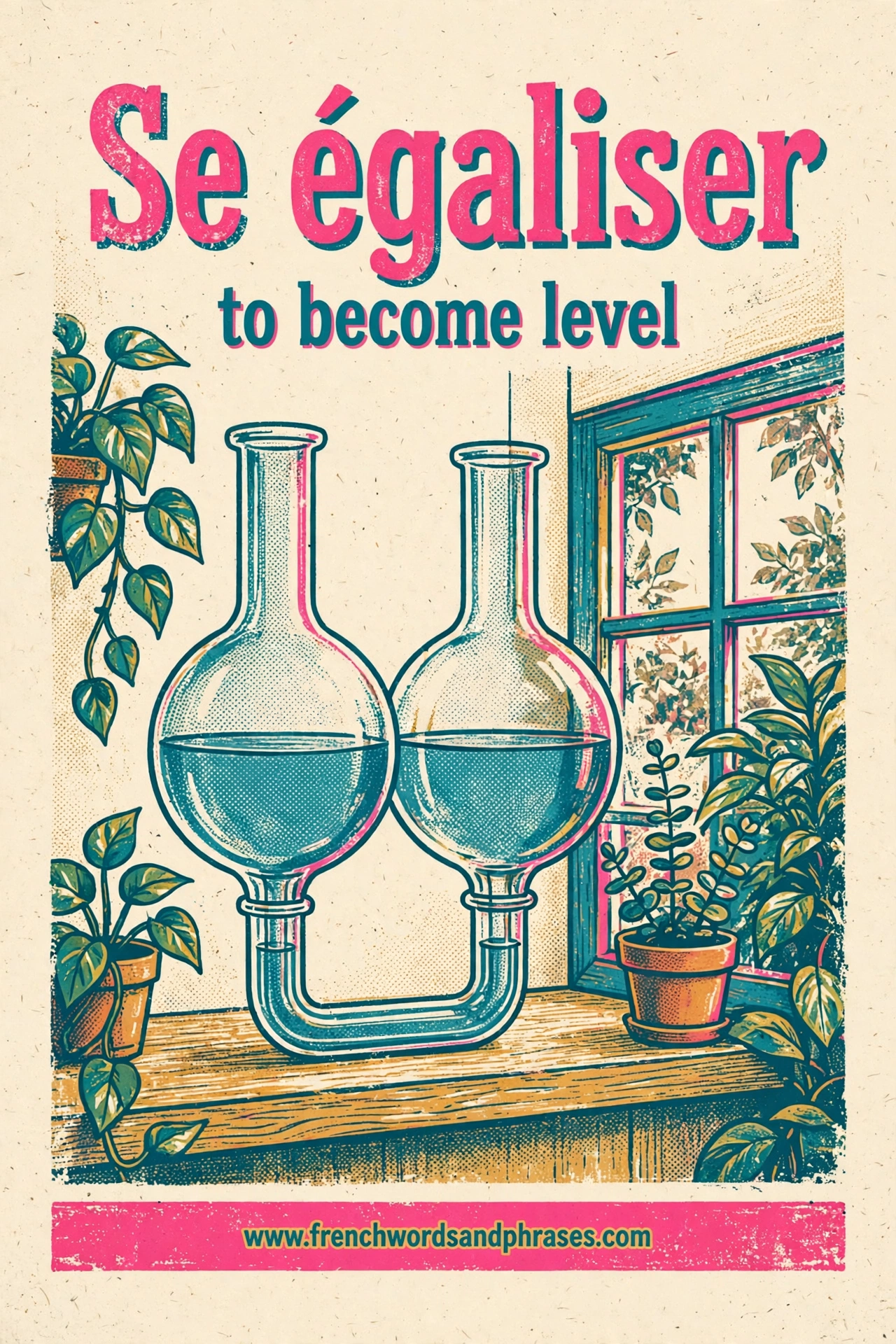
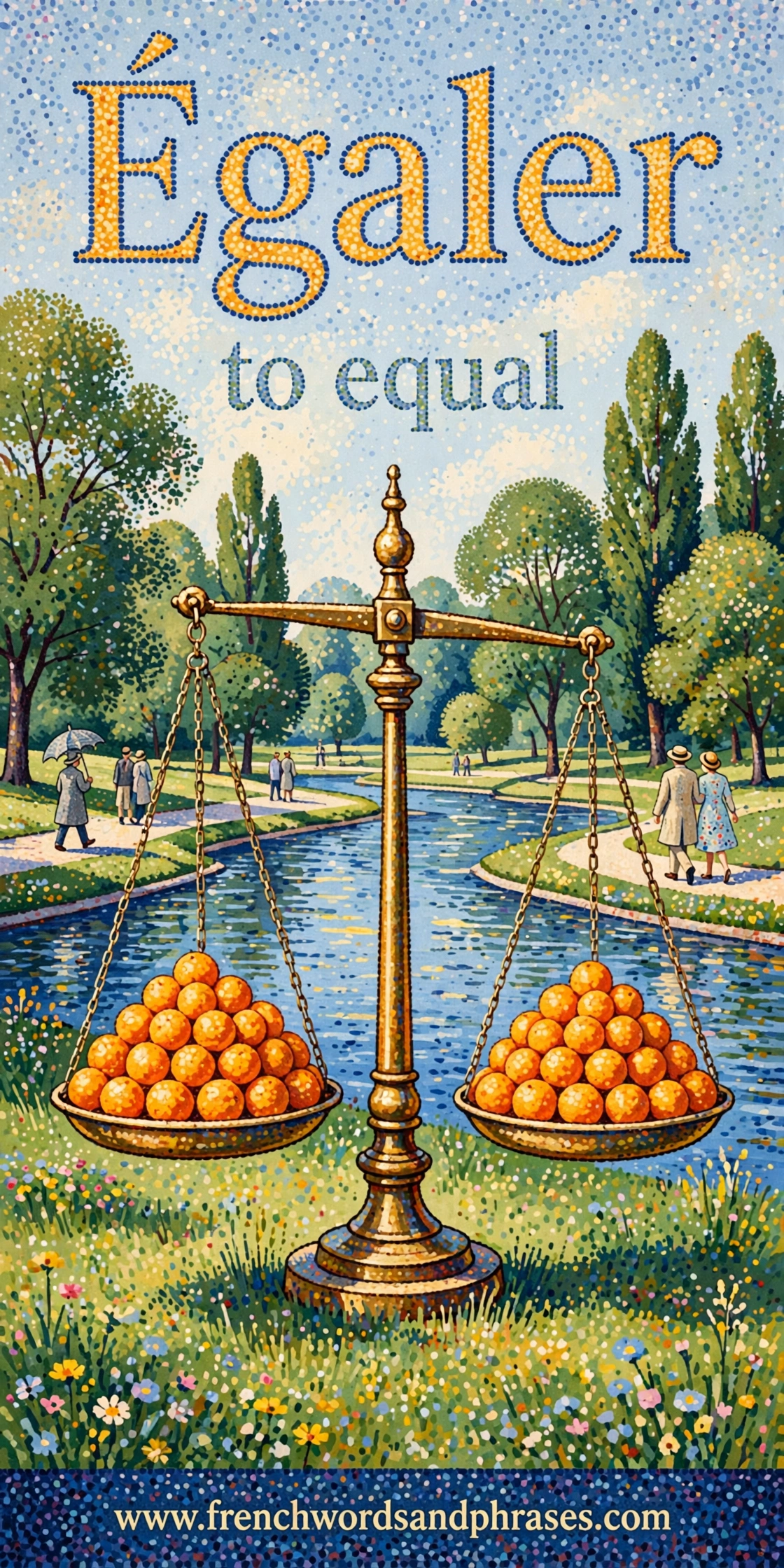
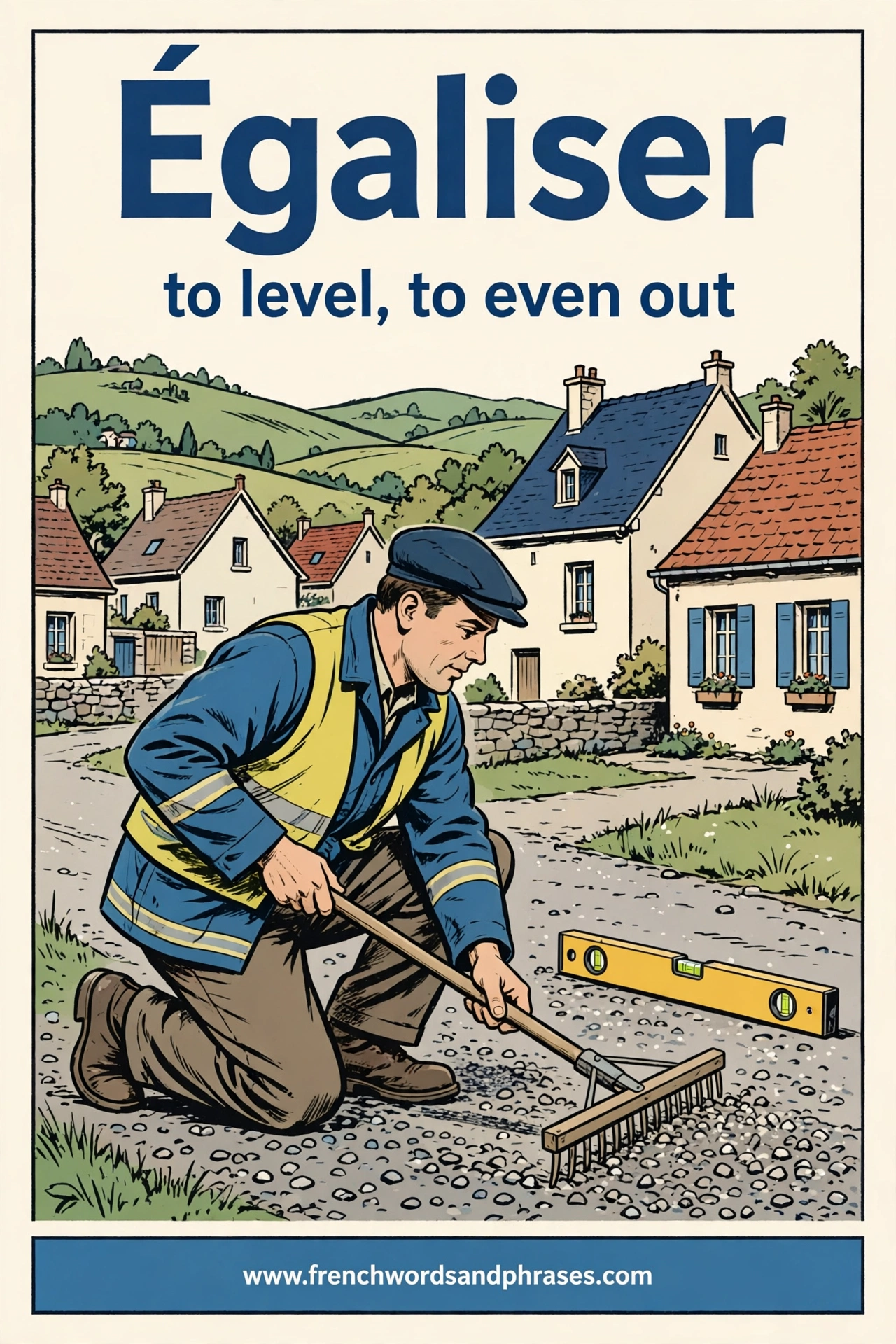
Égaliser means to level, to even out — to take a surface, a score or a situation that is uneven and make it flat, fair and equal.
A gardener raking the soil flat before sowing, a mason drawing his trowel along wet mortar, a striker in the last minute making the score one-all — égaliser is the verb of making things level, with a rake, a trowel or a goal.
In this guide, you’ll learn how to conjugate égaliser in all the major French tenses and moods. Explore complete conjugation tables, French examples, English translations, and practice quizzes.
Understanding the French Verb Égaliser
Égaliser is a regular French verb belonging to the first group of verbs, those ending in-er.
It means to level, to even out. It is commonly used in building and gardening for levelling ground, mortar and gravel, in cooking for smoothing dough and icing flat, and above all in sport, where égaliser and the noun une égalisation belong to the last tense minutes of a match.
Verb classification: First group (-er)
Auxiliary verb: Avoir
Past participle: égalisé
Present participle: égalisant
English equivalents: To level, to even out, to equalise; égaliser le sol — to level the ground; égaliser la surface — to smooth the surface level; égaliser le score — to level the score, to equalise; égaliser les chances — to even out the chances.
One important detail: égaliser is égaler put to work with the hands — where égaler states that two things match, égaliser makes them match: you égalisez a field, a wall, a layer of sand. In sport it has become the great levelling word: égaliser, alone, means to score the goal that makes it level — ils ont égalisé à la dernière minute. The verb is a perfectly regular -er: j’égalise, nous égalisons, ils égalisent.
Experience the Word
Égaliser is the verb of the flat finish — the rake, the trowel and the late goal all do the same work: they make it level.
Imagine the eighty-ninth minute. The visiting team has led since the first half, the home crowd has gone quiet — then a cross, a header, and the net shakes. Ils ont égalisé. In one second, forty-five minutes of inequality are wiped flat, and the stadium sounds like it is winning.
Nothing has been won yet. It has been levelled — égalisé — and a level game is a new game.
How to Conjugate Égaliser: Complete French Conjugation Guide
Let’s explore every major conjugation of égaliser, beginning with the indicative mood.
How to Conjugate Égaliser in the Indicative Mood
The indicative mood is used to express facts, observations, actions, and events.
How to Conjugate Égaliser in the Present Tense (Présent)
Used for actions happening now, habitual actions, and general truths.
| Subject | Conjugation |
|---|---|
| je | égalise |
| tu | égalises |
| il / elle | égalise |
| nous | égalisons |
| vous | égalisez |
| ils / elles | égalisent |
Example
Le jardinier égalise le sol avant de semer.
The gardener levels the ground before sowing.
Quick Quiz 1
Complete the sentence:
Nous ______ le sol avant de semer.
Reveal the answer
égalisons
Nous égalisons le sol avant de semer.
We level the ground before sowing.
How to Conjugate Égaliser in the Passé Composé
Used for completed actions in the past. Égaliser takes the auxiliary verb avoir.
| Subject | Conjugation |
|---|---|
| j’ | ai égalisé |
| tu | as égalisé |
| il / elle | a égalisé |
| nous | avons égalisé |
| vous | avez égalisé |
| ils / elles | ont égalisé |
Example
L’équipe a égalisé à la dernière minute.
The team equalised in the last minute.
How to Conjugate Égaliser in the Imparfait (Imperfect Tense)
Used for habitual past actions, descriptions, and ongoing situations in the past.
| Subject | Conjugation |
|---|---|
| je | égalisais |
| tu | égalisais |
| il / elle | égalisait |
| nous | égalisions |
| vous | égalisiez |
| ils / elles | égalisaient |
Example
Chaque soir, elle égalisait les comptes de la boutique.
Every evening, she would even out the shop’s accounts.
Quick Quiz 2
Choose the correct form:
The team equalised in the last minute.
L’équipe ______ à la dernière minute. (a égalisé / est égalisée)
Reveal the answer
a égalisé
L’équipe a égalisé à la dernière minute.
Égaliser takes avoir.
How to Conjugate Égaliser in the Plus-que-parfait
Used to describe an action that had already been completed before another past event.
| Subject | Conjugation |
|---|---|
| j’ | avais égalisé |
| tu | avais égalisé |
| il / elle | avait égalisé |
| nous | avions égalisé |
| vous | aviez égalisé |
| ils / elles | avaient égalisé |
Example
Il avait égalisé le terrain avant de poser la terrasse.
He had levelled the ground before laying the terrace.
How to Conjugate Égaliser in the Passé Simple
Primarily used in formal writing, literature, and historical narratives. It is rarely used in everyday conversation.
| Subject | Conjugation |
|---|---|
| je | égalisai |
| tu | égalisas |
| il / elle | égalisa |
| nous | égalisâmes |
| vous | égalisâtes |
| ils / elles | égalisèrent |
Example
Le maçon égalisa le mur d’un geste sûr.
The mason levelled the wall with a sure gesture.
How to Conjugate Égaliser in the Passé Antérieur
A literary tense used to express an action completed immediately before another past action, generally in the passé simple.
| Subject | Conjugation |
|---|---|
| j’ | eus égalisé |
| tu | eus égalisé |
| il / elle | eut égalisé |
| nous | eûmes égalisé |
| vous | eûtes égalisé |
| ils / elles | eurent égalisé |
Example
Quand l’ouvrier eut égalisé la surface, on coula le béton.
When the worker had levelled the surface, they poured the concrete.
How to Conjugate Égaliser in the Future Tense (Futur Simple)
Used to describe actions that will take place in the future.
| Subject | Conjugation |
|---|---|
| je | égaliserai |
| tu | égaliseras |
| il / elle | égalisera |
| nous | égaliserons |
| vous | égaliserez |
| ils / elles | égaliseront |
Example
Ce nouveau joueur égalisera les chances des deux équipes.
This new player will even out the two teams’ chances.
How to Conjugate Égaliser in the Futur Antérieur (Future Perfect)
Used for an action that will have been completed before a particular point in the future.
| Subject | Conjugation |
|---|---|
| j’ | aurai égalisé |
| tu | auras égalisé |
| il / elle | aura égalisé |
| nous | aurons égalisé |
| vous | aurez égalisé |
| ils / elles | auront égalisé |
Example
À la fin des travaux, ils auront égalisé tout le jardin.
By the end of the work, they will have levelled the whole garden.
How to Conjugate Égaliser in the Near Future (Futur Proche)
Used to describe something that is going to happen soon. Formed with aller + infinitive.
| Subject | Conjugation |
|---|---|
| je | vais égaliser |
| tu | vas égaliser |
| il / elle | va égaliser |
| nous | allons égaliser |
| vous | allez égaliser |
| ils / elles | vont égaliser |
Example
Le score est serré : ils vont égaliser d’un instant à l’autre.
The score is tight: they are going to equalise at any moment.
How to Conjugate Égaliser in the Conditional Mood
The conditional mood expresses what would happen under certain circumstances. It is also frequently used to make polite requests or express wishes.
How to Conjugate Égaliser in the Present Conditional
| Subject | Conjugation |
|---|---|
| je | égaliserais |
| tu | égaliserais |
| il / elle | égaliserait |
| nous | égaliserions |
| vous | égaliseriez |
| ils / elles | égaliseraient |
Example
Un bon terreau égaliserait la surface du potager.
Good compost would level the surface of the vegetable garden.
How to Conjugate Égaliser in the Past Conditional
| Subject | Conjugation |
|---|---|
| j’ | aurais égalisé |
| tu | aurais égalisé |
| il / elle | aurait égalisé |
| nous | aurions égalisé |
| vous | auriez égalisé |
| ils / elles | auraient égalisé |
Example
Sans ce but, ils n’auraient jamais égalisé.
Without that goal, they would never have equalised.
Égaliser in the Literary Past Conditional Form
This less common literary form uses the imperfect subjunctive of avoir.
| Subject | Conjugation |
|---|---|
| j’ | eusse égalisé |
| tu | eusses égalisé |
| il / elle | eût égalisé |
| nous | eussions égalisé |
| vous | eussiez égalisé |
| ils / elles | eussent égalisé |
Example
Le temps eût égalisé toutes ces fortunes.
Time would have levelled all those fortunes.
How to Conjugate Égaliser in the Subjunctive Mood
The subjunctive is used to express wishes, emotions, doubts, necessity, and uncertainty. It frequently follows expressions such as il faut que (it is necessary that) or bien que (although).
How to Conjugate Égaliser in the Present Subjunctive
| Subject | Conjugation |
|---|---|
| que je | égalise |
| que tu | égalises |
| qu’il / qu’elle | égalise |
| que nous | égalisions |
| que vous | égalisiez |
| qu’ils / qu’elles | égalisent |
Example
Il faut que tu égalises la pâte avec le rouleau.
You must level the dough with the rolling pin.
Quick Quiz 3
Complete the sentence using the subjunctive:
Il faut que vous ______ la surface avant de peindre.
Reveal the answer
égalisiez
Il faut que vous égalisiez la surface avant de peindre.
You must level the surface before painting.
How to Conjugate Égaliser in the Imperfect Subjunctive
A literary tense, rarely encountered in modern spoken French.
| Subject | Conjugation |
|---|---|
| que je | égalisasse |
| que tu | égalisasses |
| qu’il / qu’elle | égalisât |
| que nous | égalisassions |
| que vous | égalisassiez |
| qu’ils / qu’elles | égalisassent |
Example
On attendait que l’équipe égalisât avant la mi-temps.
Everyone was waiting for the team to equalise before half-time.
How to Conjugate Égaliser in the Pluperfect Subjunctive
A literary construction used to express an action completed before another past action.
| Subject | Conjugation |
|---|---|
| que j’ | eusse égalisé |
| que tu | eusses égalisé |
| qu’il / qu’elle | eût égalisé |
| que nous | eussions égalisé |
| que vous | eussiez égalisé |
| qu’ils / qu’elles | eussent égalisé |
Example
On espérait que le vent eût égalisé les dunes pendant la nuit.
People hoped the wind had levelled the dunes during the night.
How to Conjugate Égaliser in the Past Subjunctive
| Subject | Conjugation |
|---|---|
| que j’ | aie égalisé |
| que tu | aies égalisé |
| qu’il / qu’elle | ait égalisé |
| que nous | ayons égalisé |
| que vous | ayez égalisé |
| qu’ils / qu’elles | aient égalisé |
Example
Je suis heureux qu’ils aient égalisé le terrain avant l’hiver.
I am glad they levelled the ground before winter.
How to Conjugate Égaliser in the Imperative
The imperative is used to give commands, instructions, invitations, or suggestions. Subject pronouns are omitted.
How to Conjugate Égaliser in the Present Imperative
| Person | Conjugation |
|---|---|
| (tu) | égalise |
| (nous) | égalisons |
| (vous) | égalisez |
Example
Égalise bien le sable avant de planter !
Level the sand well before planting!
Quick Quiz 4
How would you say Level the sand well (tu form)?
Reveal the answer
Égalise bien le sable !
French Participles of Égaliser
Participles are verb forms that can be used in compound tenses and other grammatical constructions.
Present Participle of Égaliser
égalisant
En égalisant le score, l’équipe a retrouvé espoir.
By levelling the score, the team found hope again.
Past Participle of Égaliser
égalisé
Égalisé à la truelle, le mortier séchait déjà.
Levelled with the trowel, the mortar was already drying.
Égaliser in Everyday French: Real-Life Examples
Now that you know the conjugations, let’s see how égaliser appears in everyday French.
Example 1 — Present
Le jardinier égalise le sol.
The gardener levels the ground.
Example 2 — Passé composé
L’équipe a égalisé à la dernière minute.
The team equalised in the last minute.
Example 3 — Imparfait
Elle égalisait les comptes chaque soir.
She would even out the accounts every evening.
Example 4 — Future
Ce joueur égalisera les chances des deux équipes.
This player will even out the two teams’ chances.
Example 5 — Conditional
Un bon terreau égaliserait la surface.
Good compost would level the surface.
Example 6 — Imperative
Égalise bien le sable avant de planter !
Level the sand well before planting!
Beyond Translation: The Meaning of Égaliser
English equalise survives mainly in the sports pages — and that is exactly where French égaliser is king, too.
But French never forgot the rake and the trowel.
The same word that levels a football score levels a garden bed and a layer of mortar, because in French fairness is physical first: égaliser is what you do to anything — ground, chances, scores — that ought to be flat and even.
How to Remember the French Verb Égaliser
Remember it this way: Égaliser is about the rake on the soil, the trowel on the mortar, the late goal — all making it level.
- Égaliser makes things level; égaler just says they already match — the rake versus the scoreboard.
- In sport, égaliser alone means scoring the equaliser: ils ont égalisé à la dernière minute.
- Regular -er: j’égalise, nous égalisons, past participle égalisé; the goal itself is une égalisation.
The key idea is the rake on the soil, the trowel on the mortar, the late goal — all making it level.
Test Your Knowledge of Égaliser
Let’s see how much you’ve learned. Try answering these questions before revealing the answers.
Question 1
What is the difference between égaler and égaliser?
Reveal the answer
Égaler states a match; égaliser creates one — you égalisez ground, chances or a score to make them level.
Question 2
How do you say The team equalised in the last minute in French?
Reveal the answer
L’équipe a égalisé à la dernière minute.
Question 3
Translate: The gardener levels the ground before sowing.
Reveal the answer
Le jardinier égalise le sol avant de semer.
Question 4
What is the past participle of égaliser?
Reveal the answer
Égalisé.
Question 5
Complete the sentence:
Il faut que tu ______ la pâte avec le rouleau.
Reveal the answer
égalises
Il faut que tu égalises la pâte avec le rouleau.
You must level the dough with the rolling pin.
Your Final Challenge
Can You Use It?
How would you say this in French?
In the last minute, they equalised, and the whole stadium started breathing again.
Reveal the answer
À la dernière minute, ils ont égalisé, et le stade entier a recommencé à respirer.
In the last minute, they equalised, and the whole stadium started breathing again.
A little French. A little curiosity. A richer everyday life.
LEARN FRENCH ONE WORD AT A TIME