A French Word to Live By
How to Conjugate Effrayer in French
/e.fʁe.je/
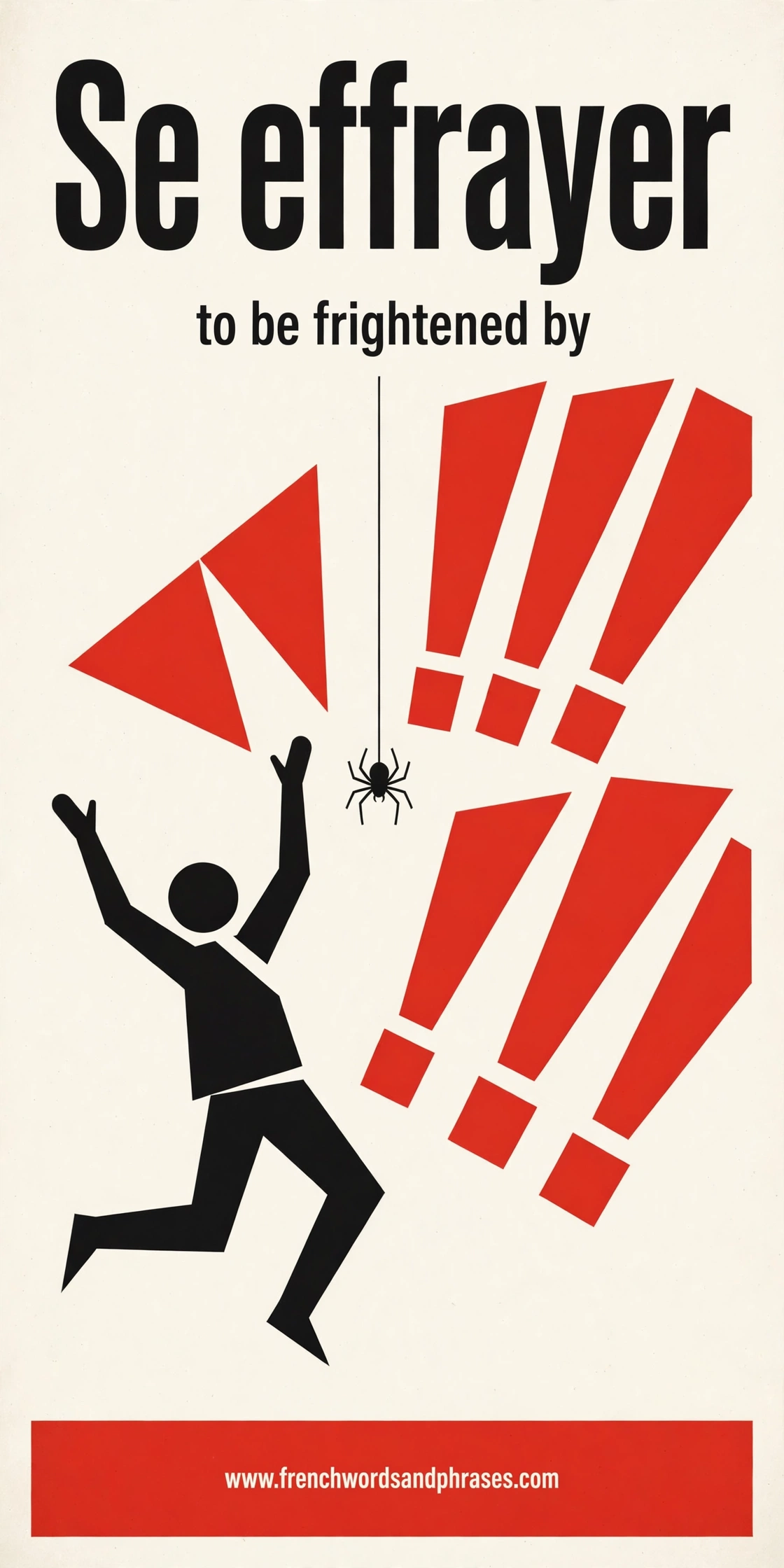
Effrayer means to scare, to frighten — to make someone’s heart jump, whether with a bang, a shadow or a piece of news.
A dog barking out of the dark, thunder over a campsite, a headline that makes a whole country hold its breath — effrayer is the verb of fright given: something out there does the scaring, and someone in here feels it.
In this guide, you’ll learn how to conjugate effrayer in all the major French tenses and moods. Explore complete conjugation tables, French examples, English translations, and practice quizzes.
Understanding the French Verb Effrayer
Effrayer is a regular French verb belonging to the first group of verbs, those ending in-er.
It means to scare, to frighten. It ranges from playground scares to genuine alarm: children effrayent the pigeons, storms effrayent the animals, and in the news, figures, rumours and epidemics effrayent the public — the verb scales from a jump to a dread without changing its shape.
Verb classification: First group (-er)
Auxiliary verb: Avoir
Past participle: effrayé
Present participle: effrayant
English equivalents: To scare, to frighten, to alarm; effrayer les enfants — to frighten the children; effrayer les oiseaux — to scare away the birds; ne m’effrayez pas ! — don’t scare me!; un bruit effrayant — a frightening noise; s’effrayer — to take fright (the reflexive page).
One important detail: effrayer is a -ayer verb, and the modern, preferred spelling turns the y into an i before a silent e: je effraie, tu effraies, il effraie, ils effraient — also written j’effraye, which is tolerated but older-fashioned. The y survives wherever the ending is heard: nous effrayons, vous effrayez, je effrayais, en effrayant. The future and conditional take the i through every person: je effraierai, je effraierais. Effrayer does the scaring; the person who feels it s’effraie or s’effraye de quelque chose — that reflexive has its own page.
Experience the Word
Effrayer is the verb of the jumped heartbeat — the scare always comes from outside, from a noise, a shape, a shadow.
Imagine a small boy crossing the farmyard at night with a bucket. Halfway across, the old dog explodes out of the darkness, barking — le chien l’effraie si fort that the bucket flies, the water flies, and the boy arrives at the door white as a sheet and laughing with shock.
The dog meant nothing by it. It has simply frightened — effrayé — and fright needs no intention.
How to Conjugate Effrayer: Complete French Conjugation Guide
Let’s explore every major conjugation of effrayer, beginning with the indicative mood.
How to Conjugate Effrayer in the Indicative Mood
The indicative mood is used to express facts, observations, actions, and events.
How to Conjugate Effrayer in the Present Tense (Présent)
Used for actions happening now, habitual actions, and general truths.
| Subject | Conjugation |
|---|---|
| je | effraye |
| tu | effrayes |
| il / elle | effraye |
| nous | effrayons |
| vous | effrayez |
| ils / elles | effrayent |
Example
Ce gros chien effraie tous les enfants du quartier.
That big dog frightens all the children in the neighbourhood.
Quick Quiz 1
Complete the sentence:
Nous ______ les pigeons en claquant des mains.
Reveal the answer
effrayons
Nous effrayons les pigeons en claquant des mains.
We frighten the pigeons by clapping our hands.
How to Conjugate Effrayer in the Passé Composé
Used for completed actions in the past. Effrayer takes the auxiliary verb avoir.
| Subject | Conjugation |
|---|---|
| j’ | ai effrayé |
| tu | as effrayé |
| il / elle | a effrayé |
| nous | avons effrayé |
| vous | avez effrayé |
| ils / elles | ont effrayé |
Example
Le tonnerre a effrayé les chevaux dans l’écurie.
The thunder frightened the horses in the stable.
How to Conjugate Effrayer in the Imparfait (Imperfect Tense)
Used for habitual past actions, descriptions, and ongoing situations in the past.
| Subject | Conjugation |
|---|---|
| je | effrayais |
| tu | effrayais |
| il / elle | effrayait |
| nous | effrayions |
| vous | effrayiez |
| ils / elles | effrayaient |
Example
Autrefois, l’épouvantail effrayait les corbeaux du champ.
In the old days, the scarecrow used to frighten the crows away from the field.
Quick Quiz 2
Choose the correct form:
The thunder frightened the horses.
Le tonnerre ______ les chevaux. (a effrayé / s’est effrayé)
Reveal the answer
a effrayé
Le tonnerre a effrayé les chevaux.
Effrayer does the scaring and takes avoir.
How to Conjugate Effrayer in the Plus-que-parfait
Used to describe an action that had already been completed before another past event.
| Subject | Conjugation |
|---|---|
| j’ | avais effrayé |
| tu | avais effrayé |
| il / elle | avait effrayé |
| nous | avions effrayé |
| vous | aviez effrayé |
| ils / elles | avaient effrayé |
Example
Elle avait effrayé tout le village avec sa fausse alerte.
She had frightened the whole village with her false alarm.
How to Conjugate Effrayer in the Passé Simple
Primarily used in formal writing, literature, and historical narratives. It is rarely used in everyday conversation.
| Subject | Conjugation |
|---|---|
| je | effrayai |
| tu | effrayas |
| il / elle | effraya |
| nous | effrayâmes |
| vous | effrayâtes |
| ils / elles | effrayèrent |
Example
Un cri soudain effraya les voyageurs sur le quai.
A sudden cry frightened the travellers on the platform.
How to Conjugate Effrayer in the Passé Antérieur
A literary tense used to express an action completed immediately before another past action, generally in the passé simple.
| Subject | Conjugation |
|---|---|
| j’ | eus effrayé |
| tu | eus effrayé |
| il / elle | eut effrayé |
| nous | eûmes effrayé |
| vous | eûtes effrayé |
| ils / elles | eurent effrayé |
Example
Quand l’explosion eut effrayé la foule, la panique commença.
When the explosion had frightened the crowd, the panic began.
How to Conjugate Effrayer in the Future Tense (Futur Simple)
Used to describe actions that will take place in the future.
| Subject | Conjugation |
|---|---|
| je | effrayerai |
| tu | effrayeras |
| il / elle | effrayera |
| nous | effrayerons |
| vous | effrayerez |
| ils / elles | effrayeront |
Example
Ce film effraiera les plus courageux, paraît-il.
This film will frighten the bravest, so they say.
How to Conjugate Effrayer in the Futur Antérieur (Future Perfect)
Used for an action that will have been completed before a particular point in the future.
| Subject | Conjugation |
|---|---|
| j’ | aurai effrayé |
| tu | auras effrayé |
| il / elle | aura effrayé |
| nous | aurons effrayé |
| vous | aurez effrayé |
| ils / elles | auront effrayé |
Example
À la fin du conte, le loup aura effrayé trois villages.
By the end of the tale, the wolf will have frightened three villages.
How to Conjugate Effrayer in the Near Future (Futur Proche)
Used to describe something that is going to happen soon. Formed with aller + infinitive.
| Subject | Conjugation |
|---|---|
| je | vais effrayer |
| tu | vas effrayer |
| il / elle | va effrayer |
| nous | allons effrayer |
| vous | allez effrayer |
| ils / elles | vont effrayer |
Example
Ne cours pas vers le chien, tu vas l’effrayer !
Do not run at the dog, you are going to frighten it!
How to Conjugate Effrayer in the Conditional Mood
The conditional mood expresses what would happen under certain circumstances. It is also frequently used to make polite requests or express wishes.
How to Conjugate Effrayer in the Present Conditional
| Subject | Conjugation |
|---|---|
| je | effrayerais |
| tu | effrayerais |
| il / elle | effrayerait |
| nous | effrayerions |
| vous | effrayeriez |
| ils / elles | effrayeraient |
Example
Un simple masque effraierait les petits, mais pas les grands.
A simple mask would frighten the little ones, but not the older ones.
How to Conjugate Effrayer in the Past Conditional
| Subject | Conjugation |
|---|---|
| j’ | aurais effrayé |
| tu | aurais effrayé |
| il / elle | aurait effrayé |
| nous | aurions effrayé |
| vous | auriez effrayé |
| ils / elles | auraient effrayé |
Example
Sans ce bruit, rien n’aurait effrayé les oiseaux.
Without that noise, nothing would have frightened the birds.
Effrayer in the Literary Past Conditional Form
This less common literary form uses the imperfect subjunctive of avoir.
| Subject | Conjugation |
|---|---|
| j’ | eusse effrayé |
| tu | eusses effrayé |
| il / elle | eût effrayé |
| nous | eussions effrayé |
| vous | eussiez effrayé |
| ils / elles | eussent effrayé |
Example
Le tonnerre eût effrayé les chevaux même dans l’écurie fermée.
The thunder would have frightened the horses even in the closed stable.
How to Conjugate Effrayer in the Subjunctive Mood
The subjunctive is used to express wishes, emotions, doubts, necessity, and uncertainty. It frequently follows expressions such as il faut que (it is necessary that) or bien que (although).
How to Conjugate Effrayer in the Present Subjunctive
| Subject | Conjugation |
|---|---|
| que je | effraye |
| que tu | effrayes |
| qu’il / qu’elle | effraye |
| que nous | effrayions |
| que vous | effrayiez |
| qu’ils / qu’elles | effrayent |
Example
Je ne veux pas que ce chien effraie les passants.
I do not want this dog to frighten passers-by.
Quick Quiz 3
Complete the sentence using the subjunctive:
Je ne veux pas que vous ______ les enfants avec cette histoire.
Reveal the answer
effrayiez
Je ne veux pas que vous effrayiez les enfants avec cette histoire.
I do not want you to frighten the children with that story.
How to Conjugate Effrayer in the Imperfect Subjunctive
A literary tense, rarely encountered in modern spoken French.
| Subject | Conjugation |
|---|---|
| que je | effrayasse |
| que tu | effrayasses |
| qu’il / qu’elle | effrayât |
| que nous | effrayassions |
| que vous | effrayassiez |
| qu’ils / qu’elles | effrayassent |
Example
Il suffisait qu’un pétard effrayât le cheval pour tout gâcher.
One firecracker frightening the horse was enough to ruin everything.
How to Conjugate Effrayer in the Pluperfect Subjunctive
A literary construction used to express an action completed before another past action.
| Subject | Conjugation |
|---|---|
| que j’ | eusse effrayé |
| que tu | eusses effrayé |
| qu’il / qu’elle | eût effrayé |
| que nous | eussions effrayé |
| que vous | eussiez effrayé |
| qu’ils / qu’elles | eussent effrayé |
Example
On raconta que la tempête eût effrayé même les marins.
It was said that the storm had frightened even the sailors.
How to Conjugate Effrayer in the Past Subjunctive
| Subject | Conjugation |
|---|---|
| que j’ | aie effrayé |
| que tu | aies effrayé |
| qu’il / qu’elle | ait effrayé |
| que nous | ayons effrayé |
| que vous | ayez effrayé |
| qu’ils / qu’elles | aient effrayé |
Example
Je regrette que le film ait effrayé ta petite sœur.
I am sorry the film frightened your little sister.
How to Conjugate Effrayer in the Imperative
The imperative is used to give commands, instructions, invitations, or suggestions. Subject pronouns are omitted.
How to Conjugate Effrayer in the Present Imperative
| Person | Conjugation |
|---|---|
| (tu) | effraye |
| (nous) | effrayons |
| (vous) | effrayez |
Example
N’effrayez pas les oiseaux, approchez doucement.
Do not frighten the birds, approach gently.
Quick Quiz 4
How would you say Do not frighten the birds (tu form)?
Reveal the answer
N’effraie pas les oiseaux !
French Participles of Effrayer
Participles are verb forms that can be used in compound tenses and other grammatical constructions.
Present Participle of Effrayer
effrayant
En effrayant les pigeons, l’enfant rit aux éclats.
By frightening the pigeons, the child bursts out laughing.
Past Participle of Effrayer
effrayé
Effrayés par l’orage, les moutons se pressent contre la clôture.
Frightened by the storm, the sheep huddle against the fence.
Effrayer in Everyday French: Real-Life Examples
Now that you know the conjugations, let’s see how effrayer appears in everyday French.
Example 1 — Present
Ce chien effraie les enfants du quartier.
That dog frightens the children in the neighbourhood.
Example 2 — Passé composé
Le tonnerre a effrayé les chevaux.
The thunder frightened the horses.
Example 3 — Imparfait
L’épouvantail effrayait les corbeaux.
The scarecrow used to frighten the crows.
Example 4 — Future
Ce film effraiera les plus courageux.
This film will frighten the bravest.
Example 5 — Conditional
Un masque effraierait les petits.
A mask would frighten the little ones.
Example 6 — Imperative
N’effraie pas les oiseaux !
Do not frighten the birds!
Beyond Translation: The Meaning of Effrayer
Old French esfreer meant to disturb, to throw into turmoil — the same root that gave English affray, a public brawl.
Fright, in this word’s memory, is a disturbance of the peace.
That is why effrayer suits crowds and countries as well as children: la nouvelle a effrayé les marchés — the news frightened the markets — is the same jumped heartbeat, wearing a suit.
How to Remember the French Verb Effrayer
Remember it this way: Effrayer is about the dog bursting out of the dark — fright given, y turning to i.
- The -ayer patch: je effraie with an i, nous effrayons with the y — future je effraierai.
- Effrayer gives the fright; the frightened person is the reflexive’s business: s’effrayer de.
- Past participle effrayé: le tonnerre a effrayé les chevaux.
The key idea is the dog bursting out of the dark — fright given, y turning to i.
Test Your Knowledge of Effrayer
Let’s see how much you’ve learned. Try answering these questions before revealing the answers.
Question 1
How do you write je in the present tense of effrayer, modern style?
Reveal the answer
Je effraie — the y of -ayer becomes i before a silent e; nous keeps the y: nous effrayons.
Question 2
How do you say The thunder frightened the horses in French?
Reveal the answer
Le tonnerre a effrayé les chevaux.
Question 3
Translate: That dog frightens all the children.
Reveal the answer
Ce chien effraie tous les enfants.
Question 4
What is the past participle of effrayer?
Reveal the answer
Effrayé.
Question 5
Complete the sentence:
Je ne veux pas que ce chien ______ les passants.
Reveal the answer
effraie
Je ne veux pas que ce chien effraie les passants.
I do not want this dog to frighten passers-by.
Your Final Challenge
Can You Use It?
How would you say this in French?
The thunder frightens the horses, but the farmer’s voice calms them at once.
Reveal the answer
Le tonnerre effraie les chevaux, mais la voix du fermier les apaise aussitôt.
The thunder frightens the horses, but the farmer’s voice calms them at once.
A little French. A little curiosity. A richer everyday life.
LEARN FRENCH ONE WORD AT A TIME