A French Word to Live By
How to Conjugate Se effranger in French
/sə e.fʁɑ̃.ʒe/
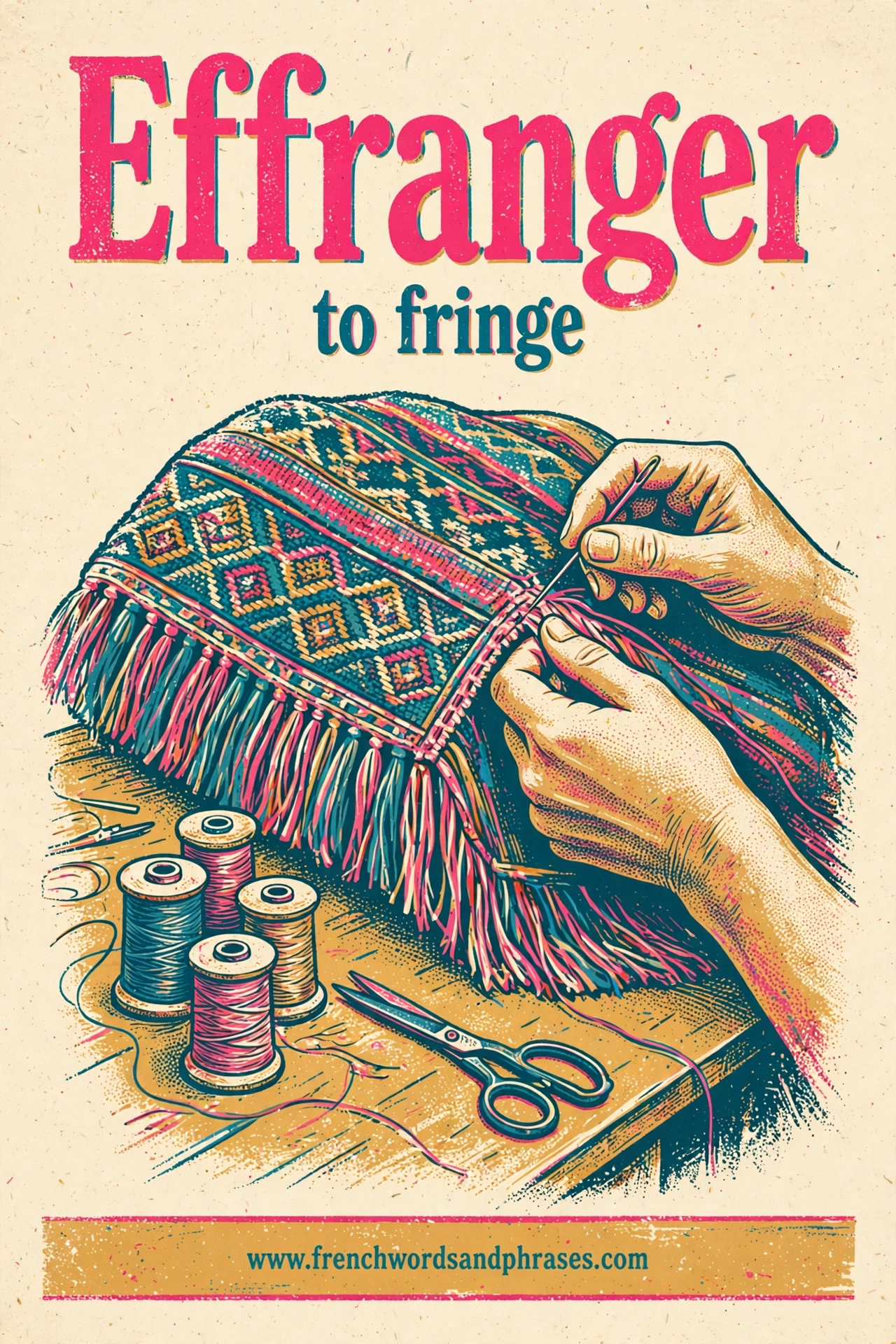
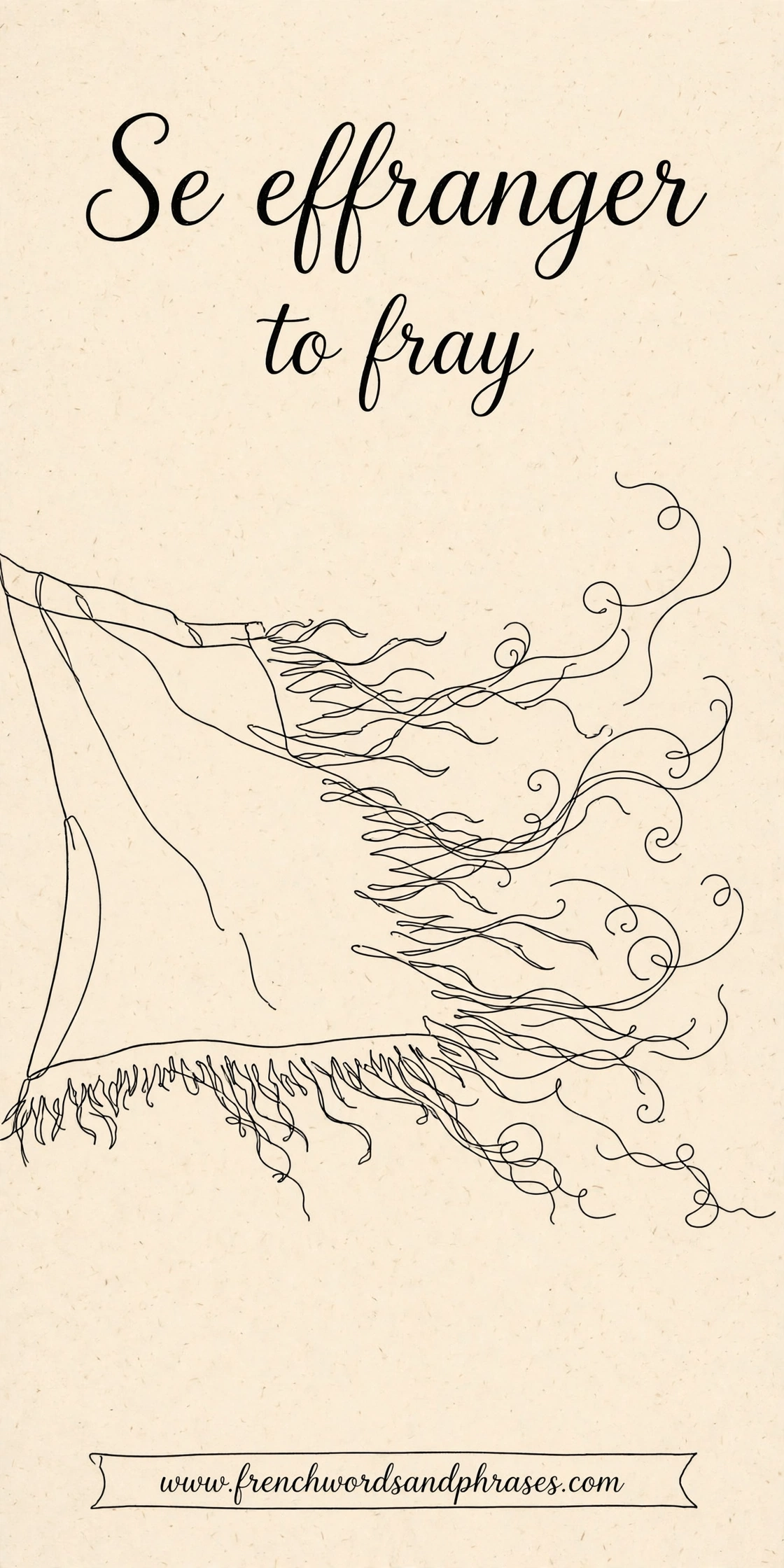
Se effranger means to fray — to come undone at the edge all by itself, thread by thread, through wear and time.
The cuff of an old shirt thinning into threads, the hem of jeans dissolving after a hundred washes, a rope’s end opening like a tiny broom — se effranger is what fabrics do when nobody is helping them: they fray.
In this guide, you’ll learn how to conjugate se effranger in all the major French tenses and moods. Explore complete conjugation tables, French examples, English translations, and practice quizzes.
Understanding the French Verb Se effranger
Se effranger is a regular French verb belonging to the first group of verbs, those ending in-er.
It means to fray. It is the standard verb for clothes, ropes, carpets and cables wearing into threads at their edges — the slow fraying of cuffs, hems and collars that tells you a garment has lived, and the frayed look fashion sometimes copies on purpose.
Verb classification: First group (-er), reflexive
Auxiliary verb: Être
Past participle: effrangé
Present participle: effrangeant
English equivalents: To fray, to come unravelled at the edge; un jean qui s’effrange — jeans that are fraying; les manches s’effrangent — the cuffs are fraying; un tapis effrangé — a frayed rug; s’effranger aux genoux — to wear into threads at the knees.
One important detail: se effranger is the reflexive twin of effranger, and the reflexive pronoun is the whole story — the cloth frays itself, through wear, with no craftsman in sight. Deliberate fringing is plain effranger; accidental fraying is se effranger. It is a -ger verb, so the g stays soft with a protective e: nous nous effrangeons, en s’effrangeant. Being reflexive, it takes être and the participle agrees with the fabric: les manches se sont effrangées.
Experience the Word
Se effranger is the verb of the tired edge — the place where a thing has been touched, washed and worn the most, quietly coming undone.
Imagine an old fisherman’s sweater, older than his boat. The cuffs have seen twenty winters of rope and salt water. Thread by thread, ils se sont effrangés — and he would no more mend them than he would repaint the harbour.
Nobody fringed this sweater. It has frayed — il s’est effrangé — all by itself, honestly, at work.
How to Conjugate Se effranger: Complete French Conjugation Guide
Let’s explore every major conjugation of se effranger, beginning with the indicative mood.
How to Conjugate Se effranger in the Indicative Mood
The indicative mood is used to express facts, observations, actions, and events.
How to Conjugate Se effranger in the Present Tense (Présent)
Used for actions happening now, habitual actions, and general truths.
| Subject | Conjugation |
|---|---|
| je | m’effrange |
| tu | t’effranges |
| il / elle | s’effrange |
| nous | nous effrangeons |
| vous | vous effrangez |
| ils / elles | s’effrangent |
Example
Les manches de ce pull s’effrangent aux poignets.
The sleeves of this jumper are fraying at the wrists.
Quick Quiz 1
Complete the sentence:
Nous regardons les manches qui se ______ aux poignets.
Reveal the answer
effrangent
Nous regardons les manches qui s’effrangent aux poignets.
We look at the sleeves fraying at the wrists.
How to Conjugate Se effranger in the Passé Composé
Used for completed actions in the past. Se effranger takes the auxiliary verb être.
| Subject | Conjugation |
|---|---|
| je | me suis effrangé / me suis effrangée |
| tu | t’es effrangé / t’es effrangée |
| il / elle | s’est effrangé / s’est effrangée |
| nous | nous sommes effrangés / nous sommes effrangées |
| vous | vous êtes effrangés / vous êtes effrangées / vous êtes effrangé / vous êtes effrangée |
| ils / elles | se sont effrangés / se sont effrangées |
Example
Le bas de son jean s’est effrangé à force de traîner.
The bottom of his jeans has frayed from dragging so much.
How to Conjugate Se effranger in the Imparfait (Imperfect Tense)
Used for habitual past actions, descriptions, and ongoing situations in the past.
| Subject | Conjugation |
|---|---|
| je | m’effrangeais |
| tu | t’effrangeais |
| il / elle | s’effrangeait |
| nous | nous effrangions |
| vous | vous effrangiez |
| ils / elles | s’effrangeaient |
Example
Le tapis s’effrangeait lentement devant la porte.
The rug was slowly fraying in front of the door.
Quick Quiz 2
Choose the correct form:
The rope has frayed.
La corde ______. (s’est effrangée / a effrangé)
Reveal the answer
s’est effrangée
La corde s’est effrangée.
Fraying happens by itself: reflexive, être, and the participle agrees.
How to Conjugate Se effranger in the Plus-que-parfait
Used to describe an action that had already been completed before another past event.
| Subject | Conjugation |
|---|---|
| je | m’étais effrangé / m’étais effrangée |
| tu | t’étais effrangé / t’étais effrangée |
| il / elle | s’était effrangé / s’était effrangée |
| nous | nous étions effrangés / nous étions effrangées |
| vous | vous étiez effrangés / vous étiez effrangées / vous étiez effrangé / vous étiez effrangée |
| ils / elles | s’étaient effrangés / s’étaient effrangées |
Example
La corde s’était effrangée bien avant la tempête.
The rope had frayed long before the storm.
How to Conjugate Se effranger in the Passé Simple
Primarily used in formal writing, literature, and historical narratives. It is rarely used in everyday conversation.
| Subject | Conjugation |
|---|---|
| je | m’effrangeai |
| tu | t’effrangeas |
| il / elle | s’effrangea |
| nous | nous effrangeâmes |
| vous | vous effrangeâtes |
| ils / elles | s’effrangeèrent |
Example
À la longue, le col de la chemise s’effrangea.
In time, the shirt collar frayed.
How to Conjugate Se effranger in the Passé Antérieur
A literary tense used to express an action completed immediately before another past action, generally in the passé simple.
| Subject | Conjugation |
|---|---|
| je | me fus effrangé / me fus effrangée |
| tu | te fus effrangé / te fus effrangée |
| il / elle | se fut effrangé / se fut effrangée |
| nous | nous fûmes effrangés / nous fûmes effrangées |
| vous | vous fûtes effrangés / vous fûtes effrangées / vous fûtes effrangé / vous fûtes effrangée |
| ils / elles | se furent effrangés / se furent effrangées |
Example
Dès que le câble se fut effrangé, on le remplaça.
As soon as the cable had frayed, it was replaced.
How to Conjugate Se effranger in the Future Tense (Futur Simple)
Used to describe actions that will take place in the future.
| Subject | Conjugation |
|---|---|
| je | m’effrangerai |
| tu | t’effrangeras |
| il / elle | s’effrangera |
| nous | nous effrangerons |
| vous | vous effrangerez |
| ils / elles | s’effrangeront |
Example
Sans ourlet, ce tissu s’effrangera dès le premier lavage.
Without a hem, this fabric will fray at the first wash.
How to Conjugate Se effranger in the Futur Antérieur (Future Perfect)
Used for an action that will have been completed before a particular point in the future.
| Subject | Conjugation |
|---|---|
| je | me serai effrangé / me serai effrangée |
| tu | te seras effrangé / te seras effrangée |
| il / elle | se sera effrangé / se sera effrangée |
| nous | nous serons effrangés / nous serons effrangées |
| vous | vous serez effrangés / vous serez effrangées / vous serez effrangé / vous serez effrangée |
| ils / elles | se seront effrangés / se seront effrangées |
Example
À la fin de l’hiver, les manches se seront effrangées.
By the end of winter, the sleeves will have frayed.
How to Conjugate Se effranger in the Near Future (Futur Proche)
Used to describe something that is going to happen soon. Formed with aller + infinitive.
| Subject | Conjugation |
|---|---|
| je | vais m’effranger |
| tu | vas t’effranger |
| il / elle | va s’effranger |
| nous | allons nous effranger |
| vous | allez vous effranger |
| ils / elles | vont s’effranger |
Example
Regarde ton col, il va s’effranger complètement.
Look at your collar, it is going to fray completely.
How to Conjugate Se effranger in the Conditional Mood
The conditional mood expresses what would happen under certain circumstances. It is also frequently used to make polite requests or express wishes.
How to Conjugate Se effranger in the Present Conditional
| Subject | Conjugation |
|---|---|
| je | m’effrangerais |
| tu | t’effrangerais |
| il / elle | s’effrangerait |
| nous | nous effrangerions |
| vous | vous effrangeriez |
| ils / elles | s’effrangeraient |
Example
Avec un meilleur fil, ce rideau s’effrangerait moins vite.
With better thread, this curtain would fray less quickly.
How to Conjugate Se effranger in the Past Conditional
| Subject | Conjugation |
|---|---|
| je | me serais effrangé / me serais effrangée |
| tu | te serais effrangé / te serais effrangée |
| il / elle | se serait effrangé / se serait effrangée |
| nous | nous serions effrangés / nous serions effrangées |
| vous | vous seriez effrangés / vous seriez effrangées / vous seriez effrangé / vous seriez effrangée |
| ils / elles | se seraient effrangés / se seraient effrangées |
Example
Le tapis se serait effrangé davantage sans sa bordure.
The rug would have frayed more without its border.
Se effranger in the Literary Past Conditional Form
This less common literary form uses the imperfect subjunctive of être.
| Subject | Conjugation |
|---|---|
| je | me fusse effrangé / me fusse effrangée |
| tu | te fusses effrangé / te fusses effrangée |
| il / elle | se fût effrangé / se fût effrangée |
| nous | nous fussions effrangés / nous fussions effrangées |
| vous | vous fussiez effrangés / vous fussiez effrangées / vous fussiez effrangé / vous fussiez effrangée |
| ils / elles | se fussent effrangés / se fussent effrangées |
Example
La corde se fût effrangée avant même la troisième saison.
The rope would have frayed even before the third season.
How to Conjugate Se effranger in the Subjunctive Mood
The subjunctive is used to express wishes, emotions, doubts, necessity, and uncertainty. It frequently follows expressions such as il faut que (it is necessary that) or bien que (although).
How to Conjugate Se effranger in the Present Subjunctive
| Subject | Conjugation |
|---|---|
| que je | m’effrange |
| que tu | t’effranges |
| qu’il / qu’elle | s’effrange |
| que nous | nous effrangions |
| que vous | vous effrangiez |
| qu’ils / qu’elles | s’effrangent |
Example
Je ne veux pas que tes manches s’effrangent déjà.
I do not want your sleeves to fray already.
Quick Quiz 3
Complete the sentence using the subjunctive:
Il faut éviter que le tissu se ______ aux coutures.
Reveal the answer
effrange
Il faut éviter que le tissu s’effrange aux coutures.
We must stop the fabric fraying at the seams.
How to Conjugate Se effranger in the Imperfect Subjunctive
A literary tense, rarely encountered in modern spoken French.
| Subject | Conjugation |
|---|---|
| que je | m’effrangasse |
| que tu | t’effrangasses |
| qu’il / qu’elle | s’effrangât |
| que nous | nous effrangassions |
| que vous | vous effrangassiez |
| qu’ils / qu’elles | s’effrangassent |
Example
Il fallait éviter que le tissu s’effrangeât aux coutures.
It was necessary to stop the fabric fraying at the seams.
How to Conjugate Se effranger in the Pluperfect Subjunctive
A literary construction used to express an action completed before another past action.
| Subject | Conjugation |
|---|---|
| que je | me fusse effrangé / me fusse effrangée |
| que tu | te fusses effrangé / te fusses effrangée |
| qu’il / qu’elle | se fût effrangé / se fût effrangée |
| que nous | nous fussions effrangés / nous fussions effrangées |
| que vous | vous fussiez effrangés / vous fussiez effrangées / vous fussiez effrangé / vous fussiez effrangée |
| qu’ils / qu’elles | se fussent effrangés / se fussent effrangées |
Example
On voyait que le col se fût effrangé depuis longtemps.
You could see the collar had been frayed for a long time.
How to Conjugate Se effranger in the Past Subjunctive
| Subject | Conjugation |
|---|---|
| que je | me sois effrangé / me sois effrangée |
| que tu | te sois effrangé / te sois effrangée |
| qu’il / qu’elle | se soit effrangé / se soit effrangée |
| que nous | nous soyons effrangés / nous soyons effrangées |
| que vous | vous soyez effrangés / vous soyez effrangées / vous soyez effrangé / vous soyez effrangée |
| qu’ils / qu’elles | se soient effrangés / se soient effrangées |
Example
Je suis étonné que le jean se soit effrangé si vite.
I am surprised the jeans frayed so quickly.
How to Conjugate Se effranger in the Imperative
The imperative is used to give commands, instructions, invitations, or suggestions. Subject pronouns are omitted.
How to Conjugate Se effranger in the Present Imperative
| Person | Conjugation |
|---|---|
| (tu) | effrange-toi |
| (nous) | effrangeons-nous |
| (vous) | effrangez-vous |
Example
Ne t’effrange pas aux genoux, vieux pantalon !
Do not fray at the knees, old trousers!
Quick Quiz 4
How would you say Do not fray (tu form)?
Reveal the answer
Ne t’effrange pas !
French Participles of Se effranger
Participles are verb forms that can be used in compound tenses and other grammatical constructions.
Present Participle of Se effranger
effrangeant
En s’effrangeant, la corde perd sa solidité.
By fraying, the rope loses its strength.
Past Participle of Se effranger
effrangé
Effrangée aux deux bouts, la corde ne sert plus à rien.
Frayed at both ends, the rope is no longer any use.
Se effranger in Everyday French: Real-Life Examples
Now that you know the conjugations, let’s see how se effranger appears in everyday French.
Example 1 — Present
Les manches s’effrangent aux poignets.
The sleeves are fraying at the wrists.
Example 2 — Passé composé
Le bas du jean s’est effrangé.
The bottom of the jeans has frayed.
Example 3 — Imparfait
Le tapis s’effrangeait devant la porte.
The rug was fraying in front of the door.
Example 4 — Future
Ce tissu s’effrangera sans ourlet.
This fabric will fray without a hem.
Example 5 — Conditional
Le rideau s’effrangerait moins vite avec un meilleur fil.
The curtain would fray less quickly with better thread.
Example 6 — Imperative
Ne vous effrangez pas, petites manches !
Do not fray, little sleeves!
Beyond Translation: The Meaning of Se effranger
English fray is a true cousin — ropes, cuffs and tempers fray in English, and in French cloth does the same work of quiet undoing.
A frayed edge is a biography.
The cuff that s’effrange tells where the hand has worked; the rope that s’effrange tells where the strain has pulled — French reads wear the way you read rings in a tree.
How to Remember the French Verb Se effranger
Remember it this way: Se effranger is about the old sweater’s cuffs, coming undone all by themselves.
- Reflexive means nobody did it: the fabric frays itself, through wear.
- The -ger e survives in the reflexive too: nous nous effrangeons, en s’effrangeant.
- Être, with agreement: les manches se sont effrangées.
The key idea is the old sweater’s cuffs, coming undone all by themselves.
Test Your Knowledge of Se effranger
Let’s see how much you’ve learned. Try answering these questions before revealing the answers.
Question 1
What is the difference between effranger and se effranger?
Reveal the answer
Effranger is deliberate craft (the seamstress fringes a cloth); se effranger is wear doing it alone (the cuffs fray).
Question 2
How do you say The sleeves are fraying at the wrists in French?
Reveal the answer
Les manches s’effrangent aux poignets.
Question 3
Translate: The bottom of the jeans has frayed.
Reveal the answer
Le bas du jean s’est effrangé.
Question 4
What is the past participle of se effranger?
Reveal the answer
Effrangé — agreeing: effrangée, effrangés, effrangées.
Question 5
Complete the sentence:
Je ne veux pas que tes manches se ______ déjà.
Reveal the answer
effrangent
Je ne veux pas que tes manches s’effrangent déjà.
I do not want your sleeves to fray already.
Your Final Challenge
Can You Use It?
How would you say this in French?
The old rug is fraying in front of the door, faithful to the last thread.
Reveal the answer
Le vieux tapis s’effrange devant la porte, fidèle jusqu’au dernier fil.
The old rug is fraying in front of the door, faithful to the last thread.
A little French. A little curiosity. A richer everyday life.
LEARN FRENCH ONE WORD AT A TIME