A French Word to Live By
How to Conjugate Effranger in French
/e.fʁɑ̃.ʒe/
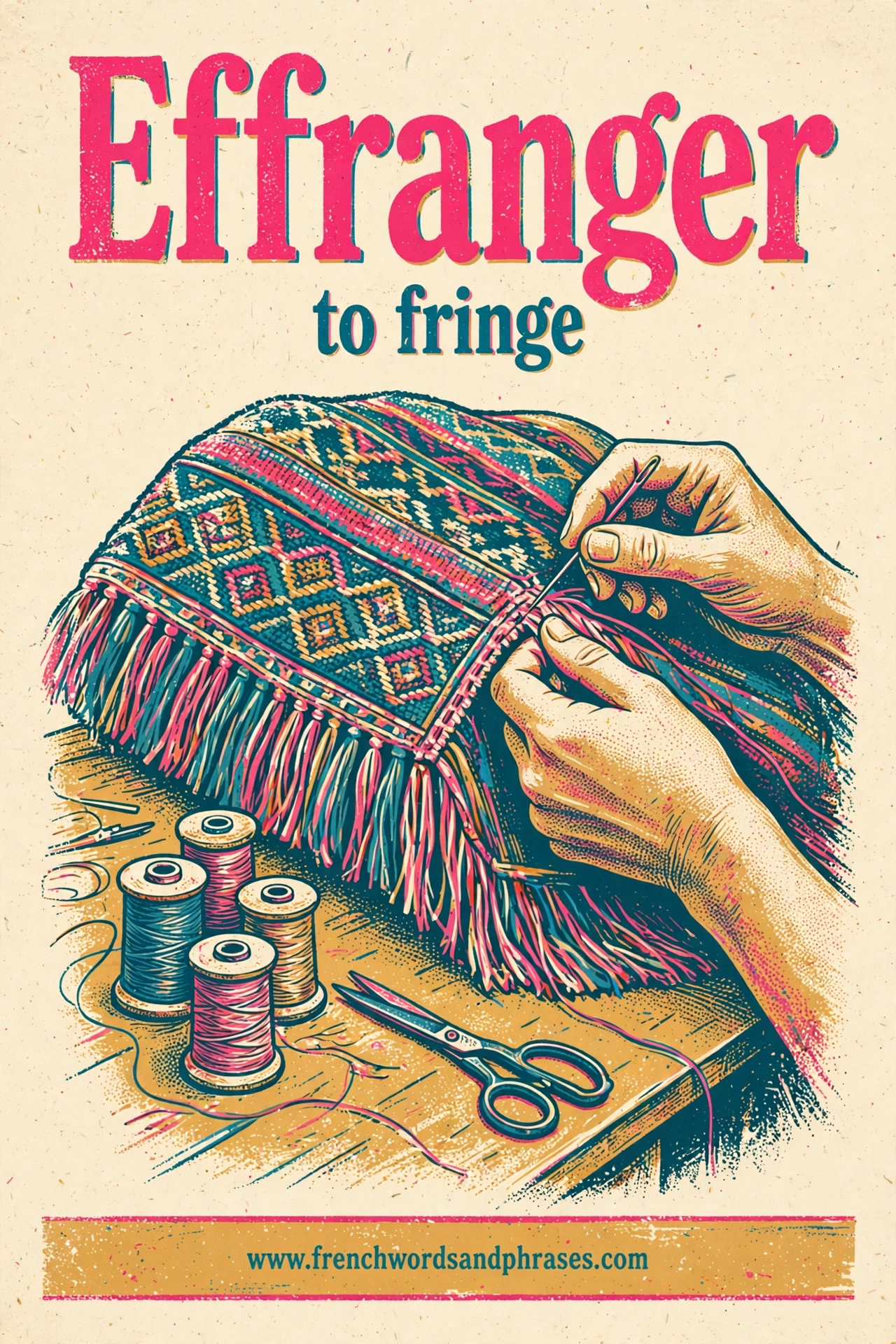
Effranger means to fringe — to fray the edge of a cloth deliberately, working its threads loose into a decorative fringe.
A seamstress pulling threads from the edge of a linen cloth one by one, a weaver turning the end of a shawl into a dancing fringe — effranger is the craftsman’s verb: to fringe a fabric on purpose, thread by loosened thread.
In this guide, you’ll learn how to conjugate effranger in all the major French tenses and moods. Explore complete conjugation tables, French examples, English translations, and practice quizzes.
Understanding the French Verb Effranger
Effranger is a regular French verb belonging to the first group of verbs, those ending in-er.
It means to fringe. It belongs to the sewing box and the loom: linen, shawls, scarves and table runners are effrangés to give them a finished, decorative edge, in a technique older than the sewing machine — pull out the cross-threads, and the warp threads become the fringe.
Verb classification: First group (-er)
Auxiliary verb: Avoir
Past participle: effrangé
Present participle: effrangeant
English equivalents: To fringe, to fray out (deliberately); effranger un napperon — to fringe a doily; effranger les bords d’un châle — to fringe the edges of a shawl; une frange — a fringe; s’effranger — to fray (by itself, through wear).
One important detail: effranger is a -ger verb, so a protective e keeps the g soft before a and o: nous effrangeons, je effrangeais, en effrangeant — never effrangons. The hand that does it matters: effranger is deliberate craft, the seamstress fringing a cloth on purpose; when wear and time do the fraying, French switches to the reflexive s’effranger, which has its own page. The verb is regular apart from that e: je effrange, ils effrangent, past participle effrangé.
Experience the Word
Effranger is the verb of the patient hand — destruction slowed down and turned into decoration.
Imagine a grandmother finishing a linen table runner. The weaving is done, but the ends are bare. With a needle she draws out thread after thread, and slowly a fringe is born — effranger is her last, quietest piece of work, and the one everyone will touch first.
The cloth has not worn out or torn. It has been fringed — effrangé — on purpose, thread by thread.
How to Conjugate Effranger: Complete French Conjugation Guide
Let’s explore every major conjugation of effranger, beginning with the indicative mood.
How to Conjugate Effranger in the Indicative Mood
The indicative mood is used to express facts, observations, actions, and events.
How to Conjugate Effranger in the Present Tense (Présent)
Used for actions happening now, habitual actions, and general truths.
| Subject | Conjugation |
|---|---|
| je | effrange |
| tu | effranges |
| il / elle | effrange |
| nous | effrangeons |
| vous | effrangez |
| ils / elles | effrangent |
Example
Elle effrange les bords du napperon avec une aiguille.
She fringes the edges of the doily with a needle.
Quick Quiz 1
Complete the sentence:
Nous ______ les écharpes pour le marché.
Reveal the answer
effrangeons
Nous effrangeons les écharpes pour le marché.
We fringe the scarves for the market.
How to Conjugate Effranger in the Passé Composé
Used for completed actions in the past. Effranger takes the auxiliary verb avoir.
| Subject | Conjugation |
|---|---|
| j’ | ai effrangé |
| tu | as effrangé |
| il / elle | a effrangé |
| nous | avons effrangé |
| vous | avez effrangé |
| ils / elles | ont effrangé |
Example
La tisserande a effrangé le châle avant de le vendre.
The weaver fringed the shawl before selling it.
How to Conjugate Effranger in the Imparfait (Imperfect Tense)
Used for habitual past actions, descriptions, and ongoing situations in the past.
| Subject | Conjugation |
|---|---|
| je | effrangeais |
| tu | effrangeais |
| il / elle | effrangeait |
| nous | effrangions |
| vous | effrangiez |
| ils / elles | effrangeaient |
Example
Autrefois, les lingères effrangeaient le linge de maison.
In the old days, linen maids used to fringe the household linen.
Quick Quiz 2
Choose the correct form:
The weaver fringed the shawl.
La tisserande ______ le châle. (a effrangé / est effrangée)
Reveal the answer
a effrangé
La tisserande a effrangé le châle.
Effranger takes avoir.
How to Conjugate Effranger in the Plus-que-parfait
Used to describe an action that had already been completed before another past event.
| Subject | Conjugation |
|---|---|
| j’ | avais effrangé |
| tu | avais effrangé |
| il / elle | avait effrangé |
| nous | avions effrangé |
| vous | aviez effrangé |
| ils / elles | avaient effrangé |
Example
Il avait effrangé les manches pour donner un style au costume.
He had fringed the sleeves to give the costume some style.
How to Conjugate Effranger in the Passé Simple
Primarily used in formal writing, literature, and historical narratives. It is rarely used in everyday conversation.
| Subject | Conjugation |
|---|---|
| je | effrangeai |
| tu | effrangeas |
| il / elle | effrangea |
| nous | effrangeâmes |
| vous | effrangeâtes |
| ils / elles | effrangeèrent |
Example
Elle effrangea le rideau de lin en une soirée.
She fringed the linen curtain in one evening.
How to Conjugate Effranger in the Passé Antérieur
A literary tense used to express an action completed immediately before another past action, generally in the passé simple.
| Subject | Conjugation |
|---|---|
| j’ | eus effrangé |
| tu | eus effrangé |
| il / elle | eut effrangé |
| nous | eûmes effrangé |
| vous | eûtes effrangé |
| ils / elles | eurent effrangé |
Example
Quand elle eut effrangé le napperon, elle le repassa soigneusement.
When she had fringed the doily, she ironed it carefully.
How to Conjugate Effranger in the Future Tense (Futur Simple)
Used to describe actions that will take place in the future.
| Subject | Conjugation |
|---|---|
| je | effrangerai |
| tu | effrangeras |
| il / elle | effrangera |
| nous | effrangerons |
| vous | effrangerez |
| ils / elles | effrangeront |
Example
Demain, nous effrangerons les écharpes pour le marché.
Tomorrow, we will fringe the scarves for the market.
How to Conjugate Effranger in the Futur Antérieur (Future Perfect)
Used for an action that will have been completed before a particular point in the future.
| Subject | Conjugation |
|---|---|
| j’ | aurai effrangé |
| tu | auras effrangé |
| il / elle | aura effrangé |
| nous | aurons effrangé |
| vous | aurez effrangé |
| ils / elles | auront effrangé |
Example
À Noël, elle aura effrangé douze napperons pour ses cadeaux.
By Christmas, she will have fringed twelve doilies for her presents.
How to Conjugate Effranger in the Near Future (Futur Proche)
Used to describe something that is going to happen soon. Formed with aller + infinitive.
| Subject | Conjugation |
|---|---|
| je | vais effranger |
| tu | vas effranger |
| il / elle | va effranger |
| nous | allons effranger |
| vous | allez effranger |
| ils / elles | vont effranger |
Example
Tu vas effranger ce tissu ? Il est si beau tel quel.
You are going to fringe that fabric? It is so beautiful as it is.
How to Conjugate Effranger in the Conditional Mood
The conditional mood expresses what would happen under certain circumstances. It is also frequently used to make polite requests or express wishes.
How to Conjugate Effranger in the Present Conditional
| Subject | Conjugation |
|---|---|
| je | effrangerais |
| tu | effrangerais |
| il / elle | effrangerait |
| nous | effrangerions |
| vous | effrangeriez |
| ils / elles | effrangeraient |
Example
Avec plus de temps, j’effrangerais les rideaux du salon.
With more time, I would fringe the living-room curtains.
How to Conjugate Effranger in the Past Conditional
| Subject | Conjugation |
|---|---|
| j’ | aurais effrangé |
| tu | aurais effrangé |
| il / elle | aurait effrangé |
| nous | aurions effrangé |
| vous | auriez effrangé |
| ils / elles | auraient effrangé |
Example
Elle aurait effrangé le châle si le fil avait suffi.
She would have fringed the shawl if there had been enough thread.
Effranger in the Literary Past Conditional Form
This less common literary form uses the imperfect subjunctive of avoir.
| Subject | Conjugation |
|---|---|
| j’ | eusse effrangé |
| tu | eusses effrangé |
| il / elle | eût effrangé |
| nous | eussions effrangé |
| vous | eussiez effrangé |
| ils / elles | eussent effrangé |
Example
La lingère eût effrangé le linge avant la fête du village.
The linen maid would have fringed the linen before the village feast.
How to Conjugate Effranger in the Subjunctive Mood
The subjunctive is used to express wishes, emotions, doubts, necessity, and uncertainty. It frequently follows expressions such as il faut que (it is necessary that) or bien que (although).
How to Conjugate Effranger in the Present Subjunctive
| Subject | Conjugation |
|---|---|
| que je | effrange |
| que tu | effranges |
| qu’il / qu’elle | effrange |
| que nous | effrangions |
| que vous | effrangiez |
| qu’ils / qu’elles | effrangent |
Example
Je veux que tu effranges les bords sans tirer trop fort.
I want you to fringe the edges without pulling too hard.
Quick Quiz 3
Complete the sentence using the subjunctive:
Je veux que vous ______ les serviettes avant samedi.
Reveal the answer
effrangiez
Je veux que vous effrangiez les serviettes avant samedi.
I want you to fringe the napkins before Saturday.
How to Conjugate Effranger in the Imperfect Subjunctive
A literary tense, rarely encountered in modern spoken French.
| Subject | Conjugation |
|---|---|
| que je | effrangasse |
| que tu | effrangasses |
| qu’il / qu’elle | effrangât |
| que nous | effrangassions |
| que vous | effrangassiez |
| qu’ils / qu’elles | effrangassent |
Example
Il fallait qu’elle effrangeât le châle avant la foire.
She had to fringe the shawl before the fair.
How to Conjugate Effranger in the Pluperfect Subjunctive
A literary construction used to express an action completed before another past action.
| Subject | Conjugation |
|---|---|
| que j’ | eusse effrangé |
| que tu | eusses effrangé |
| qu’il / qu’elle | eût effrangé |
| que nous | eussions effrangé |
| que vous | eussiez effrangé |
| qu’ils / qu’elles | eussent effrangé |
Example
On admirait le napperon qu’elle eût effrangé de ses mains.
People admired the doily she had fringed with her own hands.
How to Conjugate Effranger in the Past Subjunctive
| Subject | Conjugation |
|---|---|
| que j’ | aie effrangé |
| que tu | aies effrangé |
| qu’il / qu’elle | ait effrangé |
| que nous | ayons effrangé |
| que vous | ayez effrangé |
| qu’ils / qu’elles | aient effrangé |
Example
Je suis ravi que vous ayez effrangé les écharpes à temps.
I am delighted that you fringed the scarves in time.
How to Conjugate Effranger in the Imperative
The imperative is used to give commands, instructions, invitations, or suggestions. Subject pronouns are omitted.
How to Conjugate Effranger in the Present Imperative
| Person | Conjugation |
|---|---|
| (tu) | effrange |
| (nous) | effrangeons |
| (vous) | effrangez |
Example
Effrangeons les serviettes pour la table de fête.
Let us fringe the napkins for the party table.
Quick Quiz 4
How would you say Fringe the edges (tu form)?
Reveal the answer
Effrange les bords !
French Participles of Effranger
Participles are verb forms that can be used in compound tenses and other grammatical constructions.
Present Participle of Effranger
effrangeant
En effrangeant le tissu, elle crée une bordure légère.
By fringing the fabric, she creates a light border.
Past Participle of Effranger
effrangé
Effrangé avec soin, le châle danse à chaque pas.
Carefully fringed, the shawl dances at every step.
Effranger in Everyday French: Real-Life Examples
Now that you know the conjugations, let’s see how effranger appears in everyday French.
Example 1 — Present
Elle effrange les bords du napperon.
She fringes the edges of the doily.
Example 2 — Passé composé
La tisserande a effrangé le châle.
The weaver fringed the shawl.
Example 3 — Imparfait
Les lingères effrangeaient le linge de maison.
Linen maids used to fringe the household linen.
Example 4 — Future
Nous effrangerons les écharpes demain.
We will fringe the scarves tomorrow.
Example 5 — Conditional
J’effrangerais les rideaux avec plus de temps.
I would fringe the curtains with more time.
Example 6 — Imperative
Effrange les bords sans tirer trop fort !
Fringe the edges without pulling too hard!
Beyond Translation: The Meaning of Effranger
The treasure inside the word is frange, a fringe — from Latin fimbria, a border of threads.
Every fringe was once a solid edge.
Effranger is the gentle undoing at the heart of sewing: you do not add the fringe, you release it, thread by thread, from the cloth that was hiding it.
How to Remember the French Verb Effranger
Remember it this way: Effranger is about the seamstress’s needle, releasing a fringe thread by thread.
- A -ger verb: nous effrangeons, en effrangeant — the extra e keeps the g soft.
- Deliberate craft: the seamstress effrange a cloth on purpose; wear alone is s’effranger.
- Regular endings otherwise: je effrange, ils effrangent, past participle effrangé.
The key idea is the seamstress’s needle, releasing a fringe thread by thread.
Test Your Knowledge of Effranger
Let’s see how much you’ve learned. Try answering these questions before revealing the answers.
Question 1
Why is it nous effrangeons and not nous effrangons?
Reveal the answer
The -ger rule — an extra e before o keeps the g soft: nous effrangeons, en effrangeant.
Question 2
How do you say She fringes the edges of the doily in French?
Reveal the answer
Elle effrange les bords du napperon.
Question 3
Translate: The weaver fringed the shawl.
Reveal the answer
La tisserande a effrangé le châle.
Question 4
What is the past participle of effranger?
Reveal the answer
Effrangé.
Question 5
Complete the sentence:
Je veux que tu ______ les bords sans tirer trop fort.
Reveal the answer
effranges
Je veux que tu effranges les bords sans tirer trop fort.
I want you to fringe the edges without pulling too hard.
Your Final Challenge
Can You Use It?
How would you say this in French?
She fringes the woollen shawl, and every freed thread learns to dance.
Reveal the answer
Elle effrange le châle de laine, et chaque fil libéré apprend à danser.
She fringes the woollen shawl, and every freed thread learns to dance.
A little French. A little curiosity. A richer everyday life.
LEARN FRENCH ONE WORD AT A TIME