A French Word to Live By
How to Conjugate Aboutir in French
/a.bu.tiʁ/
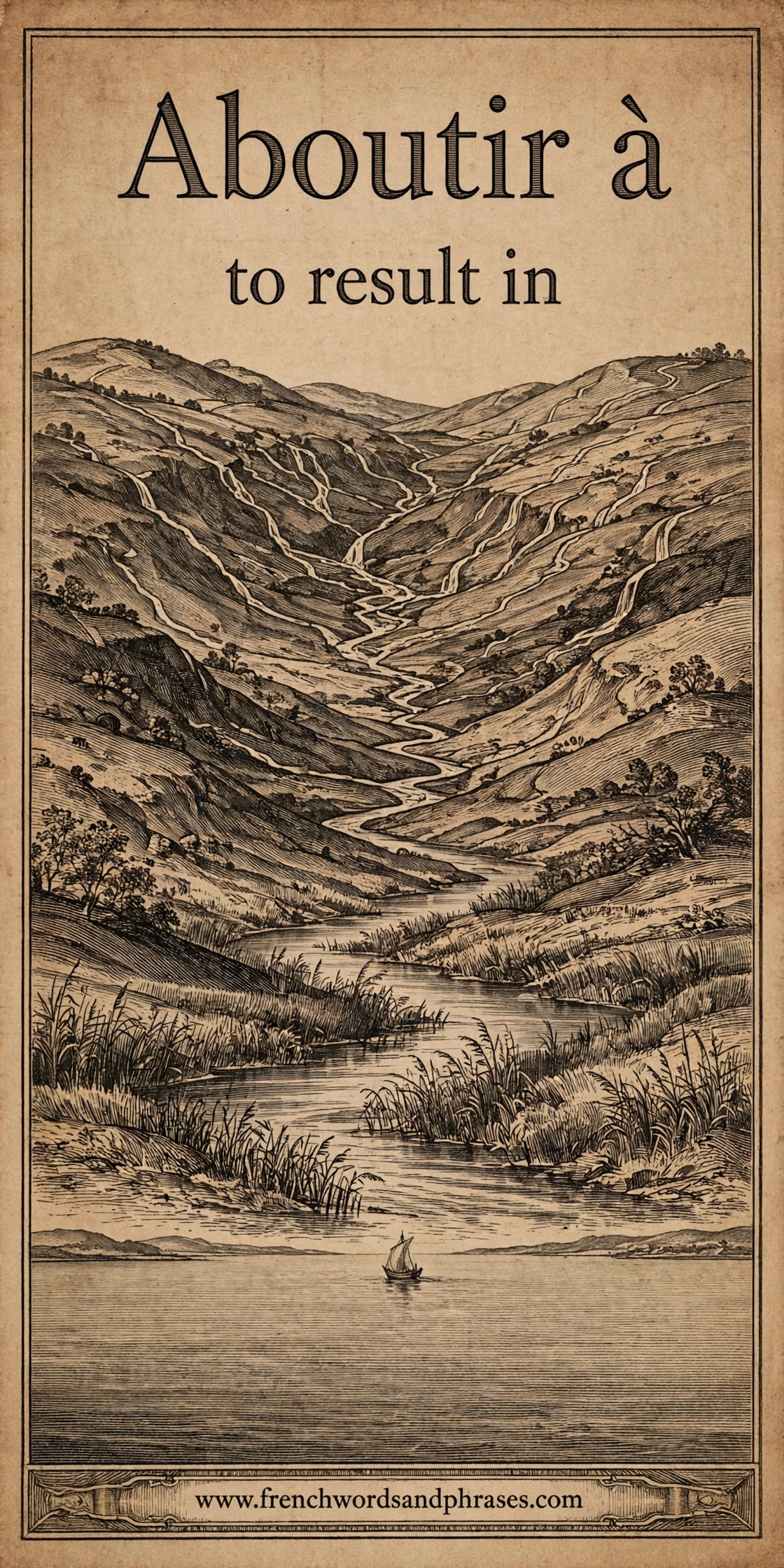
Aboutir means to lead to — for a road, an effort or an argument to arrive at an outcome, a result, an end.
A path coming out at a village, months of work ending in a signature, negotiations reaching a decision — aboutir is the verb of arrival at outcomes: everything that ends somewhere has abouti.
In this guide, you’ll learn how to conjugate aboutir in all the major French tenses and moods. Explore complete conjugation tables, French examples, English translations, and practice quizzes.
Understanding the French Verb Aboutir
Aboutir is a regular French verb belonging to the second group of verbs, those ending in -ir.
It means to lead to. It is commonly used of projects, talks, efforts and roads: a path aboutit à la rivière, an inquiry aboutit à une conclusion, and a plan that works is un projet qui aboutit. Its great negative is aboutir à rien — to come to nothing, the epitaph of wasted effort.
Verb classification: Second group (-ir)
Auxiliary verb: Avoir
Past participle: abouti
Present participle: aboutissant
English equivalents: To lead to, to end up, to succeed; aboutir à une décision — to lead to a decision; aboutir à un résultat — to produce a result; un projet qui aboutit — a project that succeeds; les négociations ont abouti — the negotiations succeeded; aboutir sur — to open onto (a street).
One important detail: aboutir is a regular second-group -ir verb, conjugated exactly like finir — j’aboutis, nous aboutissons, past participle abouti — and it almost always travels with à: aboutir à un accord, aboutir à rien (to come to nothing). Do not confuse it with abouter, the joiner’s verb of planks and pipes: aboutir finishes journeys of thought.
Experience the Word
Aboutir is the verb of the outcome — the moment a long process, road or argument finally arrives somewhere.
Imagine two years of letters, meetings and drafts in a small town hall. One spring morning the mayor signs, the room exhales — les négociations ont abouti, the talks have led somewhere at last, and the new school will be built.
Nothing has been hurried or forced. It has come through — le projet a abouti — to its result.
How to Conjugate Aboutir: Complete French Conjugation Guide
Let’s explore every major conjugation of aboutir, beginning with the indicative mood.
How to Conjugate Aboutir in the Indicative Mood
The indicative mood is used to express facts, observations, actions, and events.
How to Conjugate Aboutir in the Present Tense (Présent)
Used for actions happening now, habitual actions, and general truths.
| Subject | Conjugation |
|---|---|
| je | aboutis |
| tu | aboutis |
| il / elle | aboutit |
| nous | aboutissons |
| vous | aboutissez |
| ils / elles | aboutissent |
Example
Ce chemin aboutit à la rivière.
This path leads to the river.
Quick Quiz 1
Complete the sentence:
Nous ______ enfin à un accord.
Reveal the answer
aboutissons
Nous aboutissons enfin à un accord.
We are finally reaching an agreement.
How to Conjugate Aboutir in the Passé Composé
Used for completed actions in the past. Aboutir takes the auxiliary verb avoir.
| Subject | Conjugation |
|---|---|
| j’ | ai abouti |
| tu | as abouti |
| il / elle | a abouti |
| nous | avons abouti |
| vous | avez abouti |
| ils / elles | ont abouti |
Example
Les négociations ont abouti à un accord.
The negotiations led to an agreement.
How to Conjugate Aboutir in the Imparfait (Imperfect Tense)
Used for habitual past actions, descriptions, and ongoing situations in the past.
| Subject | Conjugation |
|---|---|
| je | aboutissais |
| tu | aboutissais |
| il / elle | aboutissait |
| nous | aboutissions |
| vous | aboutissiez |
| ils / elles | aboutissaient |
Example
Tous ses efforts aboutissaient à des refus.
All his efforts used to end in refusals.
Quick Quiz 2
Choose the correct form:
The project succeeded after two years.
Le projet ______ après deux ans. (a abouti / est abouti)
Reveal the answer
a abouti
Le projet a abouti après deux ans.
Aboutir takes avoir.
How to Conjugate Aboutir in the Plus-que-parfait
Used to describe an action that had already been completed before another past event.
| Subject | Conjugation |
|---|---|
| j’ | avais abouti |
| tu | avais abouti |
| il / elle | avait abouti |
| nous | avions abouti |
| vous | aviez abouti |
| ils / elles | avaient abouti |
Example
Le projet avait abouti après deux ans de travail.
The project had succeeded after two years of work.
How to Conjugate Aboutir in the Passé Simple
Primarily used in formal writing, literature, and historical narratives. It is rarely used in everyday conversation.
| Subject | Conjugation |
|---|---|
| je | aboutis |
| tu | aboutis |
| il / elle | aboutit |
| nous | aboutîmes |
| vous | aboutîtes |
| ils / elles | aboutirent |
Example
L’enquête aboutit à une conclusion inattendue.
The inquiry led to an unexpected conclusion.
How to Conjugate Aboutir in the Passé Antérieur
A literary tense used to express an action completed immediately before another past action, generally in the passé simple.
| Subject | Conjugation |
|---|---|
| j’ | eus abouti |
| tu | eus abouti |
| il / elle | eut abouti |
| nous | eûmes abouti |
| vous | eûtes abouti |
| ils / elles | eurent abouti |
Example
Quand les pourparlers eurent abouti, on annonça la nouvelle.
When the talks had succeeded, the news was announced.
How to Conjugate Aboutir in the Future Tense (Futur Simple)
Used to describe actions that will take place in the future.
| Subject | Conjugation |
|---|---|
| je | aboutirai |
| tu | aboutiras |
| il / elle | aboutira |
| nous | aboutirons |
| vous | aboutirez |
| ils / elles | aboutiront |
Example
Cette réforme aboutira à plus de justice.
This reform will lead to greater justice.
How to Conjugate Aboutir in the Futur Antérieur (Future Perfect)
Used for an action that will have been completed before a particular point in the future.
| Subject | Conjugation |
|---|---|
| j’ | aurai abouti |
| tu | auras abouti |
| il / elle | aura abouti |
| nous | aurons abouti |
| vous | aurez abouti |
| ils / elles | auront abouti |
Example
À la fin du mois, les discussions auront abouti.
By the end of the month, the discussions will have reached a conclusion.
How to Conjugate Aboutir in the Near Future (Futur Proche)
Used to describe something that is going to happen soon. Formed with aller + infinitive.
| Subject | Conjugation |
|---|---|
| je | vais aboutir |
| tu | vas aboutir |
| il / elle | va aboutir |
| nous | allons aboutir |
| vous | allez aboutir |
| ils / elles | vont aboutir |
Example
Le sentier va aboutir à une clairière.
The path is going to come out at a clearing.
How to Conjugate Aboutir in the Conditional Mood
The conditional mood expresses what would happen under certain circumstances. It is also frequently used to make polite requests or express wishes.
How to Conjugate Aboutir in the Present Conditional
| Subject | Conjugation |
|---|---|
| je | aboutirais |
| tu | aboutirais |
| il / elle | aboutirait |
| nous | aboutirions |
| vous | aboutiriez |
| ils / elles | aboutiraient |
Example
Sans patience, le projet n’aboutirait jamais.
Without patience, the project would never succeed.
How to Conjugate Aboutir in the Past Conditional
| Subject | Conjugation |
|---|---|
| j’ | aurais abouti |
| tu | aurais abouti |
| il / elle | aurait abouti |
| nous | aurions abouti |
| vous | auriez abouti |
| ils / elles | auraient abouti |
Example
Les négociations auraient abouti sans ce dernier obstacle.
The negotiations would have succeeded without that last obstacle.
Aboutir in the Literary Past Conditional Form
This less common literary form uses the imperfect subjunctive of avoir.
| Subject | Conjugation |
|---|---|
| j’ | eusse abouti |
| tu | eusses abouti |
| il / elle | eût abouti |
| nous | eussions abouti |
| vous | eussiez abouti |
| ils / elles | eussent abouti |
Example
L’effort eût abouti sans la fatigue des hommes.
The effort would have succeeded without the men’s exhaustion.
How to Conjugate Aboutir in the Subjunctive Mood
The subjunctive is used to express wishes, emotions, doubts, necessity, and uncertainty. It frequently follows expressions such as il faut que (it is necessary that) or bien que (although).
How to Conjugate Aboutir in the Present Subjunctive
| Subject | Conjugation |
|---|---|
| que je | aboutisse |
| que tu | aboutisses |
| qu’il / qu’elle | aboutisse |
| que nous | aboutissions |
| que vous | aboutissiez |
| qu’ils / qu’elles | aboutissent |
Example
Il faut que ce travail aboutisse à un résultat.
This work must lead to a result.
Quick Quiz 3
Complete the sentence using the subjunctive:
Je doute que vos efforts ______ avant l’hiver.
Reveal the answer
aboutissent
Je doute que vos efforts aboutissent avant l’hiver.
I doubt your efforts will succeed before winter.
How to Conjugate Aboutir in the Imperfect Subjunctive
A literary tense, rarely encountered in modern spoken French.
| Subject | Conjugation |
|---|---|
| que je | aboutisse |
| que tu | aboutisses |
| qu’il / qu’elle | aboutît |
| que nous | aboutissions |
| que vous | aboutissiez |
| qu’ils / qu’elles | aboutissent |
Example
On doutait que le projet aboutît un jour.
People doubted the project would ever succeed.
How to Conjugate Aboutir in the Pluperfect Subjunctive
A literary construction used to express an action completed before another past action.
| Subject | Conjugation |
|---|---|
| que j’ | eusse abouti |
| que tu | eusses abouti |
| qu’il / qu’elle | eût abouti |
| que nous | eussions abouti |
| que vous | eussiez abouti |
| qu’ils / qu’elles | eussent abouti |
Example
On espérait que les pourparlers eussent abouti avant l’hiver.
People hoped the talks had succeeded before winter.
How to Conjugate Aboutir in the Past Subjunctive
| Subject | Conjugation |
|---|---|
| que j’ | aie abouti |
| que tu | aies abouti |
| qu’il / qu’elle | ait abouti |
| que nous | ayons abouti |
| que vous | ayez abouti |
| qu’ils / qu’elles | aient abouti |
Example
Je suis heureux que vos efforts aient abouti.
I am glad your efforts have succeeded.
How to Conjugate Aboutir in the Imperative
The imperative is used to give commands, instructions, invitations, or suggestions. Subject pronouns are omitted.
How to Conjugate Aboutir in the Present Imperative
| Person | Conjugation |
|---|---|
| (tu) | aboutis |
| (nous) | aboutissons |
| (vous) | aboutissez |
Example
Aboutis à une décision avant ce soir !
Arrive at a decision before tonight!
Quick Quiz 4
How would you say Arrive at a decision (tu form)?
Reveal the answer
Aboutis à une décision !
French Participles of Aboutir
Participles are verb forms that can be used in compound tenses and other grammatical constructions.
Present Participle of Aboutir
aboutissant
En aboutissant à la place, la rue s’élargit.
As it comes out onto the square, the street widens.
Past Participle of Aboutir
abouti
Le projet, abouti de justesse, fut signé le lendemain.
The project, successful by a narrow margin, was signed the next day.
Aboutir in Everyday French: Real-Life Examples
Now that you know the conjugations, let’s see how aboutir appears in everyday French.
Example 1 — Present
Ce chemin aboutit à la rivière.
This path leads to the river.
Example 2 — Passé composé
Les négociations ont abouti à un accord.
The negotiations led to an agreement.
Example 3 — Imparfait
Ses efforts aboutissaient à des refus.
His efforts used to end in refusals.
Example 4 — Future
Cette réforme aboutira à plus de justice.
This reform will lead to greater justice.
Example 5 — Conditional
Sans patience, le projet n’aboutirait jamais.
Without patience, the project would never succeed.
Example 6 — Imperative
Aboutissez à une décision !
Arrive at a decision!
Beyond Translation: The Meaning of Aboutir
English lead to covers the ground, but French aboutir keeps the picture of the path: un aboutissement is the coming-out point of a long road.
Every process is a journey; aboutir is its arrival.
And its dark twin is just as common: aboutir à rien, to come to nothing — the road that ends at a wall. Between the two, French judges every project ever proposed.
How to Remember the French Verb Aboutir
Remember it this way: Aboutir is about the path coming out at the river — every process arrives somewhere.
- Regular -ir like finir: j’aboutis, nous aboutissons, past participle abouti.
- Almost always with à: aboutir à un accord, aboutir à rien — to come to nothing.
- Not abouter: abouter joins planks end to end; aboutir brings processes to results.
The key idea is the path coming out at the river — every process arrives somewhere.
Test Your Knowledge of Aboutir
Let’s see how much you’ve learned. Try answering these questions before revealing the answers.
Question 1
Which preposition does aboutir almost always take, and what does aboutir à rien mean?
Reveal the answer
À — aboutir à rien means to come to nothing.
Question 2
How do you say The negotiations led to an agreement in French?
Reveal the answer
Les négociations ont abouti à un accord.
Question 3
Translate: This path leads to the river.
Reveal the answer
Ce chemin aboutit à la rivière.
Question 4
What is the past participle of aboutir?
Reveal the answer
Abouti.
Question 5
Complete the sentence:
Il faut que ce travail ______ à un résultat.
Reveal the answer
aboutisse
Il faut que ce travail aboutisse à un résultat.
This work must lead to a result.
Your Final Challenge
Can You Use It?
How would you say this in French?
After two years of work, the project has finally succeeded.
Reveal the answer
Après deux ans de travail, le projet a enfin abouti.
After two years of work, the project has finally succeeded.
A little French. A little curiosity. A richer everyday life.
LEARN FRENCH ONE WORD AT A TIME