A French Word to Live By
How to Conjugate Abhorrer in French
/a.bɔ.ʁe/
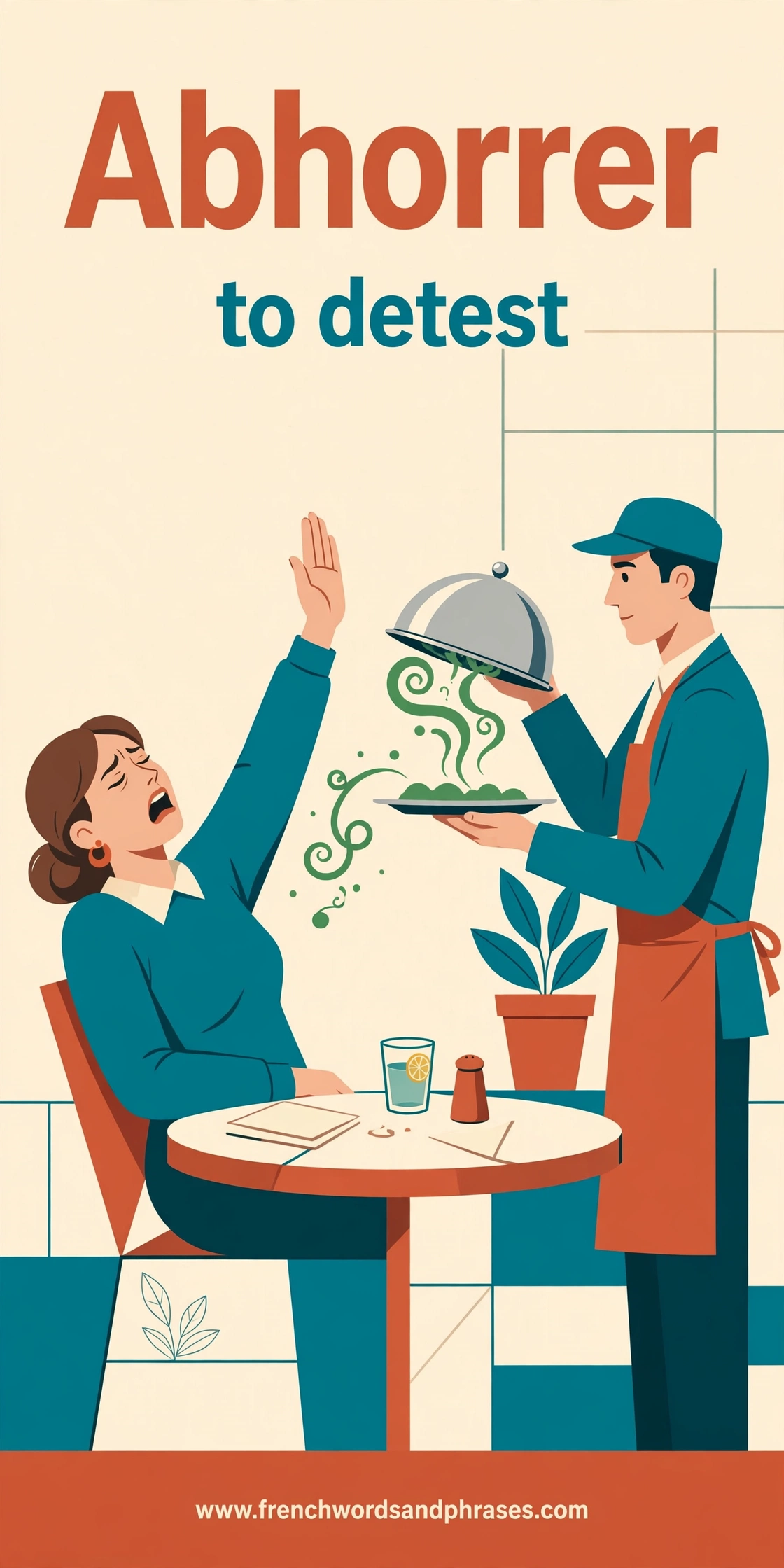
Abhorrer means to abhor — to detest with the whole body, to shrink from something with horror, loathing and a shudder.
A tyrant hated by a whole people, a smell that turns the stomach, an injustice that makes decent people recoil — abhorrer is the strongest verb of hatred French possesses: stronger than détester, darker than haïr, it is loathing with a shudder in it.
In this guide, you’ll learn how to conjugate abhorrer in all the major French tenses and moods. Explore complete conjugation tables, French examples, English translations, and practice quizzes.
Understanding the French Verb Abhorrer
Abhorrer is a regular French verb belonging to the first group of verbs, those ending in-er.
It means to abhor, to detest. It is commonly used in elevated and moral language for violence, cruelty, injustice and hypocrisy — abhorrer la guerre, abhorrer le mensonge — and of people and regimes loathed by all: un tyran abhorré de son peuple. In everyday speech détester does the ordinary work; abhorrer is saved for what truly revolts the speaker.
Verb classification: First group (-er)
Auxiliary verb: Avoir
Past participle: abhorré
Present participle: abhorrant
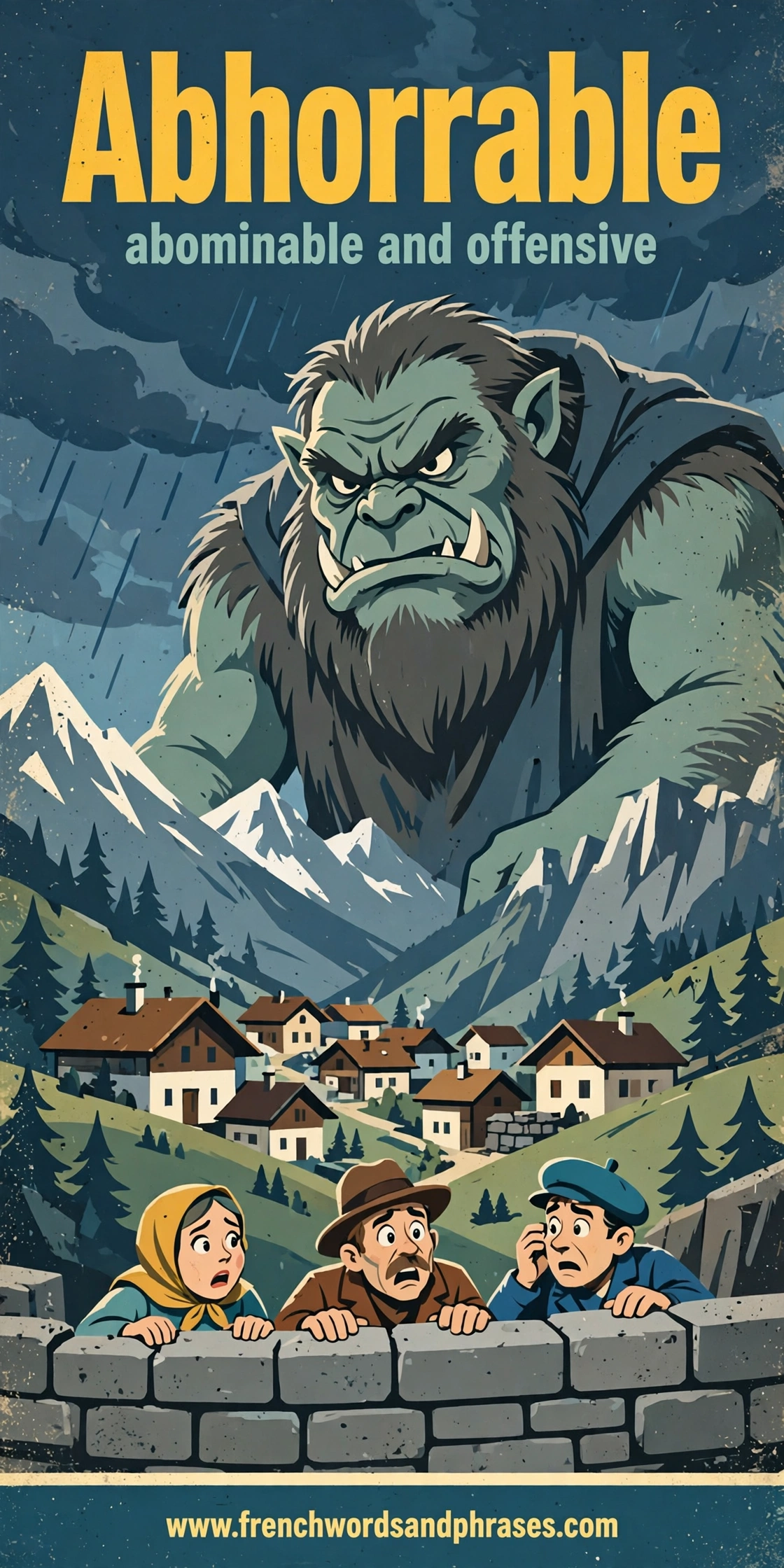
English equivalents: To abhor, to detest, to loathe; abhorrer la violence — to abhor violence; abhorrer le mensonge — to detest lying; être abhorré de tous — to be loathed by everyone; abhorrable — abominable, loathsome.
One important detail: abhorrer doubles its r in every form — j’abhorre, nous abhorrons, j’abhorrais, j’abhorrerai — because the Latin shudder inside it, horrere, to bristle with horror, is spelled with two r’s and French never thins them. The h is silent but aspirate in behaviour: one says j’abhorre with the apostrophe, and the verb is otherwise a perfectly regular -er, past participle abhorré.
Experience the Word
Abhorrer is hatred at full strength — not dislike, not disapproval, but the recoil of the whole being, hair bristling, from what it cannot bear.
Imagine a village under a petty tyrant of a mayor, feared for twenty years: the rigged contracts, the ruined neighbours, the fear at every door. When he finally falls, no one merely dislikes him in the café conversations — on l’abhorre, they abhor him, with a unanimity that needs no vote, the way the body rejects poison.
Dislike can be argued with. He is abhorred — abhorré — and the whole village breathes again.
How to Conjugate Abhorrer: Complete French Conjugation Guide
Let’s explore every major conjugation of abhorrer, beginning with the indicative mood.
How to Conjugate Abhorrer in the Indicative Mood
The indicative mood is used to express facts, observations, actions, and events.
How to Conjugate Abhorrer in the Present Tense (Présent)
Used for actions happening now, habitual actions, and general truths.
| Subject | Conjugation |
|---|---|
| je | abhorre |
| tu | abhorres |
| il / elle | abhorre |
| nous | abhorrons |
| vous | abhorrez |
| ils / elles | abhorrent |
Example
Elle abhorre le mensonge sous toutes ses formes.
She abhors lying in all its forms.
Quick Quiz 1
Complete the sentence:
Nous ______ la violence sous toutes ses formes.
Reveal the answer
abhorrons
Nous abhorrons la violence sous toutes ses formes.
We abhor violence in all its forms.
How to Conjugate Abhorrer in the Passé Composé
Used for completed actions in the past. Abhorrer takes the auxiliary verb avoir.
| Subject | Conjugation |
|---|---|
| j’ | ai abhorré |
| tu | as abhorré |
| il / elle | a abhorré |
| nous | avons abhorré |
| vous | avez abhorré |
| ils / elles | ont abhorré |
Example
Le peuple a abhorré ce tyran pendant vingt ans.
The people abhorred this tyrant for twenty years.
How to Conjugate Abhorrer in the Imparfait (Imperfect Tense)
Used for habitual past actions, descriptions, and ongoing situations in the past.
| Subject | Conjugation |
|---|---|
| je | abhorrais |
| tu | abhorrais |
| il / elle | abhorrait |
| nous | abhorrions |
| vous | abhorriez |
| ils / elles | abhorraient |
Example
Il abhorrait l’hypocrisie plus que tout au monde.
He detested hypocrisy more than anything in the world.
Quick Quiz 2
Choose the correct form:
The people abhorred this tyrant.
Le peuple ______ ce tyran. (a abhorré / est abhorré)
Reveal the answer
a abhorré
Le peuple a abhorré ce tyran.
Abhorrer takes avoir.
How to Conjugate Abhorrer in the Plus-que-parfait
Used to describe an action that had already been completed before another past event.
| Subject | Conjugation |
|---|---|
| j’ | avais abhorré |
| tu | avais abhorré |
| il / elle | avait abhorré |
| nous | avions abhorré |
| vous | aviez abhorré |
| ils / elles | avaient abhorré |
Example
Ils avaient abhorré la guerre dès la première bataille.
They had abhorred the war from the very first battle.
How to Conjugate Abhorrer in the Passé Simple
Primarily used in formal writing, literature, and historical narratives. It is rarely used in everyday conversation.
| Subject | Conjugation |
|---|---|
| je | abhorrai |
| tu | abhorras |
| il / elle | abhorra |
| nous | abhorrâmes |
| vous | abhorrâtes |
| ils / elles | abhorrèrent |
Example
La foule abhorra le traître dès son premier discours.
The crowd loathed the traitor from his first speech.
How to Conjugate Abhorrer in the Passé Antérieur
A literary tense used to express an action completed immediately before another past action, generally in the passé simple.
| Subject | Conjugation |
|---|---|
| j’ | eus abhorré |
| tu | eus abhorré |
| il / elle | eut abhorré |
| nous | eûmes abhorré |
| vous | eûtes abhorré |
| ils / elles | eurent abhorré |
Example
Quand le peuple eut abhorré le régime assez longtemps, il se souleva.
When the people had abhorred the regime long enough, they rose up.
How to Conjugate Abhorrer in the Future Tense (Futur Simple)
Used to describe actions that will take place in the future.
| Subject | Conjugation |
|---|---|
| je | abhorrerai |
| tu | abhorreras |
| il / elle | abhorrera |
| nous | abhorrerons |
| vous | abhorrerez |
| ils / elles | abhorreront |
Example
Nos enfants abhorreront la cruauté comme nous abhorrons l’injustice.
Our children will abhor cruelty as we abhor injustice.
How to Conjugate Abhorrer in the Futur Antérieur (Future Perfect)
Used for an action that will have been completed before a particular point in the future.
| Subject | Conjugation |
|---|---|
| j’ | aurai abhorré |
| tu | auras abhorré |
| il / elle | aura abhorré |
| nous | aurons abhorré |
| vous | aurez abhorré |
| ils / elles | auront abhorré |
Example
À la fin du procès, le jury aura abhorré ces crimes odieux.
By the end of the trial, the jury will have abhorred these odious crimes.
How to Conjugate Abhorrer in the Near Future (Futur Proche)
Used to describe something that is going to happen soon. Formed with aller + infinitive.
| Subject | Conjugation |
|---|---|
| je | vais abhorrer |
| tu | vas abhorrer |
| il / elle | va abhorrer |
| nous | allons abhorrer |
| vous | allez abhorrer |
| ils / elles | vont abhorrer |
Example
Tu vas abhorrer ce parfum, il est écœurant.
You are going to loathe this perfume, it is sickening.
How to Conjugate Abhorrer in the Conditional Mood
The conditional mood expresses what would happen under certain circumstances. It is also frequently used to make polite requests or express wishes.
How to Conjugate Abhorrer in the Present Conditional
| Subject | Conjugation |
|---|---|
| je | abhorrerais |
| tu | abhorrerais |
| il / elle | abhorrerait |
| nous | abhorrerions |
| vous | abhorreriez |
| ils / elles | abhorreraient |
Example
Tout homme honnête abhorrerait une telle trahison.
Any honest man would abhor such a betrayal.
How to Conjugate Abhorrer in the Past Conditional
| Subject | Conjugation |
|---|---|
| j’ | aurais abhorré |
| tu | aurais abhorré |
| il / elle | aurait abhorré |
| nous | aurions abhorré |
| vous | auriez abhorré |
| ils / elles | auraient abhorré |
Example
Elle aurait abhorré ce spectacle si elle l’avait vu.
She would have loathed this spectacle if she had seen it.
Abhorrer in the Literary Past Conditional Form
This less common literary form uses the imperfect subjunctive of avoir.
| Subject | Conjugation |
|---|---|
| j’ | eusse abhorré |
| tu | eusses abhorré |
| il / elle | eût abhorré |
| nous | eussions abhorré |
| vous | eussiez abhorré |
| ils / elles | eussent abhorré |
Example
Le juste eût abhorré le mensonge même pour sauver sa vie.
The just man would have abhorred lying even to save his own life.
How to Conjugate Abhorrer in the Subjunctive Mood
The subjunctive is used to express wishes, emotions, doubts, necessity, and uncertainty. It frequently follows expressions such as il faut que (it is necessary that) or bien que (although).
How to Conjugate Abhorrer in the Present Subjunctive
| Subject | Conjugation |
|---|---|
| que je | abhorre |
| que tu | abhorres |
| qu’il / qu’elle | abhorre |
| que nous | abhorrions |
| que vous | abhorriez |
| qu’ils / qu’elles | abhorrent |
Example
Il est naturel que le peuple abhorre la tyrannie.
It is natural that the people abhor tyranny.
Quick Quiz 3
Complete the sentence using the subjunctive:
Il est naturel que vous ______ l’injustice.
Reveal the answer
abhorriez
Il est naturel que vous abhorriez l’injustice.
It is natural that you abhor injustice.
How to Conjugate Abhorrer in the Imperfect Subjunctive
A literary tense, rarely encountered in modern spoken French.
| Subject | Conjugation |
|---|---|
| que je | abhorrasse |
| que tu | abhorrasses |
| qu’il / qu’elle | abhorrât |
| que nous | abhorrassions |
| que vous | abhorrassiez |
| qu’ils / qu’elles | abhorrassent |
Example
On ne s’étonnait pas qu’elle abhorrât les flatteurs.
Nobody was surprised that she detested flatterers.
How to Conjugate Abhorrer in the Pluperfect Subjunctive
A literary construction used to express an action completed before another past action.
| Subject | Conjugation |
|---|---|
| que j’ | eusse abhorré |
| que tu | eusses abhorré |
| qu’il / qu’elle | eût abhorré |
| que nous | eussions abhorré |
| que vous | eussiez abhorré |
| qu’ils / qu’elles | eussent abhorré |
Example
L’histoire jugea qu’ils eussent abhorré la violence en vain.
History judged that they had abhorred violence in vain.
How to Conjugate Abhorrer in the Past Subjunctive
| Subject | Conjugation |
|---|---|
| que j’ | aie abhorré |
| que tu | aies abhorré |
| qu’il / qu’elle | ait abhorré |
| que nous | ayons abhorré |
| que vous | ayez abhorré |
| qu’ils / qu’elles | aient abhorré |
Example
Je comprends que tu aies abhorré cette époque de ta vie.
I understand that you loathed that period of your life.
How to Conjugate Abhorrer in the Imperative
The imperative is used to give commands, instructions, invitations, or suggestions. Subject pronouns are omitted.
How to Conjugate Abhorrer in the Present Imperative
| Person | Conjugation |
|---|---|
| (tu) | abhorre |
| (nous) | abhorrons |
| (vous) | abhorrez |
Example
Abhorre le mal et choisis le bien !
Abhor evil and choose good!
Quick Quiz 4
How would you say Abhor evil (tu form)?
Reveal the answer
Abhorre le mal !
French Participles of Abhorrer
Participles are verb forms that can be used in compound tenses and other grammatical constructions.
Present Participle of Abhorrer
abhorrant
En abhorrant la violence, elle a consacré sa vie à la paix.
By abhorring violence, she devoted her life to peace.
Past Participle of Abhorrer
abhorré
Abhorré de tous, le tyran finit ses jours en exil.
Loathed by all, the tyrant ended his days in exile.
Abhorrer in Everyday French: Real-Life Examples
Now that you know the conjugations, let’s see how abhorrer appears in everyday French.
Example 1 — Present
Elle abhorre le mensonge.
She abhors lying.
Example 2 — Passé composé
Le peuple a abhorré ce tyran vingt ans.
The people abhorred this tyrant for twenty years.
Example 3 — Imparfait
Il abhorrait l’hypocrisie plus que tout.
He detested hypocrisy more than anything.
Example 4 — Future
Nos enfants abhorreront la cruauté.
Our children will abhor cruelty.
Example 5 — Conditional
Tout homme honnête abhorrerait une telle trahison.
Any honest man would abhor such a betrayal.
Example 6 — Imperative
Abhorrez la violence sous toutes ses formes !
Abhor violence in all its forms!
Beyond Translation: The Meaning of Abhorrer
English abhor is the same word wearing the same shudder — Latin abhorrere, to shrink back bristling — and both languages reserve it for the top of the scale.
Détester is a judgement; abhorrer is a recoil.
One déteste the rain, a film, a flavour. One abhorre cruelty, tyranny and lies — things the body itself refuses before the mind has finished its sentence. It is the verb of moral disgust, and French reaches for it only when nothing weaker will do.
How to Remember the French Verb Abhorrer
Remember it this way: Abhorrer is about the whole body recoiling — loathing with a shudder in it.
- Double r everywhere: j’abhorre, nous abhorrons, j’abhorrerai — the Latin shudder horrere keeps both r’s.
- Top of the hatred scale: aimer, détester, haïr — and above them all, abhorrer, with a shudder.
- Regular -er: j’abhorre, nous abhorrons, past participle abhorré; its adjective is abhorrable.
The key idea is the whole body recoiling — loathing with a shudder in it.
Test Your Knowledge of Abhorrer
Let’s see how much you’ve learned. Try answering these questions before revealing the answers.
Question 1
How does abhorrer compare with détester?
Reveal the answer
It is far stronger — détester is a judgement, abhorrer is a physical recoil: one déteste the rain, one abhorre cruelty.
Question 2
How do you say She abhors lying in all its forms in French?
Reveal the answer
Elle abhorre le mensonge sous toutes ses formes.
Question 3
Translate: The people abhorred this tyrant for twenty years.
Reveal the answer
Le peuple a abhorré ce tyran pendant vingt ans.
Question 4
What is the past participle of abhorrer?
Reveal the answer
Abhorré.
Question 5
Complete the sentence:
Il est naturel que le peuple ______ la tyrannie.
Reveal the answer
abhorre
Il est naturel que le peuple abhorre la tyrannie.
It is natural that the people abhor tyranny.
Your Final Challenge
Can You Use It?
How would you say this in French?
To abhor cruelty is easy; it takes more courage to abhor the cruelty in oneself.
Reveal the answer
Abhorrer la cruauté est facile ; il faut plus de courage pour abhorrer la cruauté en soi-même.
To abhor cruelty is easy; it takes more courage to abhor the cruelty in oneself.
A little French. A little curiosity. A richer everyday life.
LEARN FRENCH ONE WORD AT A TIME