A French Word to Live By
How to Conjugate Valser in French
/val.se/
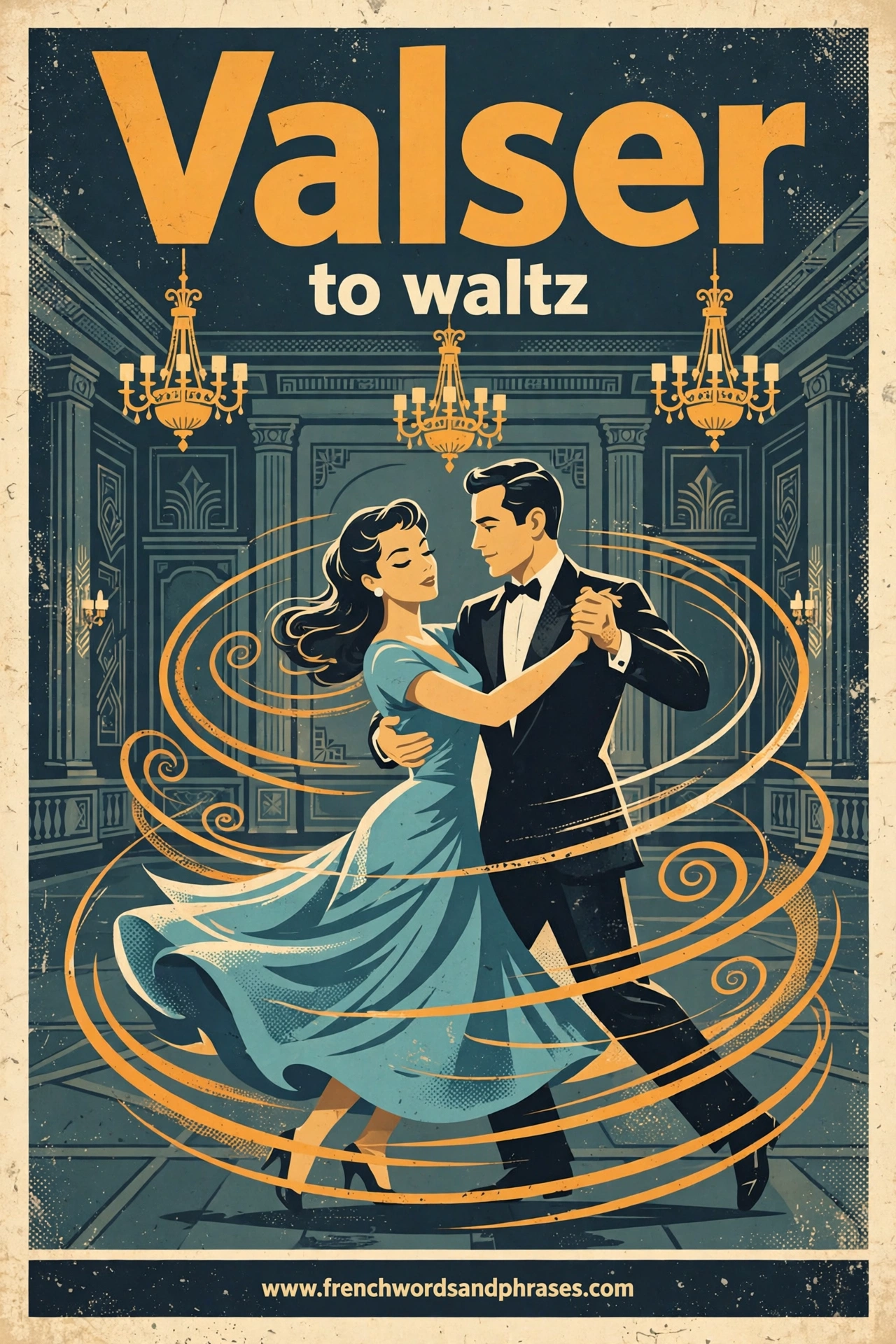
Valser means to waltz — to turn round the dance floor in three-time; and in familiar French, faire valser is to send things flying and people packing.
One, two, three — one, two, three — a couple turning under the chandeliers of a Vienna ballroom, her dress describing circles on the parquet: valser is the verb of the waltz, the dance that once scandalised Europe by holding partners close and spinning them dizzy.
In this guide, you’ll learn how to conjugate valser in all the major French tenses and moods. Explore complete conjugation tables, French examples, English translations, and practice quizzes.
Understanding the French Verb Valser
Valser is a regular French verb belonging to the first group of verbs, those ending in -er.
It means to waltz. It is commonly used for dancing the waltz at balls and weddings, and in familiar speech for sackings, clear-outs and soaring prices — anything whirled away at speed.
Verb classification: First group (-er)
Auxiliary verb: Avoir
Past participle: valsé
Present participle: valsant
English equivalents: To waltz; faire valser quelqu’un — to sack someone, to send someone packing (fam.); faire valser quelque chose — to send something flying, to splash money around; les prix valsent — prices are rocketing; faire valser les millions — to throw money about.
One important detail: valser is a regular -er verb built on the noun la valse, the waltz — but its familiar second life is the one you will hear most. Faire valser quelqu’un means to get rid of them briskly, usually a sacking: le directeur a valsé (he got the sack) or on l’a fait valser. Prices can valse too when they shoot up: les étiquettes valsent. In every case the image is the same — something spinning off the floor and out of the room.
Experience the Word
Valser is the verb of the elegant whirl — graceful on the dance floor, ruthless in the office.
Imagine the New Year’s ball in Vienna. The orchestra strikes up, and a hundred couples rise as one: les robes valsent, the chandeliers blur, and for three minutes the whole room turns like a music box. The next morning, in a Paris office, the same verb does colder work: un directeur incompétent a valsé — no music, no chandeliers, just a desk cleared by noon.
Grace or dismissal, the movement is identical. Something turns, spins — and valse out of the room.
How to Conjugate Valser: Complete French Conjugation Guide
Let’s explore every major conjugation of valser, beginning with the indicative mood.
How to Conjugate Valser in the Indicative Mood
The indicative mood is used to express facts, observations, actions, and events.
How to Conjugate Valser in the Present Tense (Présent)
Used for actions happening now, habitual actions, and general truths.
| Subject | Conjugation |
|---|---|
| je | valse |
| tu | valses |
| il / elle | valse |
| nous | valsons |
| vous | valsez |
| ils / elles | valsent |
Example
Les couples valsent au son de l’orchestre.
The couples waltz to the sound of the orchestra.
Quick Quiz 1
Complete the sentence:
Nous ______ au bal du village.
Reveal the answer
valsons
Nous valsons au bal du village.
We waltz at the village ball.
How to Conjugate Valser in the Passé Composé
Used for completed actions in the past. Valser takes the auxiliary verb avoir.
| Subject | Conjugation |
|---|---|
| j’ | ai valsé |
| tu | as valsé |
| il / elle | a valsé |
| nous | avons valsé |
| vous | avez valsé |
| ils / elles | ont valsé |
Example
Ils ont valsé toute la nuit au bal du village.
They waltzed all night at the village ball.
How to Conjugate Valser in the Imparfait (Imperfect Tense)
Used for habitual past actions, descriptions, and ongoing situations in the past.
| Subject | Conjugation |
|---|---|
| je | valsais |
| tu | valsais |
| il / elle | valsait |
| nous | valsions |
| vous | valsiez |
| ils / elles | valsaient |
Example
Autrefois, on valsait dans les guinguettes du dimanche.
In the old days, people used to waltz in the Sunday dance halls.
Quick Quiz 2
Choose the correct form:
They waltzed all night.
Ils ______ toute la nuit. (ont valsé / sont valsés)
Reveal the answer
ont valsé
Ils ont valsé toute la nuit.
Valser takes avoir.
How to Conjugate Valser in the Plus-que-parfait
Used to describe an action that had already been completed before another past event.
| Subject | Conjugation |
|---|---|
| j’ | avais valsé |
| tu | avais valsé |
| il / elle | avait valsé |
| nous | avions valsé |
| vous | aviez valsé |
| ils / elles | avaient valsé |
Example
Elle avait valsé avec lui au mariage de sa sœur.
She had waltzed with him at her sister’s wedding.
How to Conjugate Valser in the Passé Simple
Primarily used in formal writing, literature, and historical narratives. It is rarely used in everyday conversation.
| Subject | Conjugation |
|---|---|
| je | valsai |
| tu | valsas |
| il / elle | valsa |
| nous | valsâmes |
| vous | valsâtes |
| ils / elles | valsèrent |
Example
Le couple valsa au milieu du salon sous les applaudissements.
The couple waltzed in the middle of the room to applause.
How to Conjugate Valser in the Passé Antérieur
A literary tense used to express an action completed immediately before another past action, generally in the passé simple.
| Subject | Conjugation |
|---|---|
| j’ | eus valsé |
| tu | eus valsé |
| il / elle | eut valsé |
| nous | eûmes valsé |
| vous | eûtes valsé |
| ils / elles | eurent valsé |
Example
Quand ils eurent valsé une dernière fois, l’orchestre se tut.
When they had waltzed one last time, the orchestra fell silent.
How to Conjugate Valser in the Future Tense (Futur Simple)
Used to describe actions that will take place in the future.
| Subject | Conjugation |
|---|---|
| je | valserai |
| tu | valseras |
| il / elle | valsera |
| nous | valserons |
| vous | valserez |
| ils / elles | valseront |
Example
Ce soir, vous valserez à l’opéra pour le bal du Nouvel An.
Tonight, you will waltz at the opera for the New Year ball.
How to Conjugate Valser in the Futur Antérieur (Future Perfect)
Used for an action that will have been completed before a particular point in the future.
| Subject | Conjugation |
|---|---|
| j’ | aurai valsé |
| tu | auras valsé |
| il / elle | aura valsé |
| nous | aurons valsé |
| vous | aurez valsé |
| ils / elles | auront valsé |
Example
À minuit, ils auront valsé dix fois autour de la piste.
By midnight, they will have waltzed ten times around the floor.
How to Conjugate Valser in the Near Future (Futur Proche)
Used to describe something that is going to happen soon. Formed with aller + infinitive.
| Subject | Conjugation |
|---|---|
| je | vais valser |
| tu | vas valser |
| il / elle | va valser |
| nous | allons valser |
| vous | allez valser |
| ils / elles | vont valser |
Example
Je vais valser avec ma grand-mère, c’est sa chanson préférée.
I am going to waltz with my grandmother, it is her favourite song.
How to Conjugate Valser in the Conditional Mood
The conditional mood expresses what would happen under certain circumstances. It is also frequently used to make polite requests or express wishes.
How to Conjugate Valser in the Present Conditional
| Subject | Conjugation |
|---|---|
| je | valserais |
| tu | valserais |
| il / elle | valserait |
| nous | valserions |
| vous | valseriez |
| ils / elles | valseraient |
Example
Avec un bon professeur, tu valserais comme un Viennois.
With a good teacher, you would waltz like a Viennese.
How to Conjugate Valser in the Past Conditional
| Subject | Conjugation |
|---|---|
| j’ | aurais valsé |
| tu | aurais valsé |
| il / elle | aurait valsé |
| nous | aurions valsé |
| vous | auriez valsé |
| ils / elles | auraient valsé |
Example
Il aurait valsé toute la nuit si l’orchestre n’avait pas arrêté.
He would have waltzed all night if the orchestra had not stopped.
Valser in the Literary Past Conditional Form
This less common literary form uses the imperfect subjunctive of avoir.
| Subject | Conjugation |
|---|---|
| j’ | eusse valsé |
| tu | eusses valsé |
| il / elle | eût valsé |
| nous | eussions valsé |
| vous | eussiez valsé |
| ils / elles | eussent valsé |
Example
Elle eût valsé au palais jusqu’à l’aube.
She would have waltzed at the palace until dawn.
How to Conjugate Valser in the Subjunctive Mood
The subjunctive is used to express wishes, emotions, doubts, necessity, and uncertainty. It frequently follows expressions such as il faut que (it is necessary that) or bien que (although).
How to Conjugate Valser in the Present Subjunctive
| Subject | Conjugation |
|---|---|
| que je | valse |
| que tu | valses |
| qu’il / qu’elle | valse |
| que nous | valsions |
| que vous | valsiez |
| qu’ils / qu’elles | valsent |
Example
Il faut que vous valsiez au mariage de votre fille.
You must waltz at your daughter’s wedding.
Quick Quiz 3
Complete the sentence using the subjunctive:
Il faut que vous ______ avec elle.
Reveal the answer
valsiez
Il faut que vous valsiez avec elle.
You must waltz with her.
How to Conjugate Valser in the Imperfect Subjunctive
A literary tense, rarely encountered in modern spoken French.
| Subject | Conjugation |
|---|---|
| que je | valsasse |
| que tu | valsasses |
| qu’il / qu’elle | valsât |
| que nous | valsassions |
| que vous | valsassiez |
| qu’ils / qu’elles | valsassent |
Example
Elle rêvait qu’il valsât avec elle sous les étoiles.
She dreamed that he would waltz with her under the stars.
How to Conjugate Valser in the Pluperfect Subjunctive
A literary construction used to express an action completed before another past action.
| Subject | Conjugation |
|---|---|
| que j’ | eusse valsé |
| que tu | eusses valsé |
| qu’il / qu’elle | eût valsé |
| que nous | eussions valsé |
| que vous | eussiez valsé |
| qu’ils / qu’elles | eussent valsé |
Example
On racontait qu’ils eussent valsé au bal de l’empereur.
People told how they had waltzed at the emperor’s ball.
How to Conjugate Valser in the Past Subjunctive
| Subject | Conjugation |
|---|---|
| que j’ | aie valsé |
| que tu | aies valsé |
| qu’il / qu’elle | ait valsé |
| que nous | ayons valsé |
| que vous | ayez valsé |
| qu’ils / qu’elles | aient valsé |
Example
Je suis touché que tu aies valsé avec le vieux monsieur.
I am touched that you waltzed with the old gentleman.
How to Conjugate Valser in the Imperative
The imperative is used to give commands, instructions, invitations, or suggestions. Subject pronouns are omitted.
How to Conjugate Valser in the Present Imperative
| Person | Conjugation |
|---|---|
| (tu) | valse |
| (nous) | valsons |
| (vous) | valsez |
Example
Valsez, mesdames et messieurs, la musique n’attend pas !
Waltz, ladies and gentlemen, the music will not wait!
Quick Quiz 4
How would you say Waltz with me (tu form)?
Reveal the answer
Valse avec moi !
French Participles of Valser
Participles are verb forms that can be used in compound tenses and other grammatical constructions.
Present Participle of Valser
valsant
En valsant, elle a oublié tous ses soucis.
While waltzing, she forgot all her worries.
Past Participle of Valser
valsé
Après avoir valsé, les invités ont applaudi l’orchestre.
After waltzing, the guests applauded the orchestra.
Valser in Everyday French: Real-Life Examples
Now that you know the conjugations, let’s see how valser appears in everyday French.
Example 1 — Present
Les couples valsent autour de la piste.
The couples waltz around the floor.
Example 2 — Passé composé
Nous avons valsé au mariage de ma cousine.
We waltzed at my cousin’s wedding.
Example 3 — Imparfait
On valsait dans les guinguettes autrefois.
People used to waltz in the dance halls in the old days.
Example 4 — Future
Tu valseras avec moi ce soir ?
Will you waltz with me tonight?
Example 5 — Conditional
Avec des cours, je valserais beaucoup mieux.
With lessons, I would waltz much better.
Example 6 — Imperative
Valse avec elle, c’est sa chanson préférée !
Waltz with her, it is her favourite song!
Beyond Translation: The Meaning of Valser
English keeps waltz on the dance floor; French valser escaped the ballroom long ago.
Faire valser is the sack, the clear-out, the price explosion.
Le ministre a valsé — the minister has been fired; les prix valsent — prices are spinning out of control. One verb for the ballroom and the boardroom, because both are about things that turn and fly away.
How to Remember the French Verb Valser
Remember it this way: Valser is about one, two, three — the whirl of the dance floor, and of everything sent flying.
- La valse is the waltz; valser is to dance it — one, two, three, and turn.
- Familiar gold: faire valser quelqu’un — to sack them; les prix valsent — prices rocket.
- Regular -er: je valse, nous valsons, past participle valsé.
The key idea is one, two, three — the whirl of the dance floor, and of everything sent flying.
Test Your Knowledge of Valser
Let’s see how much you’ve learned. Try answering these questions before revealing the answers.
Question 1
How do you say to sack someone, in familiar French?
Reveal the answer
Faire valser quelqu’un.
Question 2
How do you say The couples waltz around the floor in French?
Reveal the answer
Les couples valsent autour de la piste.
Question 3
Translate: We waltzed at my cousin’s wedding.
Reveal the answer
Nous avons valsé au mariage de ma cousine.
Question 4
What is the past participle of valser?
Reveal the answer
Valsé.
Question 5
Complete the sentence:
Il faut que vous ______ au mariage de votre fille.
Reveal the answer
valsiez
Il faut que vous valsiez au mariage de votre fille.
You must waltz at your daughter’s wedding.
Your Final Challenge
Can You Use It?
How would you say this in French?
The couples waltz beneath the chandeliers, and the night turns with them.
Reveal the answer
Les couples valsent sous les lustres, et la nuit tourne avec eux.
The couples waltz beneath the chandeliers, and the night turns with them.
A little French. A little curiosity. A richer everyday life.
LEARN FRENCH ONE WORD AT A TIME