A French Word to Live By
How to Conjugate Trier in French
/tʁi.je/
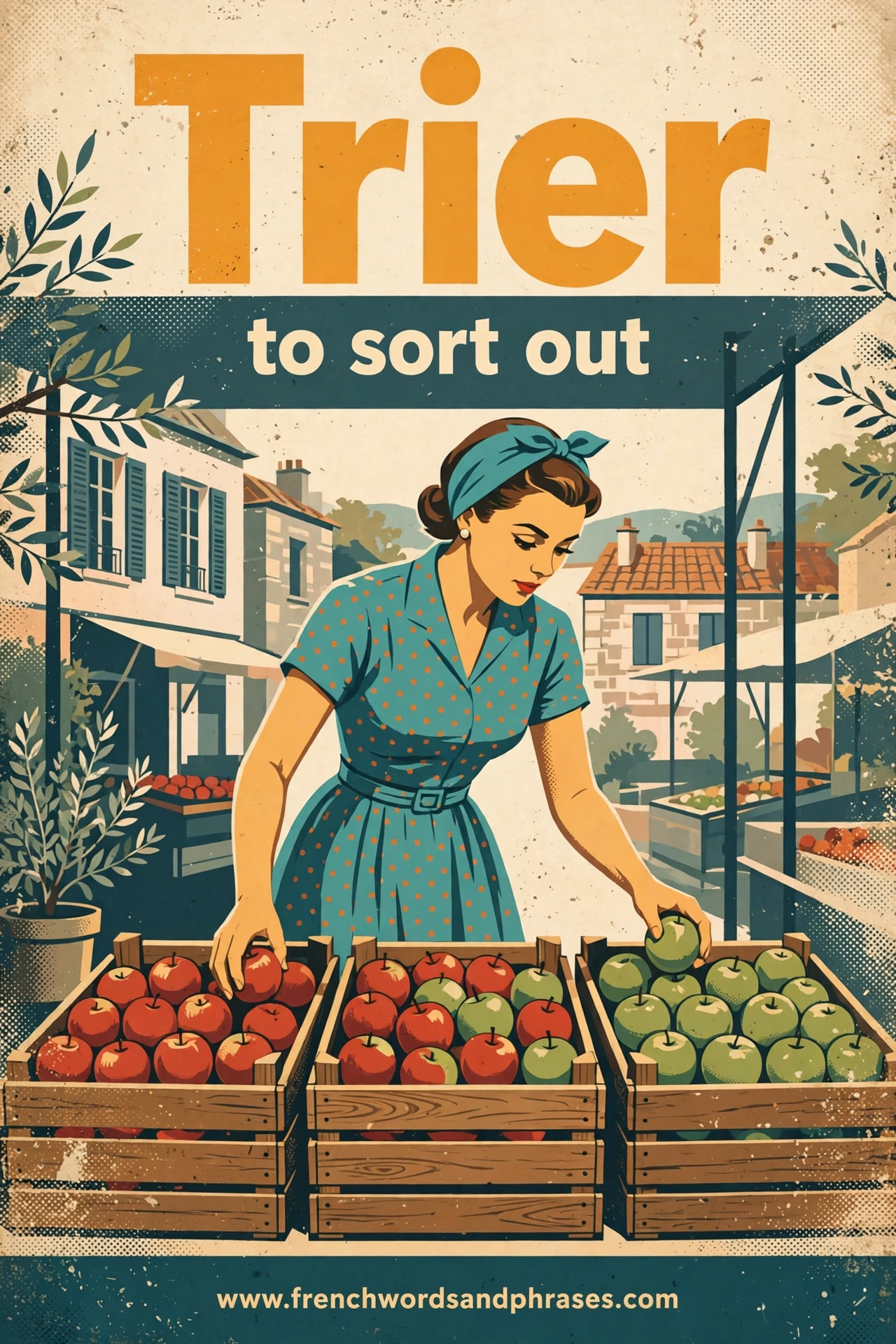
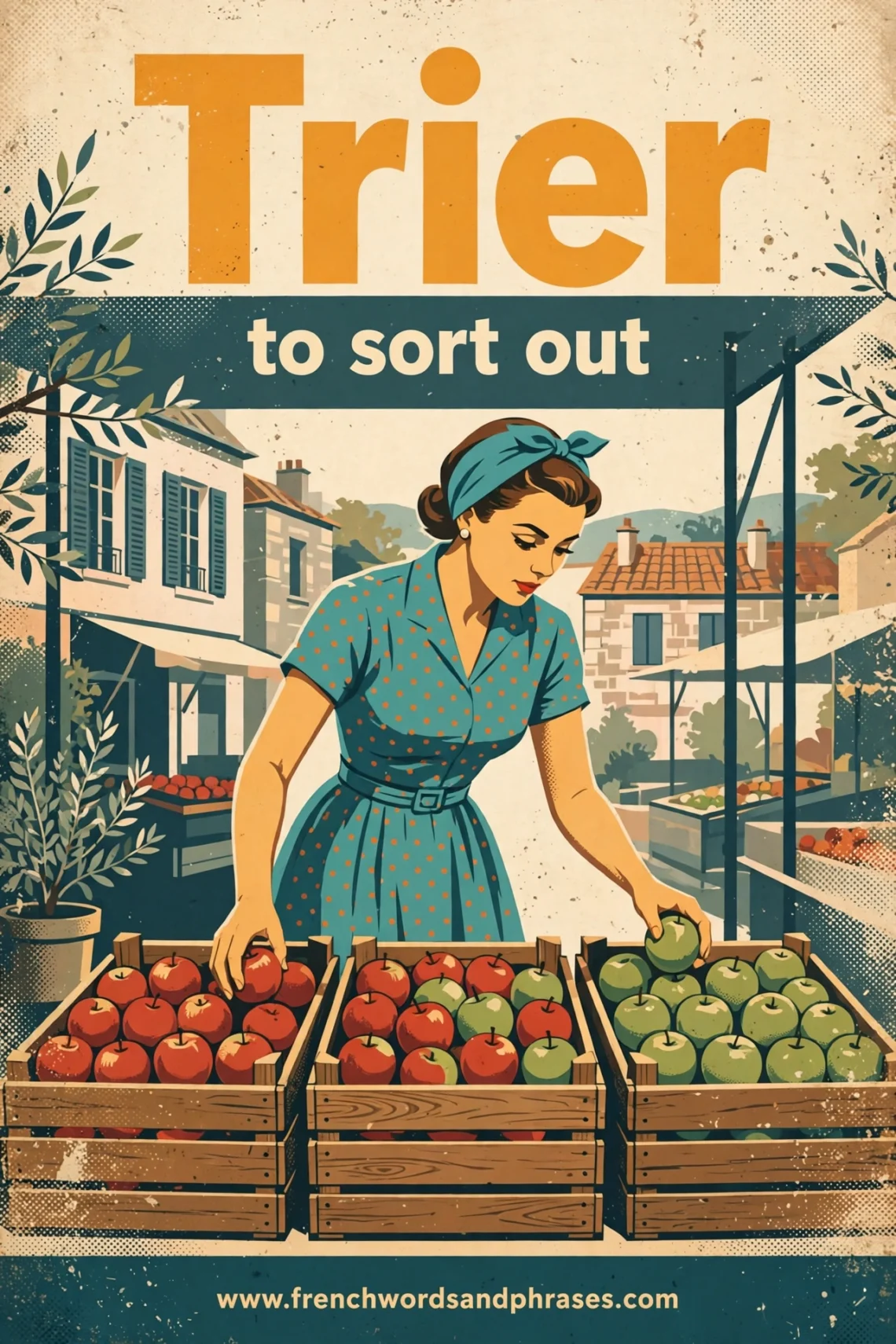
Trier means to sort out — to separate the good from the bad, the wanted from the unwanted.
A postman facing a wall of letters, a grandmother picking over lentils stone by stone, a recycling line humming with bottles and tins — trier is the verb of sorting, the quiet judgement that puts everything in its right pile.
In this guide, you’ll learn how to conjugate trier in all the major French tenses and moods. Explore complete conjugation tables, French examples, English translations, and practice quizzes.
Understanding the French Verb Trier
Trier is a regular French verb belonging to the first group of verbs, those ending in -er.
It means to sort out. It is commonly used for sorting mail and paperwork, grading fruit, coffee and lentils, separating recycling, shortlisting candidates and applications, and choosing guests or members with great care.
Verb classification: First group (-er)
Auxiliary verb: Avoir
Past participle: trié
Present participle: triant
English equivalents: To sort out, to sort through, to select; trier le courrier — to sort the mail; trier les déchets — to sort the rubbish for recycling; trier sur le volet — to hand-pick, to select very carefully; le tri — sorting.
One important detail: trier is an -ier verb, so the nous and vous forms of the imperfect and the subjunctive carry a double i: nous triions, vous triiez — the stem’s i plus the ending’s i. The phrase to treasure is trier sur le volet: guests, candidates or members chosen sur le volet are hand-picked with extreme care, the way grain was once winnowed on a wooden shutter, a volet.
Experience the Word
Trier is the verb of the two piles — keep and discard, this way and that — a small act of judgement repeated a hundred times an hour.
Imagine a coffee warehouse in Le Havre. Sacks from Brazil spill their beans onto a long table, and experienced hands move without pause, triant grain by grain, flicking every dark or broken bean into the reject tray.
At the end of the table, two sacks stand apart. The coffee has been sorted — trié — and only the best remains.
How to Conjugate Trier: Complete French Conjugation Guide
Let’s explore every major conjugation of trier, beginning with the indicative mood.
How to Conjugate Trier in the Indicative Mood
The indicative mood is used to express facts, observations, actions, and events.
How to Conjugate Trier in the Present Tense (Présent)
Used for actions happening now, habitual actions, and general truths.
| Subject | Conjugation |
|---|---|
| je | trie |
| tu | tries |
| il / elle | trie |
| nous | trions |
| vous | triez |
| ils / elles | trient |
Example
Elle trie le courrier dès son arrivée au bureau.
She sorts the mail as soon as she arrives at the office.
Quick Quiz 1
Complete the sentence:
Nous ______ le courrier chaque matin.
Reveal the answer
trions
Nous trions le courrier chaque matin.
We sort the mail every morning.
How to Conjugate Trier in the Passé Composé
Used for completed actions in the past. Trier takes the auxiliary verb avoir.
| Subject | Conjugation |
|---|---|
| j’ | ai trié |
| tu | as trié |
| il / elle | a trié |
| nous | avons trié |
| vous | avez trié |
| ils / elles | ont trié |
Example
Nous avons trié toutes les photos de famille ce week-end.
We sorted all the family photos this weekend.
How to Conjugate Trier in the Imparfait (Imperfect Tense)
Used for habitual past actions, descriptions, and ongoing situations in the past.
| Subject | Conjugation |
|---|---|
| je | triais |
| tu | triais |
| il / elle | triait |
| nous | triions |
| vous | triiez |
| ils / elles | triaient |
Example
Le matin, nous triions les lettres par quartier.
In the morning, we used to sort the letters by district.
Quick Quiz 2
Choose the correct form:
He sorted the beans before roasting them.
Il ______ les grains avant de les torréfier. (a trié / est trié)
Reveal the answer
a trié
Il a trié les grains avant de les torréfier.
Trier takes avoir.
How to Conjugate Trier in the Plus-que-parfait
Used to describe an action that had already been completed before another past event.
| Subject | Conjugation |
|---|---|
| j’ | avais trié |
| tu | avais trié |
| il / elle | avait trié |
| nous | avions trié |
| vous | aviez trié |
| ils / elles | avaient trié |
Example
Il avait trié les grains avant de les torréfier.
He had sorted the beans before roasting them.
How to Conjugate Trier in the Passé Simple
Primarily used in formal writing, literature, and historical narratives. It is rarely used in everyday conversation.
| Subject | Conjugation |
|---|---|
| je | triai |
| tu | trias |
| il / elle | tria |
| nous | triâmes |
| vous | triâtes |
| ils / elles | trièrent |
Example
Le facteur tria le courrier avant l’aube.
The postman sorted the mail before dawn.
How to Conjugate Trier in the Passé Antérieur
A literary tense used to express an action completed immediately before another past action, generally in the passé simple.
| Subject | Conjugation |
|---|---|
| j’ | eus trié |
| tu | eus trié |
| il / elle | eut trié |
| nous | eûmes trié |
| vous | eûtes trié |
| ils / elles | eurent trié |
Example
Quand elle eut trié les dossiers, l’entretien put commencer.
When she had sorted the files, the interview could begin.
How to Conjugate Trier in the Future Tense (Futur Simple)
Used to describe actions that will take place in the future.
| Subject | Conjugation |
|---|---|
| je | trierai |
| tu | trieras |
| il / elle | triera |
| nous | trierons |
| vous | trierez |
| ils / elles | trieront |
Example
Demain, je trierai mes papiers une bonne fois pour toutes.
Tomorrow, I will sort my papers once and for all.
How to Conjugate Trier in the Futur Antérieur (Future Perfect)
Used for an action that will have been completed before a particular point in the future.
| Subject | Conjugation |
|---|---|
| j’ | aurai trié |
| tu | auras trié |
| il / elle | aura trié |
| nous | aurons trié |
| vous | aurez trié |
| ils / elles | auront trié |
Example
À midi, ils auront trié toutes les candidatures.
By noon, they will have sorted all the applications.
How to Conjugate Trier in the Near Future (Futur Proche)
Used to describe something that is going to happen soon. Formed with aller + infinitive.
| Subject | Conjugation |
|---|---|
| je | vais trier |
| tu | vas trier |
| il / elle | va trier |
| nous | allons trier |
| vous | allez trier |
| ils / elles | vont trier |
Example
Je vais trier mes affaires avant le déménagement.
I am going to sort my things before the move.
How to Conjugate Trier in the Conditional Mood
The conditional mood expresses what would happen under certain circumstances. It is also frequently used to make polite requests or express wishes.
How to Conjugate Trier in the Present Conditional
| Subject | Conjugation |
|---|---|
| je | trierais |
| tu | trierais |
| il / elle | trierait |
| nous | trierions |
| vous | trieriez |
| ils / elles | trieraient |
Example
Avec plus de temps, nous trierions les archives par année.
With more time, we would sort the archives by year.
How to Conjugate Trier in the Past Conditional
| Subject | Conjugation |
|---|---|
| j’ | aurais trié |
| tu | aurais trié |
| il / elle | aurait trié |
| nous | aurions trié |
| vous | auriez trié |
| ils / elles | auraient trié |
Example
Elle aurait trié les invitations si la liste avait été prête.
She would have sorted the invitations if the list had been ready.
Trier in the Literary Past Conditional Form
This less common literary form uses the imperfect subjunctive of avoir.
| Subject | Conjugation |
|---|---|
| j’ | eusse trié |
| tu | eusses trié |
| il / elle | eût trié |
| nous | eussions trié |
| vous | eussiez trié |
| ils / elles | eussent trié |
Example
Il eût trié les grains un à un, comme autrefois.
He would have sorted the beans one by one, as in the old days.
How to Conjugate Trier in the Subjunctive Mood
The subjunctive is used to express wishes, emotions, doubts, necessity, and uncertainty. It frequently follows expressions such as il faut que (it is necessary that) or bien que (although).
How to Conjugate Trier in the Present Subjunctive
| Subject | Conjugation |
|---|---|
| que je | trie |
| que tu | tries |
| qu’il / qu’elle | trie |
| que nous | triions |
| que vous | triiez |
| qu’ils / qu’elles | trient |
Example
Il faut que nous triions les déchets correctement.
We must sort the rubbish correctly.
Quick Quiz 3
Complete the sentence using the subjunctive:
Il faut que nous ______ les déchets correctement.
Reveal the answer
triions
Il faut que nous triions les déchets correctement.
Note the double i of -ier verbs in the subjunctive.
How to Conjugate Trier in the Imperfect Subjunctive
A literary tense, rarely encountered in modern spoken French.
| Subject | Conjugation |
|---|---|
| que je | triasse |
| que tu | triasses |
| qu’il / qu’elle | triât |
| que nous | triassions |
| que vous | triassiez |
| qu’ils / qu’elles | triassent |
Example
Le directeur voulait qu’on triât les candidatures avant vendredi.
The director wanted the applications to be sorted before Friday.
How to Conjugate Trier in the Pluperfect Subjunctive
A literary construction used to express an action completed before another past action.
| Subject | Conjugation |
|---|---|
| que j’ | eusse trié |
| que tu | eusses trié |
| qu’il / qu’elle | eût trié |
| que nous | eussions trié |
| que vous | eussiez trié |
| qu’ils / qu’elles | eussent trié |
Example
On doutait qu’ils eussent trié les dossiers avec soin.
People doubted that they had sorted the files carefully.
How to Conjugate Trier in the Past Subjunctive
| Subject | Conjugation |
|---|---|
| que j’ | aie trié |
| que tu | aies trié |
| qu’il / qu’elle | ait trié |
| que nous | ayons trié |
| que vous | ayez trié |
| qu’ils / qu’elles | aient trié |
Example
Je suis content que tu aies trié tes affaires avant de partir.
I am glad you sorted your things before leaving.
How to Conjugate Trier in the Imperative
The imperative is used to give commands, instructions, invitations, or suggestions. Subject pronouns are omitted.
How to Conjugate Trier in the Present Imperative
| Person | Conjugation |
|---|---|
| (tu) | trie |
| (nous) | trions |
| (vous) | triez |
Example
Trie ces lettres par ordre alphabétique !
Sort these letters in alphabetical order!
Quick Quiz 4
How would you say Sort these letters (tu form)?
Reveal the answer
Trie ces lettres !
French Participles of Trier
Participles are verb forms that can be used in compound tenses and other grammatical constructions.
Present Participle of Trier
triant
En triant les lentilles, elle enlève les petits cailloux.
Sorting the lentils, she picks out the little stones.
Past Participle of Trier
trié
Triés sur le volet, les invités arrivèrent un à un.
Hand-picked, the guests arrived one by one.
Trier in Everyday French: Real-Life Examples
Now that you know the conjugations, let’s see how trier appears in everyday French.
Example 1 — Present
Elle trie le courrier chaque matin.
She sorts the mail every morning.
Example 2 — Passé composé
Nous avons trié toutes les vieilles photos.
We sorted all the old photos.
Example 3 — Imparfait
Nous triions les lettres par quartier.
We used to sort the letters by district.
Example 4 — Future
Je trierai mes papiers demain.
I will sort my papers tomorrow.
Example 5 — Conditional
Nous trierions les archives par année.
We would sort the archives by year.
Example 6 — Imperative
Triez les déchets correctement !
Sort the rubbish correctly!
Beyond Translation: The Meaning of Trier
English sort is plain and workmanlike; French trier carries an extra note of choosing and rejecting — nothing is merely arranged, everything is judged.
And its finest phrase is trier sur le volet.
Borrowed from winnowing grain on a shutter, it is now the mark of the most exclusive selection: des invités triés sur le volet — guests hand-picked, one by one, with nothing left to chance.
How to Remember the French Verb Trier
Remember it this way: Trier is about the two piles — keep and discard — and guests chosen sur le volet.
- Trier sur le volet — to hand-pick, to choose with extreme care.
- -ier verb: imperfect and subjunctive nous triions, vous triiez — double i.
- Regular -er: je trie, nous trions, past participle trié.
The key idea is the two piles — keep and discard — and guests chosen sur le volet.
Test Your Knowledge of Trier
Let’s see how much you’ve learned. Try answering these questions before revealing the answers.
Question 1
What does trier sur le volet mean?
Reveal the answer
To hand-pick — to select with extreme care, one by one.
Question 2
How do you say We sorted all the old photos in French?
Reveal the answer
Nous avons trié toutes les vieilles photos.
Question 3
Translate: She sorts the mail every morning.
Reveal the answer
Elle trie le courrier chaque matin.
Question 4
What is the past participle of trier?
Reveal the answer
Trié.
Question 5
Complete the sentence:
Il faut que nous ______ les déchets correctement.
Reveal the answer
triions
Il faut que nous triions les déchets correctement.
We must sort the rubbish correctly.
Your Final Challenge
Can You Use It?
How would you say this in French?
She sorts the photographs one by one, and every face finds its place again in the family’s story.
Reveal the answer
Elle trie les photographies une à une, et chaque visage retrouve sa place dans l’histoire de la famille.
She sorts the photographs one by one, and every face finds its place again in the family’s story.
A little French. A little curiosity. A richer everyday life.
LEARN FRENCH ONE WORD AT A TIME