A French Word to Live By
How to Conjugate Se vallonner in French
/sə va.lɔ.ne/
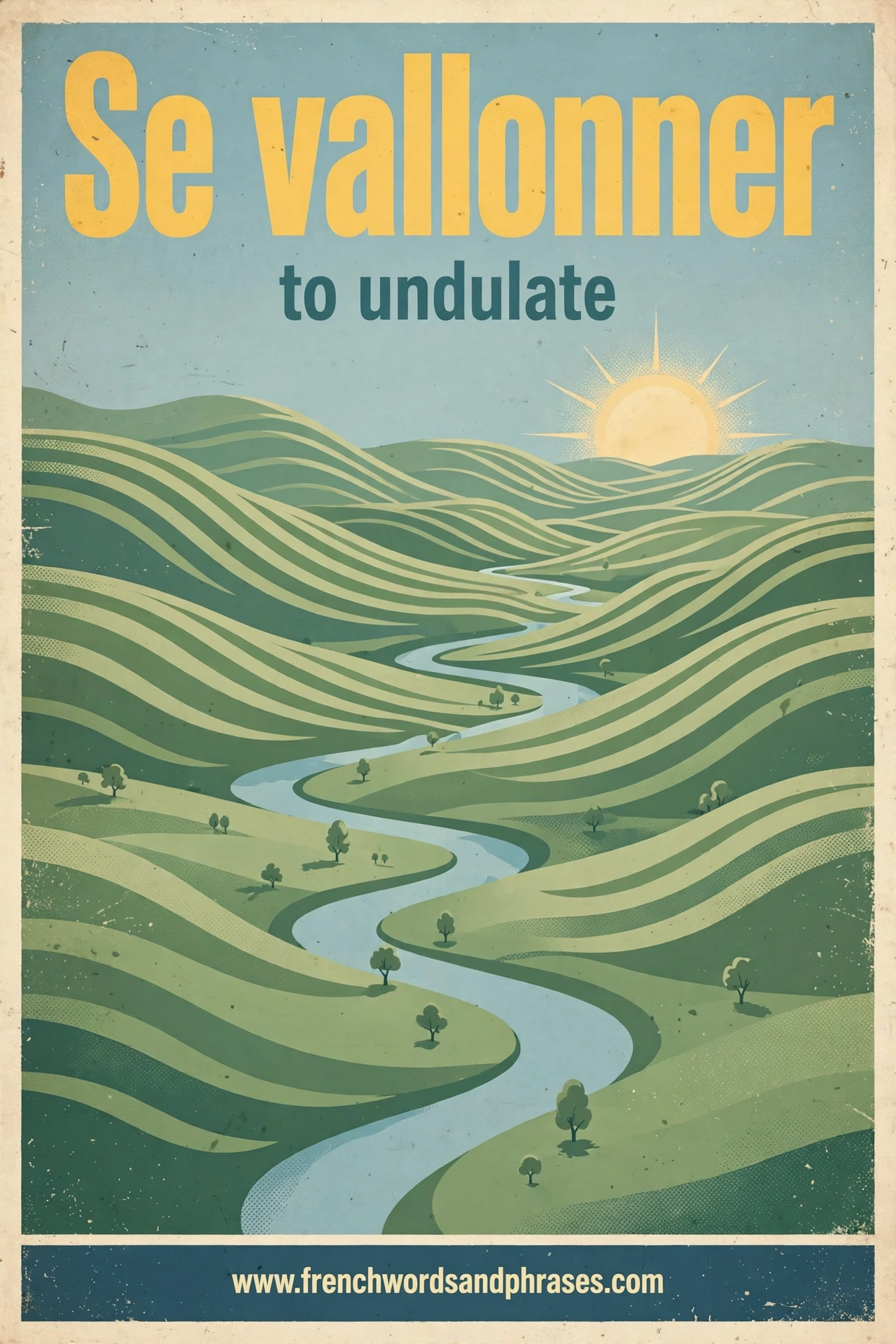
Se vallonner means to undulate — to rise and fall in gentle waves, like countryside rolling away in low green hills.
A road in Burgundy climbing a soft green shoulder, dipping into a valley of vines, climbing again towards a village on the next rise — se vallonner is the verb of rolling countryside, of land that moves in slow, easy waves as far as the eye can see.
In this guide, you’ll learn how to conjugate se vallonner in all the major French tenses and moods. Explore complete conjugation tables, French examples, English translations, and practice quizzes.
Understanding the French Verb Se vallonner
Se vallonner is a regular French verb belonging to the first group of verbs, those ending in -er.
It means to undulate. It is commonly used in travel writing and geography for rolling countryside, in descriptions of wine country and bocage, and by anyone painting a landscape in words — gentle hills succeeding one another to the horizon.
Verb classification: First group (-er), reflexive
Auxiliary verb: Être
Past participle: vallonné
Present participle: vallonnant
English equivalents: To undulate, to roll in gentle hills; un paysage vallonné — rolling countryside; des collines qui se vallonnent à l’infini — hills rolling away endlessly.
One important detail: se vallonner lives almost only in the reflexive — it is a verb for landscapes, not people, and its subjects are le paysage, la plaine, les collines, la campagne. It comes from un vallon, a small valley, and the adjective vallonné (rolling, undulating) is the form you will meet most: une région vallonnée. Being reflexive, it takes être and the participle agrees with the landscape: la plaine s’est vallonnée jusqu’à la mer.
Experience the Word
Se vallonner is the verb of land breathing slowly — up a green shoulder, down into a valley, up again.
Imagine a drive through the Charolais in early summer. The road rises, and from the top you see the whole country arranged in waves: meadows, hedgerows, a white church on every third hill, and beyond them more hills, vallonnés, fading blue into the distance.
Nothing here is flat, nothing is steep. The land simply rolls — elle se vallonne — all the way to the sky.
How to Conjugate Se vallonner: Complete French Conjugation Guide
Let’s explore every major conjugation of se vallonner, beginning with the indicative mood.
How to Conjugate Se vallonner in the Indicative Mood
The indicative mood is used to express facts, observations, actions, and events.
How to Conjugate Se vallonner in the Present Tense (Présent)
Used for actions happening now, habitual actions, and general truths.
| Subject | Conjugation |
|---|---|
| je | me vallonne |
| tu | te vallonnes |
| il / elle | se vallonne |
| nous | nous vallonnons |
| vous | vous vallonnez |
| ils / elles | se vallonnent |
Example
Le paysage se vallonne doucement jusqu’à l’horizon.
The landscape undulates gently to the horizon.
Quick Quiz 1
Complete the sentence:
Le paysage ______ après le bois.
Reveal the answer
se vallonne
Le paysage se vallonne après le bois.
The landscape rolls after the wood.
How to Conjugate Se vallonner in the Passé Composé
Used for completed actions in the past. Se vallonner takes the auxiliary verb être.
| Subject | Conjugation |
|---|---|
| je | me suis vallonné / me suis vallonnée |
| tu | t’es vallonné / t’es vallonnée |
| il / elle | s’est vallonné / s’est vallonnée |
| nous | nous sommes vallonnés / nous sommes vallonnées |
| vous | vous êtes vallonnés / vous êtes vallonnées / vous êtes vallonné / vous êtes vallonnée |
| ils / elles | se sont vallonnés / se sont vallonnées |
Example
La plaine s’est vallonnée après le fleuve.
The plain rolled into hills beyond the river.
How to Conjugate Se vallonner in the Imparfait (Imperfect Tense)
Used for habitual past actions, descriptions, and ongoing situations in the past.
| Subject | Conjugation |
|---|---|
| je | me vallonnais |
| tu | te vallonnais |
| il / elle | se vallonnait |
| nous | nous vallonnions |
| vous | vous vallonniez |
| ils / elles | se vallonnaient |
Example
Les collines se vallonnaient sous la brume du matin.
The hills used to roll away under the morning mist.
Quick Quiz 2
Choose the correct form:
The plain rolled into hills.
La plaine ______ après le fleuve. (s’est vallonnée / a vallonné)
Reveal the answer
s’est vallonnée
La plaine s’est vallonnée après le fleuve.
Se vallonner is reflexive, takes être, and the participle agrees: vallonnée.
How to Conjugate Se vallonner in the Plus-que-parfait
Used to describe an action that had already been completed before another past event.
| Subject | Conjugation |
|---|---|
| j’ | m’étais vallonné / m’étais vallonnée |
| tu | t’étais vallonné / t’étais vallonnée |
| il / elle | s’était vallonné / s’était vallonnée |
| nous | nous étions vallonnés / nous étions vallonnées |
| vous | vous étiez vallonnés / vous étiez vallonnées / vous étiez vallonné / vous étiez vallonnée |
| ils / elles | s’étaient vallonnés / s’étaient vallonnées |
Example
La campagne s’était vallonnée bien avant le village.
The countryside had begun to roll long before the village.
How to Conjugate Se vallonner in the Passé Simple
Primarily used in formal writing, literature, and historical narratives. It is rarely used in everyday conversation.
| Subject | Conjugation |
|---|---|
| je | me vallonnai |
| tu | te vallonnas |
| il / elle | se vallonna |
| nous | nous vallonnâmes |
| vous | vous vallonnâtes |
| ils / elles | se vallonnèrent |
Example
Après la plaine, le pays se vallonna soudain.
After the plain, the country suddenly began to roll.
How to Conjugate Se vallonner in the Passé Antérieur
A literary tense used to express an action completed immediately before another past action, generally in the passé simple.
| Subject | Conjugation |
|---|---|
| j’ | me fus vallonné / me fus vallonnée |
| tu | te fus vallonné / te fus vallonnée |
| il / elle | se fut vallonné / se fut vallonnée |
| nous | nous fûmes vallonnés / nous fûmes vallonnées |
| vous | vous fûtes vallonnés / vous fûtes vallonnées / vous fûtes vallonné / vous fûtes vallonnée |
| ils / elles | se furent vallonnés / se furent vallonnées |
Example
Dès que la route se fut vallonnée, les vignes apparurent.
As soon as the road had begun to roll, the vineyards appeared.
How to Conjugate Se vallonner in the Future Tense (Futur Simple)
Used to describe actions that will take place in the future.
| Subject | Conjugation |
|---|---|
| je | me vallonnerai |
| tu | te vallonneras |
| il / elle | se vallonnera |
| nous | nous vallonnerons |
| vous | vous vallonnerez |
| ils / elles | se vallonneront |
Example
Après la ville, la campagne se vallonnera de nouveau.
After the town, the countryside will roll again.
How to Conjugate Se vallonner in the Futur Antérieur (Future Perfect)
Used for an action that will have been completed before a particular point in the future.
| Subject | Conjugation |
|---|---|
| je | me serai vallonné / me serai vallonnée |
| tu | te seras vallonné / te seras vallonnée |
| il / elle | se sera vallonné / se sera vallonnée |
| nous | nous serons vallonnés / nous serons vallonnées |
| vous | vous serez vallonnés / vous serez vallonnées / vous serez vallonné / vous serez vallonnée |
| ils / elles | se seront vallonnés / se seront vallonnées |
Example
Au printemps, les champs se seront vallonnés de fleurs.
By spring, the fields will have rolled away covered in flowers.
How to Conjugate Se vallonner in the Near Future (Futur Proche)
Used to describe something that is going to happen soon. Formed with aller + infinitive.
| Subject | Conjugation |
|---|---|
| je | vais me vallonner |
| tu | vas te vallonner |
| il / elle | va se vallonner |
| nous | allons nous vallonner |
| vous | allez vous vallonner |
| ils / elles | vont se vallonner |
Example
Regarde : le paysage va se vallonner après ce bois.
Look: the landscape is going to start rolling after this wood.
How to Conjugate Se vallonner in the Conditional Mood
The conditional mood expresses what would happen under certain circumstances. It is also frequently used to make polite requests or express wishes.
How to Conjugate Se vallonner in the Present Conditional
| Subject | Conjugation |
|---|---|
| je | me vallonnerais |
| tu | te vallonnerais |
| il / elle | se vallonnerait |
| nous | nous vallonnerions |
| vous | vous vallonneriez |
| ils / elles | se vallonneraient |
Example
Sans la brume, les collines se vallonneraient à perte de vue.
Without the mist, the hills would roll away as far as the eye can see.
How to Conjugate Se vallonner in the Past Conditional
| Subject | Conjugation |
|---|---|
| je | me serais vallonné / me serais vallonnée |
| tu | te serais vallonné / te serais vallonnée |
| il / elle | se serait vallonné / se serait vallonnée |
| nous | nous serions vallonnés / nous serions vallonnées |
| vous | vous seriez vallonnés / vous seriez vallonnées / vous seriez vallonné / vous seriez vallonnée |
| ils / elles | se seraient vallonnés / se seraient vallonnées |
Example
Le pays se serait vallonné plus tôt sans cette longue plaine.
The country would have begun to roll sooner without this long plain.
Se vallonner in the Literary Past Conditional Form
This less common literary form uses the imperfect subjunctive of être.
| Subject | Conjugation |
|---|---|
| je | me fusse vallonné / me fusse vallonnée |
| tu | te fusses vallonné / te fusses vallonnée |
| il / elle | se fût vallonné / se fût vallonnée |
| nous | nous fussions vallonnés / nous fussions vallonnées |
| vous | vous fussiez vallonnés / vous fussiez vallonnées / vous fussiez vallonné / vous fussiez vallonnée |
| ils / elles | se fussent vallonnés / se fussent vallonnées |
Example
La plaine se fût vallonnée jusqu’à la mer.
The plain would have rolled all the way to the sea.
How to Conjugate Se vallonner in the Subjunctive Mood
The subjunctive is used to express wishes, emotions, doubts, necessity, and uncertainty. It frequently follows expressions such as il faut que (it is necessary that) or bien que (although).
How to Conjugate Se vallonner in the Present Subjunctive
| Subject | Conjugation |
|---|---|
| que je | me vallonne |
| que tu | te vallonnes |
| qu’il / qu’elle | se vallonne |
| que nous | nous vallonnions |
| que vous | vous vallonniez |
| qu’ils / qu’elles | se vallonnent |
Example
Je veux que le jardin se vallonne comme une prairie anglaise.
I want the garden to undulate like an English meadow.
Quick Quiz 3
Complete the sentence using the subjunctive:
Je veux que le jardin ______ comme une prairie.
Reveal the answer
se vallonne
Je veux que le jardin se vallonne comme une prairie.
I want the garden to undulate like a meadow.
How to Conjugate Se vallonner in the Imperfect Subjunctive
A literary tense, rarely encountered in modern spoken French.
| Subject | Conjugation |
|---|---|
| que je | me vallonnasse |
| que tu | te vallonnasses |
| qu’il / qu’elle | se vallonnât |
| que nous | nous vallonnassions |
| que vous | vous vallonnassiez |
| qu’ils / qu’elles | se vallonnassent |
Example
Il semblait que la route se vallonnât sans fin.
It seemed the road rolled on endlessly.
How to Conjugate Se vallonner in the Pluperfect Subjunctive
A literary construction used to express an action completed before another past action.
| Subject | Conjugation |
|---|---|
| que je | me fusse vallonné / me fusse vallonnée |
| que tu | te fusses vallonné / te fusses vallonnée |
| qu’il / qu’elle | se fût vallonné / se fût vallonnée |
| que nous | nous fussions vallonnés / nous fussions vallonnées |
| que vous | vous fussiez vallonnés / vous fussiez vallonnées / vous fussiez vallonné / vous fussiez vallonnée |
| qu’ils / qu’elles | se fussent vallonnés / se fussent vallonnées |
Example
On racontait que le pays se fût vallonné au-delà des monts.
People told how the country had rolled on beyond the hills.
How to Conjugate Se vallonner in the Past Subjunctive
| Subject | Conjugation |
|---|---|
| que je | me sois vallonné / me sois vallonnée |
| que tu | te sois vallonné / te sois vallonnée |
| qu’il / qu’elle | se soit vallonné / se soit vallonnée |
| que nous | nous soyons vallonnés / nous soyons vallonnées |
| que vous | vous soyez vallonnés / vous soyez vallonnées / vous soyez vallonné / vous soyez vallonnée |
| qu’ils / qu’elles | se soient vallonnés / se soient vallonnées |
Example
Je suis heureux que le paysage se soit vallonné ainsi.
I am glad the landscape rolled like this.
How to Conjugate Se vallonner in the Imperative
The imperative is used to give commands, instructions, invitations, or suggestions. Subject pronouns are omitted.
How to Conjugate Se vallonner in the Present Imperative
| Person | Conjugation |
|---|---|
| (tu) | vallonne-toi |
| (nous) | vallonnons-nous |
| (vous) | vallonnez-vous |
Example
Vallonne-toi, douce plaine, jusqu’à l’horizon !
Roll away, gentle plain, all the way to the horizon!
Quick Quiz 4
How would you say Rolling countryside in French?
Reveal the answer
Un paysage vallonné.
French Participles of Se vallonner
Participles are verb forms that can be used in compound tenses and other grammatical constructions.
Present Participle of Se vallonner
vallonnant
En se vallonnant, la route découvre un village à chaque sommet.
As it rolls, the road reveals a village on every summit.
Past Participle of Se vallonner
vallonné
Vallonnée de vignes et de prés, la région attire les randonneurs.
Rolling with vineyards and meadows, the region draws walkers.
Se vallonner in Everyday French: Real-Life Examples
Now that you know the conjugations, let’s see how se vallonner appears in everyday French.
Example 1 — Present
Les collines se vallonnent à perte de vue.
The hills roll away as far as the eye can see.
Example 2 — Passé composé
La plaine s’est vallonnée après le fleuve.
The plain rolled into hills beyond the river.
Example 3 — Imparfait
Le paysage se vallonnait sous la brume.
The landscape used to roll away under the mist.
Example 4 — Future
La campagne se vallonnera après la ville.
The countryside will roll again after the town.
Example 5 — Conditional
Sans la brume, le pays se vallonnerait à l’infini.
Without the mist, the country would roll on forever.
Example 6 — Imperative
Vallonne-toi, douce plaine, jusqu’à l’horizon !
Roll away, gentle plain, all the way to the horizon!
Beyond Translation: The Meaning of Se vallonner
English undulate sounds like a physics lesson; French se vallonner is a painter’s word, built from vallon, the little valley between two rises.
Every wave of land is a vallon.
Learn the adjective too — vallonné is the word on every tourist brochure for the rolling country of Burgundy, Normandy and the Loire: un paysage vallonné, the postcard landscape itself.
How to Remember the French Verb Se vallonner
Remember it this way: Se vallonner is about rolling green countryside — wave after wave of little valleys.
- Un vallon is a small valley; se vallonner is land rising and falling in small valleys, wave after wave.
- A landscape verb: its subjects are plains, hills and countryside, never people.
- Reflexive with être, and the participle agrees: la plaine s’est vallonnée.
The key idea is rolling green countryside — wave after wave of little valleys.
Test Your Knowledge of Se vallonner
Let’s see how much you’ve learned. Try answering these questions before revealing the answers.
Question 1
Which auxiliary does se vallonner use, and why?
Reveal the answer
Être — it is a reflexive verb: la plaine s’est vallonnée.
Question 2
How do you say The hills roll away as far as the eye can see in French?
Reveal the answer
Les collines se vallonnent à perte de vue.
Question 3
Translate: The plain rolled into hills beyond the river.
Reveal the answer
La plaine s’est vallonnée après le fleuve.
Question 4
What is the past participle of se vallonner?
Reveal the answer
Vallonné — agreeing: vallonnée, vallonnés, vallonnées.
Question 5
Complete the sentence:
Le paysage ______ doucement jusqu’à l’horizon.
Reveal the answer
se vallonne
Le paysage se vallonne doucement jusqu’à l’horizon.
The landscape undulates gently to the horizon.
Your Final Challenge
Can You Use It?
How would you say this in French?
The hills roll away as far as the eye can see, and the road follows their green waves.
Reveal the answer
Les collines se vallonnent à perte de vue, et la route suit leurs vagues vertes.
The hills roll away as far as the eye can see, and the road follows their green waves.
A little French. A little curiosity. A richer everyday life.
LEARN FRENCH ONE WORD AT A TIME