A French Word to Live By
How to Conjugate Relancer in French
/ʁə.lɑ̃.se/
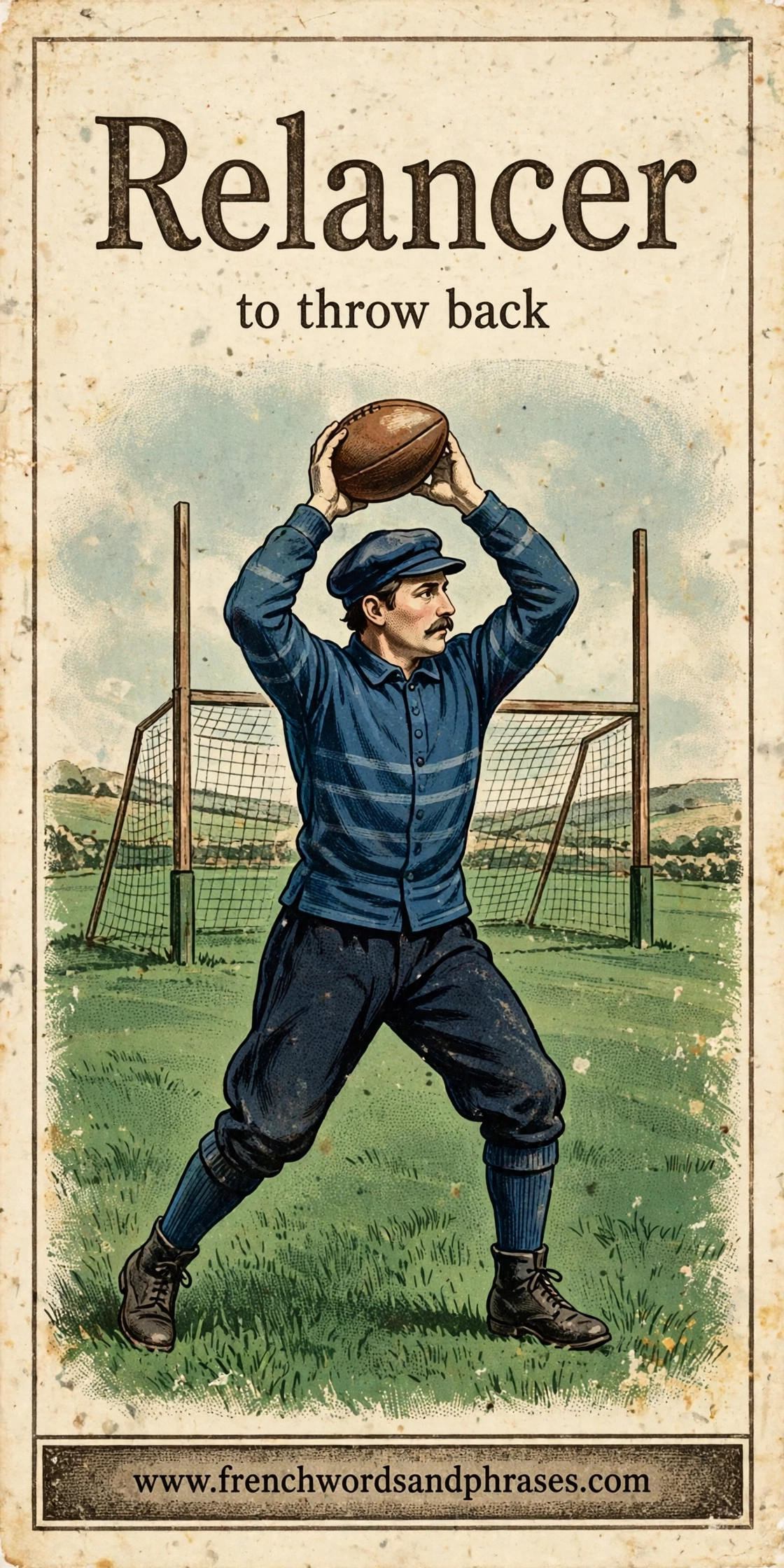
Relancer means to throw back — to return a ball, to restart a stalled machine or economy, and to chase up someone who has not replied.
A goalkeeper throwing the ball back into play, a government pumping life into a sleepy economy, an assistant sending the third polite email about an unpaid invoice — relancer is the verb of the return throw: whatever has stopped, stalled or gone unanswered gets thrown back into motion.
In this guide, you’ll learn how to conjugate relancer in all the major French tenses and moods. Explore complete conjugation tables, French examples, English translations, and practice quizzes.
Understanding the French Verb Relancer
Relancer is a regular French verb belonging to the first group of verbs, those ending in-er.
It means to throw back. It is the everyday verb of follow-up culture: une lettre de relance is a reminder letter, relancer un dossier is to chase a file, and un plan de relance is an economic stimulus plan. With people as its object it can also mean to prompt or draw someone out in conversation — relancer un invité d’une question — and at cards or in debate, to raise the stakes or throw a question back.
Verb classification: First group (-er)
Auxiliary verb: Avoir
Past participle: relancé
Present participle: relançant
English equivalents: To throw back, to relaunch, to chase up; relancer la balle — to throw the ball back; relancer l’économie — to boost the economy back into life; relancer un projet — to relaunch a project; relancer un client — to chase up a client; relancer la conversation — to get the conversation going again; une relance — a follow-up, a reminder.
One important detail: relancer is a -cer verb, so the c takes a cedilla before a and o to stay soft: nous relançons, je relançais, je relançai, en relançant. Before e and i the plain c is already soft: je relance, nous relancions, ils relancent. The verb has three lives that share one image — the throw returned: in sport you relances the ball, in business you relances a machine, a brand or the whole economy, and in the office you relances a person: relancer un client, relancer par courriel, to send the follow-up that says, politely, still waiting.
Experience the Word
Relancer is the second throw — the ball, the project and the unanswered email all come back into play.
Imagine a small office in Nantes on a Monday morning. Three invoices are a month overdue. The accountant opens her file, writes three short, courteous messages — je me permets de vous relancer — and by Friday two have been paid. Nothing was demanded, nothing was threatened; the dossiers were simply relancés, thrown back onto the right desks.
Silence had stalled everything. She has chased them up — relancés — and the money has started to move.
How to Conjugate Relancer: Complete French Conjugation Guide
Let’s explore every major conjugation of relancer, beginning with the indicative mood.
How to Conjugate Relancer in the Indicative Mood
The indicative mood is used to express facts, observations, actions, and events.
How to Conjugate Relancer in the Present Tense (Présent)
Used for actions happening now, habitual actions, and general truths.
| Subject | Conjugation |
|---|---|
| je | relance |
| tu | relances |
| il / elle | relance |
| nous | relançons |
| vous | relancez |
| ils / elles | relancent |
Example
Le gardien relance le ballon vers ses défenseurs.
The goalkeeper throws the ball back out to his defenders.
Quick Quiz 1
Complete the sentence:
Nous ______ les dossiers en retard.
Reveal the answer
relançons
Nous relançons les dossiers en retard.
We are chasing up the overdue files.
How to Conjugate Relancer in the Passé Composé
Used for completed actions in the past. Relancer takes the auxiliary verb avoir.
| Subject | Conjugation |
|---|---|
| j’ | ai relancé |
| tu | as relancé |
| il / elle | a relancé |
| nous | avons relancé |
| vous | avez relancé |
| ils / elles | ont relancé |
Example
Le gouvernement a relancé l’économie avec un grand plan de travaux.
The government boosted the economy with a big public works plan.
How to Conjugate Relancer in the Imparfait (Imperfect Tense)
Used for habitual past actions, descriptions, and ongoing situations in the past.
| Subject | Conjugation |
|---|---|
| je | relançais |
| tu | relançais |
| il / elle | relançait |
| nous | relancions |
| vous | relanciez |
| ils / elles | relançaient |
Example
Chaque semaine, elle relançait ses clients par téléphone.
Every week, she used to chase up her clients by phone.
Quick Quiz 2
Choose the correct form:
The government boosted the economy.
Le gouvernement ______ l’économie. (a relancé / est relancé)
Reveal the answer
a relancé
Le gouvernement a relancé l’économie.
Relancer takes avoir.
How to Conjugate Relancer in the Plus-que-parfait
Used to describe an action that had already been completed before another past event.
| Subject | Conjugation |
|---|---|
| j’ | avais relancé |
| tu | avais relancé |
| il / elle | avait relancé |
| nous | avions relancé |
| vous | aviez relancé |
| ils / elles | avaient relancé |
Example
Il avait relancé la conversation avant que le silence ne devienne gênant.
He had got the conversation going again before the silence became awkward.
How to Conjugate Relancer in the Passé Simple
Primarily used in formal writing, literature, and historical narratives. It is rarely used in everyday conversation.
| Subject | Conjugation |
|---|---|
| je | relançai |
| tu | relanças |
| il / elle | relança |
| nous | relançâmes |
| vous | relançâtes |
| ils / elles | relançèrent |
Example
D’un geste vif, il relança la balle par-dessus le filet.
With a quick movement, he threw the ball back over the net.
How to Conjugate Relancer in the Passé Antérieur
A literary tense used to express an action completed immediately before another past action, generally in the passé simple.
| Subject | Conjugation |
|---|---|
| j’ | eus relancé |
| tu | eus relancé |
| il / elle | eut relancé |
| nous | eûmes relancé |
| vous | eûtes relancé |
| ils / elles | eurent relancé |
Example
Dès qu’elle eut relancé la machine, l’atelier retrouva son bruit familier.
As soon as she had restarted the machine, the workshop found its familiar noise again.
How to Conjugate Relancer in the Future Tense (Futur Simple)
Used to describe actions that will take place in the future.
| Subject | Conjugation |
|---|---|
| je | relancerai |
| tu | relanceras |
| il / elle | relancera |
| nous | relancerons |
| vous | relancerez |
| ils / elles | relanceront |
Example
Je te relancerai demain si je n’ai pas de réponse.
I will chase you up tomorrow if I have no reply.
How to Conjugate Relancer in the Futur Antérieur (Future Perfect)
Used for an action that will have been completed before a particular point in the future.
| Subject | Conjugation |
|---|---|
| j’ | aurai relancé |
| tu | auras relancé |
| il / elle | aura relancé |
| nous | aurons relancé |
| vous | aurez relancé |
| ils / elles | auront relancé |
Example
À la fin du mois, nous aurons relancé tous les dossiers en retard.
By the end of the month, we will have chased up all the overdue files.
How to Conjugate Relancer in the Near Future (Futur Proche)
Used to describe something that is going to happen soon. Formed with aller + infinitive.
| Subject | Conjugation |
|---|---|
| je | vais relancer |
| tu | vas relancer |
| il / elle | va relancer |
| nous | allons relancer |
| vous | allez relancer |
| ils / elles | vont relancer |
Example
Le comité va relancer le projet de piscine.
The committee is going to relaunch the swimming pool project.
How to Conjugate Relancer in the Conditional Mood
The conditional mood expresses what would happen under certain circumstances. It is also frequently used to make polite requests or express wishes.
How to Conjugate Relancer in the Present Conditional
| Subject | Conjugation |
|---|---|
| je | relancerais |
| tu | relancerais |
| il / elle | relancerait |
| nous | relancerions |
| vous | relanceriez |
| ils / elles | relanceraient |
Example
Un petit café relancerait la discussion.
A little coffee would get the discussion going again.
How to Conjugate Relancer in the Past Conditional
| Subject | Conjugation |
|---|---|
| j’ | aurais relancé |
| tu | aurais relancé |
| il / elle | aurait relancé |
| nous | aurions relancé |
| vous | auriez relancé |
| ils / elles | auraient relancé |
Example
Sans ce prêt, la banque n’aurait jamais relancé l’usine.
Without that loan, the bank would never have got the factory going again.
Relancer in the Literary Past Conditional Form
This less common literary form uses the imperfect subjunctive of avoir.
| Subject | Conjugation |
|---|---|
| j’ | eusse relancé |
| tu | eusses relancé |
| il / elle | eût relancé |
| nous | eussions relancé |
| vous | eussiez relancé |
| ils / elles | eussent relancé |
Example
Elle eût relancé le bal d’un seul mot, si elle l’avait osé.
She would have set the ball rolling again with a single word, had she dared.
How to Conjugate Relancer in the Subjunctive Mood
The subjunctive is used to express wishes, emotions, doubts, necessity, and uncertainty. It frequently follows expressions such as il faut que (it is necessary that) or bien que (although).
How to Conjugate Relancer in the Present Subjunctive
| Subject | Conjugation |
|---|---|
| que je | relance |
| que tu | relances |
| qu’il / qu’elle | relance |
| que nous | relancions |
| que vous | relanciez |
| qu’ils / qu’elles | relancent |
Example
Il faut que tu relances ce client avant vendredi.
You must chase up this client before Friday.
Quick Quiz 3
Complete the sentence using the subjunctive:
Il faut que vous ______ le débat.
Reveal the answer
relanciez
Il faut que vous relanciez le débat.
You must reopen the debate.
How to Conjugate Relancer in the Imperfect Subjunctive
A literary tense, rarely encountered in modern spoken French.
| Subject | Conjugation |
|---|---|
| que je | relancasse |
| que tu | relancasses |
| qu’il / qu’elle | relancât |
| que nous | relancassions |
| que vous | relancassiez |
| qu’ils / qu’elles | relancassent |
Example
Je doutais qu’il relançât la balle aussi loin.
I doubted he would throw the ball back so far.
How to Conjugate Relancer in the Pluperfect Subjunctive
A literary construction used to express an action completed before another past action.
| Subject | Conjugation |
|---|---|
| que j’ | eusse relancé |
| que tu | eusses relancé |
| qu’il / qu’elle | eût relancé |
| que nous | eussions relancé |
| que vous | eussiez relancé |
| qu’ils / qu’elles | eussent relancé |
Example
On admirait qu’elle eût relancé l’entreprise familiale en un an.
People admired that she had relaunched the family business in a year.
How to Conjugate Relancer in the Past Subjunctive
| Subject | Conjugation |
|---|---|
| que j’ | aie relancé |
| que tu | aies relancé |
| qu’il / qu’elle | ait relancé |
| que nous | ayons relancé |
| que vous | ayez relancé |
| qu’ils / qu’elles | aient relancé |
Example
Je suis content que vous ayez relancé le débat.
I am glad you reopened the debate.
How to Conjugate Relancer in the Imperative
The imperative is used to give commands, instructions, invitations, or suggestions. Subject pronouns are omitted.
How to Conjugate Relancer in the Present Imperative
| Person | Conjugation |
|---|---|
| (tu) | relance |
| (nous) | relançons |
| (vous) | relancez |
Example
Relance la balle, le jeu continue !
Throw the ball back, the game goes on!
Quick Quiz 4
How would you say Throw the ball back (tu form)?
Reveal the answer
Relance la balle !
French Participles of Relancer
Participles are verb forms that can be used in compound tenses and other grammatical constructions.
Present Participle of Relancer
relançant
En relançant ses invités d’une question, elle a sauvé le dîner.
By prompting her guests with a fresh question, she saved the dinner party.
Past Participle of Relancer
relancé
Relancée par la publicité, la vieille marque a retrouvé ses clients.
Relaunched by the advertising, the old brand won its customers back.
Relancer in Everyday French: Real-Life Examples
Now that you know the conjugations, let’s see how relancer appears in everyday French.
Example 1 — Present
Je relance le client par courriel.
I am chasing up the client by email.
Example 2 — Passé composé
Ils ont relancé l’économie après la crise.
They boosted the economy after the crisis.
Example 3 — Imparfait
Elle relançait la balle sans se fatiguer.
She kept throwing the ball back tirelessly.
Example 4 — Future
Nous relancerons le projet en septembre.
We will relaunch the project in September.
Example 5 — Conditional
Un café relancerait la conversation.
A coffee would get the conversation going again.
Example 6 — Imperative
Relance-moi demain matin !
Chase me up tomorrow morning!
Beyond Translation: The Meaning of Relancer
French lancer is to throw — from the lance, the horseman’s weapon — and relancer is the throw returned to you.
One image, three worlds.
The goalkeeper relance the ball, the finance minister relance the economy with un plan de relance, and the forgotten invoice comes back to life in une lettre de relance. Whenever French wants to say that something stalled has been thrown back into motion, this is the verb it reaches for.
How to Remember the French Verb Relancer
Remember it this way: Relancer is about a ball thrown back over the net — and an email chasing a reply.
- -cer verb: the cedilla appears before a and o — nous relançons, je relançais — but never before e or i.
- Three lives, one image: throw the ball back, restart the machine, chase up the client.
- Regular -er otherwise: je relance, nous relançons, past participle relancé; the noun is une relance, a follow-up.
The key idea is a ball thrown back over the net — and an email chasing a reply.
Test Your Knowledge of Relancer
Let’s see how much you’ve learned. Try answering these questions before revealing the answers.
Question 1
Why is it nous relançons with a cedilla but nous relancions without one?
Reveal the answer
The -cer rule — c takes a cedilla before a and o to stay soft (relançons), and needs none before e or i (relancions).
Question 2
How do you say They boosted the economy after the crisis in French?
Reveal the answer
Ils ont relancé l’économie après la crise.
Question 3
Translate: I will chase you up tomorrow if I have no reply.
Reveal the answer
Je te relancerai demain si je n’ai pas de réponse.
Question 4
What is the past participle of relancer?
Reveal the answer
Relancé.
Question 5
Complete the sentence:
Il faut que tu ______ ce client avant vendredi.
Reveal the answer
relances
Il faut que tu relances ce client avant vendredi.
You must chase up this client before Friday.
Your Final Challenge
Can You Use It?
How would you say this in French?
Everything that matters ends up being thrown back into play: the ball, projects and old friendships.
Reveal the answer
Tout ce qui compte finit par être relancé : la balle, les projets et les vieilles amitiés.
Everything that matters ends up being thrown back into play: the ball, projects and old friendships.
A little French. A little curiosity. A richer everyday life.
LEARN FRENCH ONE WORD AT A TIME