A French Word to Live By
How to Conjugate Reformuler in French
/ʁə.fɔʁ.my.le/
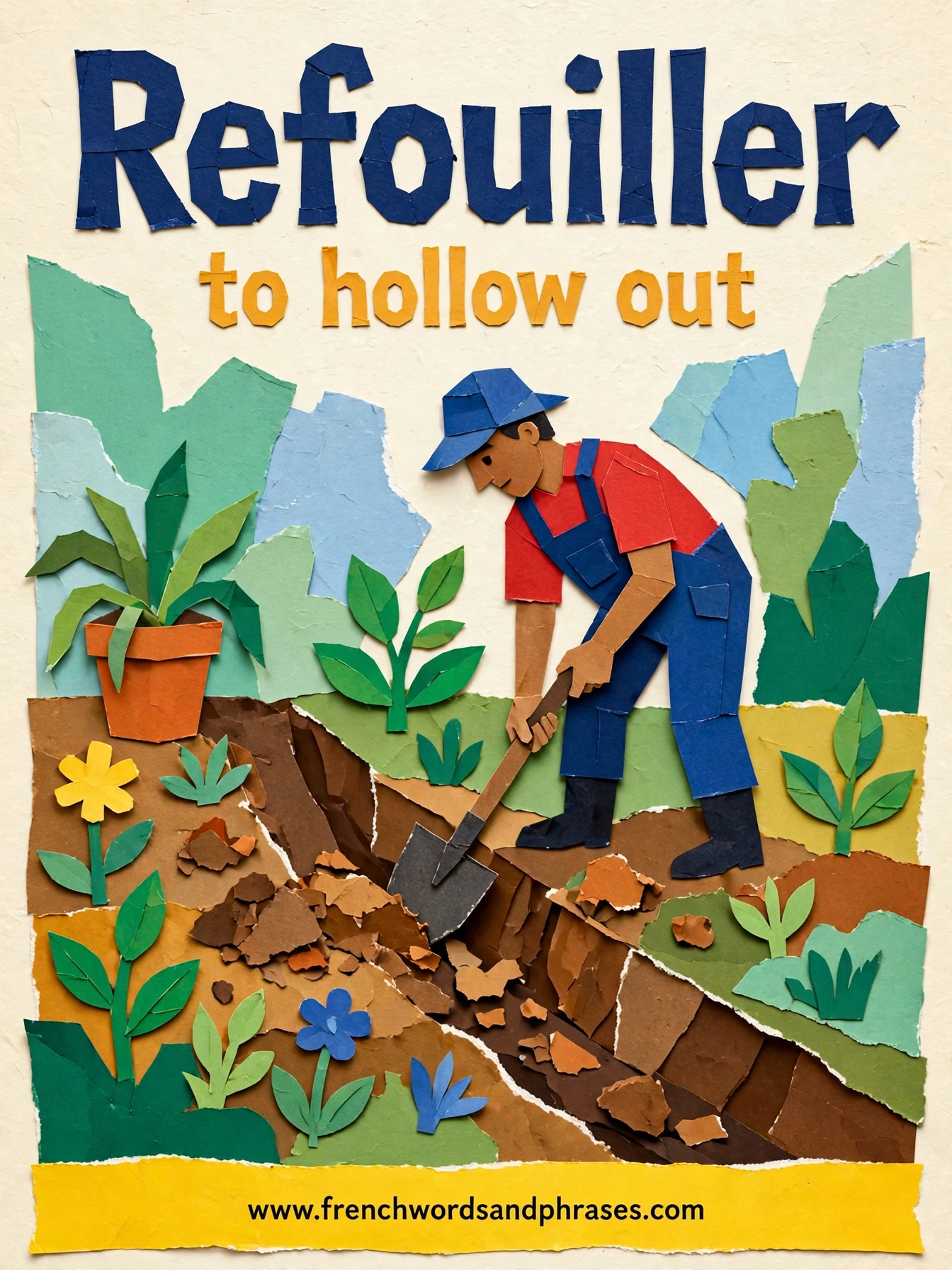
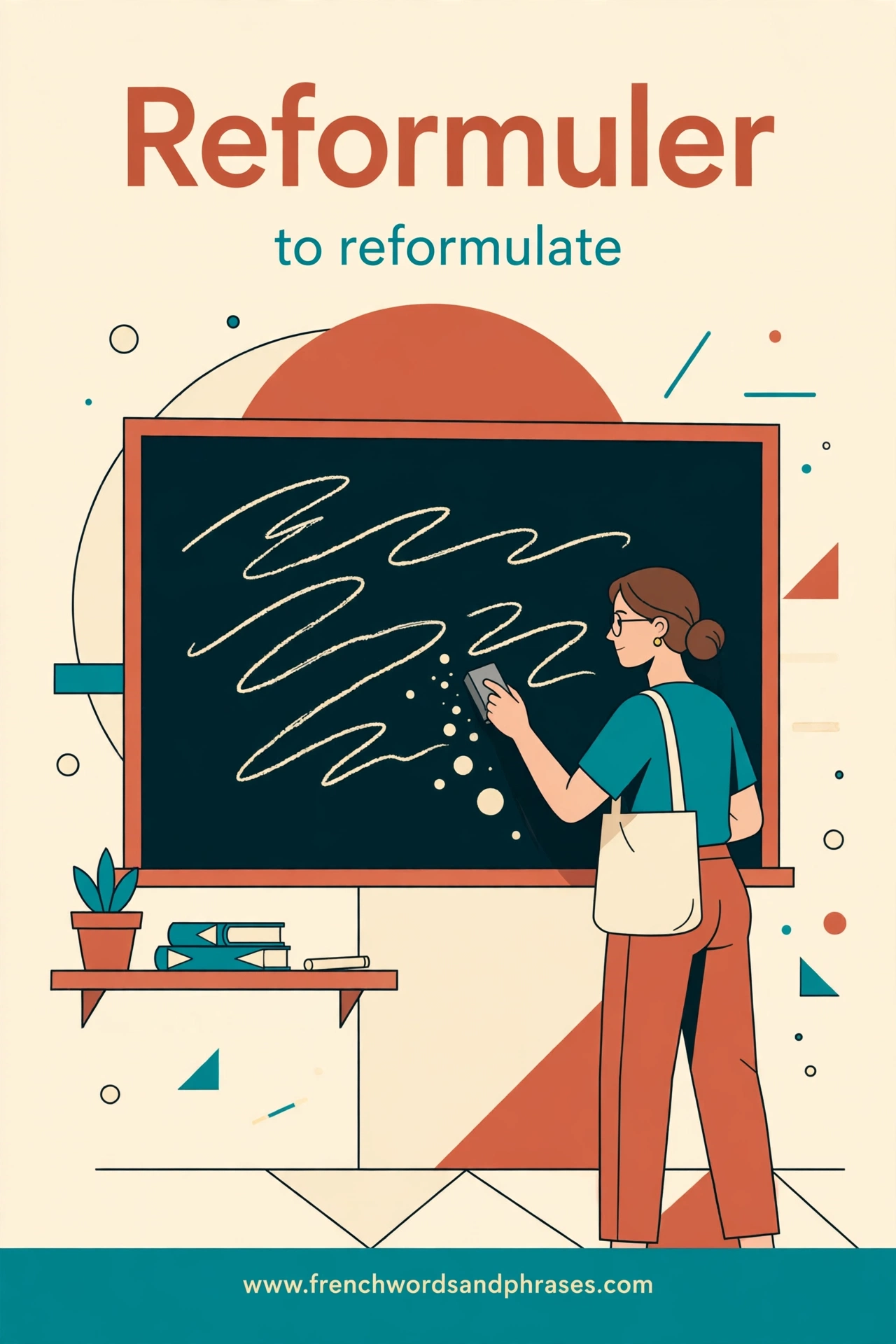
Reformuler means to reformulate — to say or write something again in new words, or to make a product again to a new recipe.
A teacher saying the same question a second, kinder way; a cosmetics laboratory quietly taking the parabens out of a famous shampoo — reformuler is the verb of the second version: same idea, new formula, whether the formula is made of words or of ingredients.
In this guide, you’ll learn how to conjugate reformuler in all the major French tenses and moods. Explore complete conjugation tables, French examples, English translations, and practice quizzes.
Understanding the French Verb Reformuler
Reformuler is a regular French verb belonging to the first group of verbs, those ending in-er.
It means to reformulate. In classrooms and meetings it is the polite art of rephrasing — reformuler une question, reformuler une consigne — the teacher’s and the therapist’s favourite move. In industry it is the technical word for changing a product’s recipe: cosmetics, drinks, paints and fuels are reformulés when an ingredient is banned, costly or out of fashion.
Verb classification: First group (-er)
Auxiliary verb: Avoir
Past participle: reformulé
Present participle: reformulant
English equivalents: To reformulate, to rephrase, to redraft; reformuler une question — to rephrase a question; reformuler une phrase — to reword a sentence; reformuler un produit — to reformulate a product; reformuler un contrat — to redraft a contract.
One important detail: reformuler is a perfectly regular -er verb — je reformule, nous reformulons, ils reformulent — built on une formule, which in French means both a set phrase and a chemical recipe. That double sense is the verb’s whole life: you reformuler a sentence in a classroom and a shampoo in a laboratory, and the word does not change. Do not confuse it with répéter: reformuler means saying it differently, not saying it again.
Experience the Word
Reformuler is the verb of the second draft — nothing is repeated, everything is said again, better.
Imagine a pupil staring at a question he cannot parse. The teacher does not repeat it louder; elle reformule — same question, simpler words, a concrete example — and the boy’s face changes. Across town that evening, a laboratory reformule the shampoo his mother uses: same bottle, new recipe inside.
Words or ingredients, the move is identical. It was reformulated — reformulé — and suddenly it worked.
How to Conjugate Reformuler: Complete French Conjugation Guide
Let’s explore every major conjugation of reformuler, beginning with the indicative mood.
How to Conjugate Reformuler in the Indicative Mood
The indicative mood is used to express facts, observations, actions, and events.
How to Conjugate Reformuler in the Present Tense (Présent)
Used for actions happening now, habitual actions, and general truths.
| Subject | Conjugation |
|---|---|
| je | reformule |
| tu | reformules |
| il / elle | reformule |
| nous | reformulons |
| vous | reformulez |
| ils / elles | reformulent |
Example
Le professeur reformule la question pour ses élèves.
The teacher rephrases the question for his pupils.
Quick Quiz 1
Complete the sentence:
Nous ______ la question pour les élèves.
Reveal the answer
reformulons
Nous reformulons la question pour les élèves.
We are rephrasing the question for the pupils.
How to Conjugate Reformuler in the Passé Composé
Used for completed actions in the past. Reformuler takes the auxiliary verb avoir.
| Subject | Conjugation |
|---|---|
| j’ | ai reformulé |
| tu | as reformulé |
| il / elle | a reformulé |
| nous | avons reformulé |
| vous | avez reformulé |
| ils / elles | ont reformulé |
Example
La marque a reformulé son shampooing sans parabènes.
The brand reformulated its shampoo without parabens.
How to Conjugate Reformuler in the Imparfait (Imperfect Tense)
Used for habitual past actions, descriptions, and ongoing situations in the past.
| Subject | Conjugation |
|---|---|
| je | reformulais |
| tu | reformulais |
| il / elle | reformulait |
| nous | reformulions |
| vous | reformuliez |
| ils / elles | reformulaient |
Example
Elle reformulait chaque phrase avant de l’écrire.
She would rephrase every sentence before writing it down.
Quick Quiz 2
Choose the correct form:
The laboratory reformulated the cream.
Le laboratoire ______ la crème. (a reformulé / est reformulé)
Reveal the answer
a reformulé
Le laboratoire a reformulé la crème.
Reformuler takes avoir.
How to Conjugate Reformuler in the Plus-que-parfait
Used to describe an action that had already been completed before another past event.
| Subject | Conjugation |
|---|---|
| j’ | avais reformulé |
| tu | avais reformulé |
| il / elle | avait reformulé |
| nous | avions reformulé |
| vous | aviez reformulé |
| ils / elles | avaient reformulé |
Example
Le journaliste avait reformulé le titre trois fois.
The journalist had reworded the headline three times.
How to Conjugate Reformuler in the Passé Simple
Primarily used in formal writing, literature, and historical narratives. It is rarely used in everyday conversation.
| Subject | Conjugation |
|---|---|
| je | reformulai |
| tu | reformulas |
| il / elle | reformula |
| nous | reformulâmes |
| vous | reformulâtes |
| ils / elles | reformulèrent |
Example
L’avocat reformula sa demande en termes plus simples.
The lawyer restated his request in simpler terms.
How to Conjugate Reformuler in the Passé Antérieur
A literary tense used to express an action completed immediately before another past action, generally in the passé simple.
| Subject | Conjugation |
|---|---|
| j’ | eus reformulé |
| tu | eus reformulé |
| il / elle | eut reformulé |
| nous | eûmes reformulé |
| vous | eûtes reformulé |
| ils / elles | eurent reformulé |
Example
Quand il eut reformulé sa question, l’élève comprit enfin.
When he had rephrased his question, the pupil finally understood.
How to Conjugate Reformuler in the Future Tense (Futur Simple)
Used to describe actions that will take place in the future.
| Subject | Conjugation |
|---|---|
| je | reformulerai |
| tu | reformuleras |
| il / elle | reformulera |
| nous | reformulerons |
| vous | reformulerez |
| ils / elles | reformuleront |
Example
Demain, le laboratoire reformulera cette crème.
Tomorrow, the laboratory will reformulate this cream.
How to Conjugate Reformuler in the Futur Antérieur (Future Perfect)
Used for an action that will have been completed before a particular point in the future.
| Subject | Conjugation |
|---|---|
| j’ | aurai reformulé |
| tu | auras reformulé |
| il / elle | aura reformulé |
| nous | aurons reformulé |
| vous | aurez reformulé |
| ils / elles | auront reformulé |
Example
À la fin du mois, l’équipe aura reformulé tout le contrat.
By the end of the month, the team will have redrafted the whole contract.
How to Conjugate Reformuler in the Near Future (Futur Proche)
Used to describe something that is going to happen soon. Formed with aller + infinitive.
| Subject | Conjugation |
|---|---|
| je | vais reformuler |
| tu | vas reformuler |
| il / elle | va reformuler |
| nous | allons reformuler |
| vous | allez reformuler |
| ils / elles | vont reformuler |
Example
Attends, je vais reformuler ma question.
Wait, I am going to rephrase my question.
How to Conjugate Reformuler in the Conditional Mood
The conditional mood expresses what would happen under certain circumstances. It is also frequently used to make polite requests or express wishes.
How to Conjugate Reformuler in the Present Conditional
| Subject | Conjugation |
|---|---|
| je | reformulerais |
| tu | reformulerais |
| il / elle | reformulerait |
| nous | reformulerions |
| vous | reformuleriez |
| ils / elles | reformuleraient |
Example
Un bon éditeur reformulerait cette phrase lourde.
A good editor would rephrase this clumsy sentence.
How to Conjugate Reformuler in the Past Conditional
| Subject | Conjugation |
|---|---|
| j’ | aurais reformulé |
| tu | aurais reformulé |
| il / elle | aurait reformulé |
| nous | aurions reformulé |
| vous | auriez reformulé |
| ils / elles | auraient reformulé |
Example
Tu aurais reformulé ta lettre si tu l’avais relue.
You would have reworded your letter if you had reread it.
Reformuler in the Literary Past Conditional Form
This less common literary form uses the imperfect subjunctive of avoir.
| Subject | Conjugation |
|---|---|
| j’ | eusse reformulé |
| tu | eusses reformulé |
| il / elle | eût reformulé |
| nous | eussions reformulé |
| vous | eussiez reformulé |
| ils / elles | eussent reformulé |
Example
L’orateur eût reformulé sa pensée avec plus de calme.
The speaker would have restated his thought more calmly.
How to Conjugate Reformuler in the Subjunctive Mood
The subjunctive is used to express wishes, emotions, doubts, necessity, and uncertainty. It frequently follows expressions such as il faut que (it is necessary that) or bien que (although).
How to Conjugate Reformuler in the Present Subjunctive
| Subject | Conjugation |
|---|---|
| que je | reformule |
| que tu | reformules |
| qu’il / qu’elle | reformule |
| que nous | reformulions |
| que vous | reformuliez |
| qu’ils / qu’elles | reformulent |
Example
Il faut que vous reformuliez cette clause du contrat.
You must redraft this clause of the contract.
Quick Quiz 3
Complete the sentence using the subjunctive:
Il faut que tu ______ ta demande poliment.
Reveal the answer
reformules
Il faut que tu reformules ta demande poliment.
You must rephrase your request politely.
How to Conjugate Reformuler in the Imperfect Subjunctive
A literary tense, rarely encountered in modern spoken French.
| Subject | Conjugation |
|---|---|
| que je | reformulasse |
| que tu | reformulasses |
| qu’il / qu’elle | reformulât |
| que nous | reformulassions |
| que vous | reformulassiez |
| qu’ils / qu’elles | reformulassent |
Example
Elle demandait que l’on reformulât la question.
She asked for the question to be rephrased.
How to Conjugate Reformuler in the Pluperfect Subjunctive
A literary construction used to express an action completed before another past action.
| Subject | Conjugation |
|---|---|
| que j’ | eusse reformulé |
| que tu | eusses reformulé |
| qu’il / qu’elle | eût reformulé |
| que nous | eussions reformulé |
| que vous | eussiez reformulé |
| qu’ils / qu’elles | eussent reformulé |
Example
On apprit qu’il eût reformulé sa réponse après coup.
It emerged that he had reworded his answer after the fact.
How to Conjugate Reformuler in the Past Subjunctive
| Subject | Conjugation |
|---|---|
| que j’ | aie reformulé |
| que tu | aies reformulé |
| qu’il / qu’elle | ait reformulé |
| que nous | ayons reformulé |
| que vous | ayez reformulé |
| qu’ils / qu’elles | aient reformulé |
Example
Je suis content que tu aies reformulé ta demande poliment.
I am glad you rephrased your request politely.
How to Conjugate Reformuler in the Imperative
The imperative is used to give commands, instructions, invitations, or suggestions. Subject pronouns are omitted.
How to Conjugate Reformuler in the Present Imperative
| Person | Conjugation |
|---|---|
| (tu) | reformule |
| (nous) | reformulons |
| (vous) | reformulez |
Example
Reformulez votre question, s’il vous plaît.
Please rephrase your question.
Quick Quiz 4
How would you say Rephrase your question (tu form)?
Reveal the answer
Reformule ta question !
French Participles of Reformuler
Participles are verb forms that can be used in compound tenses and other grammatical constructions.
Present Participle of Reformuler
reformulant
En reformulant sa phrase, elle a trouvé le mot juste.
By rephrasing her sentence, she found the right word.
Past Participle of Reformuler
reformulé
Reformulée sans sucre, la boisson se vend encore mieux.
Reformulated without sugar, the drink sells even better.
Reformuler in Everyday French: Real-Life Examples
Now that you know the conjugations, let’s see how reformuler appears in everyday French.
Example 1 — Present
Le professeur reformule la question.
The teacher rephrases the question.
Example 2 — Passé composé
La marque a reformulé son shampooing.
The brand reformulated its shampoo.
Example 3 — Imparfait
Elle reformulait chaque phrase avant de l’écrire.
She would rephrase every sentence before writing it down.
Example 4 — Future
Le laboratoire reformulera cette crème.
The laboratory will reformulate this cream.
Example 5 — Conditional
Un bon éditeur reformulerait cette phrase.
A good editor would rephrase this sentence.
Example 6 — Imperative
Reformule ta question, s’il te plaît !
Rephrase your question, please!
Beyond Translation: The Meaning of Reformuler
English reformulate exists, but it stays in the laboratory; French reformuler walks into the classroom every day, because une formule is both a recipe and a form of words.
Teachers reformulent; chemists reformulent.
The French ear hears no difference between a shampoo’s new recipe and a question’s new wording — both are the same idea, poured into a better formula.
How to Remember the French Verb Reformuler
Remember it this way: Reformuler is about the teacher rephrasing the question — and the laboratory rephrasing the shampoo.
- Une formule is both a recipe and a set phrase — reformuler redoes either one: a shampoo or a sentence.
- Reformuler is not répéter: it means saying it differently, never just saying it again.
- Regular -er: je reformule, nous reformulons, past participle reformulé, auxiliary avoir.
The key idea is the teacher rephrasing the question — and the laboratory rephrasing the shampoo.
Test Your Knowledge of Reformuler
Let’s see how much you’ve learned. Try answering these questions before revealing the answers.
Question 1
What are the two worlds in which reformuler works?
Reveal the answer
Words and products — rephrasing a question, and changing the recipe of a shampoo, a drink or a paint.
Question 2
How do you say The teacher rephrases the question in French?
Reveal the answer
Le professeur reformule la question.
Question 3
Translate: The brand reformulated its shampoo.
Reveal the answer
La marque a reformulé son shampooing.
Question 4
What is the past participle of reformuler?
Reveal the answer
Reformulé.
Question 5
Complete the sentence:
Il faut que vous ______ cette clause du contrat.
Reveal the answer
reformuliez
Il faut que vous reformuliez cette clause du contrat.
You must redraft this clause of the contract.
Your Final Challenge
Can You Use It?
How would you say this in French?
She rephrased her question with a smile, and this time, everyone understood.
Reveal the answer
Elle a reformulé sa question en souriant, et cette fois, tout le monde a compris.
She rephrased her question with a smile, and this time, everyone understood.
A little French. A little curiosity. A richer everyday life.
LEARN FRENCH ONE WORD AT A TIME