A French Word to Live By
Translate Qui ne risque rien n’a rien to English
/ki nə ʁisk ʁjɛ̃ na ʁjɛ̃/
Qui ne risque rien n’a rien means nothing ventured, nothing gained — you cannot win anything if you never take a chance.
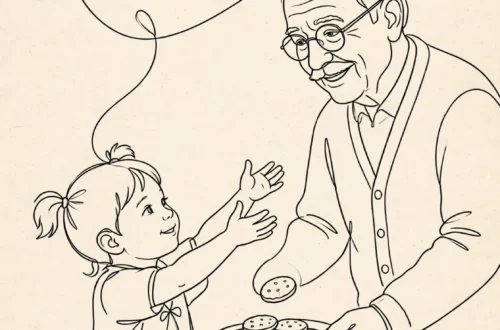
At the school fête, a shy teenager has rewritten her song contest entry three times and still has not handed it in. Her grandmother takes the form, walks it to the desk herself, and comes back smiling: « Qui ne risque rien n’a rien, ma chérie. Au pire, tu auras essayé. »
Let’s explore how qui ne risque rien n’a rien works in French, beginning with the whole phrase on one card.
Understanding the French Phrase Qui ne risque rien n’a rien
Qui ne risque rien n’a rien is a French proverb built from qui (whoever), ne risque rien (risks nothing) and n’a rien (has nothing). The same rien appears twice — the nothing you risk on one side, the nothing you get on the other — and the symmetry is the argument.
It means nothing ventured, nothing gained: if you never dare — never apply, never ask, never try — success is impossible by definition. It encourages reasonable courage, not recklessness: the risk in the proverb is a real attempt with something modest at stake, not a gamble with everything you own.
Type: Proverb — courage (qui + double negative, rien … rien)
Answers the need: Encouraging someone to dare a reasonable attempt
Register: Neutral — safe everywhere, in speech and writing
Strength: Encouraging — a push forward, not a dare to be reckless
One important usage detail: rien is the subject’s shadow in both halves — ne risque rien, risks nothing, and n’a rien, has nothing, where ne shrinks to n’ before a vowel. Qui at the head means whoever: the proverb states a general law, not a remark about one person. It is often quoted in its short form, qui ne risque rien… , letting the listener finish it.
Experience the Word
Qui ne risque rien n’a rien is arithmetic for the timid — zero offered, zero returned, every single time.
Imagine the letter never sent, the audition never taken, the small shop never opened because the moment never felt safe enough. The proverb does not promise the prize. It simply points at the locked door and notes that knocking was always allowed.
French says it without drama. No trumpets — just a shrug, a smile, and the form handed in.
How to Use Qui ne risque rien n’a rien in French: Complete Guide
Let’s explore how qui ne risque rien n’a rien works in French, beginning with the whole phrase on one card.
Qui ne risque rien n’a rien at a Glance
The Whole Phrase on One Card
Real meaning, literal picture, English twin and register — qui ne risque rien n’a rien in five lines.
| Point | Qui ne risque rien n’a rien |
|---|---|
| What it really means | whoever risks nothing gains nothing — no attempt, no reward |
| Word for word | who risks nothing has nothing |
| English equivalent | nothing ventured, nothing gained |
| Register | neutral — safe everywhere |
| Use it for | applications, auditions, invitations, small businesses — any worthwhile attempt |
Example
Postule quand même pour ce poste. Qui ne risque rien n’a rien.
Apply for the job anyway. Nothing ventured, nothing gained.
Word by Word: Building the Wager
Six small pieces — take them one by one and the two nothings face each other.
| Word | Literal meaning | Its job in the phrase |
|---|---|---|
| qui | whoever | opens the law — it is about anyone, everyone |
| ne risque | does not risk | risquer is to risk, to venture — the attempt refused |
| rien | nothing | the empty stake — what the cautious person puts forward |
| n’a | does not have | ne + a, shrunk before the vowel — the result side of the law |
| rien | nothing | the empty prize — the same nothing, coming back as the reward |
Example
Elle a envoyé son manuscrit à trois éditeurs. Qui ne risque rien n’a rien.
She sent her manuscript to three publishers. Nothing ventured, nothing gained.
Quick Quiz 1
Why does rien appear twice in qui ne risque rien n’a rien?
Reveal the answer
Because the two nothings match — the nothing you risk comes back as the nothing you gain; the symmetry is the whole argument.
Il n’a jamais osé demander. Qui ne risque rien n’a rien.
He never dared to ask. Nothing ventured, nothing gained.
When You Say It: The Daring Moments
Qui ne risque rien n’a rien fires at moments like these — just before someone decides whether to try.
| Situation | Example |
|---|---|
| Applying for a job | postule, tu verras bien — qui ne risque rien n’a rien |
| Sending creative work | envoie ton texte au concours — qui ne risque rien n’a rien |
| Asking someone out | invite-la à prendre un café — qui ne risque rien n’a rien |
| Starting small | ouvre ta boutique en ligne — qui ne risque rien n’a rien |
| Encouraging yourself | allez, je me lance : qui ne risque rien n’a rien |
Example
Il a osé présenter son idée au directeur. Qui ne risque rien n’a rien.
He dared to present his idea to the director. Nothing ventured, nothing gained.
Make It Yours: The Law for Every Attempt
The proverb is a fixed law, but the family around risquer conjugates freely.
| Form | French | In English |
|---|---|---|
| The proverb itself | qui ne risque rien n’a rien | nothing ventured, nothing gained |
| Short form | qui ne risque rien… | nothing ventured… (the listener finishes it) |
| Encouragement | risque le coup, tu verras | take the chance, you will see |
| First person | je me lance | I am going for it |
| The attempt | tenter sa chance | to try one’s luck |
| Afterwards | au pire, tu auras essayé | at worst, you will have tried |
Example
Allez, tente ta chance : qui ne risque rien n’a rien.
Go on, try your luck: nothing ventured, nothing gained.
Quick Quiz 2
In n’a rien, why is ne written n’?
Reveal the answer
Because a begins with a vowel — ne shrinks to n’ before a vowel sound, exactly as in je n’ai rien.
Sans essayer, on n’a rien.
Without trying, you get nothing.
Everyday Expressions: Building on the Wager
Qui ne risque rien n’a rien slots into these everyday frames — each one ready to use as it stands.
| Frame | In English |
|---|---|
| qui ne risque rien n’a rien | nothing ventured, nothing gained |
| tenter sa chance | to try one’s luck |
| se lancer | to take the plunge, to go for it |
| oser | to dare — the plain verb behind the proverb |
| au pire | at worst — the encourager’s safety net |
Example
Elle s’est lancée et a ouvert son atelier en mars.
She took the plunge and opened her workshop in March.
Close Cousins: The Other Courage Sayings
French has a whole shelf of daring phrases — this proverb is the arithmetic one; its cousins praise fortune, effort and the attempt itself.
| Expression | The difference |
|---|---|
| qui ne risque rien n’a rien | nothing ventured, nothing gained — no risk, no reward, stated as arithmetic |
| la fortune sourit aux audacieux | fortune smiles on the bold — grander, almost literary |
| qui tente rien n’a rien | a common spoken variant — tenter, to try, in place of risquer |
| on n’a rien sans peine | nothing without effort — the work cousin: the price is sweat, not risk |
| qui vivra verra | time will tell — the patient cousin, for after the attempt is made |
Example
La fortune sourit aux audacieux : elle a demandé, et elle a obtenu.
Fortune smiles on the bold: she asked, and she got it.
Quick Quiz 3
Which cousin says the price of success is effort rather than risk?
Reveal the answer
On n’a rien sans peine — nothing without effort: where the proverb asks for daring, this one asks for work.
Des mois d’entraînement… on n’a rien sans peine.
Months of training… nothing comes without effort.
Qui ne risque rien n’a rien and Its Neighbours
The daring shelf around the proverb — the risk, the chance and the plunge.
| French | In English |
|---|---|
| risquer | to risk, to venture |
| oser | to dare |
| tenter | to try, to attempt |
| la chance | luck; a chance |
| se lancer | to take the plunge |
| un pari | a bet, a wager |
Example
Tenter sa chance, c’est déjà risquer un petit rien.
Trying your luck is already risking a little nothing.
Watch Out: The Traps Around Qui ne risque rien n’a rien
The traps: courage confused with recklessness, a double negative that is correct, and a cousin that changes one word.
| Trap | The truth |
|---|---|
| not a licence to gamble | the proverb blesses a reasonable attempt — a form sent, a question asked; it does not bless staking everything on a whim |
| the double negative is correct | ne … rien is the standard French negative; rien n’a rien is not a mistake, it is the grammar itself |
| risquer has a dark side too | risquer can mean to run a danger — tu risques de tomber, you risk falling; context separates the wager from the warning |
| tenter is a true variant | qui tente rien n’a rien is heard everywhere in speech — same law, slightly plainer verb |
Example
Postuler n’est pas un pari : c’est un essai, et qui ne risque rien n’a rien.
Applying is not a gamble: it is an attempt, and nothing ventured, nothing gained.
Quick Quiz 4
True or false: the proverb encourages betting everything you own on one throw.
Reveal the answer
False — it encourages a reasonable attempt: applying, asking, trying. The stake is a modest effort, not your whole fortune.
Elle a juste envoyé sa candidature. Qui ne risque rien n’a rien.
She simply sent in her application. Nothing ventured, nothing gained.
Qui ne risque rien n’a rien in Everyday French: Real-Life Examples
Now that you know the word, let’s see how qui ne risque rien n’a rien appears in everyday French.
Example 1 — The contest form
Elle a enfin déposé son dossier pour le concours. Qui ne risque rien n’a rien.
She finally handed in her entry for the contest. Nothing ventured, nothing gained.
Example 2 — The job advert
Il n’a pas toutes les qualifications, mais il postule. Qui ne risque rien n’a rien.
He does not have every qualification, but he is applying. Nothing ventured, nothing gained.
Example 3 — The invitation
Elle l’a invité à danser, tout simplement. Qui ne risque rien n’a rien.
She asked him to dance, quite simply. Nothing ventured, nothing gained.
Example 4 — The little shop
Ils ouvrent leur boutique samedi. Qui ne risque rien n’a rien.
They are opening their shop on Saturday. Nothing ventured, nothing gained.
Example 5 — The manuscript
Il envoie son roman à un éditeur demain. Qui ne risque rien n’a rien.
He is sending his novel to a publisher tomorrow. Nothing ventured, nothing gained.
Example 6 — The audition
Elle passe l’audition vendredi, même si elle tremble. Qui ne risque rien n’a rien.
She is doing the audition on Friday, even though she is trembling. Nothing ventured, nothing gained.
Beyond Translation: The Meaning of Qui ne risque rien n’a rien
English ventures — a merchant’s word, cargo on a ship that may not come home. French simply counts: rien on the left, rien on the right, an equals sign made of courage. The proverb is a balance sheet for the hesitant.
To risk a little nothing is the only known way to be paid in something.
That is why grandmothers quote it while handing in forms: they have done the arithmetic a thousand times, and it has never once been wrong.
How to Remember the French Phrase Qui ne risque rien n’a rien
Remember it this way: Qui ne risque rien n’a rien is a balance sheet — the nothing on the left of the equals sign always matches the nothing on the right.
- You picture the two rien facing each other — nothing risked on one side, nothing gained on the other.
- You hear qui as whoever — the proverb is a general law, not advice for one person only.
- You keep the stake modest — the proverb blesses the attempt, the application, the question; not the reckless gamble.
The key idea is qui ne risque rien n’a rien means nothing ventured, nothing gained — no attempt, no reward.
Test Your Knowledge of Qui ne risque rien n’a rien
Let’s see how much you’ve learned. Try answering these questions before revealing the answers.
Question 1
What does qui ne risque rien n’a rien mean?
Reveal the answer
Nothing ventured, nothing gained — whoever risks nothing can gain nothing.
Question 2
What does the opening qui mean here?
Reveal the answer
Whoever — the proverb states a general law that applies to anyone.
Question 3
Why is ne written n’ in n’a rien?
Reveal the answer
Because a begins with a vowel — ne shrinks to n’ before a vowel sound.
Question 4
What is the common spoken variant with tenter?
Reveal the answer
Qui tente rien n’a rien — tenter, to try, replaces risquer with the same meaning.
Question 5
Complete the sentence:
Qui ne risque ______, n’a ______. (Nothing ventured, nothing gained.)
Reveal the answer
rien, rien
Qui ne risque rien n’a rien.
Nothing ventured, nothing gained.
Your Final Challenge
Can You Use It?
How would you say this in French?
“Nothing ventured, nothing gained.”
Reveal the answer
Qui ne risque rien n’a rien.
Nothing ventured, nothing gained.
A little French. A little curiosity. A richer everyday life.
LEARN FRENCH ONE WORD AT A TIME