A French Word to Live By
How to Conjugate Prévenir in French
/pʁev.niʁ/
Prévenir means to warn, to prevent.
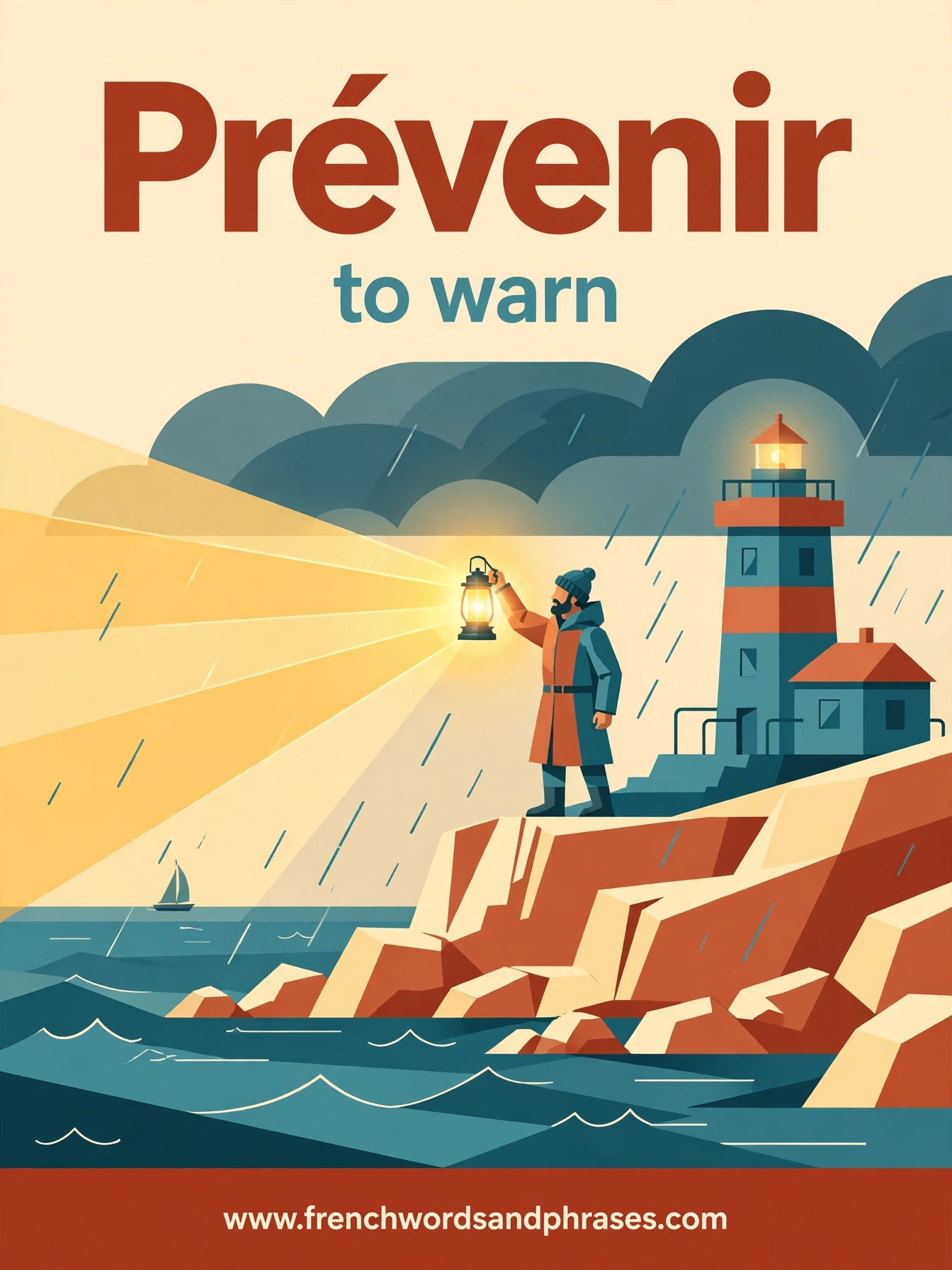
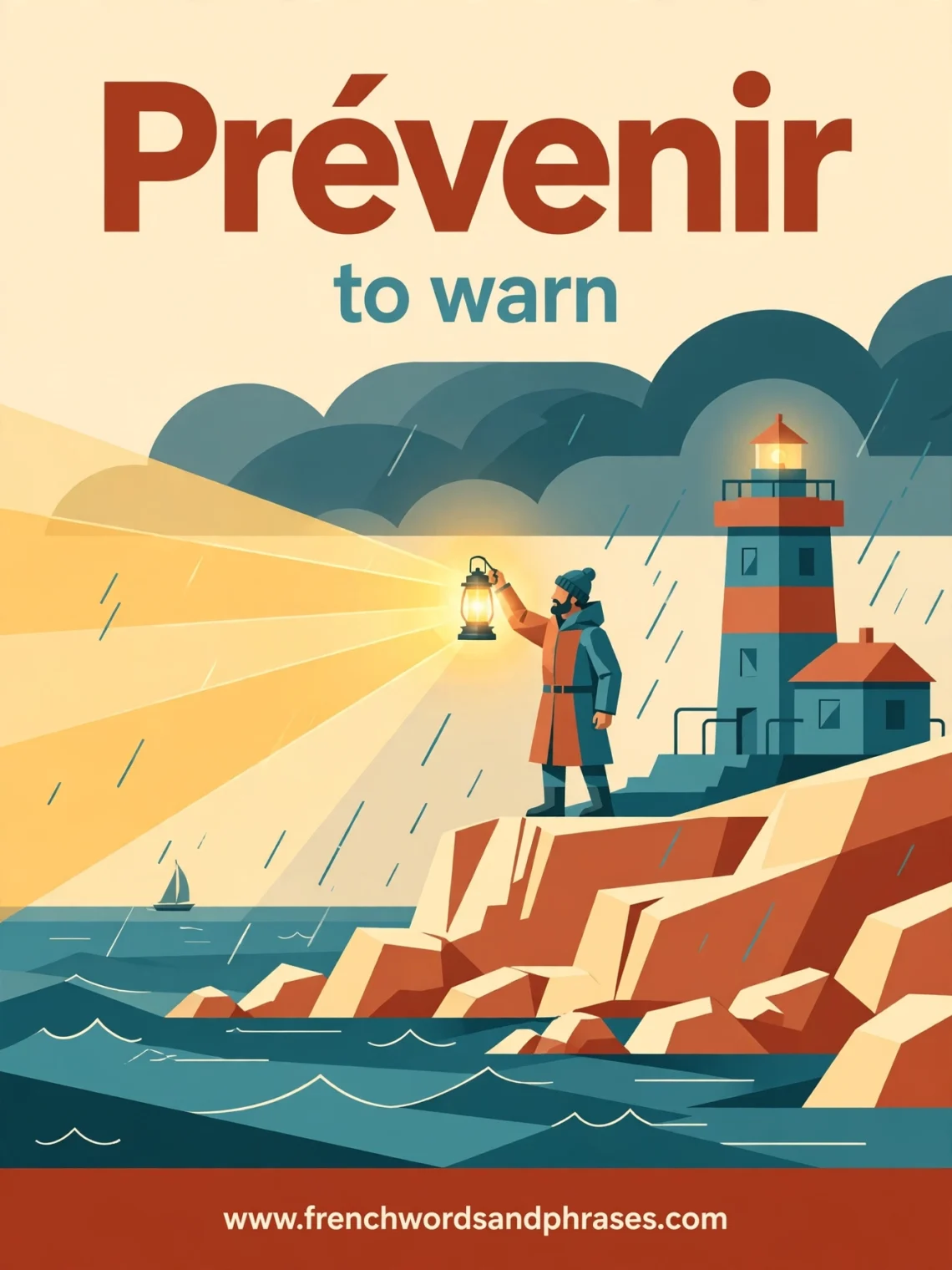
A good friend sees the danger before you do — the icy step, the coming storm, the mistake you are about to make — and speaks in time. To warn before, so that harm never comes: that is prévenir.
In this guide, you’ll learn how to conjugate prévenir in all the major French tenses and moods. Explore complete conjugation tables, French examples, English translations, and practice quizzes.
Understanding the French Verb Prévenir
Prévenir is an irregular French verb belonging to the third group of verbs, those ending in -ir, and a member of the venir family.
It means to warn, to prevent. It has two great uses: to warn someone in advance — prévenir quelqu’un d’un danger — and to prevent something from happening at all — prévenir une maladie, to prevent an illness. A famous proverb says: mieux vaut prévenir que guérir — prevention is better than cure.
Verb classification: Third group (irregular -ir verb, venir family)
Auxiliary verb: Avoir
Past participle: prévenu
Present participle: prévenant
English equivalents: To warn, to prevent.
One important spelling detail: like venir, the stem changes — je préviens, ils préviennent with a strong stem, but nous prévenons, je prévenais with a weak stem in -ven-. The future uses another stem again: je préviendrai.
Experience the Word
Prévenir is more than giving information. It is love arriving early — the hand on the shoulder before the fall.
Imagine dark clouds gathering over the harbour. Old Pierre telephones every boat he knows, one by one, before the storm arrives.
You have not just spoken. You have warned them in time.
How to Conjugate Prévenir: Complete French Conjugation Guide
Let’s explore every major conjugation of prévenir, beginning with the indicative mood.
How to Conjugate Prévenir in the Indicative Mood
The indicative mood is used to express facts, observations, actions, and events.
How to Conjugate Prévenir in the Present Tense (Présent)
Used for actions happening now, habitual actions, and general truths.
| Subject | Conjugation |
|---|---|
| je | préviens |
| tu | préviens |
| il / elle | prévient |
| nous | prévenons |
| vous | prévenez |
| ils / elles | préviennent |
Example
Elle prévient toujours ses voisins du bruit.
She always warns her neighbours about the noise.
Quick Quiz 1
Complete the sentence:
Nous ______ toujours nos voisins à l’avance.
Reveal the answer
prévenons
Nous prévenons toujours nos voisins à l’avance.
We always warn our neighbours in advance.
How to Conjugate Prévenir in the Passé Composé
Used for completed actions in the past. Prévenir takes the auxiliary verb avoir.
| Subject | Conjugation |
|---|---|
| j’ | ai prévenu |
| tu | as prévenu |
| il / elle | a prévenu |
| nous | avons prévenu |
| vous | avez prévenu |
| ils / elles | ont prévenu |
Example
Je t’ai prévenu hier soir.
I warned you last night.
How to Conjugate Prévenir in the Imparfait (Imperfect Tense)
Used for habitual past actions, descriptions, and ongoing situations in the past.
| Subject | Conjugation |
|---|---|
| je | prévenais |
| tu | prévenais |
| il / elle | prévenait |
| nous | prévenions |
| vous | préveniez |
| ils / elles | prévenaient |
Example
Quand il était jeune, il prévenait ses amis de chaque danger.
When he was young, he warned his friends of every danger.
Quick Quiz 2
Choose the correct form:
When we were young, we warned our friends of every danger.
Quand nous étions jeunes, nous ______ nos amis de chaque danger.
Reveal the answer
prévenions
Quand nous étions jeunes, nous prévenions nos amis de chaque danger.
How to Conjugate Prévenir in the Plus-que-parfait
Used to describe an action that had already been completed before another past event.
| Subject | Conjugation |
|---|---|
| j’ | avais prévenu |
| tu | avais prévenu |
| il / elle | avait prévenu |
| nous | avions prévenu |
| vous | aviez prévenu |
| ils / elles | avaient prévenu |
Example
J’avais déjà prévenu les voisins avant la fête.
I had already warned the neighbours before the party.
How to Conjugate Prévenir in the Passé Simple
Primarily used in formal writing, literature, and historical narratives. It is rarely used in everyday conversation.
| Subject | Conjugation |
|---|---|
| je | prévins |
| tu | prévins |
| il / elle | prévint |
| nous | prévînmes |
| vous | prévîntes |
| ils / elles | prévinrent |
Example
Il prévint la police dès le premier jour.
He warned the police on the very first day.
How to Conjugate Prévenir in the Passé Antérieur
A literary tense used to express an action completed immediately before another past action, generally in the passé simple.
| Subject | Conjugation |
|---|---|
| j’ | eus prévenu |
| tu | eus prévenu |
| il / elle | eut prévenu |
| nous | eûmes prévenu |
| vous | eûtes prévenu |
| ils / elles | eurent prévenu |
Example
Dès qu’il eut prévenu tout le monde, il partit.
As soon as he had warned everyone, he left.
How to Conjugate Prévenir in the Future Tense (Futur Simple)
Used to describe actions that will take place in the future.
| Subject | Conjugation |
|---|---|
| je | préviendrai |
| tu | préviendras |
| il / elle | préviendra |
| nous | préviendrons |
| vous | préviendrez |
| ils / elles | préviendront |
Example
Demain, nous préviendrons les invités du changement.
Tomorrow, we will warn the guests about the change.
How to Conjugate Prévenir in the Futur Antérieur (Future Perfect)
Used for an action that will have been completed before a particular point in the future.
| Subject | Conjugation |
|---|---|
| j’ | aurai prévenu |
| tu | auras prévenu |
| il / elle | aura prévenu |
| nous | aurons prévenu |
| vous | aurez prévenu |
| ils / elles | auront prévenu |
Example
À midi, j’aurai déjà prévenu le bureau.
By noon, I will already have warned the office.
How to Conjugate Prévenir in the Near Future (Futur Proche)
Used to describe something that is going to happen soon. Formed with aller + infinitive.
| Subject | Conjugation |
|---|---|
| je | vais prévenir |
| tu | vas prévenir |
| il / elle | va prévenir |
| nous | allons prévenir |
| vous | allez prévenir |
| ils / elles | vont prévenir |
Example
Je vais prévenir les voisins ce soir.
I am going to warn the neighbours this evening.
How to Conjugate Prévenir in the Conditional Mood
The conditional mood expresses what would happen under certain circumstances. It is also frequently used to make polite requests or express wishes.
How to Conjugate Prévenir in the Present Conditional
| Subject | Conjugation |
|---|---|
| je | préviendrais |
| tu | préviendrais |
| il / elle | préviendrait |
| nous | préviendrions |
| vous | préviendriez |
| ils / elles | préviendraient |
Example
Je préviendrais la police si je voyais quelque chose.
I would warn the police if I saw something.
How to Conjugate Prévenir in the Past Conditional
| Subject | Conjugation |
|---|---|
| j’ | aurais prévenu |
| tu | aurais prévenu |
| il / elle | aurait prévenu |
| nous | aurions prévenu |
| vous | auriez prévenu |
| ils / elles | auraient prévenu |
Example
J’aurais prévenu plus tôt si j’avais su.
I would have warned earlier if I had known.
Prévenir in the Literary Past Conditional Form
This less common literary form uses the imperfect subjunctive of avoir.
| Subject | Conjugation |
|---|---|
| j’ | eusse prévenu |
| tu | eusses prévenu |
| il / elle | eût prévenu |
| nous | eussions prévenu |
| vous | eussiez prévenu |
| ils / elles | eussent prévenu |
Example
Il eût prévenu autrement s’il avait pu.
He would have warned differently if he had been able to.
How to Conjugate Prévenir in the Subjunctive Mood
The subjunctive is used to express wishes, emotions, doubts, necessity, and uncertainty. It frequently follows expressions such as il faut que (it is necessary that) or bien que (although).
How to Conjugate Prévenir in the Present Subjunctive
| Subject | Conjugation |
|---|---|
| que je | prévienne |
| que tu | préviennes |
| qu’il / qu’elle | prévienne |
| que nous | prévenions |
| que vous | préveniez |
| qu’ils / qu’elles | préviennent |
Example
Il faut que je prévienne mes parents.
I need to warn my parents.
Quick Quiz 3
Complete the sentence using the subjunctive:
Il faut que nous ______ nos parents.
Reveal the answer
prévenions
Il faut que nous prévenions nos parents.
We need to warn our parents.
How to Conjugate Prévenir in the Imperfect Subjunctive
A literary tense, rarely encountered in modern spoken French.
| Subject | Conjugation |
|---|---|
| que je | prévinsse |
| que tu | prévinsses |
| qu’il / qu’elle | prévînt |
| que nous | prévinssions |
| que vous | prévinssiez |
| qu’ils / qu’elles | prévinssent |
Example
Il souhaitait qu’elle prévînt ses amis.
He wished that she would warn her friends.
How to Conjugate Prévenir in the Pluperfect Subjunctive
A literary construction used to express an action completed before another past action.
| Subject | Conjugation |
|---|---|
| que j’ | eusse prévenu |
| que tu | eusses prévenu |
| qu’il / qu’elle | eût prévenu |
| que nous | eussions prévenu |
| que vous | eussiez prévenu |
| qu’ils / qu’elles | eussent prévenu |
Example
Il regrettait que nous eussions prévenu si tard.
He regretted that we had warned so late.
How to Conjugate Prévenir in the Past Subjunctive
| Subject | Conjugation |
|---|---|
| que j’ | aie prévenu |
| que tu | aies prévenu |
| qu’il / qu’elle | ait prévenu |
| que nous | ayons prévenu |
| que vous | ayez prévenu |
| qu’ils / qu’elles | aient prévenu |
Example
Je suis heureux que tu aies prévenu les voisins à temps.
I am happy that you warned the neighbours in time.
How to Conjugate Prévenir in the Imperative
The imperative is used to give commands, instructions, invitations, or suggestions. Subject pronouns are omitted.
How to Conjugate Prévenir in the Present Imperative
| Person | Conjugation |
|---|---|
| (tu) | préviens |
| (nous) | prévenons |
| (vous) | prévenez |
Example
Préviens-moi avant de partir !
Warn me before you leave!
Quick Quiz 4
How would you say Warn me! (tu form)?
Reveal the answer
Préviens-moi !
French Participles of Prévenir
Participles are verb forms that can be used in compound tenses and other grammatical constructions.
Present Participle of Prévenir
prévenant
En prévenant à temps, il a évité un accident.
By warning in time, he avoided an accident.
Past Participle of Prévenir
prévenu
Nous avons prévenu nos voisins du danger.
We warned our neighbours about the danger.
Prévenir in Everyday French: Real-Life Examples
Now that you know the conjugations, let’s see how prévenir appears in everyday French.
Example 1 — Present
Nous prévenons toujours nos voisins à l’avance.
We always warn our neighbours in advance.
Example 2 — Passé composé
Elle a prévenu la police hier soir.
She warned the police last night.
Example 3 — Imparfait
Il prévenait ses amis de chaque danger.
He warned his friends of every danger.
Example 4 — Future
Ils préviendront les invités demain matin.
They will warn the guests tomorrow morning.
Example 5 — Conditional
Je préviendrais les voisins si je pouvais.
I would warn the neighbours if I could.
Example 6 — Subjunctive
Bien que nous prévenions à temps, personne n’écoute.
Although we warn in time, nobody listens.
Beyond Translation: The Meaning of Prévenir
English needs two words, warn and prevent, for the meaning of prévenir. The French word holds both: to speak before, so that the bad thing never happens at all.
To prévenir is to arrive before the danger.
It evokes care and foresight — the friend who calls, the doctor who vaccinates, the sign that says attention. And the proverb sums it up: mieux vaut prévenir que guérir.
How to Remember the French Verb Prévenir
Remember it this way: Prévenir is about arriving before the danger.
- You call your friend before the storm — tu préviens ton ami.
- You tell the neighbours about tomorrow’s noise — tu as prévenu les voisins.
- You wash your hands to stay healthy — tu préviens la maladie.
The key idea is arriving before the danger.
Test Your Knowledge of Prévenir
Let’s see how much you’ve learned. Try answering these questions before revealing the answers.
Question 1
What auxiliary verb is used with prévenir in compound tenses?
Reveal the answer
Avoir
Question 2
How do you say I will warn in French?
Reveal the answer
Je préviendrai.
Question 3
Translate: We warned our neighbours about the danger.
Reveal the answer
Nous avons prévenu nos voisins du danger.
Question 4
What is the present participle of prévenir?
Reveal the answer
Prévenant.
Question 5
Complete the sentence:
Si je pouvais, je ______ les voisins.
Reveal the answer
préviendrais
Si je pouvais, je préviendrais les voisins.
If I could, I would warn the neighbours.
Your Final Challenge
Can You Use It?
How would you say this in French?
“Tomorrow, I want to warn my neighbours in advance.”
Reveal the answer
Demain, je veux prévenir mes voisins à l’avance.
Tomorrow, I want to warn my neighbours in advance.
A little French. A little curiosity. A richer everyday life.
LEARN FRENCH ONE WORD AT A TIME