A French Word to Live By
Translate Personnellement, je pense que to English
/pɛʁ.sɔ.nɛl.mɑ̃ ʒə pɑ̃s kə/
Personnellement, je pense que means personally, I think.
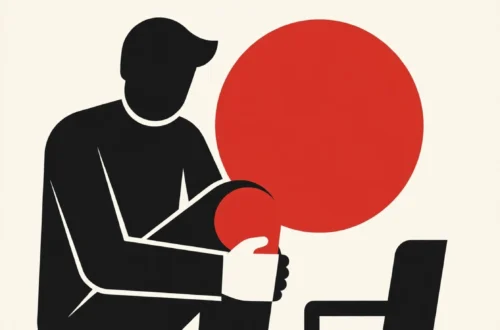
The meeting has gone round in circles for twenty minutes: the budget, the calendar, the new software. You wait for a pause, take a breath, and plant your flag — politely, but clearly: « Personnellement, je pense que nous compliquons les choses. » Heads turn. Your view is on the table, signed with your name.
Let’s explore how personnellement, je pense que works in French, beginning with the whole phrase on one card.
Understanding the French Phrase Personnellement, je pense que
Personnellement, je pense que is a French opinion opener — a short launch pad that announces ‘what follows is my own view’. It pairs the adverb personnellement (personally) with the verb penser (to think) and que (that), the little hinge that introduces the opinion itself.
It means personally, I think — and it does a social job as much as a language job. It marks the next sentence as your view, not a fact, and it politely leaves the door open for other people to disagree. French speakers reach for it whenever an opinion needs a name tag: mine.
Type: Opinion opener — adverb + je pense que (I think that)
Answers the need: Giving your own view clearly, in speech or in writing
Register: Neutral to slightly formal — meetings, essays, interviews, conversation
Strength: Clear but polite — a stated opinion, not a demand
One important usage detail: que must be followed by a complete clause, with its own subject and verb — the phrase is a doorway, not the room. And when the opinion turns negative, French changes gear: personnellement, je ne pense pas qu’il vienne (personally, I don’t think he’ll come) uses the subjunctive after je ne pense pas que.
Experience the Word
Personnellement, je pense que is the sound of someone stepping forward in a discussion — calmly, without pushing anyone else back.
Imagine a family arguing about where to spend the holidays: the mountains, the sea, grandmother’s village. One voice says « Personnellement, je pense que la mer ferait plaisir aux enfants » — and suddenly the debate has a proposal to work with, not just noise.
An opinion with a name tag is easier to discuss than an opinion dressed up as a fact. This phrase is how French signs its opinions.
How to Use Personnellement, je pense que in French: Complete Guide
Let’s explore how personnellement, je pense que works in French, beginning with the whole phrase on one card.
Personnellement, je pense que at a Glance
The Whole Phrase on One Card
Real meaning, word-for-word version, English twin and register — personnellement, je pense que in five lines.
| Point | Personnellement, je pense que |
|---|---|
| What it really means | personally, I think — this is my own view |
| Word for word | personally, I think that |
| English equivalent | personally, I think / in my opinion |
| Register | neutral, slightly formal — safe at work and in essays |
| Use it for | opinions you want to own clearly, without imposing them |
Example
Personnellement, je pense que ce plan est trop cher.
Personally, I think this plan is too expensive.
Word by Word: Signing Your Opinion
Four small pieces — each one does a job, and together they sign the opinion with your name.
| Word | Literal meaning | Its job in the phrase |
|---|---|---|
| personnellement | personally | sets the frame: what follows is my view, not a fact |
| je | I | the speaker steps forward and takes responsibility |
| pense | think | from penser, to think — the opinion verb |
| que | that | the hinge: everything after que is the opinion itself |
Example
Personnellement, je pense que le train est plus pratique.
Personally, I think the train is more practical.
Quick Quiz 1
What job does personnellement do at the start of the phrase?
Reveal the answer
It frames what follows as your personal view — an opinion with your name on it, not a fact.
Personnellement, je pense que ce livre est excellent.
Personally, I think this book is excellent.
When You Say It: The Opinion Moments
Personnellement, je pense que appears whenever a view needs an owner — at moments like these.
| Situation | Example |
|---|---|
| In a work meeting | personnellement, je pense que le délai est trop court — personally, I think the deadline is too short |
| Writing an essay | personnellement, je pense que la lecture reste essentielle — personally, I think reading remains essential |
| Disagreeing politely | personnellement, je pense que ce n’est pas la meilleure solution — personally, I think that isn’t the best solution |
| In a job interview | personnellement, je pense que le travail d’équipe est la clé — personally, I think teamwork is the key |
| Advising a friend | personnellement, je pense que tu devrais lui parler — personally, I think you should talk to him |
Example
Personnellement, je pense que nous devrions attendre un peu.
Personally, I think we should wait a little.
Make It Yours: Changing the Shape
The frame bends — a group instead of a person, a softer verb, a negative, a question thrown back.
| Form | French | In English |
|---|---|---|
| A group speaks | personnellement, nous pensons que | personally, we think that |
| Softer verb | personnellement, je trouve que | personally, I find that |
| Negative (+ subjunctive) | personnellement, je ne pense pas qu’il ait raison | personally, I don’t think he is right |
| Inviting others | et toi, personnellement, tu penses que… ? | and you, personally, do you think that…? |
| In the past | personnellement, je pensais que | personally, I thought that |
Example
Personnellement, nous pensons que le projet mérite une chance.
Personally, we think the project deserves a chance.
Quick Quiz 2
What changes in the grammar when je pense que becomes je ne pense pas que?
Reveal the answer
The verb after que moves into the subjunctive — the negative of penser opens the door to doubt.
Personnellement, je ne pense pas qu’elle soit d’accord.
Personally, I don’t think she agrees.
Everyday Expressions: Frames That Carry the Phrase
Personnellement, je pense que slots into these everyday frames — each one ready to use as it stands.
| Frame | In English |
|---|---|
| personnellement, je pense qu’il faut… | personally, I think we must / it is necessary to… |
| personnellement, je pense que c’est une bonne idée | personally, I think it’s a good idea |
| personnellement, je pense que tu as raison | personally, I think you’re right |
| personnellement, je pense que le mieux serait de… | personally, I think the best thing would be to… |
| personnellement, je pense que non | personally, I don’t think so (short answer) |
Example
Personnellement, je pense qu’il faut partir tôt demain.
Personally, I think we need to leave early tomorrow.
Close Cousins: The Other Opinion Openers
French has a whole family of opinion openers — personnellement, je pense que is the full, clear version; its cousins adjust the weight.
| Expression | The difference |
|---|---|
| personnellement, je pense que | the full version — frame + verb; clear, slightly formal |
| à mon avis | in my opinion — shorter, lighter, the everyday default |
| pour ma part | for my part — sets your view against the others’ |
| en ce qui me concerne | as far as I’m concerned — more formal, written flavour |
| je trouve que | I find that — judges from experience, a touch softer |
Example
À mon avis, ce restaurant est meilleur que l’autre.
In my opinion, this restaurant is better than the other one.
Quick Quiz 3
Which cousin is the short, everyday default for “in my opinion”?
Reveal the answer
À mon avis — three words, no verb, and it does the same framing job more lightly.
À mon avis, le concert était magnifique.
In my opinion, the concert was magnificent.
Personnellement, je pense que and Its Neighbours
The opinion shelf around the phrase, from hesitant impression to opinion dressed as fact.
| French | In English |
|---|---|
| il me semble que | it seems to me that (much more hesitant) |
| personnellement, je pense que | personally, I think (clear, signed) |
| d’après moi | in my view / according to me |
| franchement | frankly (adds candour to the opinion) |
| tout le monde sait que | everyone knows that (the opposite move: opinion as fact) |
Example
D’après moi, le magasin ferme à sept heures.
In my view, the shop closes at seven.
Watch Out: The Traps Around Personnellement, je pense que
The traps: stacking two openers, leaving que with nothing after it, and forgetting the negative’s subjunctive.
| Trap | The truth |
|---|---|
| stacking openers | ‘personnellement, à mon avis, je pense que…’ says the same thing three times — pick one frame |
| que with no clause | ‘personnellement, je pense que demain’ is a fragment — que needs a subject and a verb after it |
| indicative after the negative | je ne pense pas que takes the subjunctive: qu’il vienne, not qu’il vient, in careful French |
| spelling personnellement | double n and double l — personnel + -ment; English ‘personally’ hides the extra letters |
| hearing it as a complaint | English ‘personally…’ can sound offended; the French phrase is neutral framing, not a grievance |
Example
Personnellement, je ne pense pas qu’elle soit d’accord.
Personally, I don’t think she agrees.
Quick Quiz 4
Spot the mistake: “Personnellement, je pense que demain.“
Reveal the answer
There is no clause after que — que must introduce a full statement with its own subject and verb.
Personnellement, je pense que demain sera plus calme.
Personally, I think tomorrow will be calmer.
Personnellement, je pense que in Everyday French: Real-Life Examples
Now that you know the word, let’s see how personnellement, je pense que appears in everyday French.
Example Example 1 — A meeting
Personnellement, je pense que ce budget est réaliste.
Personally, I think this budget is realistic.
Example Example 2 — An essay
Personnellement, je pense que les voyages forment la jeunesse.
Personally, I think travel broadens young minds.
Example Example 3 — Between friends
Personnellement, je pense que tu exagères un peu.
Personally, I think you’re exaggerating a little.
Example Example 4 — A family decision
Personnellement, je pense que la maison près de l’école est mieux.
Personally, I think the house near the school is better.
Example Example 5 — An interview
Personnellement, je pense que la patience est une qualité essentielle.
Personally, I think patience is an essential quality.
Example Example 6 — Advice
Personnellement, je pense que tu devrais te reposer ce week-end.
Personally, I think you should rest this weekend.
Beyond Translation: The Meaning of Personnellement, je pense que
French discussion has a choreography: first you announce whose view is coming, then you deliver it. Personnellement, je pense que is the announcement — a small act of honesty that says ‘this is one person’s reading, and other readings exist’.
To sign your opinion is to make debate possible.
That is why the phrase thrives in meetings, essays and interviews alike: it turns ‘the truth, according to me’ into ‘my position, open to discussion’ — firmer than a guess, fairer than a fact.
How to Remember the French Phrase Personnellement, je pense que
Remember it this way: Remember it this way: Personnellement, je pense que is the signed opinion — your name first, your view after it.
- You sign first — personnellement puts your name on the opinion before you give it.
- You open with que — and a full clause must walk through the door it opens.
- You flip in the negative — je ne pense pas que calls for the subjunctive.
The key idea is personnellement, je pense que means personally, I think — an opinion with your name on it.
Test Your Knowledge of Personnellement, je pense que
Let’s see how much you’ve learned. Try answering these questions before revealing the answers.
Question 1
What does personnellement, je pense que mean?
Reveal the answer
Personally, I think — it introduces your own opinion and marks it as yours.
Question 2
What must come after que in this phrase?
Reveal the answer
A complete clause — a subject and a verb: je pense que le film est trop long, never just je pense que demain.
Question 3
What happens grammatically after je ne pense pas que?
Reveal the answer
The subjunctive arrives — je ne pense pas qu’il vienne (I don’t think he’ll come).
Question 4
Translate: Personally, I think this village is charming.
Reveal the answer
Personnellement, je pense que ce village est charmant.
Question 5
Complete the sentence:
Personnellement, je ______ que nous avons le temps. (Personally, I think we have time.)
Reveal the answer
pense
Personnellement, je pense que nous avons le temps.
Personally, I think we have time.
Your Final Challenge
Can You Use It?
How would you say this in French?
“How would you say this in French?”
Reveal the answer
Personnellement, je pense que ce quartier est le plus agréable.
Personally, I think this neighbourhood is the nicest.
A little French. A little curiosity. A richer everyday life.
LEARN FRENCH ONE WORD AT A TIME