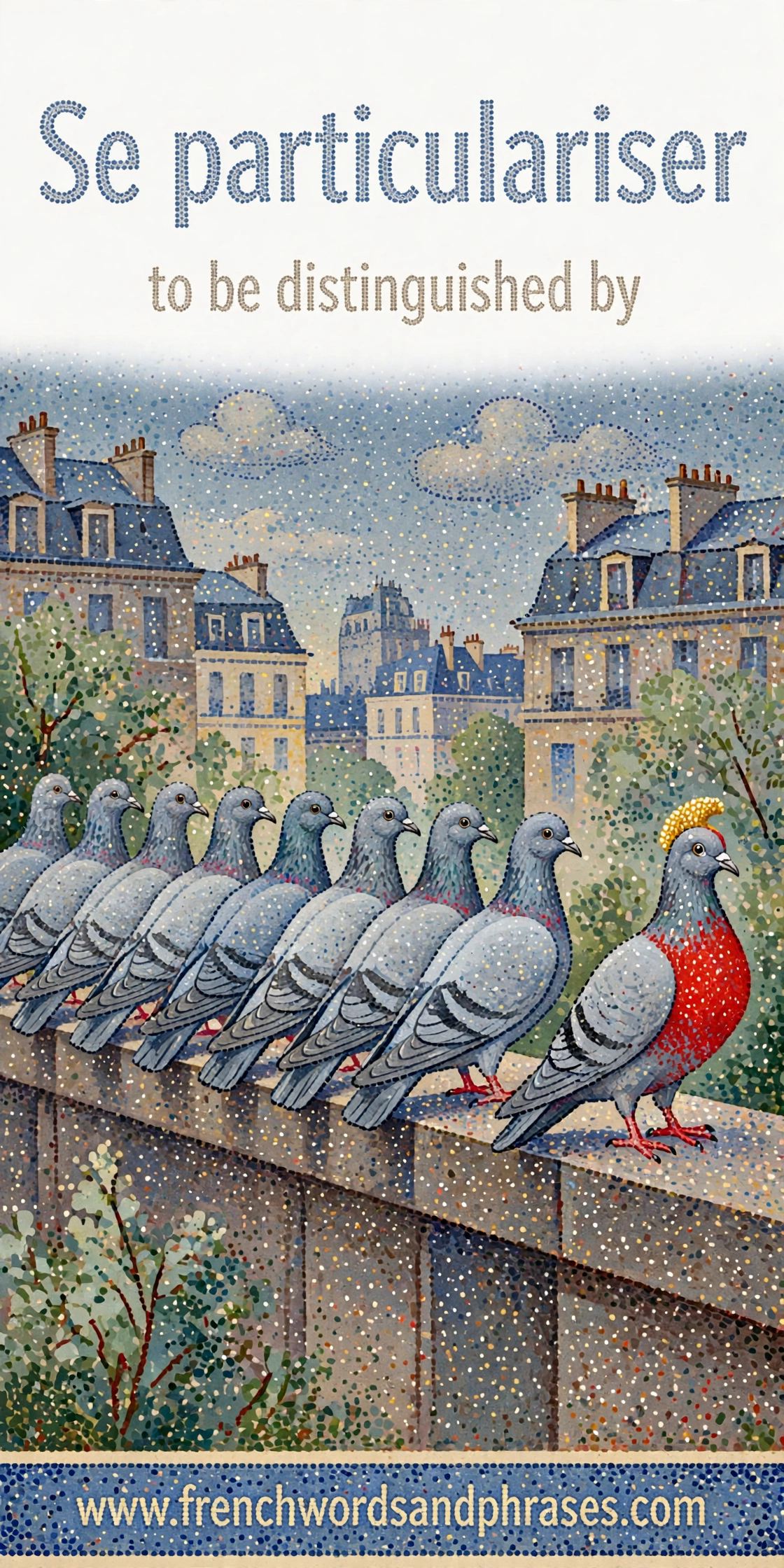
How to Conjugate Particulariser in French
/paʁ.ti.ky.la.ʁi.ze/
Particulariser means to particularize — to set something out in detail, case by case and point by point, instead of leaving it general.
A notary reading a will aloud, pausing at every name and every field; a contract that refuses to say ‘the goods’ and instead lists forty-one boxes — particulariser is the verb of the fine print done properly: nothing waved at, everything named.
In this guide, you’ll learn how to conjugate particulariser in all the major French tenses and moods. Explore complete conjugation tables, French examples, English translations, and practice quizzes.
Understanding the French Verb Particulariser
Particulariser is a regular French verb belonging to the first group of verbs, those ending in -er.
It means to particularize. Lawyers, notaries, accountants and examiners particularisent for a living: charges are particularised against an accused, expenses are particularised in an annex, conditions are particularised in a contract. Wherever a general statement would be dangerous or useless, this verb moves in with its list.
Verb classification: First group (-er)
Auxiliary verb: Avoir
Past participle: particularisé
Present participle: particularisant
English equivalents: To particularize, to specify in detail, to itemize; particulariser les faits — to set out the facts in detail; particulariser une demande — to spell out a request; particulariser les dépenses — to itemize the expenses; sans particulariser — without going into detail; le particulier — the private individual, the particular case.
One important detail: particulariser is a long but perfectly regular -er verb — je particularise, nous particularisons, ils particularisent, past participle particularisé — with no stem surprises at all. Its trap is purely one of style: it belongs to careful, administrative and legal French. In everyday conversation, French prefers shorter tools — préciser (to specify), détailler (to detail) or donner les détails; particulariser is the word of contracts, reports and instructions that must leave nothing vague.
Experience the Word
Particulariser is the verb of ‘let us be precise’ — the general statement sent back to be rewritten with names, dates and numbers.
Imagine an inheritance dispute in a notary’s study. ‘The estate goes to the family,’ says the will — and everyone leans forward, because that sentence settles nothing. The notary opens a fresh page and particularise: this field to the elder son, this vineyard to the daughter, these debts to be paid first. An hour later, the quarrel has nowhere left to live.
The general words caused the fight. The particulars — particularisés, item by item — ended it.
How to Conjugate Particulariser: Complete French Conjugation Guide
Let’s explore every major conjugation of particulariser, beginning with the indicative mood.
How to Conjugate Particulariser in the Indicative Mood
The indicative mood is used to express facts, observations, actions, and events.
How to Conjugate Particulariser in the Present Tense (Présent)
Used for actions happening now, habitual actions, and general truths.
| Subject | Conjugation |
|---|---|
| je | particularise |
| tu | particularises |
| il / elle | particularise |
| nous | particularisons |
| vous | particularisez |
| ils / elles | particularisent |
Le contrat particularise chaque cas avec soin.
The contract sets out each case in detail, with care.
Complete the sentence:
Nous ______ les conditions du prêt.
Reveal the answer
particularisons
Nous particularisons les conditions du prêt.
We are spelling out the conditions of the loan.
How to Conjugate Particulariser in the Passé Composé
Used for completed actions in the past. Particulariser takes the auxiliary verb avoir.
| Subject | Conjugation |
|---|---|
| j’ | ai particularisé |
| tu | as particularisé |
| il / elle | a particularisé |
| nous | avons particularisé |
| vous | avez particularisé |
| ils / elles | ont particularisé |
L’avocat a particularisé les charges contre l’accusé.
The lawyer set out the charges against the accused in detail.
How to Conjugate Particulariser in the Imparfait (Imperfect Tense)
Used for habitual past actions, descriptions, and ongoing situations in the past.
| Subject | Conjugation |
|---|---|
| je | particularisais |
| tu | particularisais |
| il / elle | particularisait |
| nous | particularisions |
| vous | particularisiez |
| ils / elles | particularisaient |
Le rapport particularisait les besoins de chaque région.
The report used to spell out the needs of each region.
Choose the correct form:
The lawyer set out the charges in detail.
L’avocat ______ les charges. (a particularisé / est particularisé)
Reveal the answer
a particularisé
L’avocat a particularisé les charges.
Particulariser takes avoir.
How to Conjugate Particulariser in the Plus-que-parfait
Used to describe an action that had already been completed before another past event.
| Subject | Conjugation |
|---|---|
| j’ | avais particularisé |
| tu | avais particularisé |
| il / elle | avait particularisé |
| nous | avions particularisé |
| vous | aviez particularisé |
| ils / elles | avaient particularisé |
Elle avait particularisé ses demandes dans la lettre.
She had spelled out her requests in the letter.
How to Conjugate Particulariser in the Passé Simple
Primarily used in formal writing, literature, and historical narratives. It is rarely used in everyday conversation.
| Subject | Conjugation |
|---|---|
| je | particularisai |
| tu | particularisas |
| il / elle | particularisa |
| nous | particularisâmes |
| vous | particularisâtes |
| ils / elles | particularisèrent |
Le notaire particularisa les biens de la succession.
The notary itemized the assets of the estate.
How to Conjugate Particulariser in the Passé Antérieur
A literary tense used to express an action completed immediately before another past action, generally in the passé simple.
| Subject | Conjugation |
|---|---|
| j’ | eus particularisé |
| tu | eus particularisé |
| il / elle | eut particularisé |
| nous | eûmes particularisé |
| vous | eûtes particularisé |
| ils / elles | eurent particularisé |
Quand il eut particularisé les faits, le juge prit la parole.
When he had set out the facts in detail, the judge began to speak.
How to Conjugate Particulariser in the Future Tense (Futur Simple)
Used to describe actions that will take place in the future.
| Subject | Conjugation |
|---|---|
| je | particulariserai |
| tu | particulariseras |
| il / elle | particularisera |
| nous | particulariserons |
| vous | particulariserez |
| ils / elles | particulariseront |
Demain, nous particulariserons les conditions du prêt.
Tomorrow, we will spell out the conditions of the loan.
How to Conjugate Particulariser in the Futur Antérieur (Future Perfect)
Used for an action that will have been completed before a particular point in the future.
| Subject | Conjugation |
|---|---|
| j’ | aurai particularisé |
| tu | auras particularisé |
| il / elle | aura particularisé |
| nous | aurons particularisé |
| vous | aurez particularisé |
| ils / elles | auront particularisé |
À la fin de la semaine, le comité aura particularisé toutes les règles.
By the end of the week, the committee will have set out all the rules in detail.
How to Conjugate Particulariser in the Near Future (Futur Proche)
Used to describe something that is going to happen soon. Formed with aller + infinitive.
| Subject | Conjugation |
|---|---|
| je | vais particulariser |
| tu | vas particulariser |
| il / elle | va particulariser |
| nous | allons particulariser |
| vous | allez particulariser |
| ils / elles | vont particulariser |
Je vais particulariser mes remarques dans un instant.
I am going to spell out my remarks in a moment.
How to Conjugate Particulariser in the Conditional Mood
The conditional mood expresses what would happen under certain circumstances. It is also frequently used to make polite requests or express wishes.
How to Conjugate Particulariser in the Present Conditional
| Subject | Conjugation |
|---|---|
| je | particulariserais |
| tu | particulariserais |
| il / elle | particulariserait |
| nous | particulariserions |
| vous | particulariseriez |
| ils / elles | particulariseraient |
Sans ces documents, on particulariserait mal les responsabilités.
Without these documents, responsibilities would be poorly defined.
How to Conjugate Particulariser in the Past Conditional
| Subject | Conjugation |
|---|---|
| j’ | aurais particularisé |
| tu | aurais particularisé |
| il / elle | aurait particularisé |
| nous | aurions particularisé |
| vous | auriez particularisé |
| ils / elles | auraient particularisé |
Tu aurais particularisé davantage si tu avais eu le temps.
You would have gone into more detail if you had had the time.
Particulariser in the Literary Past Conditional Form
This less common literary form uses the imperfect subjunctive of avoir.
| Subject | Conjugation |
|---|---|
| j’ | eusse particularisé |
| tu | eusses particularisé |
| il / elle | eût particularisé |
| nous | eussions particularisé |
| vous | eussiez particularisé |
| ils / elles | eussent particularisé |
Le chroniqueur eût particularisé chaque bataille sans la censure.
The chronicler would have described each battle in detail, without censorship.
How to Conjugate Particulariser in the Subjunctive Mood
The subjunctive is used to express wishes, emotions, doubts, necessity, and uncertainty. It frequently follows expressions such as il faut que (it is necessary that) or bien que (although).
How to Conjugate Particulariser in the Present Subjunctive
| Subject | Conjugation |
|---|---|
| que je | particularise |
| que tu | particularises |
| qu’il / qu’elle | particularise |
| que nous | particularisions |
| que vous | particularisiez |
| qu’ils / qu’elles | particularisent |
Il faut que le texte particularise les exceptions.
The text must spell out the exceptions.
Complete the sentence using the subjunctive:
Il faut que vous ______ les cas difficiles.
Reveal the answer
particularisiez
Il faut que vous particularisiez les cas difficiles.
You must spell out the difficult cases.
How to Conjugate Particulariser in the Imperfect Subjunctive
A literary tense, rarely encountered in modern spoken French.
| Subject | Conjugation |
|---|---|
| que je | particularisasse |
| que tu | particularisasses |
| qu’il / qu’elle | particularisât |
| que nous | particularisassions |
| que vous | particularisassiez |
| qu’ils / qu’elles | particularisassent |
On demanda que le rapport particularisât les dépenses.
It was requested that the report itemize the expenses.
How to Conjugate Particulariser in the Pluperfect Subjunctive
A literary construction used to express an action completed before another past action.
| Subject | Conjugation |
|---|---|
| que j’ | eusse particularisé |
| que tu | eusses particularisé |
| qu’il / qu’elle | eût particularisé |
| que nous | eussions particularisé |
| que vous | eussiez particularisé |
| qu’ils / qu’elles | eussent particularisé |
On admirait qu’il eût particularisé chaque détail du plan.
People admired that he had set out every detail of the plan.
How to Conjugate Particulariser in the Past Subjunctive
| Subject | Conjugation |
|---|---|
| que j’ | aie particularisé |
| que tu | aies particularisé |
| qu’il / qu’elle | ait particularisé |
| que nous | ayons particularisé |
| que vous | ayez particularisé |
| qu’ils / qu’elles | aient particularisé |
Je suis content que vous ayez particularisé les cas difficiles.
I am glad you spelled out the difficult cases.
How to Conjugate Particulariser in the Imperative
The imperative is used to give commands, instructions, invitations, or suggestions. Subject pronouns are omitted.
How to Conjugate Particulariser in the Present Imperative
| Person | Conjugation |
|---|---|
| (tu) | particularise |
| (nous) | particularisons |
| (vous) | particularisez |
Particularisez vos demandes, s’il vous plaît !
Please set out your requests in detail!
How would you say Set out your requests in detail (tu form)?
Reveal the answer
Particularise tes demandes !
French Participles of Particulariser
Participles are verb forms that can be used in compound tenses and other grammatical constructions.
Present Participle of Particulariser
particularisant
En particularisant chaque cas, l’administration évite les injustices.
By dealing with each case in detail, the administration avoids injustices.
Past Participle of Particulariser
particularisé
Particularisés dans l’annexe, ces cas échappent à la règle générale.
Set out in detail in the appendix, these cases fall outside the general rule.
Particulariser in Everyday French: Real-Life Examples
Now that you know the conjugations, let’s see how particulariser appears in everyday French.
Le contrat particularise chaque cas.
The contract sets out each case in detail.
L’avocat a particularisé les charges.
The lawyer set out the charges in detail.
Le rapport particularisait les besoins de chaque région.
The report used to spell out each region’s needs.
Nous particulariserons les conditions du prêt.
We will spell out the conditions of the loan.
Tu particulariserais davantage avec plus de temps.
You would go into more detail with more time.
Particularisez vos demandes !
Set out your requests in detail!
Beyond Translation: The Meaning of Particulariser
The word is built on particulier — particular, private, one’s own — from Latin particula, a little part.
To particularise is to break the whole into its little parts and name them one by one.
Its opposite number is généraliser, to generalise, and the two verbs mark the two directions of careful thought: down into the particulars, where the truth is checked, or up into the general, where it is summarised — and possibly lost.
How to Remember the French Verb Particulariser
Remember it this way: Particulariser is about the notary’s fresh page, turning one vague sentence into forty-one named items.
- Particulier = particular: particulariser = to go into the particulars, item by item.
- A word of contracts and reports; in conversation, préciser and détailler do the same job more lightly.
- Long but regular: je particularise, nous particularisons, past participle particularisé.
The key idea is the notary’s fresh page, turning one vague sentence into forty-one named items.
Test Your Knowledge of Particulariser
Let’s see how much you’ve learned. Try answering these questions before revealing the answers.
What is the everyday near-synonym most French speakers would use instead of particulariser?
Reveal the answer
Préciser (or détailler) — particulariser belongs to careful, administrative and legal French.
How do you say The lawyer set out the charges in detail in French?
Reveal the answer
L’avocat a particularisé les charges.
Translate: The contract sets out each case in detail.
Reveal the answer
Le contrat particularise chaque cas.
What is the past participle of particulariser?
Reveal the answer
Particularisé.
Complete the sentence:
Il faut que le texte ______ les exceptions.
Reveal the answer
particularise
Il faut que le texte particularise les exceptions.
The text must spell out the exceptions.
Can You Use It?
How would you say this in French?
A good contract sets everything out in detail, so that nobody has to guess.
Reveal the answer
Un bon contrat particularise tout, pour que personne n’ait à deviner.
A good contract sets everything out in detail, so that nobody has to guess.
LEARN FRENCH ONE WORD AT A TIME